STRATEGIES AND GUIDELINES FOR WATERFRONT DEVELOPMENTS
Hazreena Hussein
Dept. of Architecture, Fac. of Built Environment, Uni. of Malaya
reena@alambina.um.edu.my
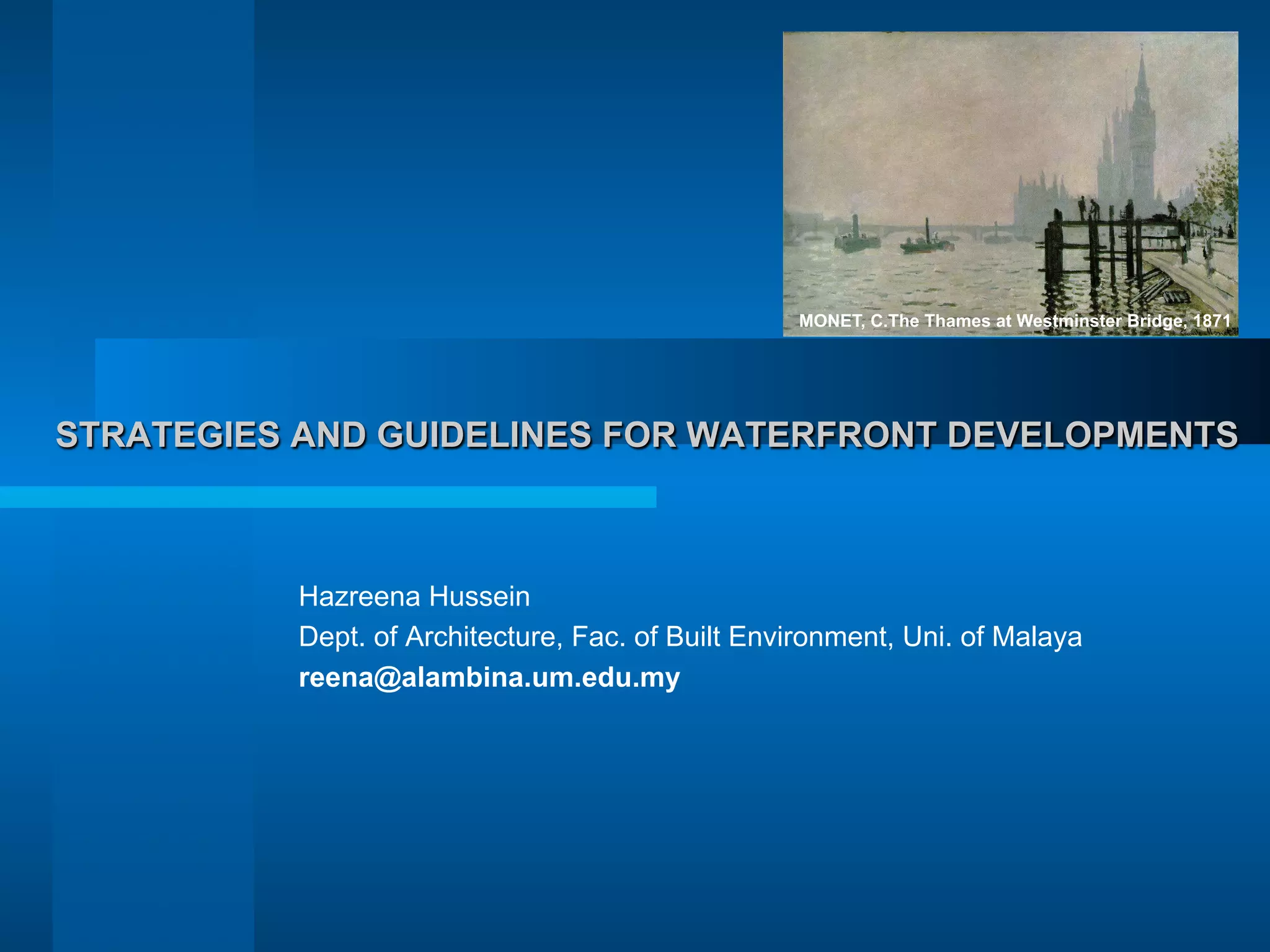
MONET, C.The Thames at Westminster Bridge, 1871
GUIDE TO THE EXPLORATORY RESEARCH
  Prelude
  The Background
  Statements of Research Problems
  Research Objectives
  Strategic Objectives
  Strategic Guidelines
  General Urban Design Guidelines
  Epilogue
  Attitude Towards the River
PRELUDE
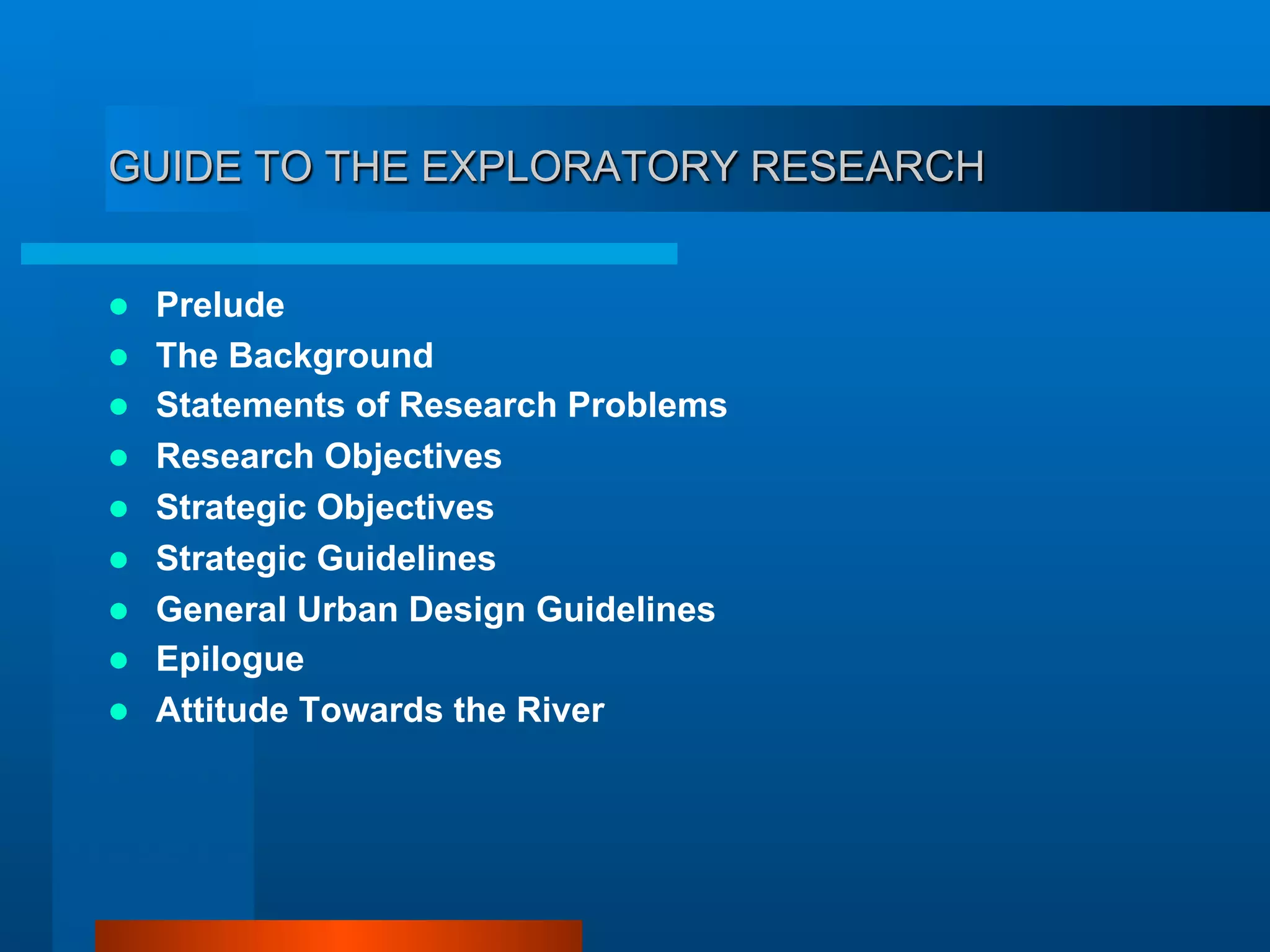
Purpose of Research –
Quick respond from Landscape
Architects, Local authorities are
emphasizing the potential use of
urban waterfronts. Most cities in
Malaysia are situated on the water edge.
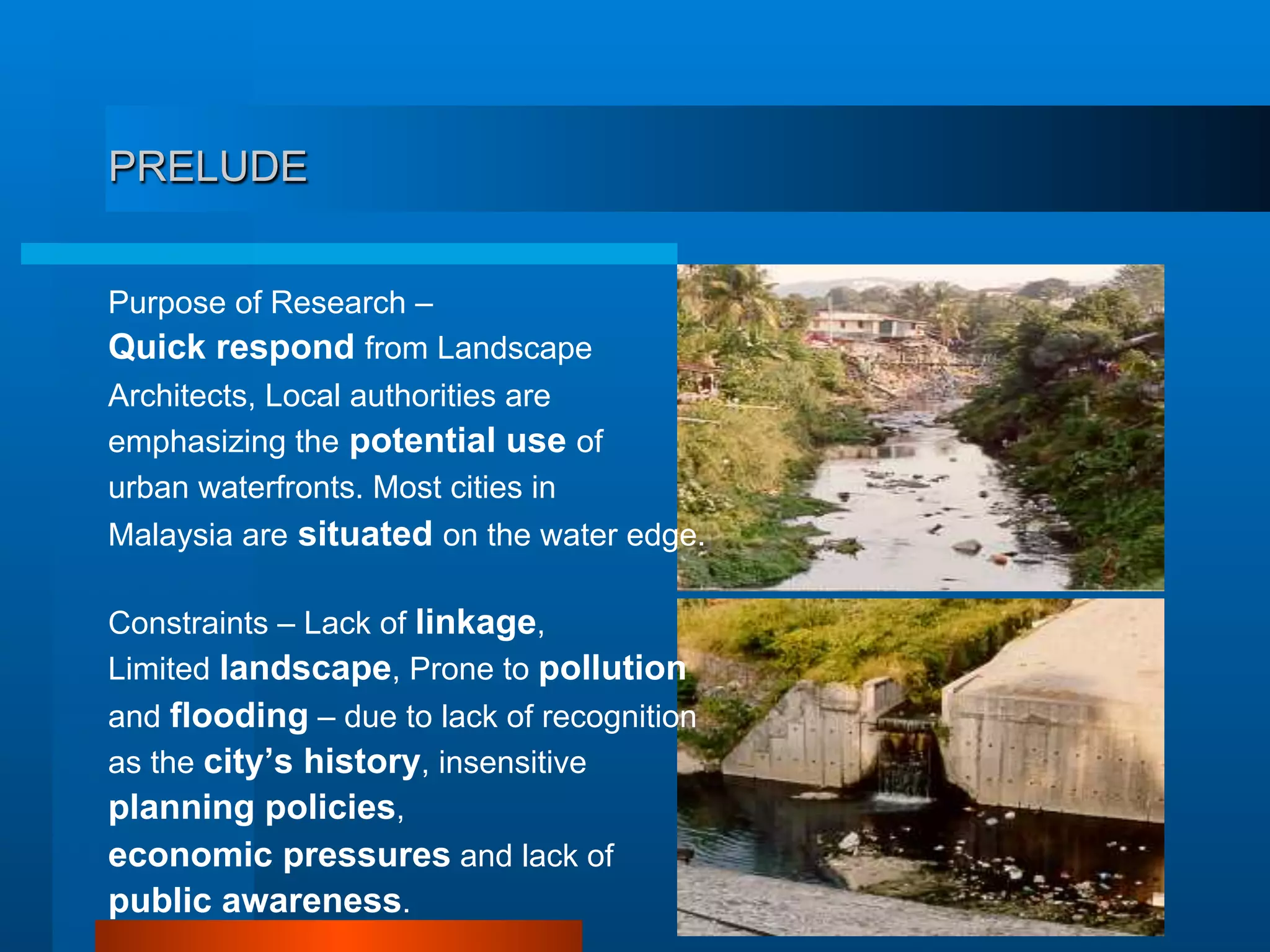
Constraints – Lack of linkage,
Limited landscape, Prone to pollution
and flooding – due to lack of recognition
as the city’s history, insensitive
planning policies,
economic pressures and lack of
public awareness.
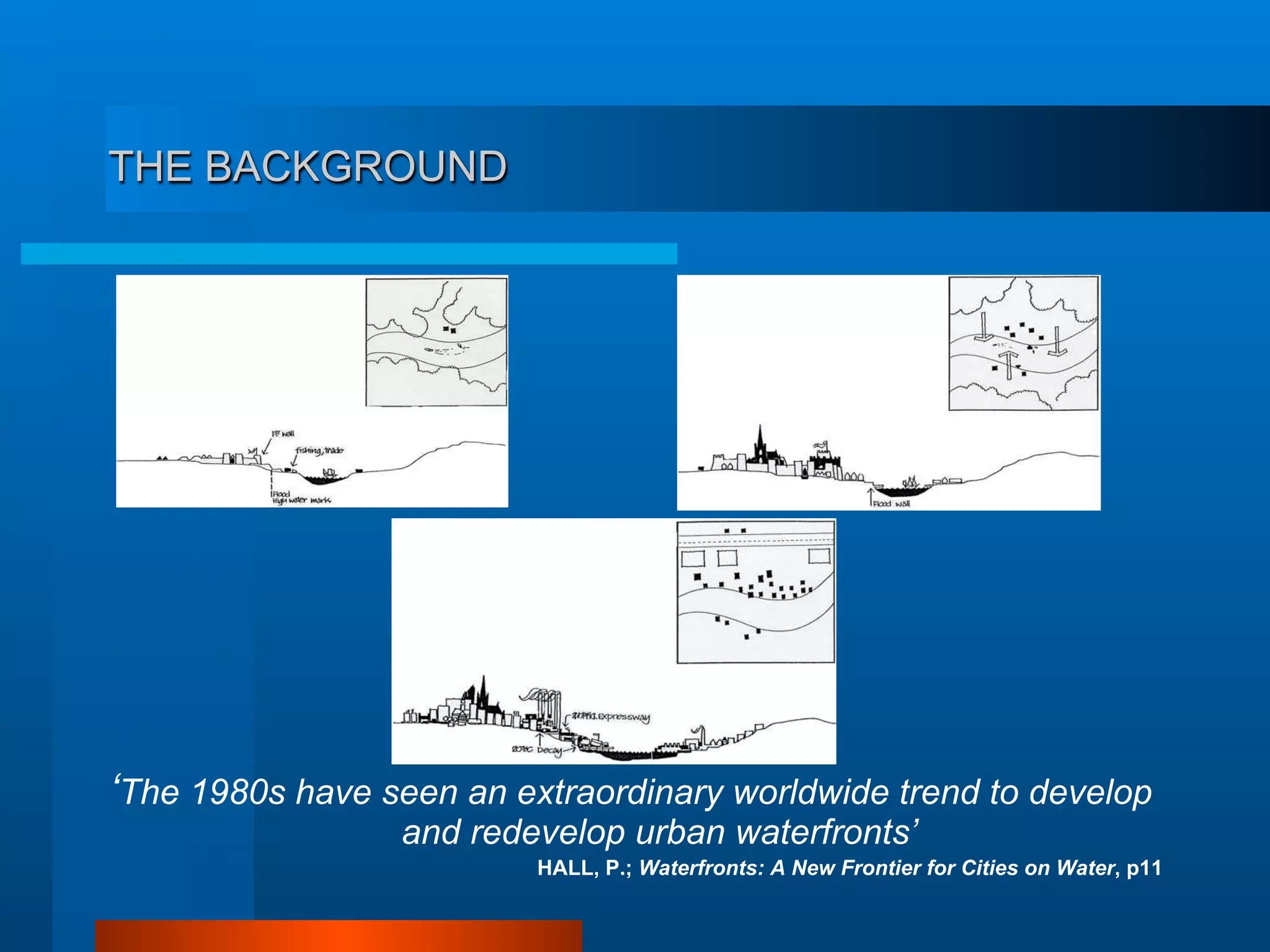
THE BACKGROUND
‘The 1980s have seen an extraordinary worldwide trend to develop
and redevelop urban waterfronts’
HALL, P.; Waterfronts: A New Frontier for Cities on Water, p11
STATEMENTS
Athena Tacha: ‘Until water becomes as sacred throughout the world as it is
in India, we will not develop a proper riverfront solution’
Allen Eskew: ‘I have found that really what is more powerful is access to
the water’s edge…if you can get the people to go to the water, the poetry
is in the edge’
Roy Mann: ‘Cities need to be plan and build from the outset in a more
enriching, enabling way so that activity can be built up to its proper peak
in the early years of any waterfront project’
Landscape Architecture Periodical, February 1991
RESEARCH OBJECTIVES
  To produce general urban
strategies for waterfront
developments in city centres;
  To produce design guidelines
for urban waterfront developments.
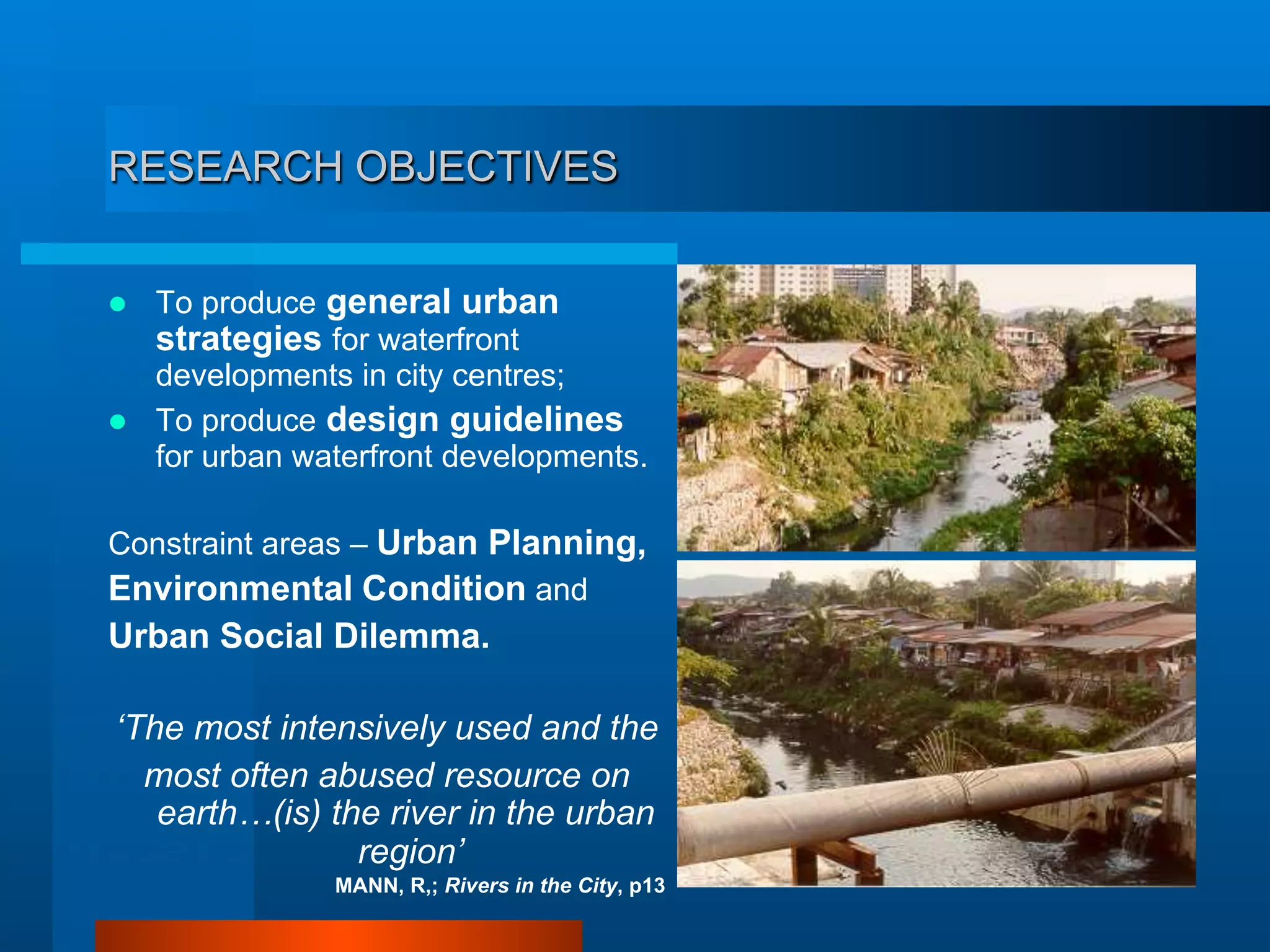
Constraint areas – Urban Planning,
Environmental Condition and
Urban Social Dilemma.
‘The most intensively used and the
most often abused resource on
earth…(is) the river in the urban
region’
MANN, R,; Rivers in the City, p13
STRATEGIC OBJECTIVES
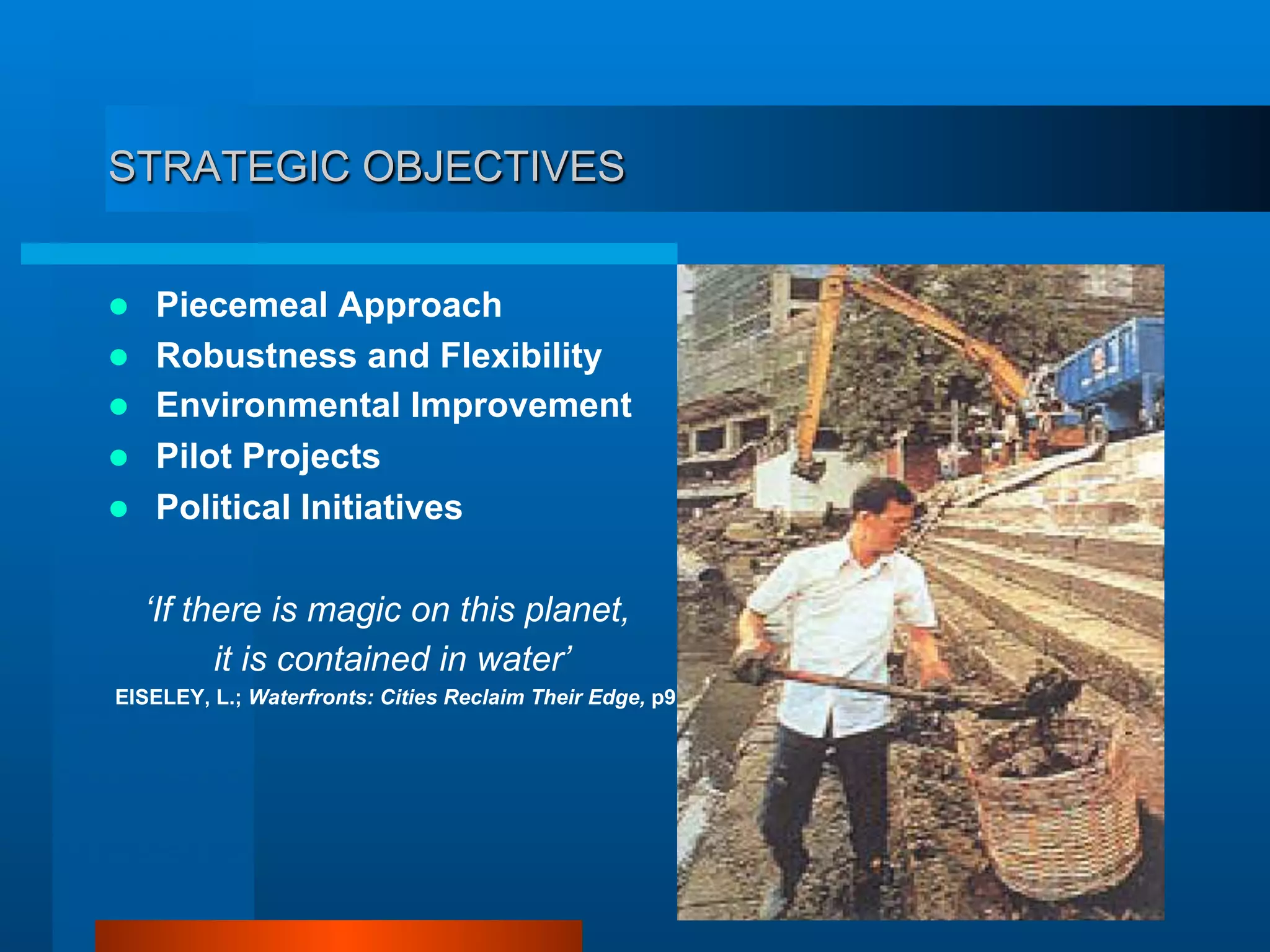
  Piecemeal Approach
  Robustness and Flexibility
  Environmental Improvement
  Pilot Projects
  Political Initiatives
‘If there is magic on this planet,
it is contained in water’
EISELEY, L.; Waterfronts: Cities Reclaim Their Edge, p9
STRATEGIC GUIDELINES
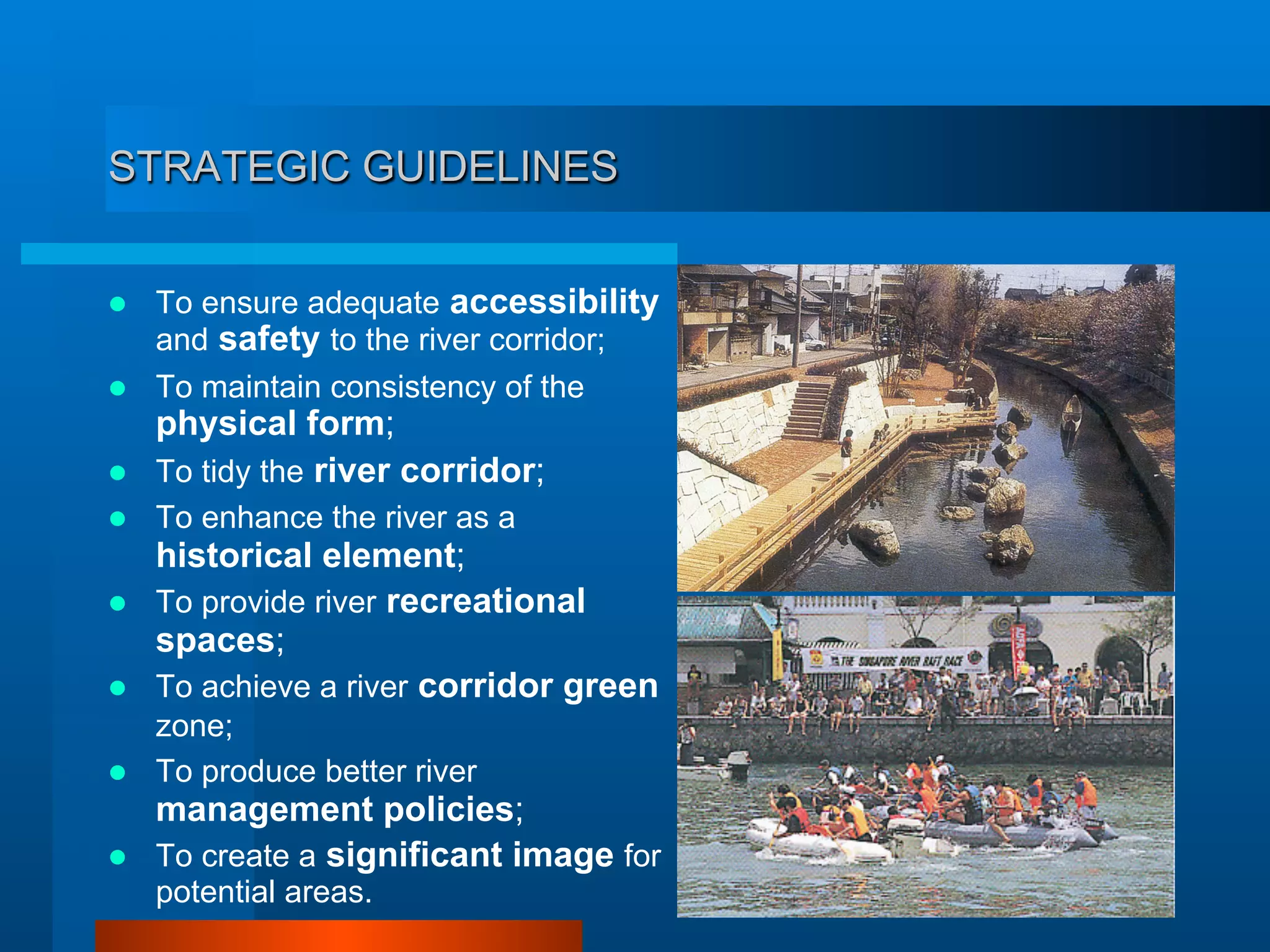
  To ensure adequate accessibility
and safety to the river corridor;
  To maintain consistency of the
physical form;
  To tidy the river corridor;
  To enhance the river as a
historical element;
  To provide river recreational
spaces;
  To achieve a river corridor green
zone;
  To produce better river
management policies;
  To create a significant image for
potential areas.
GENERAL URBAN DESIGN GUIDELINES
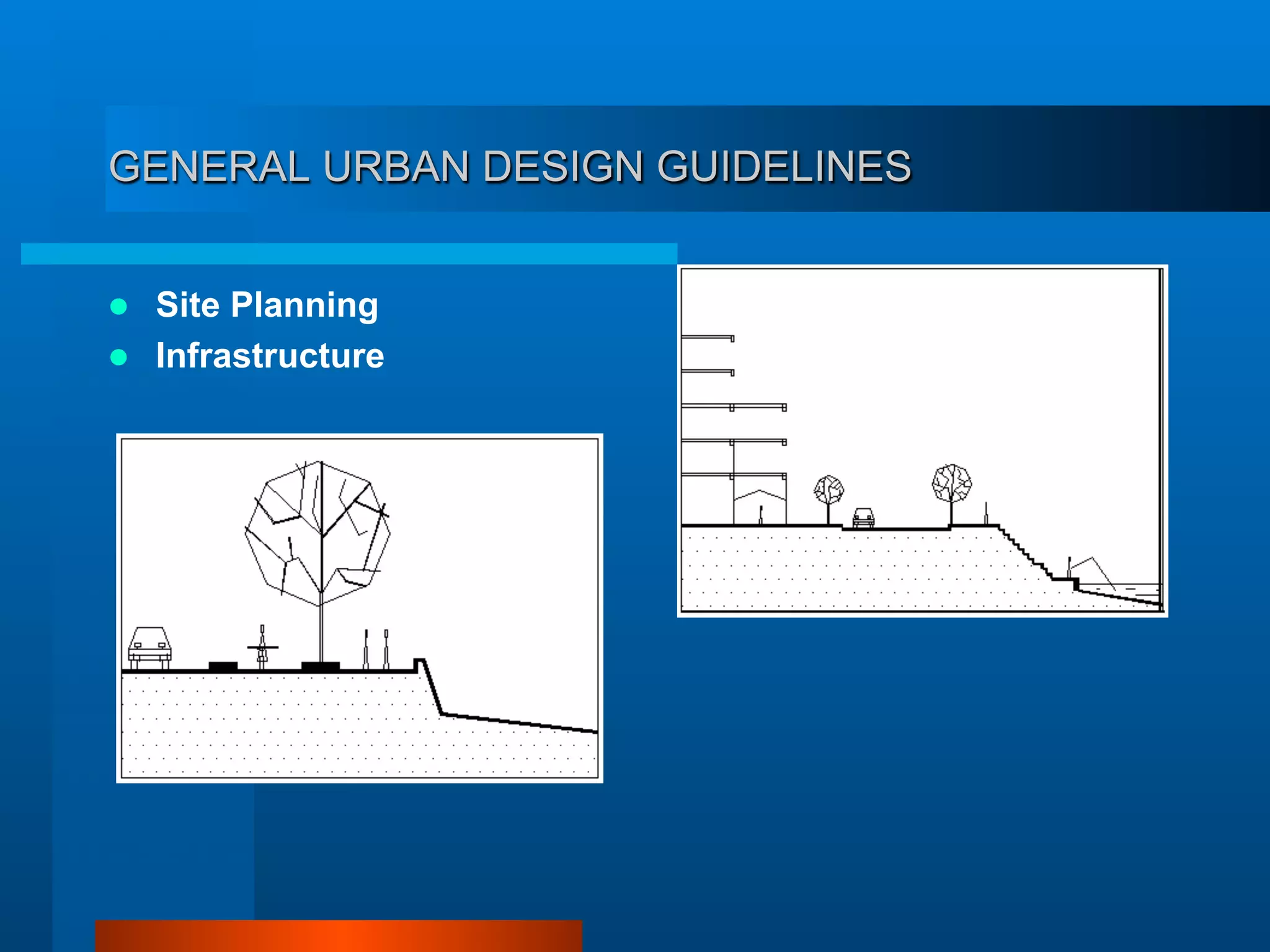
  Site Planning
  Infrastructure
GENERAL URBAN DESIGN GUIDELINES
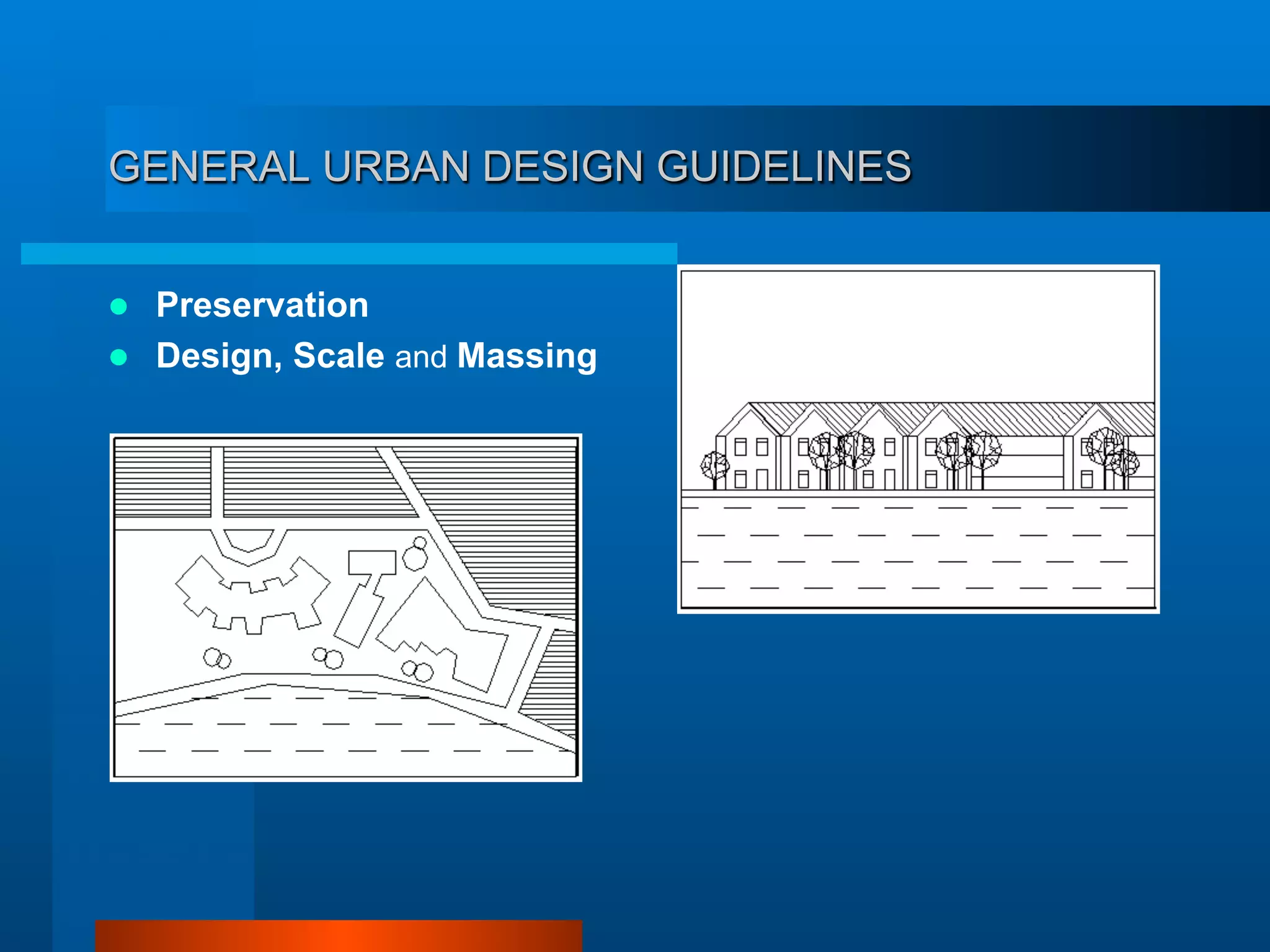
  Preservation
  Design, Scale and Massing
GENERAL URBAN DESIGN GUIDELINES
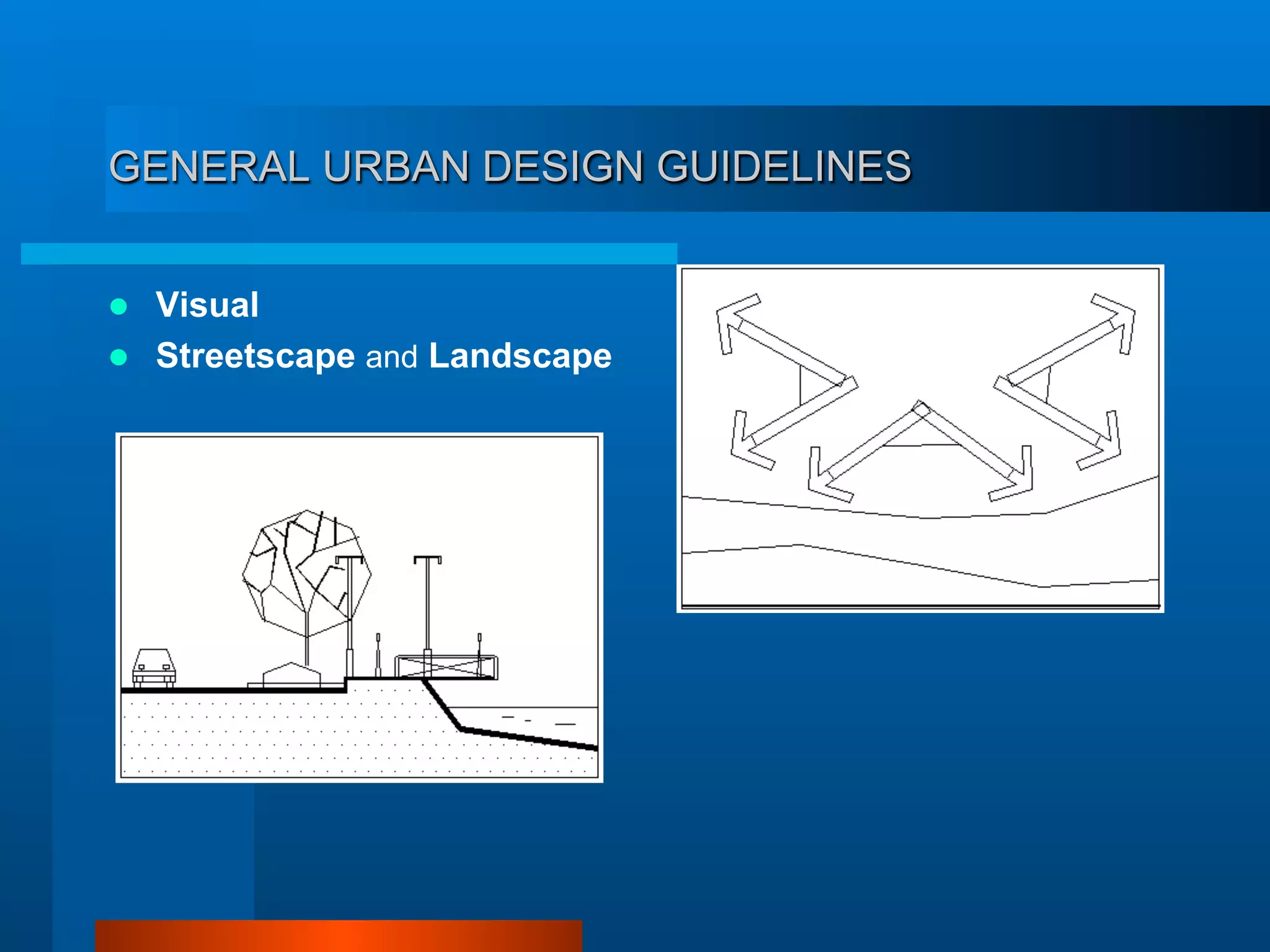
  Visual
  Streetscape and Landscape
GENERAL URBAN DESIGN GUIDELINES
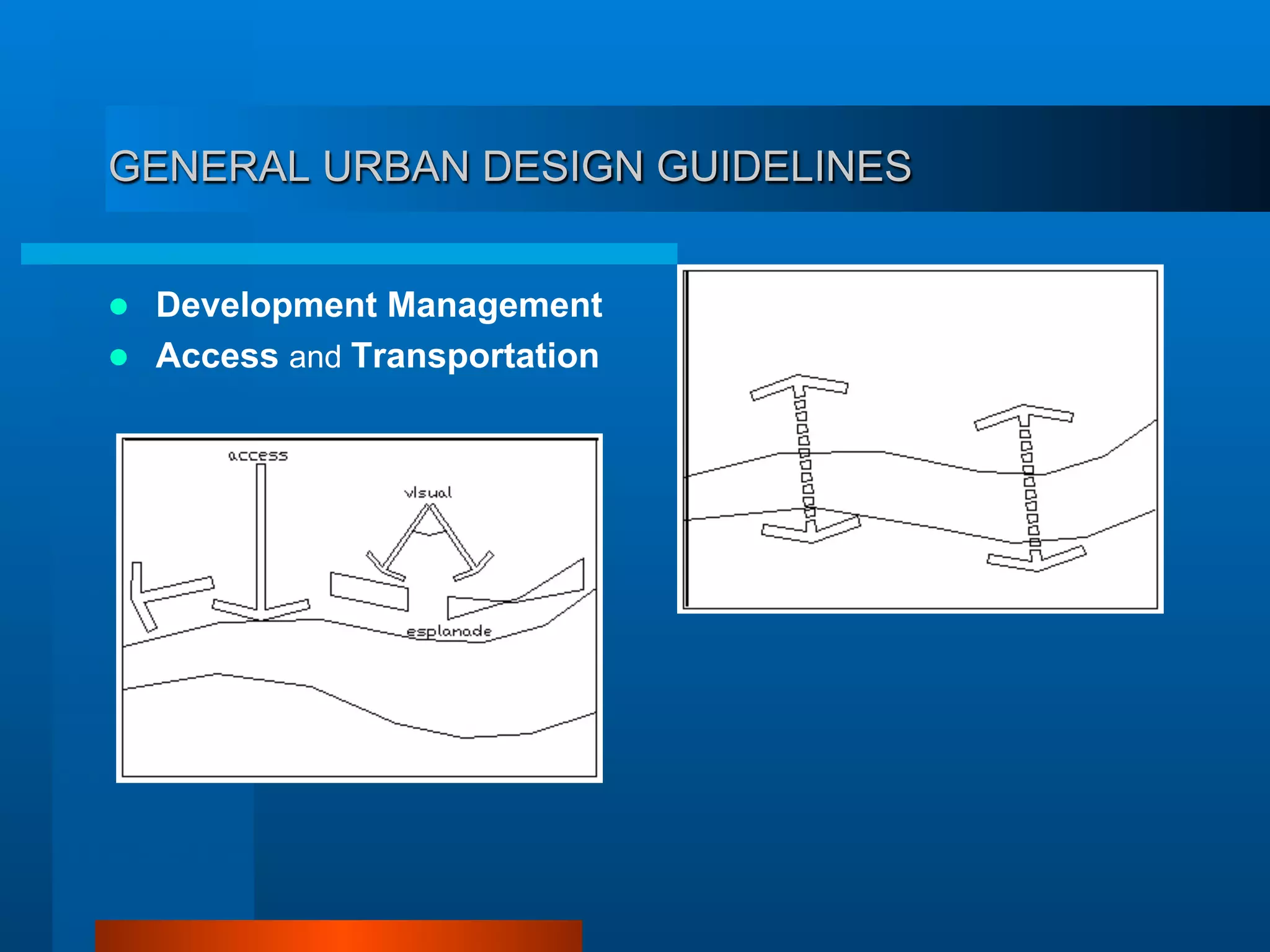
  Development Management
  Access and Transportation
GENERAL URBAN DESIGN GUIDELINES
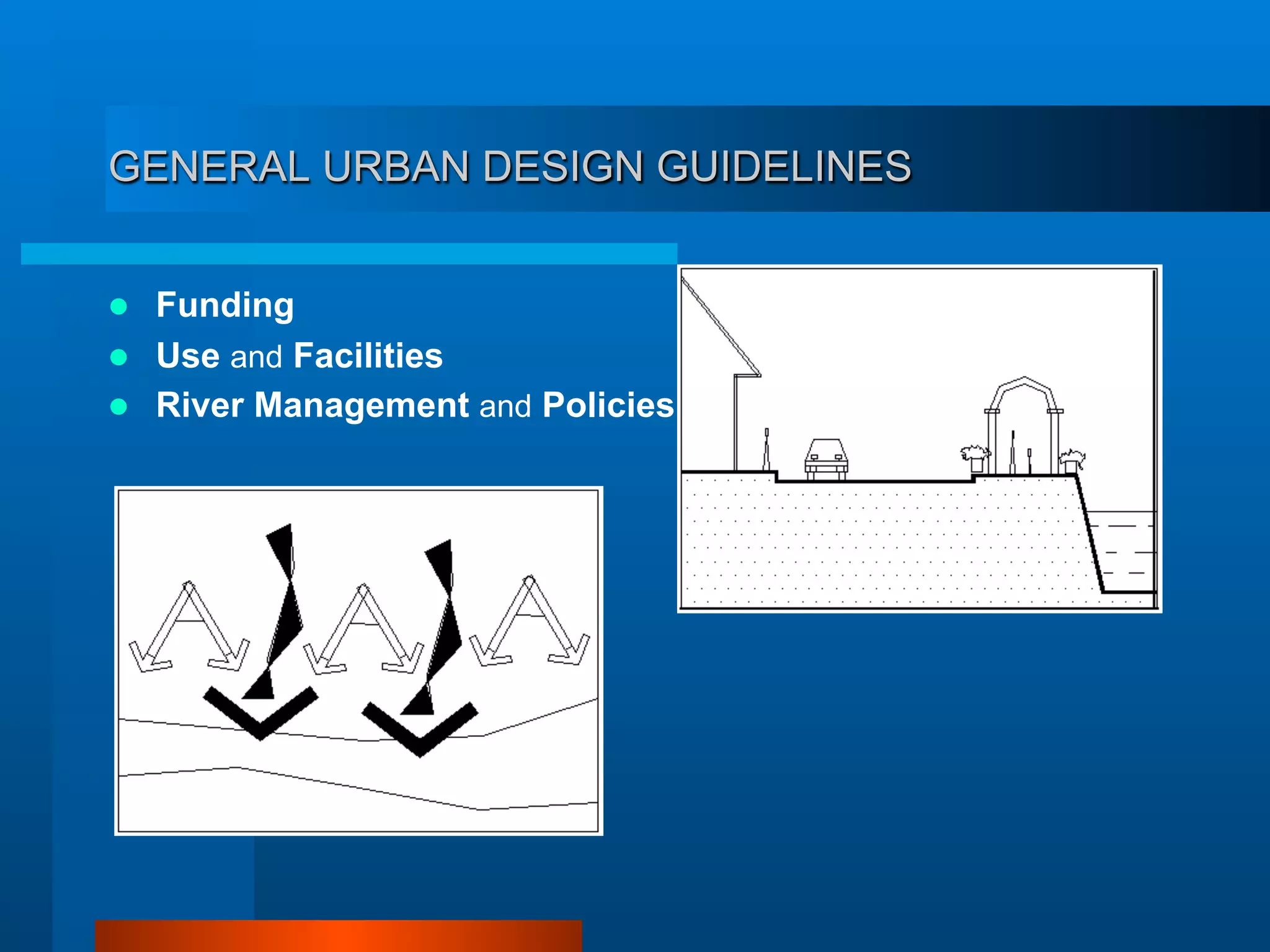
  Funding
  Use and Facilities
  River Management and Policies
EPILOGUE
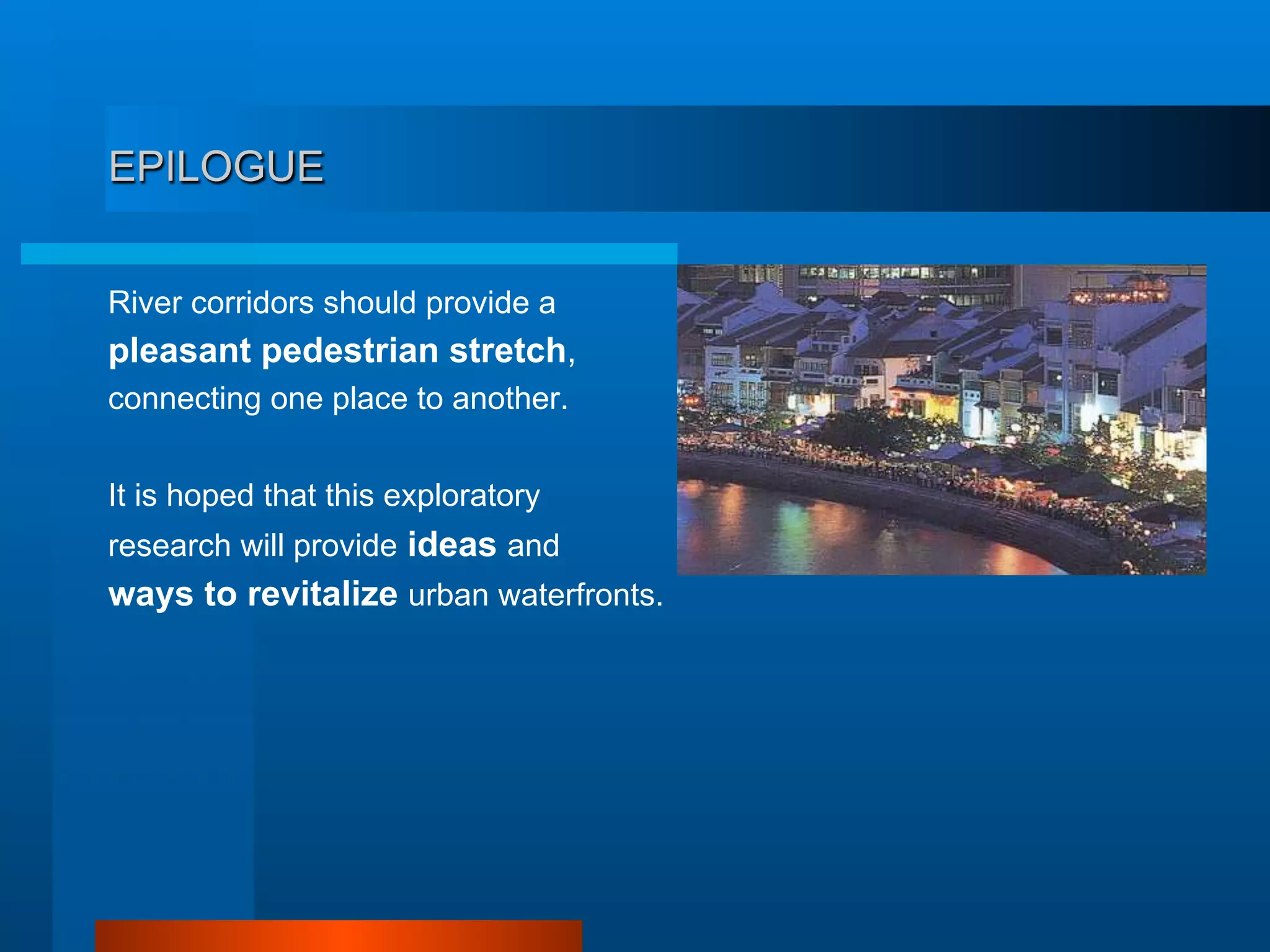
River corridors should provide a
pleasant pedestrian stretch,
connecting one place to another.
It is hoped that this exploratory
research will provide ideas and
ways to revitalize urban waterfronts.
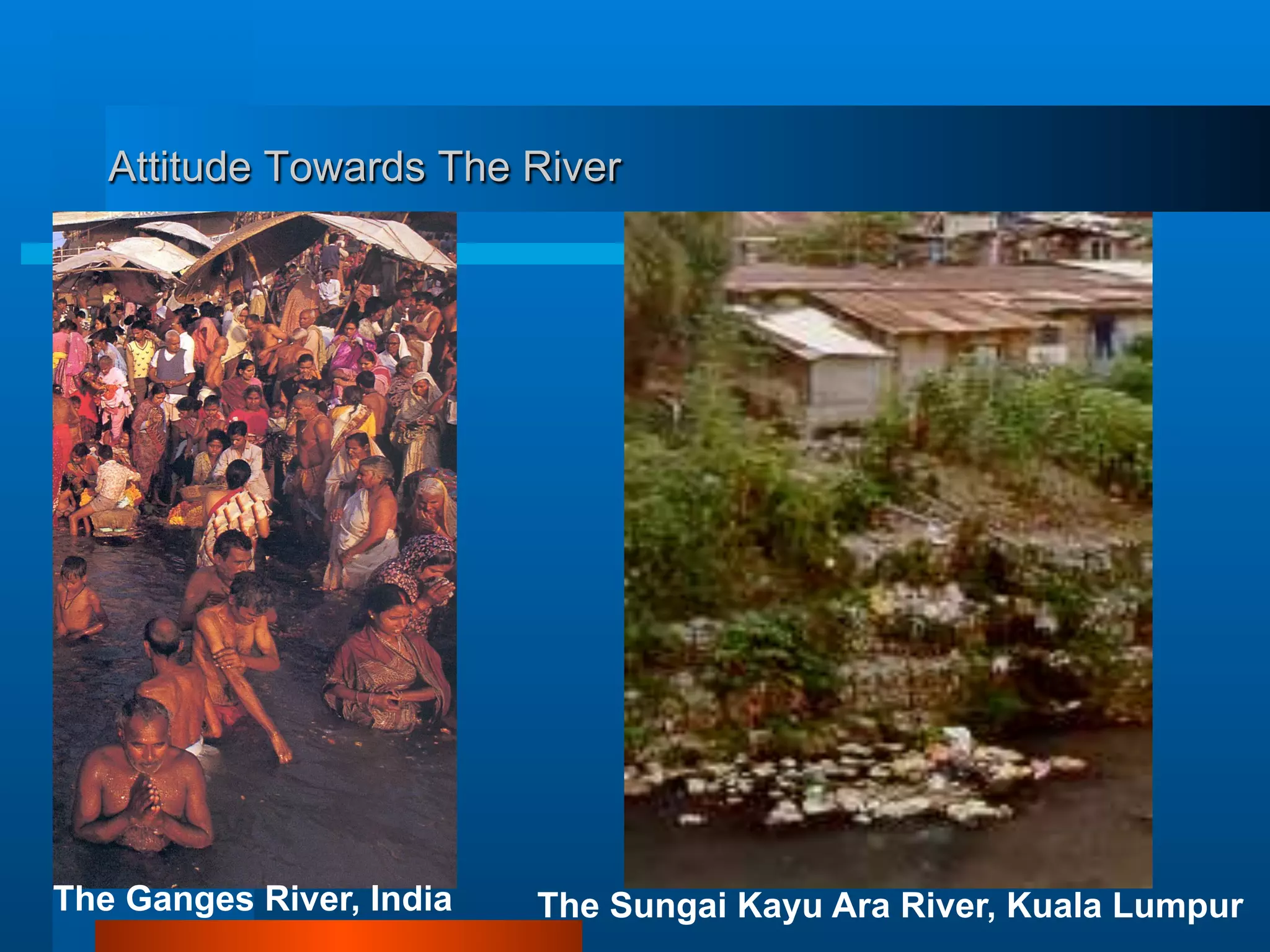
Attitude Towards The River
The Ganges River, India The Sungai Kayu Ara River, Kuala Lumpur

Strategies and Guidelines for Waterfront Developments

  • 1.
    STRATEGIES AND GUIDELINESFOR WATERFRONT DEVELOPMENTS Hazreena Hussein Dept. of Architecture, Fac. of Built Environment, Uni. of Malaya reena@alambina.um.edu.my MONET, C.The Thames at Westminster Bridge, 1871
  • 2.
    GUIDE TO THEEXPLORATORY RESEARCH   Prelude   The Background   Statements of Research Problems   Research Objectives   Strategic Objectives   Strategic Guidelines   General Urban Design Guidelines   Epilogue   Attitude Towards the River
  • 3.
    PRELUDE Purpose of Research– Quick respond from Landscape Architects, Local authorities are emphasizing the potential use of urban waterfronts. Most cities in Malaysia are situated on the water edge. Constraints – Lack of linkage, Limited landscape, Prone to pollution and flooding – due to lack of recognition as the city’s history, insensitive planning policies, economic pressures and lack of public awareness.
  • 4.
    THE BACKGROUND ‘The 1980shave seen an extraordinary worldwide trend to develop and redevelop urban waterfronts’ HALL, P.; Waterfronts: A New Frontier for Cities on Water, p11
  • 5.
    STATEMENTS Athena Tacha: ‘Untilwater becomes as sacred throughout the world as it is in India, we will not develop a proper riverfront solution’ Allen Eskew: ‘I have found that really what is more powerful is access to the water’s edge…if you can get the people to go to the water, the poetry is in the edge’ Roy Mann: ‘Cities need to be plan and build from the outset in a more enriching, enabling way so that activity can be built up to its proper peak in the early years of any waterfront project’ Landscape Architecture Periodical, February 1991
  • 6.
    RESEARCH OBJECTIVES   Toproduce general urban strategies for waterfront developments in city centres;   To produce design guidelines for urban waterfront developments. Constraint areas – Urban Planning, Environmental Condition and Urban Social Dilemma. ‘The most intensively used and the most often abused resource on earth…(is) the river in the urban region’ MANN, R,; Rivers in the City, p13
  • 7.
    STRATEGIC OBJECTIVES   PiecemealApproach   Robustness and Flexibility   Environmental Improvement   Pilot Projects   Political Initiatives ‘If there is magic on this planet, it is contained in water’ EISELEY, L.; Waterfronts: Cities Reclaim Their Edge, p9
  • 8.
    STRATEGIC GUIDELINES   Toensure adequate accessibility and safety to the river corridor;   To maintain consistency of the physical form;   To tidy the river corridor;   To enhance the river as a historical element;   To provide river recreational spaces;   To achieve a river corridor green zone;   To produce better river management policies;   To create a significant image for potential areas.
  • 9.
    GENERAL URBAN DESIGNGUIDELINES   Site Planning   Infrastructure
  • 10.
    GENERAL URBAN DESIGNGUIDELINES   Preservation   Design, Scale and Massing
  • 11.
    GENERAL URBAN DESIGNGUIDELINES   Visual   Streetscape and Landscape
  • 12.
    GENERAL URBAN DESIGNGUIDELINES   Development Management   Access and Transportation
  • 13.
    GENERAL URBAN DESIGNGUIDELINES   Funding   Use and Facilities   River Management and Policies
  • 14.
    EPILOGUE River corridors shouldprovide a pleasant pedestrian stretch, connecting one place to another. It is hoped that this exploratory research will provide ideas and ways to revitalize urban waterfronts.
  • 15.
    Attitude Towards TheRiver The Ganges River, India The Sungai Kayu Ara River, Kuala Lumpur