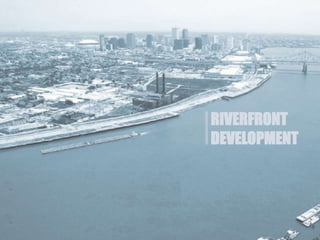
RIVERFRONT
DEVELOPMENT
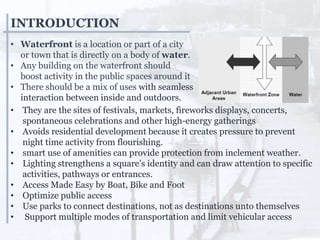
INTRODUCTION
• Waterfront is a location or part of a city
or town that is directly on a body of water.
• Any building on the waterfront should
boost activity in the public spaces around it
• There should be a mix of uses with seamless
interaction between inside and outdoors.
• They are the sites of festivals, markets, fireworks displays, concerts,
spontaneous celebrations and other high-energy gatherings
• Avoids residential development because it creates pressure to prevent
night time activity from flourishing.
• smart use of amenities can provide protection from inclement weather.
• Lighting strengthens a square’s identity and can draw attention to specific
activities, pathways or entrances.
• Access Made Easy by Boat, Bike and Foot
• Optimize public access
• Use parks to connect destinations, not as destinations unto themselves
• Support multiple modes of transportation and limit vehicular access
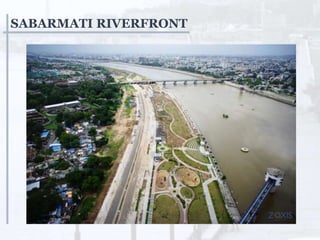
SABARMATI RIVERFRONT
• A Multidimensional Environmental Improvement and Urban
Rejuvenation Project
• One of the most innovative projects to make the city liveable &
sustainable
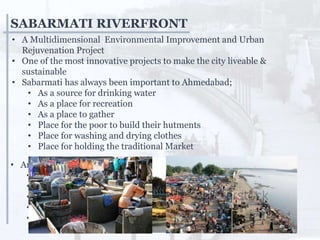
• Sabarmati has always been important to Ahmedabad;
• As a source for drinking water
• As a place for recreation
• As a place to gather
• Place for the poor to build their hutments
• Place for washing and drying clothes
• Place for holding the traditional Market
• And yet, Sabarmati was abused and neglected;
• Sabarmati became a place to dump garbage
• Storm water drains spewed untreated sewage into the river
• Nallas brought sewage into the river and abused Sabarmati
• Encroachments reduced the river’s flood carrying capacity
• The river was inaccessible to the public
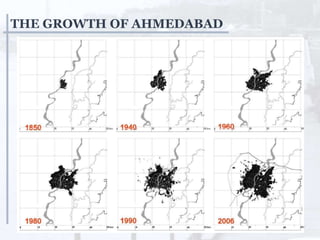
THE GROWTH OF AHMEDABAD
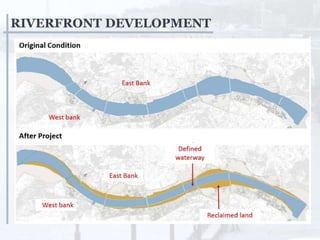
RIVERFRONT DEVELOPMENT
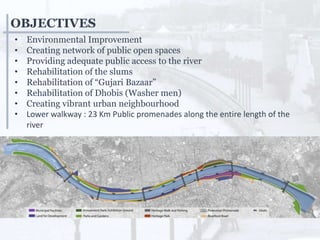
• Environmental Improvement
• Creating network of public open spaces
• Providing adequate public access to the river
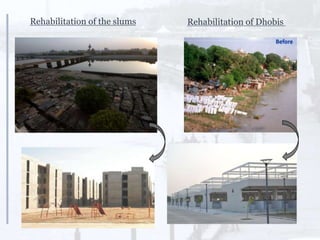
• Rehabilitation of the slums
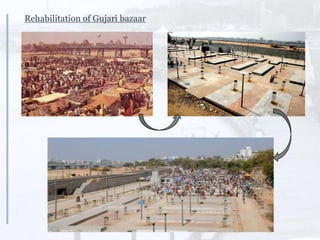
• Rehabilitation of “Gujari Bazaar”
• Rehabilitation of Dhobis (Washer men)
• Creating vibrant urban neighbourhood
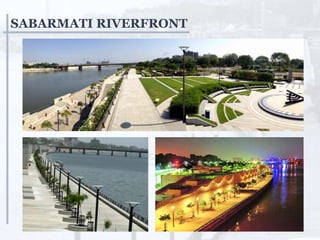
• Lower walkway : 23 Km Public promenades along the entire length of the
river
OBJECTIVES
Rehabilitation of the slums Rehabilitation of Dhobis
Rehabilitation of Gujari bazaar
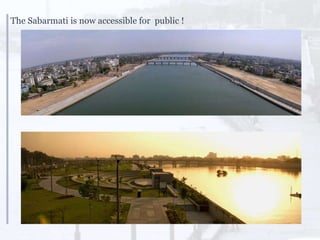
The Sabarmati is now accessible for public !
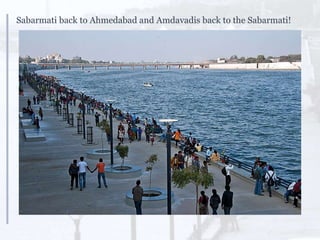
Sabarmati back to Ahmedabad and Amdavadis back to the Sabarmati!
THE CRESCENT
THE CRESCENT
THE CRESCENT
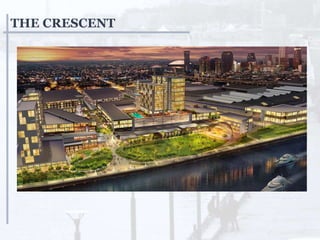
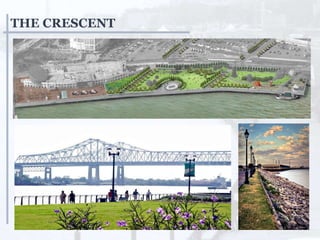
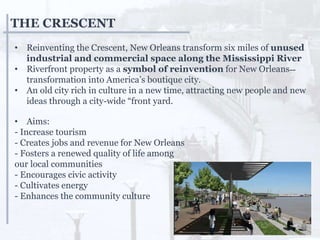
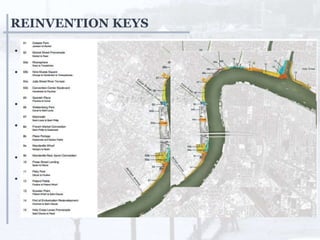
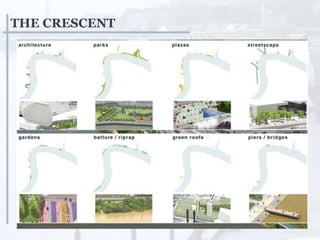
• Reinventing the Crescent, New Orleans transform six miles of unused
industrial and commercial space along the Mississippi River
• Riverfront property as a symbol of reinvention for New Orleans˗˗
transformation into America’s boutique city.
• An old city rich in culture in a new time, attracting new people and new
ideas through a city-wide “front yard.
• Aims:
- Increase tourism
- Creates jobs and revenue for New Orleans
- Fosters a renewed quality of life among
our local communities
- Encourages civic activity
- Cultivates energy
- Enhances the community culture
THE CRESCENT
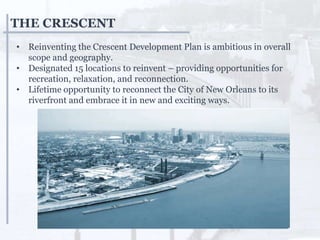
• Reinventing the Crescent Development Plan is ambitious in overall
scope and geography.
• Designated 15 locations to reinvent – providing opportunities for
recreation, relaxation, and reconnection.
• Lifetime opportunity to reconnect the City of New Orleans to its
riverfront and embrace it in new and exciting ways.
REINVENTION KEYS
• Remove the physical barrier to
public access to the river
• Creation of continuous linear
access and network of great green
spaces along the river’s edge
• Created gathering places and
moment of district character
• New architectural icons and
landmarks to give new face to the
city.
• Beautiful and sustainable living
areas were created along riverside.
• Enhanced huge flow of
infrastructure with expansion in
tax for economic stability.
THE CRESCENT
THE CRESCENT
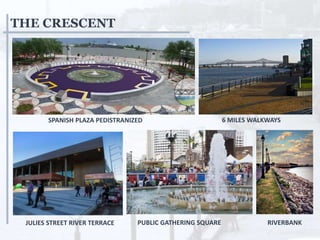
SPANISH PLAZA PEDISTRANIZED
JULIES STREET RIVER TERRACE PUBLIC GATHERING SQUARE
6 MILES WALKWAYS
RIVERBANK
CONCLUSION
• Showcase the river’s history
-History plays an important role in shaping a place.
-It gives any place its unique identity.
-It can also be used to educate people about the place.
• Activate the riverfront
-Recreation/Fitness
-Tourism improves the economic wealth of the city.
• Public accessibility
-Limit obstacles and connect to the river.
-Convenient means for visitors to access the waterfront area.
-Trails, walkways, beaches, along rivers provided.
-There should be multiple entry points to the river so as to have a
successful riverfront with active use.
• Local participation
CONCLUSION
• Engage with the water
-Existing activities like fishing, boating, repair yards etc. along the
river give it a character.
-Newer development should not totally take away the existing
activities
• Liability
-Building near water can be hazardous for people.
-With easy accessibility to water there are certain liabilities like
drowning or falling from walkways with no railing on them.
• Bank stabilization
-The accessibility factor along with bank stabilization measures.
• Employ high quality architectural materials and sustainable
engineering practices
-By selecting building materials, heights, native plants for
landscaping, reusing disturbed areas and building within the
context.
THANK YOU

Riverfront development

  • 1.
  • 2.
    INTRODUCTION • Waterfront isa location or part of a city or town that is directly on a body of water. • Any building on the waterfront should boost activity in the public spaces around it • There should be a mix of uses with seamless interaction between inside and outdoors. • They are the sites of festivals, markets, fireworks displays, concerts, spontaneous celebrations and other high-energy gatherings • Avoids residential development because it creates pressure to prevent night time activity from flourishing. • smart use of amenities can provide protection from inclement weather. • Lighting strengthens a square’s identity and can draw attention to specific activities, pathways or entrances. • Access Made Easy by Boat, Bike and Foot • Optimize public access • Use parks to connect destinations, not as destinations unto themselves • Support multiple modes of transportation and limit vehicular access
  • 3.
  • 4.
  • 5.
    SABARMATI RIVERFRONT • AMultidimensional Environmental Improvement and Urban Rejuvenation Project • One of the most innovative projects to make the city liveable & sustainable • Sabarmati has always been important to Ahmedabad; • As a source for drinking water • As a place for recreation • As a place to gather • Place for the poor to build their hutments • Place for washing and drying clothes • Place for holding the traditional Market • And yet, Sabarmati was abused and neglected; • Sabarmati became a place to dump garbage • Storm water drains spewed untreated sewage into the river • Nallas brought sewage into the river and abused Sabarmati • Encroachments reduced the river’s flood carrying capacity • The river was inaccessible to the public
  • 6.
    THE GROWTH OFAHMEDABAD
  • 7.
  • 8.
    • Environmental Improvement •Creating network of public open spaces • Providing adequate public access to the river • Rehabilitation of the slums • Rehabilitation of “Gujari Bazaar” • Rehabilitation of Dhobis (Washer men) • Creating vibrant urban neighbourhood • Lower walkway : 23 Km Public promenades along the entire length of the river OBJECTIVES
  • 9.
    Rehabilitation of theslums Rehabilitation of Dhobis
  • 10.
  • 11.
    The Sabarmati isnow accessible for public !
  • 12.
    Sabarmati back toAhmedabad and Amdavadis back to the Sabarmati!
  • 13.
  • 14.
  • 15.
    THE CRESCENT • Reinventingthe Crescent, New Orleans transform six miles of unused industrial and commercial space along the Mississippi River • Riverfront property as a symbol of reinvention for New Orleans˗˗ transformation into America’s boutique city. • An old city rich in culture in a new time, attracting new people and new ideas through a city-wide “front yard. • Aims: - Increase tourism - Creates jobs and revenue for New Orleans - Fosters a renewed quality of life among our local communities - Encourages civic activity - Cultivates energy - Enhances the community culture
  • 16.
    THE CRESCENT • Reinventingthe Crescent Development Plan is ambitious in overall scope and geography. • Designated 15 locations to reinvent – providing opportunities for recreation, relaxation, and reconnection. • Lifetime opportunity to reconnect the City of New Orleans to its riverfront and embrace it in new and exciting ways.
  • 17.
    REINVENTION KEYS • Removethe physical barrier to public access to the river • Creation of continuous linear access and network of great green spaces along the river’s edge • Created gathering places and moment of district character • New architectural icons and landmarks to give new face to the city. • Beautiful and sustainable living areas were created along riverside. • Enhanced huge flow of infrastructure with expansion in tax for economic stability.
  • 18.
  • 19.
    THE CRESCENT SPANISH PLAZAPEDISTRANIZED JULIES STREET RIVER TERRACE PUBLIC GATHERING SQUARE 6 MILES WALKWAYS RIVERBANK
  • 20.
    CONCLUSION • Showcase theriver’s history -History plays an important role in shaping a place. -It gives any place its unique identity. -It can also be used to educate people about the place. • Activate the riverfront -Recreation/Fitness -Tourism improves the economic wealth of the city. • Public accessibility -Limit obstacles and connect to the river. -Convenient means for visitors to access the waterfront area. -Trails, walkways, beaches, along rivers provided. -There should be multiple entry points to the river so as to have a successful riverfront with active use. • Local participation
  • 21.
    CONCLUSION • Engage withthe water -Existing activities like fishing, boating, repair yards etc. along the river give it a character. -Newer development should not totally take away the existing activities • Liability -Building near water can be hazardous for people. -With easy accessibility to water there are certain liabilities like drowning or falling from walkways with no railing on them. • Bank stabilization -The accessibility factor along with bank stabilization measures. • Employ high quality architectural materials and sustainable engineering practices -By selecting building materials, heights, native plants for landscaping, reusing disturbed areas and building within the context.
  • 22.