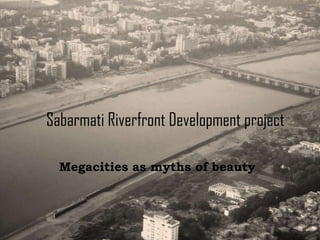
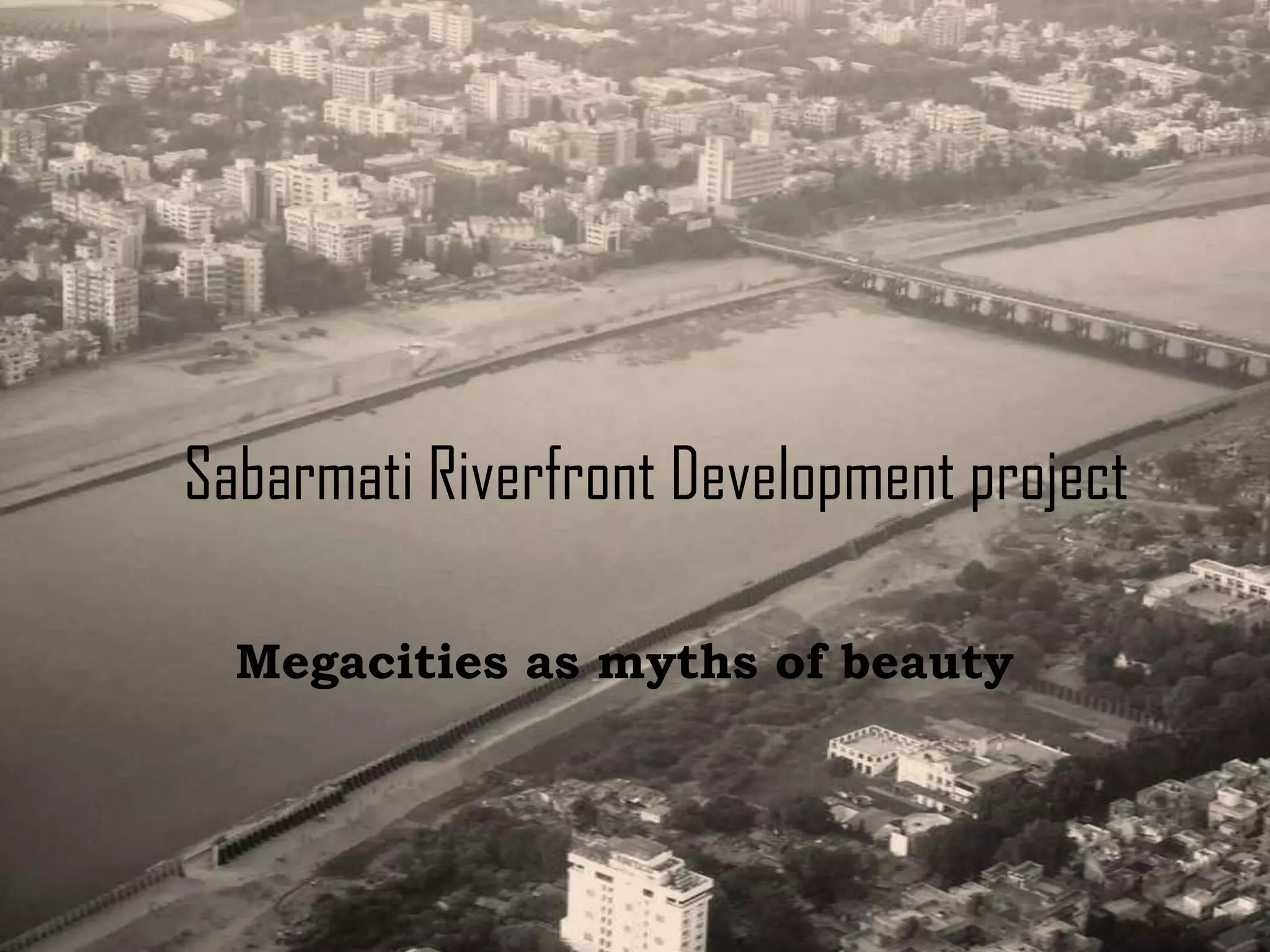
Sabarmati Riverfront Development project

  Megacities as myths of beauty
Geography/demography of conflict:
History of the city
   Known for its textile mills, Gandhi Ashram, Muslim
    architecture and communal violence
   City‟s history allows a range of vocabulary, elements
    one can choose from and mobilize in order to
    articulate different imaginations
   Marred by communal conflicts, seen as an economic
    hub, abysmal income disparity between west and
    east
   Since 2000s focus on development but skewed
   Time period in focus: Narendra Modi govt+ IT boom
   Promise of the metropolis: IT boom and the rise of
    the megacity
   Megacity= 10 million or above, Ahmedabad=50
    million+
   Inside urbanising Asia: Darshini Mahadevia

   Essential to look into: governance, financing
    infrastructure and hence a pattern of selective
    development. This is background, it will show how
    the narrative of development is problematic and
    serves only middle class imagination.
The ‘Manchester of the East’
To the ‘east of Manchester’
   50% of dwelling in east Ahmedabad is slums and
    chawls
   To get title of Megacity, sudden expansion of AUDA
    limits, inclusion of many more areas, reaching
    population targets
   80% of the displaced population is Muslims
   State to protect you from yourself: Slum dwellers
    identified as living in unhygienic conditions, in low
    lying flood prone areas
   Most are hawkers, lower income class, grocers:
    obsolete occupations in a modern city
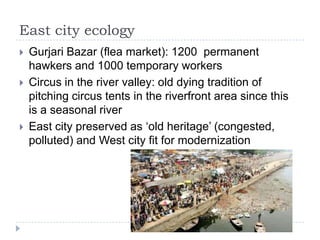
East city ecology
   Gurjari Bazar (flea market): 1200 permanent
    hawkers and 1000 temporary workers
   Circus in the river valley: old dying tradition of
    pitching circus tents in the riverfront area since this
    is a seasonal river
   East city preserved as „old heritage‟ (congested,
    polluted) and West city fit for modernization
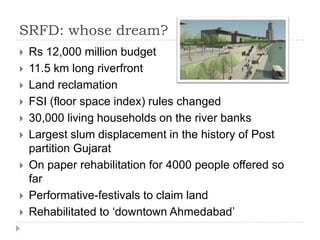
SRFD: whose dream?
   Rs 12,000 million budget
   11.5 km long riverfront
   Land reclamation
   FSI (floor space index) rules changed
   30,000 living households on the river banks
   Largest slum displacement in the history of Post
    partition Gujarat
   On paper rehabilitation for 4000 people offered so
    far
   Performative-festivals to claim land
   Rehabilitated to „downtown Ahmedabad‟
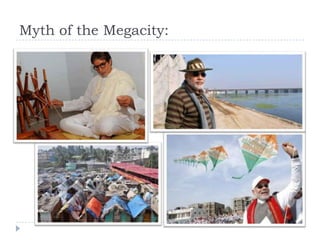
Myth of the Megacity:
Excerpts of the imagined city:
   “It‟s like a dream that one lives. Waking up by the
    river, driving down the riverside; board meeting with
    vast blue vista in the background and then a cruise
    across the water for a power lunch on the other
    bank. And then, a dinner on the gloating restaurant
    with family to chill out…In the midst of concrete and
    steel that is the dream that city planners are
    conjuring for apnu Amdavad.”
   On two stretches of 11.5 km, the future of a decaying
    city takes shape. It will create a central business
    district on the waterfront which will rub shoulders
    with world‟s best- Melbourne which has only 800m
    and Singapore, 1.2km…the tallest of buildings in
    Gujarat…and ghats for religious activities.”
State authorized vandalism
   City as an aesthetic object, a site for performative
    art: lifetsyle, cultural traditions, rituals,
   Ahmedabad and Sabarmati: the relationship of the
    city (as a populated space) and the river, will it be
    altered by this?
   Embellishing vandalism: Dario Gamboni
   Logic of e-governance: sacrifice for a greater good

Sabarmati Riverfront development project

  • 1.
    Sabarmati Riverfront Developmentproject Megacities as myths of beauty
  • 2.
  • 3.
    History of thecity  Known for its textile mills, Gandhi Ashram, Muslim architecture and communal violence  City‟s history allows a range of vocabulary, elements one can choose from and mobilize in order to articulate different imaginations  Marred by communal conflicts, seen as an economic hub, abysmal income disparity between west and east  Since 2000s focus on development but skewed  Time period in focus: Narendra Modi govt+ IT boom
  • 4.
    Promise of the metropolis: IT boom and the rise of the megacity  Megacity= 10 million or above, Ahmedabad=50 million+  Inside urbanising Asia: Darshini Mahadevia  Essential to look into: governance, financing infrastructure and hence a pattern of selective development. This is background, it will show how the narrative of development is problematic and serves only middle class imagination.
  • 5.
  • 6.
    To the ‘eastof Manchester’
  • 7.
    50% of dwelling in east Ahmedabad is slums and chawls  To get title of Megacity, sudden expansion of AUDA limits, inclusion of many more areas, reaching population targets  80% of the displaced population is Muslims  State to protect you from yourself: Slum dwellers identified as living in unhygienic conditions, in low lying flood prone areas  Most are hawkers, lower income class, grocers: obsolete occupations in a modern city
  • 8.
    East city ecology  Gurjari Bazar (flea market): 1200 permanent hawkers and 1000 temporary workers  Circus in the river valley: old dying tradition of pitching circus tents in the riverfront area since this is a seasonal river  East city preserved as „old heritage‟ (congested, polluted) and West city fit for modernization
  • 9.
    SRFD: whose dream?  Rs 12,000 million budget  11.5 km long riverfront  Land reclamation  FSI (floor space index) rules changed  30,000 living households on the river banks  Largest slum displacement in the history of Post partition Gujarat  On paper rehabilitation for 4000 people offered so far  Performative-festivals to claim land  Rehabilitated to „downtown Ahmedabad‟
  • 10.
    Myth of theMegacity:
  • 11.
    Excerpts of theimagined city:  “It‟s like a dream that one lives. Waking up by the river, driving down the riverside; board meeting with vast blue vista in the background and then a cruise across the water for a power lunch on the other bank. And then, a dinner on the gloating restaurant with family to chill out…In the midst of concrete and steel that is the dream that city planners are conjuring for apnu Amdavad.”
  • 12.
    On two stretches of 11.5 km, the future of a decaying city takes shape. It will create a central business district on the waterfront which will rub shoulders with world‟s best- Melbourne which has only 800m and Singapore, 1.2km…the tallest of buildings in Gujarat…and ghats for religious activities.”
  • 13.
    State authorized vandalism  City as an aesthetic object, a site for performative art: lifetsyle, cultural traditions, rituals,  Ahmedabad and Sabarmati: the relationship of the city (as a populated space) and the river, will it be altered by this?  Embellishing vandalism: Dario Gamboni  Logic of e-governance: sacrifice for a greater good