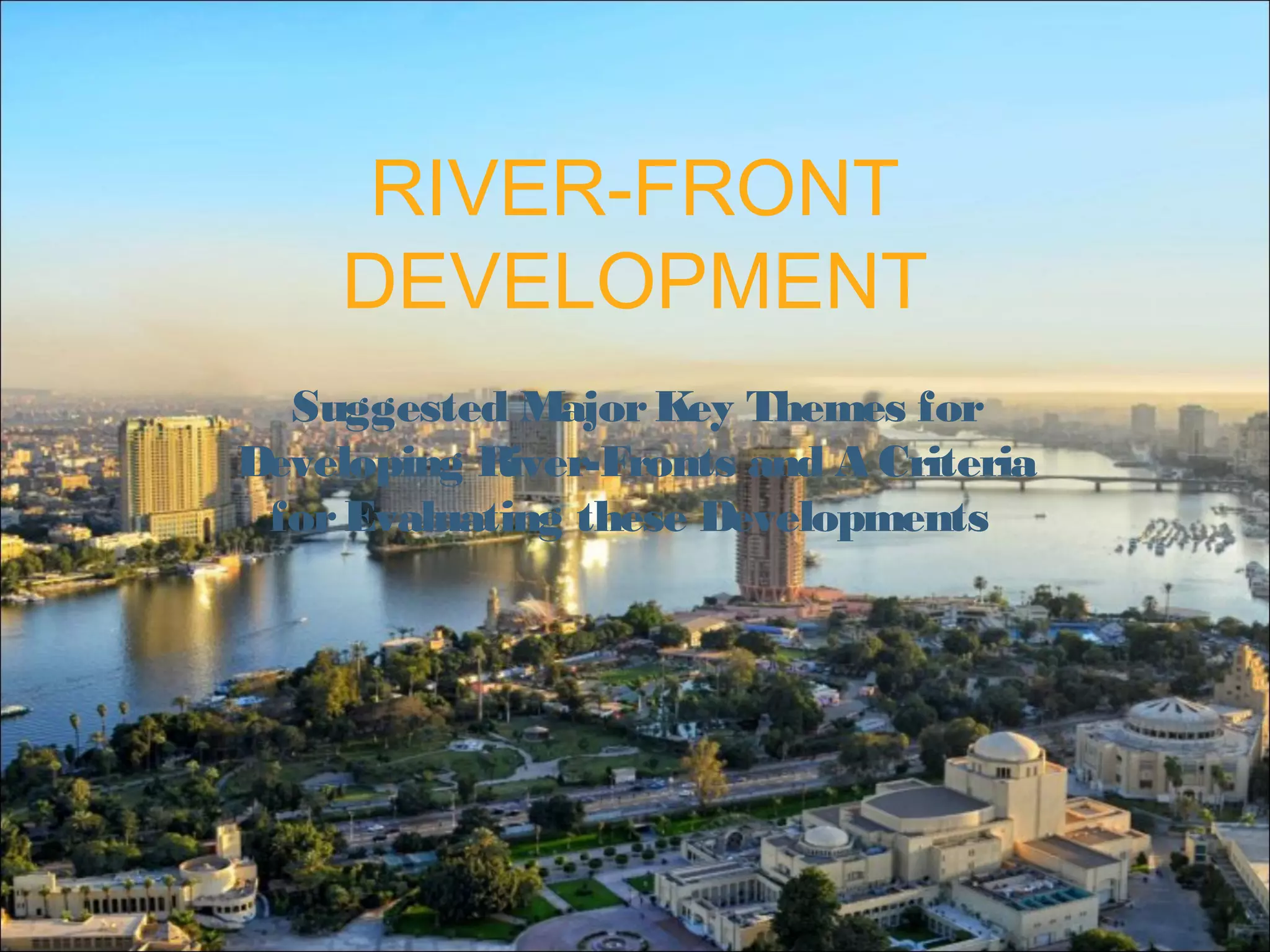
RIVER-FRONT
DEVELOPMENT
Suggested MajorKey Themes for
Developing River-Fronts and A Criteria
forEvaluating these Developments
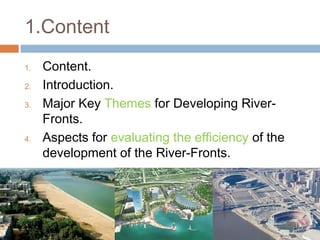
1.Content
1. Content.
2. Introduction.
3. Major Key Themes for Developing River-
Fronts.
4. Aspects for evaluating the efficiency of the
development of the River-Fronts.
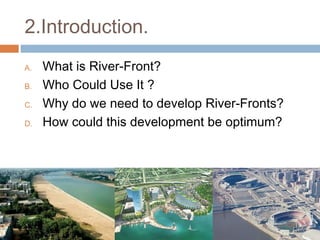
2.Introduction.
A. What is River-Front?
B. Who Could Use It ?
C. Why do we need to develop River-Fronts?
D. How could this development be optimum?
2.Introduction.
A-What is River-Front?
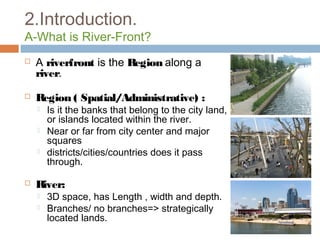
 A riverfront is the Region along a
river.
 Region ( Spatial/Administrative) :
 Is it the banks that belong to the city land,
or islands located within the river.
 Near or far from city center and major
squares
 districts/cities/countries does it pass
through.
 River:
 3D space, has Length , width and depth.
 Branches/ no branches=> strategically
located lands.
2.Introduction.
B-Who Could Use It ?
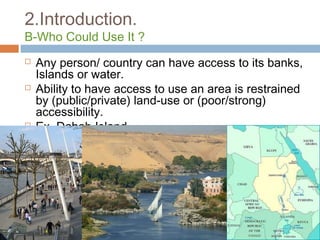
 Any person/ country can have access to its banks,
Islands or water.
 Ability to have access to use an area is restrained
by (public/private) land-use or (poor/strong)
accessibility.
 Ex. Dahab Island
2.Introduction.
C-Why do we need to develop River-Fronts?
 Today many riverfronts are a staple of modernism
and city beautification.
 Minimum avenues for recreation and open green
spaces.
 Affects the feel of belonging, and the social
cohesion within a community.
 City image-branding.
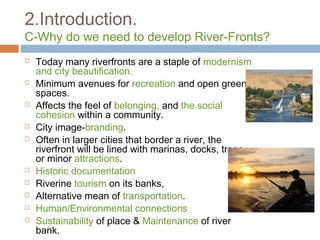
 Often in larger cities that border a river, the
riverfront will be lined with marinas, docks, trees,
or minor attractions.
 Historic documentation
 Riverine tourism on its banks,
 Alternative mean of transportation.
 Human/Environmental connections
 Sustainability of place & Maintenance of river
bank.
2.Introduction.
D- objective of development
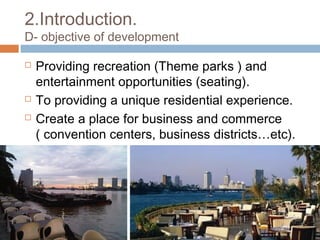
 Providing recreation (Theme parks ) and
entertainment opportunities (seating).
 To providing a unique residential experience.
 Create a place for business and commerce
( convention centers, business districts…etc).
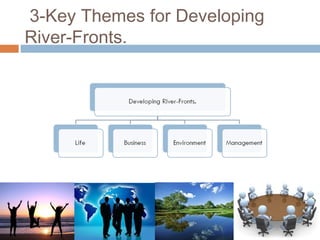
3-Key Themes for Developing
River-Fronts.
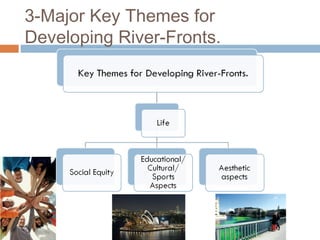
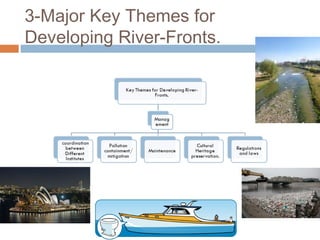
3-Major Key Themes for
Developing River-Fronts.
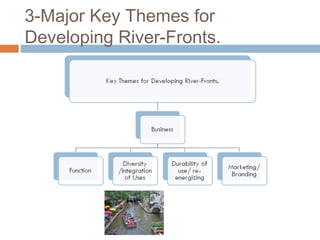
3-Major Key Themes for
Developing River-Fronts.
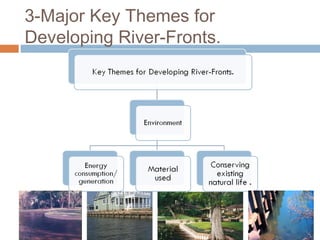
3-Major Key Themes for
Developing River-Fronts.
3-Major Key Themes for
Developing River-Fronts.
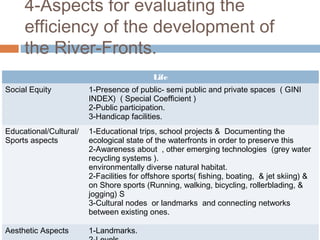
4-Aspects for evaluating the
efficiency of the development of
the River-Fronts.
Life
Social Equity 1-Presence of public- semi public and private spaces ( GINI
INDEX) ( Special Coefficient )
2-Public participation.
3-Handicap facilities.
Educational/Cultural/
Sports aspects
1-Educational trips, school projects & Documenting the
ecological state of the waterfronts in order to preserve this
2-Awareness about , other emerging technologies (grey water
recycling systems ).
environmentally diverse natural habitat.
2-Facilities for offshore sports( fishing, boating, & jet skiing) &
on Shore sports (Running, walking, bicycling, rollerblading, &
jogging) S
3-Cultural nodes or landmarks and connecting networks
between existing ones.
Aesthetic Aspects 1-Landmarks.
4-Aspects for evaluating the
efficiency of the development of
the River-Fronts.
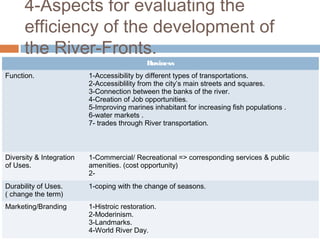
Business
Function. 1-Accessibility by different types of transportations.
2-Accessiblility from the city’s main streets and squares.
3-Connection between the banks of the river.
4-Creation of Job opportunities.
5-Improving marines inhabitant for increasing fish populations .
6-water markets .
7- trades through River transportation.
Diversity & Integration
of Uses.
1-Commercial/ Recreational => corresponding services & public
amenities. (cost opportunity)
2-
Durability of Uses.
( change the term)
1-coping with the change of seasons.
Marketing/Branding 1-Histroic restoration.
2-Moderinism.
3-Landmarks.
4-World River Day.
4-Aspects for evaluating the
efficiency of the development of
the River-Fronts.
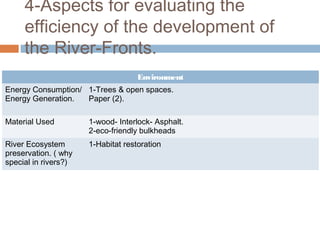
Environment
Energy Consumption/
Energy Generation.
1-Trees & open spaces.
Paper (2).
Material Used 1-wood- Interlock- Asphalt.
2-eco-friendly bulkheads
River Ecosystem
preservation. ( why
special in rivers?)
1-Habitat restoration
4-Aspects for evaluating the
efficiency of the development of
the River-Fronts.
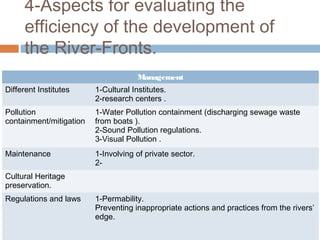
Management
Different Institutes 1-Cultural Institutes.
2-research centers .
Pollution
containment/mitigation
1-Water Pollution containment (discharging sewage waste
from boats ).
2-Sound Pollution regulations.
3-Visual Pollution .
Maintenance 1-Involving of private sector.
2-
Cultural Heritage
preservation.
Regulations and laws 1-Permability.
Preventing inappropriate actions and practices from the rivers’
edge.

River front development principles - draft

  • 1.
    RIVER-FRONT DEVELOPMENT Suggested MajorKey Themesfor Developing River-Fronts and A Criteria forEvaluating these Developments
  • 2.
    1.Content 1. Content. 2. Introduction. 3.Major Key Themes for Developing River- Fronts. 4. Aspects for evaluating the efficiency of the development of the River-Fronts.
  • 3.
    2.Introduction. A. What isRiver-Front? B. Who Could Use It ? C. Why do we need to develop River-Fronts? D. How could this development be optimum?
  • 4.
    2.Introduction. A-What is River-Front? A riverfront is the Region along a river.  Region ( Spatial/Administrative) :  Is it the banks that belong to the city land, or islands located within the river.  Near or far from city center and major squares  districts/cities/countries does it pass through.  River:  3D space, has Length , width and depth.  Branches/ no branches=> strategically located lands.
  • 5.
    2.Introduction. B-Who Could UseIt ?  Any person/ country can have access to its banks, Islands or water.  Ability to have access to use an area is restrained by (public/private) land-use or (poor/strong) accessibility.  Ex. Dahab Island
  • 6.
    2.Introduction. C-Why do weneed to develop River-Fronts?  Today many riverfronts are a staple of modernism and city beautification.  Minimum avenues for recreation and open green spaces.  Affects the feel of belonging, and the social cohesion within a community.  City image-branding.  Often in larger cities that border a river, the riverfront will be lined with marinas, docks, trees, or minor attractions.  Historic documentation  Riverine tourism on its banks,  Alternative mean of transportation.  Human/Environmental connections  Sustainability of place & Maintenance of river bank.
  • 7.
    2.Introduction. D- objective ofdevelopment  Providing recreation (Theme parks ) and entertainment opportunities (seating).  To providing a unique residential experience.  Create a place for business and commerce ( convention centers, business districts…etc).
  • 8.
    3-Key Themes forDeveloping River-Fronts.
  • 9.
    3-Major Key Themesfor Developing River-Fronts.
  • 10.
    3-Major Key Themesfor Developing River-Fronts.
  • 11.
    3-Major Key Themesfor Developing River-Fronts.
  • 12.
    3-Major Key Themesfor Developing River-Fronts.
  • 13.
    4-Aspects for evaluatingthe efficiency of the development of the River-Fronts. Life Social Equity 1-Presence of public- semi public and private spaces ( GINI INDEX) ( Special Coefficient ) 2-Public participation. 3-Handicap facilities. Educational/Cultural/ Sports aspects 1-Educational trips, school projects & Documenting the ecological state of the waterfronts in order to preserve this 2-Awareness about , other emerging technologies (grey water recycling systems ). environmentally diverse natural habitat. 2-Facilities for offshore sports( fishing, boating, & jet skiing) & on Shore sports (Running, walking, bicycling, rollerblading, & jogging) S 3-Cultural nodes or landmarks and connecting networks between existing ones. Aesthetic Aspects 1-Landmarks.
  • 14.
    4-Aspects for evaluatingthe efficiency of the development of the River-Fronts. Business Function. 1-Accessibility by different types of transportations. 2-Accessiblility from the city’s main streets and squares. 3-Connection between the banks of the river. 4-Creation of Job opportunities. 5-Improving marines inhabitant for increasing fish populations . 6-water markets . 7- trades through River transportation. Diversity & Integration of Uses. 1-Commercial/ Recreational => corresponding services & public amenities. (cost opportunity) 2- Durability of Uses. ( change the term) 1-coping with the change of seasons. Marketing/Branding 1-Histroic restoration. 2-Moderinism. 3-Landmarks. 4-World River Day.
  • 15.
    4-Aspects for evaluatingthe efficiency of the development of the River-Fronts. Environment Energy Consumption/ Energy Generation. 1-Trees & open spaces. Paper (2). Material Used 1-wood- Interlock- Asphalt. 2-eco-friendly bulkheads River Ecosystem preservation. ( why special in rivers?) 1-Habitat restoration
  • 16.
    4-Aspects for evaluatingthe efficiency of the development of the River-Fronts. Management Different Institutes 1-Cultural Institutes. 2-research centers . Pollution containment/mitigation 1-Water Pollution containment (discharging sewage waste from boats ). 2-Sound Pollution regulations. 3-Visual Pollution . Maintenance 1-Involving of private sector. 2- Cultural Heritage preservation. Regulations and laws 1-Permability. Preventing inappropriate actions and practices from the rivers’ edge.

Editor's Notes

  • #7 Sustainability: l