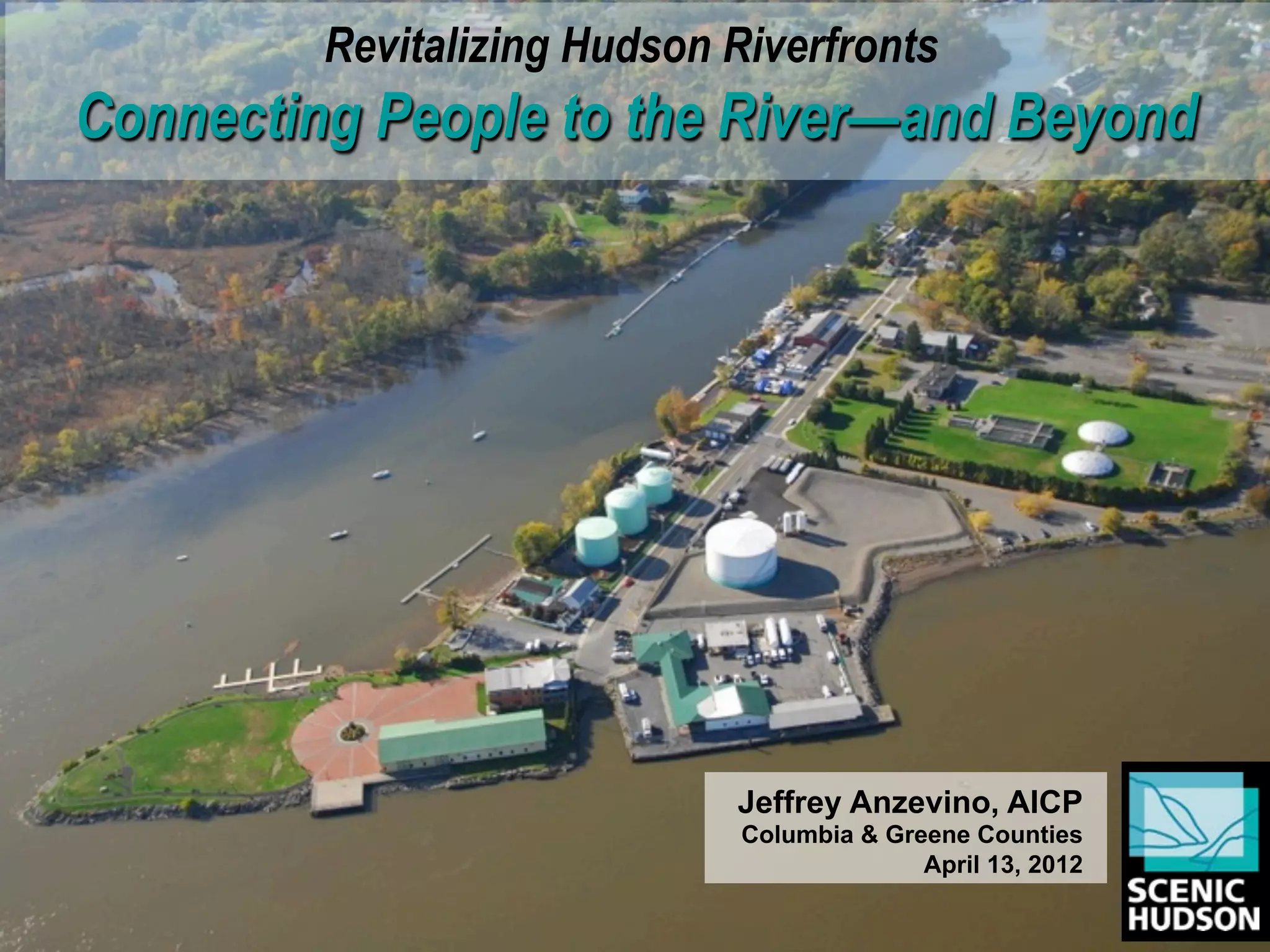
Revitalizing Hudson Riverfronts
Connecting People to the River—and Beyond


                             Jeffrey Anzevino, AICP
                              Columbia & Greene Counties
                                            April 13, 2012
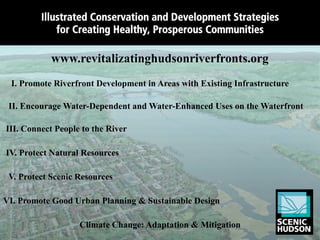
Illustrated Conservation and Development Strategies
             for Creating Healthy, Prosperous Communities

            www.revitalizatinghudsonriverfronts.org
                     Illustrated Strategies for
 I. Promote Riverfront Development in Areas with Existing Infrastructure
                   Public Officials, Developers,
 II. Encourage Water-Dependent and Water-Enhanced Uses on the Waterfront
                Community Groups, and Citizens
III. Connect People to the River

IV. Protect Natural Resources

 V. Protect Scenic Resources

VI. Promote Good Urban Planning & Sustainable Design

                   Climate Change: Adaptation & Mitigation
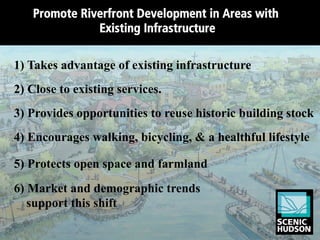
Promote Riverfront Development in Areas with
              Existing Infrastructure

1) Takes advantage of existing infrastructure
2) Close to existing services.
3) Provides opportunities to reuse historic building stock
4) Encourages walking, bicycling, & a healthful lifestyle

5) Protects open space and farmland
6) Market and demographic trends
   support this shift
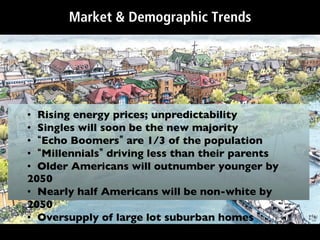
Market & Demographic Trends


•  Rising energy prices; unpredictability 	

•  Singles will soon be the new majority	

•  Echo Boomers are 1/3 of the population	

•  Millennials driving less than their parents	

•  Older Americans will outnumber younger by
2050	

•  Nearly half Americans will be non-white by
2050	

•  Oversupply of large lot suburban homes
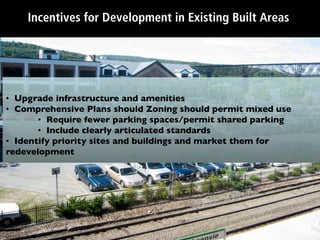
Incentives for Development in Existing Built Areas


•  Upgrade infrastructure and amenities	

•  Comprehensive Plans should Zoning should permit mixed use	

        •  Require fewer parking spaces/permit shared parking	

        •  Include clearly articulated standards	

•  Identify priority sites and buildings and market them for
redevelopment
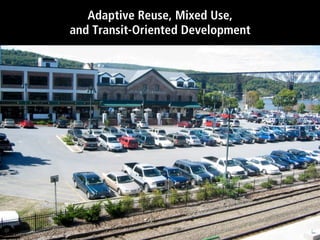
Adaptive Reuse, Mixed Use,
and Transit-Oriented Development
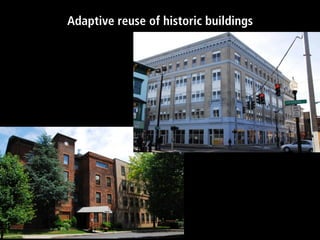
Adaptive reuse of historic buildings
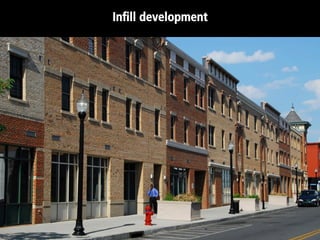
Infill development
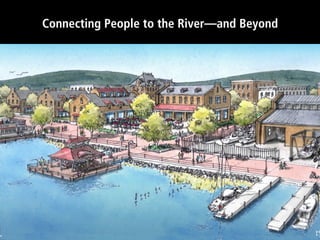
Connecting People to the River—and Beyond


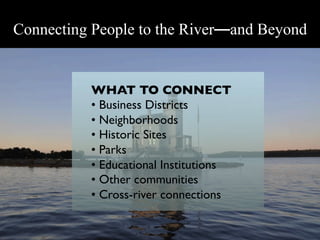
          WHAT TO CONNECT 	

          •  Business Districts	

          •  Neighborhoods	

          •  Historic Sites	

          •  Parks	

          •  Educational Institutions	

          •  Other communities	

          •  Cross-river connections
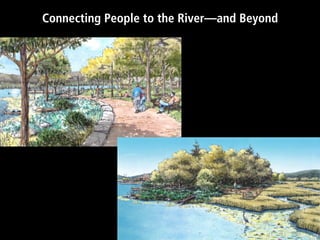
Connecting People to the River—and Beyond

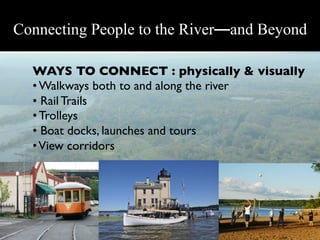
  WAYS TO CONNECT : physically & visually	

  • Walkways both to and along the river	

  •  Rail Trails	

  • Trolleys	

  •  Boat docks, launches and tours	

  • View corridors
Revitalizing Hudson Riverfronts
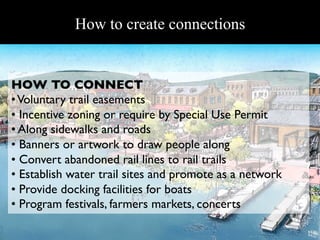
            How to create connections


HOW TO CONNECT 	

• Voluntary trail easements	

•  Incentive zoning or require by Special Use Permit 	

•  Along sidewalks and roads	

•  Banners or artwork to draw people along 	

•  Convert abandoned rail lines to rail trails	

•  Establish water trail sites and promote as a network	

•  Provide docking facilities for boats	

•  Program festivals, farmers markets, concerts
Revitalizing Hudson Riverfronts
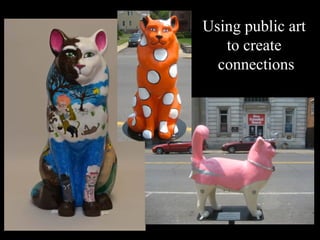
                      Using public art
                          to create
                        connections
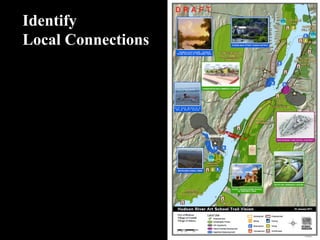
Identify
Local Connections
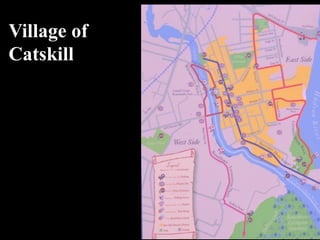
Village of
Catskill
Connecting People to the River—and Beyond
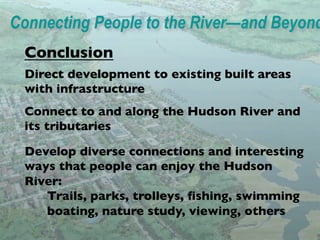
 Conclusion	

 Direct development to existing built areas
 with infrastructure 	

 Connect to and along the Hudson River and
            Illustrated Strategies for
 its tributaries 	

Officials, Developers,
           Public
 Develop diverse connectionsCitizens
           Community Groups, and and interesting
 ways that people can enjoy the Hudson
 River:	


Trails, parks, trolleys, fishing, swimming 	


boating, nature study, viewing, others
Connecting People to the River—and Beyond


            Illustrated Strategies for
           Public Officials, Developers,
                  Questions?	

         Community Groups, and Citizens
            janzevino@scenichudson.org	

                  845-473-4440 x221	


  www.revitalizatinghudsonriverfronts.org

Connecting People to the River by Jeff Anzevino

  • 1.
    Revitalizing Hudson Riverfronts ConnectingPeople to the River—and Beyond Jeffrey Anzevino, AICP Columbia & Greene Counties April 13, 2012
  • 2.
    Illustrated Conservation andDevelopment Strategies for Creating Healthy, Prosperous Communities www.revitalizatinghudsonriverfronts.org Illustrated Strategies for I. Promote Riverfront Development in Areas with Existing Infrastructure Public Officials, Developers, II. Encourage Water-Dependent and Water-Enhanced Uses on the Waterfront Community Groups, and Citizens III. Connect People to the River IV. Protect Natural Resources V. Protect Scenic Resources VI. Promote Good Urban Planning & Sustainable Design Climate Change: Adaptation & Mitigation
  • 3.
    Promote Riverfront Developmentin Areas with Existing Infrastructure 1) Takes advantage of existing infrastructure 2) Close to existing services. 3) Provides opportunities to reuse historic building stock 4) Encourages walking, bicycling, & a healthful lifestyle 5) Protects open space and farmland 6) Market and demographic trends support this shift
  • 4.
    Market & DemographicTrends •  Rising energy prices; unpredictability •  Singles will soon be the new majority •  Echo Boomers are 1/3 of the population •  Millennials driving less than their parents •  Older Americans will outnumber younger by 2050 •  Nearly half Americans will be non-white by 2050 •  Oversupply of large lot suburban homes
  • 5.
    Incentives for Developmentin Existing Built Areas •  Upgrade infrastructure and amenities •  Comprehensive Plans should Zoning should permit mixed use •  Require fewer parking spaces/permit shared parking •  Include clearly articulated standards •  Identify priority sites and buildings and market them for redevelopment
  • 6.
    Adaptive Reuse, MixedUse, and Transit-Oriented Development
  • 7.
    Adaptive reuse ofhistoric buildings
  • 8.
  • 9.
    Connecting People tothe River—and Beyond
  • 10.
    Connecting People tothe River—and Beyond
  • 11.
    Connecting People tothe River—and Beyond WHAT TO CONNECT •  Business Districts •  Neighborhoods •  Historic Sites •  Parks •  Educational Institutions •  Other communities •  Cross-river connections
  • 12.
    Connecting People tothe River—and Beyond WAYS TO CONNECT : physically & visually • Walkways both to and along the river •  Rail Trails • Trolleys •  Boat docks, launches and tours • View corridors
  • 13.
    Revitalizing Hudson Riverfronts How to create connections HOW TO CONNECT • Voluntary trail easements •  Incentive zoning or require by Special Use Permit •  Along sidewalks and roads •  Banners or artwork to draw people along •  Convert abandoned rail lines to rail trails •  Establish water trail sites and promote as a network •  Provide docking facilities for boats •  Program festivals, farmers markets, concerts
  • 14.
    Revitalizing Hudson Riverfronts Using public art to create connections
  • 15.
  • 16.
  • 17.
    Connecting People tothe River—and Beyond Conclusion Direct development to existing built areas with infrastructure Connect to and along the Hudson River and Illustrated Strategies for its tributaries Officials, Developers, Public Develop diverse connectionsCitizens Community Groups, and and interesting ways that people can enjoy the Hudson River: Trails, parks, trolleys, fishing, swimming boating, nature study, viewing, others
  • 18.
    Connecting People tothe River—and Beyond Illustrated Strategies for Public Officials, Developers, Questions? Community Groups, and Citizens janzevino@scenichudson.org 845-473-4440 x221 www.revitalizatinghudsonriverfronts.org