Strategic Human Resource Management – KMB HR04
Topic: Strategic Knowledge Management
(Conceptual Framework)
(Part 1 of 4)
ACHLA TYAGI, ABES EC (032), AKTU,
LUCKNOW
Knowledge Management (KM)
• Knowledge Management is the discipline of enabling
individuals, teams and entire organizations to
collectively and systematically create, share and apply
knowledge, to better achieve their objectives."
• KM focuses on processes such as acquiring, creating
and sharing knowledge and the cultural and technical
foundations that support them.
• The purpose of Knowledge Management is to provide
the right information to the right people at the right
time to enable informed decision making which
enables service providers to be more efficient and
improve the quality of service delivered.
ACHLA TYAGI, ABES EC (032), AKTU,
LUCKNOW
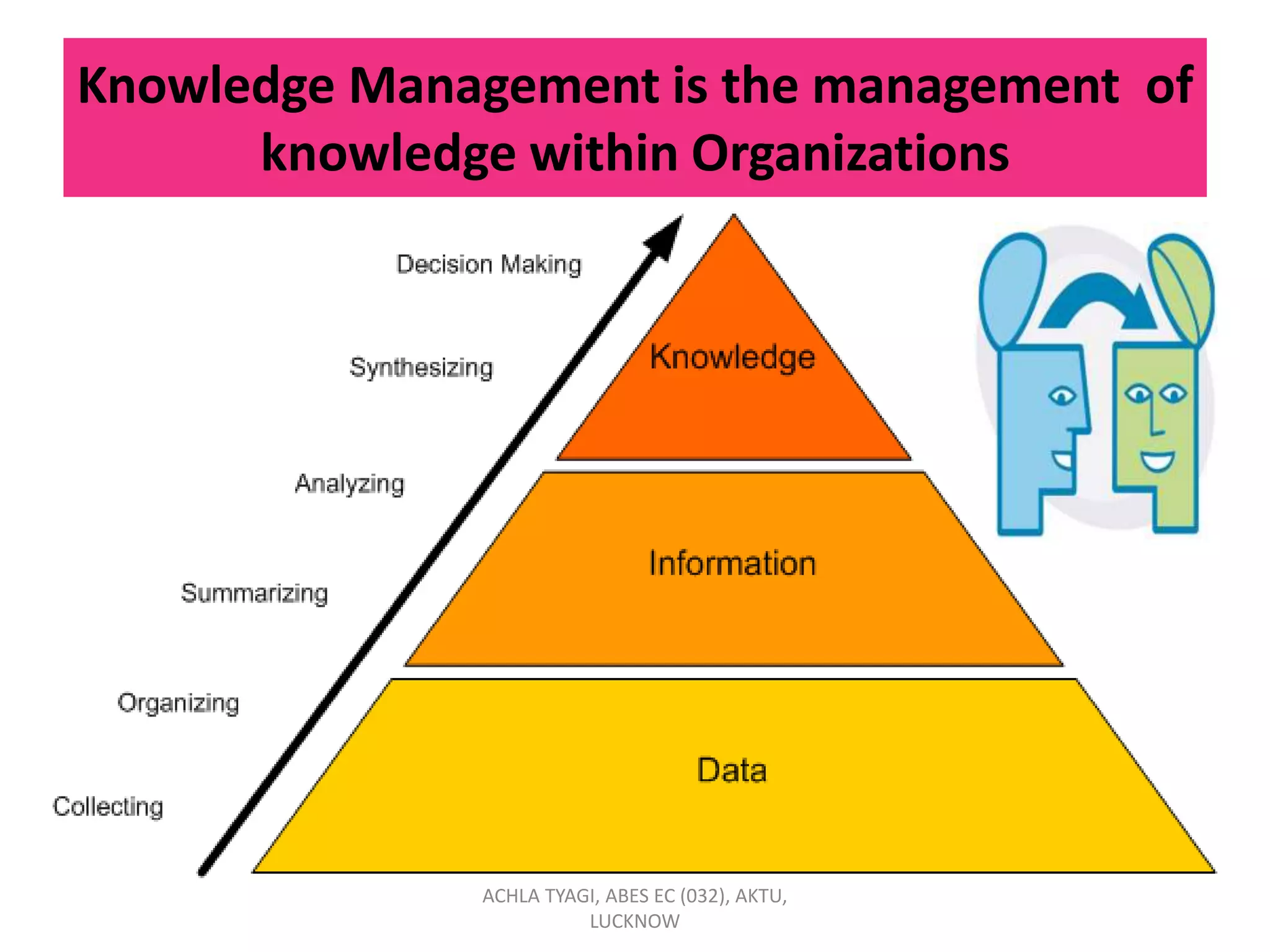
Knowledge Management is the management of
knowledge within Organizations
ACHLA TYAGI, ABES EC (032), AKTU,
LUCKNOW
Uses of KM
• Process to help organization identify, select,
organize, disseminate and transfer
information.
• Structuring enables problem-solving, dynamic
learning, strategic planning and decision-
making.
• Leverage value of intellectual capital through
reuse of information.
ACHLA TYAGI, ABES EC (032), AKTU,
LUCKNOW
Benefits of KM
• Reduces time-to-market
• New products are designed and commercialized
more quickly and successfully
Thus resulting in:
• Increased Revenue
• Retained Market Share
• Expanding Profit Margins
ACHLA TYAGI, ABES EC (032), AKTU,
LUCKNOW
Knowledge Management may be
viewed in terms of:
People – how do you increase the ability of an individual
in the organization to influence others with their
knowledge
Processes – Its approach varies from organization to
organization. There is no limit on the number of
processes.
Technology – It needs to be chosen only after all the
requirements of a knowledge management initiative
have been established.
Culture –The biggest enabler of successful knowledge-
driven organizations is the establishment of a
knowledge- focused culture.
Structure – the business processes and
organizational structures that facilitate knowledge
sharing. ACHLA TYAGI, ABES EC (032), AKTU,
LUCKNOW
Knowledge Management Cycle/
Process
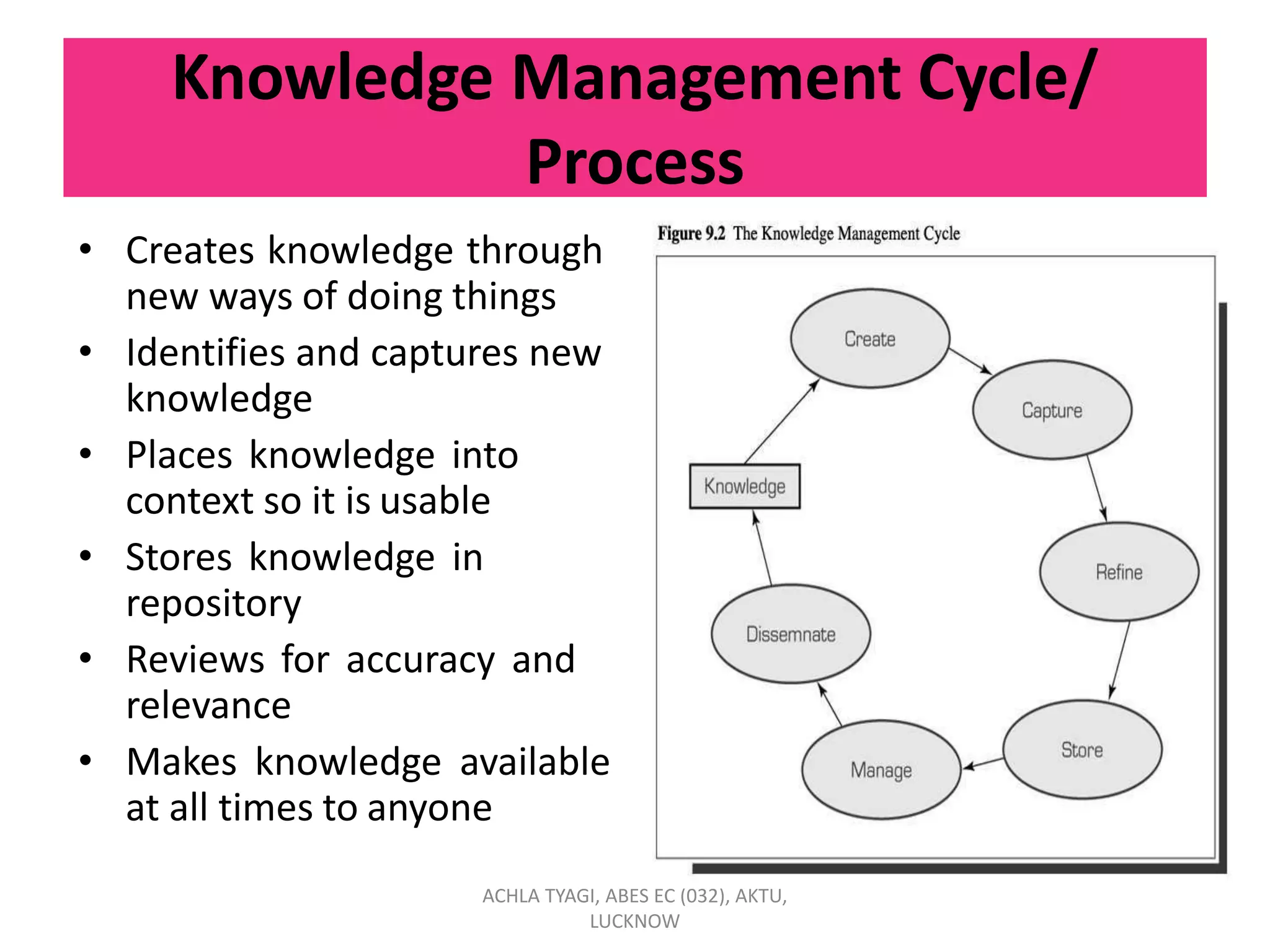
• Creates knowledge through
new ways of doing things
• Identifies and captures new
knowledge
• Places knowledge into
context so it is usable
• Stores knowledge in
repository
• Reviews for accuracy and
relevance
• Makes knowledge available
at all times to anyone
ACHLA TYAGI, ABES EC (032), AKTU,
LUCKNOW
Two types of Knowledge
ACHLA TYAGI, ABES EC (032), AKTU,
LUCKNOW
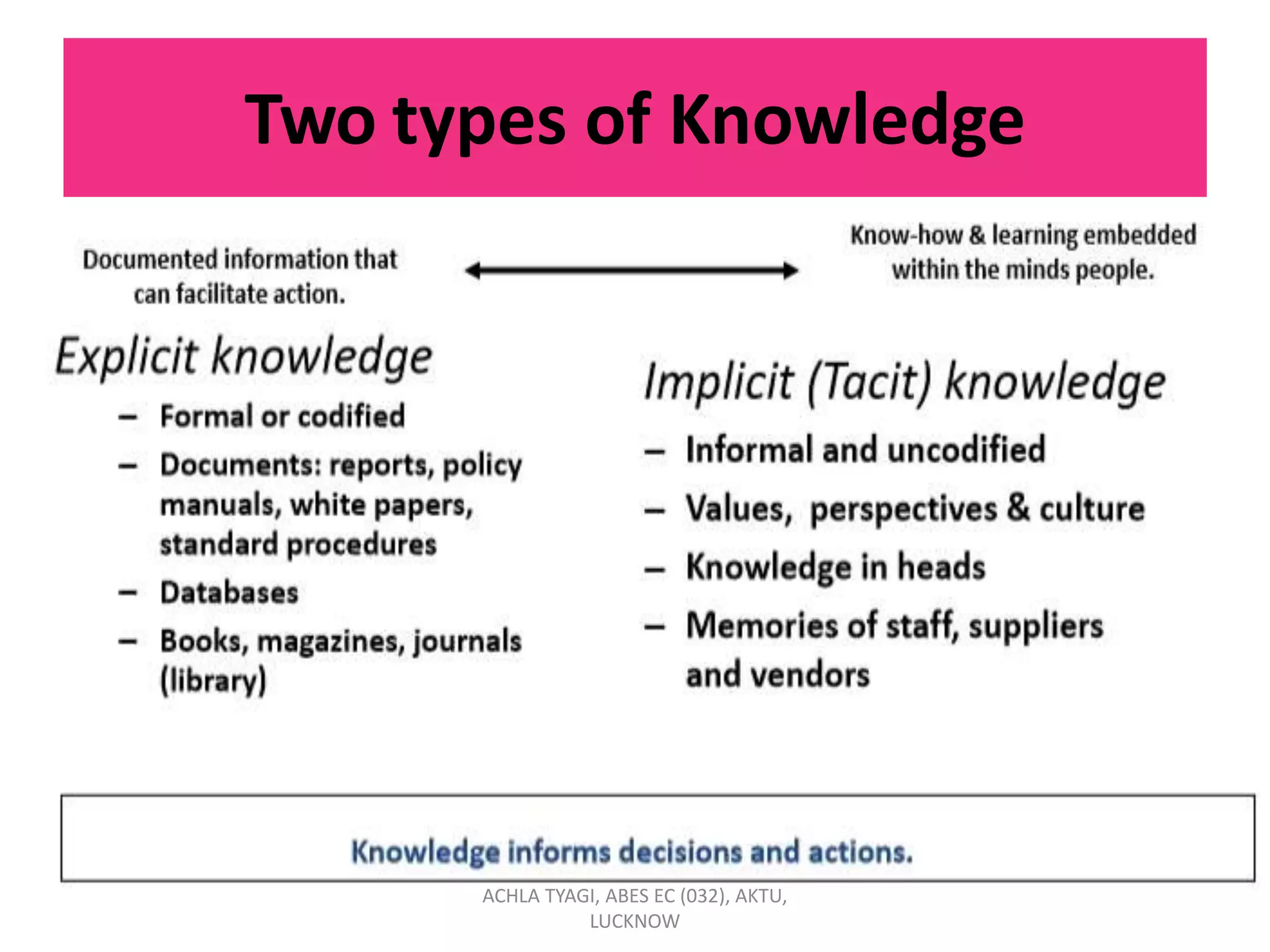
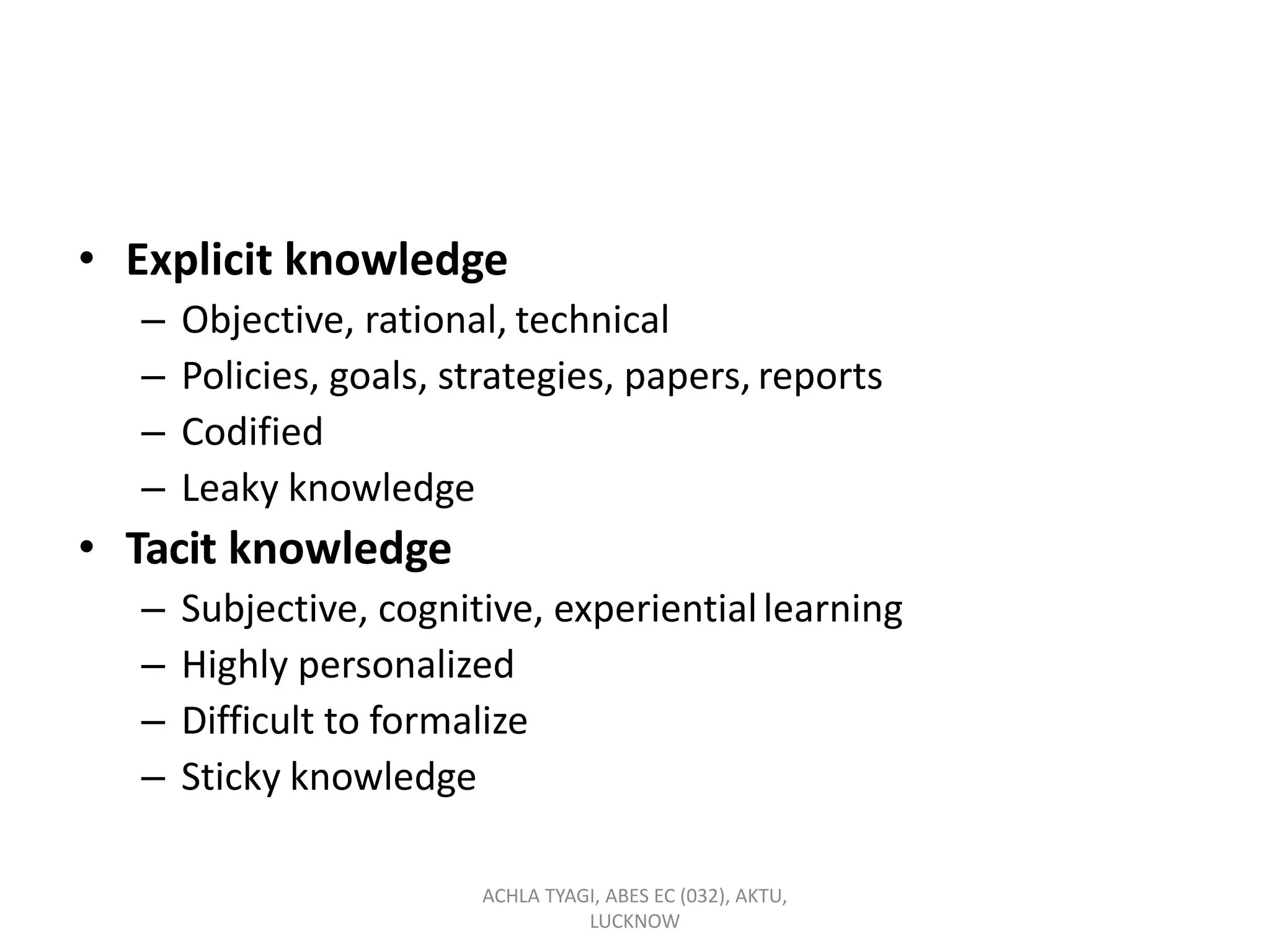
• Explicit knowledge
– Objective, rational, technical
– Policies, goals, strategies, papers, reports
– Codified
– Leaky knowledge
• Tacit knowledge
– Subjective, cognitive, experientiallearning
– Highly personalized
– Difficult to formalize
– Sticky knowledge
ACHLA TYAGI, ABES EC (032), AKTU,
LUCKNOW
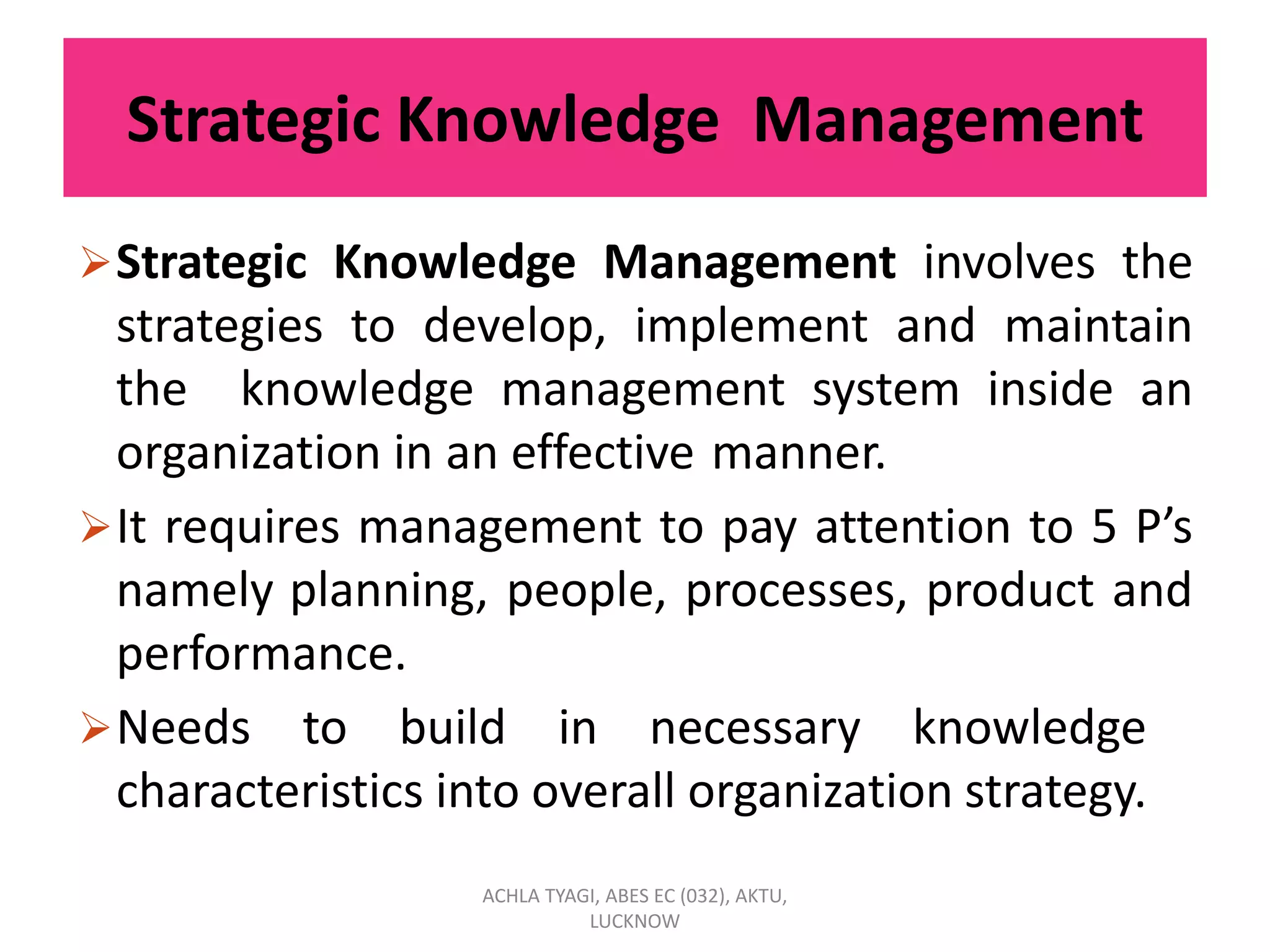
Strategic Knowledge Management
Strategic Knowledge Management involves the
strategies to develop, implement and maintain
the knowledge management system inside an
organization in an effective manner.
It requires management to pay attention to 5 P’s
namely planning, people, processes, product and
performance.
Needs to build in necessary knowledge
characteristics into overall organization strategy.
ACHLA TYAGI, ABES EC (032), AKTU,
LUCKNOW
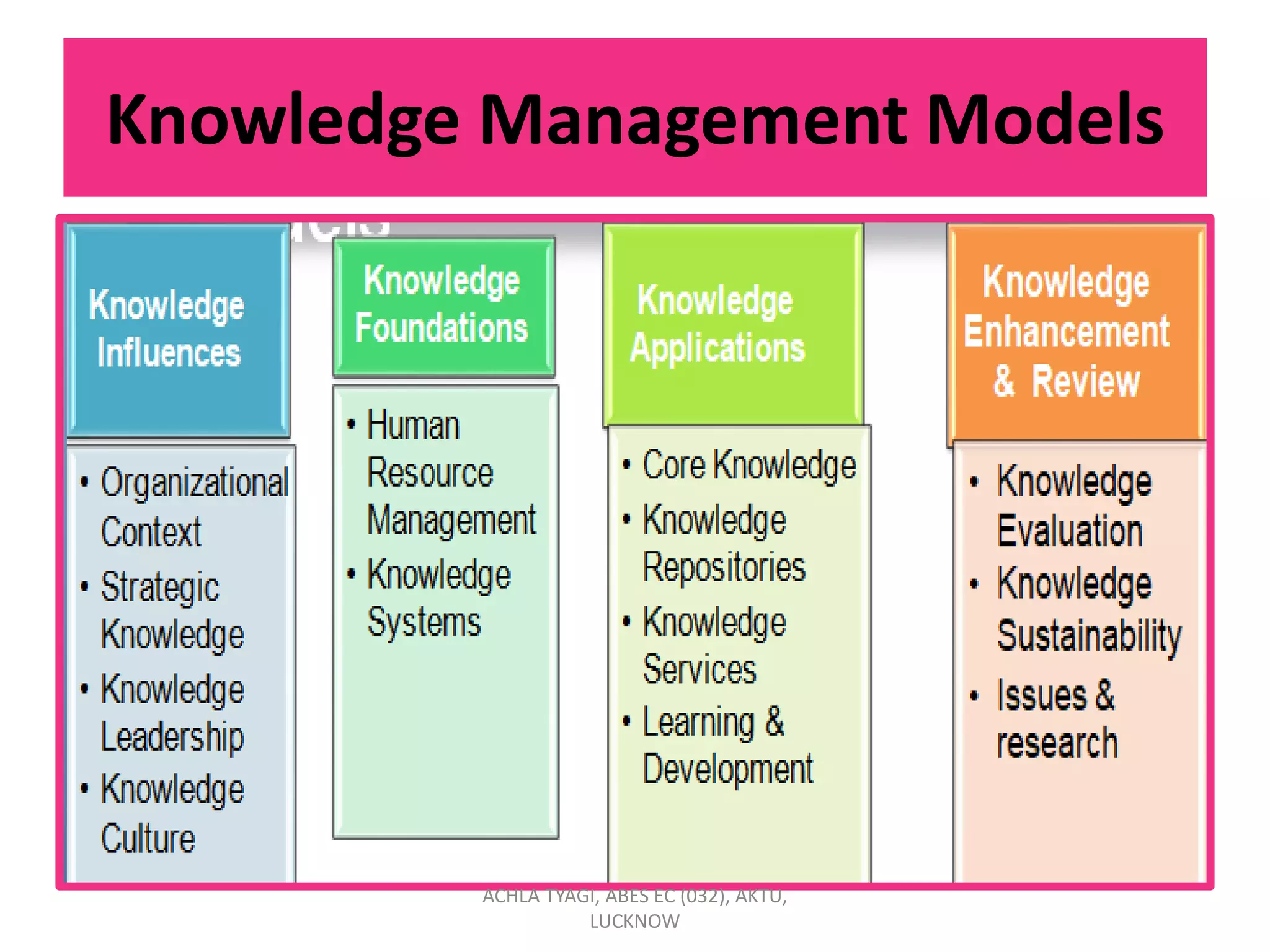
Knowledge Management Models
ACHLA TYAGI, ABES EC (032), AKTU,
LUCKNOW

Strategic Knowledge Management - Conceptual Framework

  • 1.
    Strategic Human ResourceManagement – KMB HR04 Topic: Strategic Knowledge Management (Conceptual Framework) (Part 1 of 4) ACHLA TYAGI, ABES EC (032), AKTU, LUCKNOW
  • 2.
    Knowledge Management (KM) •Knowledge Management is the discipline of enabling individuals, teams and entire organizations to collectively and systematically create, share and apply knowledge, to better achieve their objectives." • KM focuses on processes such as acquiring, creating and sharing knowledge and the cultural and technical foundations that support them. • The purpose of Knowledge Management is to provide the right information to the right people at the right time to enable informed decision making which enables service providers to be more efficient and improve the quality of service delivered. ACHLA TYAGI, ABES EC (032), AKTU, LUCKNOW
  • 3.
    Knowledge Management isthe management of knowledge within Organizations ACHLA TYAGI, ABES EC (032), AKTU, LUCKNOW
  • 4.
    Uses of KM •Process to help organization identify, select, organize, disseminate and transfer information. • Structuring enables problem-solving, dynamic learning, strategic planning and decision- making. • Leverage value of intellectual capital through reuse of information. ACHLA TYAGI, ABES EC (032), AKTU, LUCKNOW
  • 5.
    Benefits of KM •Reduces time-to-market • New products are designed and commercialized more quickly and successfully Thus resulting in: • Increased Revenue • Retained Market Share • Expanding Profit Margins ACHLA TYAGI, ABES EC (032), AKTU, LUCKNOW
  • 6.
    Knowledge Management maybe viewed in terms of: People – how do you increase the ability of an individual in the organization to influence others with their knowledge Processes – Its approach varies from organization to organization. There is no limit on the number of processes. Technology – It needs to be chosen only after all the requirements of a knowledge management initiative have been established. Culture –The biggest enabler of successful knowledge- driven organizations is the establishment of a knowledge- focused culture. Structure – the business processes and organizational structures that facilitate knowledge sharing. ACHLA TYAGI, ABES EC (032), AKTU, LUCKNOW
  • 7.
    Knowledge Management Cycle/ Process •Creates knowledge through new ways of doing things • Identifies and captures new knowledge • Places knowledge into context so it is usable • Stores knowledge in repository • Reviews for accuracy and relevance • Makes knowledge available at all times to anyone ACHLA TYAGI, ABES EC (032), AKTU, LUCKNOW
  • 8.
    Two types ofKnowledge ACHLA TYAGI, ABES EC (032), AKTU, LUCKNOW
  • 9.
    • Explicit knowledge –Objective, rational, technical – Policies, goals, strategies, papers, reports – Codified – Leaky knowledge • Tacit knowledge – Subjective, cognitive, experientiallearning – Highly personalized – Difficult to formalize – Sticky knowledge ACHLA TYAGI, ABES EC (032), AKTU, LUCKNOW
  • 10.
    Strategic Knowledge Management StrategicKnowledge Management involves the strategies to develop, implement and maintain the knowledge management system inside an organization in an effective manner. It requires management to pay attention to 5 P’s namely planning, people, processes, product and performance. Needs to build in necessary knowledge characteristics into overall organization strategy. ACHLA TYAGI, ABES EC (032), AKTU, LUCKNOW
  • 11.
    Knowledge Management Models ACHLATYAGI, ABES EC (032), AKTU, LUCKNOW