Learning &Teaching Conference 2010: Re-thinking the Curriculum
Dr Stephen McKinnell
Director of e-Learning
Dr Peter Dangerfield
Director of MBChBYear 1
Faculty of Health & Life Sciences
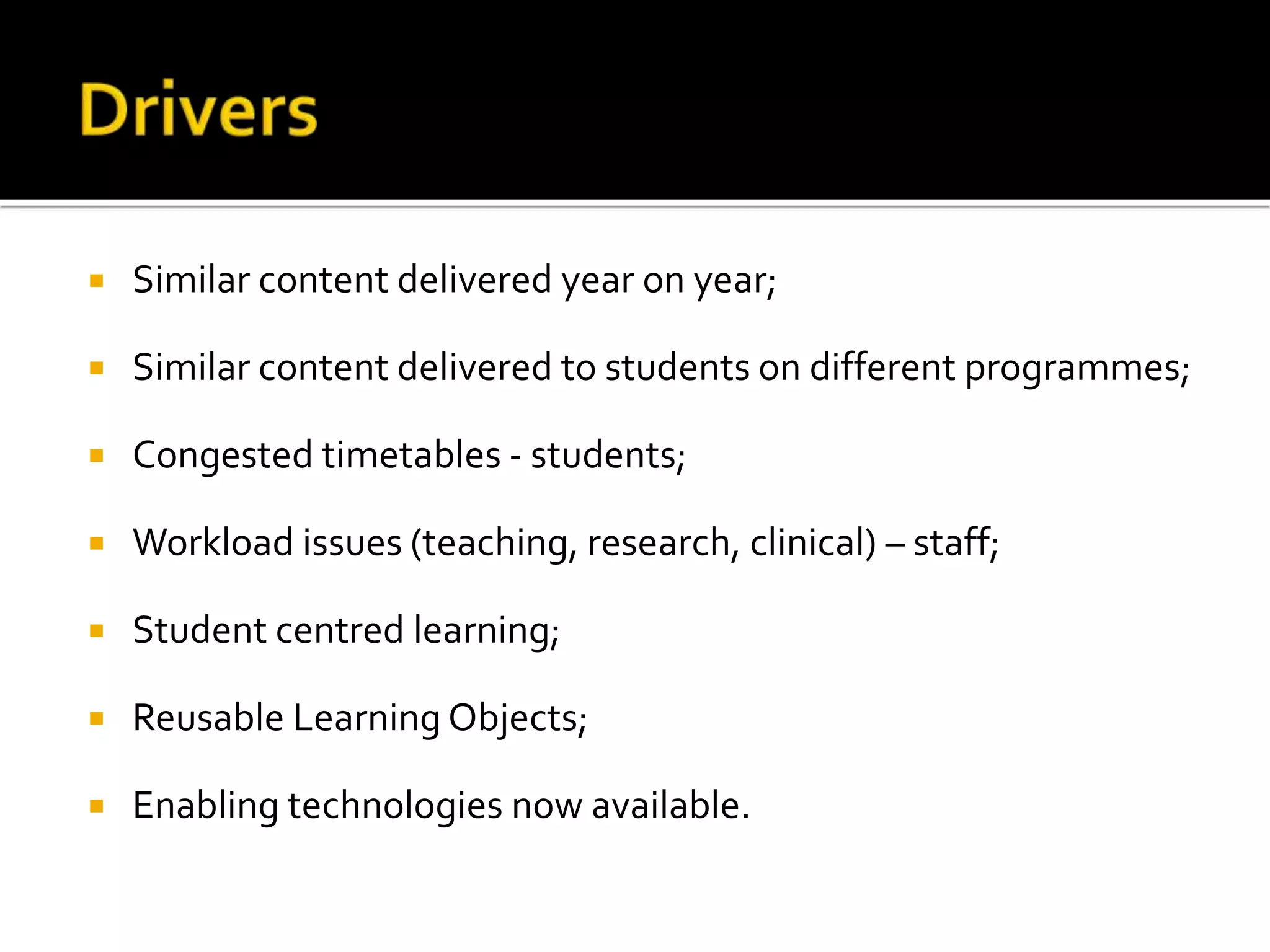
 Similar content delivered year on year;
 Similar content delivered to students on different programmes;
 Congested timetables - students;
 Workload issues (teaching, research, clinical) – staff;
 Student centred learning;
 Reusable Learning Objects;
 Enabling technologies now available.
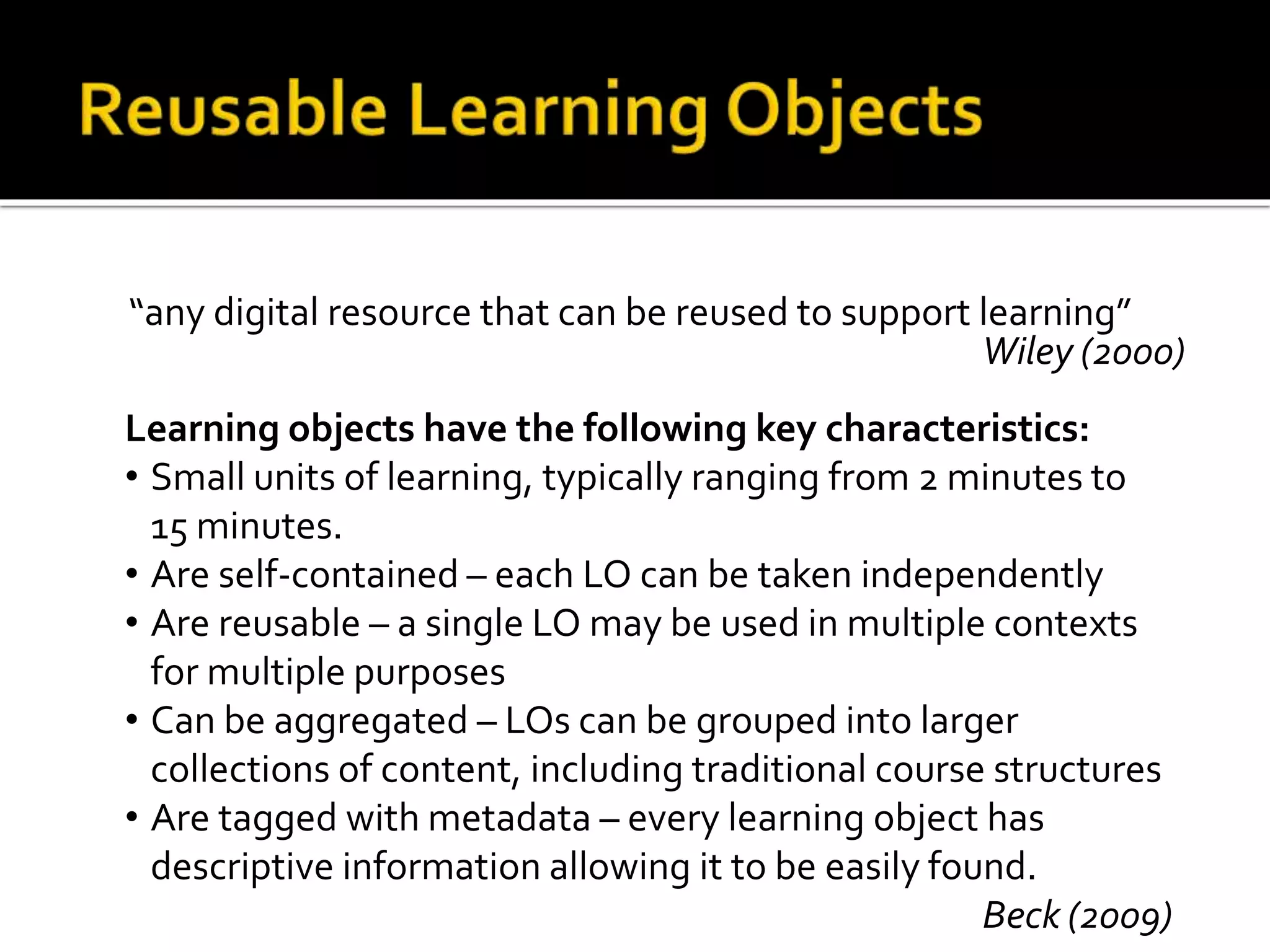
“any digital resource that can be reused to support learning”
Wiley (2000)
Learning objects have the following key characteristics:
• Small units of learning, typically ranging from 2 minutes to
15 minutes.
• Are self-contained – each LO can be taken independently
• Are reusable – a single LO may be used in multiple contexts
for multiple purposes
• Can be aggregated – LOs can be grouped into larger
collections of content, including traditional course structures
• Are tagged with metadata – every learning object has
descriptive information allowing it to be easily found.
Beck (2009)
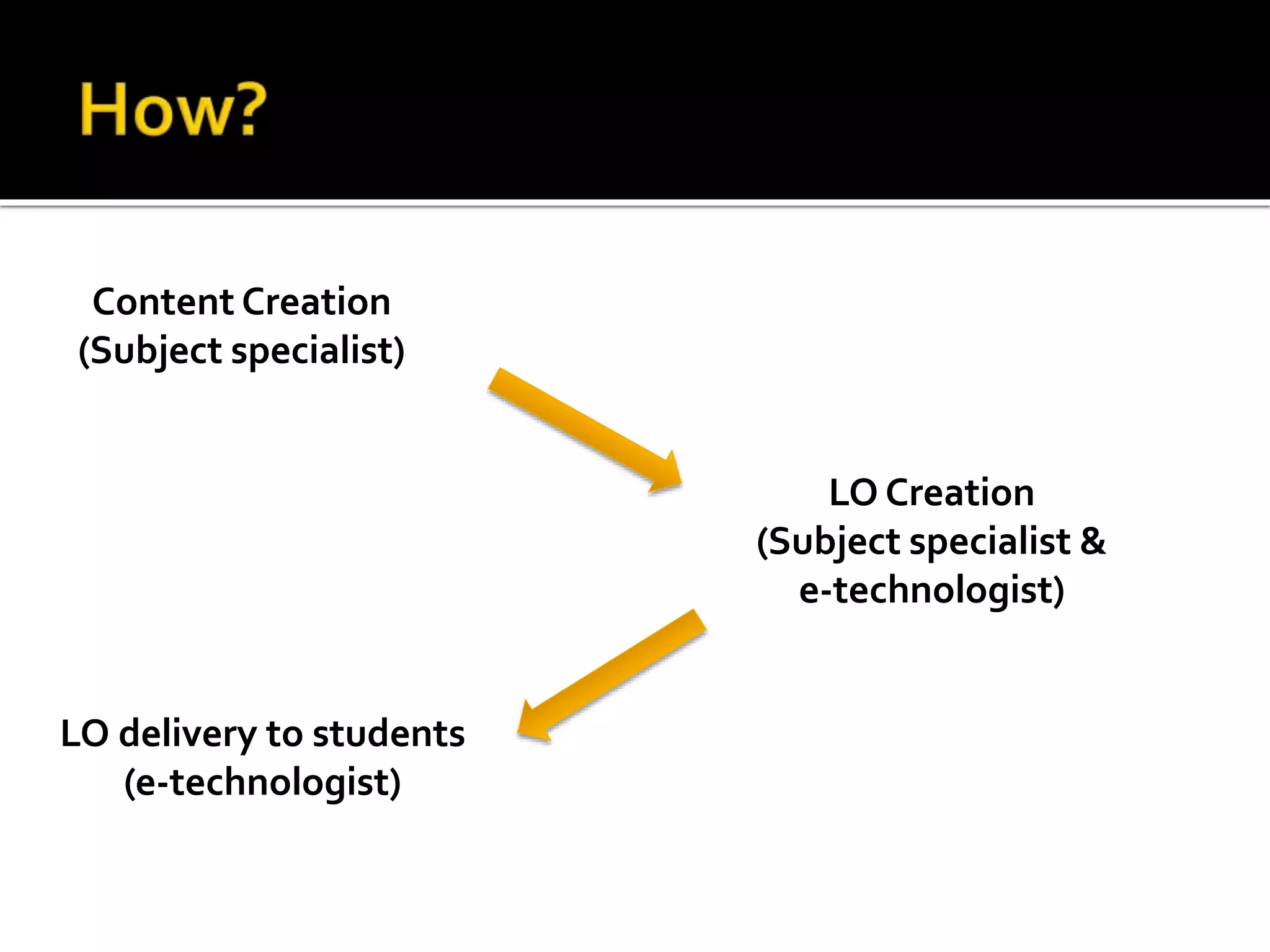
Content Creation
(Subject specialist)
LO Creation
(Subject specialist &
e-technologist)
LO delivery to students
(e-technologist)
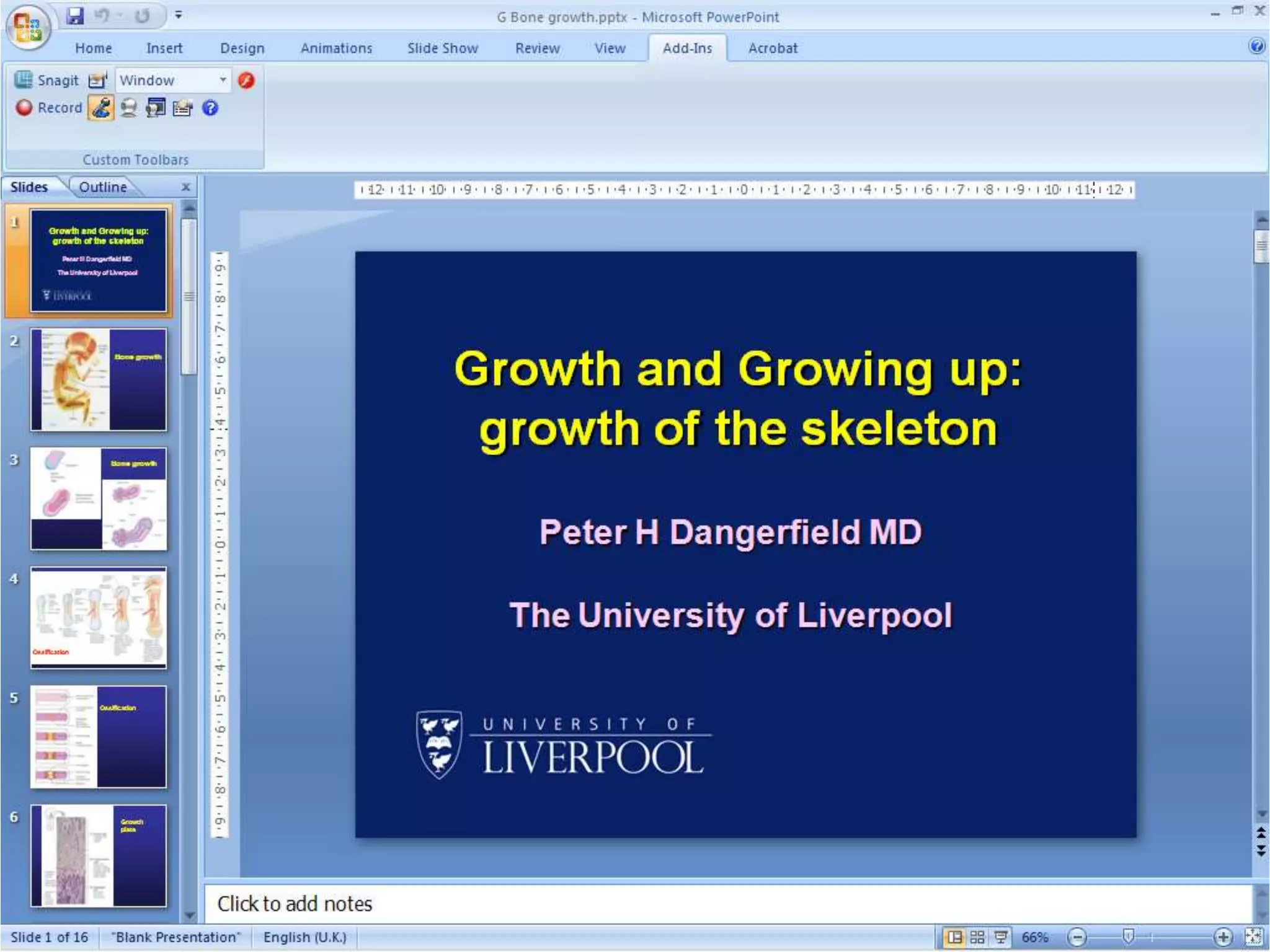
 Normal PowerPoints developed
 Discrete chunks….multiple small PowerPoints instead of one
large one
 Consideration given to future use and how to lessen future re-
recording/re-editing
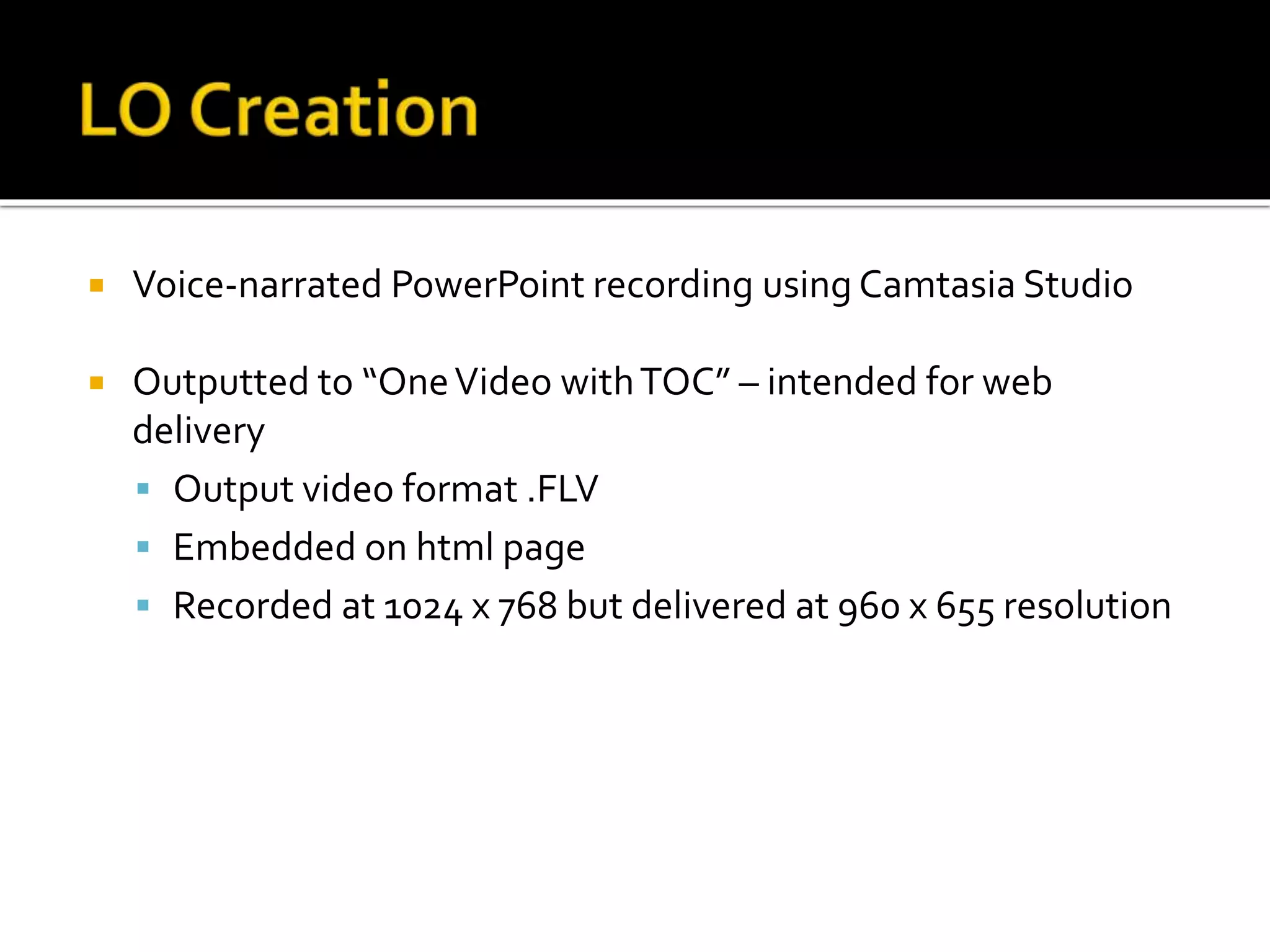
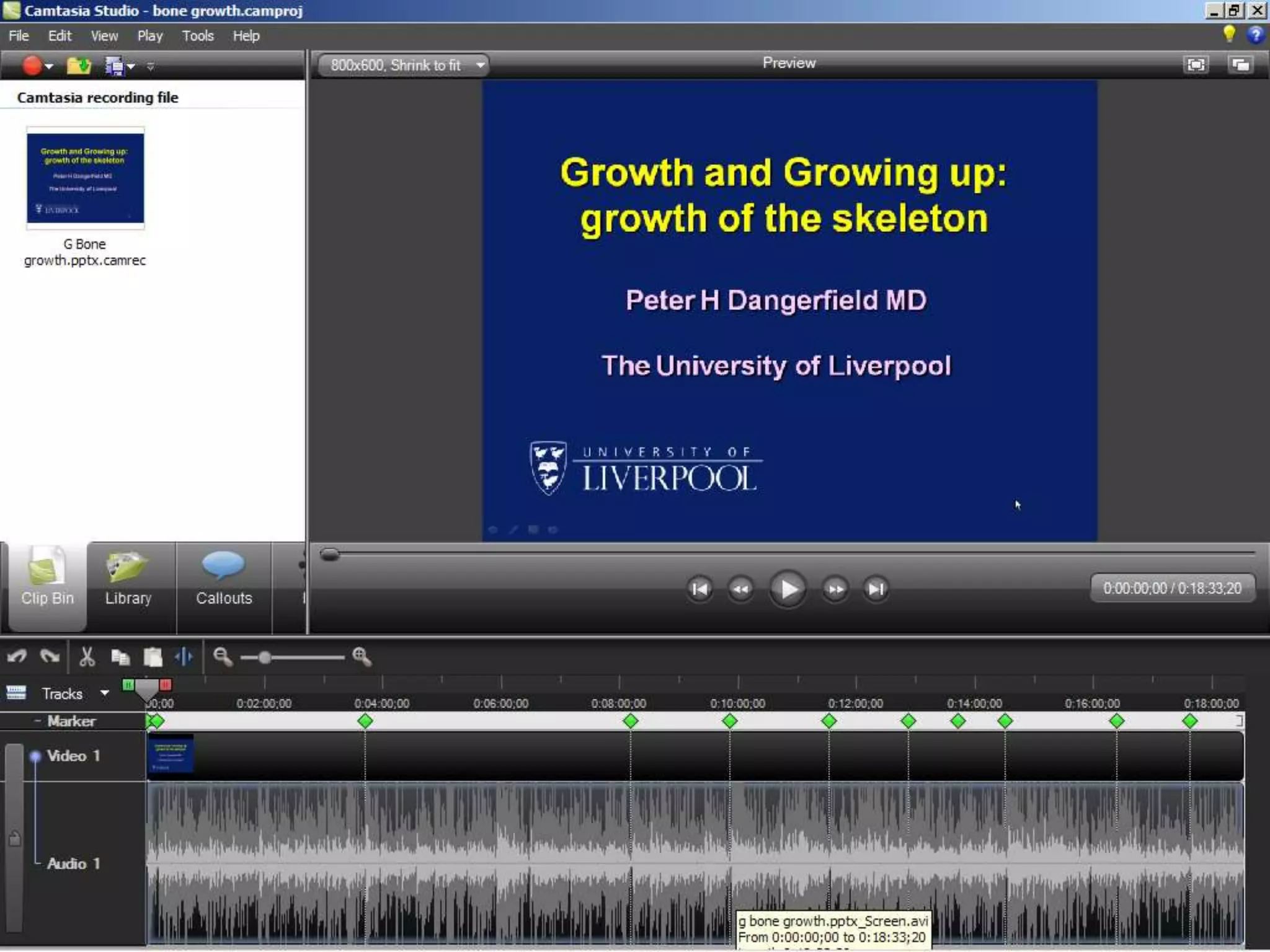
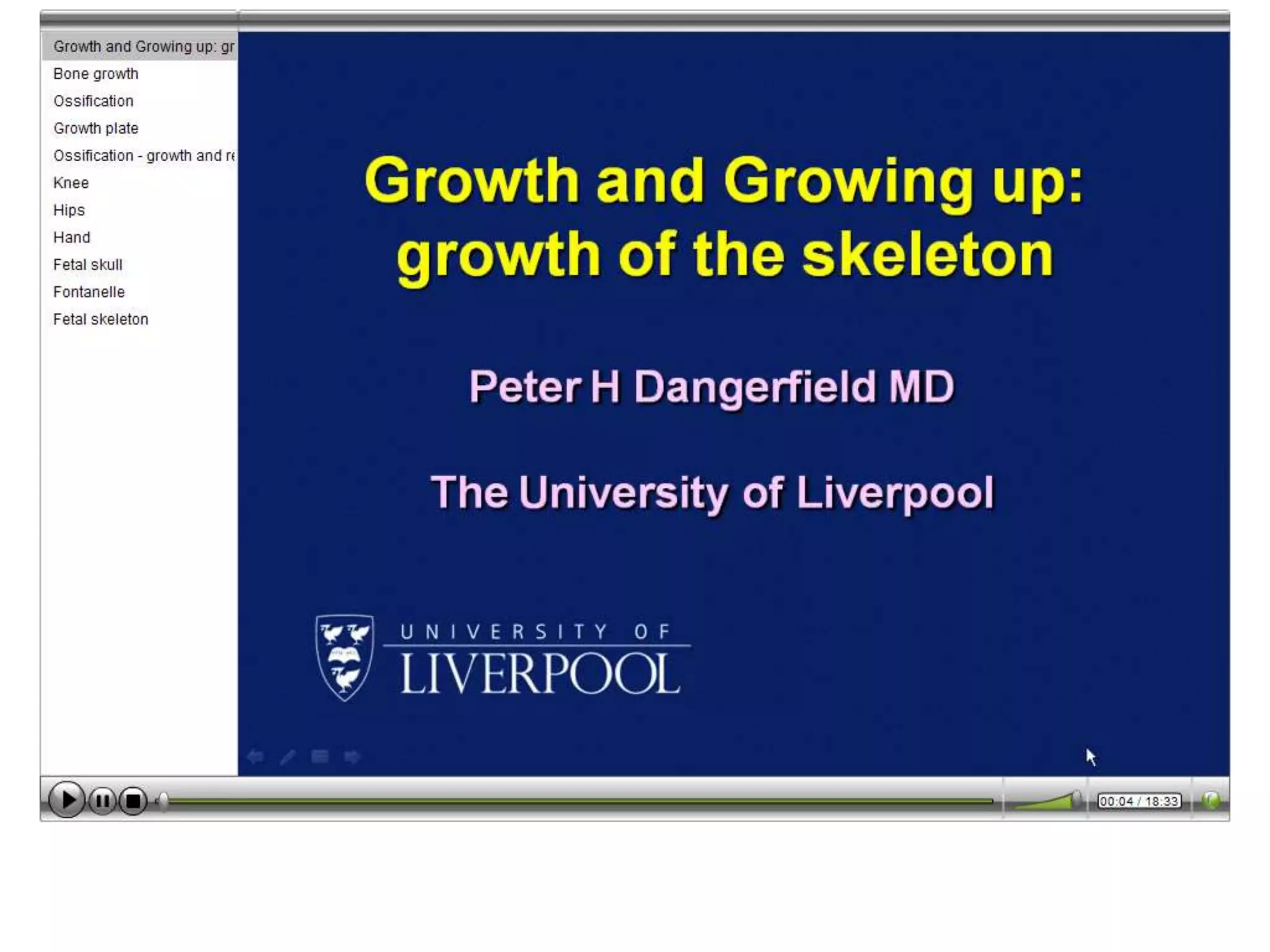
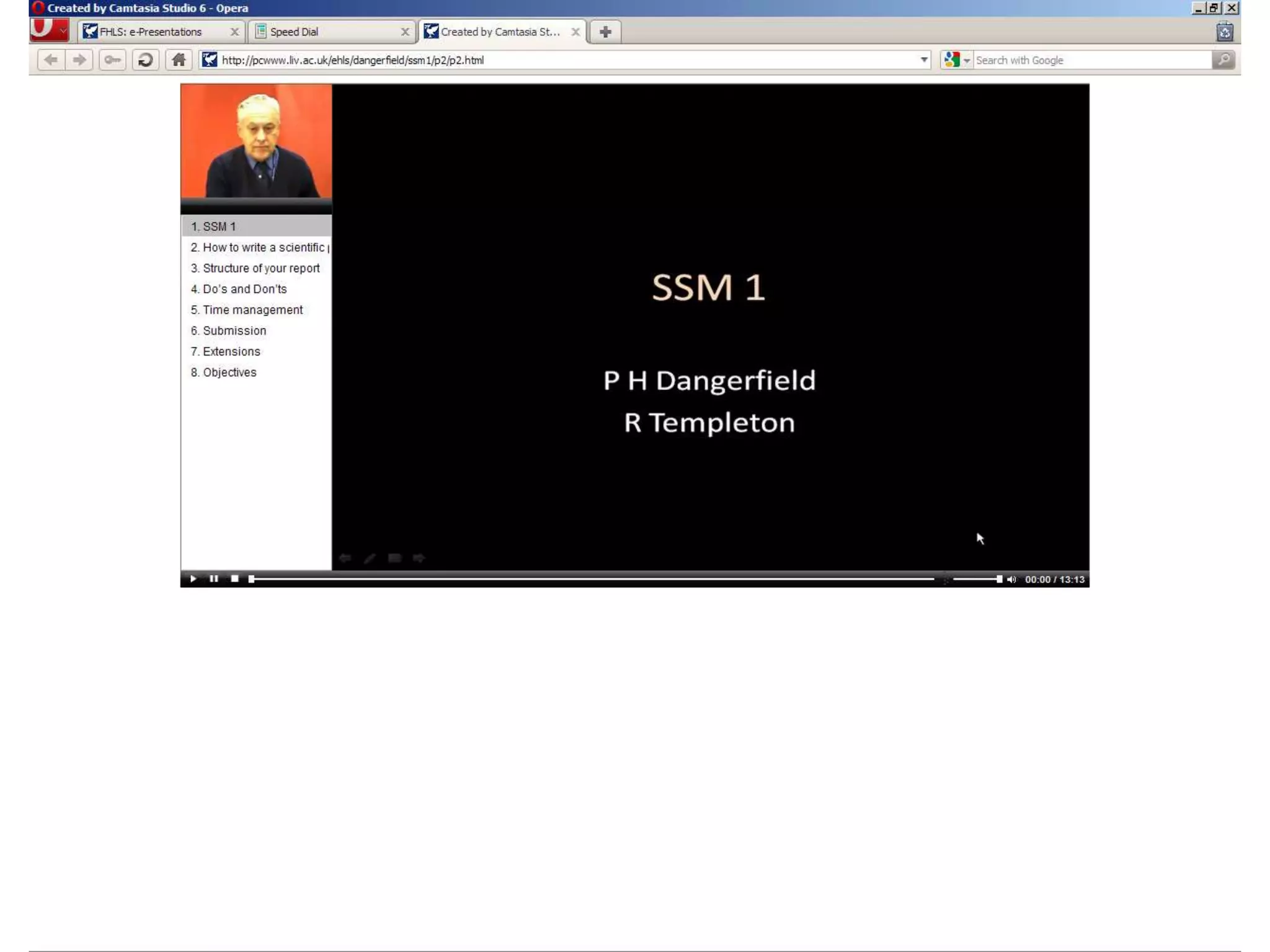
 Voice-narrated PowerPoint recording using Camtasia Studio
 Outputted to “OneVideo withTOC” – intended for web
delivery
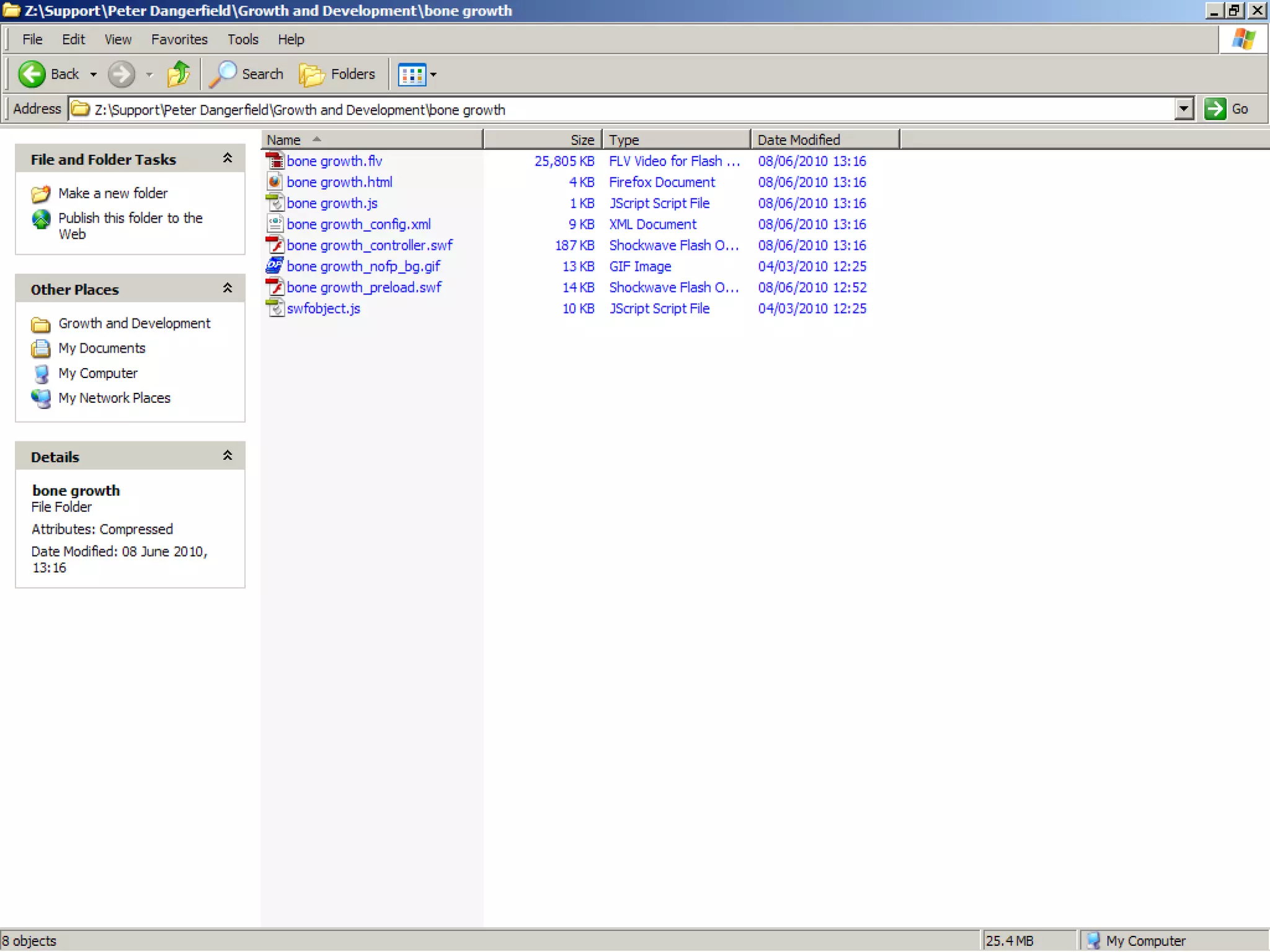
 Output video format .FLV
 Embedded on html page
 Recorded at 1024 x 768 but delivered at 960 x 655 resolution
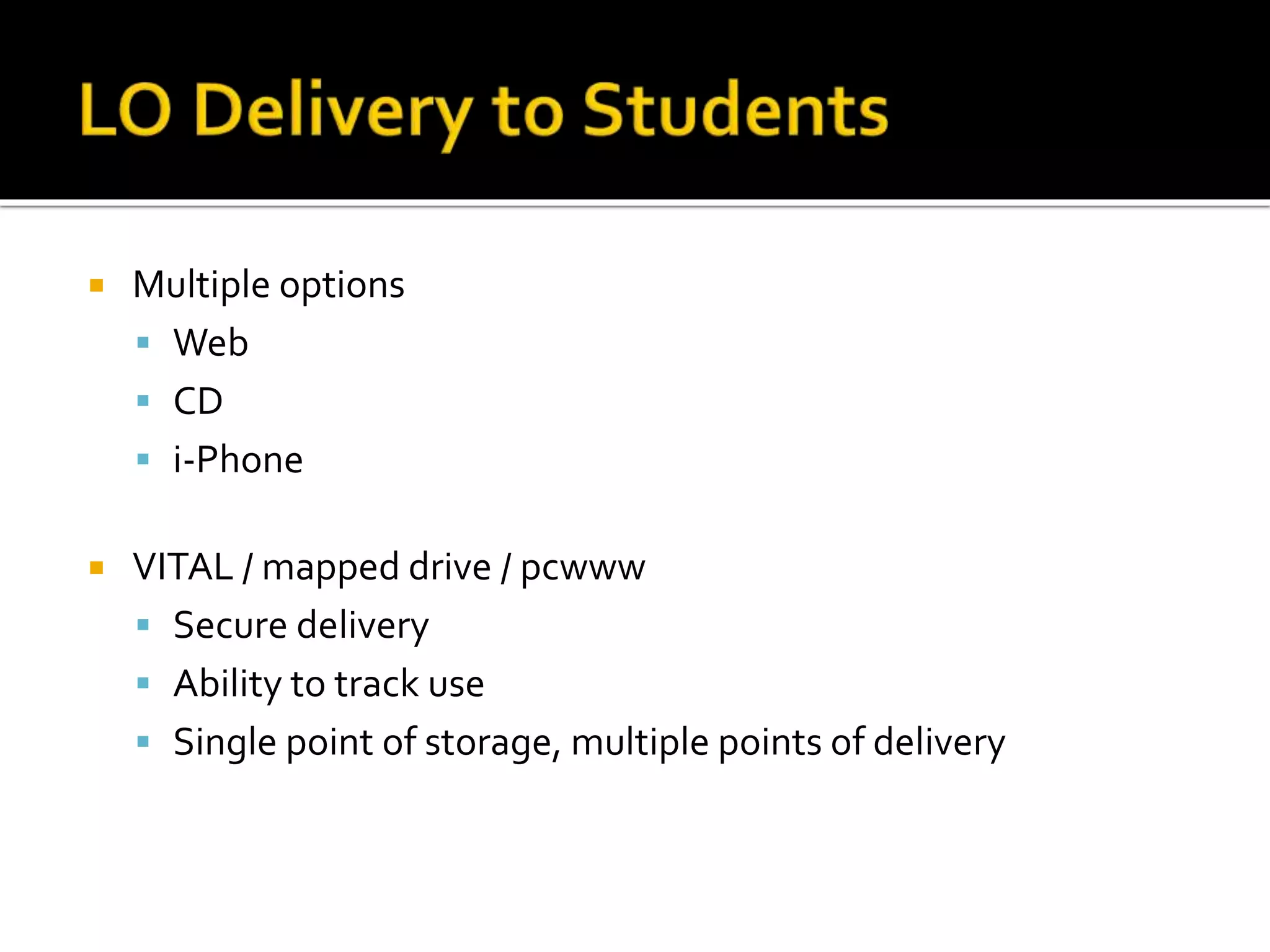
 Multiple options
 Web
 CD
 i-Phone
 VITAL / mapped drive / pcwww
 Secure delivery
 Ability to track use
 Single point of storage, multiple points of delivery
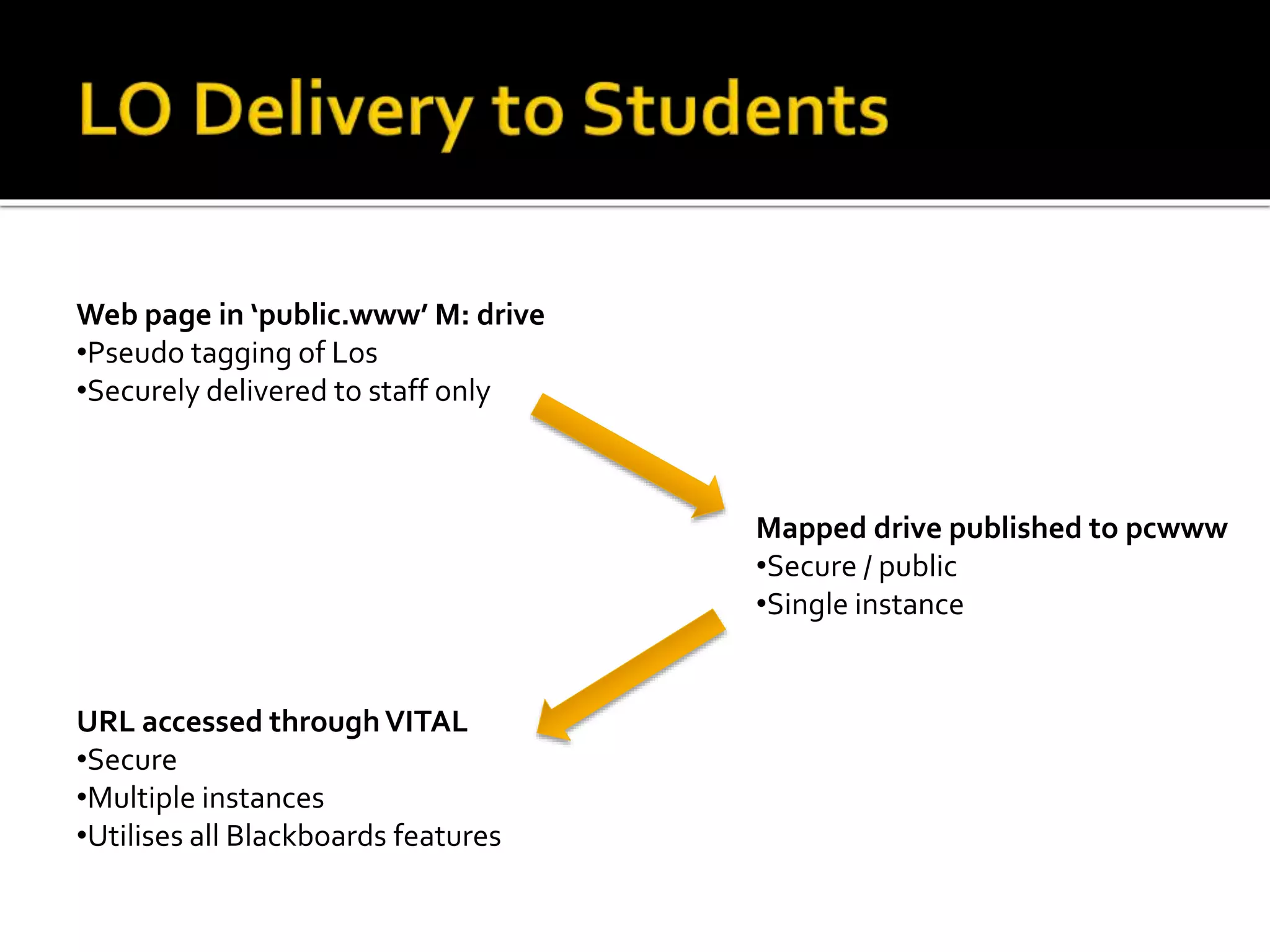
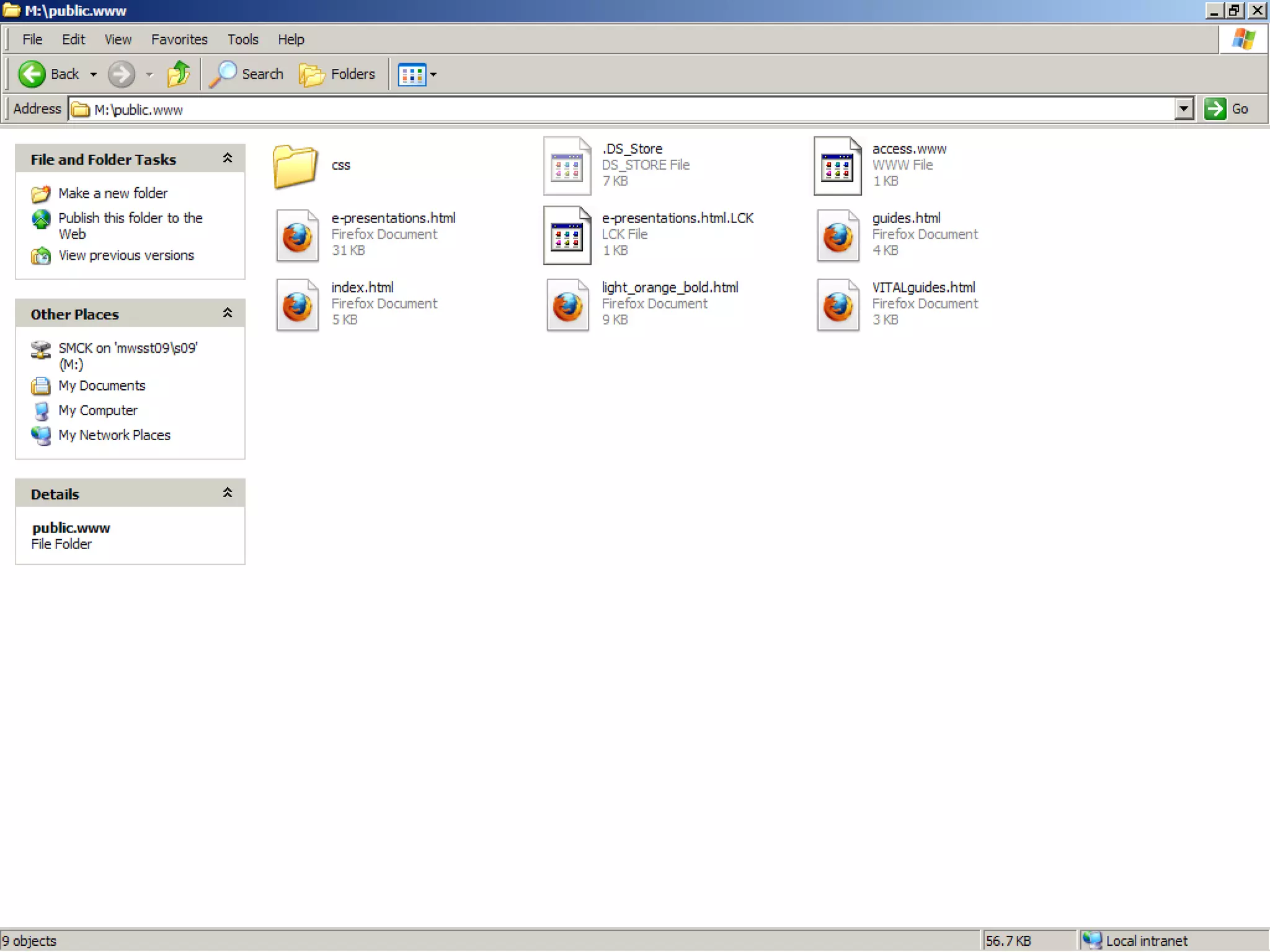
Web page in ‘public.www’ M: drive
•Pseudo tagging of Los
•Securely delivered to staff only
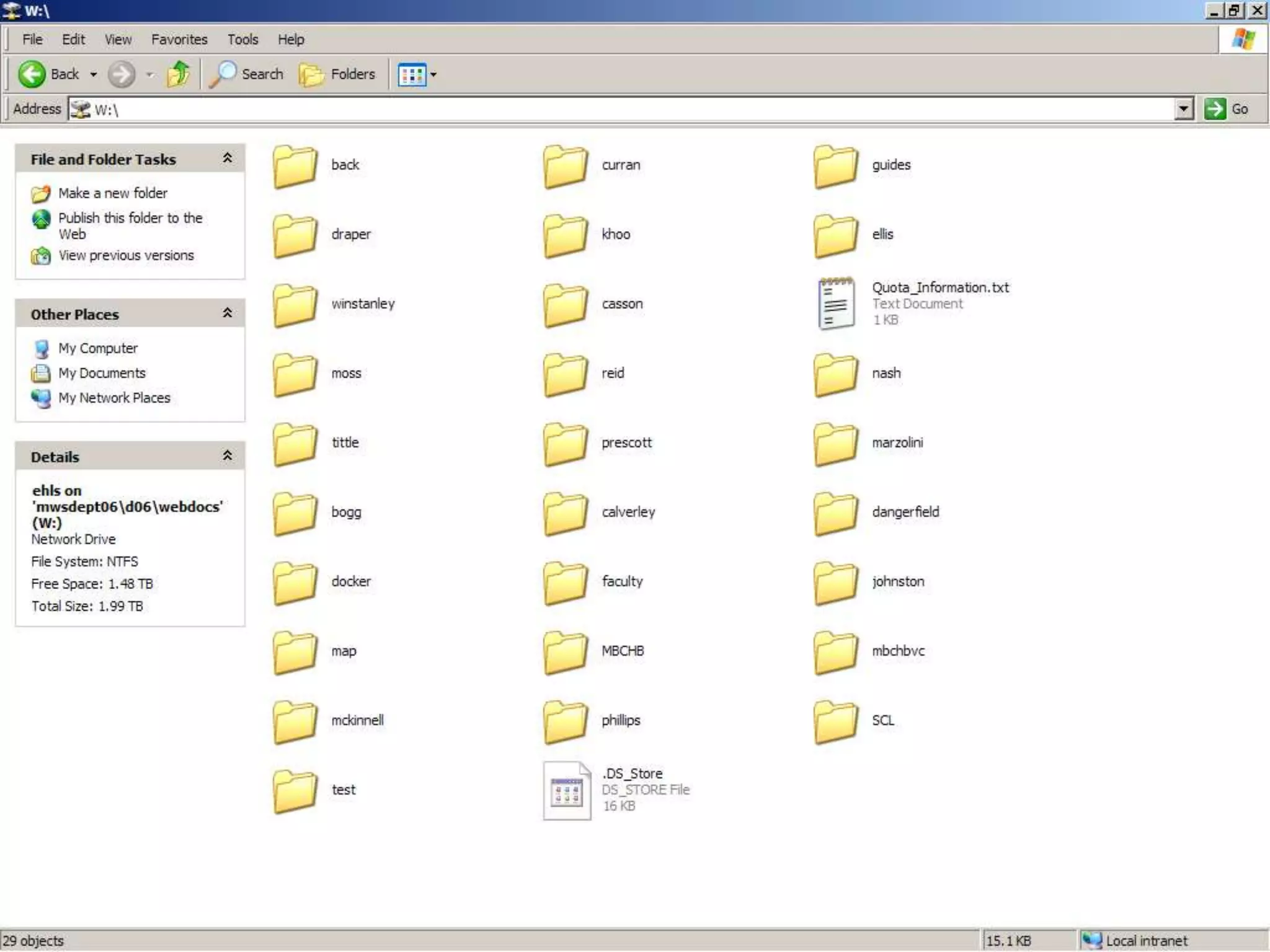
Mapped drive published to pcwww
•Secure / public
•Single instance
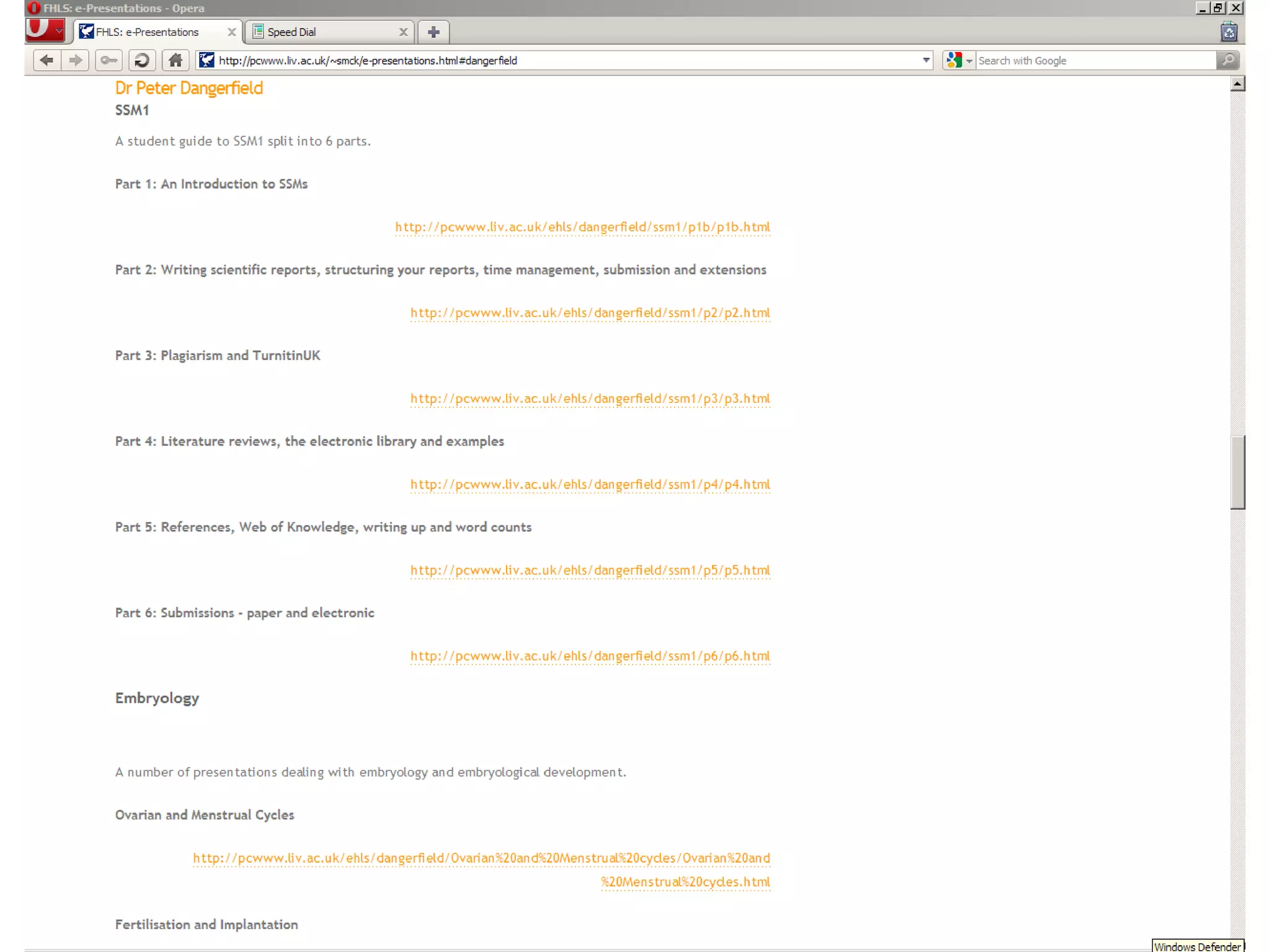
URL accessed throughVITAL
•Secure
•Multiple instances
•Utilises all Blackboards features
 15 embryology themed and 4 growth and developed themed
LOs already developed plus 6 supporting SSMs.
 Available to multiple years on the MBChB programme (UG and
PG entry), BDS programme and the BSc (Hons)Anatomy
degree.
 No analysis of student usage / views yet undertaken. But
positive feedback has been received.
 The approach undertaken and technology used is more than
satisfactory.
 The use ofTOCs is a real advantage.
 Not all content lends itself to this approach.
 Additional front-loaded work for staff which may be onset
against ‘savings’ later.
 ‘Team developed’ approach desirable to make appropriate /
efficient use of skills (academic and e-learning technologist).
 Student centre learning – emphasis on the independent
learner.
 Improved the student experience.
 Beck, Robert J. (2009), "What Are Learning Objects?", Learning
Objects, Center for International Education, University of
Wisconsin-Milwaukee.
http://www4.uwm.edu/cie/learning_objects.cfm?gid=56
 Wiley, DavidA. (2000), "Connecting Learning Objects to
Instructional DesignTheory: A Definition, A Metaphor, and A
Taxonomy", inWiley, David A. (DOC),The Instructional Use of
Learning Object. http://www.reusability.org/read/

Steve m &_peter_d_conf_10

  • 1.
    Learning &Teaching Conference2010: Re-thinking the Curriculum Dr Stephen McKinnell Director of e-Learning Dr Peter Dangerfield Director of MBChBYear 1 Faculty of Health & Life Sciences
  • 2.
     Similar contentdelivered year on year;  Similar content delivered to students on different programmes;  Congested timetables - students;  Workload issues (teaching, research, clinical) – staff;  Student centred learning;  Reusable Learning Objects;  Enabling technologies now available.
  • 3.
    “any digital resourcethat can be reused to support learning” Wiley (2000) Learning objects have the following key characteristics: • Small units of learning, typically ranging from 2 minutes to 15 minutes. • Are self-contained – each LO can be taken independently • Are reusable – a single LO may be used in multiple contexts for multiple purposes • Can be aggregated – LOs can be grouped into larger collections of content, including traditional course structures • Are tagged with metadata – every learning object has descriptive information allowing it to be easily found. Beck (2009)
  • 4.
    Content Creation (Subject specialist) LOCreation (Subject specialist & e-technologist) LO delivery to students (e-technologist)
  • 5.
     Normal PowerPointsdeveloped  Discrete chunks….multiple small PowerPoints instead of one large one  Consideration given to future use and how to lessen future re- recording/re-editing
  • 6.
     Voice-narrated PowerPointrecording using Camtasia Studio  Outputted to “OneVideo withTOC” – intended for web delivery  Output video format .FLV  Embedded on html page  Recorded at 1024 x 768 but delivered at 960 x 655 resolution
  • 11.
     Multiple options Web  CD  i-Phone  VITAL / mapped drive / pcwww  Secure delivery  Ability to track use  Single point of storage, multiple points of delivery
  • 13.
    Web page in‘public.www’ M: drive •Pseudo tagging of Los •Securely delivered to staff only Mapped drive published to pcwww •Secure / public •Single instance URL accessed throughVITAL •Secure •Multiple instances •Utilises all Blackboards features
  • 17.
     15 embryologythemed and 4 growth and developed themed LOs already developed plus 6 supporting SSMs.  Available to multiple years on the MBChB programme (UG and PG entry), BDS programme and the BSc (Hons)Anatomy degree.  No analysis of student usage / views yet undertaken. But positive feedback has been received.  The approach undertaken and technology used is more than satisfactory.  The use ofTOCs is a real advantage.
  • 18.
     Not allcontent lends itself to this approach.  Additional front-loaded work for staff which may be onset against ‘savings’ later.  ‘Team developed’ approach desirable to make appropriate / efficient use of skills (academic and e-learning technologist).  Student centre learning – emphasis on the independent learner.  Improved the student experience.
  • 19.
     Beck, RobertJ. (2009), "What Are Learning Objects?", Learning Objects, Center for International Education, University of Wisconsin-Milwaukee. http://www4.uwm.edu/cie/learning_objects.cfm?gid=56  Wiley, DavidA. (2000), "Connecting Learning Objects to Instructional DesignTheory: A Definition, A Metaphor, and A Taxonomy", inWiley, David A. (DOC),The Instructional Use of Learning Object. http://www.reusability.org/read/