Quality Issues in eLearning 
Greig Krull 
eLearning and Technology Summit 
16 October 2014 
Indaba Hotel, Fourways
Context 
Defined policies & 
procedures to 
ensure quality of 
traditional courses… 
Quality assurance often 
afterthought to convert 
existing courses for 
online delivery… 
eLearning has a 
perception of being 
inferior quality to 
traditional learning 
Dr Neil Clifton [CC-BY] http://www.geograph.org.uk/photo/2326197
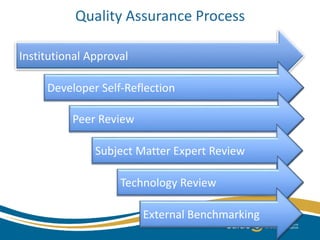
Quality Assurance Process 
Institutional Approval 
Developer Self-Reflection 
Peer Review 
Subject Matter Expert Review 
Technology Review 
External Benchmarking
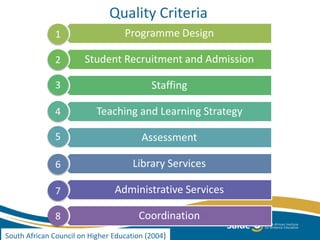
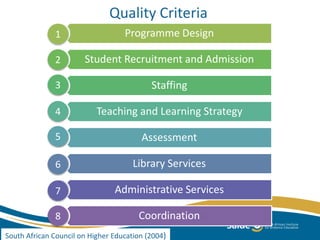
Quality Criteria 
Programme Design 
Student Recruitment and Admission 
Staffing 
Teaching and Learning Strategy 
Assessment 
Library Services 
Administrative Services 
Coordination 
1 
2 
3 
4 
5 
6 
7 
8 
South African Council on Higher Education (2004)
1. Programme Design 
Economics student enrols for course 
with only one 20 year old textbook 
and is required download own 
resources 
• ICT is appropriate 
• Include digital 
resources 
• Alternative online / 
offline access 
Browning [CC-BY-NC] https://www.flickr.com/photos/smichael/4563914649
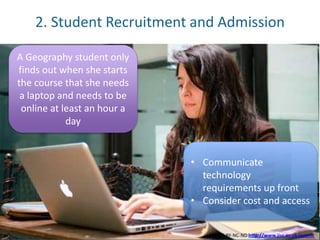
2. Student Recruitment and Admission 
A Geography student only 
finds out when she starts 
the course that she needs 
a laptop and needs to be 
online at least an hour a 
day 
• Communicate 
technology 
requirements up front 
• Consider cost and access 
JISC CC-BY-NC-ND http://www.jisc.ac.uk/events
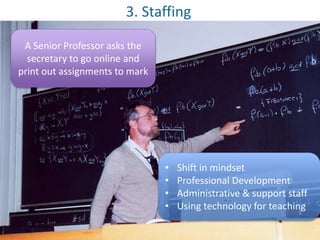
3. Staffing 
A Senior Professor asks the 
secretary to go online and 
print out assignments to mark 
• Shift in mindset 
• Professional Development 
• Administrative & support staff 
• Using technology for teaching
4. Teaching & Learning Strategy 
A student receives all 
her materials on a 
flash disk and is told to 
go study and submit 
the assignments end 
of term 
Image: Vanguard Visions [CC-BY] 
• Orientation to technology 
• Technical support 
• Regular engagement and 
interaction
5. Assessment 
Accounting students have 
one online multiple 
choice test that does not 
count and a MCQ 
examination that counts 
100% 
• Online submission, marking & 
return processes 
• Variety of e-assessment 
• Reliability and security 
• Regular formative assessment 
• Feedback 
Qperello [CC-BY] http://www.flickr.com/photos/albertogp123/5843577306/
6. Library Services 
Nursing student needs 
access to a physical 
textbook at the library 
but student is working full 
time 
• Access to ICT outside of class 
times 
• Wider access to e-resources 
• Develop information literacy 
ParentingPatch [CC-BY-SA] http://www.flickr.com/photos/albertogp123/5843577306/
7. Administrative 
When 2000 first year 
students try to submit 
their assignments, the 
LMS crashes 
• Online Support Services 
• Robust data systems 
• Learning Analytics 
Pimenta [CC-BY-SA] https://www.flickr.com/photos/guspim/2280690094/
8. Coordination 
A first year course 
enrols 2000 students 
but only employs 2 
tutors 
• Alignment to 
organisational strategy 
• ICT Budget 
• Online Tutors 
JuditK [CC-BY-ND] https://www.flickr.com/photos/juditk/8973427921/
Quality Criteria 
Programme Design 
Student Recruitment and Admission 
Staffing 
Teaching and Learning Strategy 
Assessment 
Library Services 
Administrative Services 
Coordination 
1 
2 
3 
4 
5 
6 
7 
8 
South African Council on Higher Education (2004)
Platforms 
Content 
Curation 
Polls / 
Quizzes 
Free / Open Source 
Collabora-tion 
Blog & 
Microblog 
Multi-media 
Virtual 
Meeting 
Rooms 
Sharing 
Social 
Networks 
Learning Tools 
Adapted from: Cavazza, Social Media Landscape [CC-BY-NC-SA]
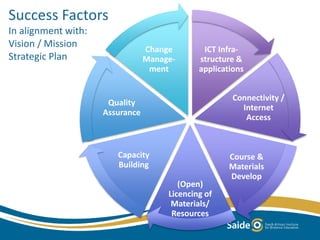
ICT Infra-structure 
& 
applications 
Connectivity / 
Internet 
Access 
Course & 
Materials 
Develop 
Change 
Manage-ment 
(Open) 
Licencing of 
Materials/ 
Resources 
Quality 
Assurance 
Capacity 
Building 
Success Factors 
In alignment with: 
Vision / Mission 
Strategic Plan
How do you ensure quality in your own 
courses and materials?
Thank You! 
greigk@saide.org.za 
greigk_za 
Greig Krull 
This work is licensed under a 
Creative Commons Attribution 3.0 Unported License.
References 
• CHE (2014) Distance Higher Education Programmes in a Digital 
Era: Good Practice Guide 
• CHE (2004) Criteria for Programme Accreditation 
• Saide (2014) Course Quality Evaluation Instrument

Quality Considerations in eLearning

  • 1.
    Quality Issues ineLearning Greig Krull eLearning and Technology Summit 16 October 2014 Indaba Hotel, Fourways
  • 2.
    Context Defined policies& procedures to ensure quality of traditional courses… Quality assurance often afterthought to convert existing courses for online delivery… eLearning has a perception of being inferior quality to traditional learning Dr Neil Clifton [CC-BY] http://www.geograph.org.uk/photo/2326197
  • 3.
    Quality Assurance Process Institutional Approval Developer Self-Reflection Peer Review Subject Matter Expert Review Technology Review External Benchmarking
  • 4.
    Quality Criteria ProgrammeDesign Student Recruitment and Admission Staffing Teaching and Learning Strategy Assessment Library Services Administrative Services Coordination 1 2 3 4 5 6 7 8 South African Council on Higher Education (2004)
  • 5.
    1. Programme Design Economics student enrols for course with only one 20 year old textbook and is required download own resources • ICT is appropriate • Include digital resources • Alternative online / offline access Browning [CC-BY-NC] https://www.flickr.com/photos/smichael/4563914649
  • 6.
    2. Student Recruitmentand Admission A Geography student only finds out when she starts the course that she needs a laptop and needs to be online at least an hour a day • Communicate technology requirements up front • Consider cost and access JISC CC-BY-NC-ND http://www.jisc.ac.uk/events
  • 7.
    3. Staffing ASenior Professor asks the secretary to go online and print out assignments to mark • Shift in mindset • Professional Development • Administrative & support staff • Using technology for teaching
  • 8.
    4. Teaching &Learning Strategy A student receives all her materials on a flash disk and is told to go study and submit the assignments end of term Image: Vanguard Visions [CC-BY] • Orientation to technology • Technical support • Regular engagement and interaction
  • 9.
    5. Assessment Accountingstudents have one online multiple choice test that does not count and a MCQ examination that counts 100% • Online submission, marking & return processes • Variety of e-assessment • Reliability and security • Regular formative assessment • Feedback Qperello [CC-BY] http://www.flickr.com/photos/albertogp123/5843577306/
  • 10.
    6. Library Services Nursing student needs access to a physical textbook at the library but student is working full time • Access to ICT outside of class times • Wider access to e-resources • Develop information literacy ParentingPatch [CC-BY-SA] http://www.flickr.com/photos/albertogp123/5843577306/
  • 11.
    7. Administrative When2000 first year students try to submit their assignments, the LMS crashes • Online Support Services • Robust data systems • Learning Analytics Pimenta [CC-BY-SA] https://www.flickr.com/photos/guspim/2280690094/
  • 12.
    8. Coordination Afirst year course enrols 2000 students but only employs 2 tutors • Alignment to organisational strategy • ICT Budget • Online Tutors JuditK [CC-BY-ND] https://www.flickr.com/photos/juditk/8973427921/
  • 13.
    Quality Criteria ProgrammeDesign Student Recruitment and Admission Staffing Teaching and Learning Strategy Assessment Library Services Administrative Services Coordination 1 2 3 4 5 6 7 8 South African Council on Higher Education (2004)
  • 14.
    Platforms Content Curation Polls / Quizzes Free / Open Source Collabora-tion Blog & Microblog Multi-media Virtual Meeting Rooms Sharing Social Networks Learning Tools Adapted from: Cavazza, Social Media Landscape [CC-BY-NC-SA]
  • 15.
    ICT Infra-structure & applications Connectivity / Internet Access Course & Materials Develop Change Manage-ment (Open) Licencing of Materials/ Resources Quality Assurance Capacity Building Success Factors In alignment with: Vision / Mission Strategic Plan
  • 16.
    How do youensure quality in your own courses and materials?
  • 17.
    Thank You! greigk@saide.org.za greigk_za Greig Krull This work is licensed under a Creative Commons Attribution 3.0 Unported License.
  • 18.
    References • CHE(2014) Distance Higher Education Programmes in a Digital Era: Good Practice Guide • CHE (2004) Criteria for Programme Accreditation • Saide (2014) Course Quality Evaluation Instrument

Editor's Notes

  • #3 Image: “Charterhouse campus of St. Bartholomew's Hospital Medical College” Dr Neil Clifton [CC-BY] http://www.geograph.org.uk/photo/2326197
  • #6 ICT selected is appropriate to student circumstances and needs and teaching methods - Learner profile most important Resources include digital resources and OER Students have alternative online / offline access options
  • #7 Technology requirements communicated and verified before admission Responsible advertising of costs of technology
  • #8 Capacity building in designing and developing online materials and online course delivery Orientation and professional development Administrative staff for managing backups, internet access etc Tutor to learner ratio Multiple forms of comms: Telephone, email, skype, twitter Not just how to use the technology – but how to use it in teaching.
  • #9 Clear what technology is used and how it is used to support teaching and learning Staff and students oriented in how to use the technology Staff and students have access to appropriate technologies Technical support to students in timely manner Image: “Flipped Learning Design in VET” Vanguard Visions [CC-BY] https://www.flickr.com/photos/77018488@N03/9315194075/
  • #10 Processes for online submission, marking, data capture & return with feedback Systems to ensure reliability & security of online assessment system Processes/tools to counter plagiarism Formative assessment is important Image: “Exam” Alberto Qperello [CC-BY] http://www.flickr.com/photos/albertogp123/5843577306/
  • #11 Access to ICT infrastructure also outside of working hours Access to wider electronic resources (online or CD/Flash) Support to develop information literacy skills to use resources Image: “Shelves of Language Books in Library” ParentingPatch [CC-BY-SA] http://www.flickr.com/photos/albertogp123/5843577306
  • #12 Online Support Services e.g. forums, helpdesk Data management systems are robust and secure Track student progress, to identify & support students at-risk & to provide data to inform programme review Image: “ 404 Error”G Pimenta [CC-BY-SA] https://www.flickr.com/photos/guspim/2280690094/
  • #13 Require a budget for maintaining and upgrading the appropriate technology Regular review of the strategic and operational plans for use of educational technology to evaluate progress eTutors Image: “iDevices” JuditK [CC-BY-ND] https://www.flickr.com/photos/juditk/8973427921/
  • #15 Image: Adapted from: Fred Cavazza, Social Media Landscape [CC-BY-NC-SA] http://www.flickr.com/photos/fredcavazza/2564571564
  • #16 Role of ICTs in improving quality, widening access and cutting costs in the teaching function Technology must be seen as a supportive tool The use of technology needs to add value Categories ICT Infrastructure and Applications Connectivity/Internet Access Programme, Course, and Materials Development and Delivery Public Service and External Collaboration Licensing of e-Learning Materials Capacity Building Quality Assurance, Monitoring, and Evaluation Change Management