State-of-
the-Art
ET
Applicatio
n
Practices
state-of-the-art
*the most recent and
therefore considered the
best
*the level of knowledge and
development achieved in a
technique, science, etc.,
esp at present
With our progressive state
policies that support
technology-in-education,
our educators today
have become more aware
and active in adopting
state-of-the-art
educational technology
practices they can
possibly adopt.
The following trends
should also be
recognized by educators:
Through school or
training center
computer courses,
present-day students
have become
computer literate.
They send e-mail,
prepare computer
encoded class reports,
even make power-point
presentation
sometimes to the
surprise of their media
tradition-bound
teachers.
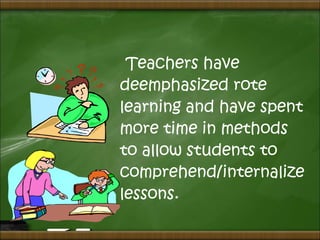
Teachers have
deemphasized rote
learning and have spent
more time in methods
to allow students to
comprehend/internalize
lessons.
Shifting focus from lower-level
traditional learning outcomes,
student assessment/examinations
have included measurement of
higher level learning outcomes
such as creative and critical
thinking skills.
Recent teaching-learning models
(such as constructivism and social
constructivism) have paved the
way for instructional approaches
in which students rely less on
teachers as information-givers,
and instead more on their efforts
to acquire information, build
their own knowledge, and solve
problems.
Virtue is in moderation
and so, there is truly a
need for teachers to
balance their time to the
preparation and
application of
instructional tools.
•  
Through wise technical
advice, schools can also
acquire the most
appropriate computer
hardware and software.
At the same time, training
should ensure that the
use of ET is fitted to
learning objectives
•  
In addition, teachers
should acquire
computer skills for so
that they can serve as
models in integrating
educational technology
in the teaching-learning
process.
Following modern trends in
technology-related
education, schools should
now foster a student-
centered learning
environment, wherein
students are given leeway to
use computer information
sources in their assignments,
reports and presentation in
written, visual, or dramatic
forms.
All these suggestion
show that teachers
and schools can no
longer avoid the
integration of
educational
technology in
instruction.
Especially in the
coming years, when
portable and mobile
computing will make
computing activities
easier to perform, the
approaches to
classroom pedagogy
musts change.
And with continuing
changes in high-speed
communication, mass
storage of data, including
the revolutionary changes
among school libraries,
educators should be open
for more drastic
educational changes in
the years ahead.
That ends my
report..
Thank you and God
bless

State of the art ET Application Practices

  • 1.
  • 2.
    state-of-the-art *the most recentand therefore considered the best *the level of knowledge and development achieved in a technique, science, etc., esp at present
  • 3.
    With our progressivestate policies that support technology-in-education, our educators today have become more aware and active in adopting state-of-the-art educational technology practices they can possibly adopt.
  • 4.
    The following trends shouldalso be recognized by educators:
  • 5.
    Through school or trainingcenter computer courses, present-day students have become computer literate.
  • 6.
    They send e-mail, preparecomputer encoded class reports, even make power-point presentation sometimes to the surprise of their media tradition-bound teachers.
  • 7.
    Teachers have deemphasized rote learningand have spent more time in methods to allow students to comprehend/internalize lessons.
  • 8.
    Shifting focus fromlower-level traditional learning outcomes, student assessment/examinations have included measurement of higher level learning outcomes such as creative and critical thinking skills.
  • 9.
    Recent teaching-learning models (suchas constructivism and social constructivism) have paved the way for instructional approaches in which students rely less on teachers as information-givers, and instead more on their efforts to acquire information, build their own knowledge, and solve problems.
  • 10.
    Virtue is inmoderation and so, there is truly a need for teachers to balance their time to the preparation and application of instructional tools. •  
  • 11.
    Through wise technical advice,schools can also acquire the most appropriate computer hardware and software. At the same time, training should ensure that the use of ET is fitted to learning objectives •  
  • 12.
    In addition, teachers shouldacquire computer skills for so that they can serve as models in integrating educational technology in the teaching-learning process.
  • 14.
    Following modern trendsin technology-related education, schools should now foster a student- centered learning environment, wherein students are given leeway to use computer information sources in their assignments, reports and presentation in written, visual, or dramatic forms.
  • 15.
    All these suggestion showthat teachers and schools can no longer avoid the integration of educational technology in instruction.
  • 16.
    Especially in the comingyears, when portable and mobile computing will make computing activities easier to perform, the approaches to classroom pedagogy musts change.
  • 17.
    And with continuing changesin high-speed communication, mass storage of data, including the revolutionary changes among school libraries, educators should be open for more drastic educational changes in the years ahead.
  • 18.
    That ends my report.. Thankyou and God bless