EMBRYONIC STEM CULTURES
AND
ADULT STEM CULTURES
Presented By : Saritha Sadanandan Pillai
MSc Biotechnology
SAS SNDP Yogam College,
Konni.
Stem cells
 Undifferentiated cells capable of self-renew and to
differentiate into different cell types or tissues
during embryonic development and throughout
adulthood.
 Have possibility to become a specialised cell.
Have the ability to divide continuously and develop
into various other kinds of cells.
Have immune potential and can help to treat a
wide range of medical problems.
Discovery of stem cells lead to a whole new
branch of medicine known as Regenerative
medicine.
Types of stem cells
 Stem cells are classified into various types based on
their ability to undergo differentiation into different cell
types.
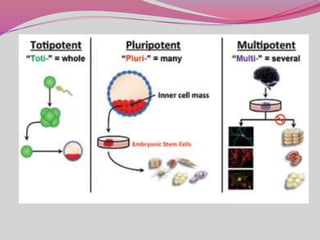
UNIPOTENT: Cells can reproduce only one cell type,
their own, but have the property of self renewable
(distinguishes from non-stem cells)
e.g. progenitor cells, muscle cells.
OLIGOPOTENT: differentiate into only a few cell
types.
e.g. lymphoid or myeloid stem cells.
MULTIPOTENT : differentiate into a number of cell
types, but only of a closely related family of cells.
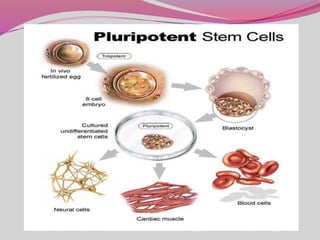
PLURIPOTENT: are descendents of totipotent cells
and can differentiate into nearly all cells. i.e. cells
derived from any of the three germ layers.
 They are able to develop into all cell types, except
cells of the embryonic membranes.
TOTIPOTENT: differentiate into embryonic and extra-
embryonic cell types.
Such cells can construct a complete, viable
organism.
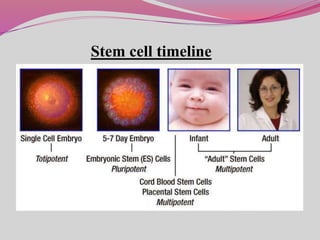
Stem cell timeline
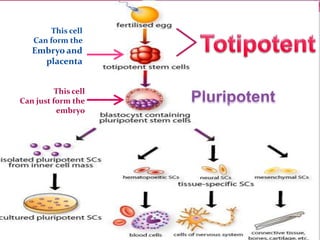
This cell
Can form the
Embryo and
placenta
This cell
Can just form the
embryo
Terminology
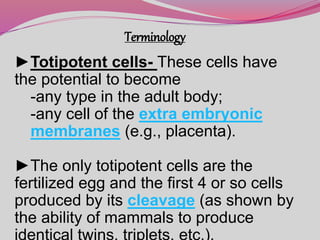
►Totipotent cells- These cells have
the potential to become
-any type in the adult body;
-any cell of the extra embryonic
membranes (e.g., placenta).
►The only totipotent cells are the
fertilized egg and the first 4 or so cells
produced by its cleavage (as shown by
the ability of mammals to produce
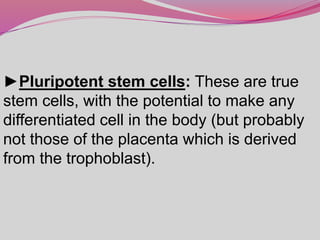
►Pluripotent stem cells: These are true
stem cells, with the potential to make any
differentiated cell in the body (but probably
not those of the placenta which is derived
from the trophoblast).
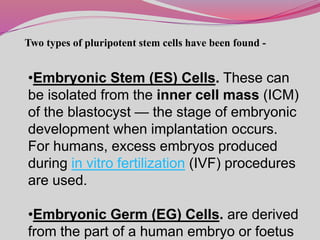
Two types of pluripotent stem cells have been found -
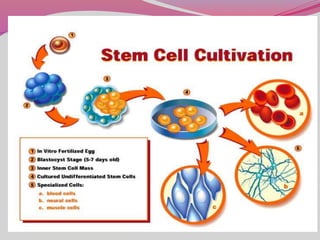
•Embryonic Stem (ES) Cells. These can
be isolated from the inner cell mass (ICM)
of the blastocyst — the stage of embryonic
development when implantation occurs.
For humans, excess embryos produced
during in vitro fertilization (IVF) procedures
are used.
•Embryonic Germ (EG) Cells. are derived
from the part of a human embryo or foetus
These types of pluripotent stem cells
•can only be isolated from embryonic or
fetal tissue;
•can be grown in culture, but only with
special methods to prevent them from
differentiating.
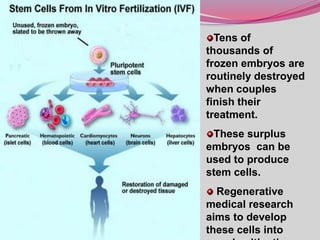
Tens of
thousands of
frozen embryos are
routinely destroyed
when couples
finish their
treatment.
These surplus
embryos can be
used to produce
stem cells.
Regenerative
medical research
aims to develop
these cells into
Somatic Cell Nuclear
Transfer
The nucleus of a
donated egg is
removed and replaced
with the nucleus of a
mature, "somatic cell"
(a skin cell, for
example).
No sperm is involved
in this process, and no
embryo is created to be
implanted in a woman’s
womb.
The resulting stem
cells can potentially
develop into
specialized cells that
A: Stem
Cell
B: Progenitor
Cell
C: Differentiated
Cell
Stem cell division
and
Differentiation
1: Symmetric stem cell division
2: Asymmetric stem cell division
3: Progenitor division
4: Terminal
differentiation
How are embryonic stem cells harvested?
•Growing cells in the laboratory is called as cell
culture.
•Human ES cells are derived from 4-5 day old
blastocyst
•Blastocyst structures include:
-Trophoblast: outer layer of cells that surrounds
the blastocyst & forms the placenta
-Blastocoel: (“blastoseel”) the hollow cavity inside
the blastocyst that will form body cavity
-Inner cell mass: a group of approx. 30 cells at
one end of the blastocoel:
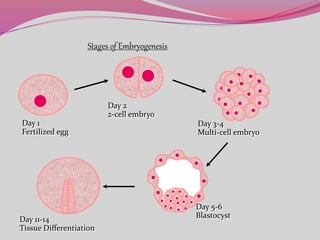
Stages of Embryogenesis
Day 1
Fertilized egg
Day 2
2-cell embryo
Day 3-4
Multi-cell embryo
Day 5-6
Blastocyst
Day 11-14
Tissue Differentiation
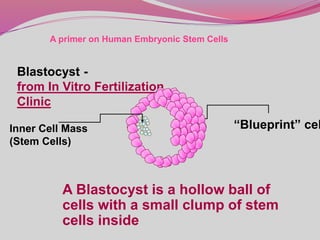
A primer on Human Embryonic Stem Cells
Blastocyst -
from In Vitro Fertilization
Clinic
“Blueprint” celInner Cell Mass
(Stem Cells)
A Blastocyst is a hollow ball of
cells with a small clump of stem
cells inside
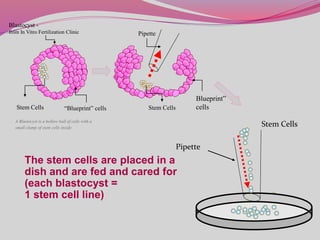
Human Embryonic Stem Cells
Blastocyst -
from In Vitro Fertilization Clinic
Stem Cells “Blueprint” cells
A Blastocyst is a hollow ball of cells with a
small clump of stem cells inside
“Blueprint”
cells
Pipette
To remove the stem cells, the
Blastocyst is opened and the stem
cells removed with a pipette
Blastocyst -
from In Vitro Fertilization Clinic
Stem Cells “Blueprint” cells
A Blastocyst is a hollow ball of cells with a
small clump of stem cells inside
Pipette
Stem Cells
Blueprint”
cells
Stem Cells
Pipette
The stem cells are placed in a
dish and are fed and cared for
(each blastocyst =
1 stem cell line)
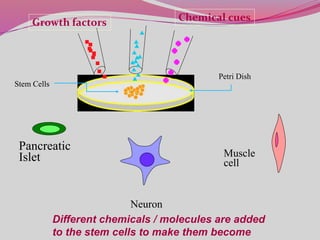
Growth factors Chemical cues
Stem Cells
Petri Dish
Pancreatic
Islet
Neuron
Muscle
cell
Different chemicals / molecules are added
to the stem cells to make them become
Cell Culture Techniques for ESC
•Isolate & transfer of inner cell mass into plastic
culture dish that contains culture medium
•Cells divide and spread over the dish
Inner surface of culture dish is typically coated with
mouse embryonic skin cells that have been treated
so they will not divide
•This coating is called a FEEDER LAYER
•Feeder cells provide ES cells with a sticky
surface for attachment
•Feeder cells release nutrients
•Recent discovery: methods for growing embryonic
Significance – eliminate infection
by viruses or other mouse
molecules
•ES cells are removed gently and
plated into several different culture
plates before crowding occurs
►Over the course of several days the
inner cell mass proliferate and begin to
crowd the culture dish.
►They are then gently removed and
plated into several fresh culture dishes.
The process of plating the cells is
repeated several times and for many
months and is called subculturing .
Each cycle of subculturing is referred to
as a passage.
►After six months or more the inner cell
mass yield millions of embryonic stem
cells. These cells are Pluripotent and
appear genetically normal and are referred
Multipotent stem cells
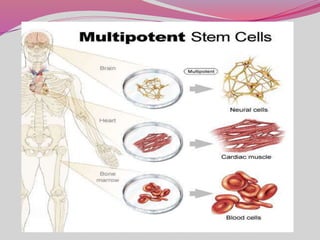
►These are true stem cells but can only
differentiate into a limited number of types.
For example, the bone marrow contains
multipotent stem cells that give rise to all
the cells of the blood but not to other types
of cells.
►Multipotent stem cells are found in adult
animals; perhaps most organs in the body
(e.g., brain, liver) contain them where they
can replace dead or damaged cells.
►These adult stem cells may also be the
cells that — when one accumulates sufficient
Adult Stem Cells
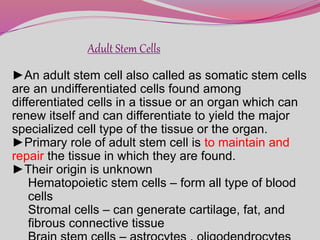
►An adult stem cell also called as somatic stem cells
are an undifferentiated cells found among
differentiated cells in a tissue or an organ which can
renew itself and can differentiate to yield the major
specialized cell type of the tissue or the organ.
►Primary role of adult stem cell is to maintain and
repair the tissue in which they are found.
►Their origin is unknown
Hematopoietic stem cells – form all type of blood
cells
Stromal cells – can generate cartilage, fat, and
fibrous connective tissue
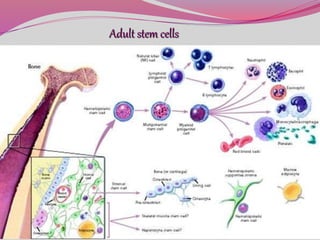
Adult stem cells
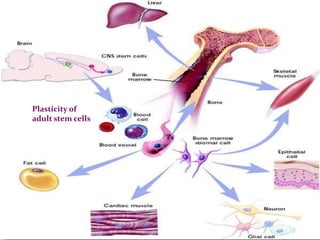
Plasticity of
adult stem cells
Adult stem cells
►Contrary to the ES cells, which are
pluripotent, adult stem cells have a more
restricted differentiation capacity and are
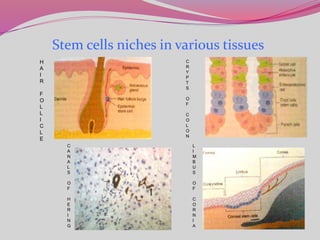
usually lineage specific.
►Present in bone marrow and other tissues.
►Stem cells outside bone marrow are called
as tissue stem cells.
►In the tissue, stem cells are located in the
sites called niches.
Stem cells niches in various tissues
H
A
I
R
F
O
L
L
I
C
L
E
C
R
Y
P
T
S
O
F
C
O
L
O
N
C
A
N
A
L
S
O
F
H
E
R
I
N
G
L
I
M
B
U
S
O
F
C
O
R
N
I
A
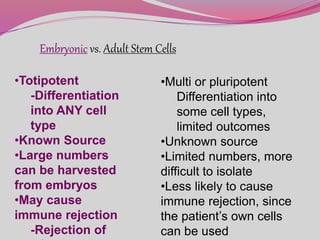
Embryonic vs. Adult Stem Cells
•Totipotent
-Differentiation
into ANY cell
type
•Known Source
•Large numbers
can be harvested
from embryos
•May cause
immune rejection
-Rejection of
•Multi or pluripotent
Differentiation into
some cell types,
limited outcomes
•Unknown source
•Limited numbers, more
difficult to isolate
•Less likely to cause
immune rejection, since
the patient’s own cells
can be used
Cord Blood
•Umbilical cord blood is also known
as placental blood.
•It is the blood that flows in the
circulation of the developing fetus in
the womb.
•After the baby’s birth, the left over
blood in the umbilical cord and
placenta is called cord blood.
•This blood is a rich source of stem
Umbilical cord stem cells
•Umbilical cord blood is a rich source of
primitive stem cells as compared to adult
stem cells. Therefore these are able to
expand rapidly.
•Stored cord blood stem cells from a child is
the perfect match for that child. This allows
for an autologous transplant if needed, with
no risk of Graft-vs- Host Disease(GVHD).
•Cord blood stem cells are a close match for
siblings or family members in case of need,
Making a decision to collect baby’s cord blood stem cells.
Yes, if there is a family history of
malignant, benign or inherited
disorders.
Yes, even in the absence of “health
risk factors”, as there are potential
benefits to family in the future.
Yes, if the costs are affordable and
this is something of value.
Yes, it is the one chance to collect
Collecting cord blood stemcells
•This blood is collected by the physician
after the baby is born and the cord is cut.
•It takes less than 5 minutes and there is
no pain, harm or risk to mother or
newborn.
•This cord blood containing the stem
cells, is sent to a “Cord Blood Bank”
either private or public where it is
processed and the stem cells are
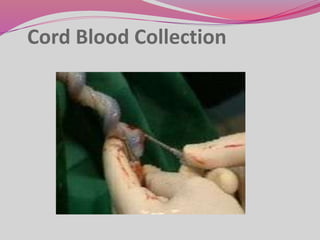
•Immediately after a baby is delivered
umbilical cord is clamped . After delivery of
placenta , the placenta is placed on
supporting frame , the cord is cleaned and
needle is inserted into the umbilical vein .
The umbilical cord blood is collected in a
closed system and blood drained as a
“standard gravity phlebotomy
oSecond method involves collecting the cord
blood while the placenta is still in the mother’s
womb.
This method has theoretically two
advantages
collection begins earlier before the blood
has a chance to clot.
It uses the contraction of the uterus to
enhance the blood drainage in addition to the
gravity.
Disadvantage: it is more intrusive and has
the potential to interfere with after-delivery
care for the mother and infant.
Umbilical cord stemcells
•Adult stem cells of infant
origin
•Greater compatibility
•Less expensive
Umbilical cord stemcells
Three important functions:
1. Plasticity: Potential to change
into other cell types like nerve
cells
2. Homing: To travel to the site of
tissue damage
3. Engraftment: To unite with
other tissues
Potential Uses of Stem Cells
•Basic research – clarification of complex
events that occur during human
development & understanding molecular
basis of cancer
-Molecular mechanisms for gene
control
-Role of signals in gene expression &
differentiation of the stem cell
-Stem cell theory of cancer
Potential uses
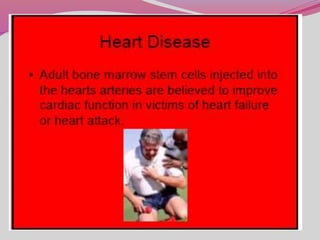
•Cell based therapies:
Regenerative therapy to treat Parkinson’s,
Alzheimer’s, ALS, spinal cord injury, stroke,
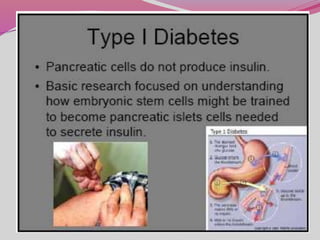
severe burns, heart disease, diabetes,
osteoarthritis, and rheumatoid arthritis
Potential uses
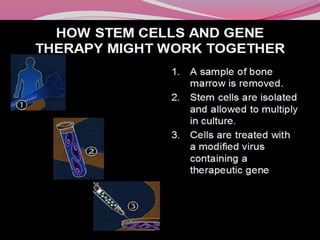
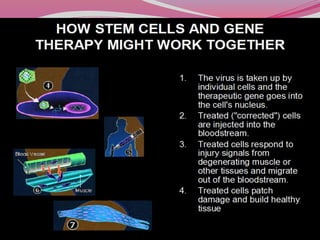
•Stem cells in gene therapy
Stem cells as vehicles after they have
been genetically manipulated
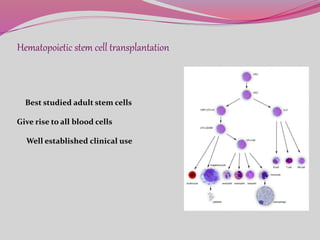
Hematopoietic stem cell transplantation
Best studied adult stem cells
Give rise to all blood cells
Well established clinical use
Definition
Any procedure where hematopoietic
stem cells of any donor and any source are
given to a recipient with intention of
repopulating/replacing the hematopoietic
system in total or in part.
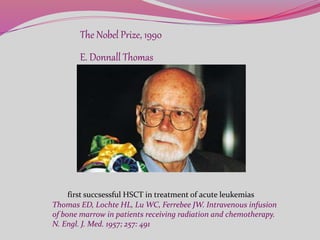
The Nobel Prize, 1990
E. Donnall Thomas
first succsessful HSCT in treatment of acute leukemias
Thomas ED, Lochte HL, Lu WC, Ferrebee JW. Intravenous infusion
of bone marrow in patients receiving radiation and chemotherapy.
N. Engl. J. Med. 1957; 257: 491
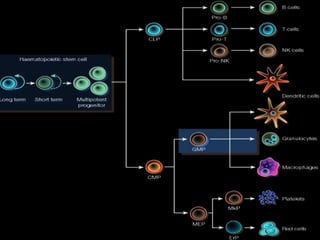
Hematopoietic stem cells
►It is defined as the cell with the ability to
achieve long term reconstruction of both
myeloid and lymphoid lineage.
►Features :-
1. Remarkable regenerative capacity
2. Ability to home to marrow spaces following
IV injection. {mediated in par by interaction of
selectin on bone marrow endothelium and
integrin on early hematopoietic cells }
3. Ability to be cryopreserved.
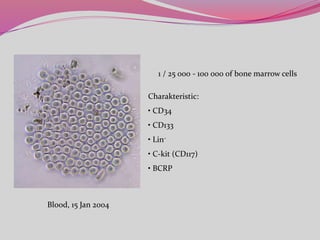
1 / 25 000 - 100 000 of bone marrow cells
Charakteristic:
• CD34
• CD133
• Lin-
• C-kit (CD117)
• BCRP
Blood, 15 Jan 2004
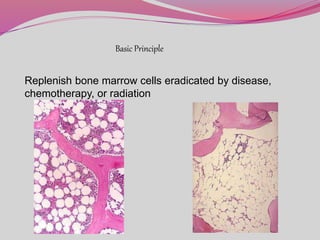
Basic Principle
Replenish bone marrow cells eradicated by disease,
chemotherapy, or radiation
Sources of stemcells
 Bone marrow
 Peripheral blood
 Umbilical cord blood
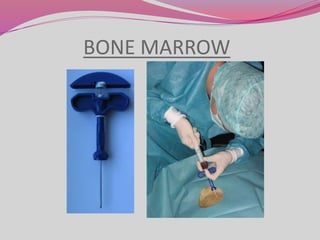
BONE MARROW
►Marrow is obtained by multiple aspirations from
the posterior iliac crest under general or epidural
anesthesia.
►For larger quantity anterior crest or sternum can
be the site. Several skin puncture on each iliac
crest and multiple bone puncture are usually
required.
►Target volume is 10-15 mg/kg of recipient or donor
weight , whichever is less.
►Marrow is collected in heparinized syringe and
filtered through 0.3-0.2 mm screen to remove the
fat and bony spicule.
►Further processing depend on the clinical
situation, such as
 Removal of RBCs to prevent hemolysis in ABO
incompatible transplants {In BMSCT ABO mismatch
is the most common}
 Removal of immunocompetent donor T cells to
prevent GVHD
 Attempts to remove possible contamination of
tumour cells in autologous transplantation.
►Marrow is usually transfused immediately after
harvesting, but delay of upto 24 hrs may occur
without adverse consequences.
►These cells are now the most common source of stem cells
for HSCT .
►Peripheral blood stem cells {PBSC} are collected by
leokopheresis after the donor has been treated with
hematopoietic growth factors or a combination of
chemotherapy and growth factors. For pts. with
malignancy cyclophosphamide based chemotherapy and G
–CSF are used.
►The donors are typically treated with growth factor for
4-6 days, following which the stem cells are collected in one
to two 4 hrs sessions.
►In autologous setting transplantation of >2.5 X 10⁶
CD 34+ cells / kg leads to rapid and sustained engraftment.
Peripheral blood {PB }
APHERESIS
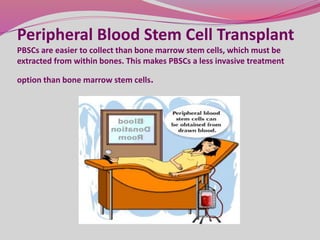
Peripheral Blood Stem Cell Transplant
PBSCs are easier to collect than bone marrow stem cells, which must be
extracted from within bones. This makes PBSCs a less invasive treatment
option than bone marrow stem cells.
Cord Blood Collection
Storage of haematopoietic stem cell
►Bone marrow cells can be cryopreserved for prolonged time.
This is necessary for autologous HSC because the cells must
be harvested months in advance of the transplant treatment.
►In allogenic transplants fresh HSC are preferred in order to
avoid cell loss that might occur during the freezing and
thawing process.
►The graft undergoes HLA typing, cell counts and testing for
viruses.
►Allogenic cord blood is stored frozen at a cord blood bank
because it is only obtainable at the time of child birth.
►To cryopreserved HSC a preservative
(dimethyl sulfoxide )DMSO, must be added and cells must be
cooled very slowly in a control rate freezer to prevent osmotic
cellular injury during ice crystal formation.
►HSC may be stored for years in a cryofreezer.
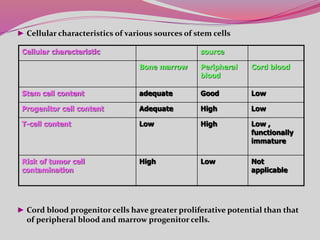
► Cellular characteristics of various sources of stem cells
► Cord blood progenitor cells have greater proliferative potential than that
of peripheral blood and marrow progenitor cells.
Cellular characteristic source
Bone marrow Peripheral
blood
Cord blood
Stem cell content adequate Good Low
Progenitor cell content Adequate High Low
T-cell content Low High Low ,
functionally
immature
Risk of tumor cell
contamination
High Low Not
applicable
Clinical characteristics with various sources of stem
cells
Cellular
characteristic
source
Peripheral
blood
Bone marrow Cord blood
HLA Matching Close matching
required
Close matching
required
Less restrictive
than other
Engraftment Fastest Intermediate Slowest
Risk of acute
GVHD
Same as in
bone marrow
Same as in
peripheral
blood
Lowest
Risk of chronic
GVHD
Highest Lower than
peripheral
blood
Lowest
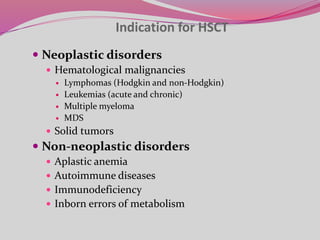
Indication for HSCT
 Neoplastic disorders
 Hematological malignancies
 Lymphomas (Hodgkin and non-Hodgkin)
 Leukemias (acute and chronic)
 Multiple myeloma
 MDS
 Solid tumors
 Non-neoplastic disorders
 Aplastic anemia
 Autoimmune diseases
 Immunodeficiency
 Inborn errors of metabolism
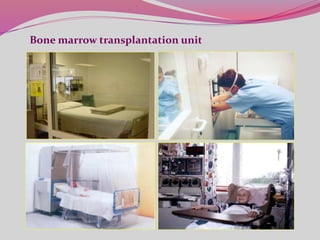
Bone marrow transplantation unit
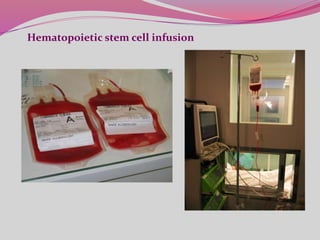
Hematopoietic stem cell infusion
Potential uses of stem cells
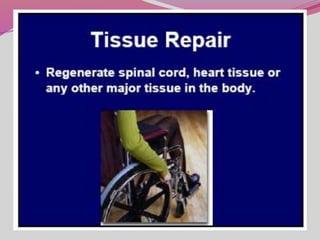
 Replacing damaged tissue
 Studying human development
 Testing new drugs
 Screening toxins
 Testing gene therapy methods
Embryonic stem culture

Embryonic stem culture

  • 1.
    EMBRYONIC STEM CULTURES AND ADULTSTEM CULTURES Presented By : Saritha Sadanandan Pillai MSc Biotechnology SAS SNDP Yogam College, Konni.
  • 2.
    Stem cells  Undifferentiatedcells capable of self-renew and to differentiate into different cell types or tissues during embryonic development and throughout adulthood.  Have possibility to become a specialised cell. Have the ability to divide continuously and develop into various other kinds of cells. Have immune potential and can help to treat a wide range of medical problems. Discovery of stem cells lead to a whole new branch of medicine known as Regenerative medicine.
  • 3.
    Types of stemcells  Stem cells are classified into various types based on their ability to undergo differentiation into different cell types. UNIPOTENT: Cells can reproduce only one cell type, their own, but have the property of self renewable (distinguishes from non-stem cells) e.g. progenitor cells, muscle cells. OLIGOPOTENT: differentiate into only a few cell types. e.g. lymphoid or myeloid stem cells. MULTIPOTENT : differentiate into a number of cell types, but only of a closely related family of cells.
  • 4.
    PLURIPOTENT: are descendentsof totipotent cells and can differentiate into nearly all cells. i.e. cells derived from any of the three germ layers.  They are able to develop into all cell types, except cells of the embryonic membranes. TOTIPOTENT: differentiate into embryonic and extra- embryonic cell types. Such cells can construct a complete, viable organism.
  • 5.
  • 7.
    This cell Can formthe Embryo and placenta This cell Can just form the embryo
  • 8.
    Terminology ►Totipotent cells- Thesecells have the potential to become -any type in the adult body; -any cell of the extra embryonic membranes (e.g., placenta). ►The only totipotent cells are the fertilized egg and the first 4 or so cells produced by its cleavage (as shown by the ability of mammals to produce
  • 9.
    ►Pluripotent stem cells:These are true stem cells, with the potential to make any differentiated cell in the body (but probably not those of the placenta which is derived from the trophoblast).
  • 11.
    Two types ofpluripotent stem cells have been found - •Embryonic Stem (ES) Cells. These can be isolated from the inner cell mass (ICM) of the blastocyst — the stage of embryonic development when implantation occurs. For humans, excess embryos produced during in vitro fertilization (IVF) procedures are used. •Embryonic Germ (EG) Cells. are derived from the part of a human embryo or foetus
  • 12.
    These types ofpluripotent stem cells •can only be isolated from embryonic or fetal tissue; •can be grown in culture, but only with special methods to prevent them from differentiating.
  • 13.
    Tens of thousands of frozenembryos are routinely destroyed when couples finish their treatment. These surplus embryos can be used to produce stem cells. Regenerative medical research aims to develop these cells into
  • 14.
    Somatic Cell Nuclear Transfer Thenucleus of a donated egg is removed and replaced with the nucleus of a mature, "somatic cell" (a skin cell, for example). No sperm is involved in this process, and no embryo is created to be implanted in a woman’s womb. The resulting stem cells can potentially develop into specialized cells that
  • 15.
    A: Stem Cell B: Progenitor Cell C:Differentiated Cell Stem cell division and Differentiation 1: Symmetric stem cell division 2: Asymmetric stem cell division 3: Progenitor division 4: Terminal differentiation
  • 16.
    How are embryonicstem cells harvested? •Growing cells in the laboratory is called as cell culture. •Human ES cells are derived from 4-5 day old blastocyst •Blastocyst structures include: -Trophoblast: outer layer of cells that surrounds the blastocyst & forms the placenta -Blastocoel: (“blastoseel”) the hollow cavity inside the blastocyst that will form body cavity -Inner cell mass: a group of approx. 30 cells at one end of the blastocoel:
  • 17.
    Stages of Embryogenesis Day1 Fertilized egg Day 2 2-cell embryo Day 3-4 Multi-cell embryo Day 5-6 Blastocyst Day 11-14 Tissue Differentiation
  • 18.
    A primer onHuman Embryonic Stem Cells Blastocyst - from In Vitro Fertilization Clinic “Blueprint” celInner Cell Mass (Stem Cells) A Blastocyst is a hollow ball of cells with a small clump of stem cells inside
  • 19.
    Human Embryonic StemCells Blastocyst - from In Vitro Fertilization Clinic Stem Cells “Blueprint” cells A Blastocyst is a hollow ball of cells with a small clump of stem cells inside “Blueprint” cells Pipette To remove the stem cells, the Blastocyst is opened and the stem cells removed with a pipette
  • 20.
    Blastocyst - from InVitro Fertilization Clinic Stem Cells “Blueprint” cells A Blastocyst is a hollow ball of cells with a small clump of stem cells inside Pipette Stem Cells Blueprint” cells Stem Cells Pipette The stem cells are placed in a dish and are fed and cared for (each blastocyst = 1 stem cell line)
  • 21.
    Growth factors Chemicalcues Stem Cells Petri Dish Pancreatic Islet Neuron Muscle cell Different chemicals / molecules are added to the stem cells to make them become
  • 22.
    Cell Culture Techniquesfor ESC •Isolate & transfer of inner cell mass into plastic culture dish that contains culture medium •Cells divide and spread over the dish Inner surface of culture dish is typically coated with mouse embryonic skin cells that have been treated so they will not divide •This coating is called a FEEDER LAYER •Feeder cells provide ES cells with a sticky surface for attachment •Feeder cells release nutrients •Recent discovery: methods for growing embryonic
  • 23.
    Significance – eliminateinfection by viruses or other mouse molecules •ES cells are removed gently and plated into several different culture plates before crowding occurs
  • 24.
    ►Over the courseof several days the inner cell mass proliferate and begin to crowd the culture dish. ►They are then gently removed and plated into several fresh culture dishes. The process of plating the cells is repeated several times and for many months and is called subculturing . Each cycle of subculturing is referred to as a passage. ►After six months or more the inner cell mass yield millions of embryonic stem cells. These cells are Pluripotent and appear genetically normal and are referred
  • 26.
    Multipotent stem cells ►Theseare true stem cells but can only differentiate into a limited number of types. For example, the bone marrow contains multipotent stem cells that give rise to all the cells of the blood but not to other types of cells. ►Multipotent stem cells are found in adult animals; perhaps most organs in the body (e.g., brain, liver) contain them where they can replace dead or damaged cells. ►These adult stem cells may also be the cells that — when one accumulates sufficient
  • 28.
    Adult Stem Cells ►Anadult stem cell also called as somatic stem cells are an undifferentiated cells found among differentiated cells in a tissue or an organ which can renew itself and can differentiate to yield the major specialized cell type of the tissue or the organ. ►Primary role of adult stem cell is to maintain and repair the tissue in which they are found. ►Their origin is unknown Hematopoietic stem cells – form all type of blood cells Stromal cells – can generate cartilage, fat, and fibrous connective tissue
  • 29.
  • 30.
  • 31.
    Adult stem cells ►Contraryto the ES cells, which are pluripotent, adult stem cells have a more restricted differentiation capacity and are usually lineage specific. ►Present in bone marrow and other tissues. ►Stem cells outside bone marrow are called as tissue stem cells. ►In the tissue, stem cells are located in the sites called niches.
  • 32.
    Stem cells nichesin various tissues H A I R F O L L I C L E C R Y P T S O F C O L O N C A N A L S O F H E R I N G L I M B U S O F C O R N I A
  • 33.
    Embryonic vs. AdultStem Cells •Totipotent -Differentiation into ANY cell type •Known Source •Large numbers can be harvested from embryos •May cause immune rejection -Rejection of •Multi or pluripotent Differentiation into some cell types, limited outcomes •Unknown source •Limited numbers, more difficult to isolate •Less likely to cause immune rejection, since the patient’s own cells can be used
  • 34.
    Cord Blood •Umbilical cordblood is also known as placental blood. •It is the blood that flows in the circulation of the developing fetus in the womb. •After the baby’s birth, the left over blood in the umbilical cord and placenta is called cord blood. •This blood is a rich source of stem
  • 35.
    Umbilical cord stemcells •Umbilical cord blood is a rich source of primitive stem cells as compared to adult stem cells. Therefore these are able to expand rapidly. •Stored cord blood stem cells from a child is the perfect match for that child. This allows for an autologous transplant if needed, with no risk of Graft-vs- Host Disease(GVHD). •Cord blood stem cells are a close match for siblings or family members in case of need,
  • 36.
    Making a decisionto collect baby’s cord blood stem cells. Yes, if there is a family history of malignant, benign or inherited disorders. Yes, even in the absence of “health risk factors”, as there are potential benefits to family in the future. Yes, if the costs are affordable and this is something of value. Yes, it is the one chance to collect
  • 37.
    Collecting cord bloodstemcells •This blood is collected by the physician after the baby is born and the cord is cut. •It takes less than 5 minutes and there is no pain, harm or risk to mother or newborn. •This cord blood containing the stem cells, is sent to a “Cord Blood Bank” either private or public where it is processed and the stem cells are
  • 38.
    •Immediately after ababy is delivered umbilical cord is clamped . After delivery of placenta , the placenta is placed on supporting frame , the cord is cleaned and needle is inserted into the umbilical vein . The umbilical cord blood is collected in a closed system and blood drained as a “standard gravity phlebotomy
  • 39.
    oSecond method involvescollecting the cord blood while the placenta is still in the mother’s womb. This method has theoretically two advantages collection begins earlier before the blood has a chance to clot. It uses the contraction of the uterus to enhance the blood drainage in addition to the gravity. Disadvantage: it is more intrusive and has the potential to interfere with after-delivery care for the mother and infant.
  • 40.
    Umbilical cord stemcells •Adultstem cells of infant origin •Greater compatibility •Less expensive
  • 41.
    Umbilical cord stemcells Threeimportant functions: 1. Plasticity: Potential to change into other cell types like nerve cells 2. Homing: To travel to the site of tissue damage 3. Engraftment: To unite with other tissues
  • 42.
    Potential Uses ofStem Cells •Basic research – clarification of complex events that occur during human development & understanding molecular basis of cancer -Molecular mechanisms for gene control -Role of signals in gene expression & differentiation of the stem cell -Stem cell theory of cancer
  • 43.
    Potential uses •Cell basedtherapies: Regenerative therapy to treat Parkinson’s, Alzheimer’s, ALS, spinal cord injury, stroke, severe burns, heart disease, diabetes, osteoarthritis, and rheumatoid arthritis
  • 47.
    Potential uses •Stem cellsin gene therapy Stem cells as vehicles after they have been genetically manipulated
  • 50.
    Hematopoietic stem celltransplantation Best studied adult stem cells Give rise to all blood cells Well established clinical use
  • 51.
    Definition Any procedure wherehematopoietic stem cells of any donor and any source are given to a recipient with intention of repopulating/replacing the hematopoietic system in total or in part.
  • 52.
    The Nobel Prize,1990 E. Donnall Thomas first succsessful HSCT in treatment of acute leukemias Thomas ED, Lochte HL, Lu WC, Ferrebee JW. Intravenous infusion of bone marrow in patients receiving radiation and chemotherapy. N. Engl. J. Med. 1957; 257: 491
  • 53.
    Hematopoietic stem cells ►Itis defined as the cell with the ability to achieve long term reconstruction of both myeloid and lymphoid lineage. ►Features :- 1. Remarkable regenerative capacity 2. Ability to home to marrow spaces following IV injection. {mediated in par by interaction of selectin on bone marrow endothelium and integrin on early hematopoietic cells } 3. Ability to be cryopreserved.
  • 55.
    1 / 25000 - 100 000 of bone marrow cells Charakteristic: • CD34 • CD133 • Lin- • C-kit (CD117) • BCRP Blood, 15 Jan 2004
  • 56.
    Basic Principle Replenish bonemarrow cells eradicated by disease, chemotherapy, or radiation
  • 57.
    Sources of stemcells Bone marrow  Peripheral blood  Umbilical cord blood
  • 58.
  • 59.
    ►Marrow is obtainedby multiple aspirations from the posterior iliac crest under general or epidural anesthesia. ►For larger quantity anterior crest or sternum can be the site. Several skin puncture on each iliac crest and multiple bone puncture are usually required. ►Target volume is 10-15 mg/kg of recipient or donor weight , whichever is less. ►Marrow is collected in heparinized syringe and filtered through 0.3-0.2 mm screen to remove the fat and bony spicule.
  • 60.
    ►Further processing dependon the clinical situation, such as  Removal of RBCs to prevent hemolysis in ABO incompatible transplants {In BMSCT ABO mismatch is the most common}  Removal of immunocompetent donor T cells to prevent GVHD  Attempts to remove possible contamination of tumour cells in autologous transplantation. ►Marrow is usually transfused immediately after harvesting, but delay of upto 24 hrs may occur without adverse consequences.
  • 61.
    ►These cells arenow the most common source of stem cells for HSCT . ►Peripheral blood stem cells {PBSC} are collected by leokopheresis after the donor has been treated with hematopoietic growth factors or a combination of chemotherapy and growth factors. For pts. with malignancy cyclophosphamide based chemotherapy and G –CSF are used. ►The donors are typically treated with growth factor for 4-6 days, following which the stem cells are collected in one to two 4 hrs sessions. ►In autologous setting transplantation of >2.5 X 10⁶ CD 34+ cells / kg leads to rapid and sustained engraftment. Peripheral blood {PB }
  • 62.
  • 63.
    Peripheral Blood StemCell Transplant PBSCs are easier to collect than bone marrow stem cells, which must be extracted from within bones. This makes PBSCs a less invasive treatment option than bone marrow stem cells.
  • 64.
  • 65.
    Storage of haematopoieticstem cell ►Bone marrow cells can be cryopreserved for prolonged time. This is necessary for autologous HSC because the cells must be harvested months in advance of the transplant treatment. ►In allogenic transplants fresh HSC are preferred in order to avoid cell loss that might occur during the freezing and thawing process. ►The graft undergoes HLA typing, cell counts and testing for viruses. ►Allogenic cord blood is stored frozen at a cord blood bank because it is only obtainable at the time of child birth. ►To cryopreserved HSC a preservative (dimethyl sulfoxide )DMSO, must be added and cells must be cooled very slowly in a control rate freezer to prevent osmotic cellular injury during ice crystal formation. ►HSC may be stored for years in a cryofreezer.
  • 66.
    ► Cellular characteristicsof various sources of stem cells ► Cord blood progenitor cells have greater proliferative potential than that of peripheral blood and marrow progenitor cells. Cellular characteristic source Bone marrow Peripheral blood Cord blood Stem cell content adequate Good Low Progenitor cell content Adequate High Low T-cell content Low High Low , functionally immature Risk of tumor cell contamination High Low Not applicable
  • 67.
    Clinical characteristics withvarious sources of stem cells Cellular characteristic source Peripheral blood Bone marrow Cord blood HLA Matching Close matching required Close matching required Less restrictive than other Engraftment Fastest Intermediate Slowest Risk of acute GVHD Same as in bone marrow Same as in peripheral blood Lowest Risk of chronic GVHD Highest Lower than peripheral blood Lowest
  • 68.
    Indication for HSCT Neoplastic disorders  Hematological malignancies  Lymphomas (Hodgkin and non-Hodgkin)  Leukemias (acute and chronic)  Multiple myeloma  MDS  Solid tumors  Non-neoplastic disorders  Aplastic anemia  Autoimmune diseases  Immunodeficiency  Inborn errors of metabolism
  • 69.
  • 70.
  • 71.
    Potential uses ofstem cells  Replacing damaged tissue  Studying human development  Testing new drugs  Screening toxins  Testing gene therapy methods