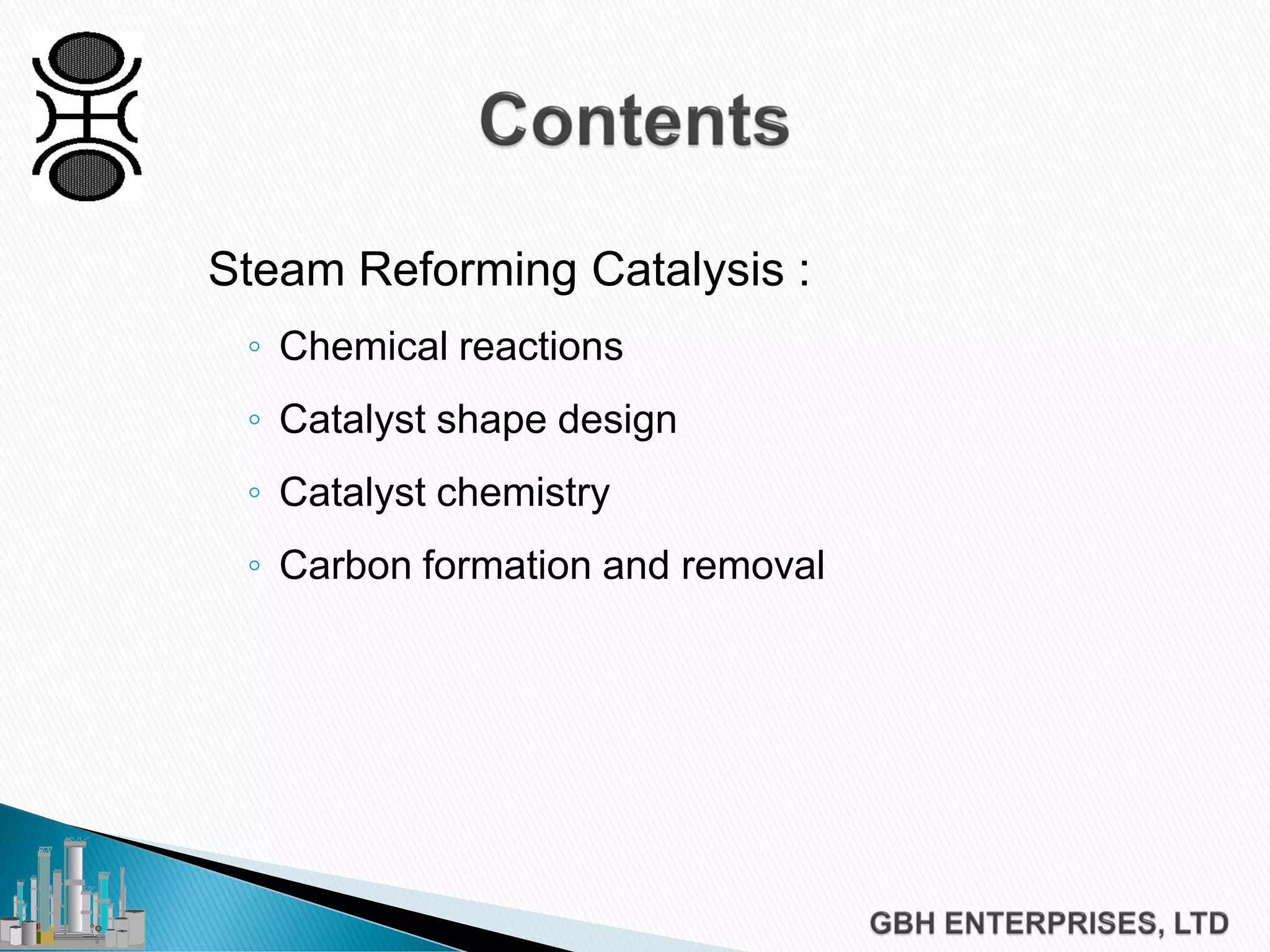
C2PT Catalyst Process Technology
By Gerard B Hawkins
Managing Director
Steam Reforming Catalysis :
◦ Chemical reactions
◦ Catalyst shape design
◦ Catalyst chemistry
◦ Carbon formation and removal
The conversion of hydrocarbons to a mixture of
CO, CO2 and H2
Two reactions: Reforming and Shift
Steam Reforming (very endothermic)
CH4 + H2O CO + 3H2
CnH2n+2 + nH2O nCO + (2n + 1)H2
Water gas shift (slightly exothermic)
CO + H2O CO2 + H2
Overall the reaction is highly endothermic
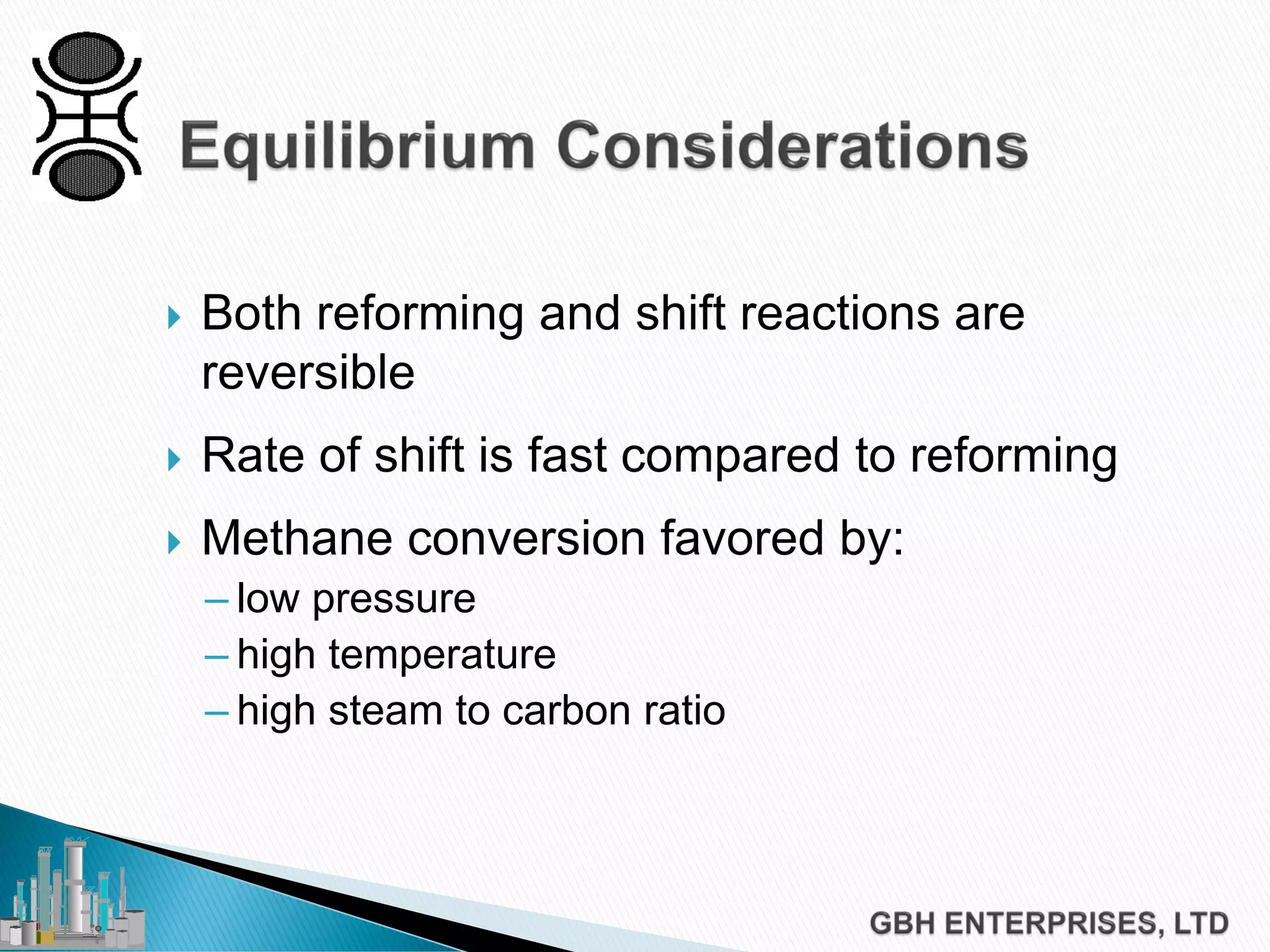
 Both reforming and shift reactions are
reversible
 Rate of shift is fast compared to reforming
 Methane conversion favored by:
– low pressure
– high temperature
– high steam to carbon ratio
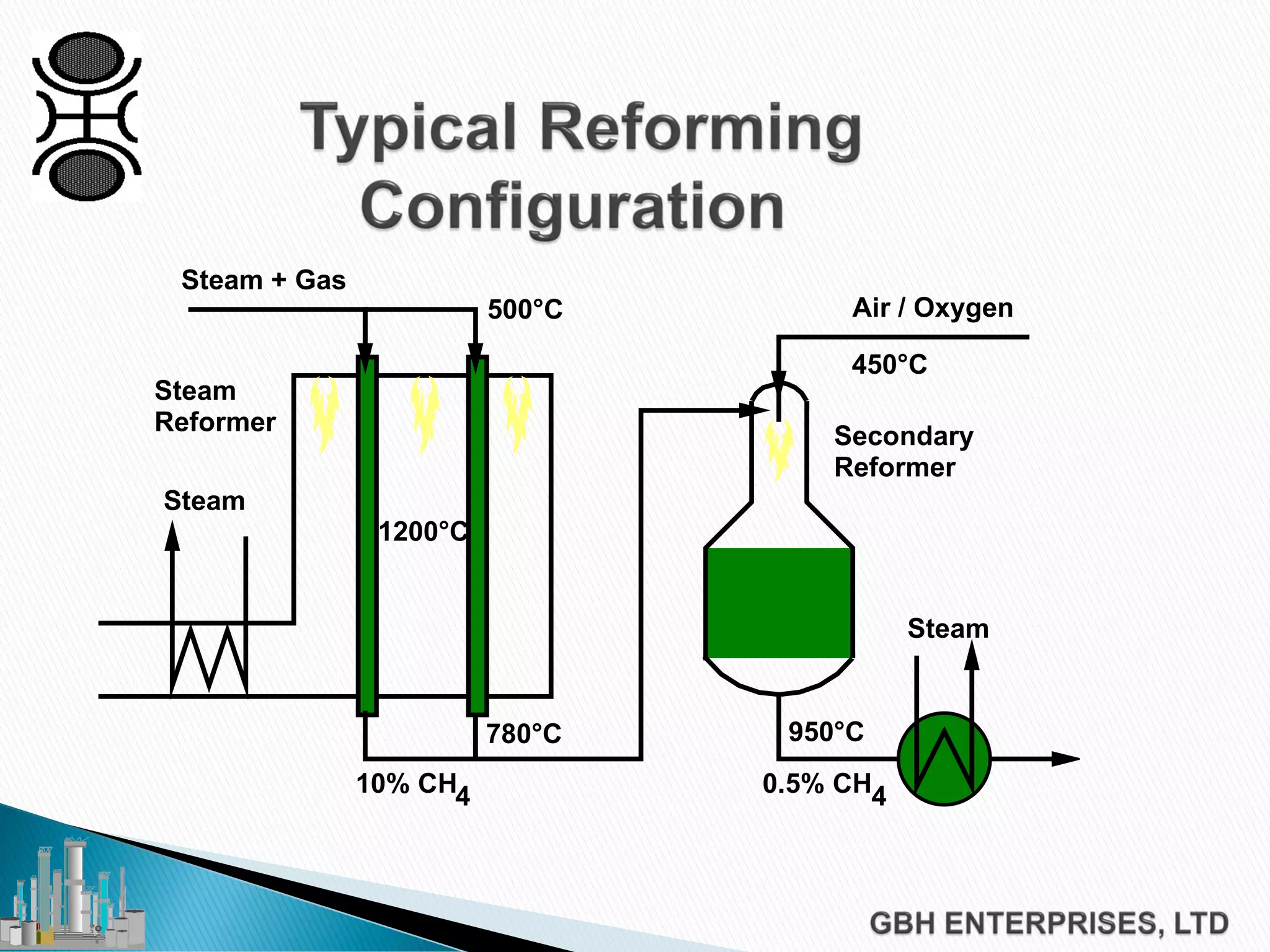
Steam
Secondary
Reformer
Steam
Steam + Gas
Steam
Reformer
Air / Oxygen500°C
780°C
450°C
1200°C
950°C
10% CH4 0.5% CH4
 The primary reformer is a heat exchanger
 Its function is to heat up process gas
 Catalyst and reaction in the tubes
 Combustion on the shell side
 Dominant heat transfer by radiation
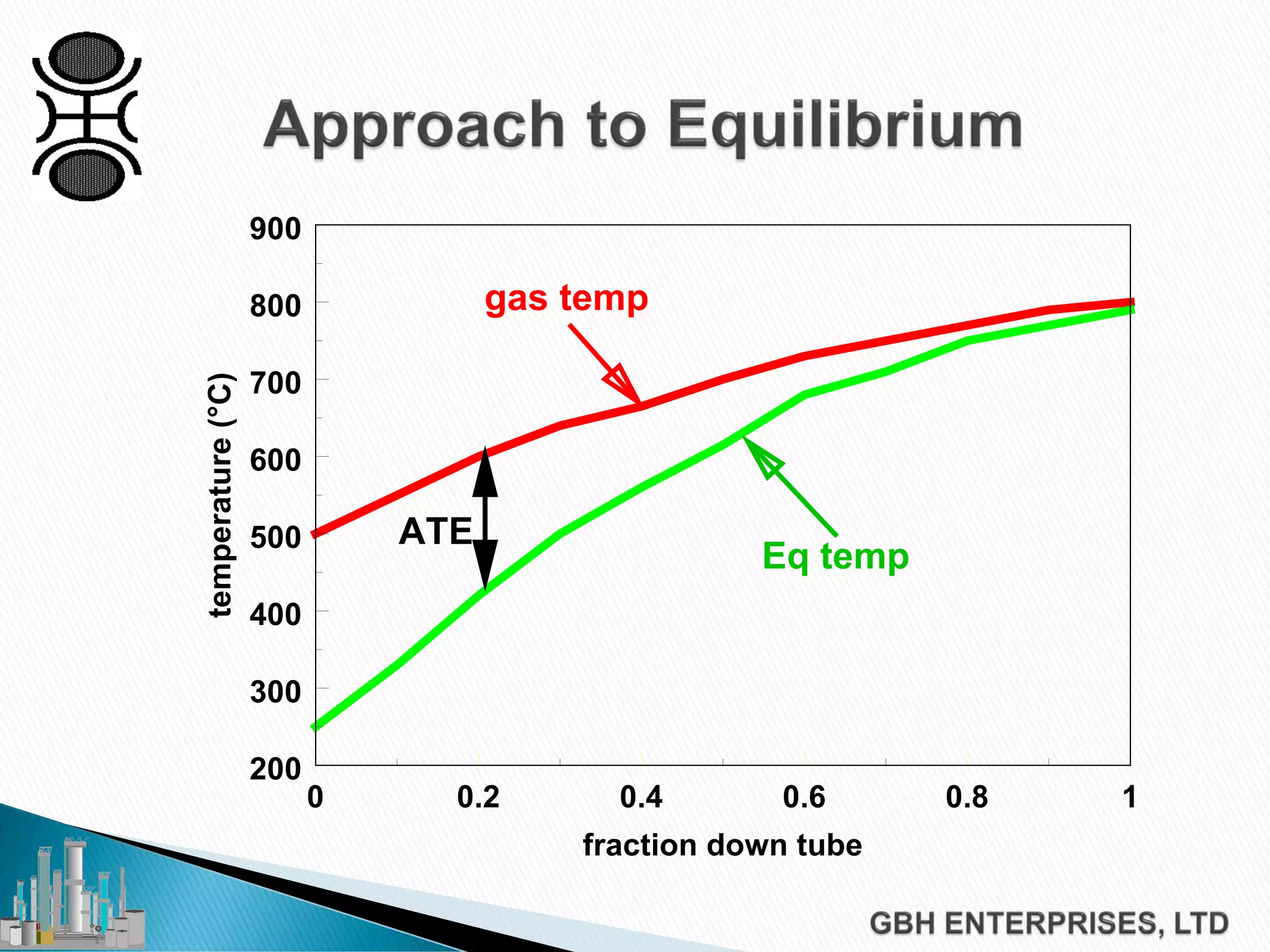
0 0.2 0.4 0.6 0.8 1
200
300
400
500
600
700
800
900
fraction down tube
temperature(°C)
gas temp
Eq temp
ATE
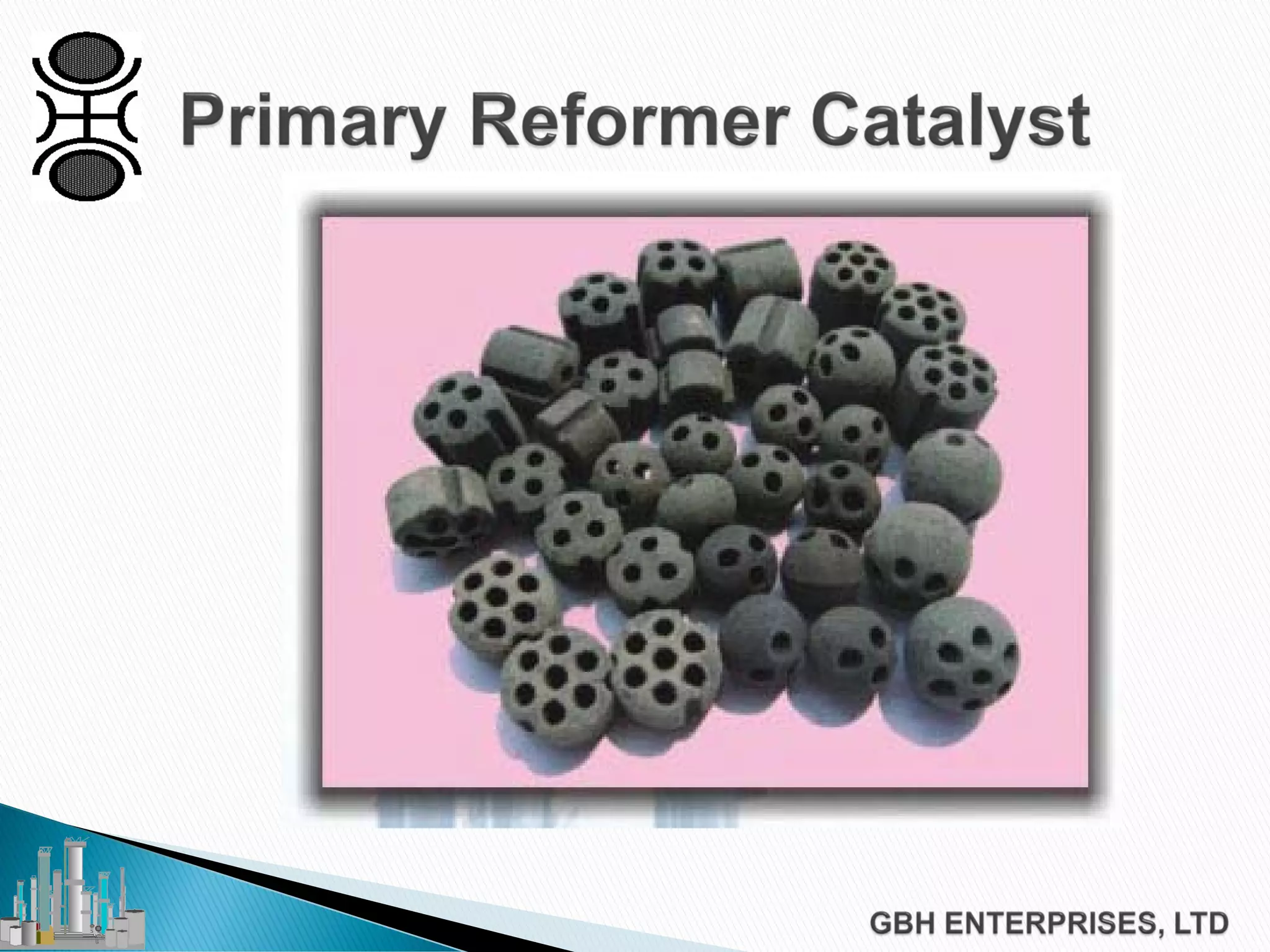
 Nickel on a ceramic support
 Three key factors in catalyst design:
– geometric surface area
– heat transfer from tube to gas
– pressure drop
 Also of concern:
– packing in the tube
– breakage characteristics
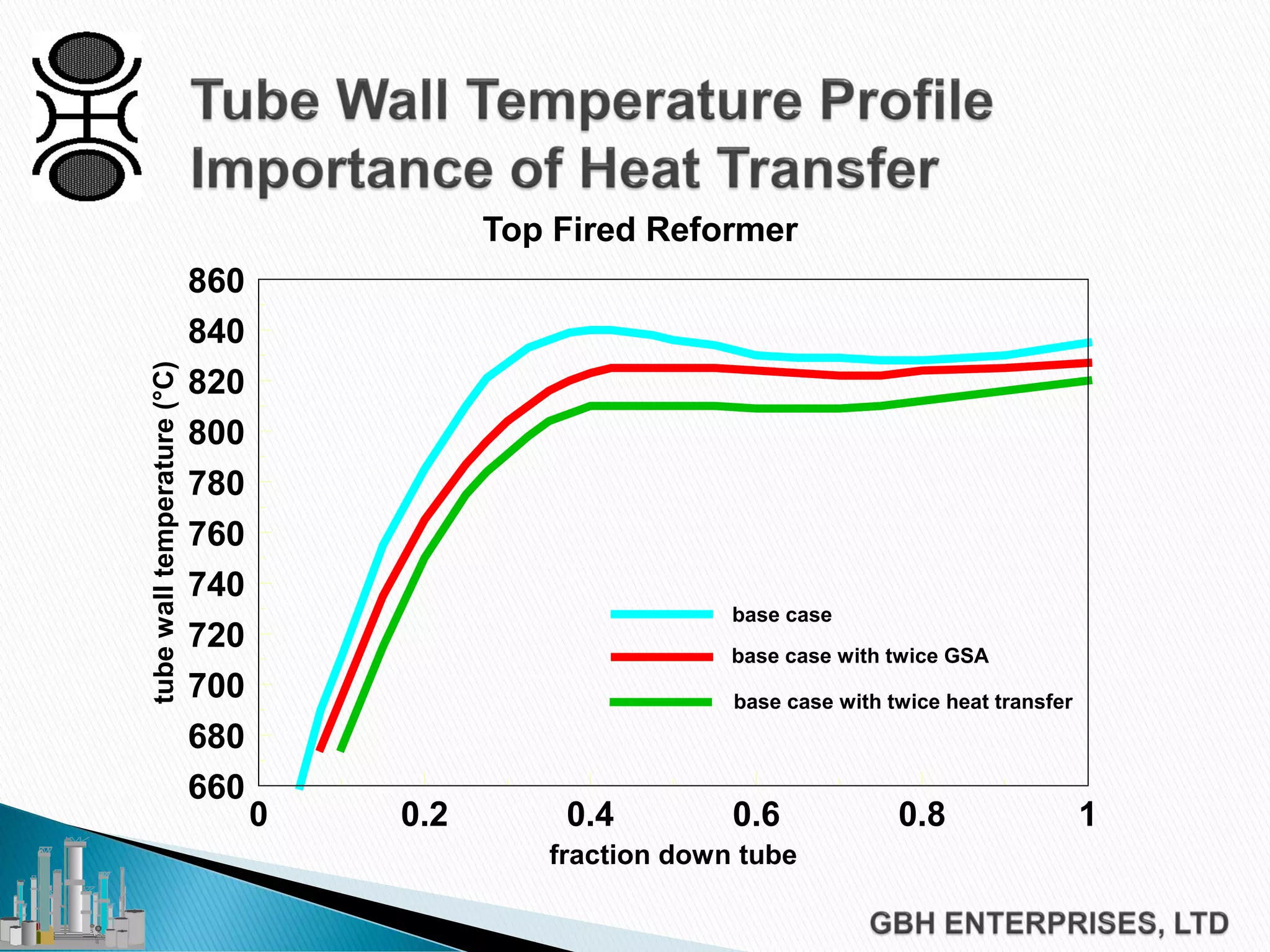
Top Fired Reformer
0 0.2 0.4 0.6 0.8 1
660
680
700
720
740
760
780
800
820
840
860
fraction down tube
tubewalltemperature(°C)
base case
base case with twice GSA
base case with twice heat transfer
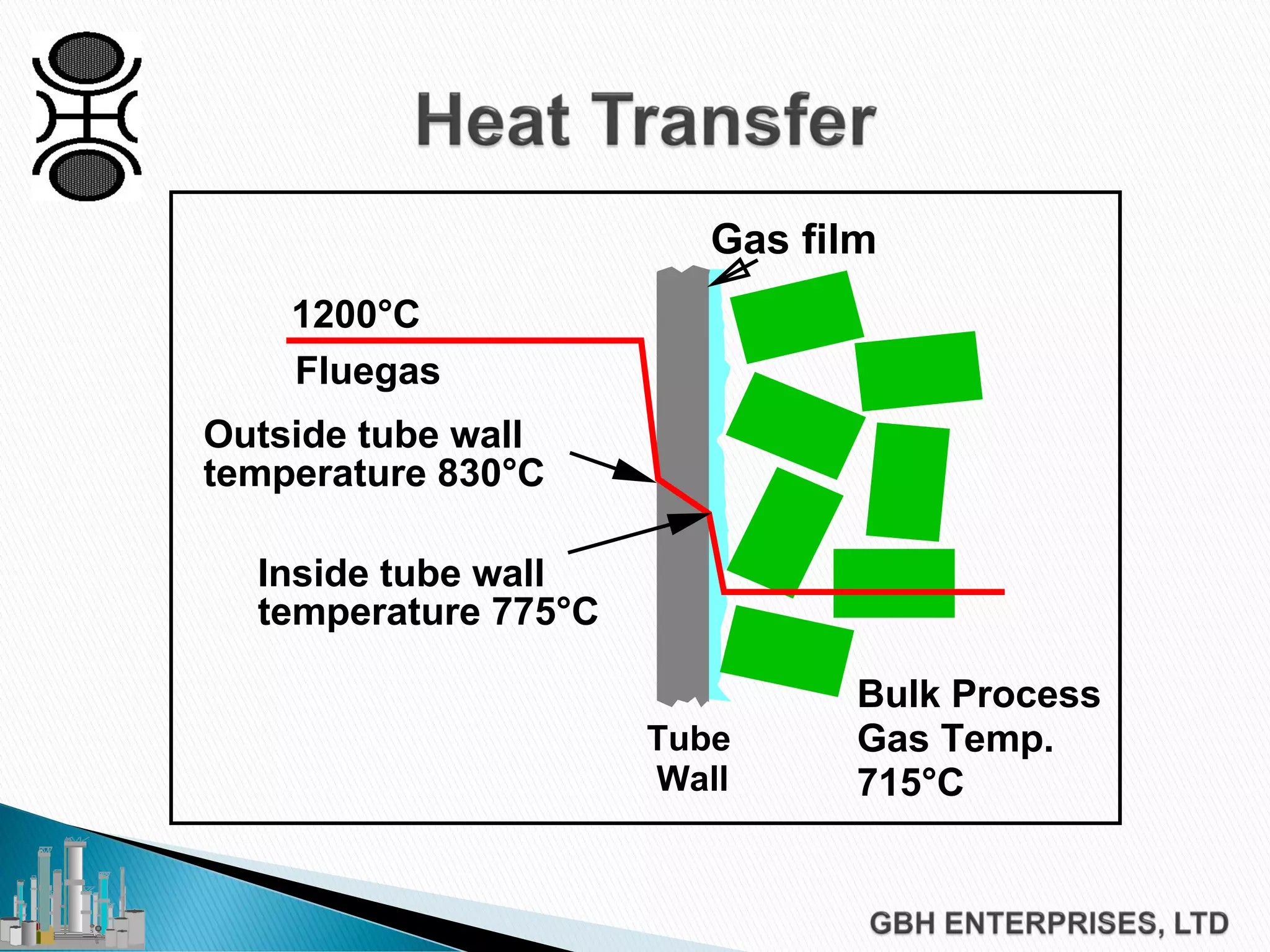
Outside tube wall
temperature 830°C
Bulk Process
Gas Temp.
715°C
1200°C
Fluegas
Inside tube wall
temperature 775°C
Gas film
Tube
Wall
 Need to minimize thickness of gas film at tube
wall
 Smaller catalyst particles improve heat transfer
from wall to bulk gas and reduce tube
temperatures
 Smaller particles increase pressure drop
 Catalyst shape should be optimized for high
heat transfer with low pressure drop
 The traditional catalyst shape is a ring
 Smaller rings give high activity and heat
transfer but higher pressure drop
 Optimized catalysts offer high surface
area and heat transfer with low PD
 Important that shape also provides good
packing and breakage characteristics
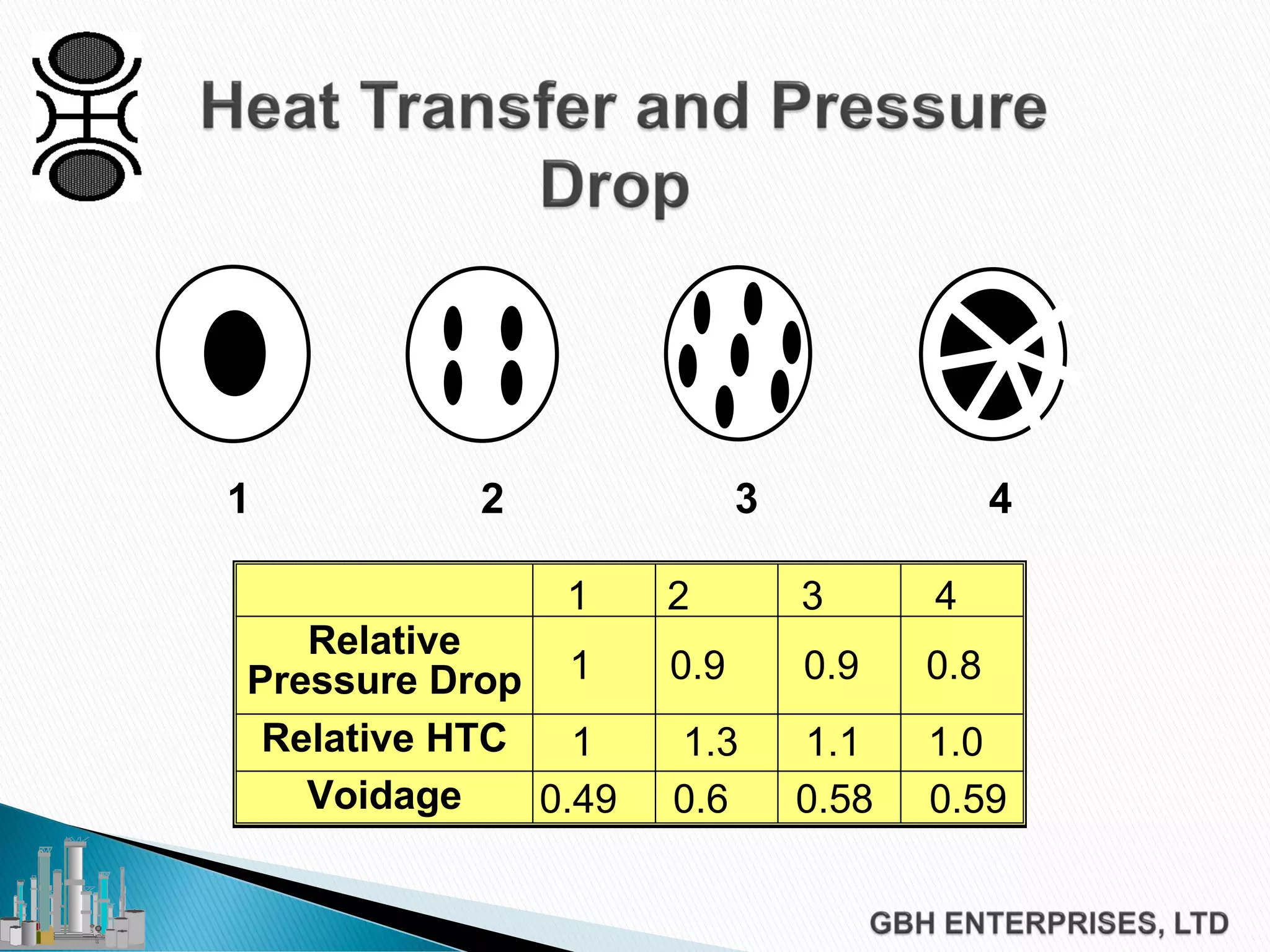
Relative
Pressure Drop
Relative HTC
Voidage
1 0.9 0.9 0.8
1 2 3 4
1 1.3 1.1 1.0
0.49 0.6 0.58 0.59
1 2 3 4
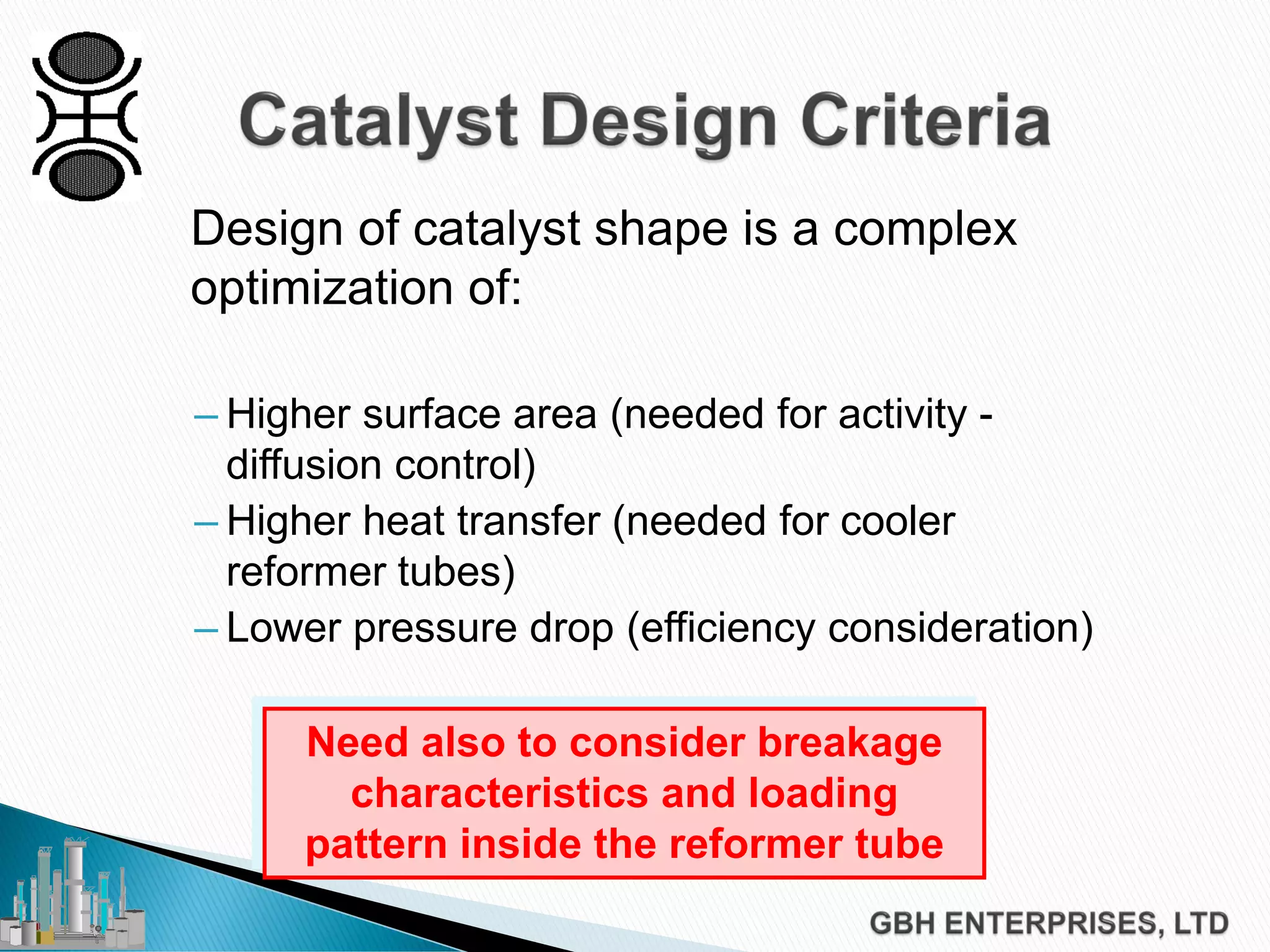
Design of catalyst shape is a complex
optimization of:
– Higher surface area (needed for activity -
diffusion control)
– Higher heat transfer (needed for cooler
reformer tubes)
– Lower pressure drop (efficiency consideration)
Need also to consider breakage
characteristics and loading
pattern inside the reformer tube
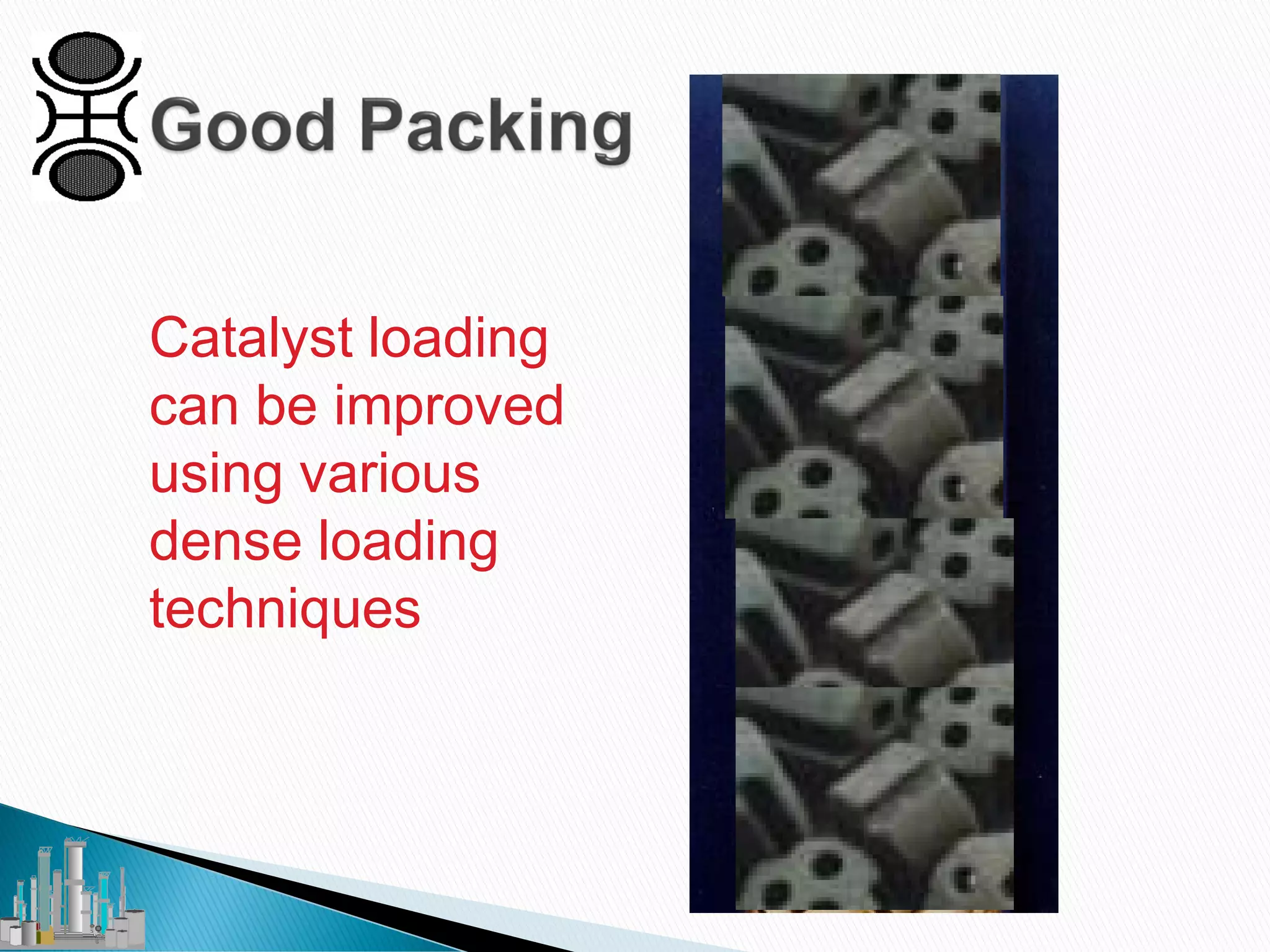
Catalyst loading
can be improved
using various
dense loading
techniques
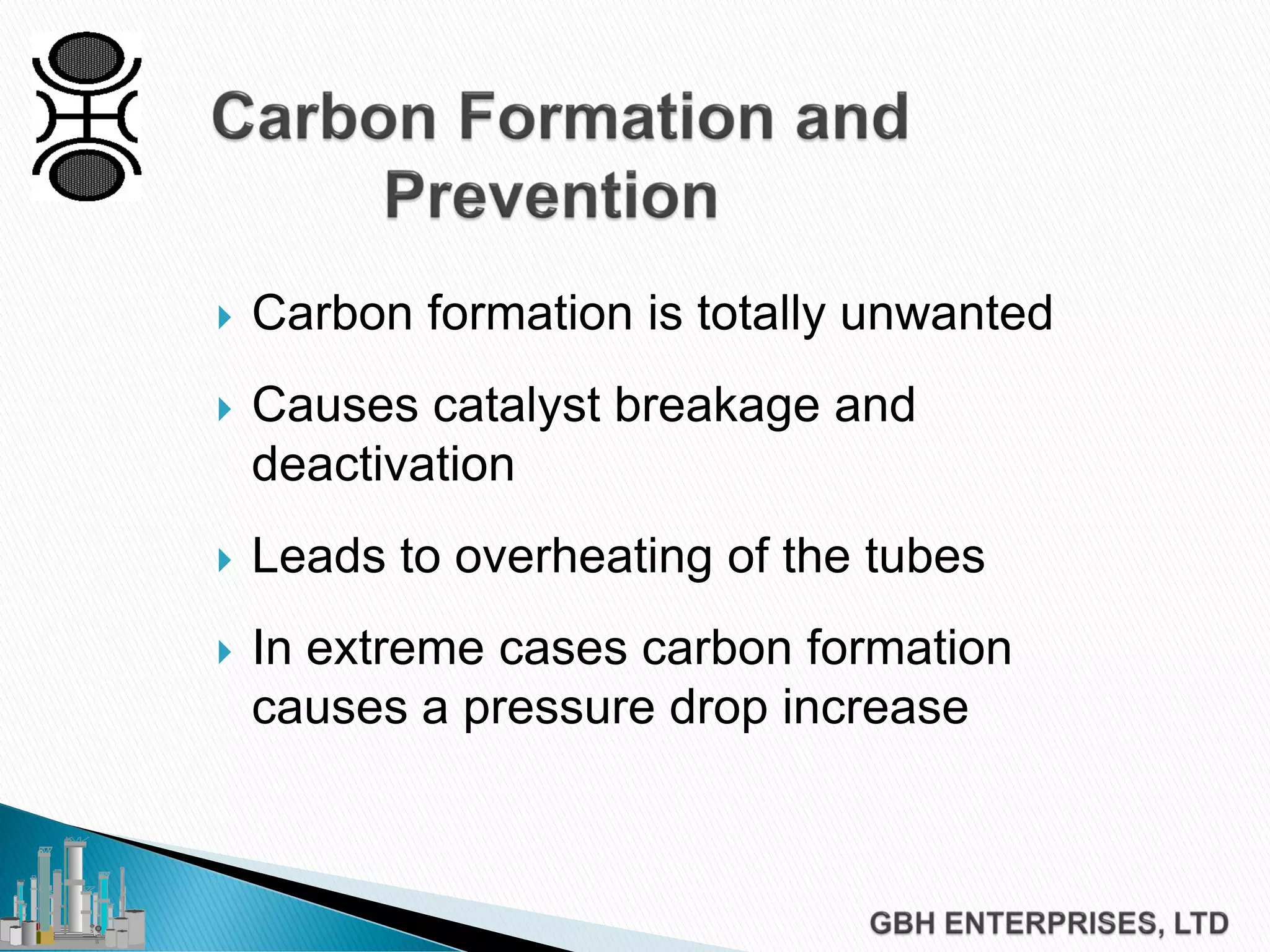
 Carbon formation is totally unwanted
 Causes catalyst breakage and
deactivation
 Leads to overheating of the tubes
 In extreme cases carbon formation
causes a pressure drop increase
Carbon Formation and
Prevention
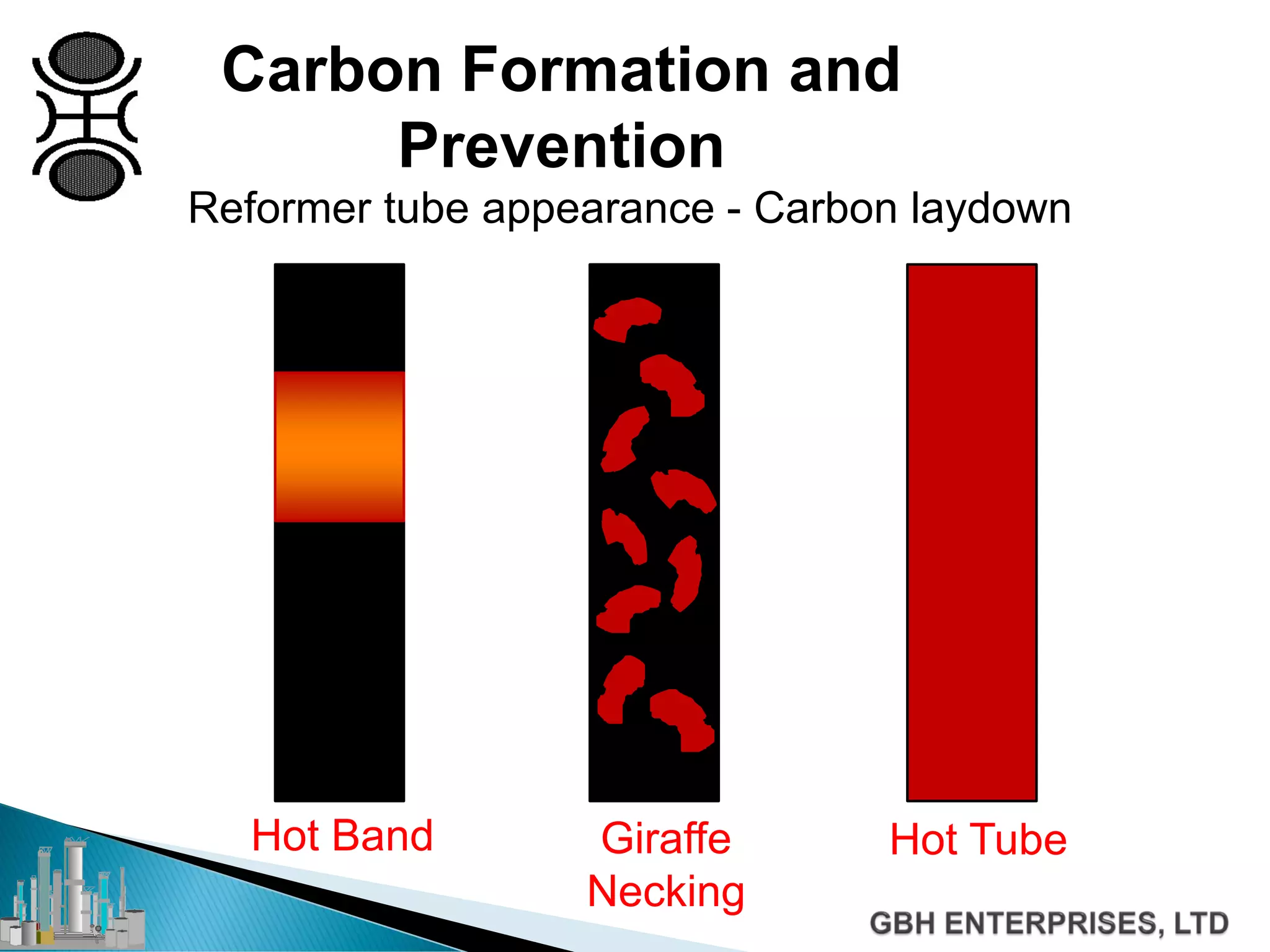
Giraffe
Necking
Hot TubeHot Band
Reformer tube appearance - Carbon laydown
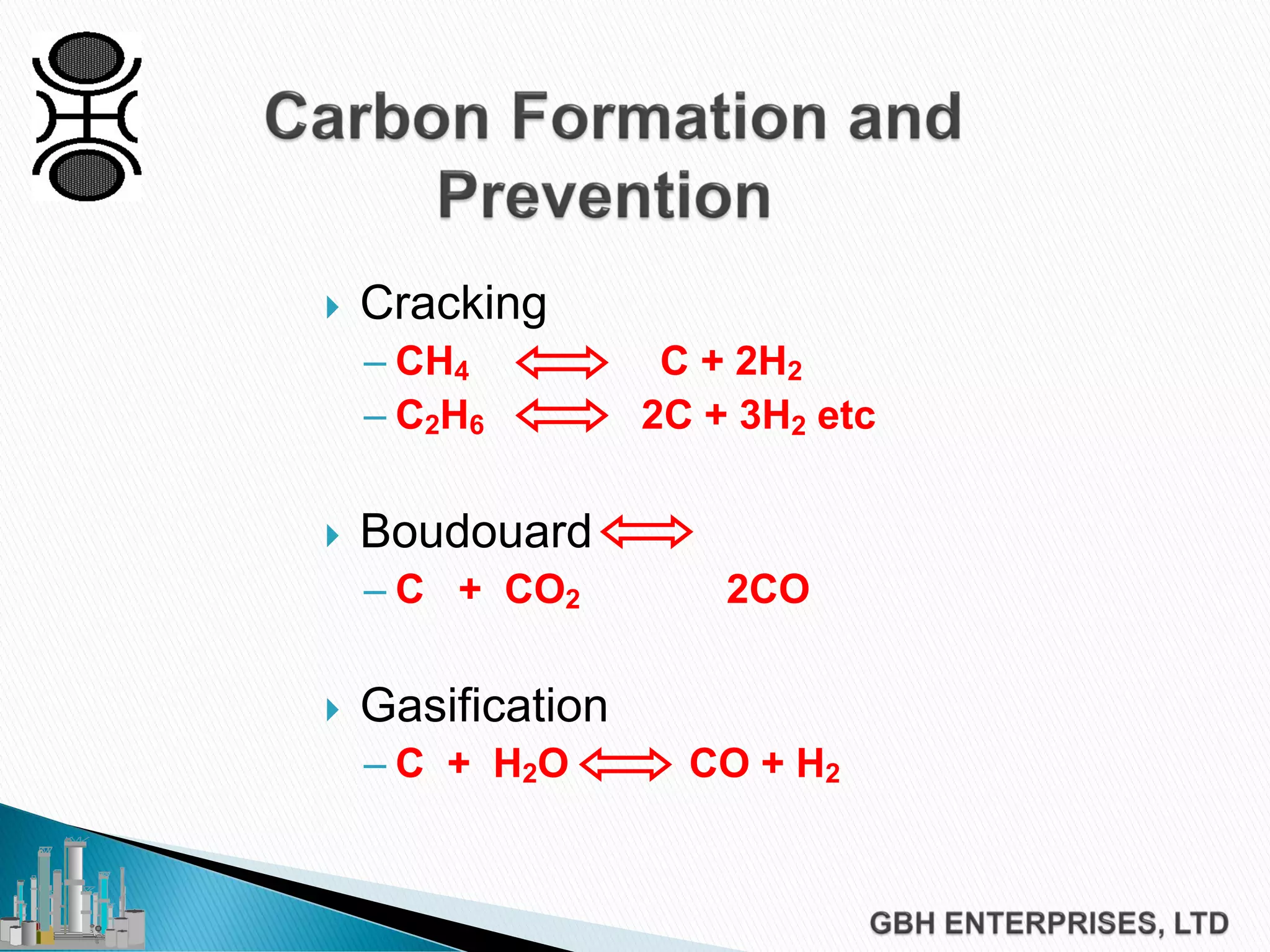
 Cracking
– CH4 C + 2H2
– C2H6 2C + 3H2 etc
 Boudouard
– C + CO2 2CO
 Gasification
– C + H2O CO + H2
 Under normal conditions carbon
gasification by steam and CO2 is favored
(gasification rate > C formation rate)
 Problems of carbon formation occur when:
– steam to carbon ratio is too low
– catalyst is not active enough
– higher hydrocarbons are present
– tube walls are too hot
– catalyst has poor heat transfer characteristics
 Use of a potash doped catalyst reduces
probability of carbon formation
Methods of preventing carbon formation:
– Use more active catalyst
– Use better heat transfer catalyst
– Reduce level of higher hydrocarbons
– Increase the steam ratio
– Use VSG-Z102 (3-7) -hole tailored catalysts
catalyst (potash-promoted)
 Alkali greatly accelerates carbon removal
 Addition of potash to the catalyst support
reduces carbon formation in two ways:
a increases the basicity of the support
b promotes carbon gasification
 Potash is mobile on the catalyst surface
 Potash doped catalyst is only needed in
the top half of the reformer tube
C + H2O CO + H2
OH -
 Increasing the content of alkali (potash)
– Higher heat flux possible for light feeds
– Heavier hydrocarbons can be steam reformed
– Lower steam to carbon ratios
– Faster carbon removal during steaming
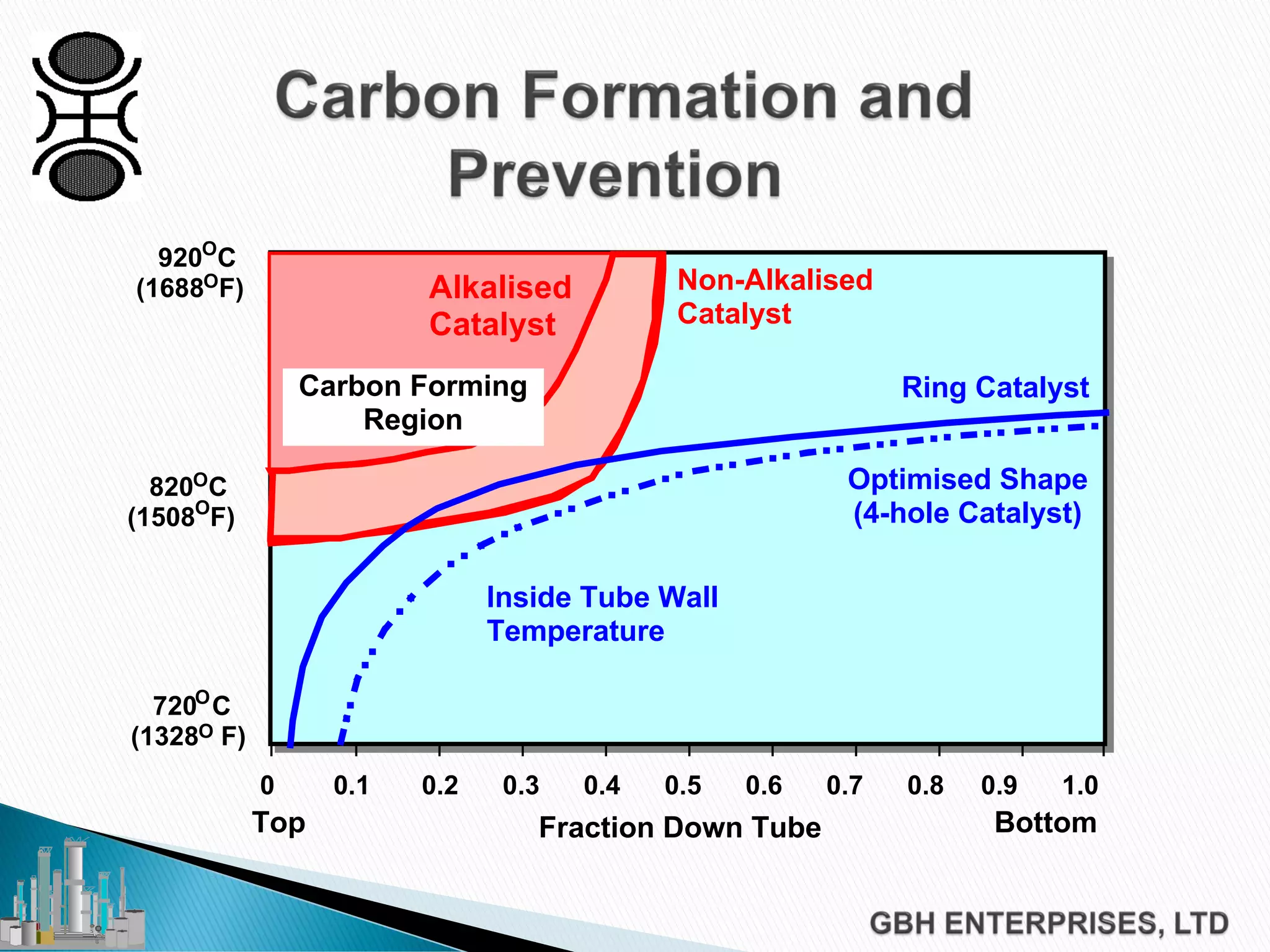
Fraction Down TubeTop Bottom
Non-Alkalised
Catalyst
Ring Catalyst
Optimised Shape
(4-hole Catalyst)
Inside Tube Wall
Temperature
920 C
(1688 F)
820 C
(1508 F)
720 C
(1328 F)
0 0.1 0.2 0.3 0.4 0.5 0.6 0.7 0.8 0.9 1.0
Alkalised
Catalyst
Carbon Forming
Region
O
O
O
O
O
O
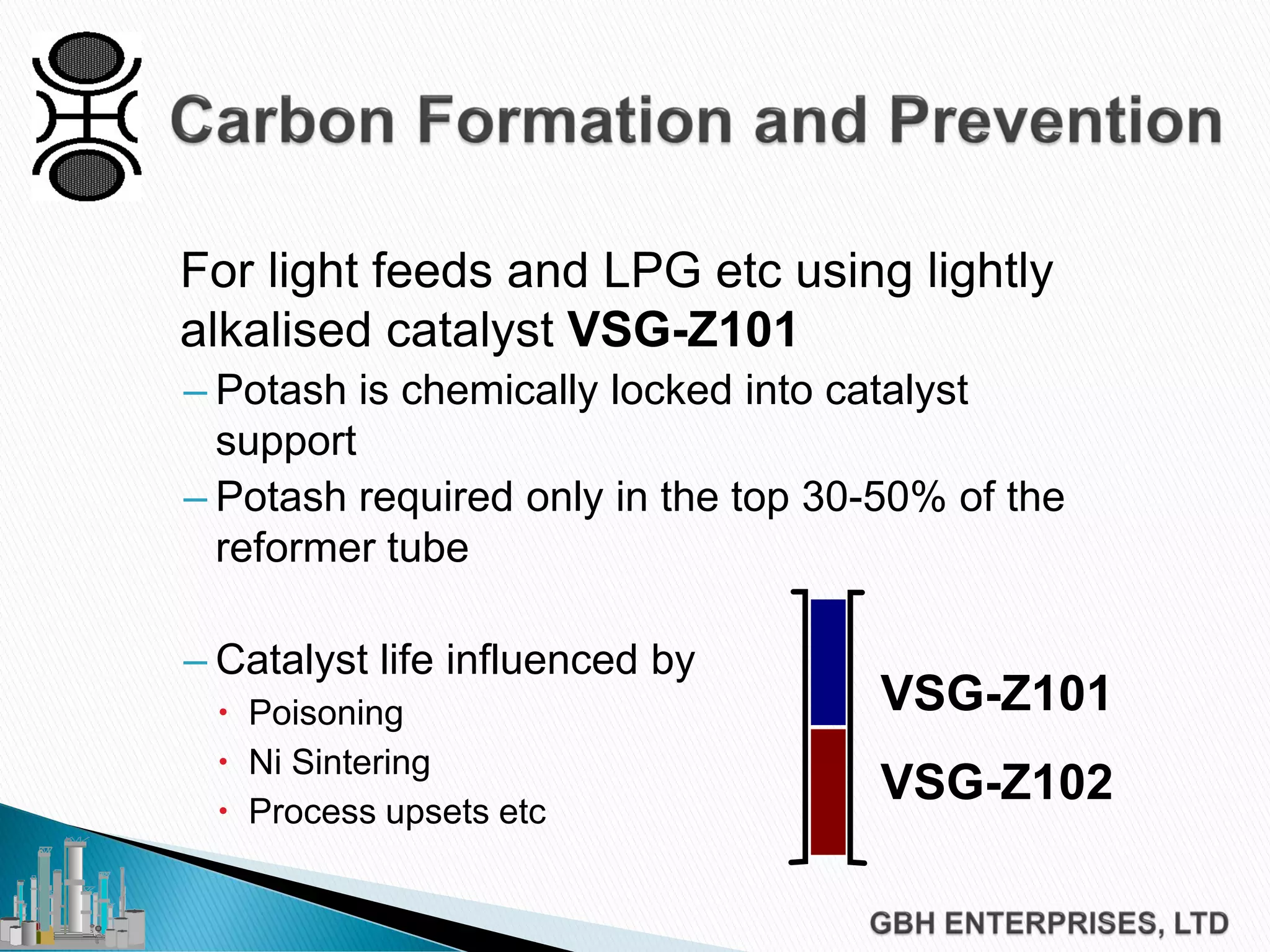
For light feeds and LPG etc using lightly
alkalised catalyst VSG-Z101
– Potash is chemically locked into catalyst
support
– Potash required only in the top 30-50% of the
reformer tube
– Catalyst life influenced by
 Poisoning
 Ni Sintering
 Process upsets etc
VSG-Z101
VSG-Z102
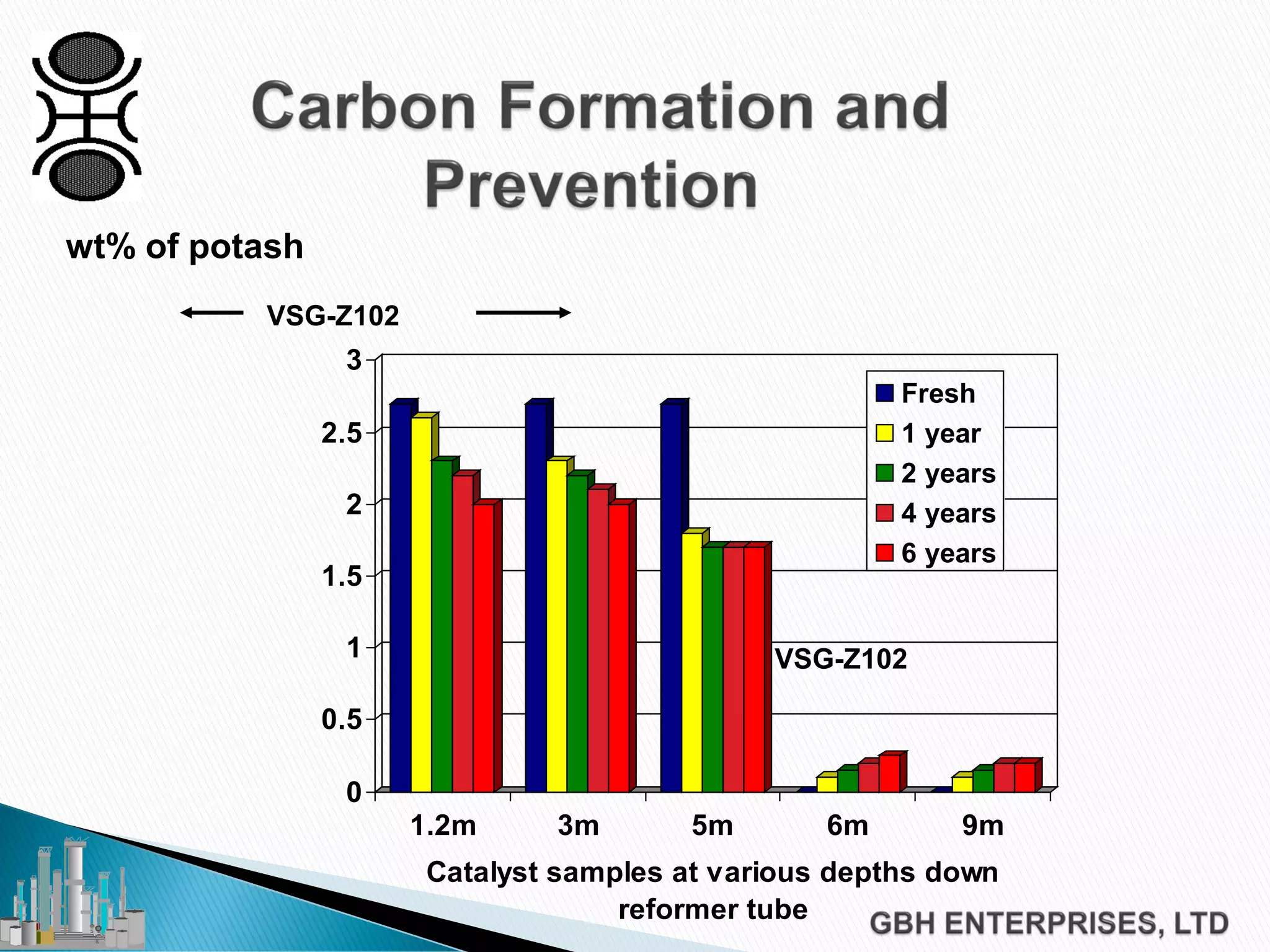
0
0.5
1
1.5
2
2.5
3
1.2m 3m 5m 6m 9m
Catalyst samples at various depths down
reformer tube
Fresh
1 year
2 years
4 years
6 years
wt% of potash
VSG-Z102
VSG-Z102
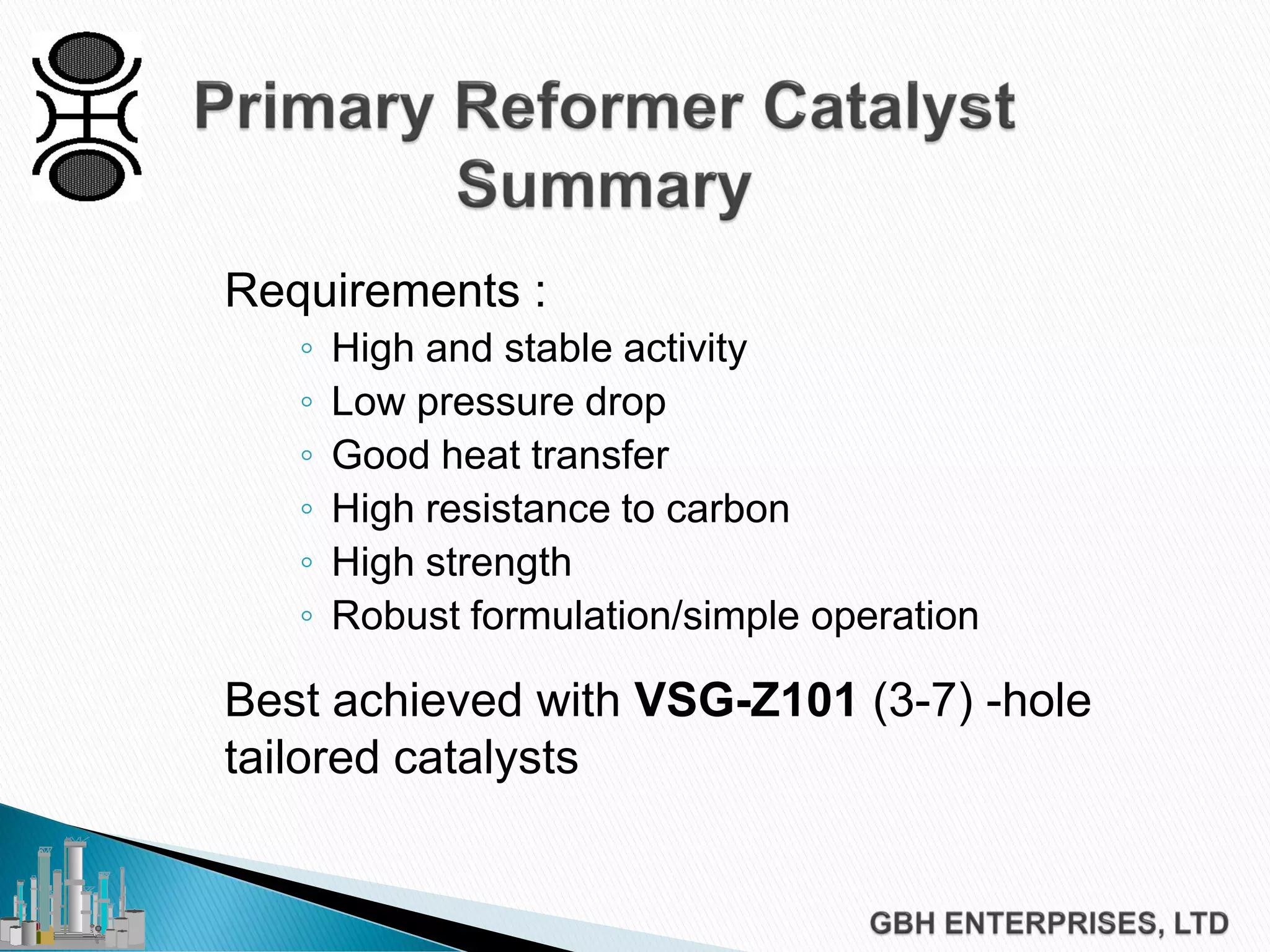
Requirements :
◦ High and stable activity
◦ Low pressure drop
◦ Good heat transfer
◦ High resistance to carbon
◦ High strength
◦ Robust formulation/simple operation
Best achieved with VSG-Z101 (3-7) -hole
tailored catalysts
Steam reforming  - The Basics of Reforming

Steam reforming - The Basics of Reforming

  • 1.
    C2PT Catalyst ProcessTechnology By Gerard B Hawkins Managing Director
  • 2.
    Steam Reforming Catalysis: ◦ Chemical reactions ◦ Catalyst shape design ◦ Catalyst chemistry ◦ Carbon formation and removal
  • 3.
    The conversion ofhydrocarbons to a mixture of CO, CO2 and H2 Two reactions: Reforming and Shift Steam Reforming (very endothermic) CH4 + H2O CO + 3H2 CnH2n+2 + nH2O nCO + (2n + 1)H2 Water gas shift (slightly exothermic) CO + H2O CO2 + H2 Overall the reaction is highly endothermic
  • 4.
     Both reformingand shift reactions are reversible  Rate of shift is fast compared to reforming  Methane conversion favored by: – low pressure – high temperature – high steam to carbon ratio
  • 5.
    Steam Secondary Reformer Steam Steam + Gas Steam Reformer Air/ Oxygen500°C 780°C 450°C 1200°C 950°C 10% CH4 0.5% CH4
  • 6.
     The primaryreformer is a heat exchanger  Its function is to heat up process gas  Catalyst and reaction in the tubes  Combustion on the shell side  Dominant heat transfer by radiation
  • 8.
    0 0.2 0.40.6 0.8 1 200 300 400 500 600 700 800 900 fraction down tube temperature(°C) gas temp Eq temp ATE
  • 9.
     Nickel ona ceramic support  Three key factors in catalyst design: – geometric surface area – heat transfer from tube to gas – pressure drop  Also of concern: – packing in the tube – breakage characteristics
  • 10.
    Top Fired Reformer 00.2 0.4 0.6 0.8 1 660 680 700 720 740 760 780 800 820 840 860 fraction down tube tubewalltemperature(°C) base case base case with twice GSA base case with twice heat transfer
  • 11.
    Outside tube wall temperature830°C Bulk Process Gas Temp. 715°C 1200°C Fluegas Inside tube wall temperature 775°C Gas film Tube Wall
  • 12.
     Need tominimize thickness of gas film at tube wall  Smaller catalyst particles improve heat transfer from wall to bulk gas and reduce tube temperatures  Smaller particles increase pressure drop  Catalyst shape should be optimized for high heat transfer with low pressure drop
  • 13.
     The traditionalcatalyst shape is a ring  Smaller rings give high activity and heat transfer but higher pressure drop  Optimized catalysts offer high surface area and heat transfer with low PD  Important that shape also provides good packing and breakage characteristics
  • 14.
    Relative Pressure Drop Relative HTC Voidage 10.9 0.9 0.8 1 2 3 4 1 1.3 1.1 1.0 0.49 0.6 0.58 0.59 1 2 3 4
  • 15.
    Design of catalystshape is a complex optimization of: – Higher surface area (needed for activity - diffusion control) – Higher heat transfer (needed for cooler reformer tubes) – Lower pressure drop (efficiency consideration) Need also to consider breakage characteristics and loading pattern inside the reformer tube
  • 16.
    Catalyst loading can beimproved using various dense loading techniques
  • 18.
     Carbon formationis totally unwanted  Causes catalyst breakage and deactivation  Leads to overheating of the tubes  In extreme cases carbon formation causes a pressure drop increase
  • 19.
    Carbon Formation and Prevention Giraffe Necking HotTubeHot Band Reformer tube appearance - Carbon laydown
  • 20.
     Cracking – CH4C + 2H2 – C2H6 2C + 3H2 etc  Boudouard – C + CO2 2CO  Gasification – C + H2O CO + H2
  • 21.
     Under normalconditions carbon gasification by steam and CO2 is favored (gasification rate > C formation rate)  Problems of carbon formation occur when: – steam to carbon ratio is too low – catalyst is not active enough – higher hydrocarbons are present – tube walls are too hot – catalyst has poor heat transfer characteristics  Use of a potash doped catalyst reduces probability of carbon formation
  • 22.
    Methods of preventingcarbon formation: – Use more active catalyst – Use better heat transfer catalyst – Reduce level of higher hydrocarbons – Increase the steam ratio – Use VSG-Z102 (3-7) -hole tailored catalysts catalyst (potash-promoted)
  • 23.
     Alkali greatlyaccelerates carbon removal  Addition of potash to the catalyst support reduces carbon formation in two ways: a increases the basicity of the support b promotes carbon gasification  Potash is mobile on the catalyst surface  Potash doped catalyst is only needed in the top half of the reformer tube C + H2O CO + H2 OH -
  • 24.
     Increasing thecontent of alkali (potash) – Higher heat flux possible for light feeds – Heavier hydrocarbons can be steam reformed – Lower steam to carbon ratios – Faster carbon removal during steaming
  • 25.
    Fraction Down TubeTopBottom Non-Alkalised Catalyst Ring Catalyst Optimised Shape (4-hole Catalyst) Inside Tube Wall Temperature 920 C (1688 F) 820 C (1508 F) 720 C (1328 F) 0 0.1 0.2 0.3 0.4 0.5 0.6 0.7 0.8 0.9 1.0 Alkalised Catalyst Carbon Forming Region O O O O O O
  • 26.
    For light feedsand LPG etc using lightly alkalised catalyst VSG-Z101 – Potash is chemically locked into catalyst support – Potash required only in the top 30-50% of the reformer tube – Catalyst life influenced by  Poisoning  Ni Sintering  Process upsets etc VSG-Z101 VSG-Z102
  • 27.
    0 0.5 1 1.5 2 2.5 3 1.2m 3m 5m6m 9m Catalyst samples at various depths down reformer tube Fresh 1 year 2 years 4 years 6 years wt% of potash VSG-Z102 VSG-Z102
  • 28.
    Requirements : ◦ Highand stable activity ◦ Low pressure drop ◦ Good heat transfer ◦ High resistance to carbon ◦ High strength ◦ Robust formulation/simple operation Best achieved with VSG-Z101 (3-7) -hole tailored catalysts