STARBUCKS
COFFEE
Group 7
Mission & vision
 Mission:
“to inspire and nurture the human spirit – one person, one
cup and one neighborhood at a time.”
 Vision :
“to establish Starbucks as the premier purveyor of the
coffee in the world while maintaining our uncompromising
principles while we grow . “
 Starbucks’s corporate vision focuses on leadership in the industry.
 We’re called partners, because it’s not just a job, it’s our passion.
Together, we embrace diversity to create a place where each of us can
ourselves. We always treat each other with respect and dignity. And we
Competition
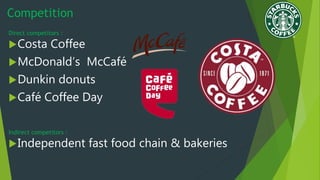
Direct competitors :
Costa Coffee
McDonald’s McCafé
Dunkin donuts
Café Coffee Day
Indirect competitors :
Independent fast food chain & bakeries
Company's implicit values
The main features of Starbucks’ organizational culture are :
 Servant Leadership (“employees first”)
 Relationship-driven approach
 Collaboration and communication
 Openness
 Inclusion and diversity
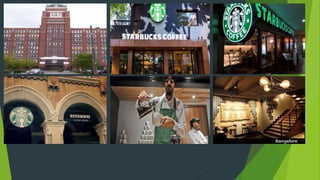
Store location
 the Starbucks Center (formerly the SODO Center) is the world
headquarters for coffeehouse chain Starbucks
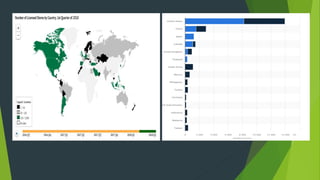
 There are around 28000 stores in world spread over 73
countries
 In India there are around 101 stores in major cities like
 Delhi ncr Hyderabad
 Mumbai Kolkata
 Pune
 Bangalore
 Chennai
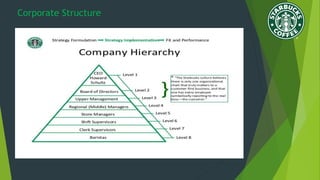
Corporate Structure
Organizational structure
 STARBUCKS HAS A MATRIX ORGANISATIONAL STRUCTURE
 MAIN FEATURES OF CORPORATE STRUCTURE ARE :
 FUNCTIONAL HIERARCHY
 GEOGRAPHIC DIVISIONS
 PRODUCT-BASED DIVISIONS
 TEAMS
 Organisational structure is decentralised, with responsibility given
to store managers.
 Employees can give their opinions in decision making.
 This increases innovation of new products
Decision Making
 Organisational structure is decentralised, with responsibility
given to store managers.
 Employees can give their opinions in decision making which
increases innovation of new products
 Decision making is consensual.
 Also at the Café’s company uses work team of Barista’s.
 In other parts of organization Starbucks uses Functional
Position with less emphasis on work teams.
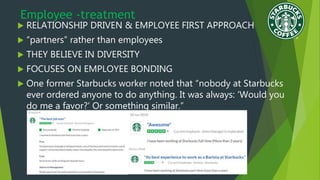
Employee -treatment
 RELATIONSHIP DRIVEN & EMPLOYEE FIRST APPROACH
 “partners” rather than employees
 THEY BELIEVE IN DIVERSITY
 FOCUSES ON EMPLOYEE BONDING
 One former Starbucks worker noted that “nobody at Starbucks
ever ordered anyone to do anything. It was always: ‘Would you
do me a favor?’ Or something similar.”
Nature of doing work
 Employees are called baristas.
 Employees are well trained and knowledgeable about products offered.
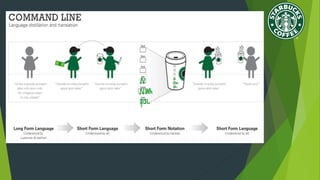
 baristas are trained to reply orders in Starbucks language
 Trained to be people oriented
Customers opinion
 Third place’ away from work and home.
 Exceptional customer service.
 Wide variety of options.
Customer-relationship
 Customers are the boss
 Starbucks reward card
 In store feedback form
 One person, one cup at a time
ORGANIZATIONAL STRUCTURE AT STARBUCKS

ORGANIZATIONAL STRUCTURE AT STARBUCKS

  • 1.
  • 2.
    Mission & vision Mission: “to inspire and nurture the human spirit – one person, one cup and one neighborhood at a time.”  Vision : “to establish Starbucks as the premier purveyor of the coffee in the world while maintaining our uncompromising principles while we grow . “  Starbucks’s corporate vision focuses on leadership in the industry.  We’re called partners, because it’s not just a job, it’s our passion. Together, we embrace diversity to create a place where each of us can ourselves. We always treat each other with respect and dignity. And we
  • 3.
    Competition Direct competitors : CostaCoffee McDonald’s McCafé Dunkin donuts Café Coffee Day Indirect competitors : Independent fast food chain & bakeries
  • 4.
    Company's implicit values Themain features of Starbucks’ organizational culture are :  Servant Leadership (“employees first”)  Relationship-driven approach  Collaboration and communication  Openness  Inclusion and diversity
  • 5.
    Store location  theStarbucks Center (formerly the SODO Center) is the world headquarters for coffeehouse chain Starbucks  There are around 28000 stores in world spread over 73 countries  In India there are around 101 stores in major cities like  Delhi ncr Hyderabad  Mumbai Kolkata  Pune  Bangalore  Chennai
  • 8.
  • 9.
    Organizational structure  STARBUCKSHAS A MATRIX ORGANISATIONAL STRUCTURE  MAIN FEATURES OF CORPORATE STRUCTURE ARE :  FUNCTIONAL HIERARCHY  GEOGRAPHIC DIVISIONS  PRODUCT-BASED DIVISIONS  TEAMS  Organisational structure is decentralised, with responsibility given to store managers.  Employees can give their opinions in decision making.  This increases innovation of new products
  • 10.
    Decision Making  Organisationalstructure is decentralised, with responsibility given to store managers.  Employees can give their opinions in decision making which increases innovation of new products  Decision making is consensual.  Also at the Café’s company uses work team of Barista’s.  In other parts of organization Starbucks uses Functional Position with less emphasis on work teams.
  • 11.
    Employee -treatment  RELATIONSHIPDRIVEN & EMPLOYEE FIRST APPROACH  “partners” rather than employees  THEY BELIEVE IN DIVERSITY  FOCUSES ON EMPLOYEE BONDING  One former Starbucks worker noted that “nobody at Starbucks ever ordered anyone to do anything. It was always: ‘Would you do me a favor?’ Or something similar.”
  • 12.
    Nature of doingwork  Employees are called baristas.  Employees are well trained and knowledgeable about products offered.  baristas are trained to reply orders in Starbucks language  Trained to be people oriented
  • 14.
    Customers opinion  Thirdplace’ away from work and home.  Exceptional customer service.  Wide variety of options.
  • 15.
    Customer-relationship  Customers arethe boss  Starbucks reward card  In store feedback form  One person, one cup at a time