Downloaded 1,000 times


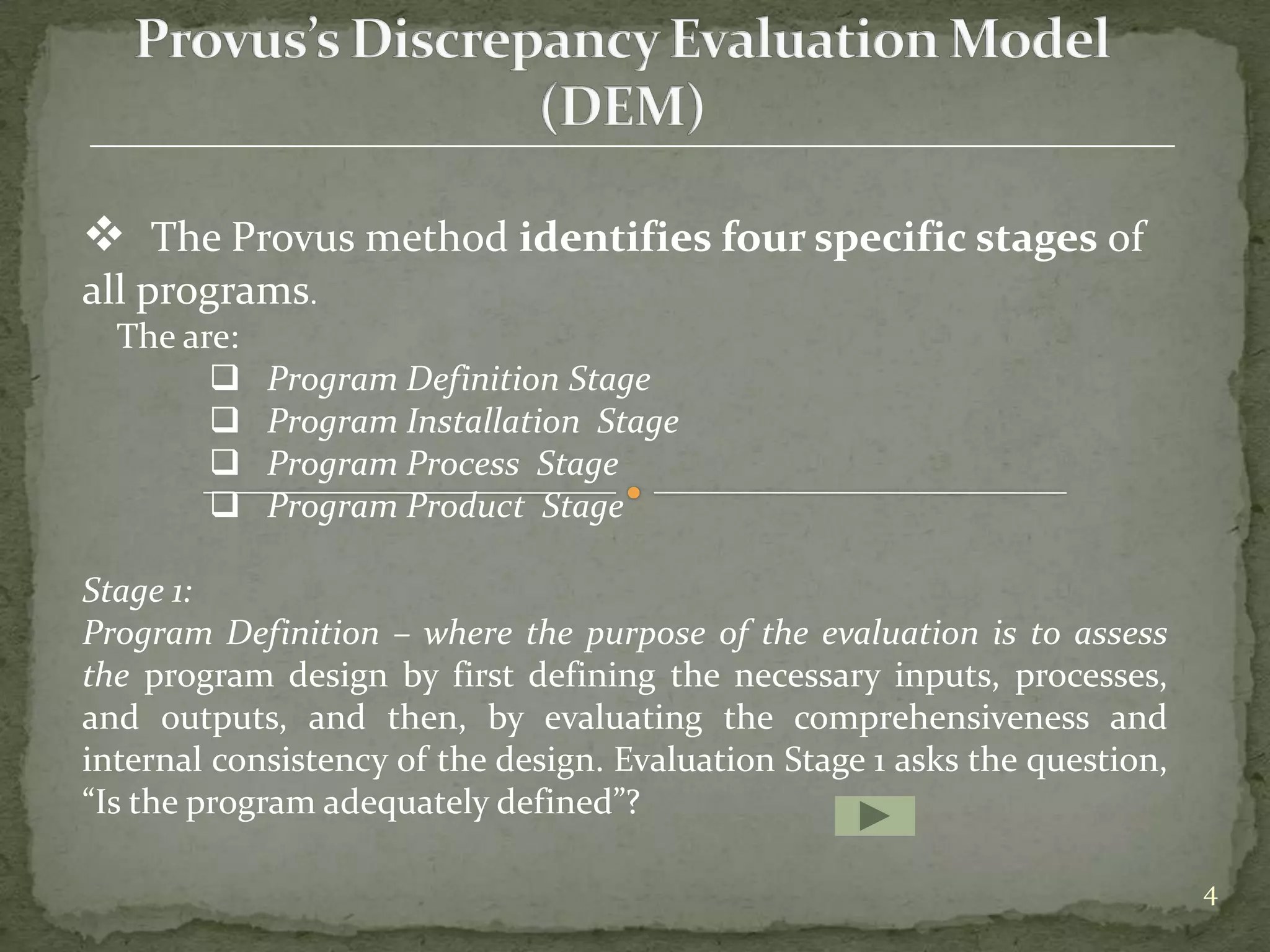

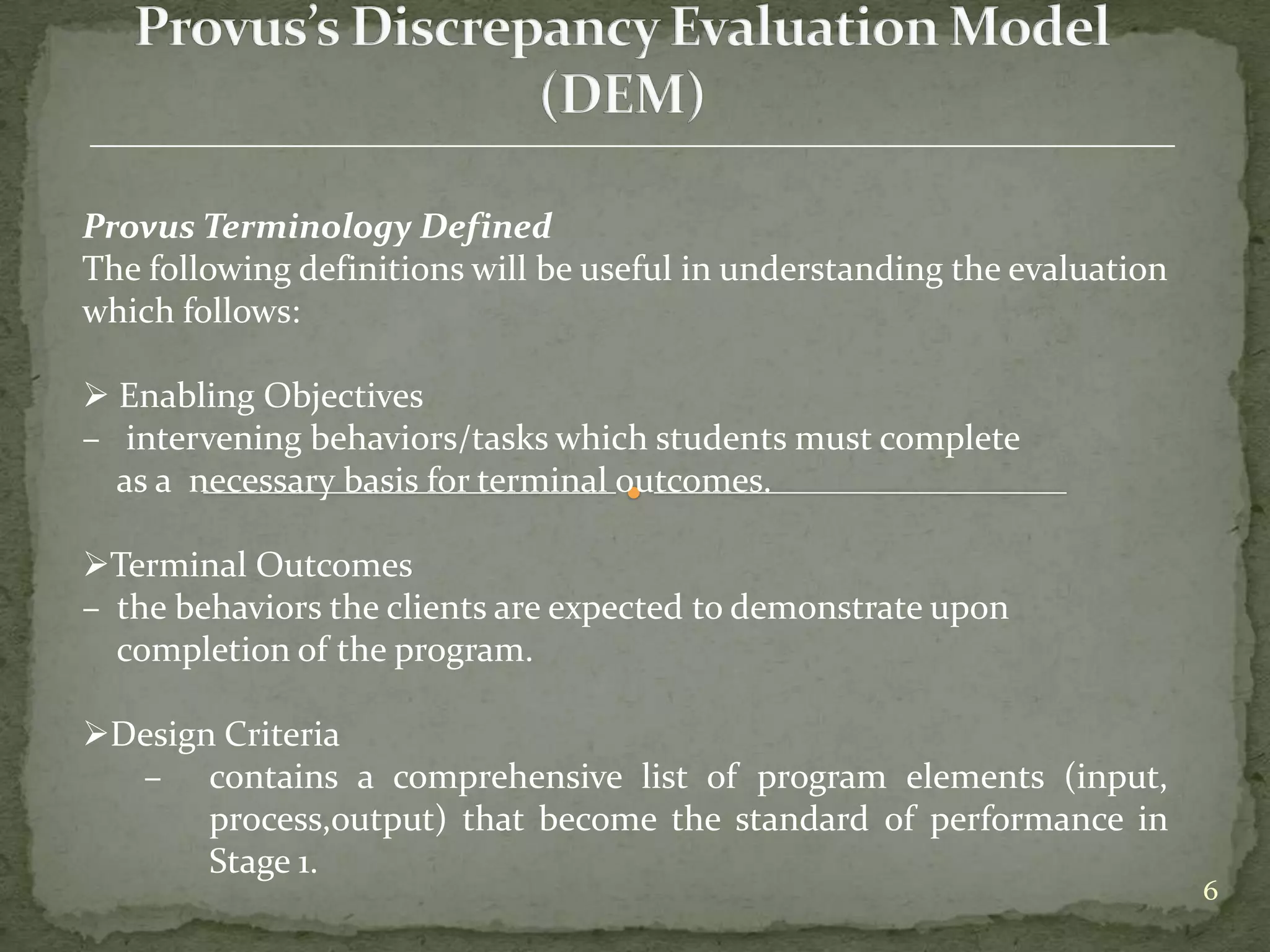
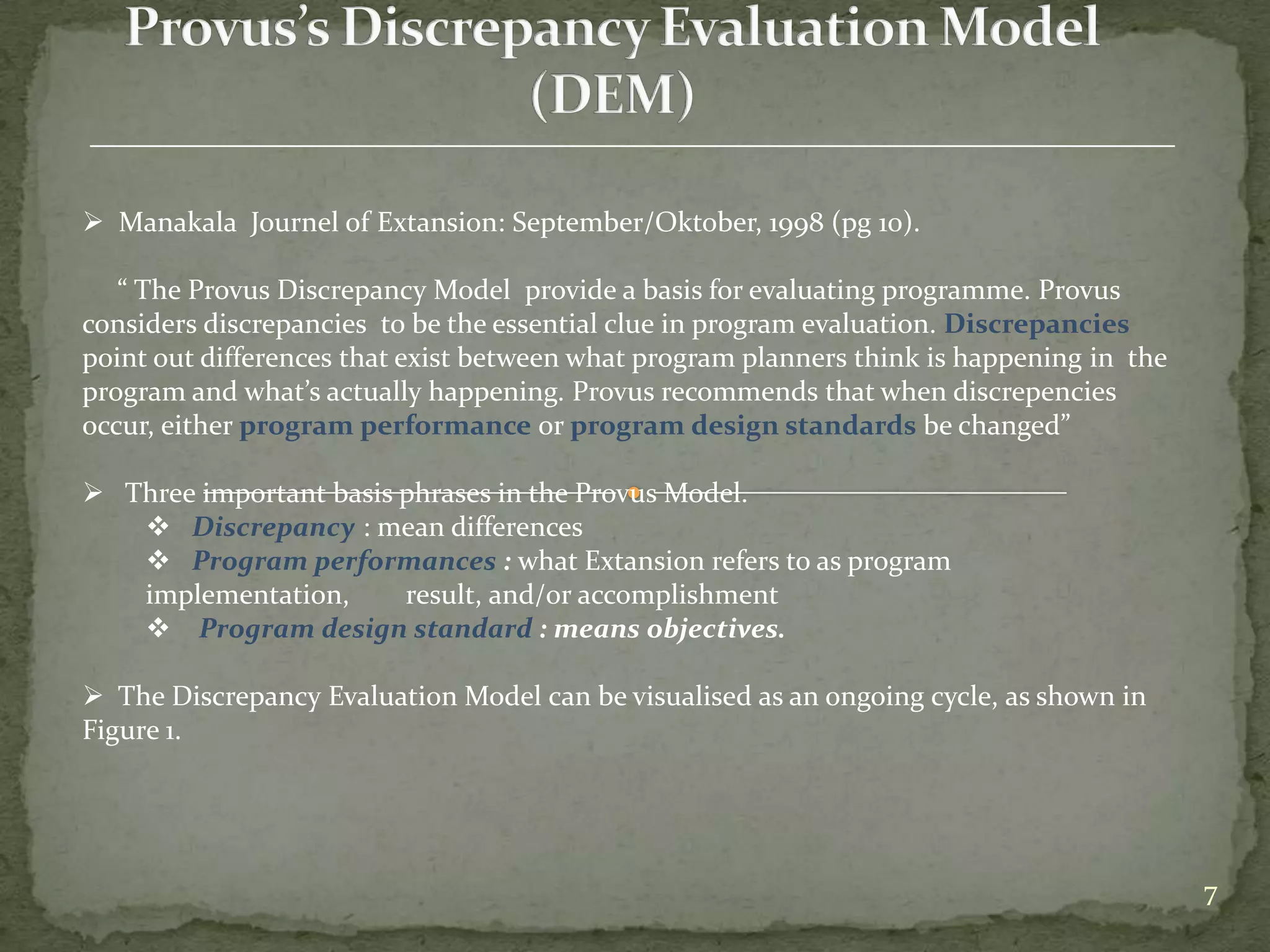
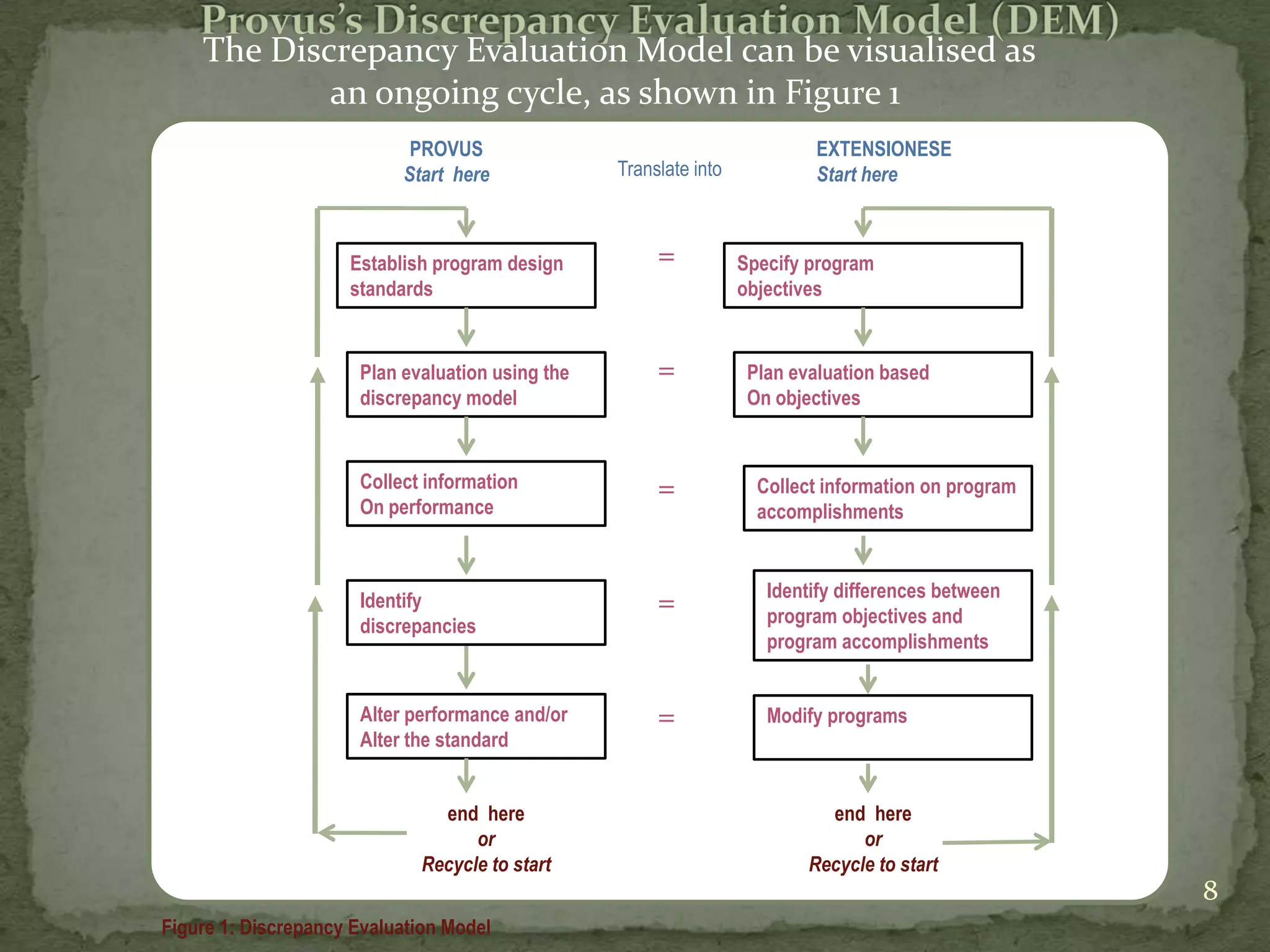


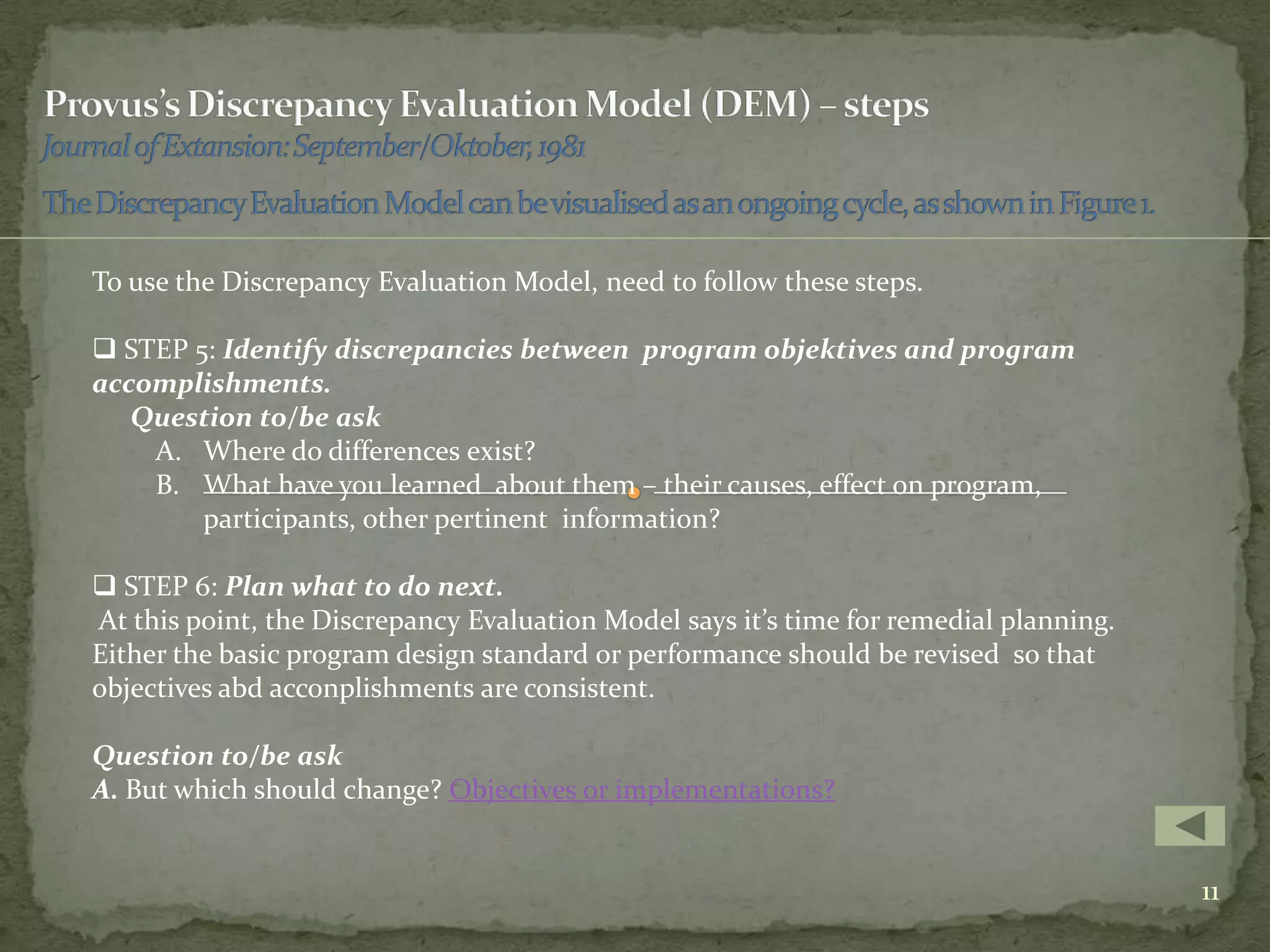

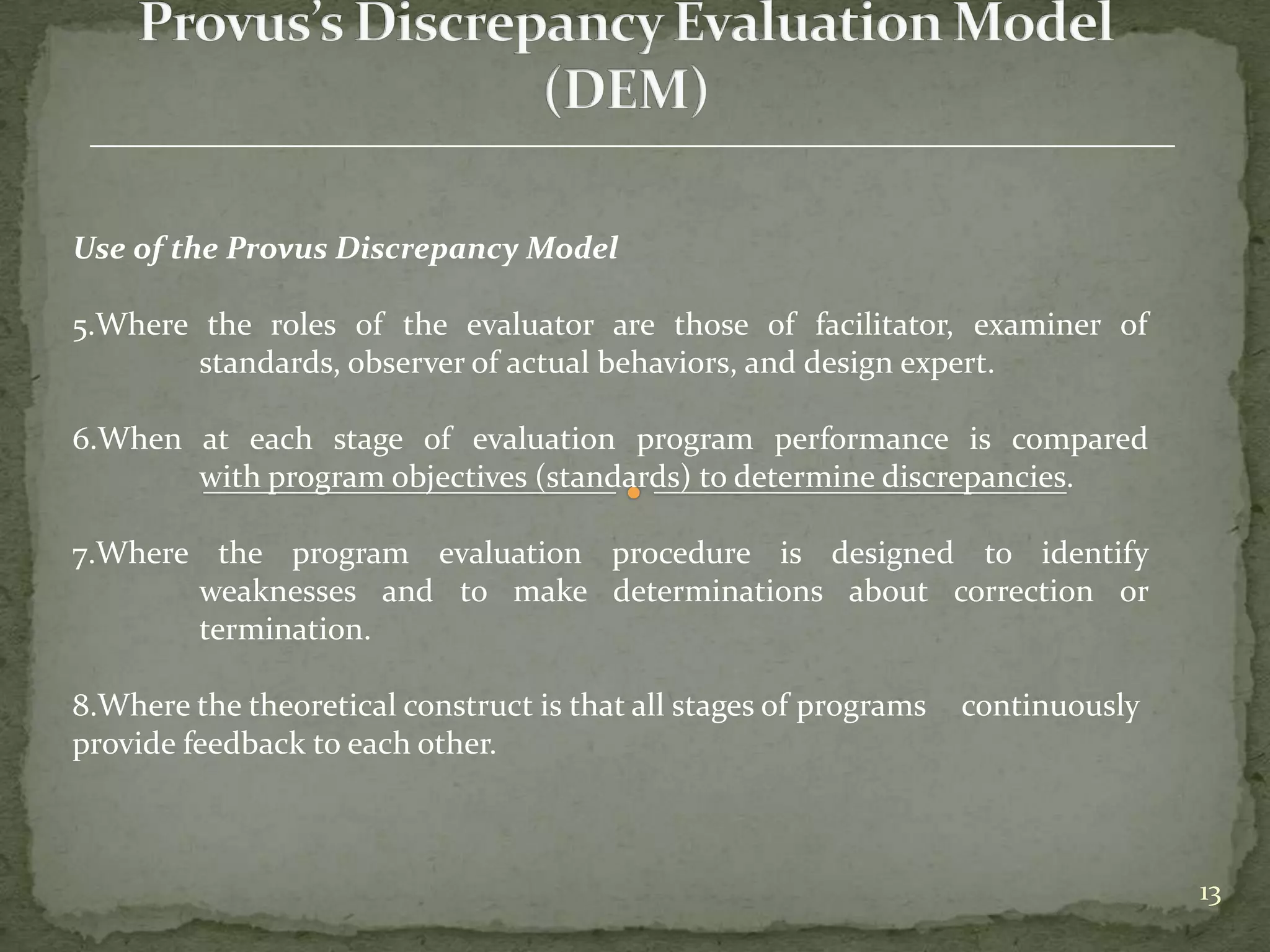



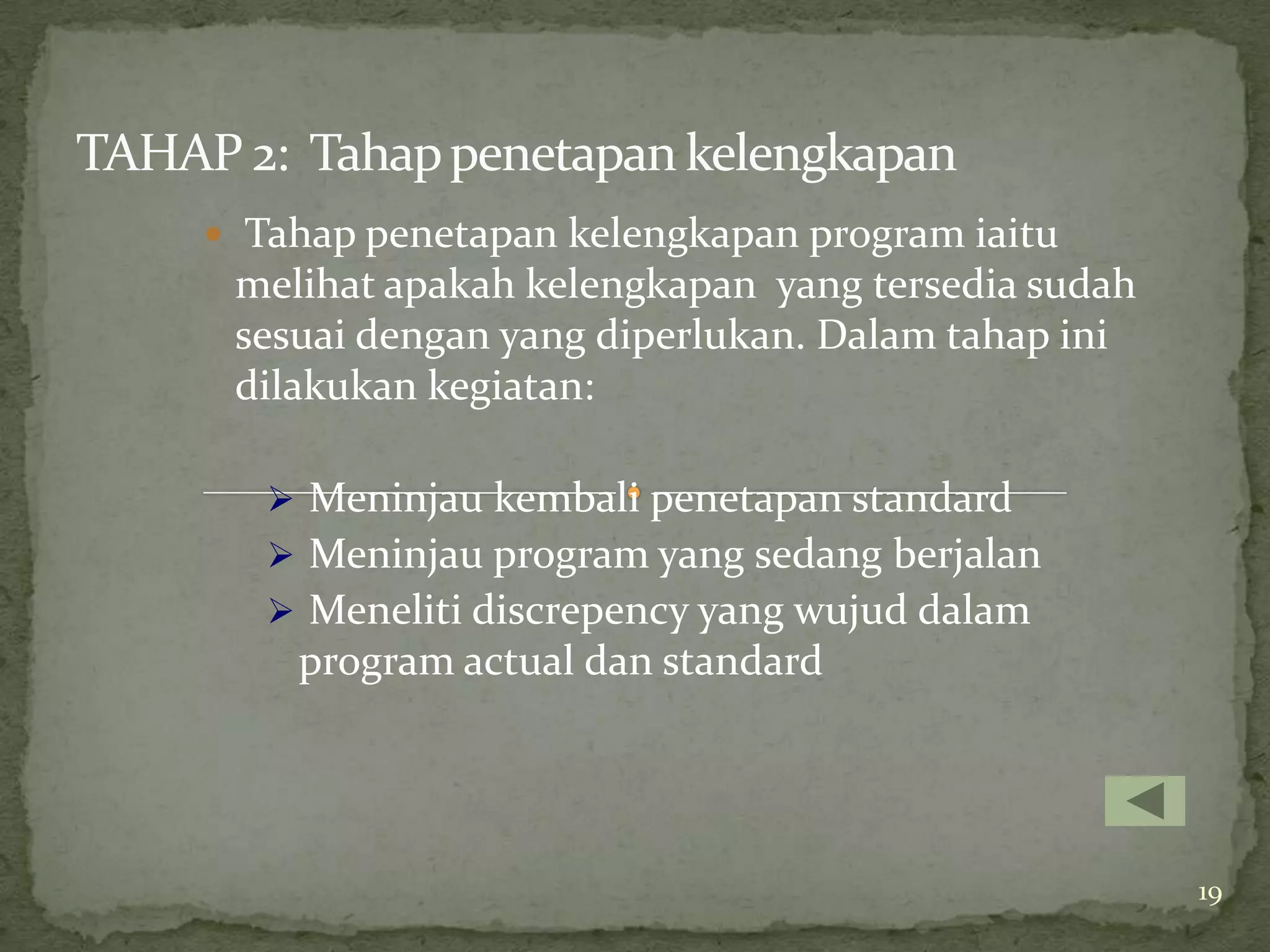


The document discusses the Discrepancy Evaluation Model developed by Malcom Provus in 1969 to assess programs and drive improvement by identifying discrepancies between program standards and actual performance, with the goal of modifying programs or standards to address weaknesses; it outlines the key stages and steps of the model including defining objectives, planning evaluations, collecting data, identifying discrepancies, and determining corrective actions. The Provus model is best suited for formative program evaluation focused on continuous improvement through comparison of objectives and outcomes.


![What is program evaluation lecture 100207 [compatibility mode]](https://cdn.slidesharecdn.com/ss_thumbnails/whatisprogramevaluationlecture-100207compatibilitymode-110923090703-phpapp02-thumbnail.jpg?width=640&height=640&fit=bounds)


