Standard Costs and Variance
         Analysis
Objectives


1. Explain how standard costs are developed.
2. Calculate and interpret variances for direct
   material.
3. Calculate and interpret variances for direct
   labor.
Standard Costs
Standard cost refers to expected costs
   under anticipated conditions.
• Standard cost systems allow for
   comparison of standard versus actual
   costs.
• Differences are referred to as standard
   cost variances.
• Variances should be investigated if
   significant.
Standard Costing: Process of
   establishing the standard cost
Development of Standard Costs


  1. Standard costs are developed in a variety
     of ways:
     a. Specified by formulas.
     b. Developed from price lists provided by
        suppliers.
     c. Determined by time studies conducted
        by industrial engineers.
     d. Developed from analyses of past data.
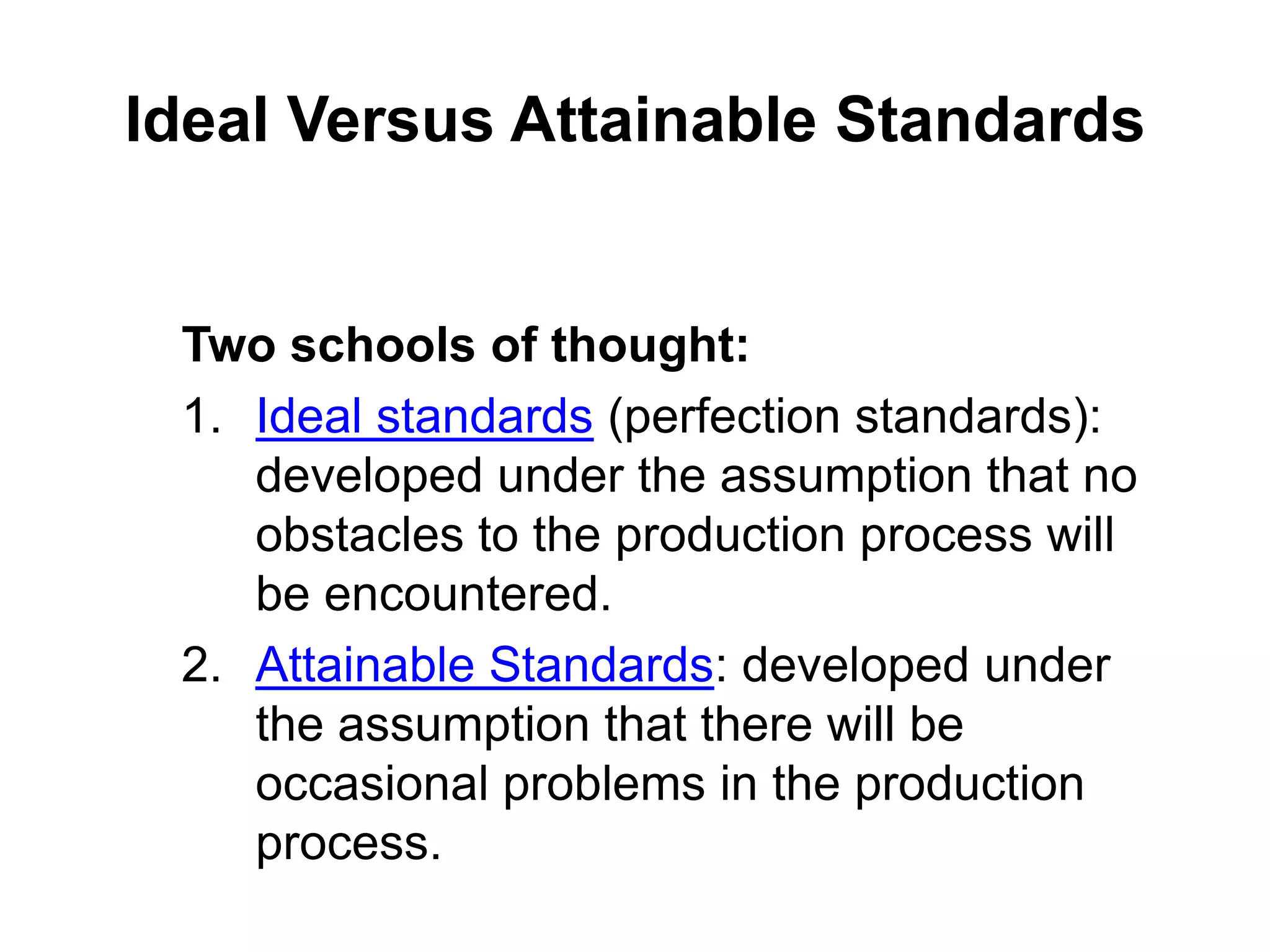
Ideal Versus Attainable Standards


 Two schools of thought:
 1. Ideal standards (perfection standards):
    developed under the assumption that no
    obstacles to the production process will
    be encountered.
 2. Attainable Standards: developed under
    the assumption that there will be
    occasional problems in the production
    process.
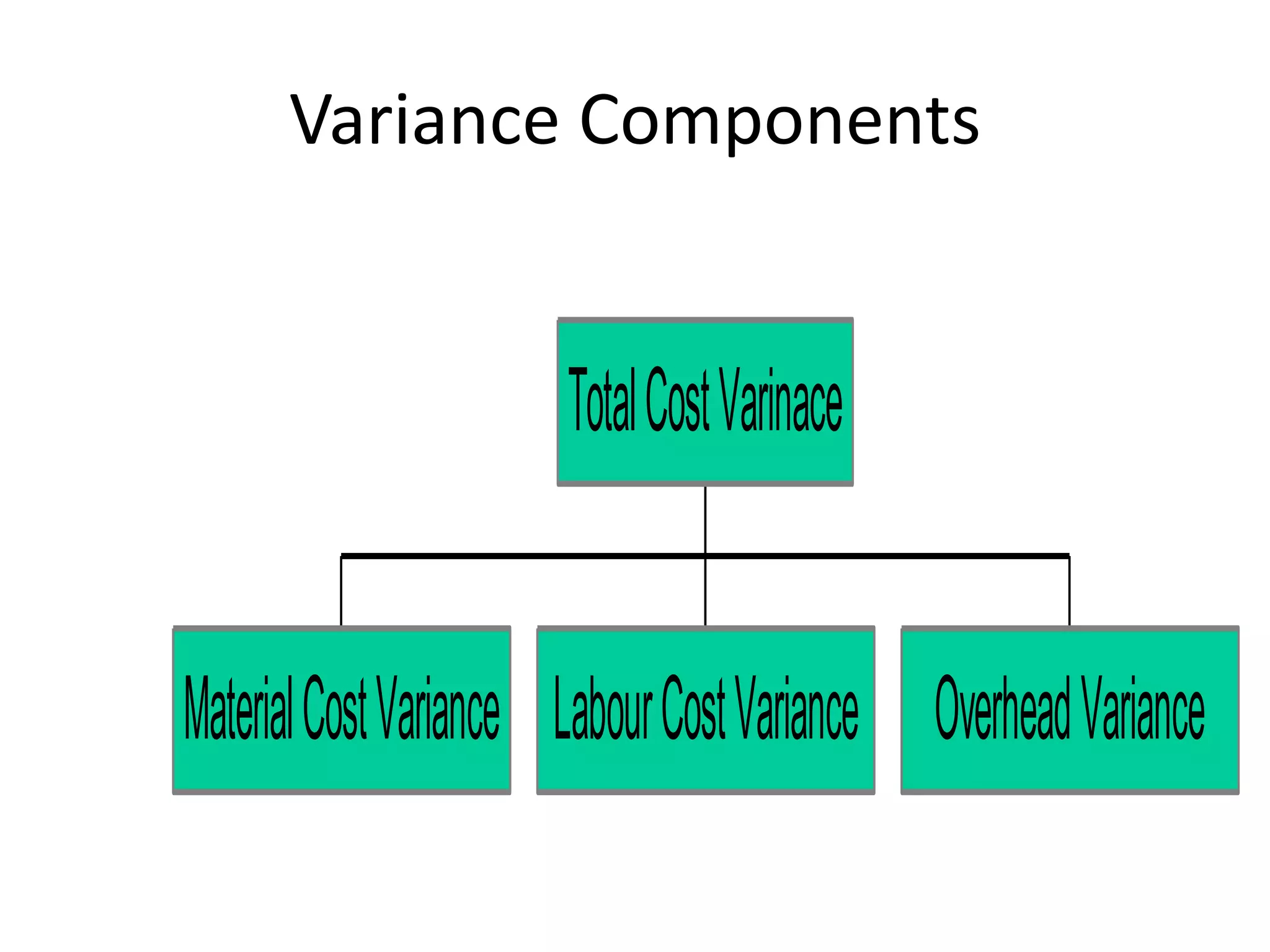
Variance Components


                      Total Cost Varinace


Material Cost Variance Labour Cost Variance Overhead Variance
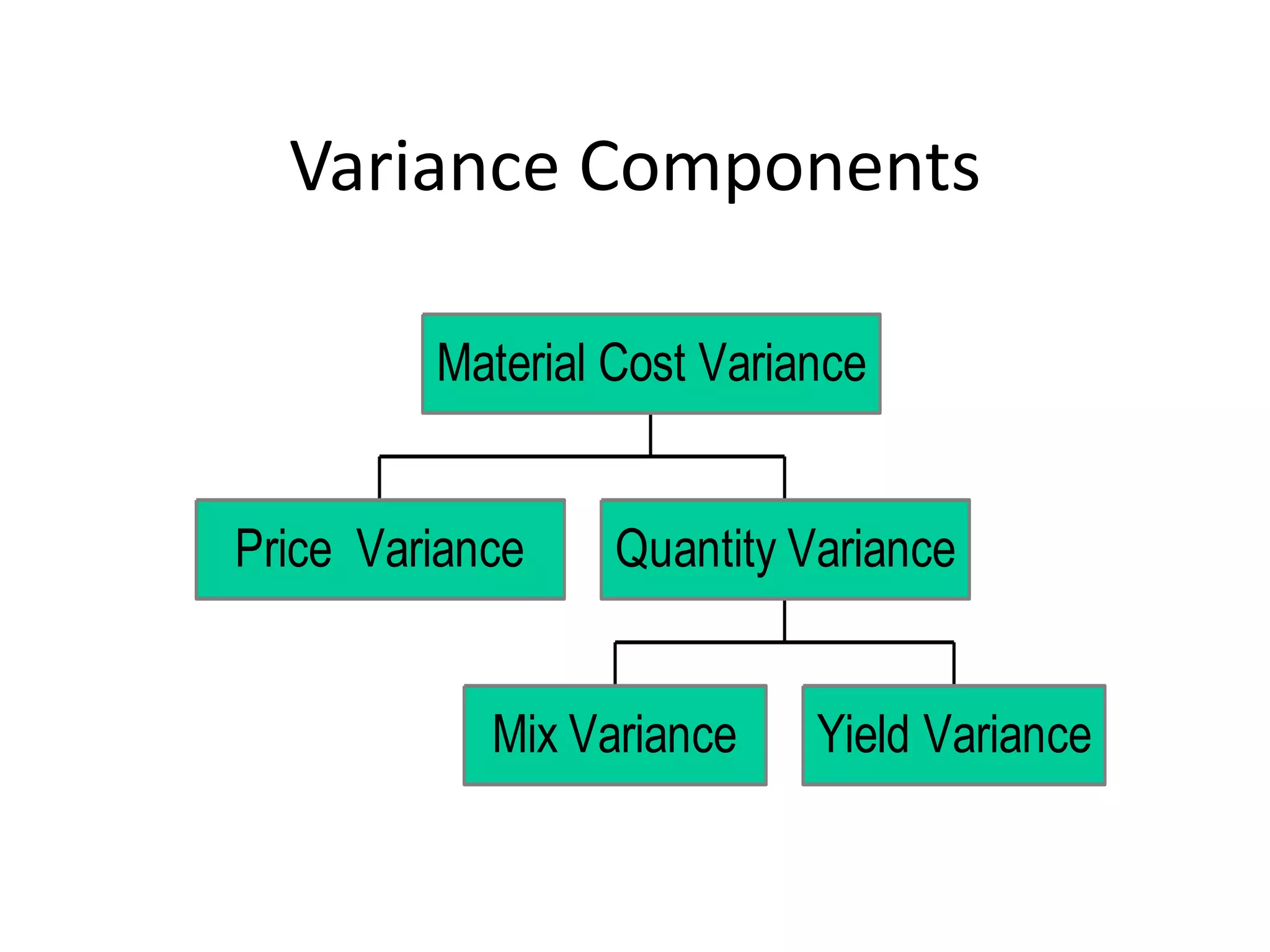
Variance Components

         Material Cost Variance


Price Variance    Quantity Variance


            Mix Variance    Yield Variance
Material Variance
When output is not given:
1.Material Cost Variance: Total Standard
  Material Cost-Total Actual Material Cost
2.Material Price Variance: AQ[SP-AP]
3.Material Quantity Variance: SP[SQ-AQ]
 where
      AQ----Actual Quantity
       SP----Standard Price
       AP----Actual Price
      SQ----Standard Quantity
Material Variance
When output is given
1. Material cost variance:
   Standard cost X Actual Output –Total actual
   Standard Output                material cost
2. Material Price variance: AQ[SP-AP]
3. Material Quantity Variance:
SP[Standard Qty. of A X Actual Output –Actual Qty.of A]
   Standard Output
Material Variance
4. Material Mix Variance:
SP[Standard Qty. of A X Total Actual Qty-Actual Qty. of A]
   Total Standard Quantity

5.Material Yield Variance:
  Std Cost[Actual Yield-Standard output X Total Actual Qty]
  Std Output            Total Standard Quantity
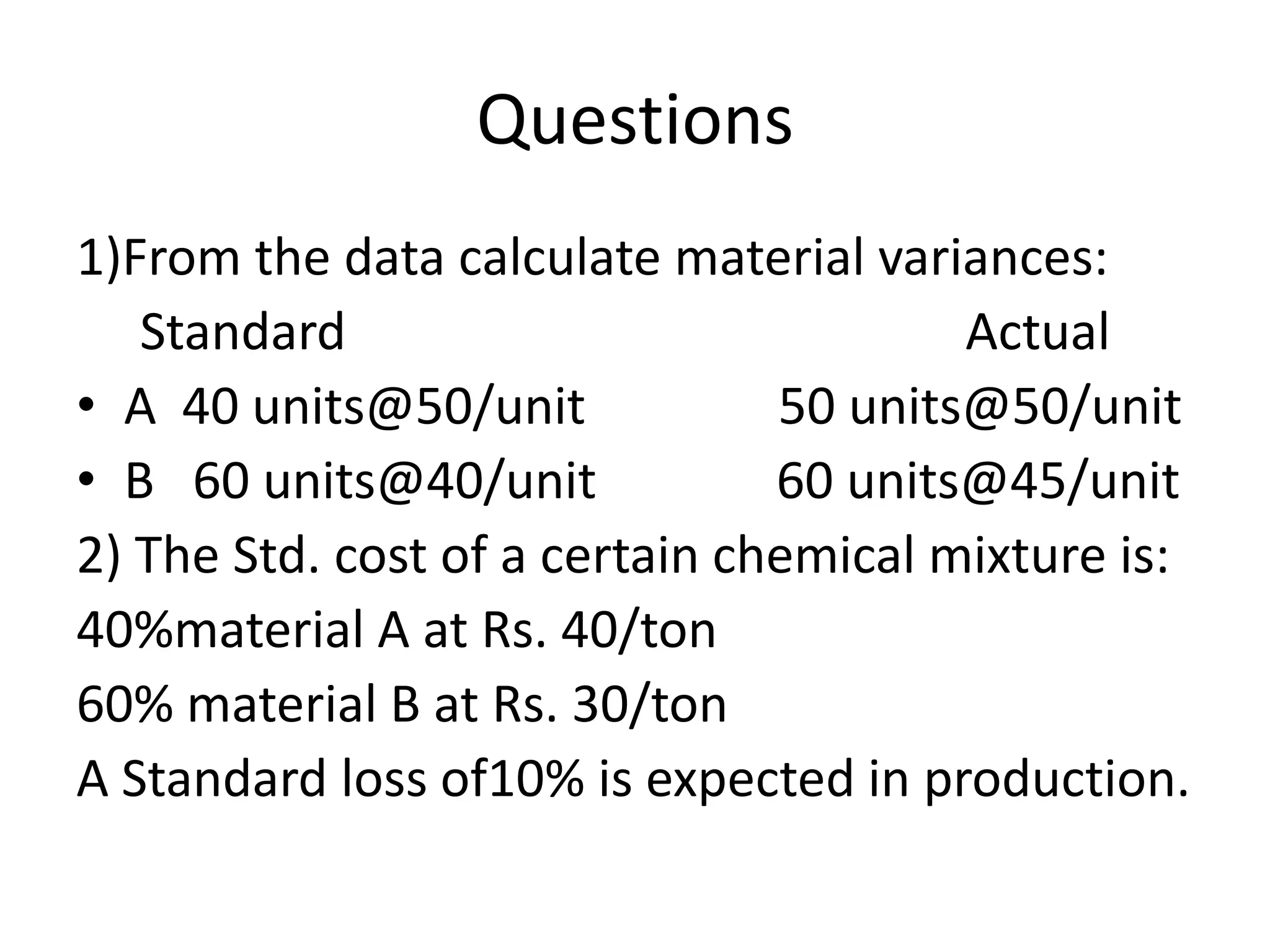
Questions
1)From the data calculate material variances:
   Standard                             Actual
• A 40 units@50/unit            50 units@50/unit
• B 60 units@40/unit            60 units@45/unit
2) The Std. cost of a certain chemical mixture is:
40%material A at Rs. 40/ton
60% material B at Rs. 30/ton
A Standard loss of10% is expected in production.
Questions (contd…)
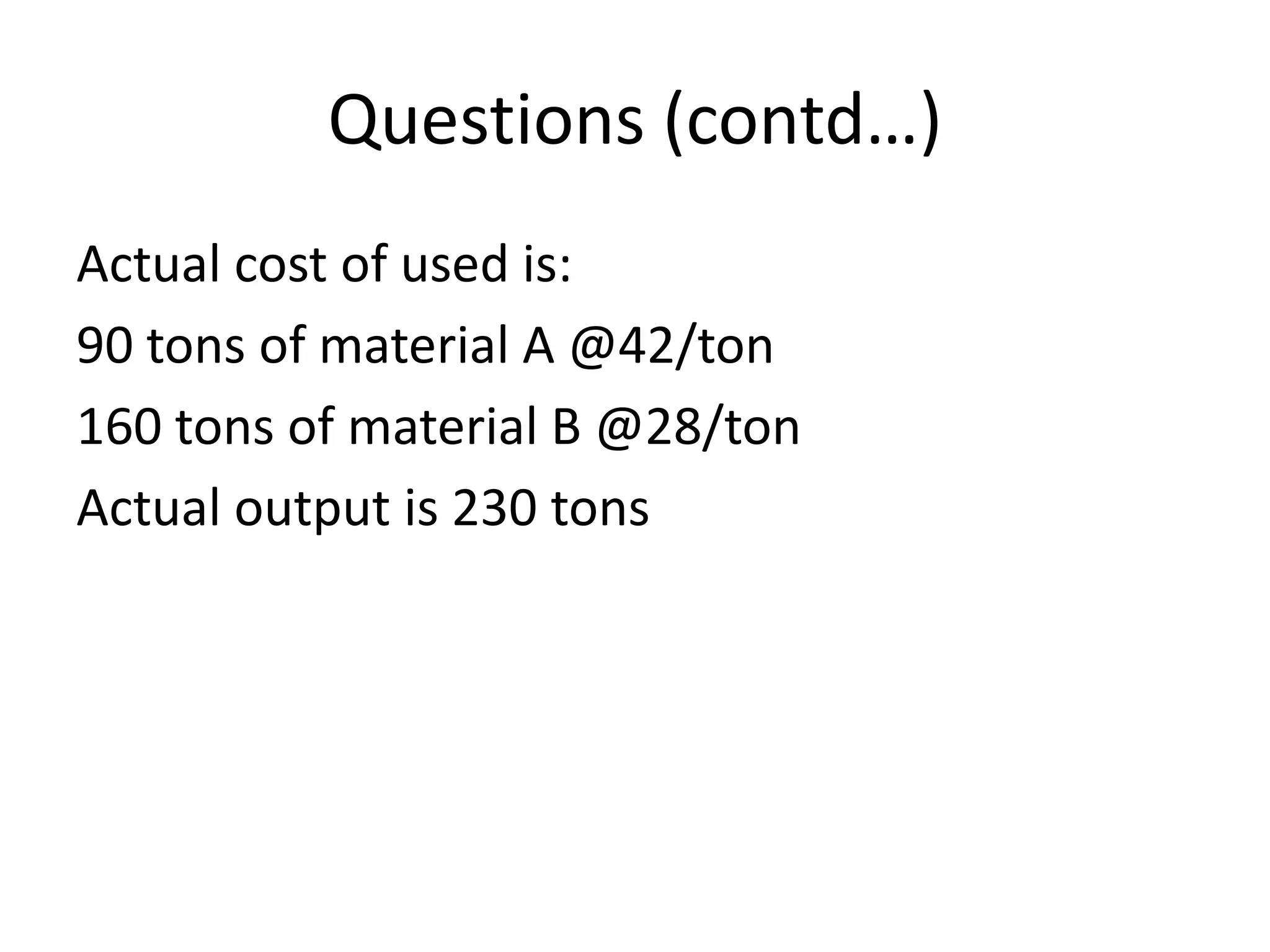
Actual cost of used is:
90 tons of material A @42/ton
160 tons of material B @28/ton
Actual output is 230 tons
You Get What You Measure
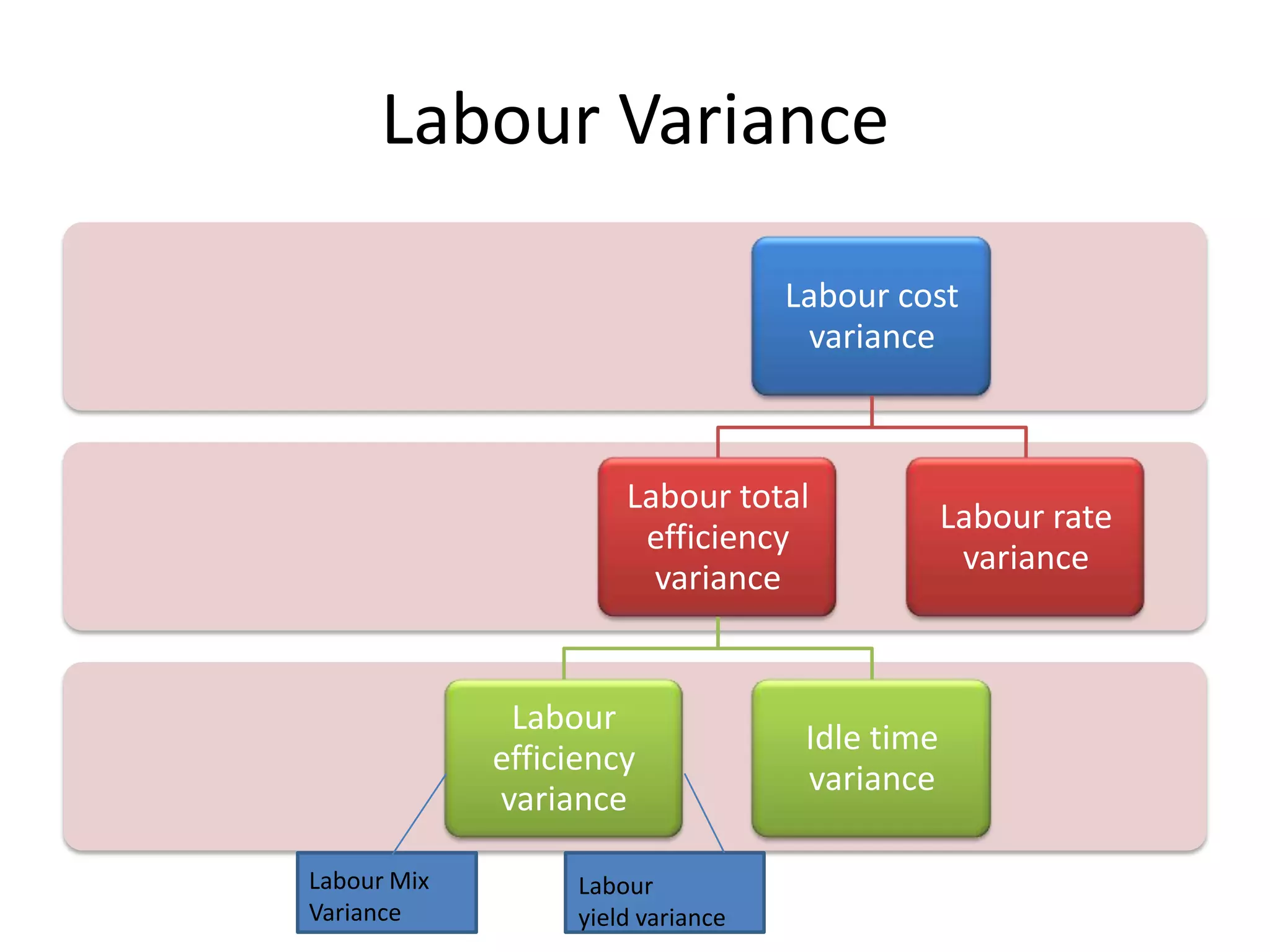
Labour Variance

                                    Labour cost
                                     variance


                       Labour total
                                                 Labour rate
                        efficiency
                                                  variance
                         variance


              Labour
                                     Idle time
             efficiency
                                     variance
             variance

Labour Mix         Labour
Variance           yield variance
Labour Varinace
When output is not given:
1.Labour Cost Variance: Total Standard
   Labour Cost-Total Actual Labour Cost
2.Labour Rate Variance: AH[SR-AR]
3.Labour Efficiency Variance: SR[SH-AH]
 where
        AH---Actual Hours
        SR---Standard Rate
        AR---Actual Rate
        SH---Standard Hours
Labour Varinace
When output is given
1. Labor cost variance:
   Standard cost X Actual Output –Total actual
   Standard output                  labour cost

2.Labour Rate Variance: AH[SR-AR]

3. Labour Efficiency Variance:
SR[Standard Hrs. of A X Actual Output –Actual Hrs.A]
    Standard Output
Labour Varinace
4. Labour Mix Variance:
SR[Standard Hrs. of A X Total Actual Hrs -Actual Hrs. of A]
   Total Standard Hrs

5.Labour Yield Variance:
   SR[Actual Yield-Standard output X Total Actual Hrs.
                   Total Standard Hrs.
Where SR=Standard Cost
            Standard Output
6. Idle Time Variance:
Idle Time X Standard Rate
When Idle time=0,then LTEV=LEV

Standard costs and variance analysis

  • 1.
    Standard Costs andVariance Analysis
  • 2.
    Objectives 1. Explain howstandard costs are developed. 2. Calculate and interpret variances for direct material. 3. Calculate and interpret variances for direct labor.
  • 3.
    Standard Costs Standard costrefers to expected costs under anticipated conditions. • Standard cost systems allow for comparison of standard versus actual costs. • Differences are referred to as standard cost variances. • Variances should be investigated if significant. Standard Costing: Process of establishing the standard cost
  • 4.
    Development of StandardCosts 1. Standard costs are developed in a variety of ways: a. Specified by formulas. b. Developed from price lists provided by suppliers. c. Determined by time studies conducted by industrial engineers. d. Developed from analyses of past data.
  • 5.
    Ideal Versus AttainableStandards Two schools of thought: 1. Ideal standards (perfection standards): developed under the assumption that no obstacles to the production process will be encountered. 2. Attainable Standards: developed under the assumption that there will be occasional problems in the production process.
  • 6.
    Variance Components Total Cost Varinace Material Cost Variance Labour Cost Variance Overhead Variance
  • 7.
    Variance Components Material Cost Variance Price Variance Quantity Variance Mix Variance Yield Variance
  • 8.
    Material Variance When outputis not given: 1.Material Cost Variance: Total Standard Material Cost-Total Actual Material Cost 2.Material Price Variance: AQ[SP-AP] 3.Material Quantity Variance: SP[SQ-AQ] where AQ----Actual Quantity SP----Standard Price AP----Actual Price SQ----Standard Quantity
  • 9.
    Material Variance When outputis given 1. Material cost variance: Standard cost X Actual Output –Total actual Standard Output material cost 2. Material Price variance: AQ[SP-AP] 3. Material Quantity Variance: SP[Standard Qty. of A X Actual Output –Actual Qty.of A] Standard Output
  • 10.
    Material Variance 4. MaterialMix Variance: SP[Standard Qty. of A X Total Actual Qty-Actual Qty. of A] Total Standard Quantity 5.Material Yield Variance: Std Cost[Actual Yield-Standard output X Total Actual Qty] Std Output Total Standard Quantity
  • 11.
    Questions 1)From the datacalculate material variances: Standard Actual • A 40 units@50/unit 50 units@50/unit • B 60 units@40/unit 60 units@45/unit 2) The Std. cost of a certain chemical mixture is: 40%material A at Rs. 40/ton 60% material B at Rs. 30/ton A Standard loss of10% is expected in production.
  • 12.
    Questions (contd…) Actual costof used is: 90 tons of material A @42/ton 160 tons of material B @28/ton Actual output is 230 tons
  • 13.
    You Get WhatYou Measure
  • 14.
    Labour Variance Labour cost variance Labour total Labour rate efficiency variance variance Labour Idle time efficiency variance variance Labour Mix Labour Variance yield variance
  • 15.
    Labour Varinace When outputis not given: 1.Labour Cost Variance: Total Standard Labour Cost-Total Actual Labour Cost 2.Labour Rate Variance: AH[SR-AR] 3.Labour Efficiency Variance: SR[SH-AH] where AH---Actual Hours SR---Standard Rate AR---Actual Rate SH---Standard Hours
  • 16.
    Labour Varinace When outputis given 1. Labor cost variance: Standard cost X Actual Output –Total actual Standard output labour cost 2.Labour Rate Variance: AH[SR-AR] 3. Labour Efficiency Variance: SR[Standard Hrs. of A X Actual Output –Actual Hrs.A] Standard Output
  • 17.
    Labour Varinace 4. LabourMix Variance: SR[Standard Hrs. of A X Total Actual Hrs -Actual Hrs. of A] Total Standard Hrs 5.Labour Yield Variance: SR[Actual Yield-Standard output X Total Actual Hrs. Total Standard Hrs. Where SR=Standard Cost Standard Output 6. Idle Time Variance: Idle Time X Standard Rate When Idle time=0,then LTEV=LEV