Absorption Costing
Presented By:
Shiva Sahani
Bimarsh Raj Giri
(MBA II Semester)
Introduce Raw
Material
Manufacture
Product
Store Finished
Goods
Sell Finished
Goods
• Direct material
are purchased
• Direct materials
are placed into
production
• Direct
Labour
applied to the
product
• Overhead
costs
incurred
• Production
process
completed
• Goods are
shipped for
sales
Manufacturing
Process
Classification of Cost
Fixed Cost: Cost that doesn’t change with increase or decrease in the
number of goods or services produced or sold.
Variable Cost: Cost that changes in proportion with production
output.
Direct Cost: Cost that can be completely assigned to the production of
specific goods or services.
Indirect Cost: Cost that cannot be assigned to a cost object
Period Cost:
Cost that cannot be appointed to the product and it is charged
to the period in which they arise.
Example: Selling and Administration Costs like Rent and
Salary
Product Cost:
Cost that is attributable to the product i.e. the cost is traceable
to the product and is a part of inventory values.
Example: Direct Material, Direct Labour Factory Overhead etc.
Absorption Costing
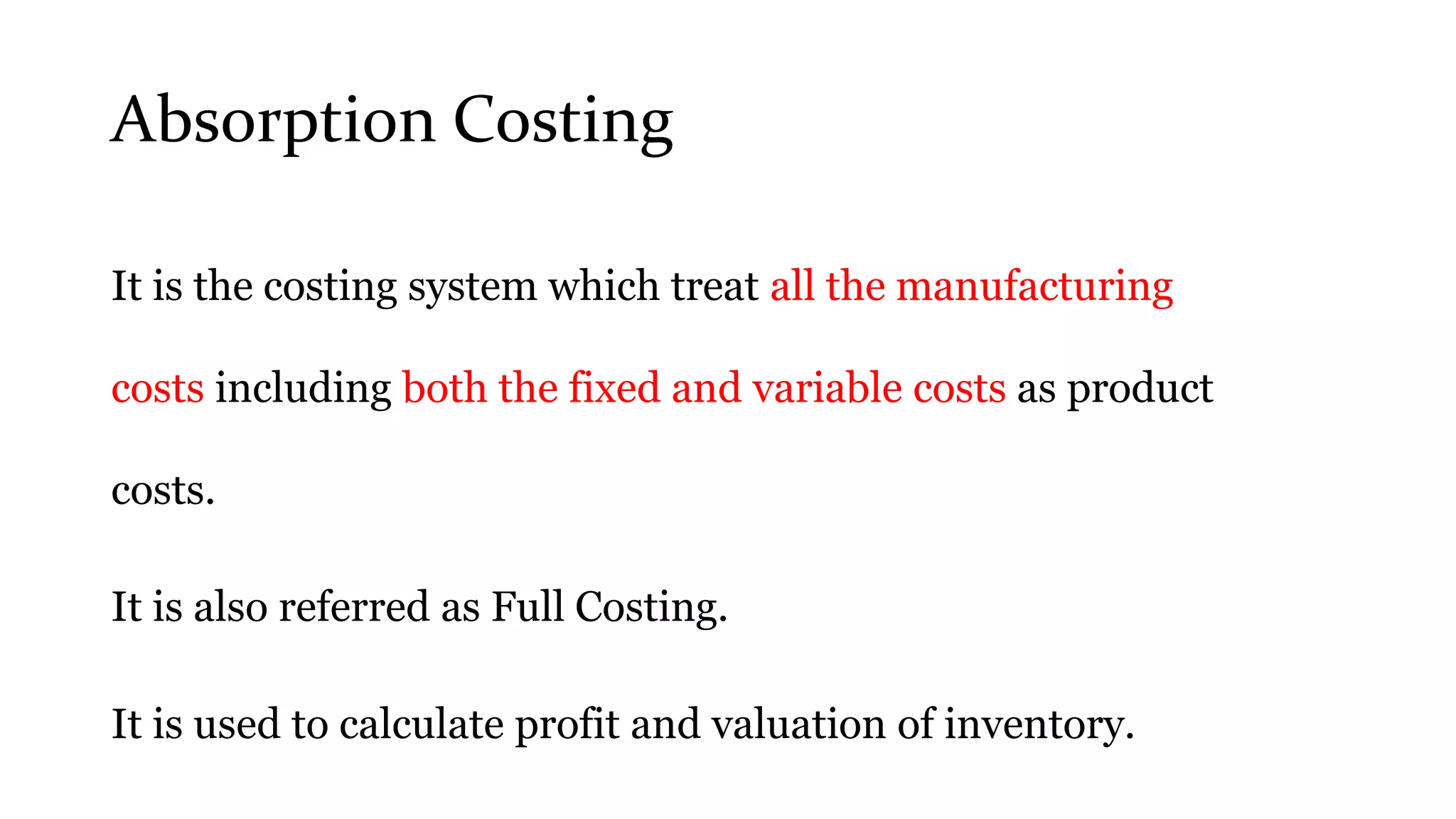
It is the costing system which treat all the manufacturing
costs including both the fixed and variable costs as product
costs.
It is also referred as Full Costing.
It is used to calculate profit and valuation of inventory.
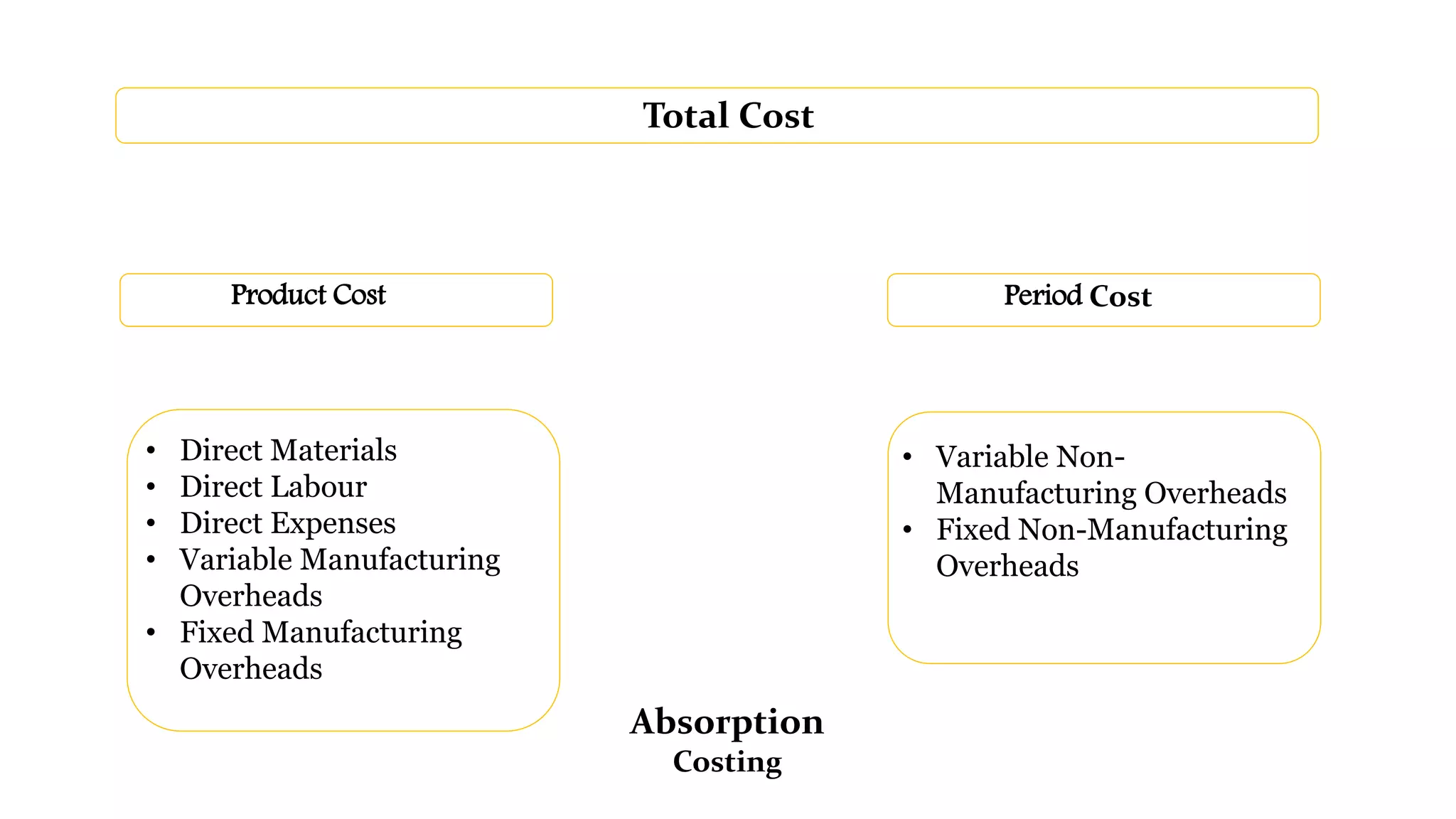
Total Cost
• Variable Non-
Manufacturing Overheads
• Fixed Non-Manufacturing
Overheads
Product Cost Period Cost
• Direct Materials
• Direct Labour
• Direct Expenses
• Variable Manufacturing
Overheads
• Fixed Manufacturing
Overheads
Absorption
Costing
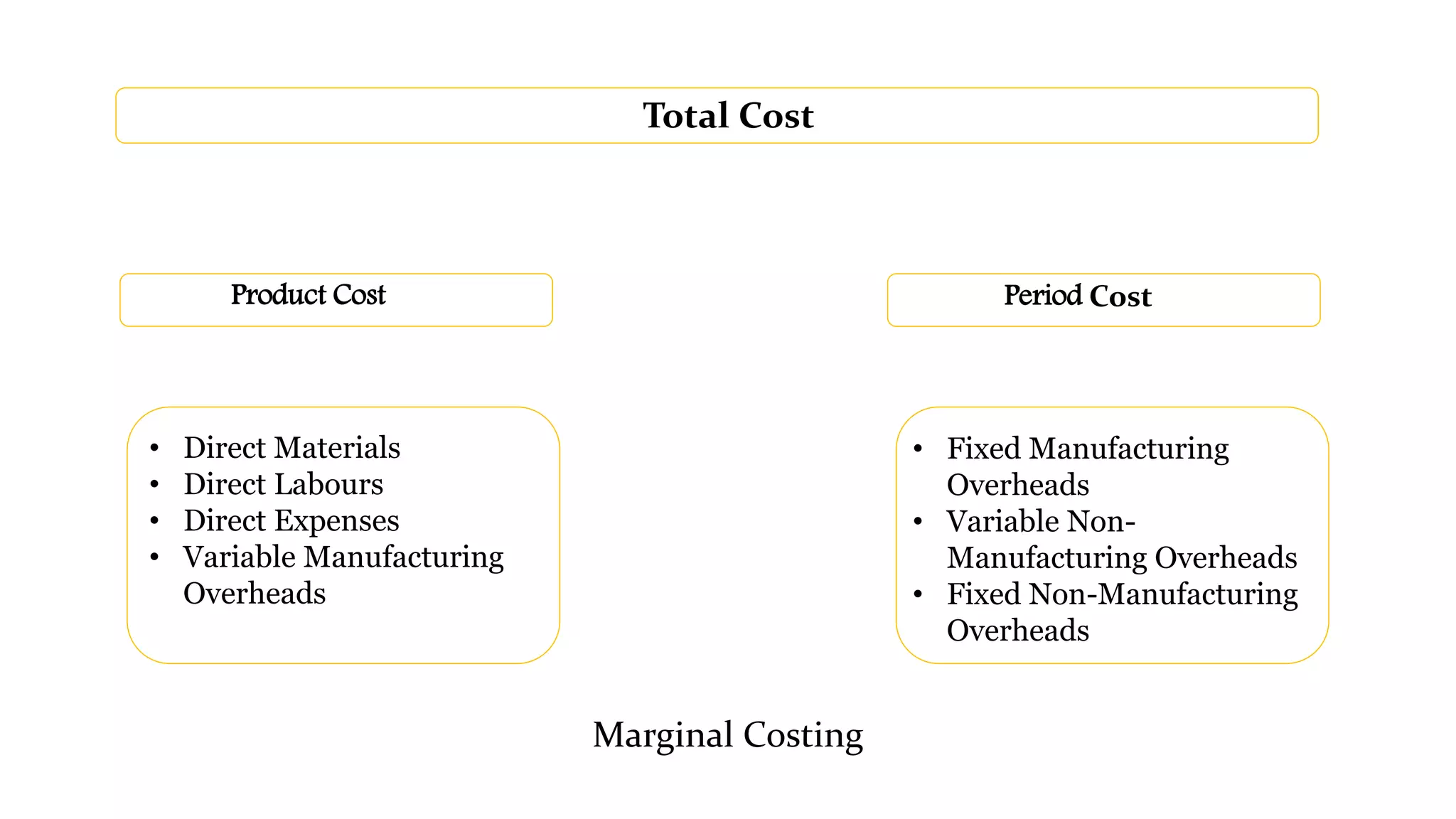
Marginal Costing
It is the costing system which treat only the variable
manufacturing costs as product costs.
It is used to help with short term decision making i.e.
break-even analysis, margin of safety etc.
Total Cost
Product Cost Period Cost
• Direct Materials
• Direct Labours
• Direct Expenses
• Variable Manufacturing
Overheads
• Fixed Manufacturing
Overheads
• Variable Non-
Manufacturing Overheads
• Fixed Non-Manufacturing
Overheads
Marginal Costing
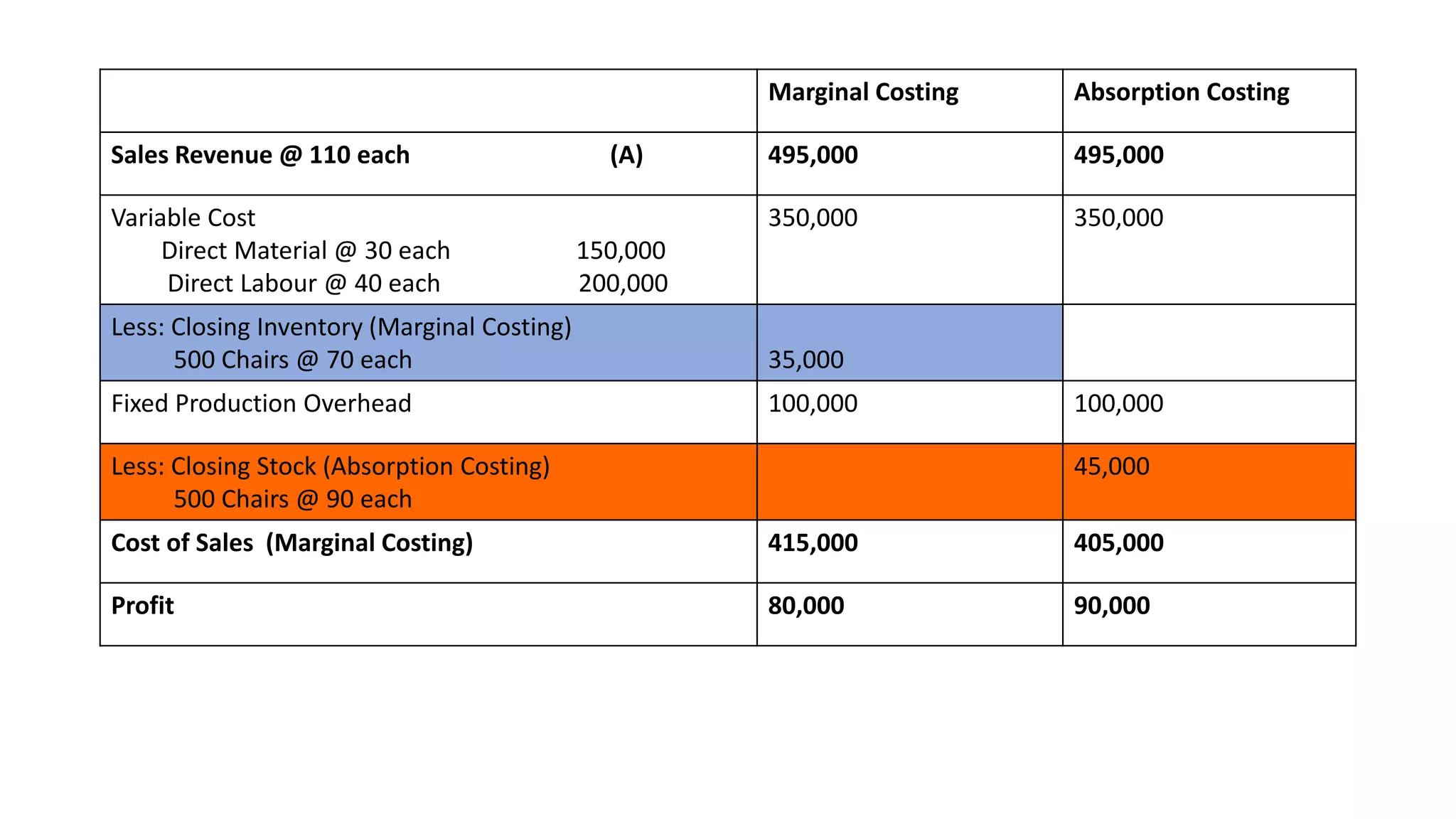
Sahani Limited commenced business on 1 January 2019. It manufactures a
special type of chair designed to alleviate back pain. Information on the first
year’s trading is as follows:
Number of chairs manufactured 5,000
Number of chairs sold 4,500
Selling price Rs 110 per chair
Direct materials Rs 30 per chair
Direct labor Rs 40 per chair
Fixed production overheads Rs 100,000
The directors ask for your help in producing profit statements using the
marginal costing and absorption costing methods. They say that they will use
Marginal Costing Absorption Costing
Sales Revenue @ 110 each (A) 495,000 495,000
Variable Cost
Direct Material @ 30 each 150,000
Direct Labour @ 40 each 200,000
350,000 350,000
Less: Closing Inventory (Marginal Costing)
500 Chairs @ 70 each 35,000
Fixed Production Overhead 100,000 100,000
Less: Closing Stock (Absorption Costing)
500 Chairs @ 90 each
45,000
Cost of Sales (Marginal Costing) 415,000 405,000
Profit 80,000 90,000
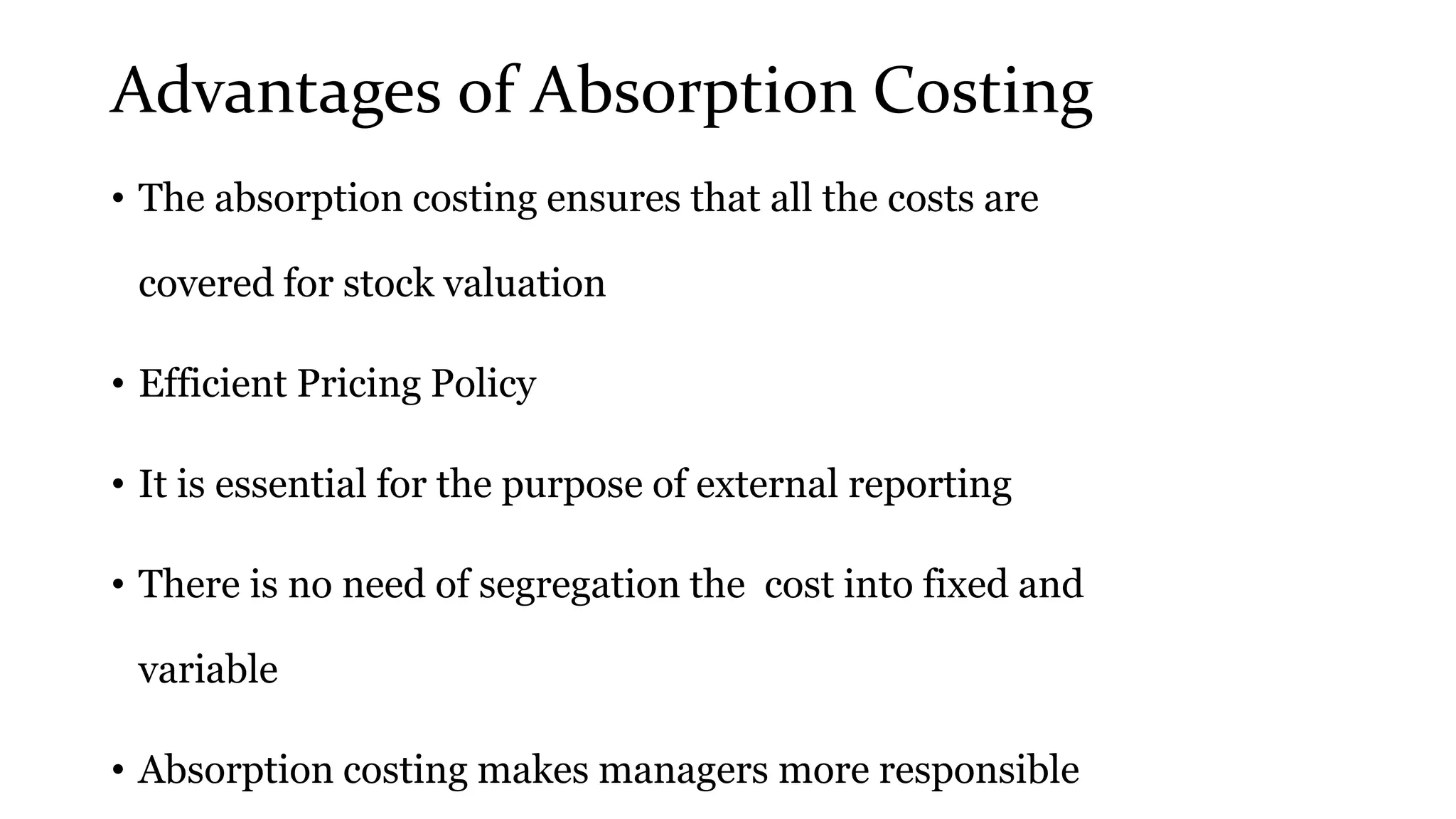
Advantages of Absorption Costing
• The absorption costing ensures that all the costs are
covered for stock valuation
• Efficient Pricing Policy
• It is essential for the purpose of external reporting
• There is no need of segregation the cost into fixed and
variable
• Absorption costing makes managers more responsible
Thank You

Absorption Costing Concept

  • 1.
    Absorption Costing Presented By: ShivaSahani Bimarsh Raj Giri (MBA II Semester)
  • 2.
    Introduce Raw Material Manufacture Product Store Finished Goods SellFinished Goods • Direct material are purchased • Direct materials are placed into production • Direct Labour applied to the product • Overhead costs incurred • Production process completed • Goods are shipped for sales Manufacturing Process
  • 3.
    Classification of Cost FixedCost: Cost that doesn’t change with increase or decrease in the number of goods or services produced or sold. Variable Cost: Cost that changes in proportion with production output. Direct Cost: Cost that can be completely assigned to the production of specific goods or services. Indirect Cost: Cost that cannot be assigned to a cost object
  • 4.
    Period Cost: Cost thatcannot be appointed to the product and it is charged to the period in which they arise. Example: Selling and Administration Costs like Rent and Salary Product Cost: Cost that is attributable to the product i.e. the cost is traceable to the product and is a part of inventory values. Example: Direct Material, Direct Labour Factory Overhead etc.
  • 5.
    Absorption Costing It isthe costing system which treat all the manufacturing costs including both the fixed and variable costs as product costs. It is also referred as Full Costing. It is used to calculate profit and valuation of inventory.
  • 6.
    Total Cost • VariableNon- Manufacturing Overheads • Fixed Non-Manufacturing Overheads Product Cost Period Cost • Direct Materials • Direct Labour • Direct Expenses • Variable Manufacturing Overheads • Fixed Manufacturing Overheads Absorption Costing
  • 7.
    Marginal Costing It isthe costing system which treat only the variable manufacturing costs as product costs. It is used to help with short term decision making i.e. break-even analysis, margin of safety etc.
  • 8.
    Total Cost Product CostPeriod Cost • Direct Materials • Direct Labours • Direct Expenses • Variable Manufacturing Overheads • Fixed Manufacturing Overheads • Variable Non- Manufacturing Overheads • Fixed Non-Manufacturing Overheads Marginal Costing
  • 9.
    Sahani Limited commencedbusiness on 1 January 2019. It manufactures a special type of chair designed to alleviate back pain. Information on the first year’s trading is as follows: Number of chairs manufactured 5,000 Number of chairs sold 4,500 Selling price Rs 110 per chair Direct materials Rs 30 per chair Direct labor Rs 40 per chair Fixed production overheads Rs 100,000 The directors ask for your help in producing profit statements using the marginal costing and absorption costing methods. They say that they will use
  • 10.
    Marginal Costing AbsorptionCosting Sales Revenue @ 110 each (A) 495,000 495,000 Variable Cost Direct Material @ 30 each 150,000 Direct Labour @ 40 each 200,000 350,000 350,000 Less: Closing Inventory (Marginal Costing) 500 Chairs @ 70 each 35,000 Fixed Production Overhead 100,000 100,000 Less: Closing Stock (Absorption Costing) 500 Chairs @ 90 each 45,000 Cost of Sales (Marginal Costing) 415,000 405,000 Profit 80,000 90,000
  • 11.
    Advantages of AbsorptionCosting • The absorption costing ensures that all the costs are covered for stock valuation • Efficient Pricing Policy • It is essential for the purpose of external reporting • There is no need of segregation the cost into fixed and variable • Absorption costing makes managers more responsible
  • 12.

Editor's Notes

  • #12 http://www.yourarticlelibrary.com/accounting/costing/advantages-and-limitations-of-absorption-costing/52643