STAGES OF
SEED DEVELOPMENT
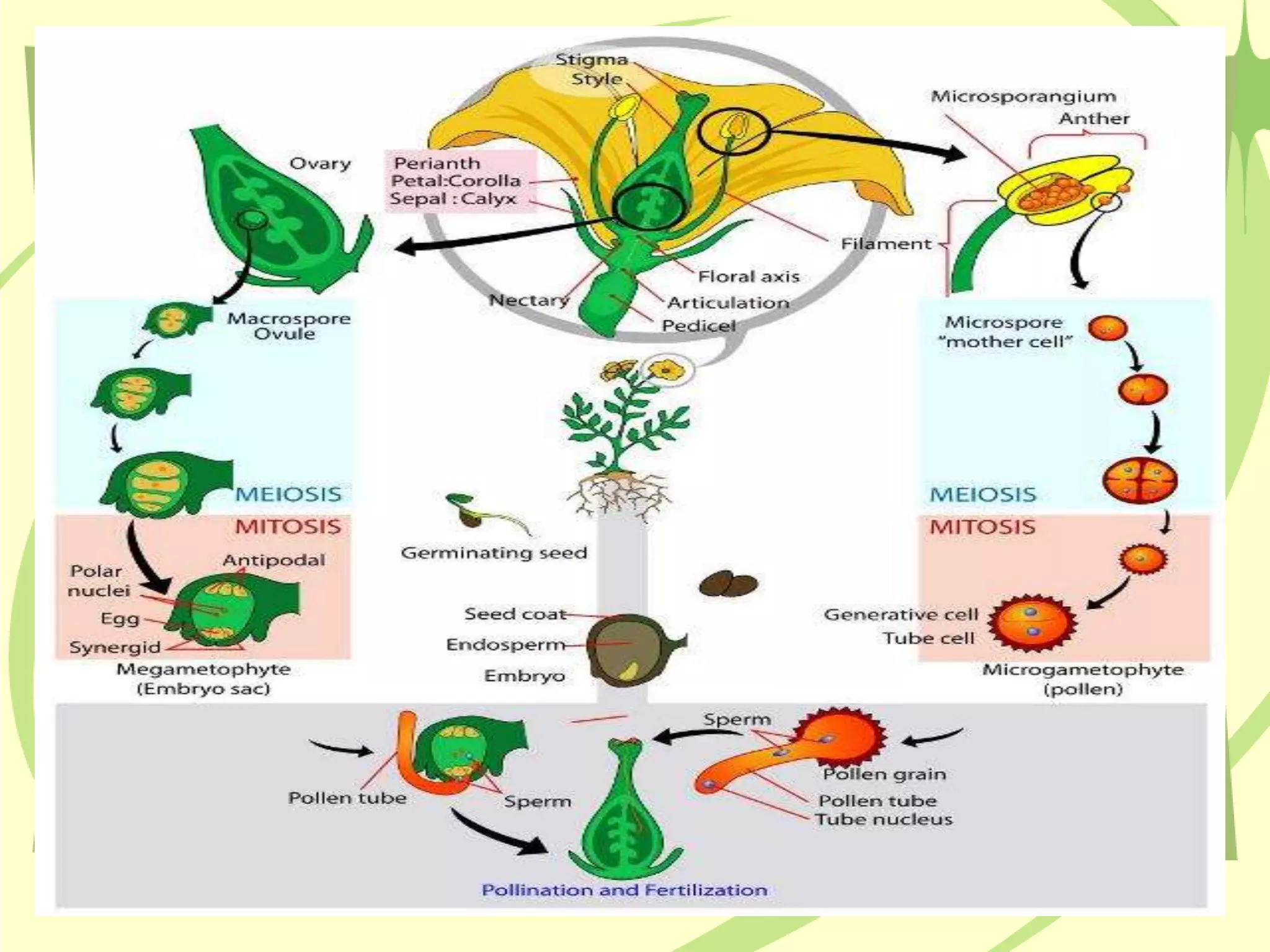
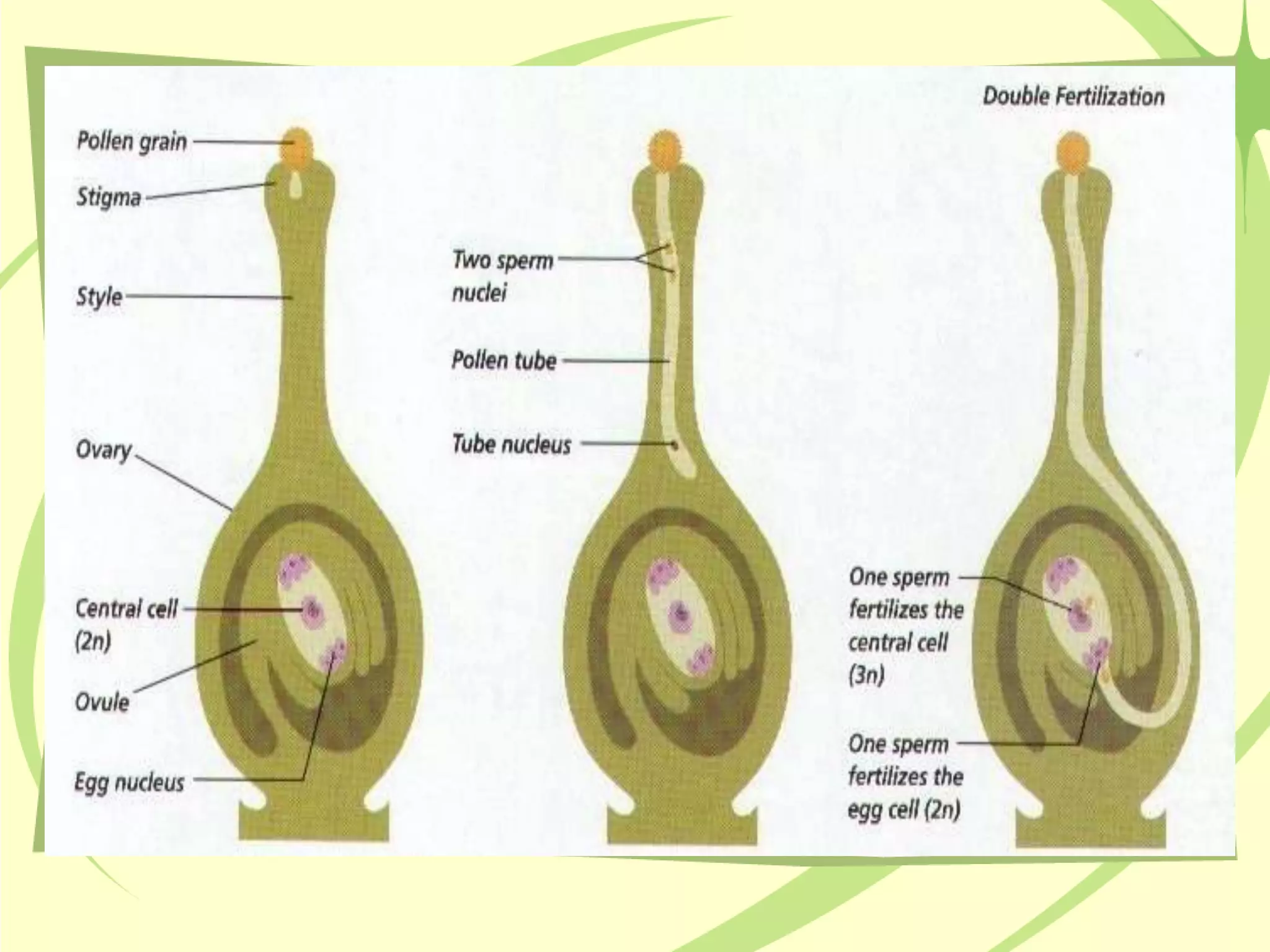
POLLINATION & FERTILIZATION
SEED DEVELOPMENT
• The Integument of the ovule – seed coat
• Nucellus – absorbed and absent
• Endosperm
Monocot : Max morphological development
Dicot : Used up by the developing embryo.
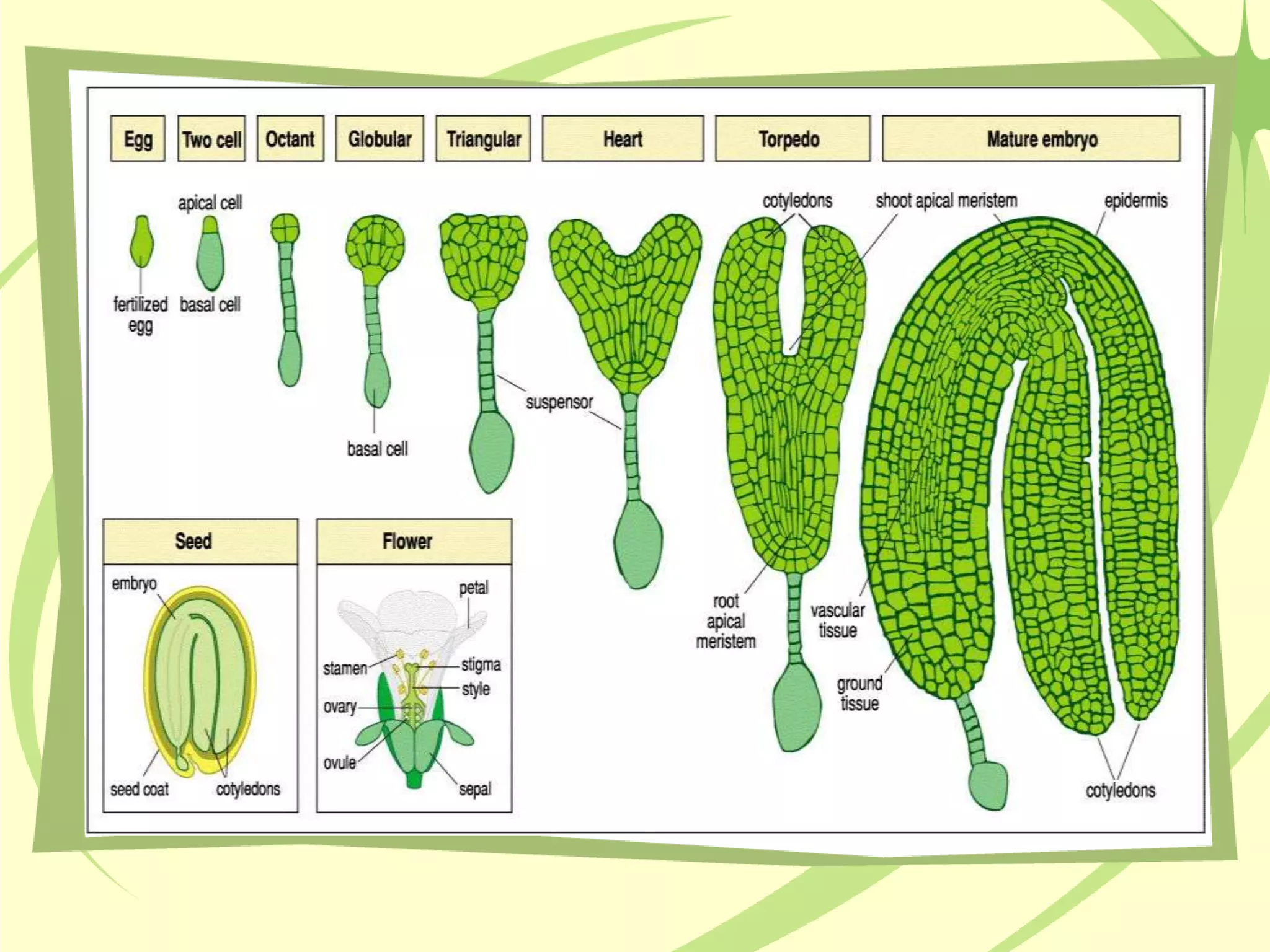
EMBRYO DEVELOPMENT
• The first few cell division from the
zygote forms the Pro-embryo. Although
the mature embryo of monocotyledons
and dicotyledons appears considerably
different, their pattern of embryogeny are
similar.
• The Pro-embryo is divided into Suspensor
and Embryo proper.
• The suspensor forms into a chain of cells,
pushing the embryo proper into the center
of the ovule thus making it in contact with
the available food supply
ENDOSPERM DEVELOPMENT
• Endosperm formation starts prior to
embryo formation.
• Reaches its maximum morphological
development at physiological maturity.
• There are 3 types of endosperm
development
(a) nuclear - where the endosperm nucleus
undergoes several divisions prior to
cell wall formation, e.g., wheat apple,
squash.
(b) cellular - in which there is no free
nuclear phase
(c) helobial - where the free nuclear division is
preceded, and is followed by cellularization as in
some monocots
SEED GROWTH & MATURATION
• The seed is said to have physiologically
matured only when it attains maximum
dry weight, germinability and vigour.
• Normally the seed is harvested at field
maturity, a stage when the moisture
content is reduced to about 6-10 % in
wheat.
PHYSIOLOGICAL CHANGES
• Water uptake
• Respiration
• Mobilization of reserve materials
 BIOCHEMICAL CHANGES
• Nucleic acids
• Proteins
• Carbohydrates
• Inorganic nutrients
ENVIRONMENTAL FACTORS
• SOIL FERTILITY
• TEMPERATURE
• WATER
• LIGHT
MATURATION & DRYING
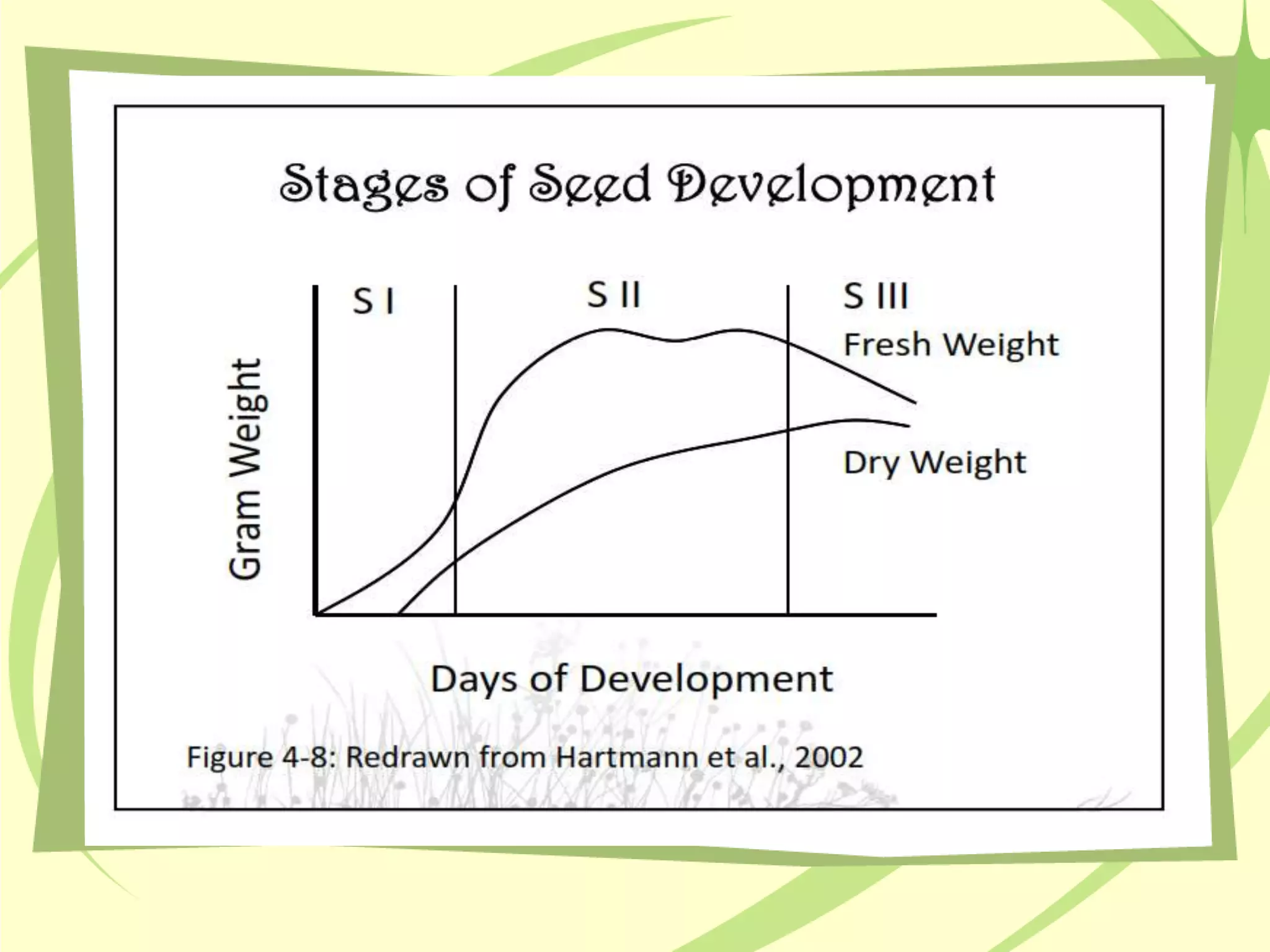
• Physiological maturity is identified as
maximum seed dry matter accumulation
• Physiological maturity is reached when
there is no further significant increase in
seed dry weight
• The first concept of physiological maturity was
proposed by Shaw and Loomis in 1950 as the
stage in which the seed possesses maximum
dry weight and yield.
• Physiological maturity has also been termed
“relative maturity” by Aldrich in 1943,
morphological maturity” by Anderson in 1955
while others prefer to use terms such as
“harvest maturity”& “agronomic maturity”
• Probably the most accurate method of
determining physiological maturity is the
measurement of 14C assimilate uptake by the
developing seed. This was demonstrated by
TeKrony et al. (1979)
• Finally, the definition of physiological
maturity based on seed maximum dry weight
should be considered a reference point to
characterize the end of seed development.
Stages of seed development

Stages of seed development

  • 1.
  • 2.
  • 7.
    SEED DEVELOPMENT • TheIntegument of the ovule – seed coat • Nucellus – absorbed and absent • Endosperm Monocot : Max morphological development Dicot : Used up by the developing embryo.
  • 8.
    EMBRYO DEVELOPMENT • Thefirst few cell division from the zygote forms the Pro-embryo. Although the mature embryo of monocotyledons and dicotyledons appears considerably different, their pattern of embryogeny are similar.
  • 9.
    • The Pro-embryois divided into Suspensor and Embryo proper. • The suspensor forms into a chain of cells, pushing the embryo proper into the center of the ovule thus making it in contact with the available food supply
  • 11.
    ENDOSPERM DEVELOPMENT • Endospermformation starts prior to embryo formation. • Reaches its maximum morphological development at physiological maturity.
  • 12.
    • There are3 types of endosperm development (a) nuclear - where the endosperm nucleus undergoes several divisions prior to cell wall formation, e.g., wheat apple, squash. (b) cellular - in which there is no free nuclear phase
  • 13.
    (c) helobial -where the free nuclear division is preceded, and is followed by cellularization as in some monocots
  • 14.
    SEED GROWTH &MATURATION • The seed is said to have physiologically matured only when it attains maximum dry weight, germinability and vigour. • Normally the seed is harvested at field maturity, a stage when the moisture content is reduced to about 6-10 % in wheat.
  • 15.
    PHYSIOLOGICAL CHANGES • Wateruptake • Respiration • Mobilization of reserve materials  BIOCHEMICAL CHANGES • Nucleic acids • Proteins • Carbohydrates • Inorganic nutrients
  • 16.
    ENVIRONMENTAL FACTORS • SOILFERTILITY • TEMPERATURE • WATER • LIGHT
  • 17.
    MATURATION & DRYING •Physiological maturity is identified as maximum seed dry matter accumulation • Physiological maturity is reached when there is no further significant increase in seed dry weight
  • 18.
    • The firstconcept of physiological maturity was proposed by Shaw and Loomis in 1950 as the stage in which the seed possesses maximum dry weight and yield. • Physiological maturity has also been termed “relative maturity” by Aldrich in 1943, morphological maturity” by Anderson in 1955 while others prefer to use terms such as “harvest maturity”& “agronomic maturity”
  • 19.
    • Probably themost accurate method of determining physiological maturity is the measurement of 14C assimilate uptake by the developing seed. This was demonstrated by TeKrony et al. (1979) • Finally, the definition of physiological maturity based on seed maximum dry weight should be considered a reference point to characterize the end of seed development.