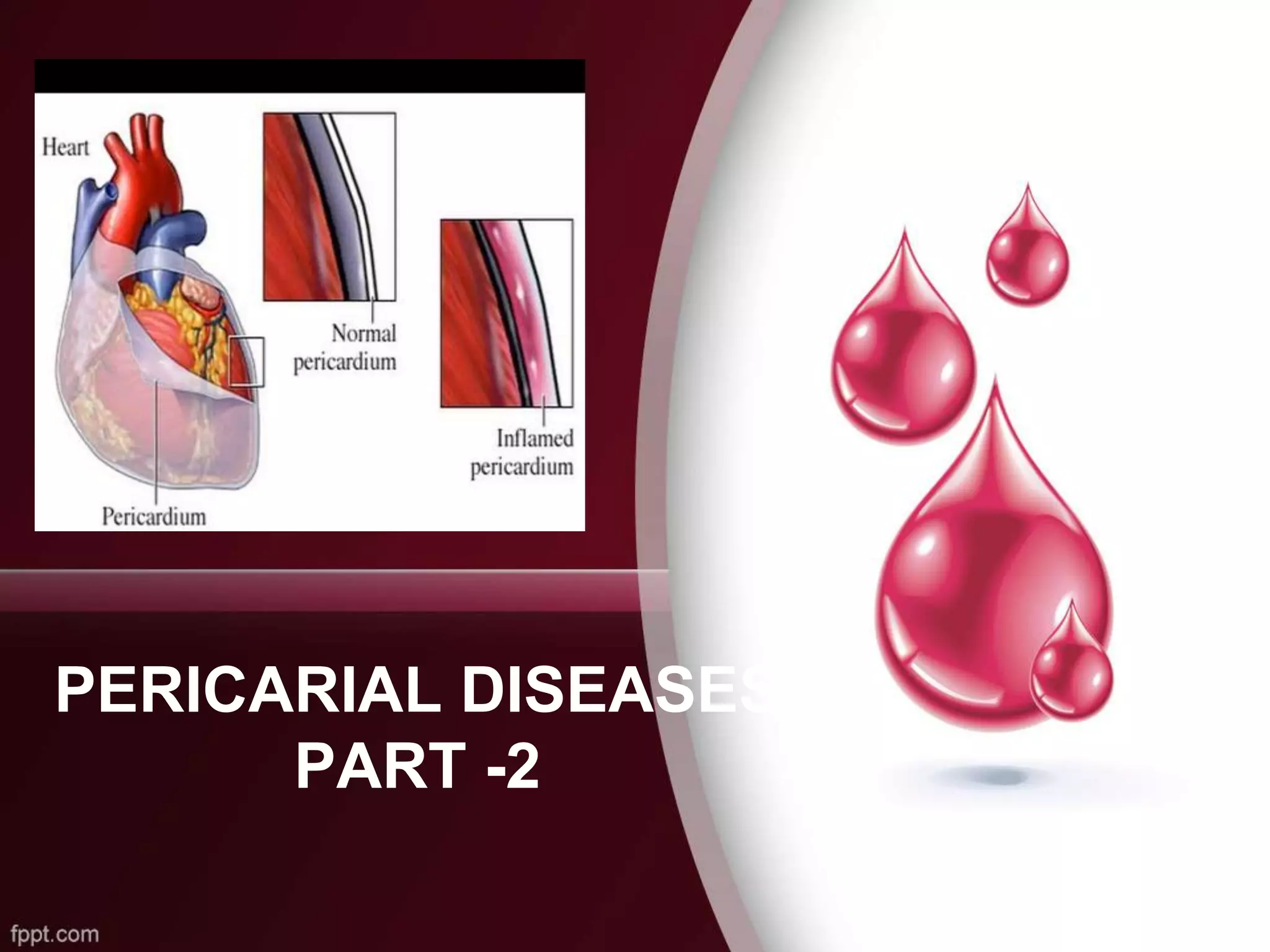
PERICARIAL DISEASES
PART -2
CARDIAC TAMPONADE
• Accumulation of fluid in the pericardial
space causing increase in pressure with
subsequent cardiac compression.
Most common causes :
– Malignancy
– Idiopathic pericarditis
– Renal failure
– cardiac Surgery and trauma.
– TB & Hemopericardium
• Accumulated fluid under high pressure:
compresses cardiac chambers & impairs
diastolic filling of both ventricles.
• SV venous pressures.
• Cardiac output, systemic
• Hypotension/shock JVP Reflex
» Tachycardia, hepatomegaly ascites peripheral
oedema.
CONT..
PATHOPHYSIOLOGY
• Modest amounts of rapidly accumulating fluid can
have major effects on cardiac function.
• An effusion reduces the volume of the cardiac
chambers that cardiac output begins to decline –
Mainly by impeding right-sided heart filling.
• chronic changes in the pericardial pressure effect
on the left side of the heart due to secondary filling.
PATHOPHYSIOLOGY…
CLINICAL FEATURES
• Symptoms acute : confusion / agitation
• Signs - hypotension - elevated JVP -
muffled heart sounds.
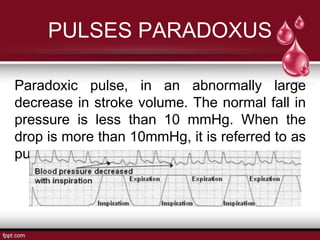
• Pulsus paradoxus : When severe, it may be
detected by palpating weakness or
disappearance of the arterial pulse during
inspiration
PULSES PARADOXUS
Paradoxic pulse, in an abnormally large
decrease in stroke volume. The normal fall in
pressure is less than 10 mmHg. When the
drop is more than 10mmHg, it is referred to as
pulses paradoxus.
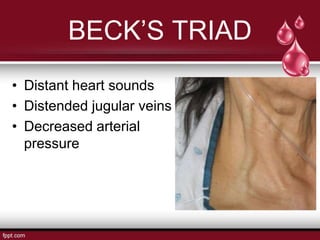
BECK’S TRIAD
• Distant heart sounds
• Distended jugular veins
• Decreased arterial
pressure
MANAGEMENT
• Save the patient’s life
• Improve the heart function
• Relieve the symptoms
MANAGEMENT
• Diuretics & salt restriction
• Digoxin for sinus tachycardia to slow the
ventricular rate.
• Beta blockers & calcium channel blockers
Surgical management
• Pericardiectomy
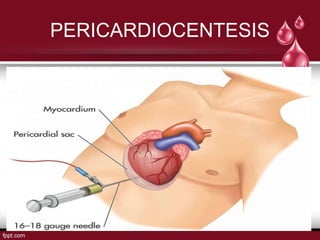
PERICARDIOCENTESIS
MEDICAL MANAGEMENT
• Oxygenation
• Inotropic drugs ( Dobutamine)
• Mechanical ventilation
• Maintain volemic status (normovolemia)
NURSING ASSESMENT
• Physical assessment to obtain the base
line data.
• Vital signs.
• Assess patient in various positions in order
to detect pain whether it is influenced by
respiratory movements, coughing and
swallowing.
NURSING ….
• Assess Heart and Lung Sounds
May hear a pericardial friction rub,
muffled heart sounds, or extra sounds because of
the pressure being placed on the hear
• Assess and Address Oral Hygiene
There is a significant connection between
oral health and pericarditis. Bacteria can travel to
the heart easily from the oral cavity. Patients
should brush their teeth twice daily to prevent
complications.
NURSING INTERVENTIONS
• Pain management – elevate head end to
45 deg.
• Anti inflammatory drugs as prescribed.
• Monitor complications
NURSING DIAGNOSIS
• Ineffective breathing pattern related to chest pain.
• Altered thermoregulation , hyperthermia, related to infection
and inflammation as evidenced by temp.
• Pain related to inflammation of the pericardium.
• Risk for cardiogenic shock related to decreased cardiac
output.
• Ineffective tissue perfusion related to decrease blood flow.
• Anxiety related to therapeutic interventions and uncertainty
of prognosis.
NURSING MANAGEMENT
• Explain every procedure to the patient in order to
get consent, cooperation and array anxiety.
• Position patient in semi fowlers to relieve pain
and allow expansion of chest for effective
breathing.
• Explain the pathophysiology to the patient.
• Encourage gradual increase activity.
• Monitor vital signs closely to detect infections.
NURSING MANAGEMENT
• Educate patient on signs and symptoms of
infection.
• Educate patient to inform the need
prophylactic antibiotics.
• No dental procedures for at least 6 months.
COMPLICATIONS
• Pericarditis progresses to heart failure.
• Pericardial effusion fluid collection in
pericardial space.
• Cardiac tamponade - it develops when
pericardial effusion increases.
Thank you

Pericardial diseases part ii

  • 1.
  • 2.
    CARDIAC TAMPONADE • Accumulationof fluid in the pericardial space causing increase in pressure with subsequent cardiac compression. Most common causes : – Malignancy – Idiopathic pericarditis – Renal failure – cardiac Surgery and trauma. – TB & Hemopericardium
  • 3.
    • Accumulated fluidunder high pressure: compresses cardiac chambers & impairs diastolic filling of both ventricles. • SV venous pressures. • Cardiac output, systemic • Hypotension/shock JVP Reflex » Tachycardia, hepatomegaly ascites peripheral oedema. CONT..
  • 4.
    PATHOPHYSIOLOGY • Modest amountsof rapidly accumulating fluid can have major effects on cardiac function. • An effusion reduces the volume of the cardiac chambers that cardiac output begins to decline – Mainly by impeding right-sided heart filling. • chronic changes in the pericardial pressure effect on the left side of the heart due to secondary filling.
  • 5.
  • 6.
    CLINICAL FEATURES • Symptomsacute : confusion / agitation • Signs - hypotension - elevated JVP - muffled heart sounds. • Pulsus paradoxus : When severe, it may be detected by palpating weakness or disappearance of the arterial pulse during inspiration
  • 7.
    PULSES PARADOXUS Paradoxic pulse,in an abnormally large decrease in stroke volume. The normal fall in pressure is less than 10 mmHg. When the drop is more than 10mmHg, it is referred to as pulses paradoxus.
  • 8.
    BECK’S TRIAD • Distantheart sounds • Distended jugular veins • Decreased arterial pressure
  • 9.
    MANAGEMENT • Save thepatient’s life • Improve the heart function • Relieve the symptoms
  • 10.
    MANAGEMENT • Diuretics &salt restriction • Digoxin for sinus tachycardia to slow the ventricular rate. • Beta blockers & calcium channel blockers Surgical management • Pericardiectomy
  • 11.
  • 12.
    MEDICAL MANAGEMENT • Oxygenation •Inotropic drugs ( Dobutamine) • Mechanical ventilation • Maintain volemic status (normovolemia)
  • 13.
    NURSING ASSESMENT • Physicalassessment to obtain the base line data. • Vital signs. • Assess patient in various positions in order to detect pain whether it is influenced by respiratory movements, coughing and swallowing.
  • 14.
    NURSING …. • AssessHeart and Lung Sounds May hear a pericardial friction rub, muffled heart sounds, or extra sounds because of the pressure being placed on the hear • Assess and Address Oral Hygiene There is a significant connection between oral health and pericarditis. Bacteria can travel to the heart easily from the oral cavity. Patients should brush their teeth twice daily to prevent complications.
  • 15.
    NURSING INTERVENTIONS • Painmanagement – elevate head end to 45 deg. • Anti inflammatory drugs as prescribed. • Monitor complications
  • 16.
    NURSING DIAGNOSIS • Ineffectivebreathing pattern related to chest pain. • Altered thermoregulation , hyperthermia, related to infection and inflammation as evidenced by temp. • Pain related to inflammation of the pericardium. • Risk for cardiogenic shock related to decreased cardiac output. • Ineffective tissue perfusion related to decrease blood flow. • Anxiety related to therapeutic interventions and uncertainty of prognosis.
  • 17.
    NURSING MANAGEMENT • Explainevery procedure to the patient in order to get consent, cooperation and array anxiety. • Position patient in semi fowlers to relieve pain and allow expansion of chest for effective breathing. • Explain the pathophysiology to the patient. • Encourage gradual increase activity. • Monitor vital signs closely to detect infections.
  • 18.
    NURSING MANAGEMENT • Educatepatient on signs and symptoms of infection. • Educate patient to inform the need prophylactic antibiotics. • No dental procedures for at least 6 months.
  • 19.
    COMPLICATIONS • Pericarditis progressesto heart failure. • Pericardial effusion fluid collection in pericardial space. • Cardiac tamponade - it develops when pericardial effusion increases.
  • 20.