Early Christian
Architecture
QUINTO, LEANNIE K.C.
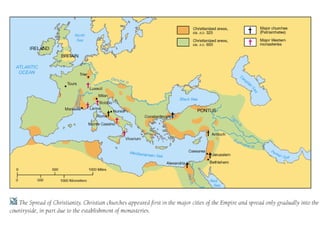
The Early Christian
Architecture started in two (2)
prominent locations at ROME
and CONSTANTINOPLE
29 A.D.
Passing of Isa (AS) and
the beginning of
Christian Religion.
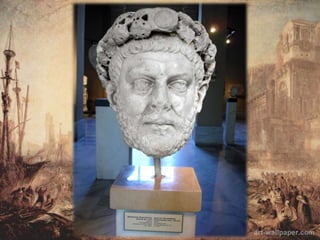
286 A.D.
Emperor Diocletian reorganizes

the Roman Empire splitting it
into two; the Eastern and
Western part.
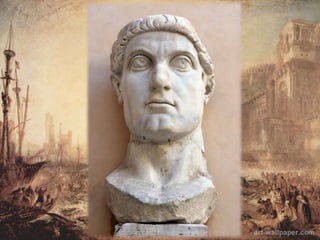
313 A.D.
Emperor Constantine
recognizes the Christian
Religion and adopts it as
a state religion.
324 A.D.
Emperor Constantine reunited
the Roman Empire with a new
capital.
364 A.D.
Rome finally splits into two;
The Western and Eastern
Empire
The term “Early Christian Architecture”
refers to the architecture of the early
Christian Churches of the Roman Era.
With Christianity widely accepted as a
state religion in Rome, it was necessary
for Architecture to respond to the
demands of the religion for worship
space.
Mode of worship was the
most important
determinant of the form of
the church.
The requirements include:
• A path for processional entry and exit clergy.
• An altar area, where the clergy celebrate mass
• A space for the segregation of the clergy from the
congregation during procession and communion.
• Burial space.
The single most important
social phenomenon of the
Early Christian period was the
spread and acceptance of the
Christian Religion.
Early Christian Churches were further
divided into two:
• Basilica Church
• Alternative Church Plans
Basilica Church
• The early churches were generally simple
and functional in their design.
• The emphasis was centered on the act of
Christian worship.
• The form chosen for the early church was
the Roman Basilica.
• The architecture of the church that
developed was not a completely new
style, but the use of available Roman
forms to satisfy a new program need.
• It was suitable for use as a church
with no serious modification and it
could be easily and rapidly built at
low cost.
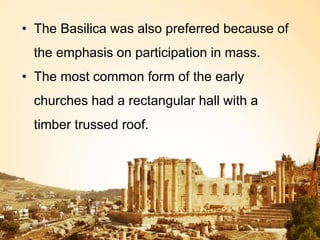
• The Basilica was also preferred because of
the emphasis on participation in mass.
• The most common form of the early
churches had a rectangular hall with a
timber trussed roof.
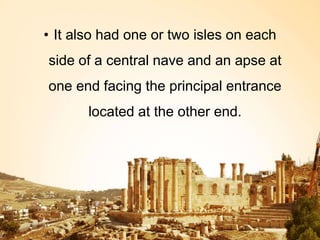
• It also had one or two isles on each
side of a central nave and an apse at
one end facing the principal entrance
located at the other end.
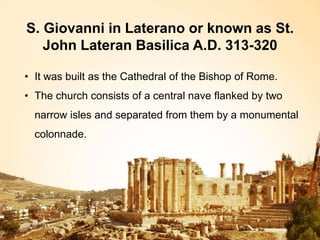
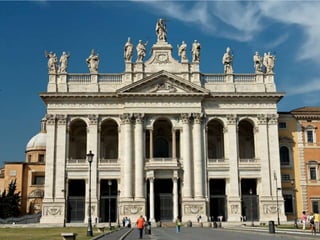
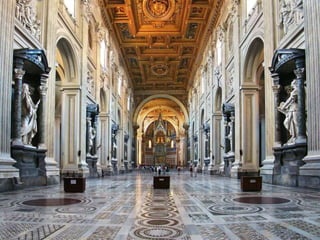
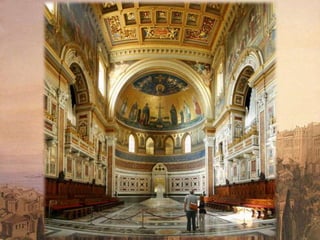
S. Giovanni in Laterano or known as St.
John Lateran Basilica A.D. 313-320
• It was built as the Cathedral of the Bishop of Rome.
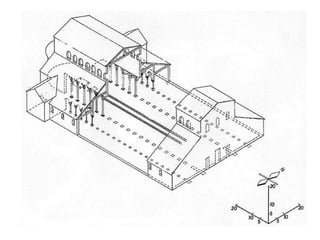
• The church consists of a central nave flanked by two
narrow isles and separated from them by a monumental
colonnade.
• The central nave rose above the isle roof, and the
inner isle rose above the outer part.
• The nave terminated at the apse.
• The structure was of brick faced concrete with
simple trussed timber-roof.
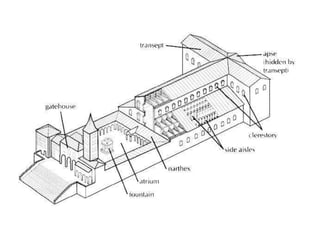
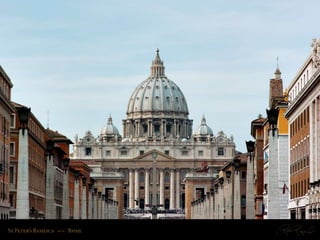
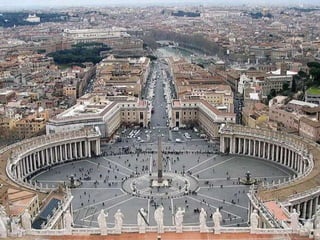
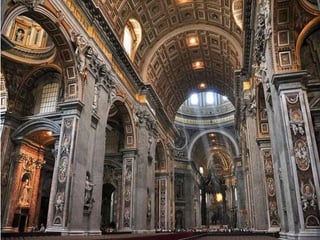
S. Peter’s, Rome also known as St.
Peter’s Basilica A.D. 333
• The church has a triple entrance gate
leading to an atrium.
• The Basilica had a wooden roof
interlocking rafters.
• The nave did not lead directly to
the apse but instead ends in a
transverse space that is high as
the nave.
Alternative Church
Form
Alternative more centralized plans,
with a focus on a central vertical axis
rather than longitudinal horizontal one
were also adopted occasionally.
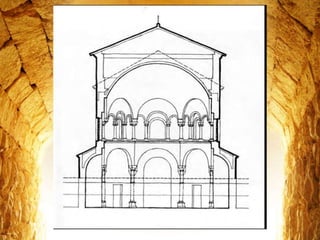
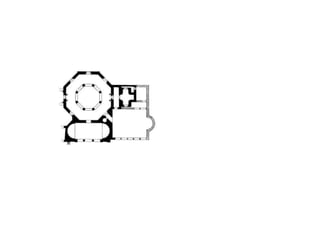
Baptistery Church Form
The Baptistery of Constantine, Rome
(A.D. 430-440) built near the Lateran
church of Sixtux III, and not by
Constantine to whom it is generally
attributed is among the oldest of Italian
baptisteries, of which it was probably the
model.
The roof is supported by a two-storeyed
ring of eight porphyry and marble
columns taken from old pagan building
while in the center is an old Roman
bath of green basalt converted into a
front.
HISTORY: Early Christian Architecture

HISTORY: Early Christian Architecture

  • 1.
  • 2.
    The Early Christian Architecturestarted in two (2) prominent locations at ROME and CONSTANTINOPLE
  • 4.
    29 A.D. Passing ofIsa (AS) and the beginning of Christian Religion.
  • 5.
    286 A.D. Emperor Diocletianreorganizes the Roman Empire splitting it into two; the Eastern and Western part.
  • 7.
    313 A.D. Emperor Constantine recognizesthe Christian Religion and adopts it as a state religion.
  • 9.
    324 A.D. Emperor Constantinereunited the Roman Empire with a new capital.
  • 10.
    364 A.D. Rome finallysplits into two; The Western and Eastern Empire
  • 11.
    The term “EarlyChristian Architecture” refers to the architecture of the early Christian Churches of the Roman Era.
  • 12.
    With Christianity widelyaccepted as a state religion in Rome, it was necessary for Architecture to respond to the demands of the religion for worship space.
  • 13.
    Mode of worshipwas the most important determinant of the form of the church.
  • 14.
    The requirements include: •A path for processional entry and exit clergy. • An altar area, where the clergy celebrate mass • A space for the segregation of the clergy from the congregation during procession and communion. • Burial space.
  • 15.
    The single mostimportant social phenomenon of the Early Christian period was the spread and acceptance of the Christian Religion.
  • 16.
    Early Christian Churcheswere further divided into two: • Basilica Church • Alternative Church Plans
  • 17.
  • 18.
    • The earlychurches were generally simple and functional in their design. • The emphasis was centered on the act of Christian worship. • The form chosen for the early church was the Roman Basilica.
  • 19.
    • The architectureof the church that developed was not a completely new style, but the use of available Roman forms to satisfy a new program need.
  • 20.
    • It wassuitable for use as a church with no serious modification and it could be easily and rapidly built at low cost.
  • 21.
    • The Basilicawas also preferred because of the emphasis on participation in mass. • The most common form of the early churches had a rectangular hall with a timber trussed roof.
  • 22.
    • It alsohad one or two isles on each side of a central nave and an apse at one end facing the principal entrance located at the other end.
  • 24.
    S. Giovanni inLaterano or known as St. John Lateran Basilica A.D. 313-320 • It was built as the Cathedral of the Bishop of Rome. • The church consists of a central nave flanked by two narrow isles and separated from them by a monumental colonnade.
  • 26.
    • The centralnave rose above the isle roof, and the inner isle rose above the outer part. • The nave terminated at the apse. • The structure was of brick faced concrete with simple trussed timber-roof.
  • 30.
    S. Peter’s, Romealso known as St. Peter’s Basilica A.D. 333 • The church has a triple entrance gate leading to an atrium. • The Basilica had a wooden roof interlocking rafters.
  • 32.
    • The navedid not lead directly to the apse but instead ends in a transverse space that is high as the nave.
  • 36.
  • 37.
    Alternative more centralizedplans, with a focus on a central vertical axis rather than longitudinal horizontal one were also adopted occasionally.
  • 38.
    Baptistery Church Form TheBaptistery of Constantine, Rome (A.D. 430-440) built near the Lateran church of Sixtux III, and not by Constantine to whom it is generally attributed is among the oldest of Italian baptisteries, of which it was probably the model.
  • 39.
    The roof issupported by a two-storeyed ring of eight porphyry and marble columns taken from old pagan building while in the center is an old Roman bath of green basalt converted into a front.