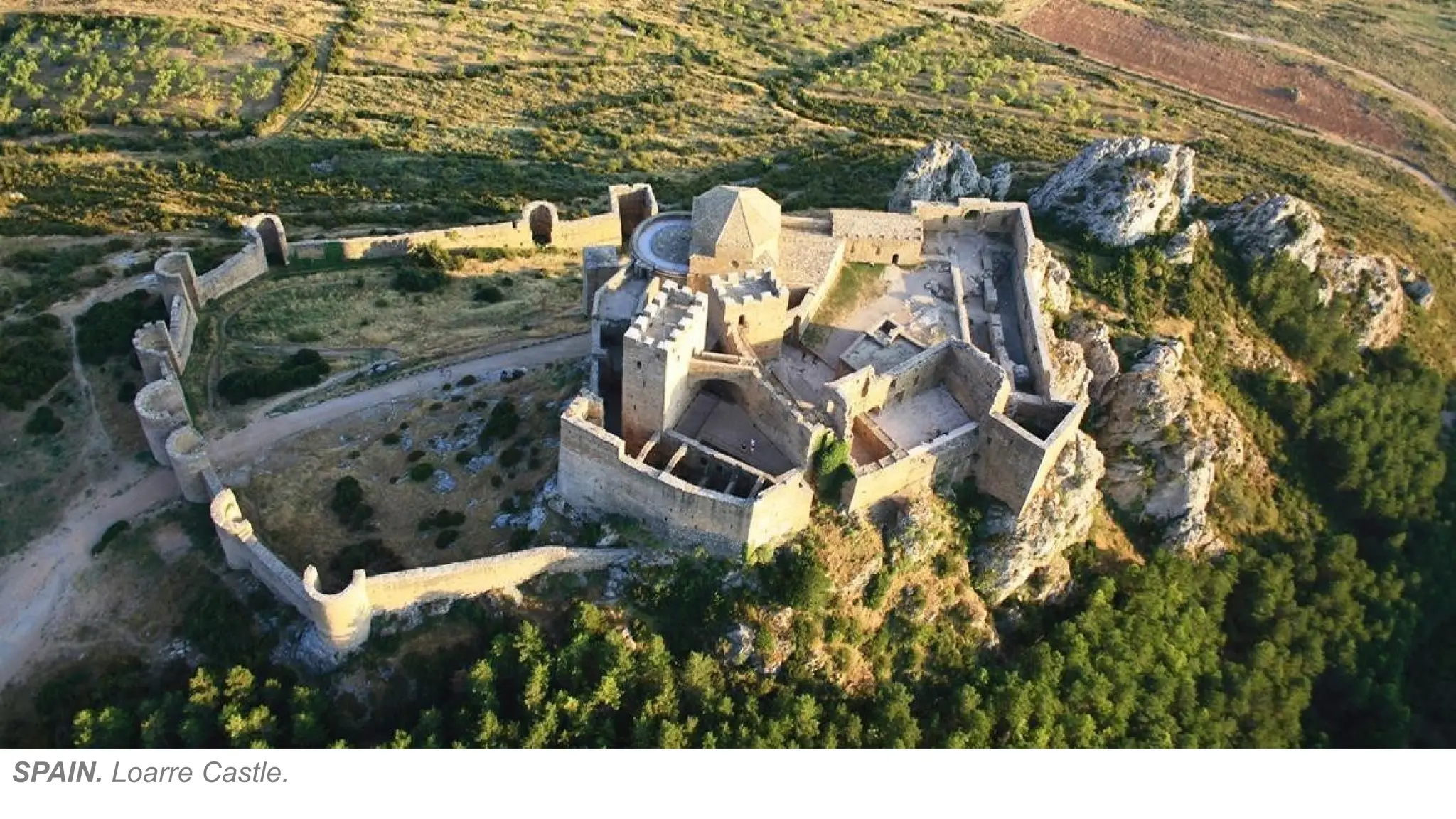
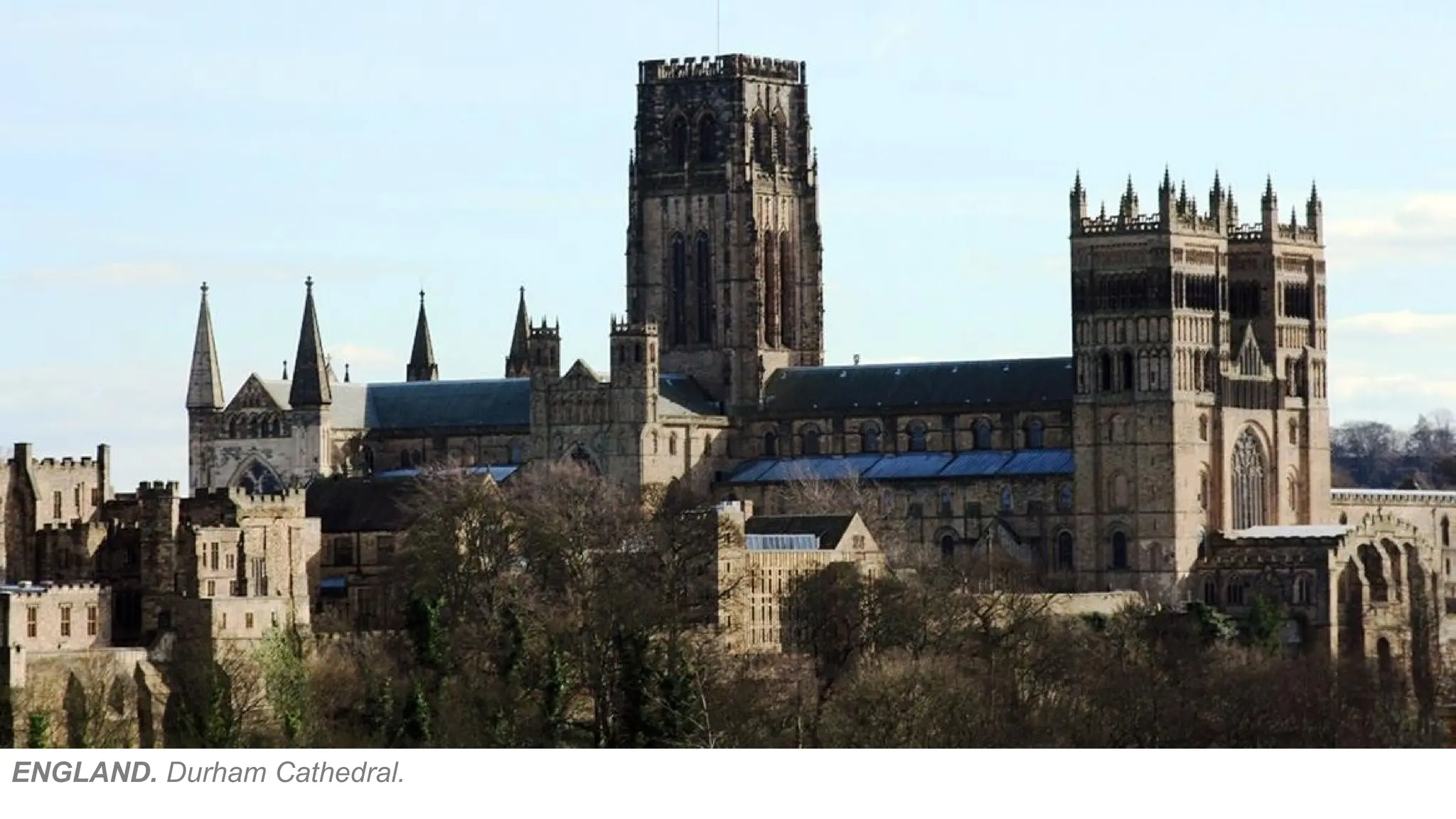
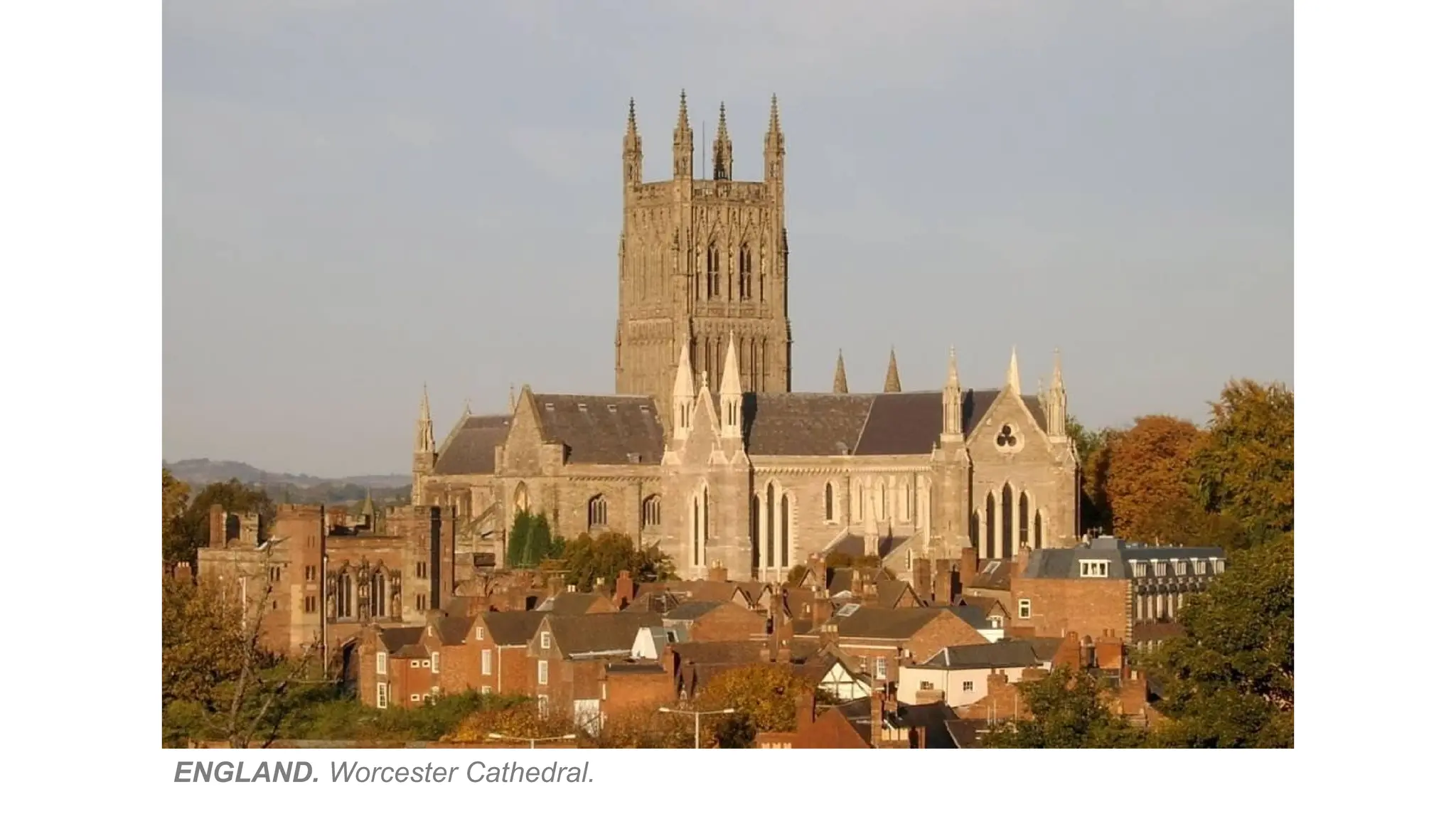
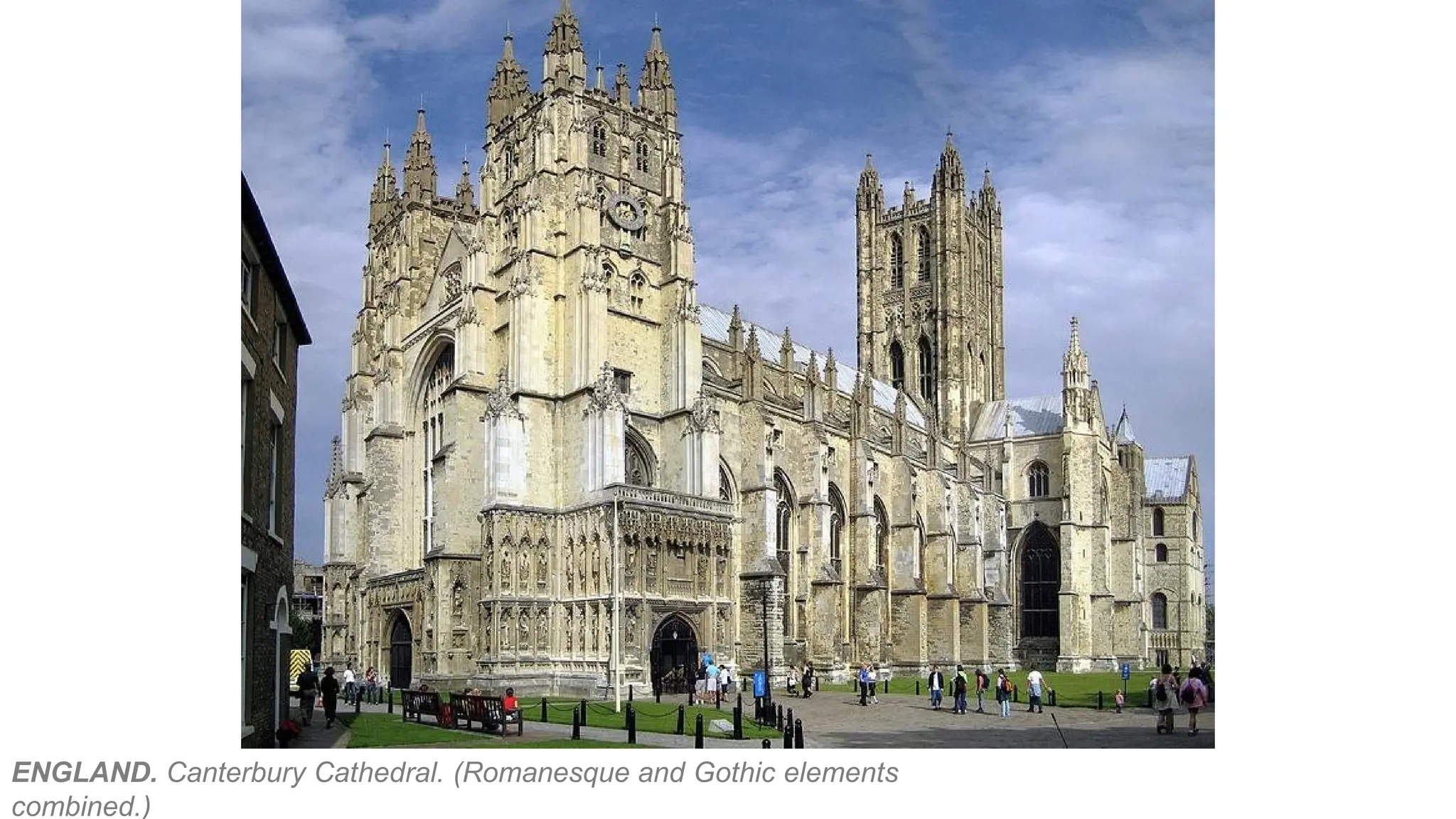
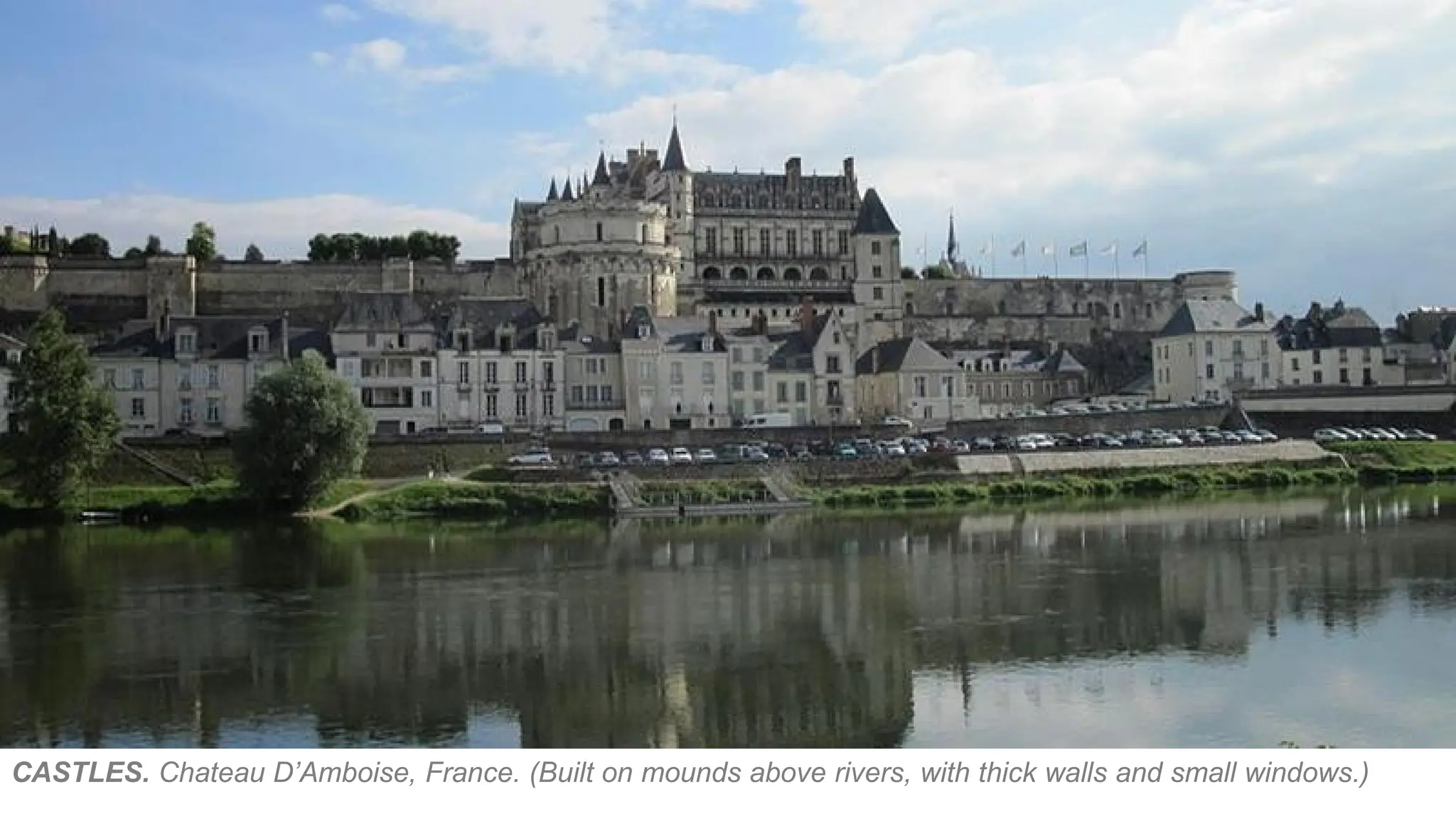
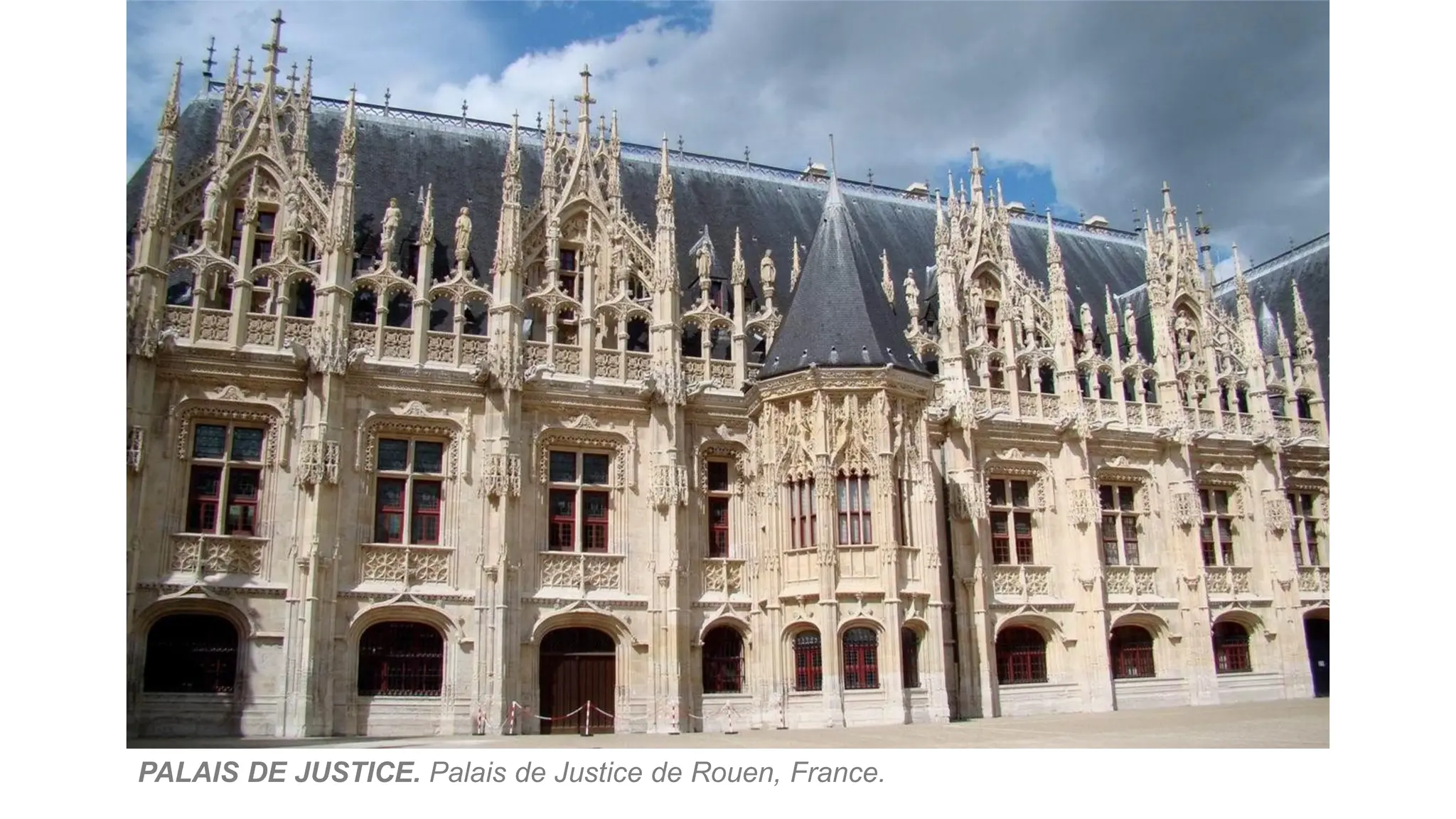
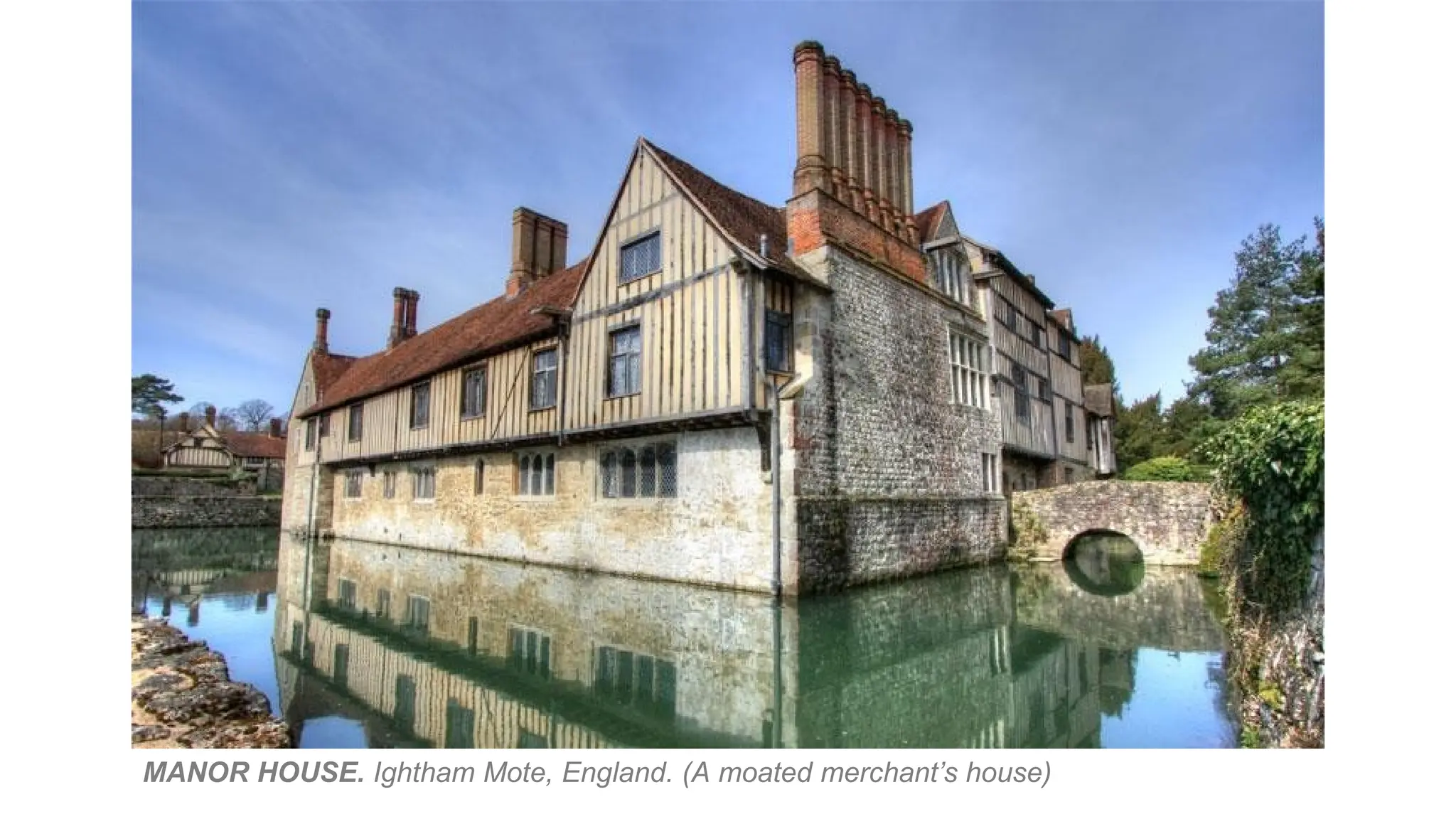
Early Christian (200-1025)
▪The final phase of Roman architecture.
▪ Christianity became the state religion.
▪ House-churches, early venue for religious practices.
▪ Roman basilica form was adopted as the ground plan
for most churches: rectangular plan and a nave with
two side aisles.
▪ Basilican churches were constructed over the burial
place of a saint.
▪ Facades faced west.
4.
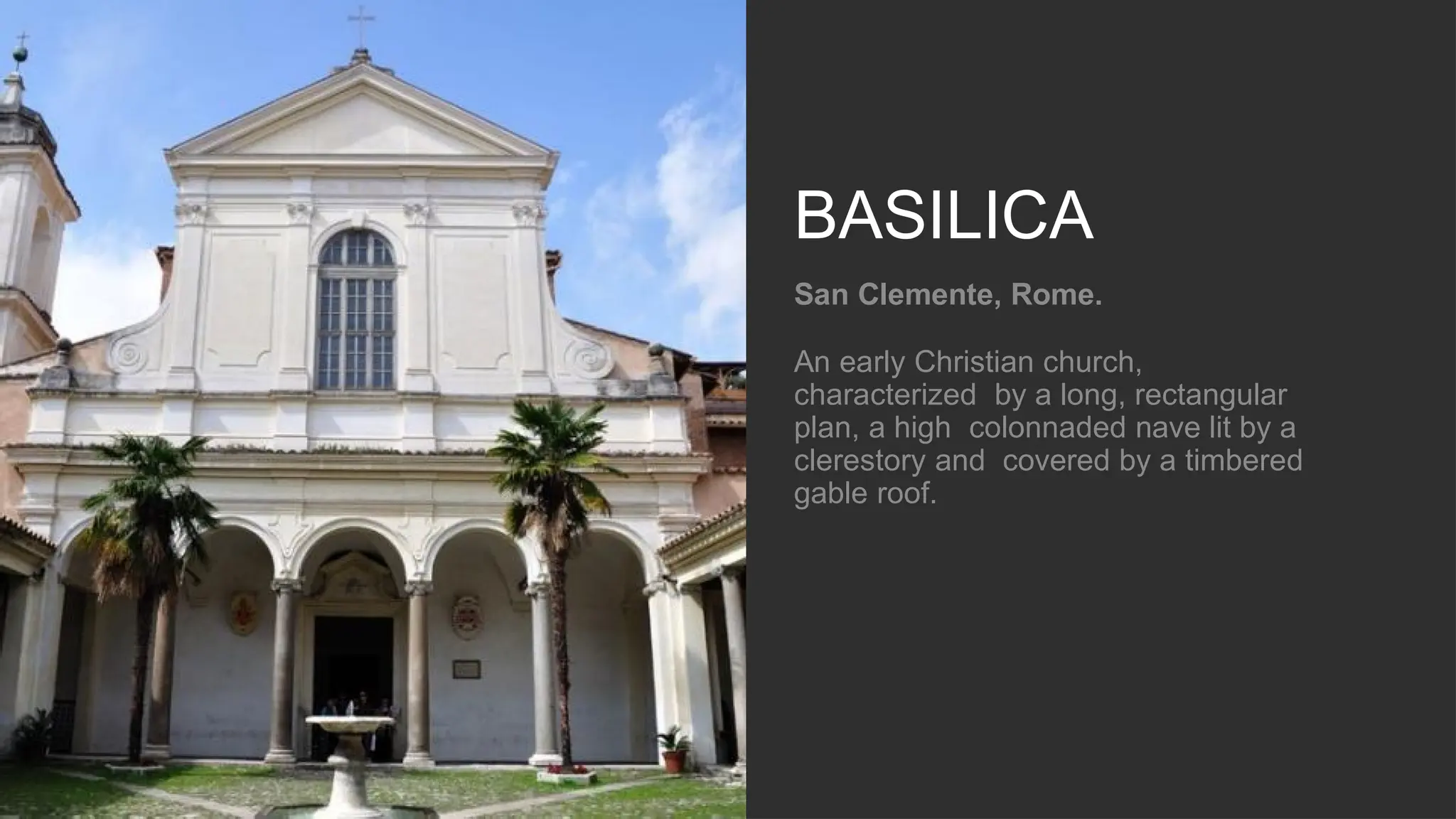
BASILICA
San Clemente, Rome.
Anearly Christian church,
characterized by a long, rectangular
plan, a high colonnaded nave lit by a
clerestory and covered by a timbered
gable roof.
5.
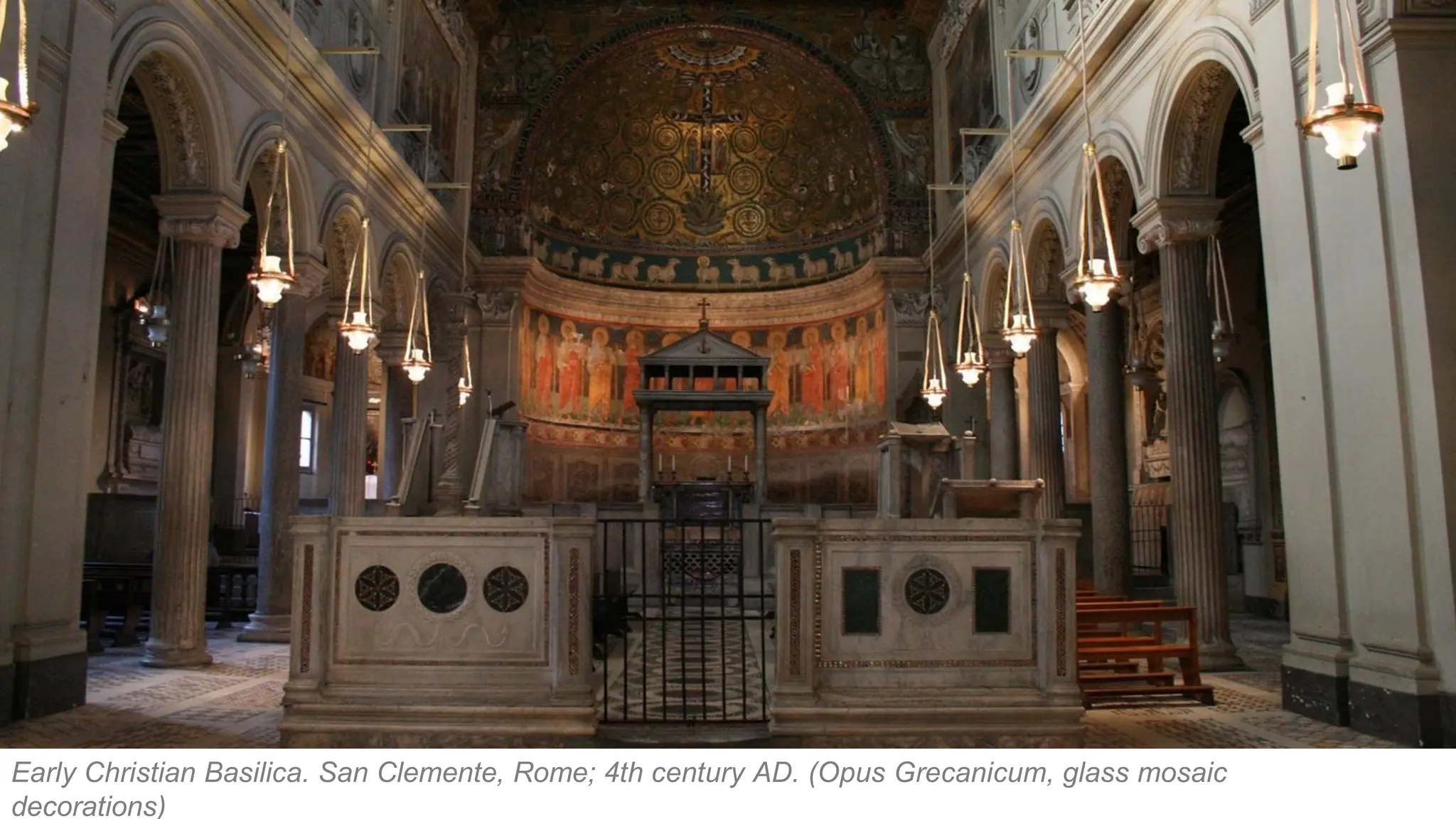
Early Christian Basilica.San Clemente, Rome; 4th century AD. (Opus Grecanicum, glass mosaic
decorations)
6.
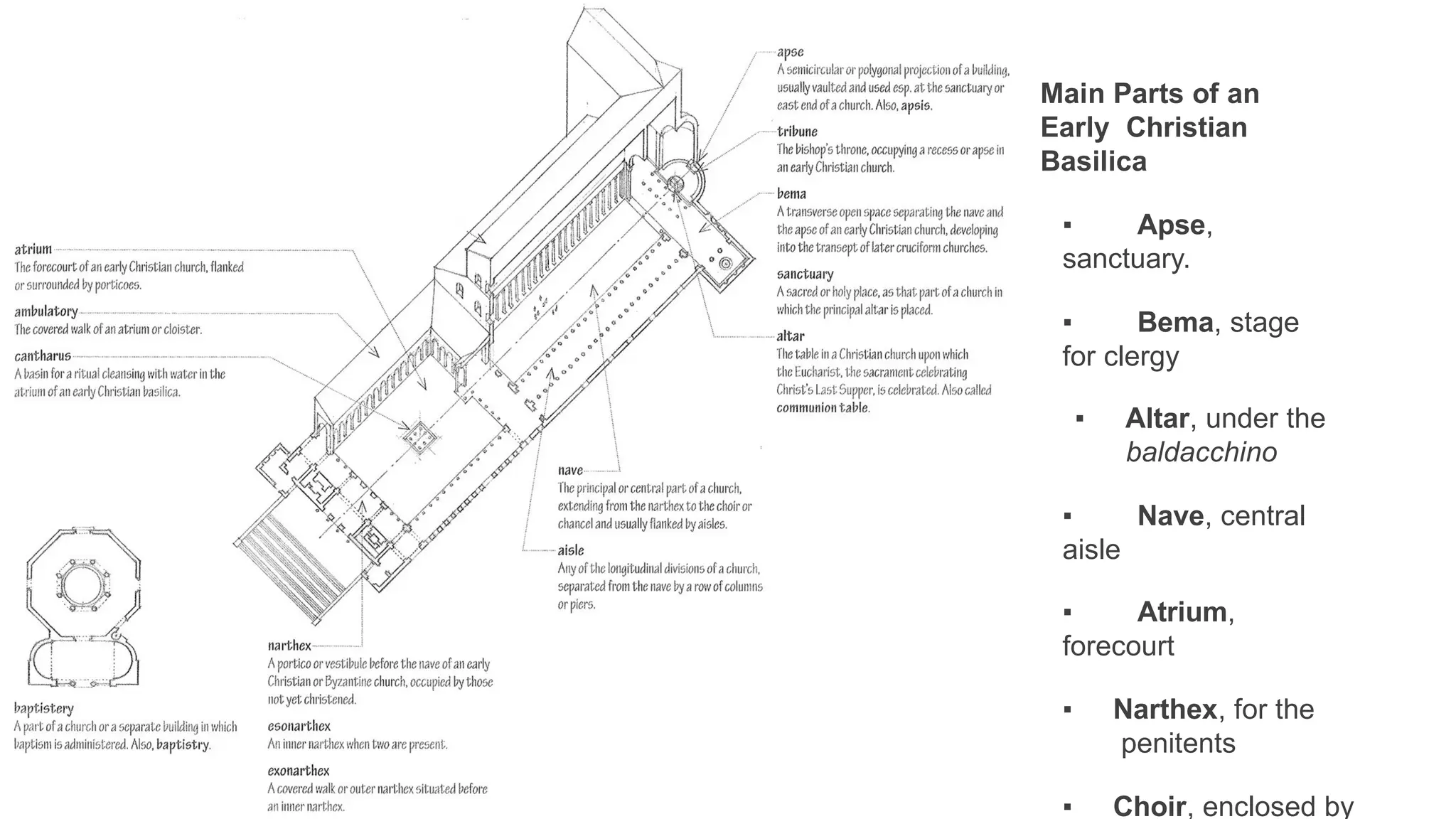
Main Parts ofan
Early Christian
Basilica
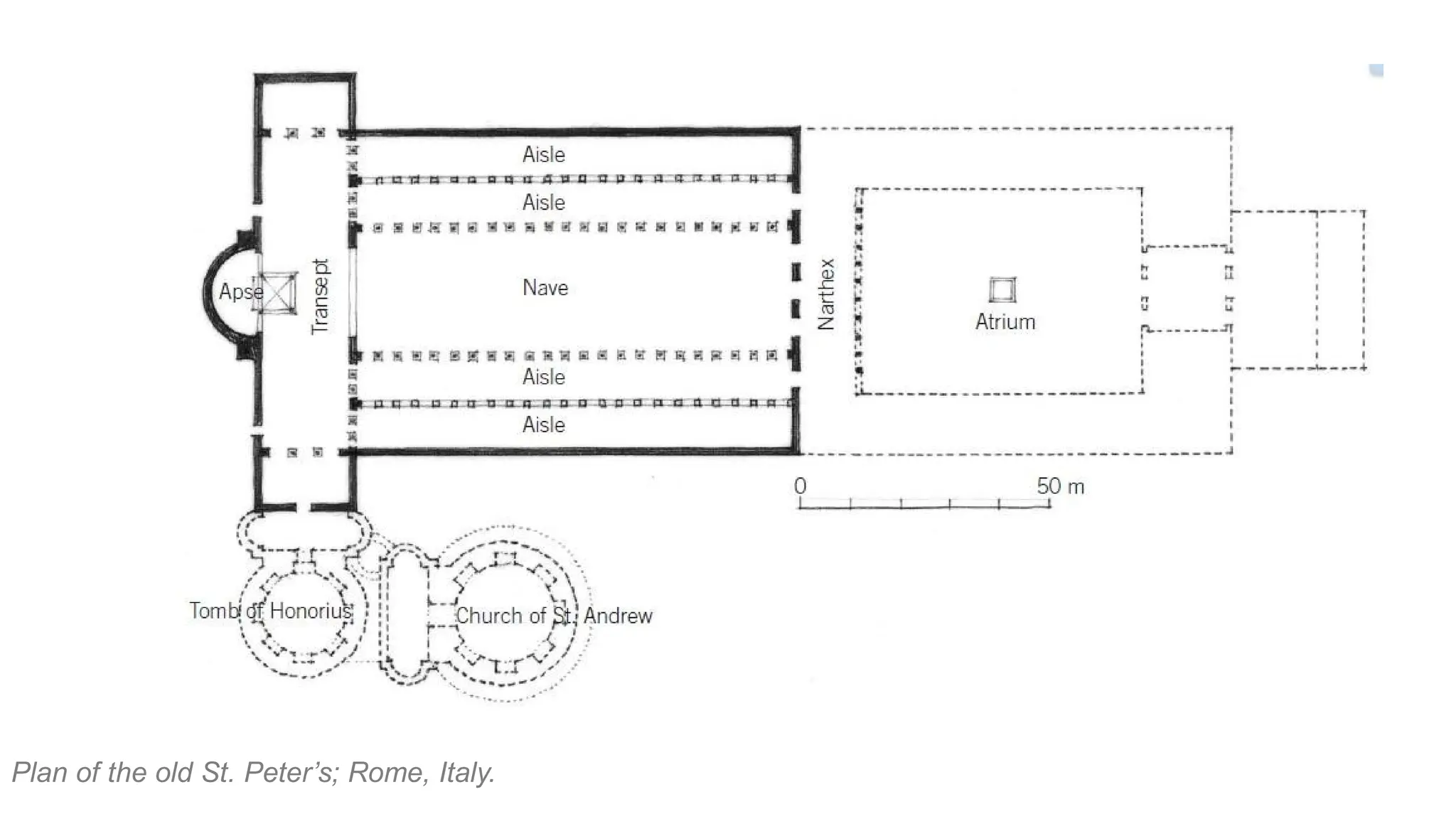
▪ Apse,
sanctuary.
▪ Bema, stage
for clergy
▪ Altar, under the
baldacchino
▪ Nave, central
aisle
▪ Atrium,
forecourt
▪ Narthex, for the
penitents
▪ Choir, enclosed by
7.
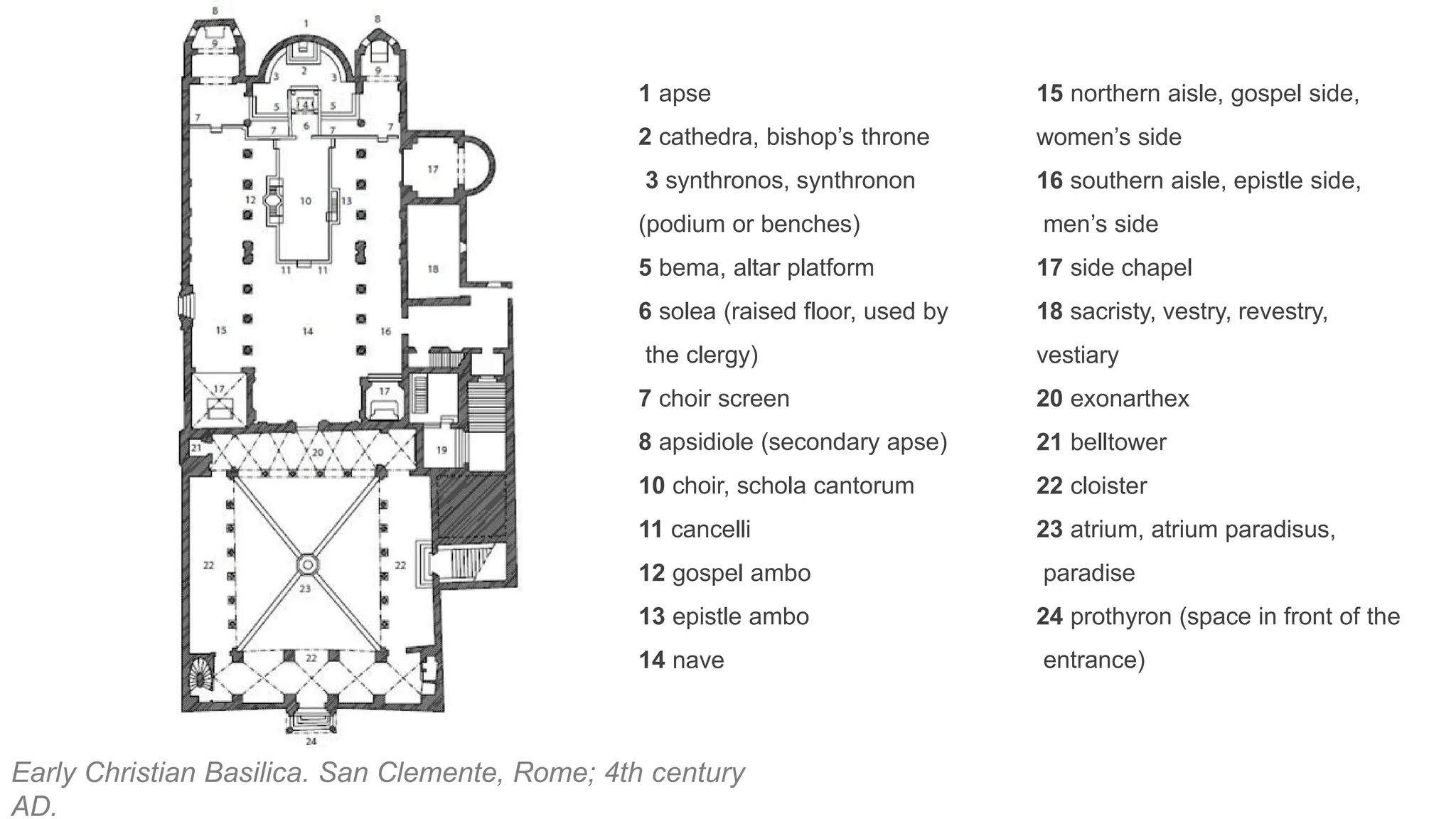
Early Christian Basilica.San Clemente, Rome; 4th century
AD.
1 apse
2 cathedra, bishop’s throne
3 synthronos, synthronon
(podium or benches)
5 bema, altar platform
6 solea (raised floor, used by
the clergy)
7 choir screen
8 apsidiole (secondary apse)
10 choir, schola cantorum
11 cancelli
12 gospel ambo
13 epistle ambo
14 nave
15 northern aisle, gospel side,
women’s side
16 southern aisle, epistle side,
men’s side
17 side chapel
18 sacristy, vestry, revestry,
vestiary
20 exonarthex
21 belltower
22 cloister
23 atrium, atrium paradisus,
paradise
24 prothyron (space in front of the
entrance)
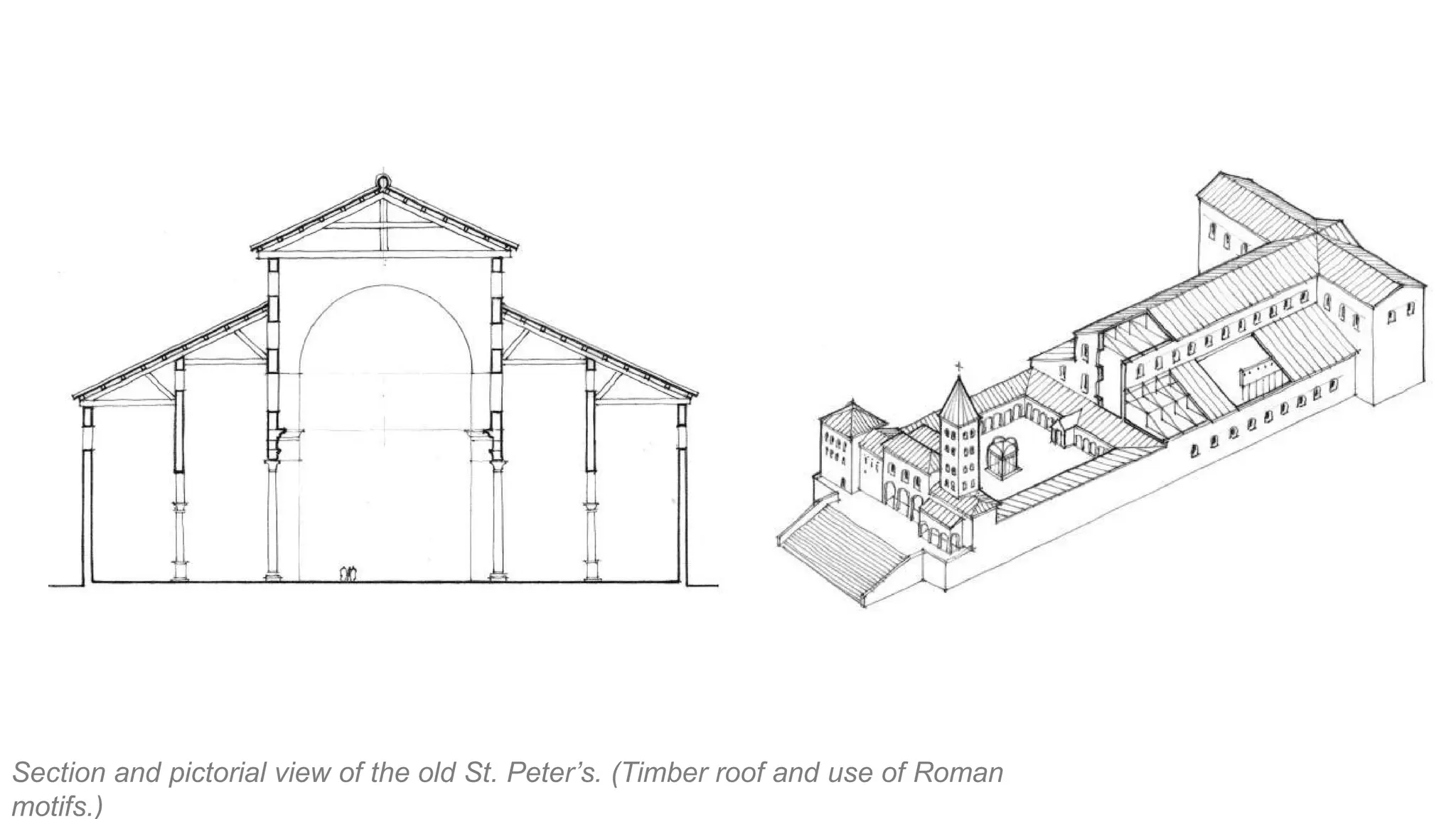
Section and pictorialview of the old St. Peter’s. (Timber roof and use of Roman
motifs.)
10.
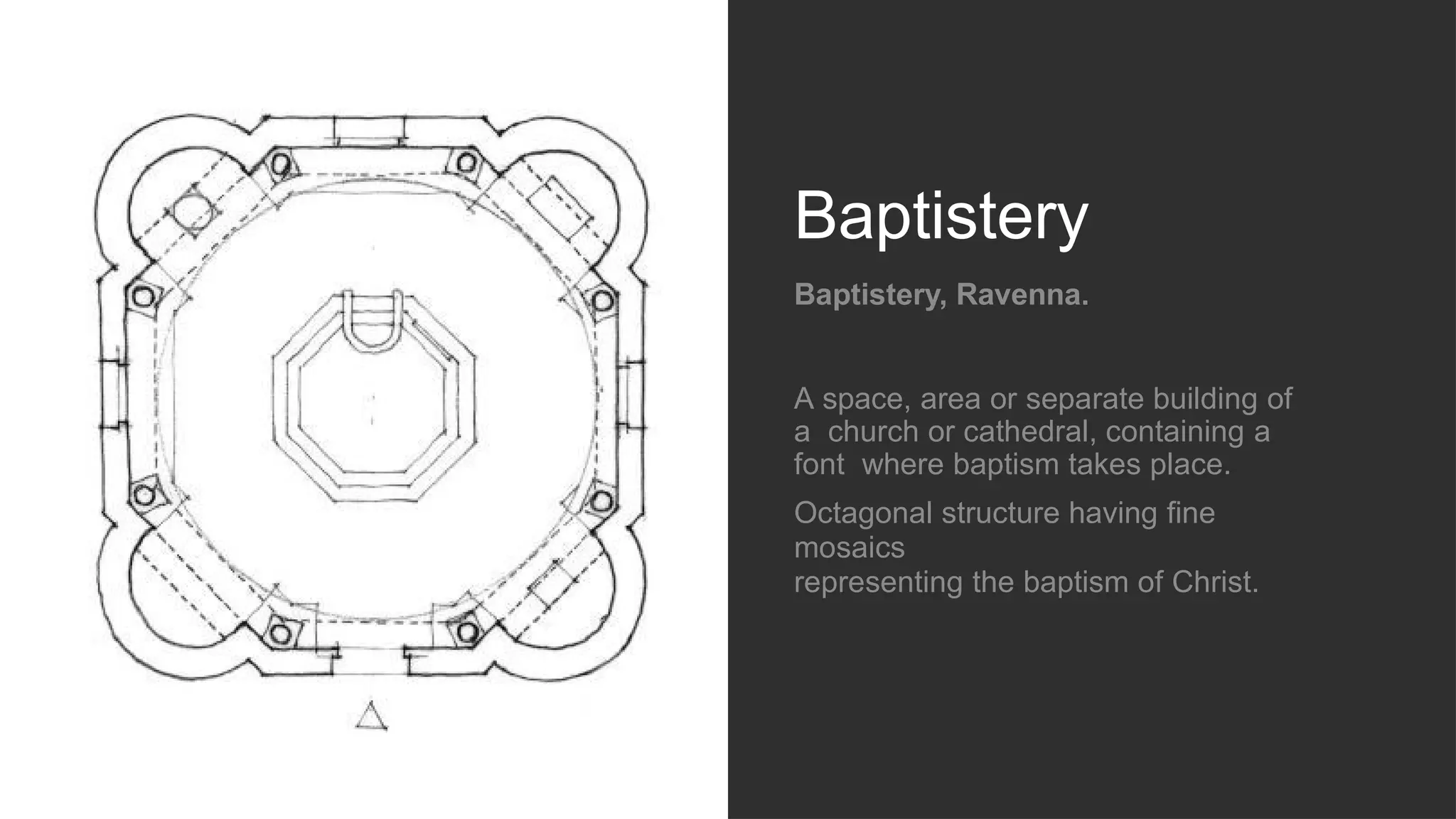
Baptistery
Baptistery, Ravenna.
A space,area or separate building of
a church or cathedral, containing a
font where baptism takes place.
Octagonal structure having fine
mosaics
representing the baptism of Christ.
11.
On a canonicalsense…
▪A basilica is the name given to certain churches granted
special privileges by the pope or the Vatican.
▪The criteria are based on special spiritual, historical,
and/or architectural significance.
▪This is the highest permanent designation for a church
building.
12.
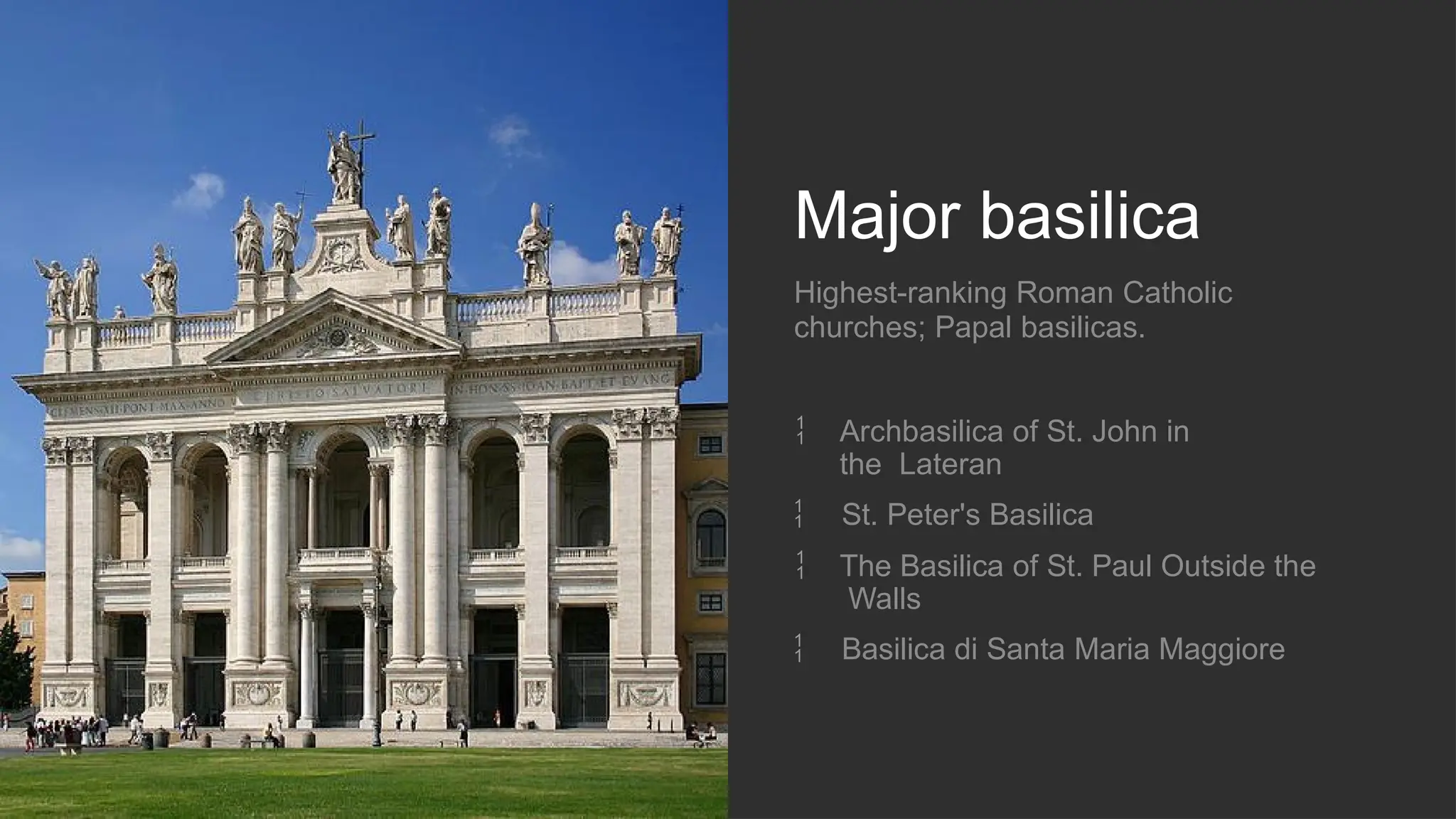
Major basilica
Highest-ranking RomanCatholic
churches; Papal basilicas.
Archbasilica of St. John in
the Lateran
St. Peter's Basilica
The Basilica of St. Paul Outside the
Walls
Basilica di Santa Maria Maggiore
13.
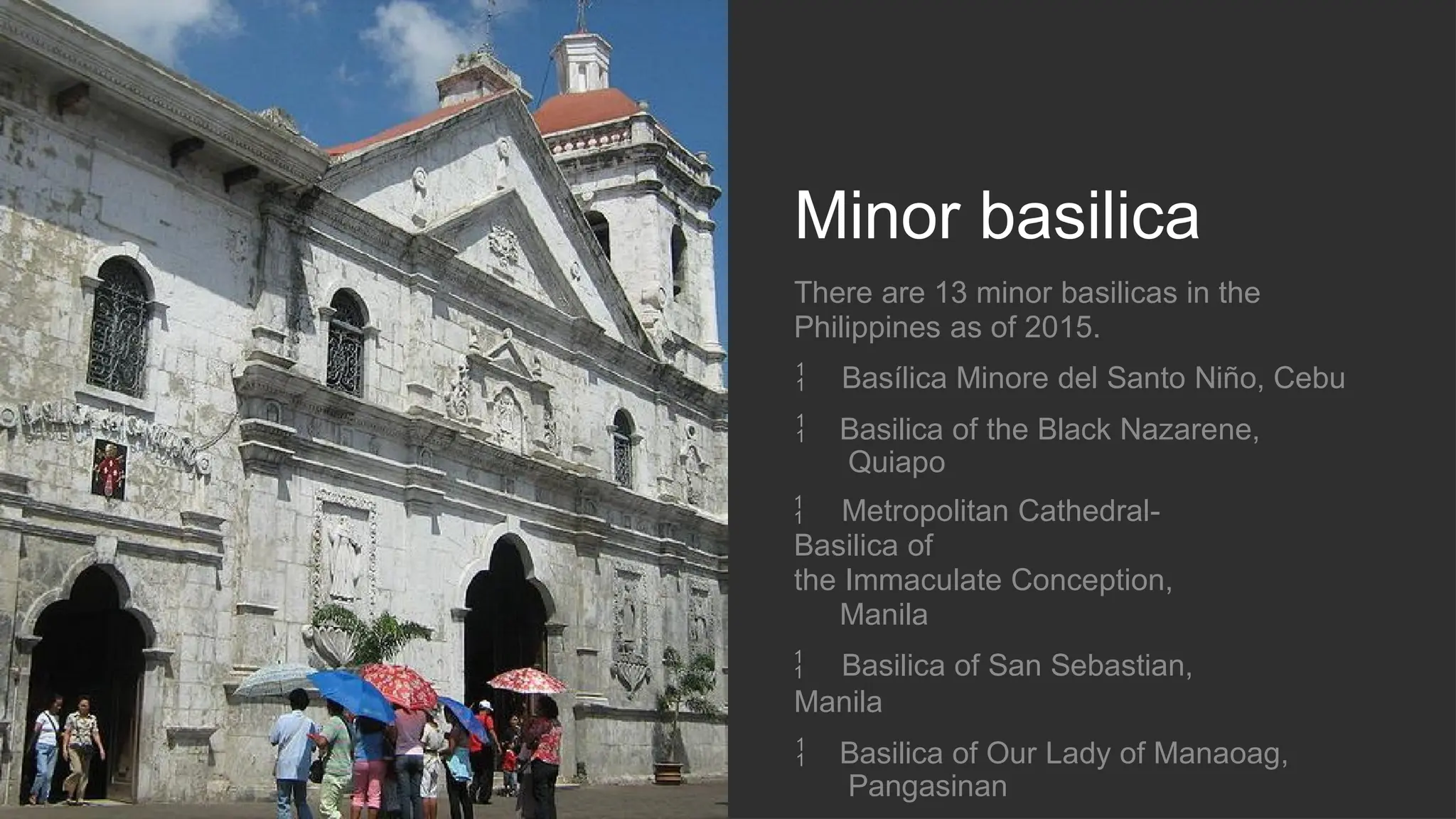
Minor basilica
There are13 minor basilicas in the
Philippines as of 2015.
Basílica Minore del Santo Niño, Cebu
Basilica of the Black Nazarene,
Quiapo
Metropolitan Cathedral-
Basilica of
the Immaculate Conception,
Manila
Basilica of San Sebastian,
Manila
Basilica of Our Lady of Manaoag,
Pangasinan
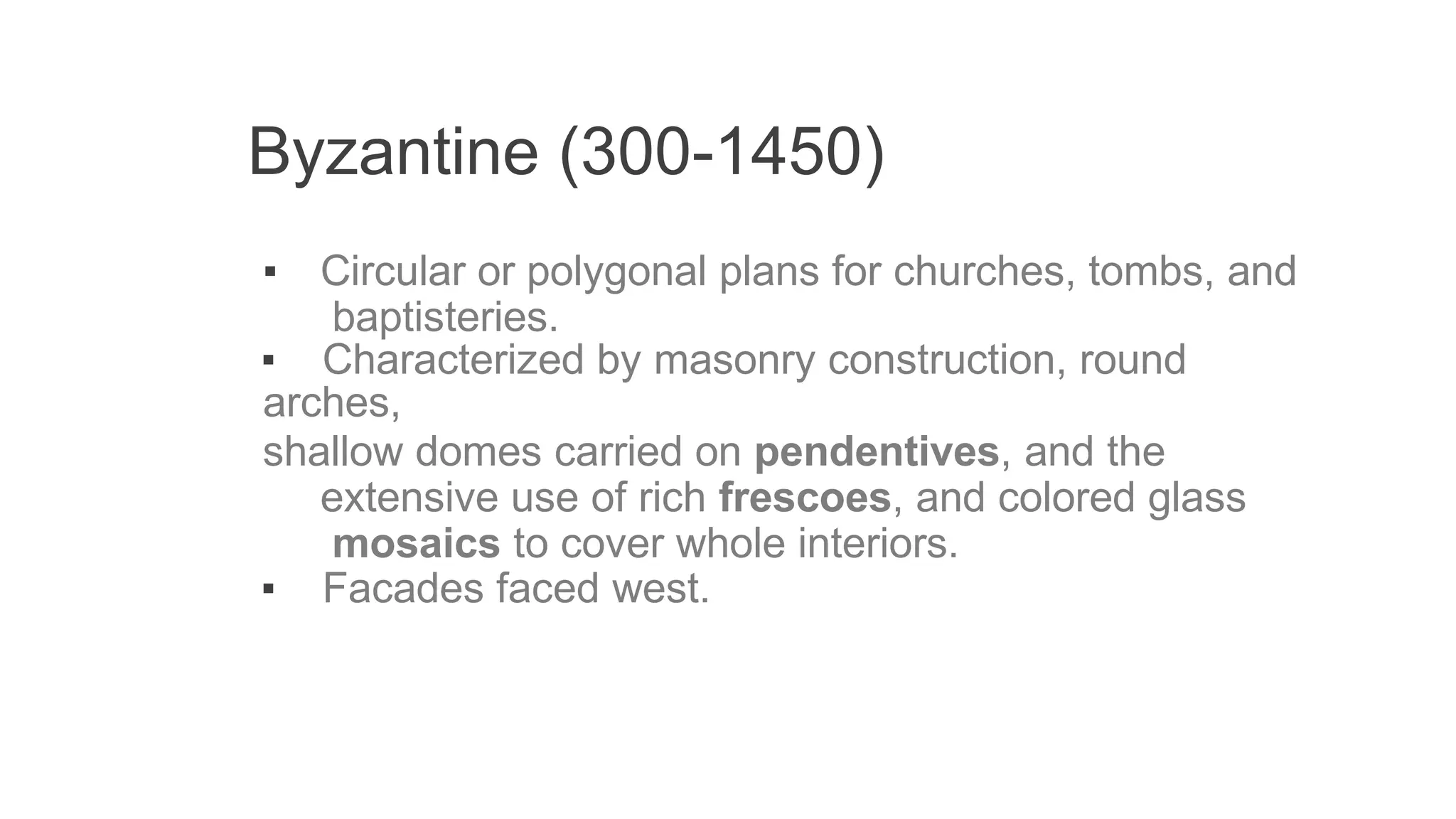
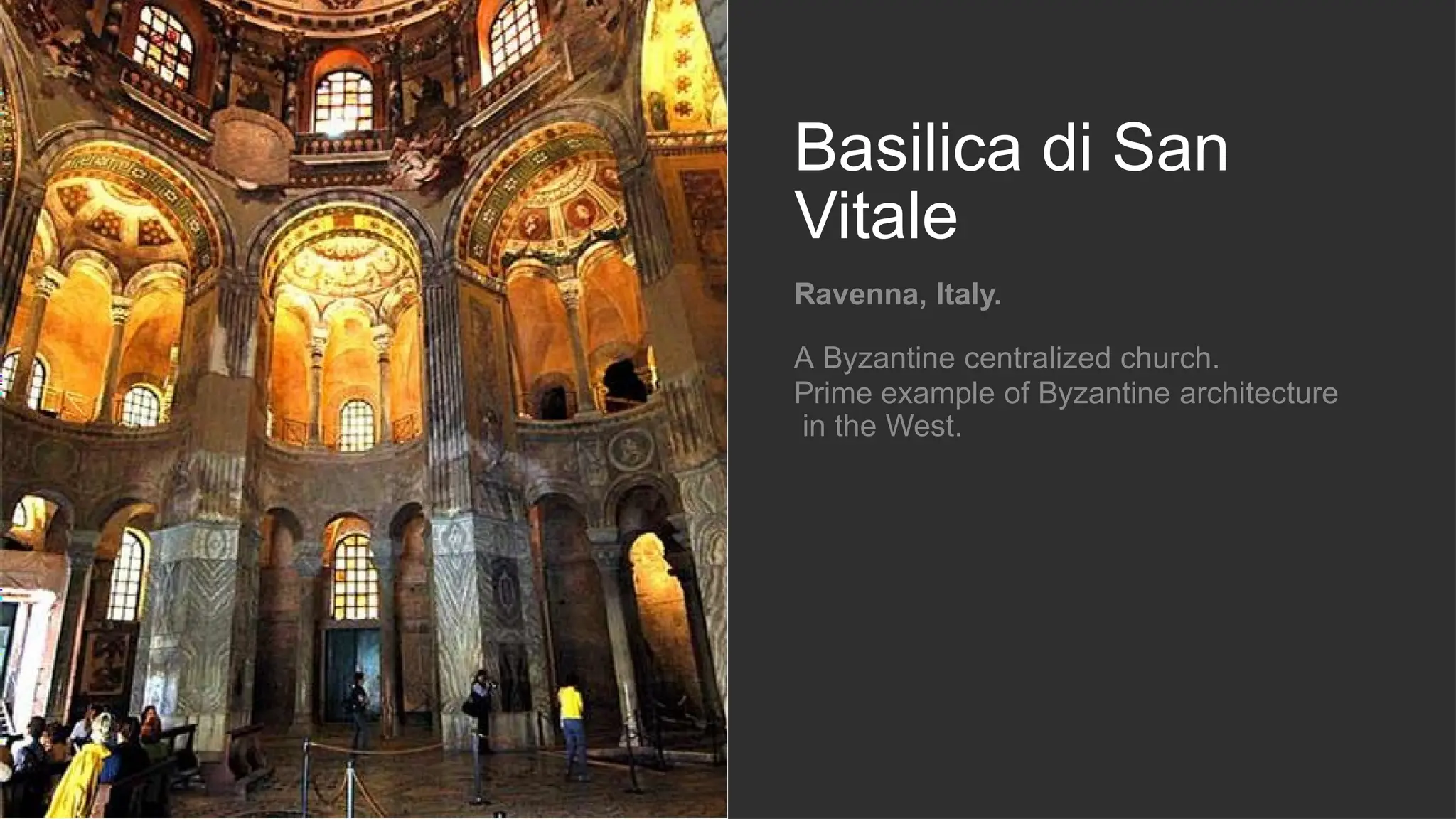
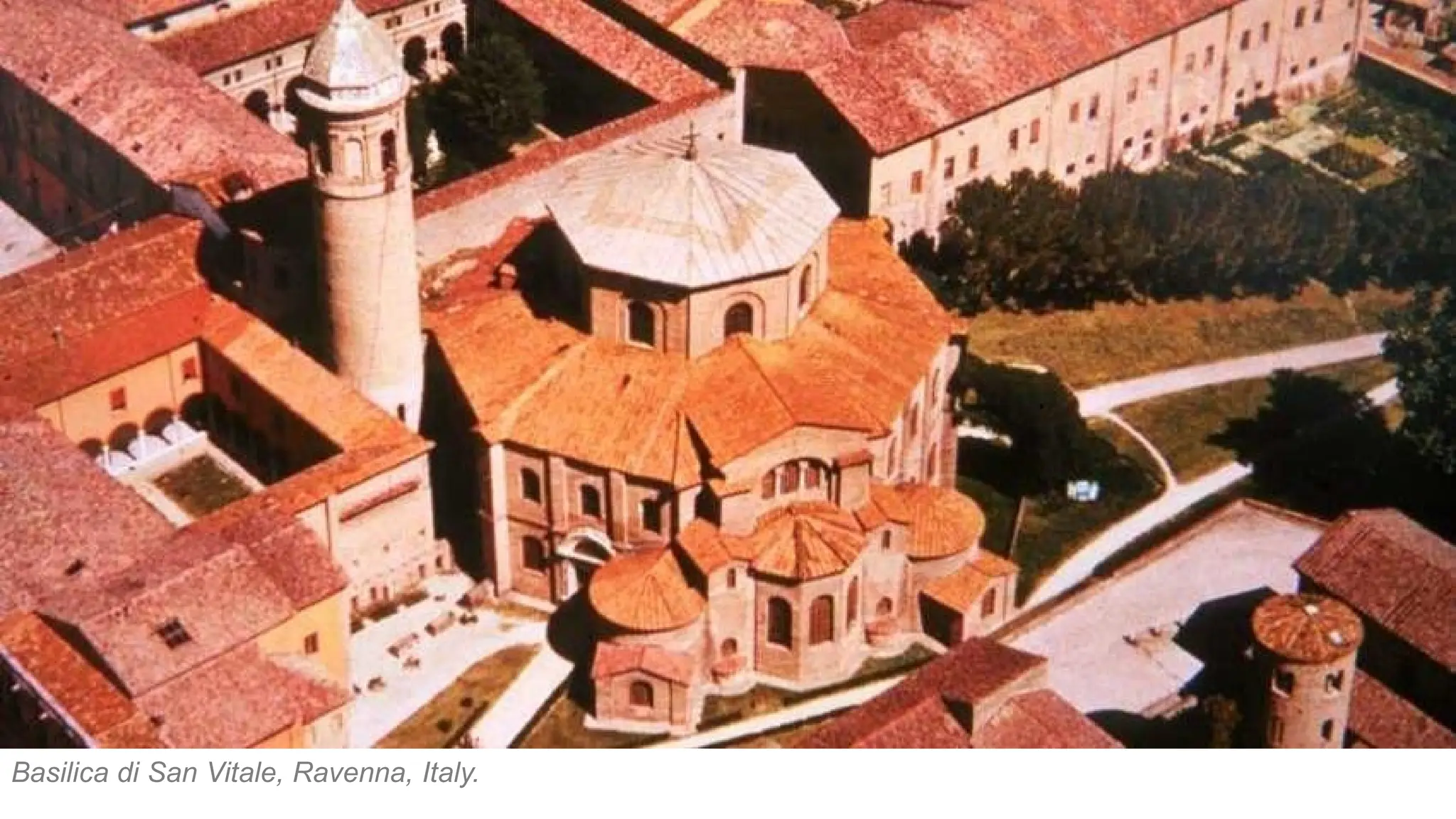
Byzantine (300-1450)
▪ Circularor polygonal plans for churches, tombs, and
baptisteries.
▪ Characterized by masonry construction, round
arches,
shallow domes carried on pendentives, and the
extensive use of rich frescoes, and colored glass
mosaics to cover whole interiors.
▪ Facades faced west.
18.
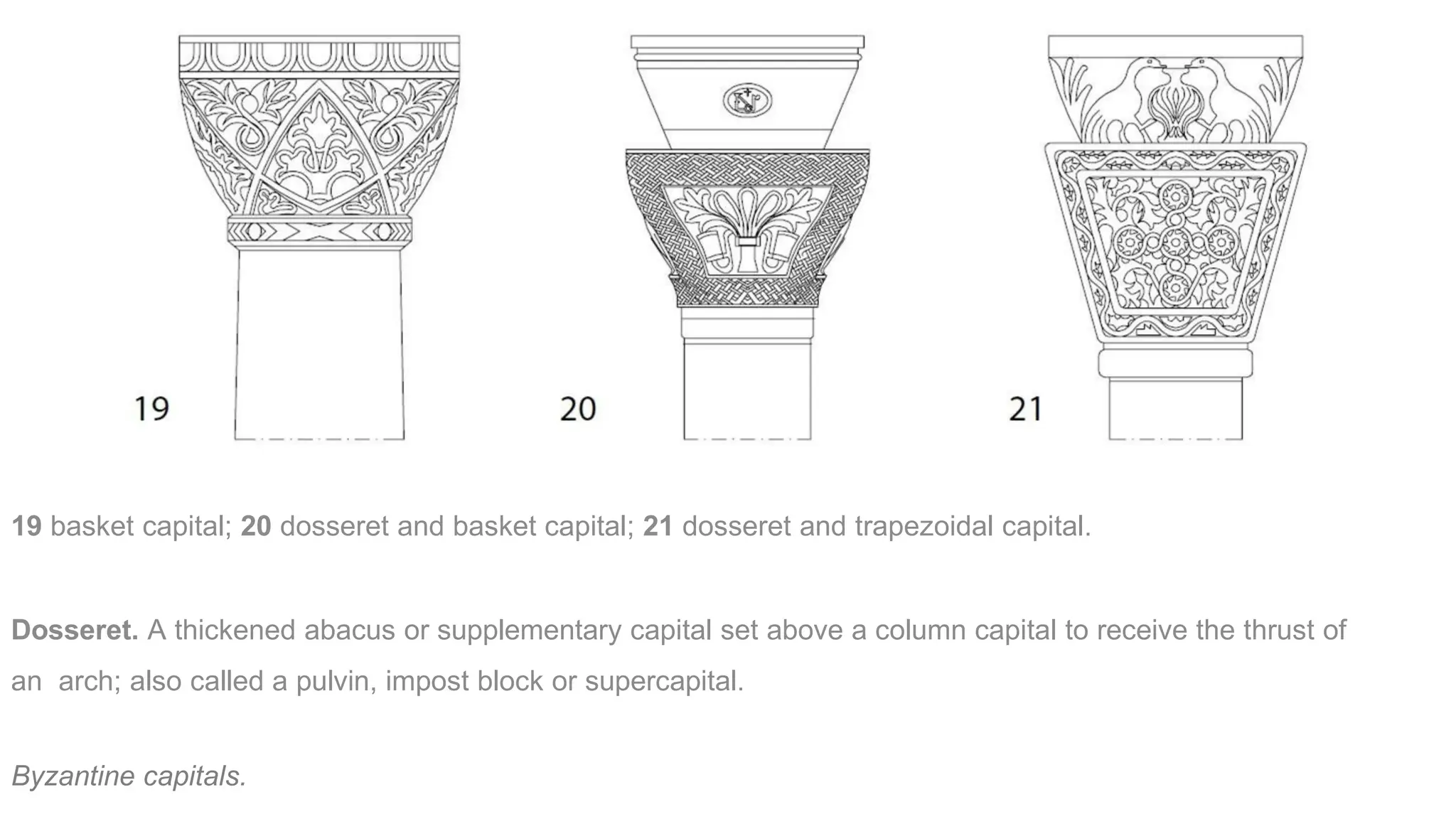
19 basket capital;20 dosseret and basket capital; 21 dosseret and trapezoidal capital.
Dosseret. A thickened abacus or supplementary capital set above a column capital to receive the thrust of
an arch; also called a pulvin, impost block or supercapital.
Byzantine capitals.
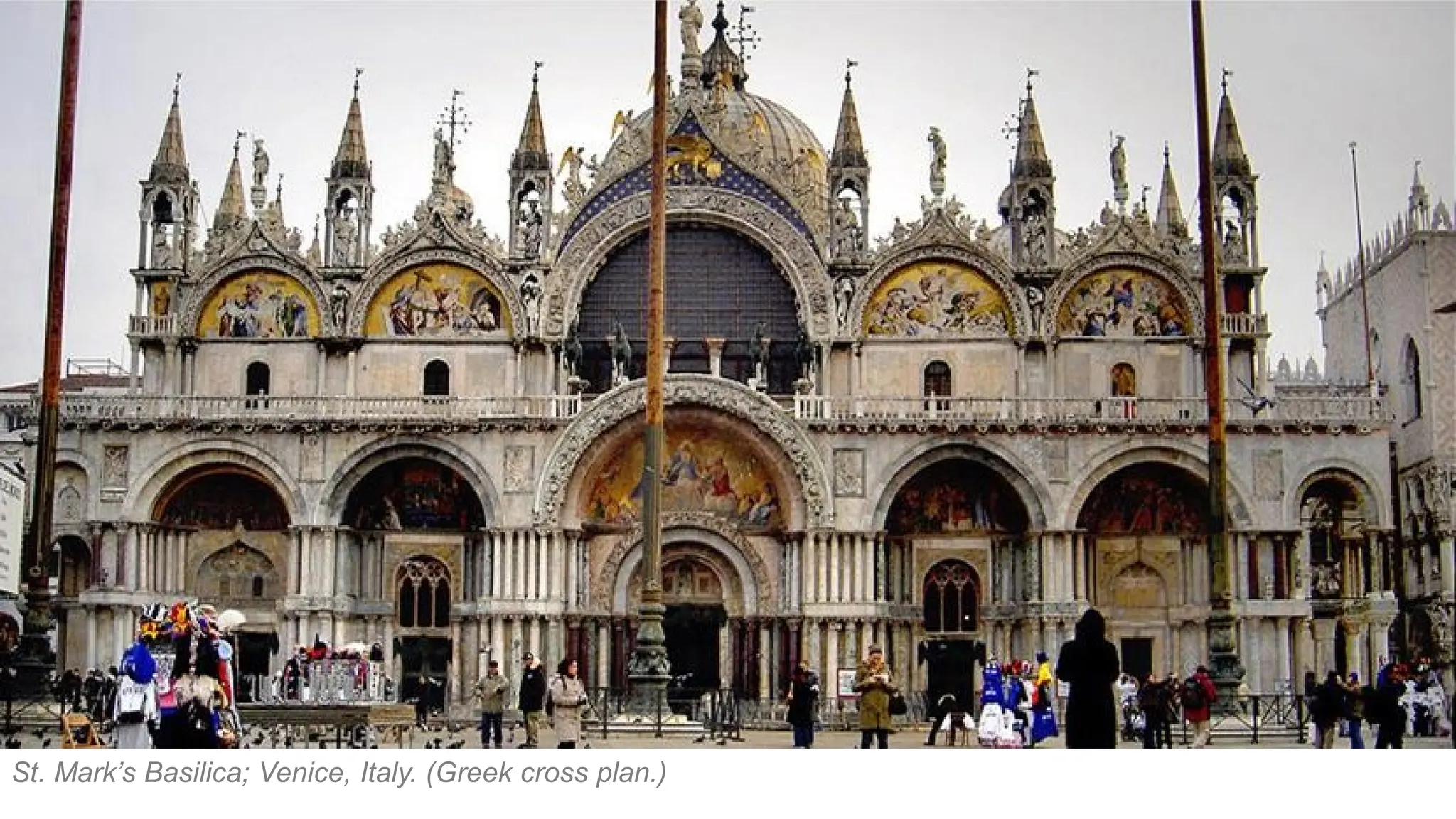
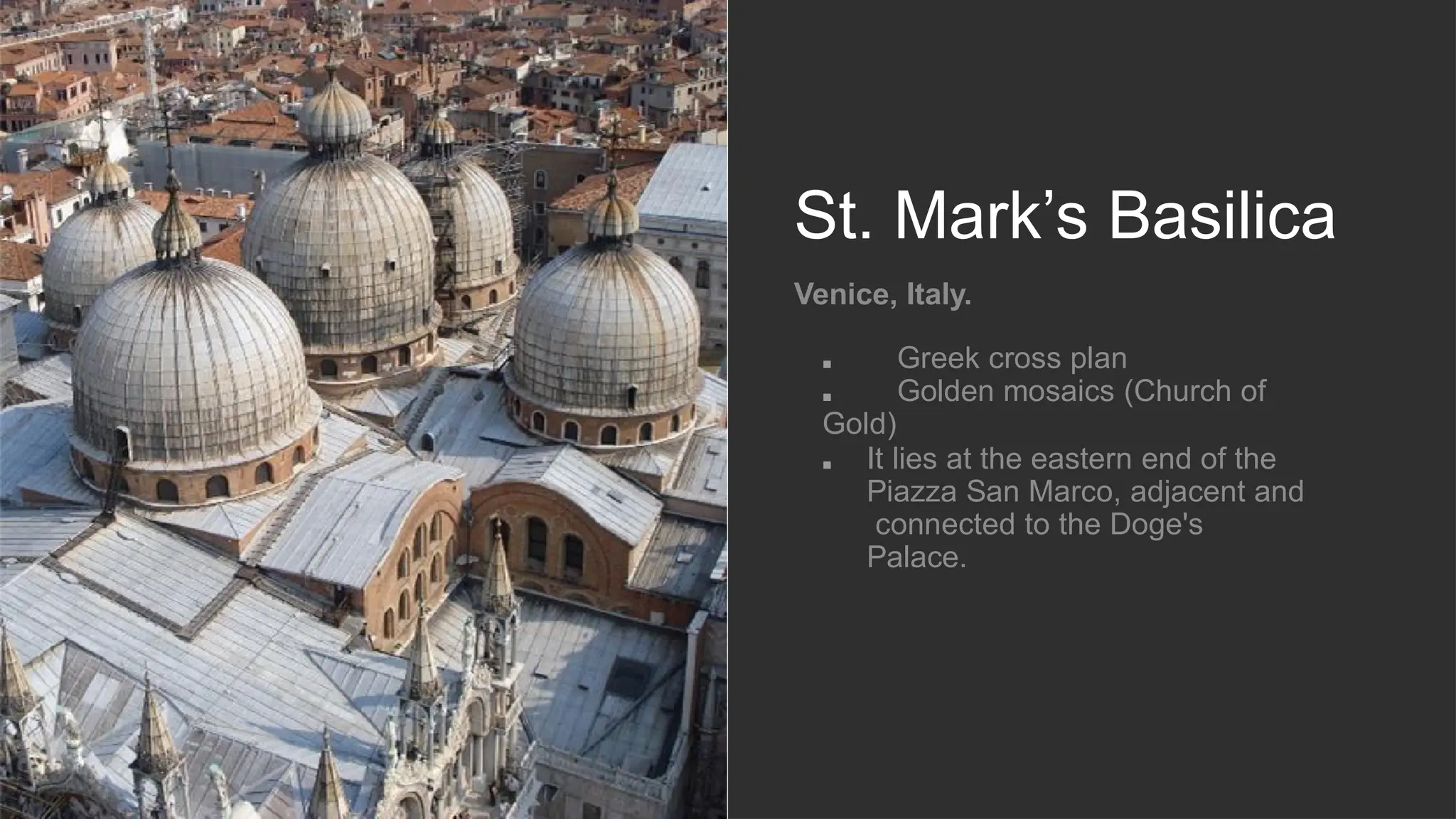
St. Mark’s Basilica
Venice,Italy.
■ Greek cross plan
■ Golden mosaics (Church of
Gold)
■ It lies at the eastern end of the
Piazza San Marco, adjacent and
connected to the Doge's
Palace.
24.
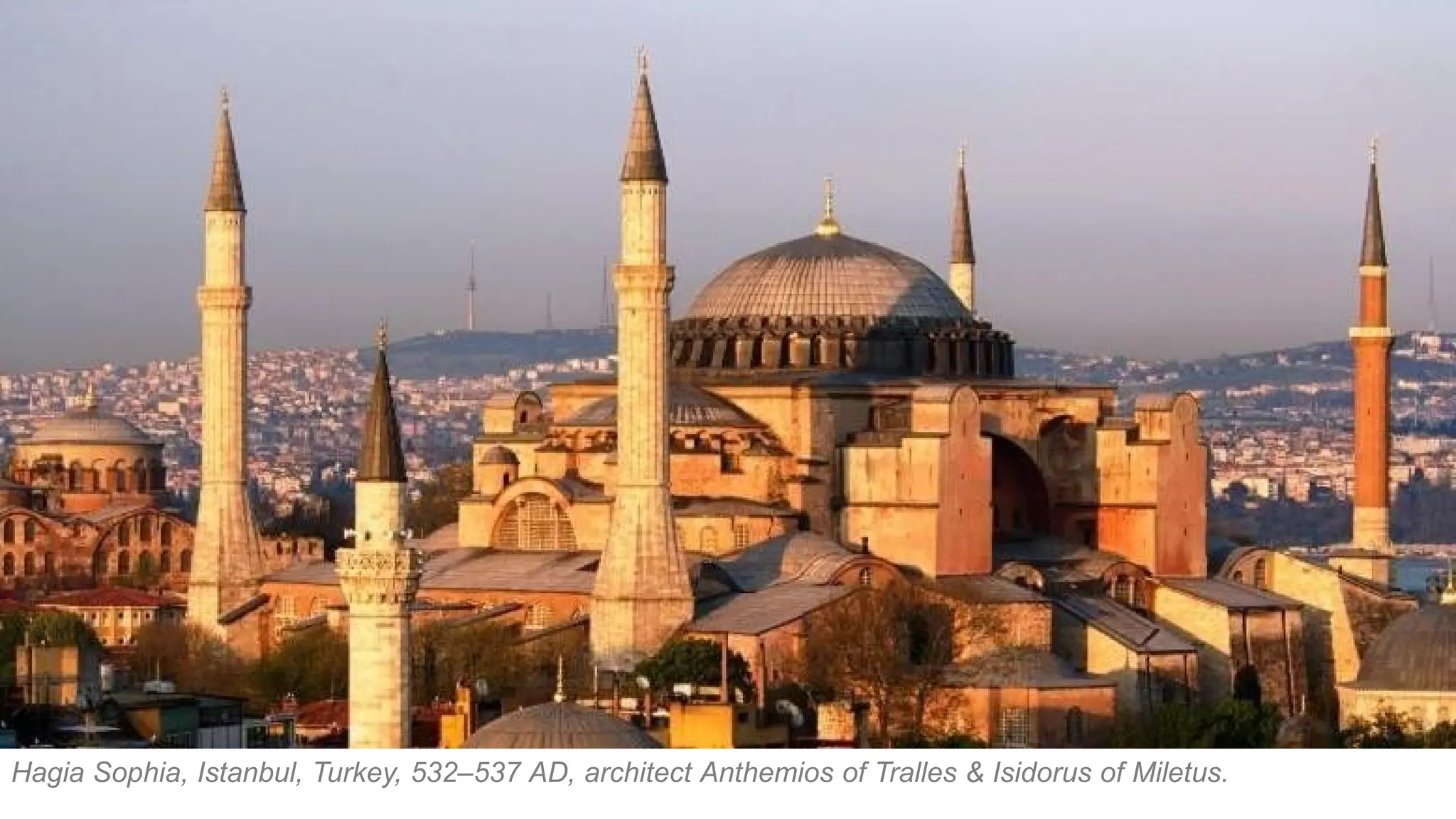
Hagia Sophia, Istanbul,Turkey, 532–537 AD, architect Anthemios of Tralles & Isidorus of Miletus.
25.
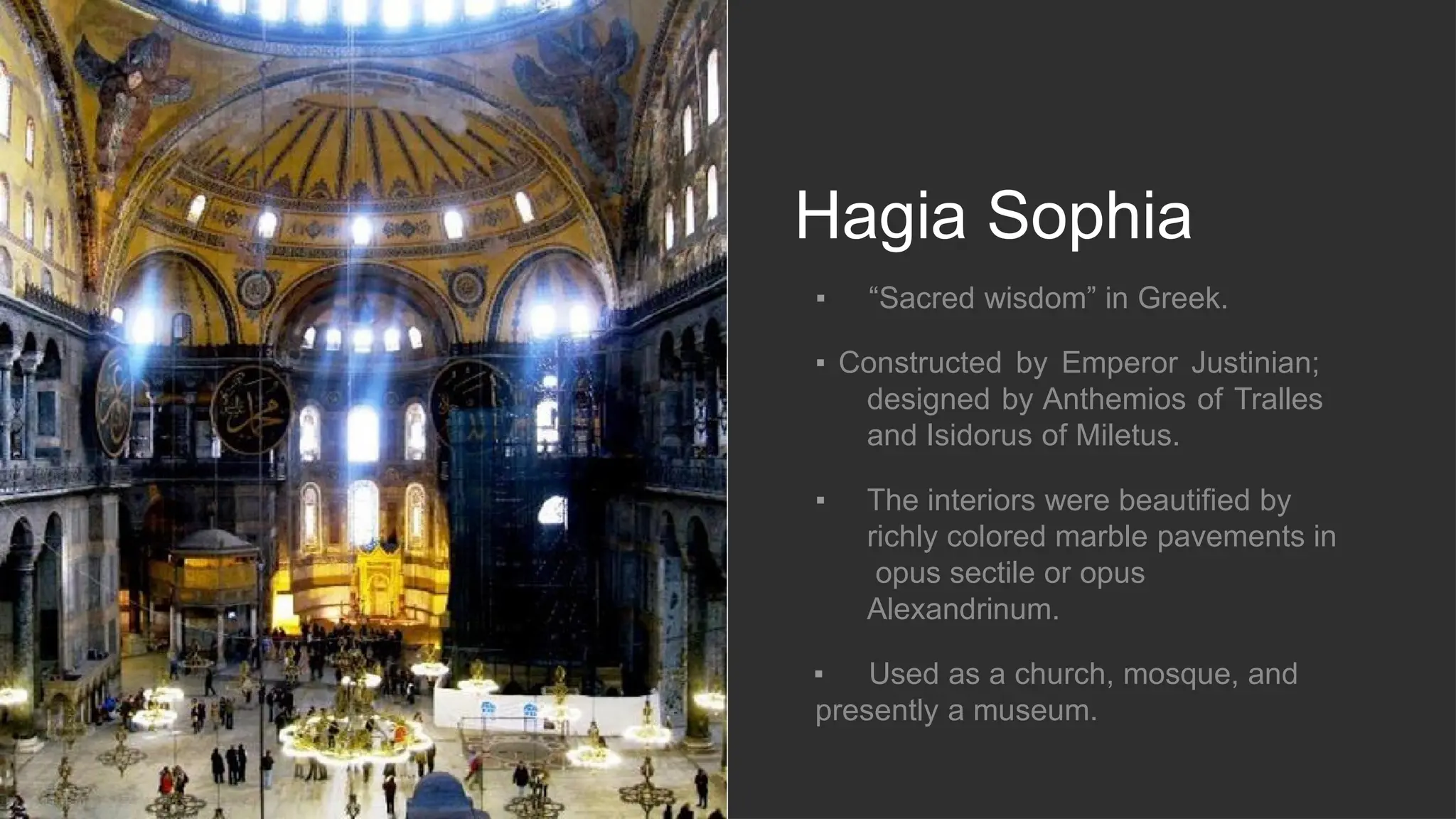
Hagia Sophia
▪ “Sacredwisdom” in Greek.
▪ Constructed by Emperor Justinian;
designed by Anthemios of Tralles
and Isidorus of Miletus.
▪ The interiors were beautified by
richly colored marble pavements in
opus sectile or opus
Alexandrinum.
▪ Used as a church, mosque, and
presently a museum.
26.
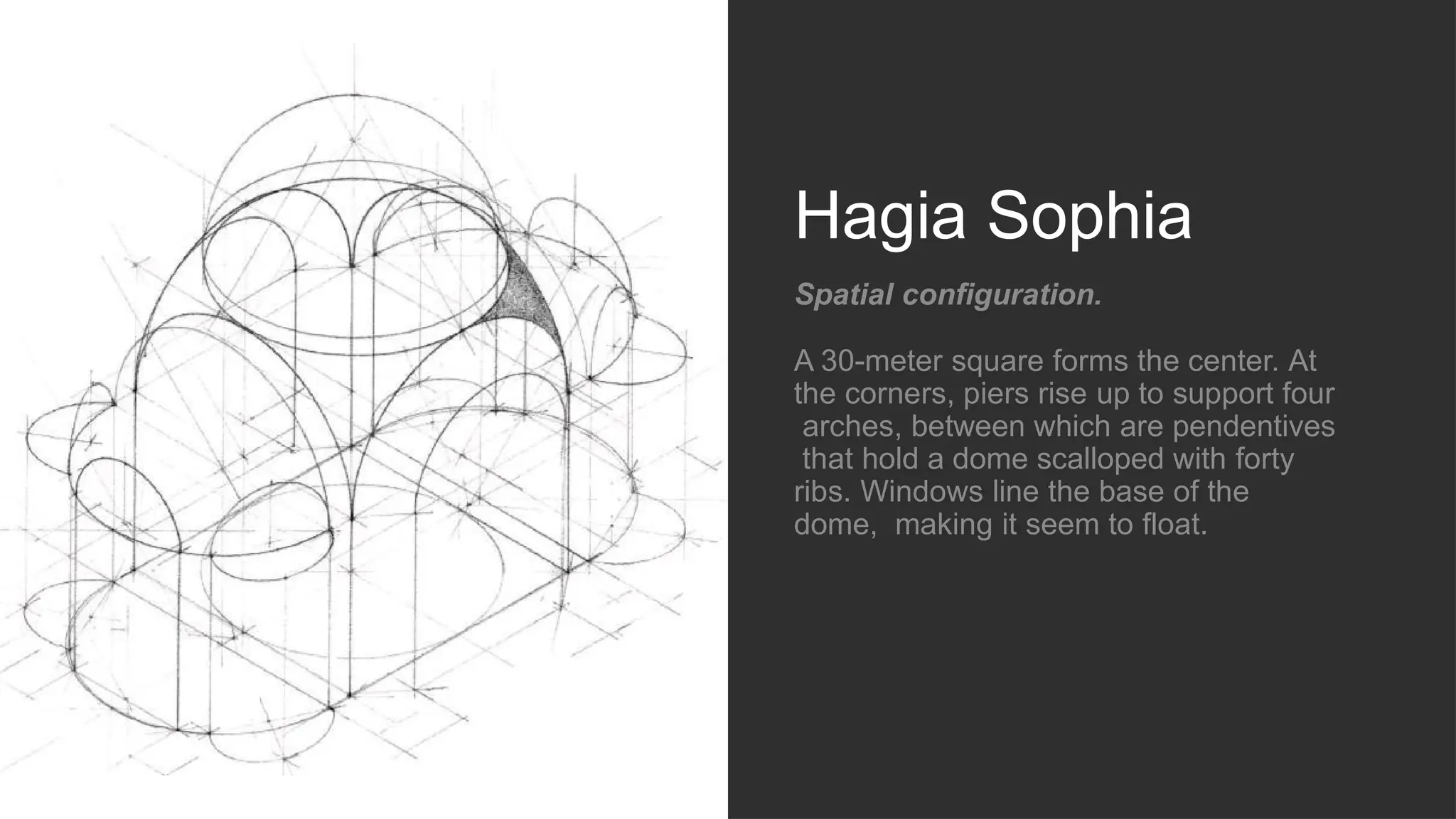
Hagia Sophia
Spatial configuration.
A30-meter square forms the center. At
the corners, piers rise up to support four
arches, between which are pendentives
that hold a dome scalloped with forty
ribs. Windows line the base of the
dome, making it seem to float.
27.
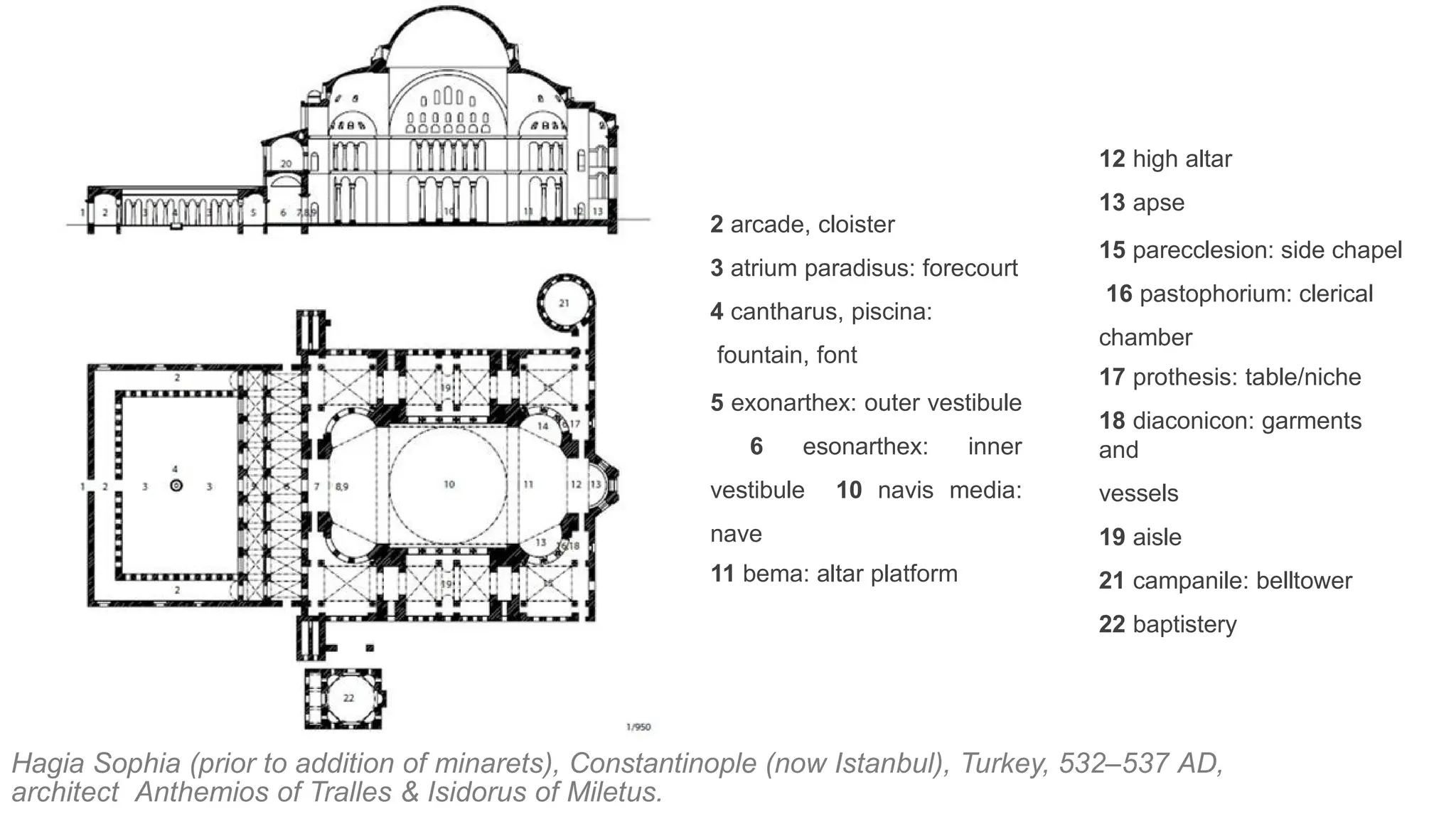
Hagia Sophia (priorto addition of minarets), Constantinople (now Istanbul), Turkey, 532–537 AD,
architect Anthemios of Tralles & Isidorus of Miletus.
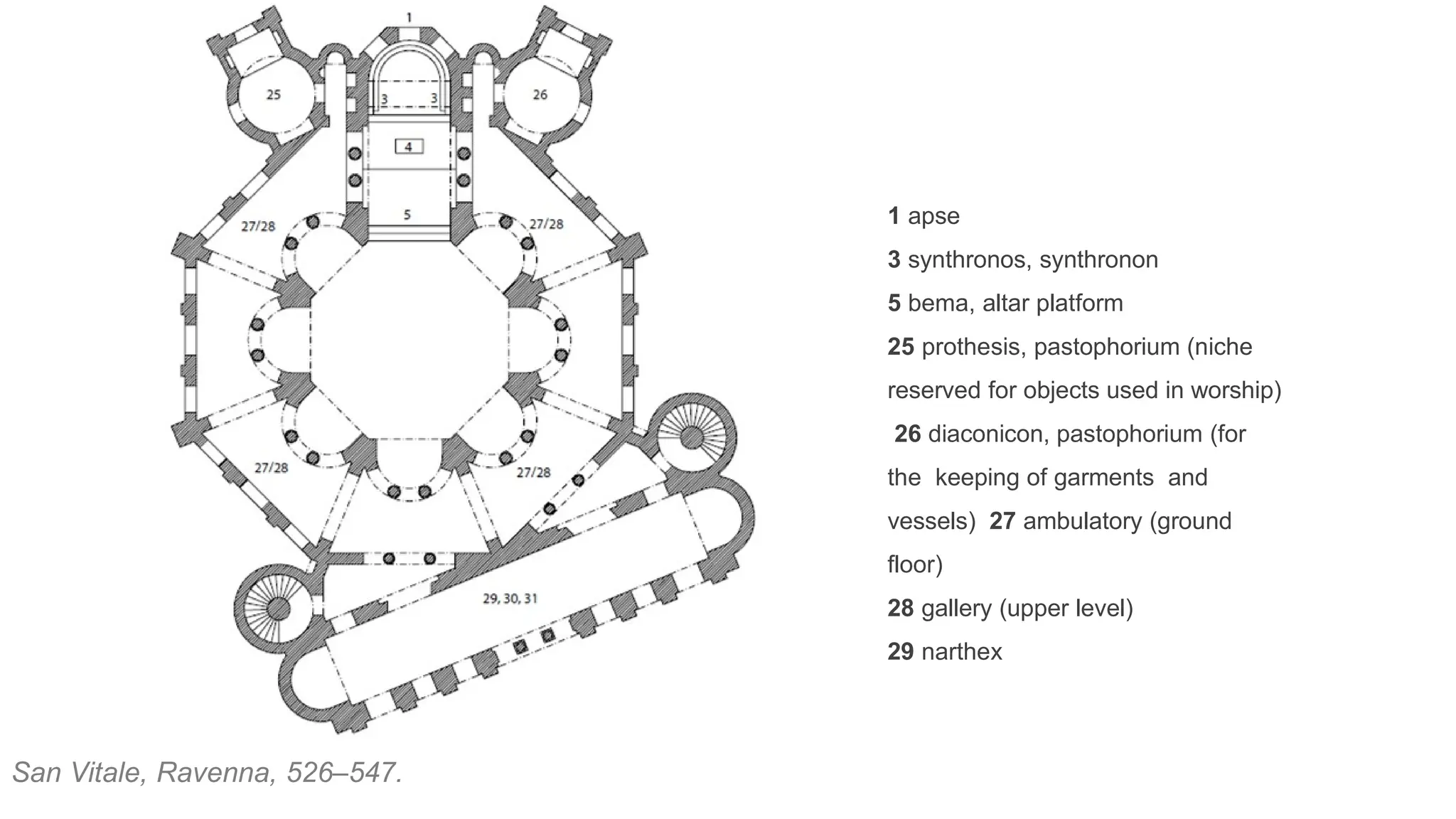
2 arcade, cloister
3 atrium paradisus: forecourt
4 cantharus, piscina:
fountain, font
5 exonarthex: outer vestibule
6 esonarthex: inner
vestibule 10 navis media:
nave
11 bema: altar platform
12 high altar
13 apse
15 parecclesion: side chapel
16 pastophorium: clerical
chamber
17 prothesis: table/niche
18 diaconicon: garments
and
vessels
19 aisle
21 campanile: belltower
22 baptistery
28.
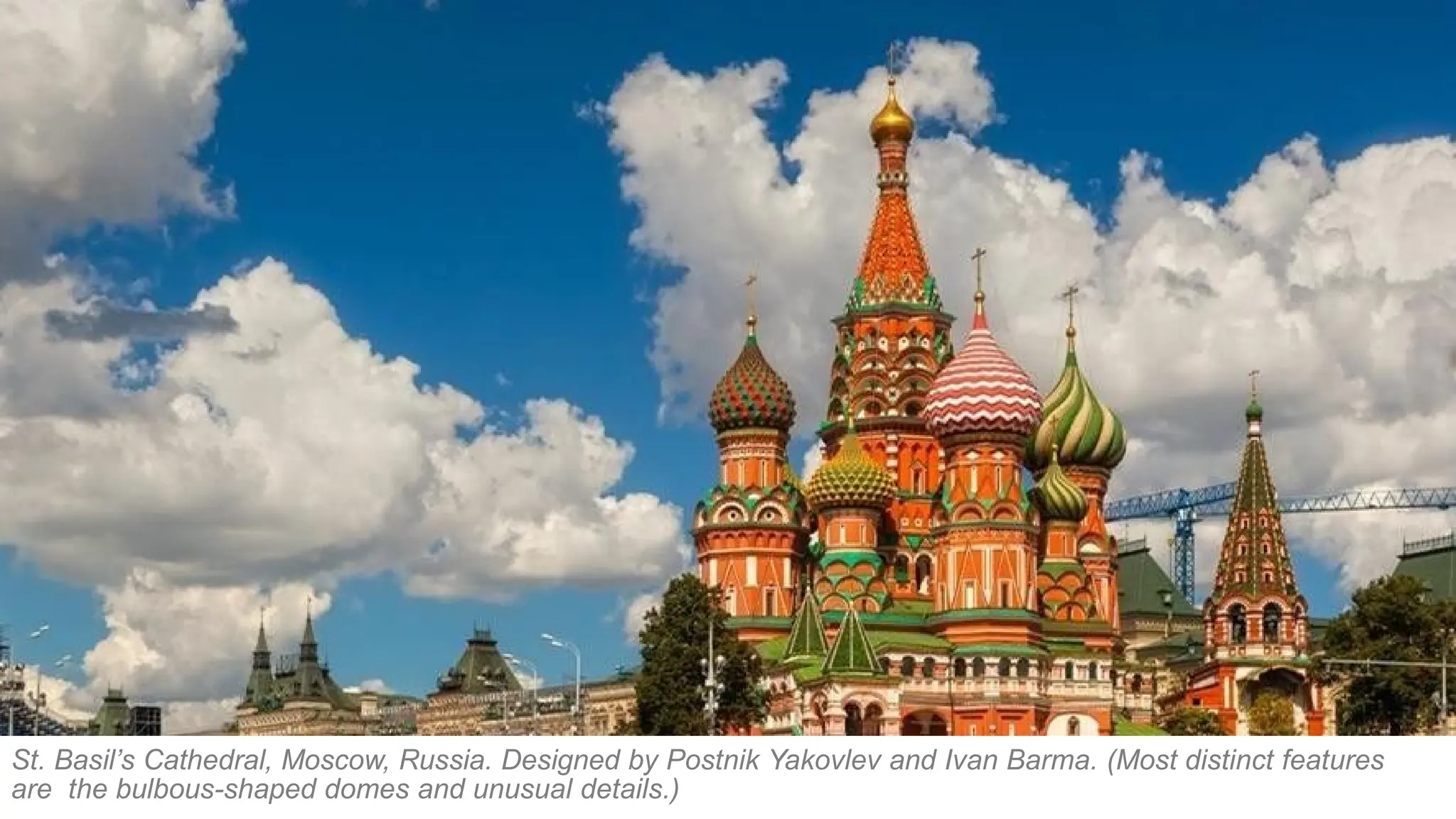
St. Basil’s Cathedral,Moscow, Russia. Designed by Postnik Yakovlev and Ivan Barma. (Most distinct features
are the bulbous-shaped domes and unusual details.)
Romanesque (800-1180)
▪ "Roman-like”
▪Heavy articulated masonry construction with narrow
openings, round arches, barrel vaults, introduction of
central and western towers, and sparse ornament.
▪ Churches gradually changed to cross-shaped plans
formed by wings called transepts and the choir.
▪ Towers at the west and east ends and the crossing of
nave and transepts.
▪ known in England as Norman architecture.
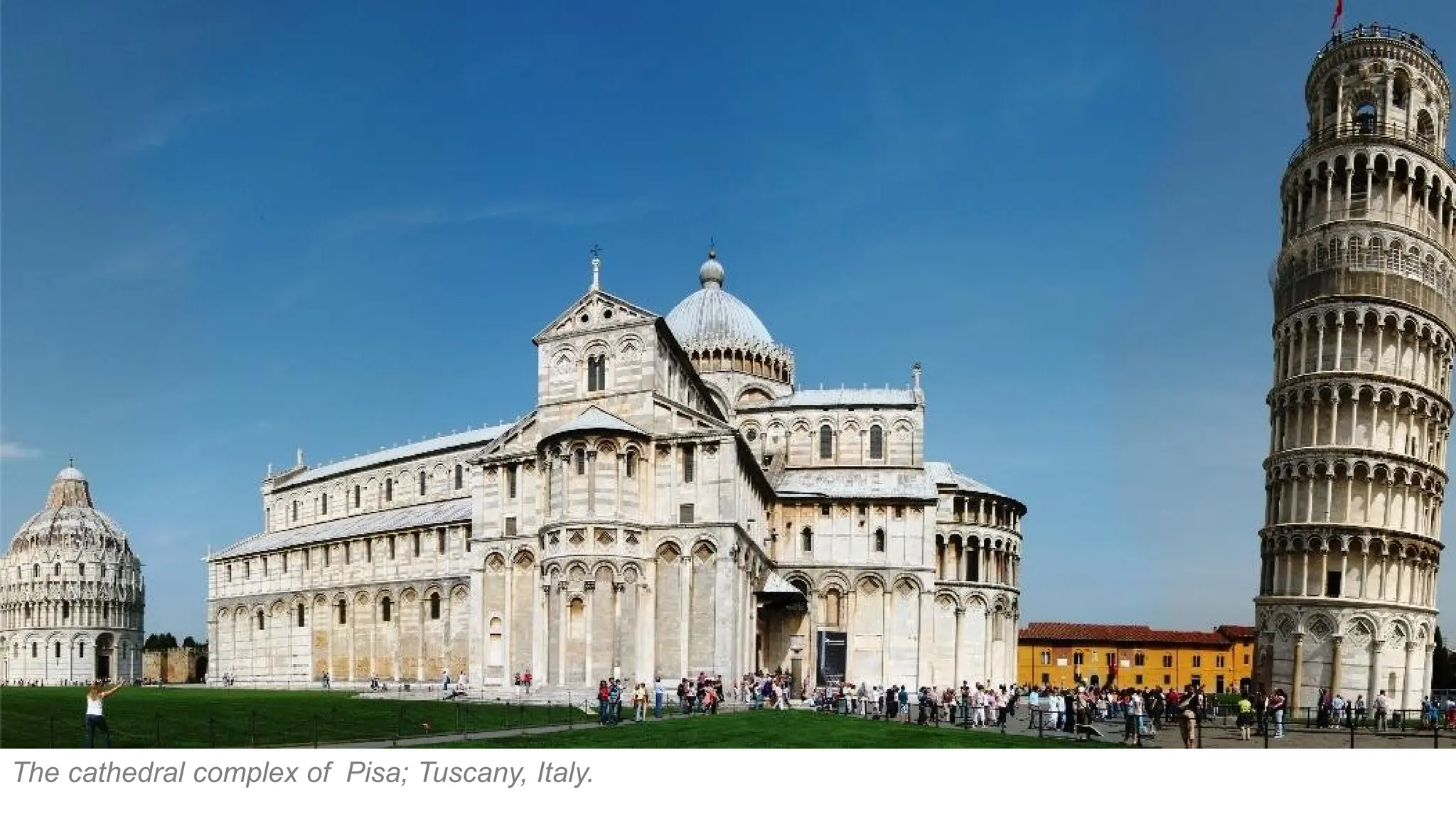
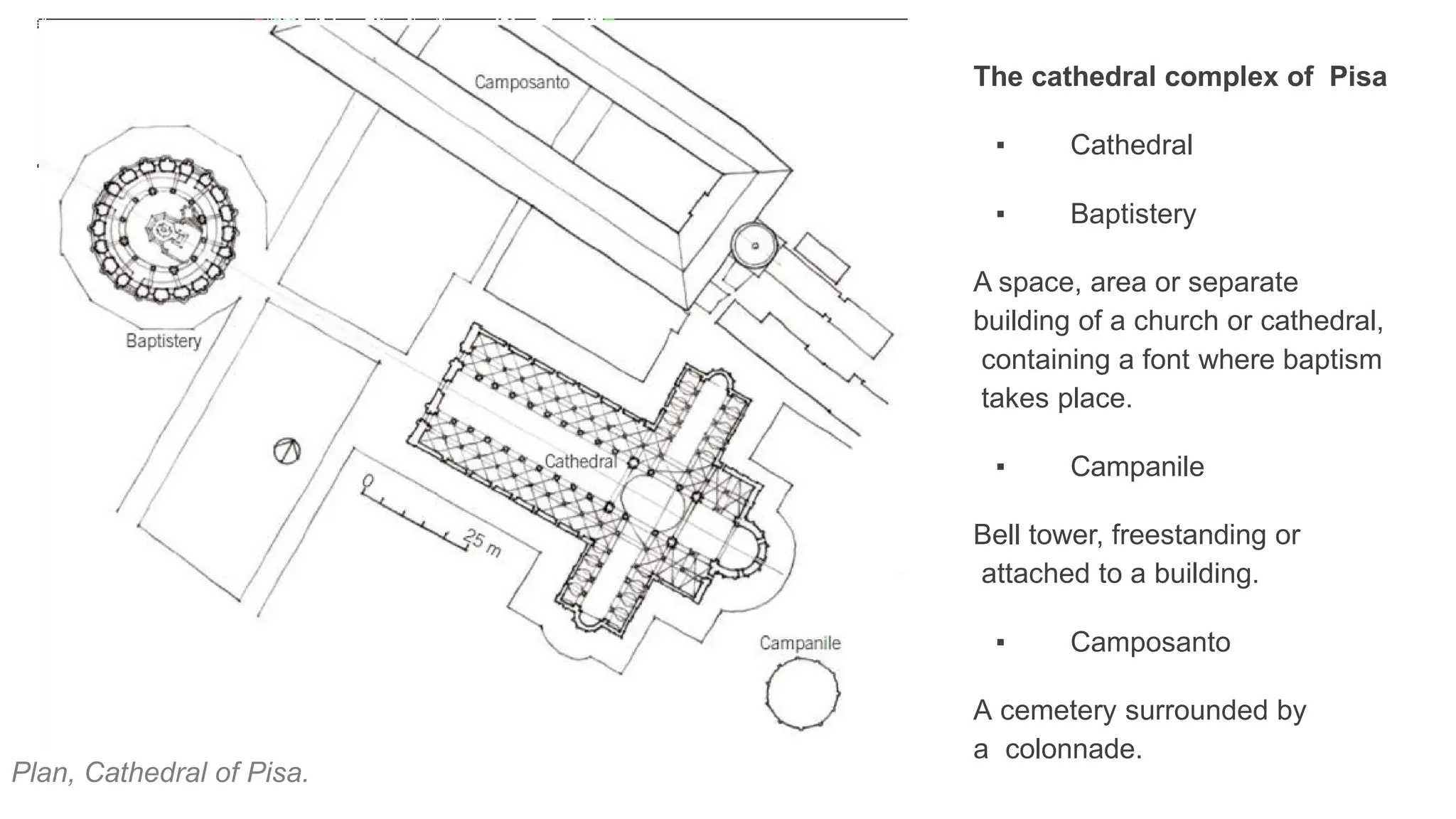
Plan, Cathedral ofPisa.
The cathedral complex of Pisa
▪ Cathedral
▪ Baptistery
A space, area or separate
building of a church or cathedral,
containing a font where baptism
takes place.
▪ Campanile
Bell tower, freestanding or
attached to a building.
▪ Camposanto
A cemetery surrounded by
a colonnade.
34.
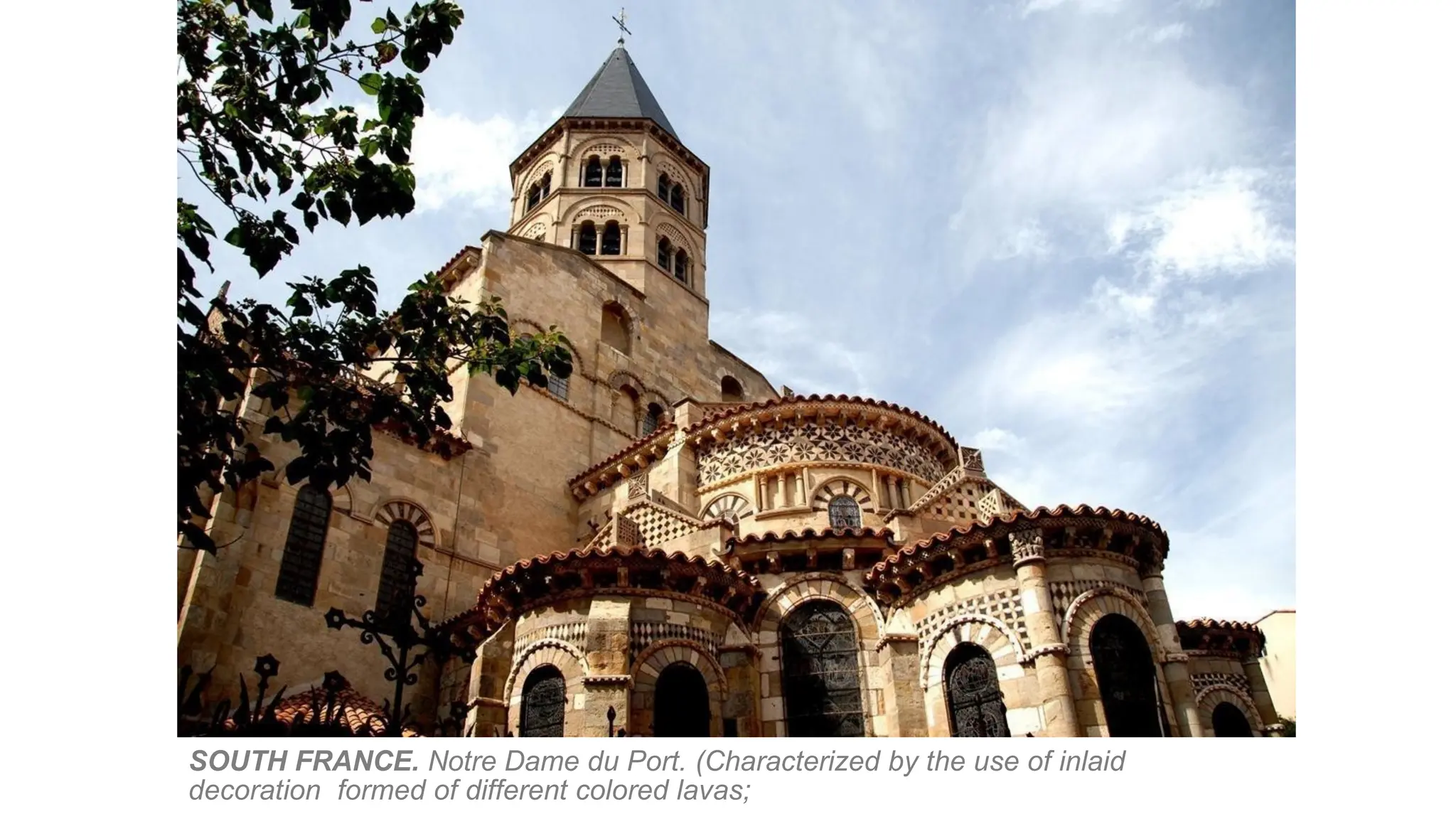
SOUTH FRANCE. NotreDame du Port. (Characterized by the use of inlaid
decoration formed of different colored lavas;
35.
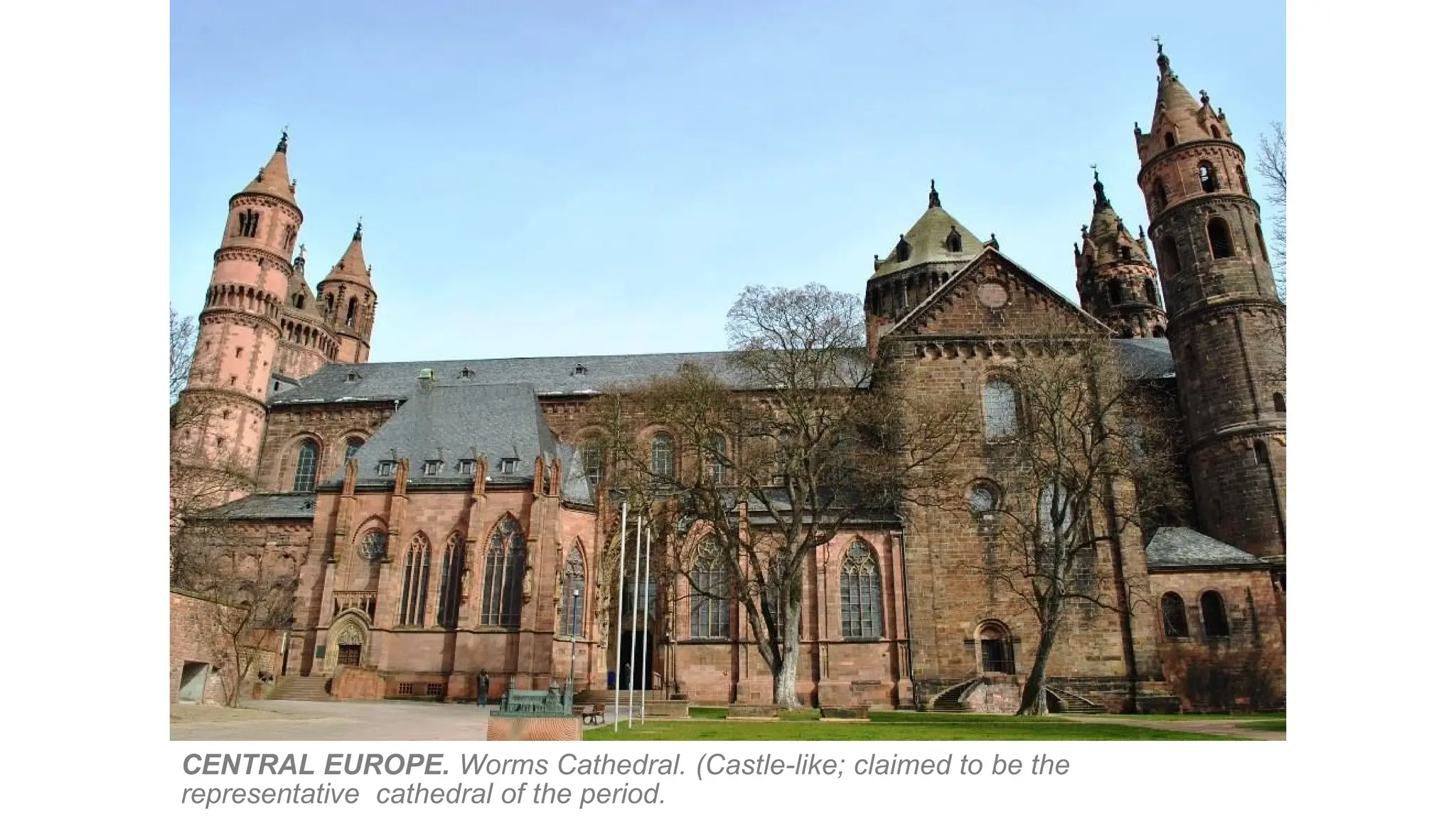
CENTRAL EUROPE. WormsCathedral. (Castle-like; claimed to be the
representative cathedral of the period.
36.
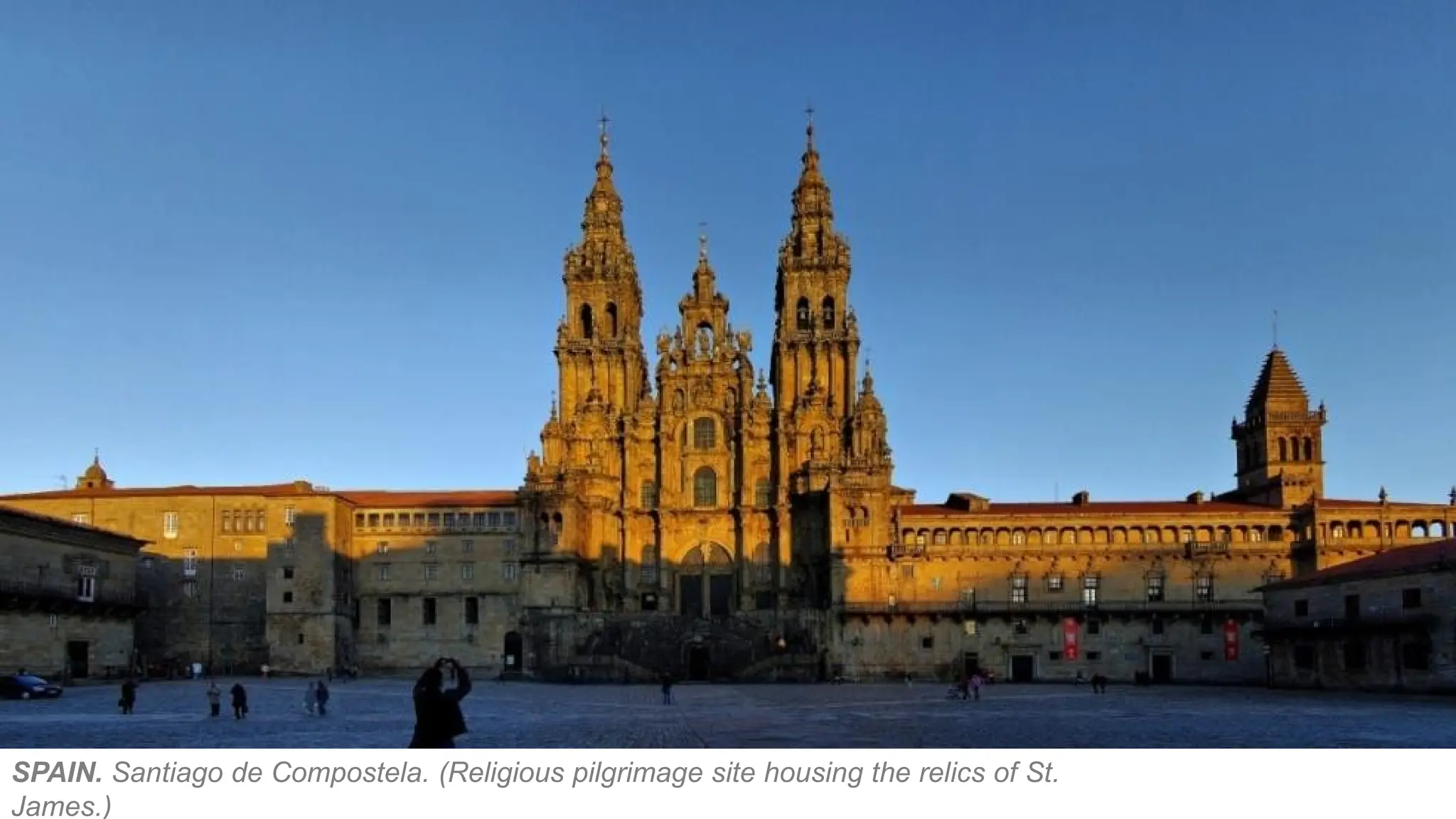
SPAIN. Santiago deCompostela. (Religious pilgrimage site housing the relics of St.
James.)
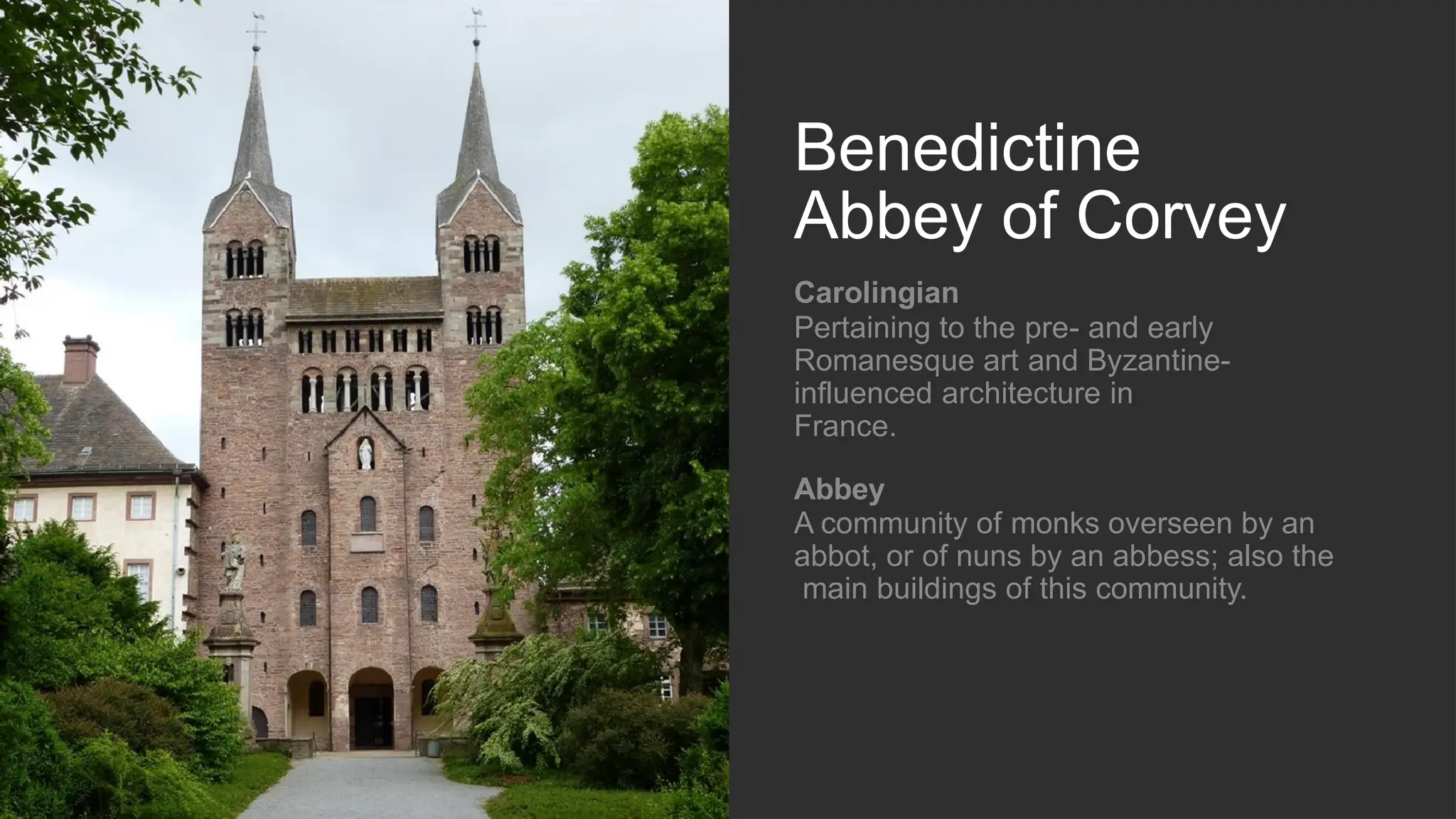
Benedictine
Abbey of Corvey
Carolingian
Pertainingto the pre- and early
Romanesque art and Byzantine-
influenced architecture in
France.
Abbey
A community of monks overseen by an
abbot, or of nuns by an abbess; also the
main buildings of this community.
43.
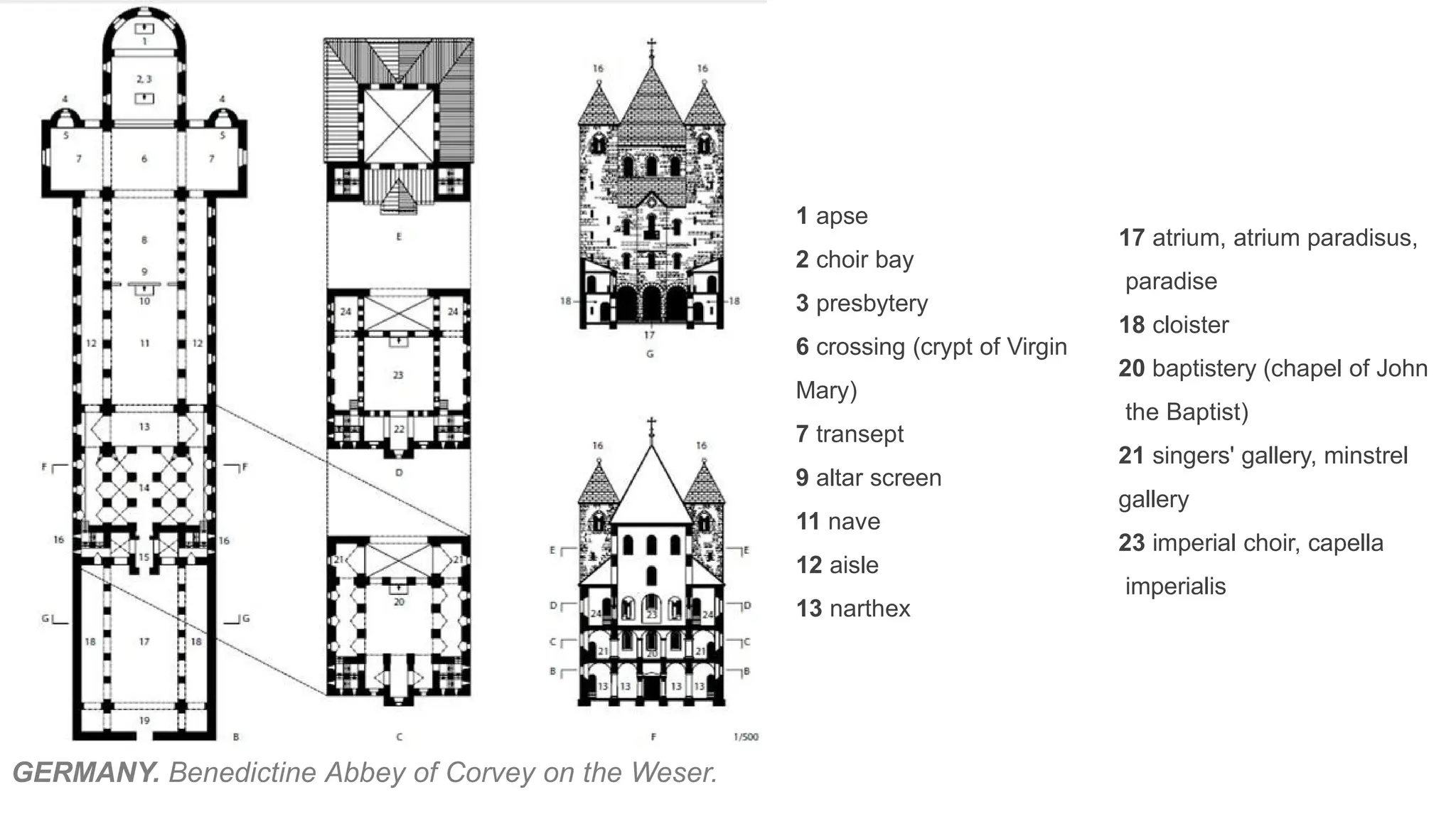
GERMANY. Benedictine Abbeyof Corvey on the Weser.
1 apse
2 choir bay
3 presbytery
6 crossing (crypt of Virgin
Mary)
7 transept
9 altar screen
11 nave
12 aisle
13 narthex
17 atrium, atrium paradisus,
paradise
18 cloister
20 baptistery (chapel of John
the Baptist)
21 singers' gallery, minstrel
gallery
23 imperial choir, capella
imperialis
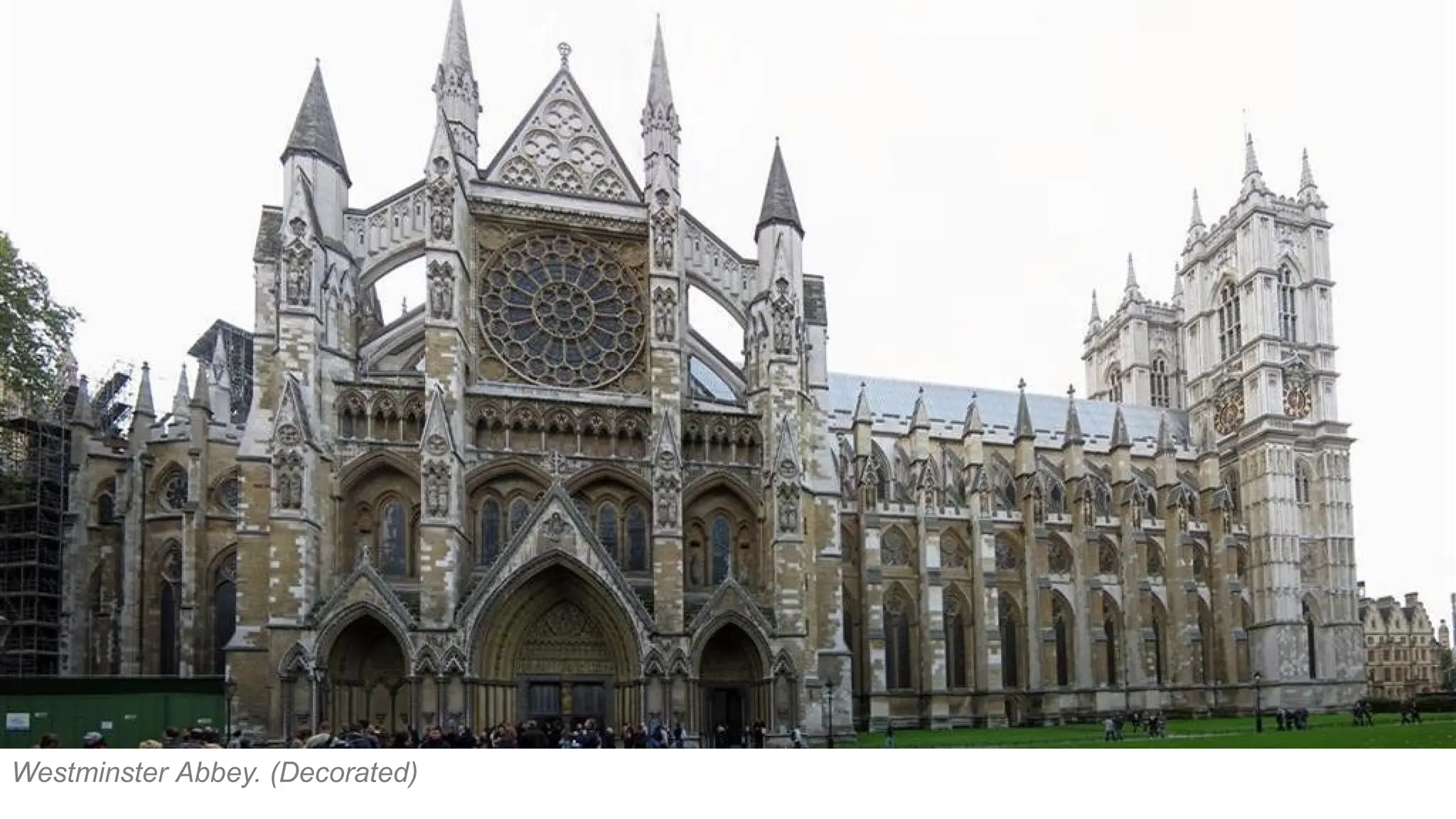
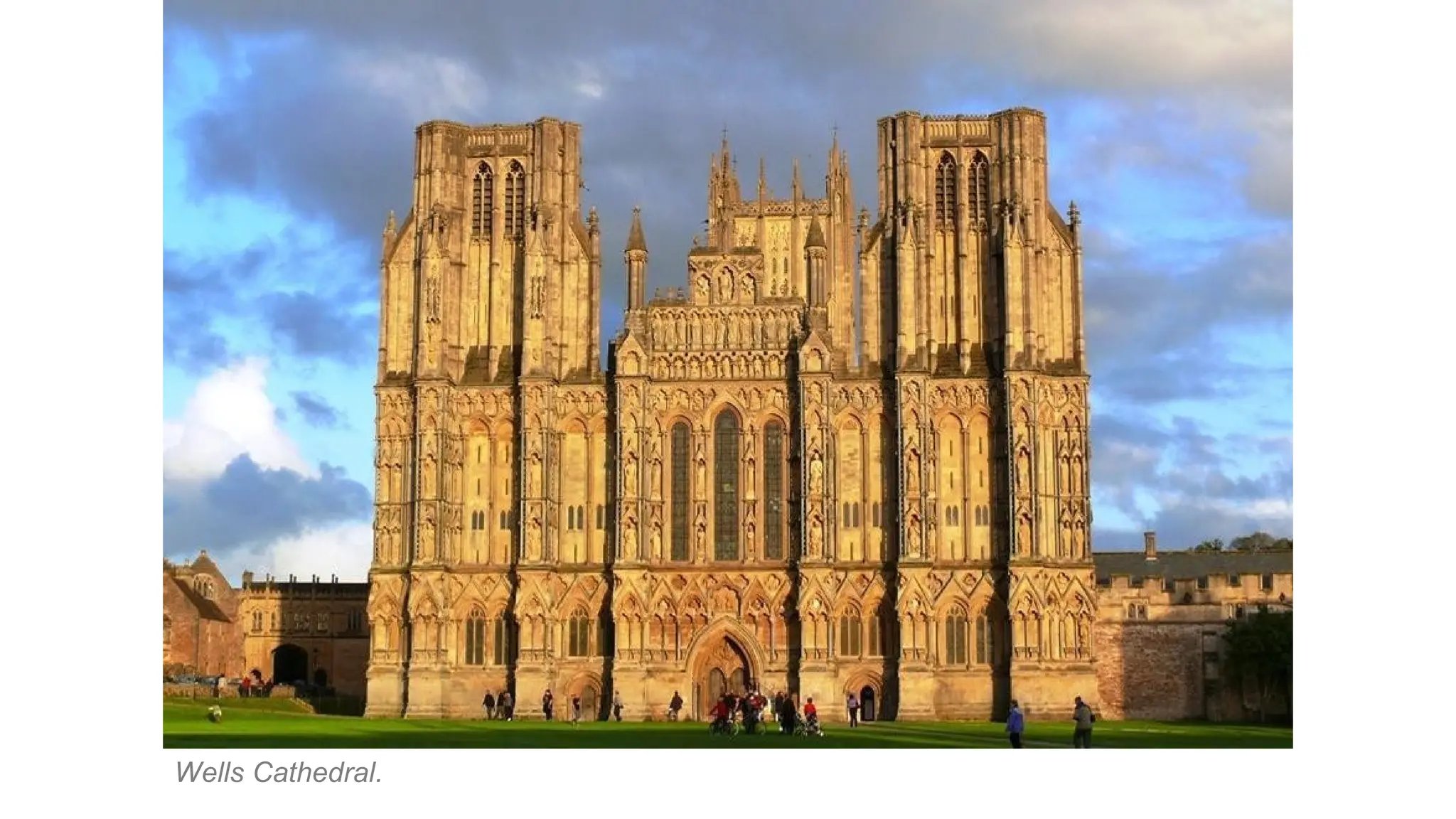
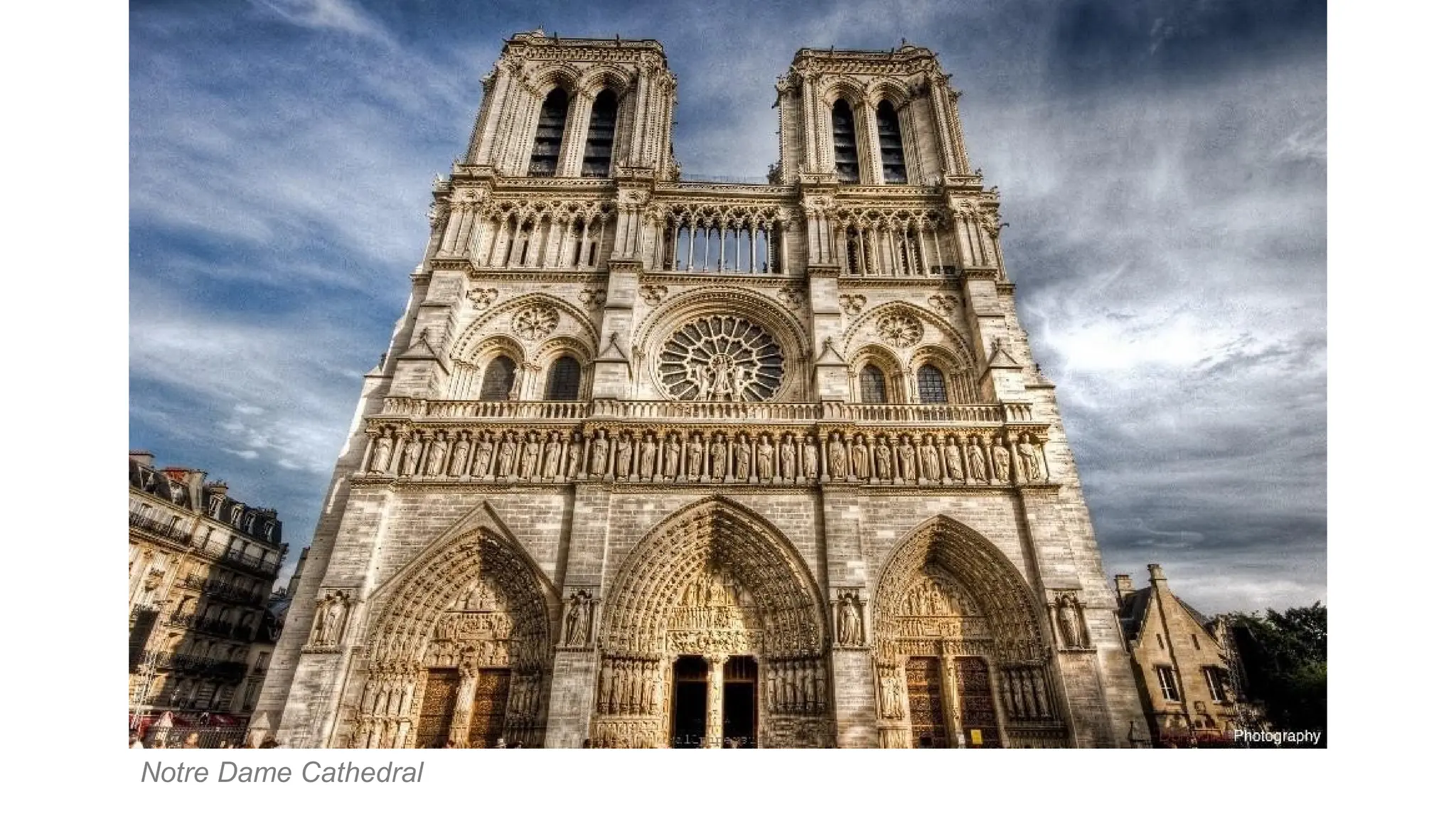
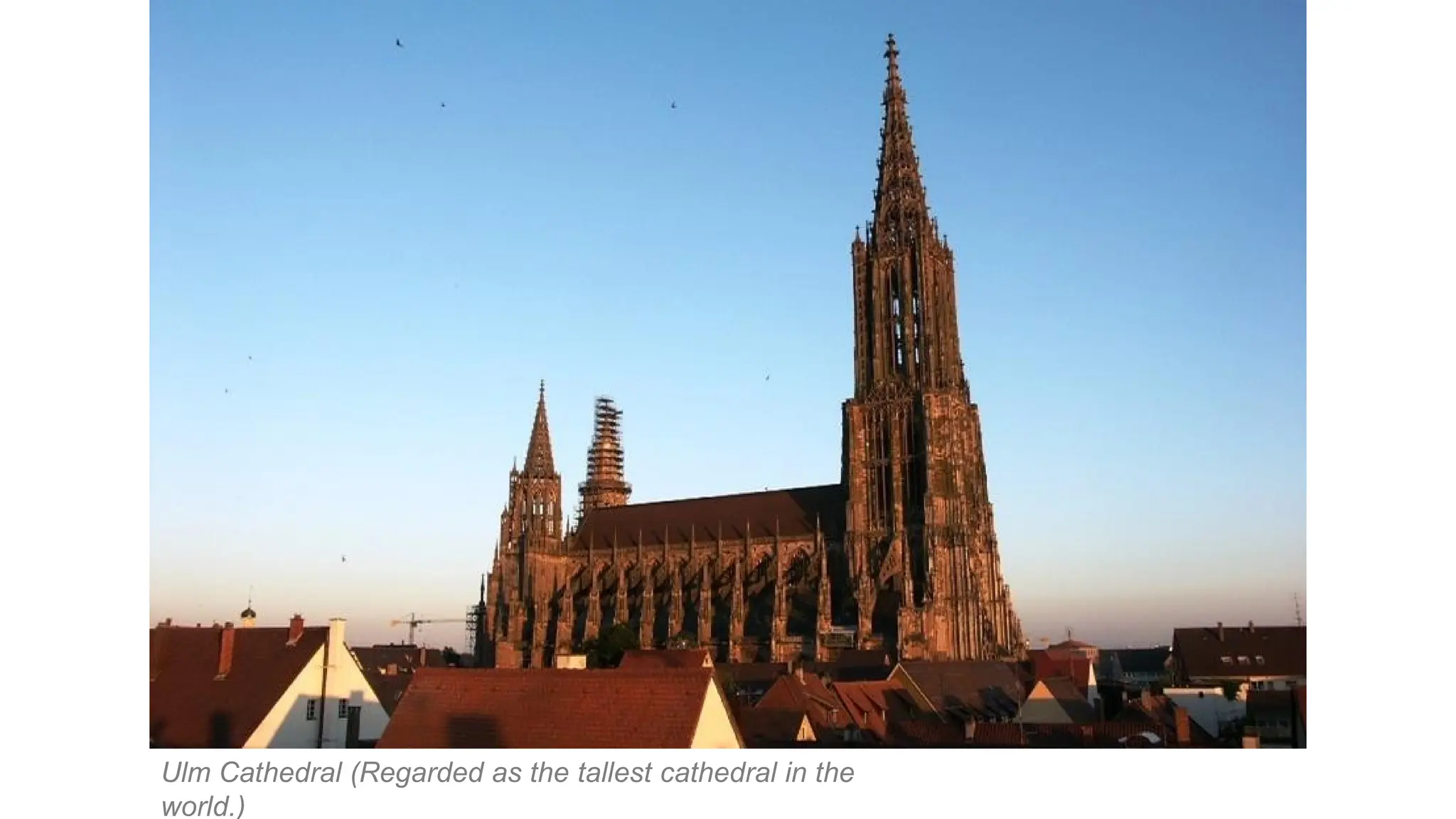
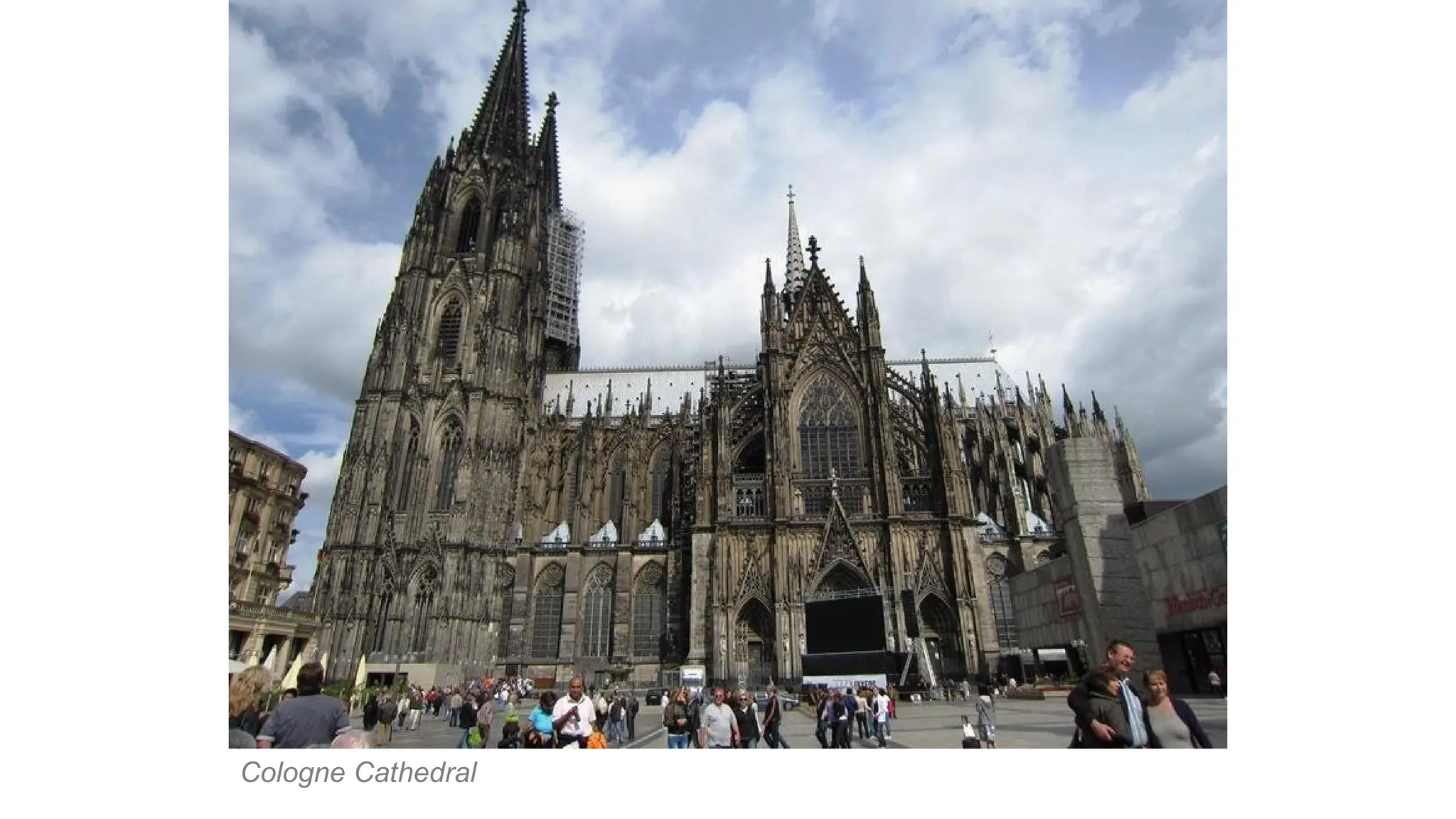
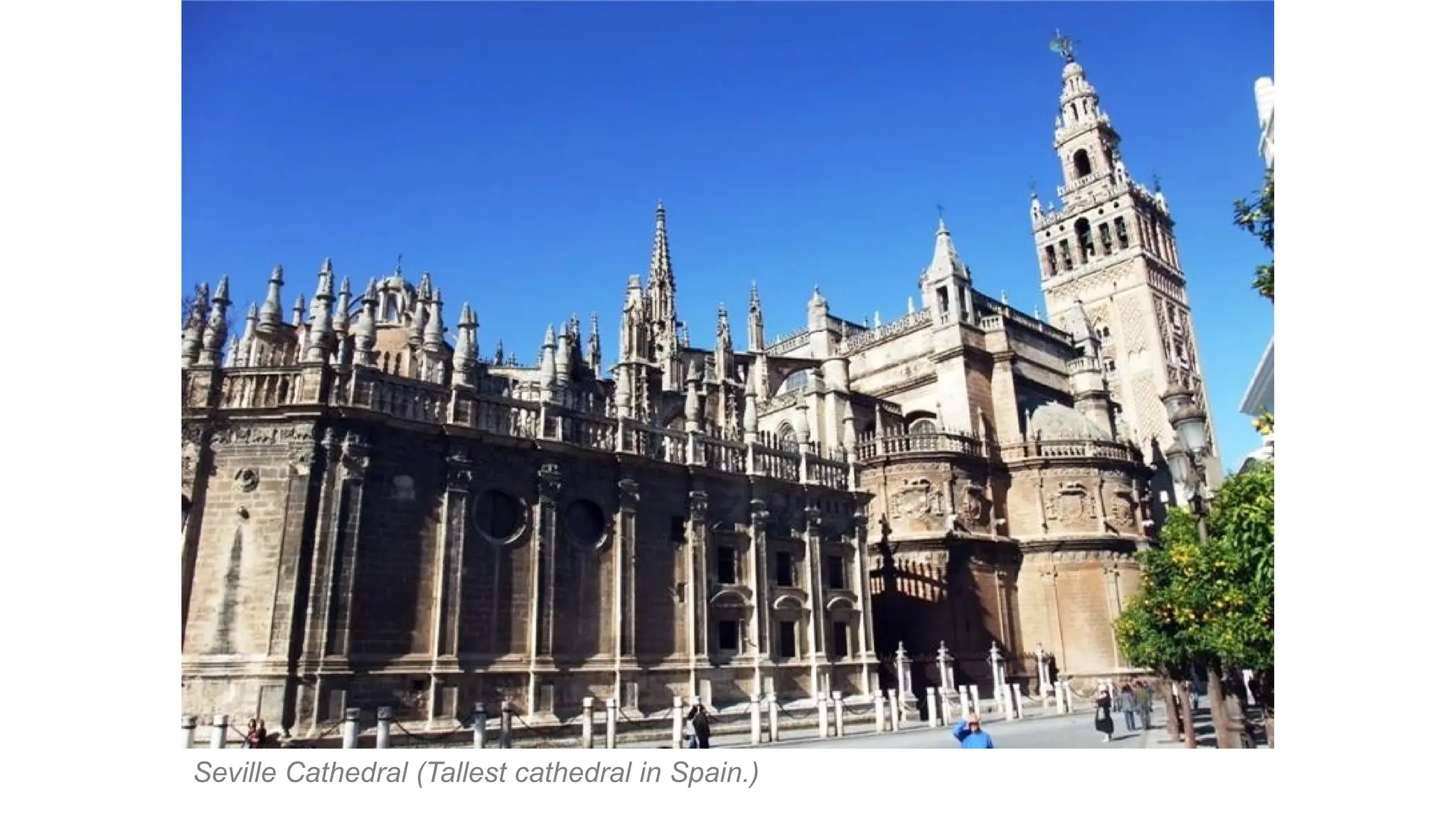
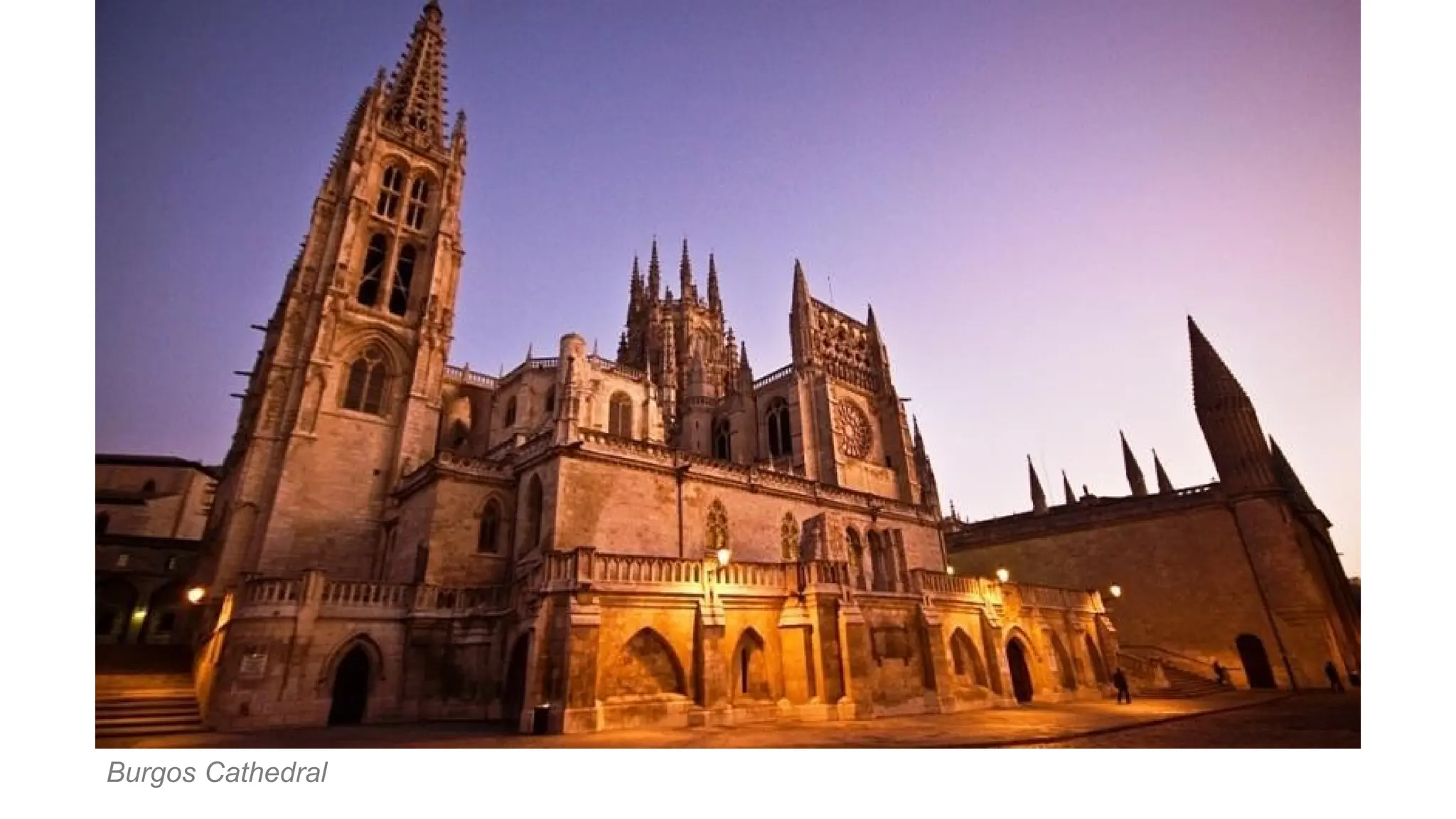
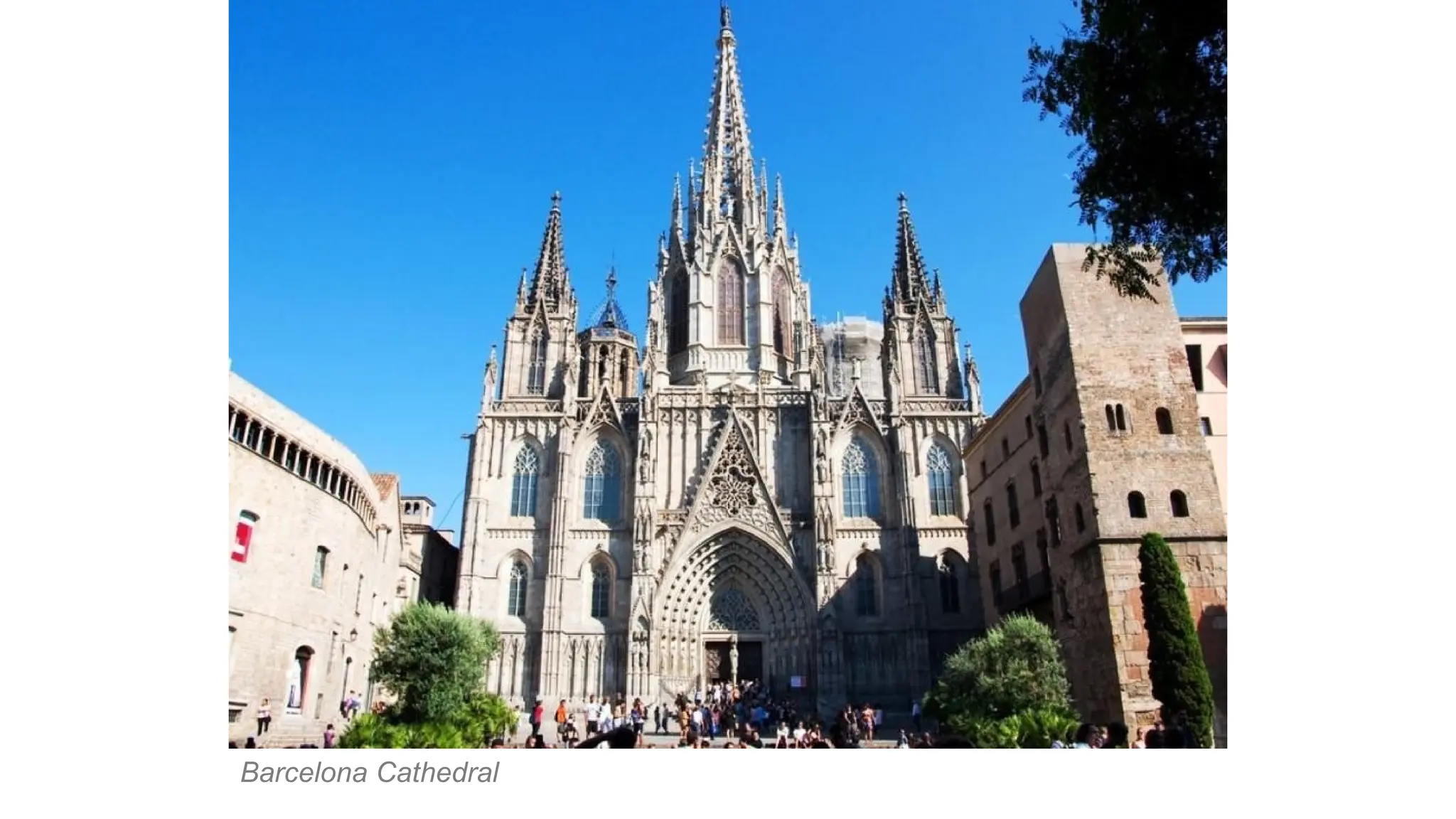
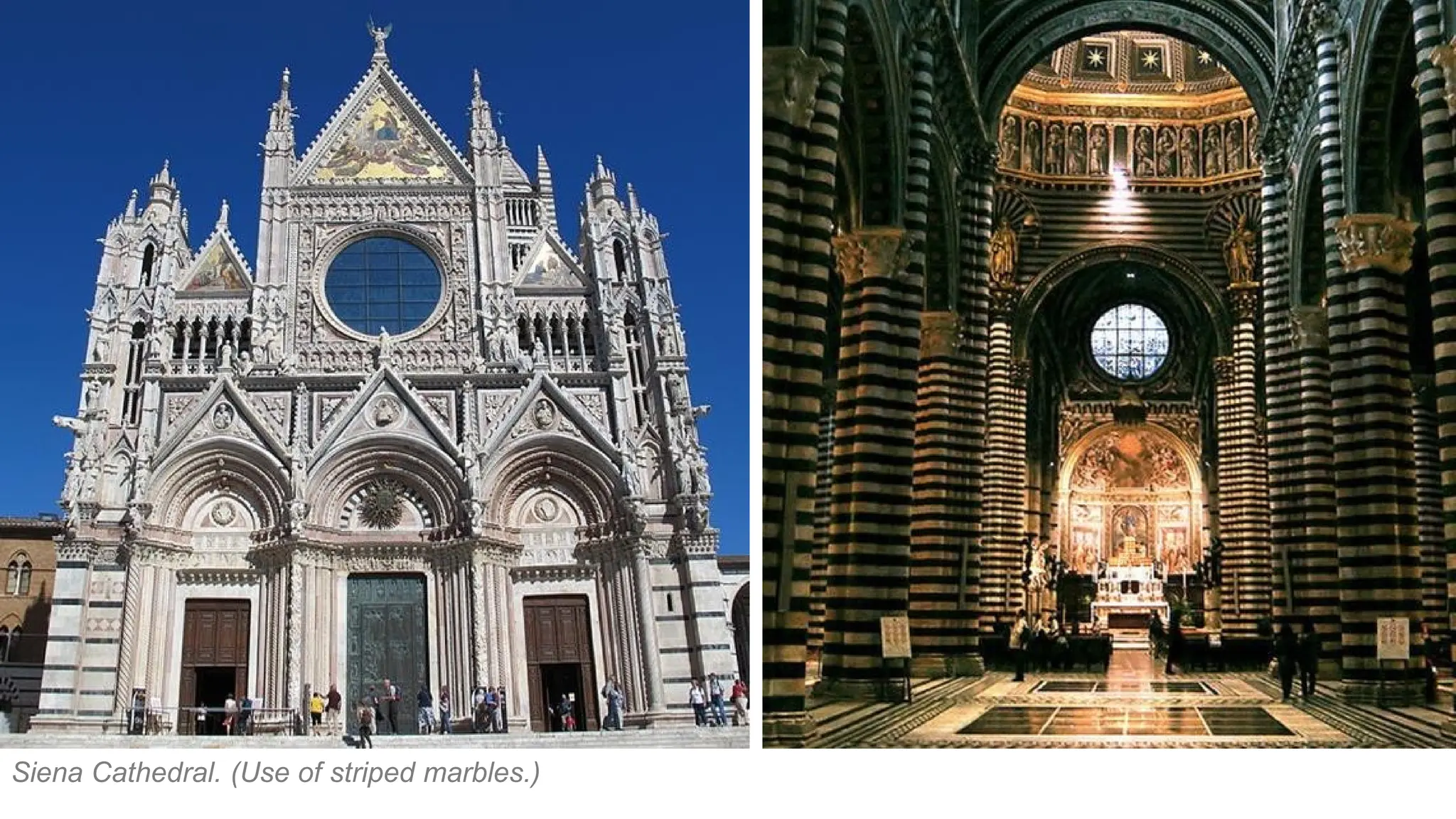
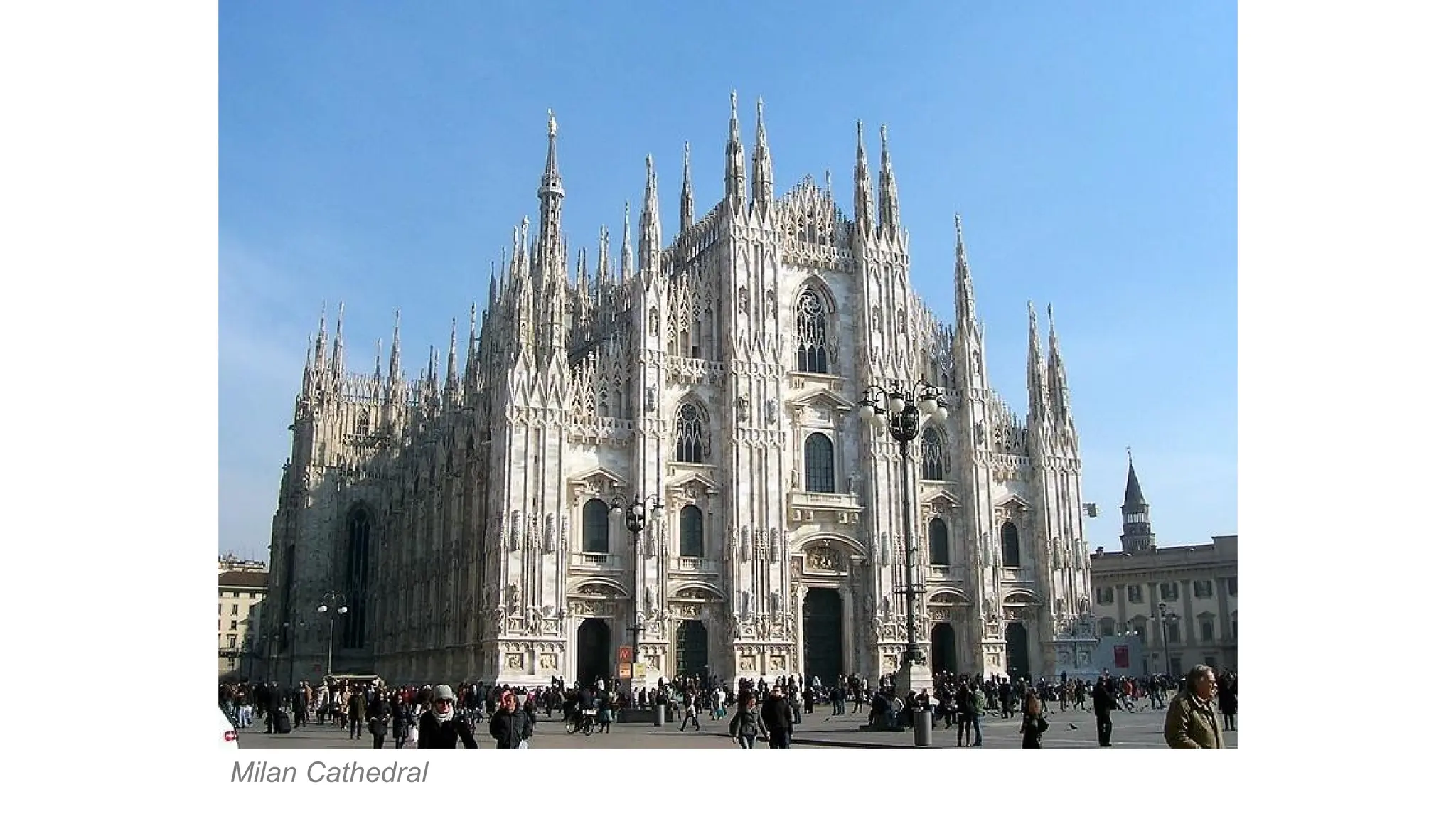
Gothic (1050-1530)
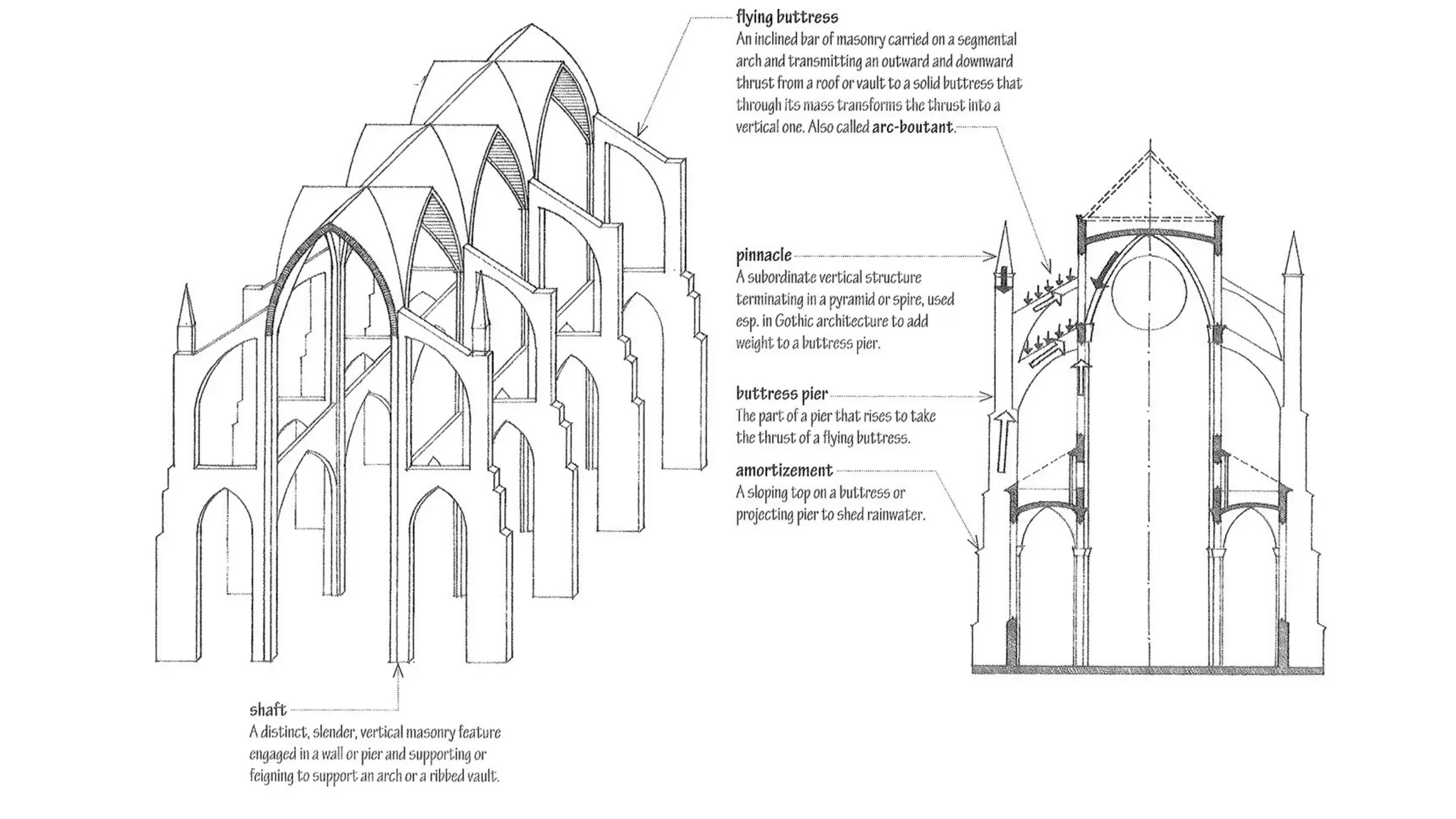
▪ “StyleOgivale”
▪ Progressive lightening and heightening of structure
(made possible by the flying buttress)
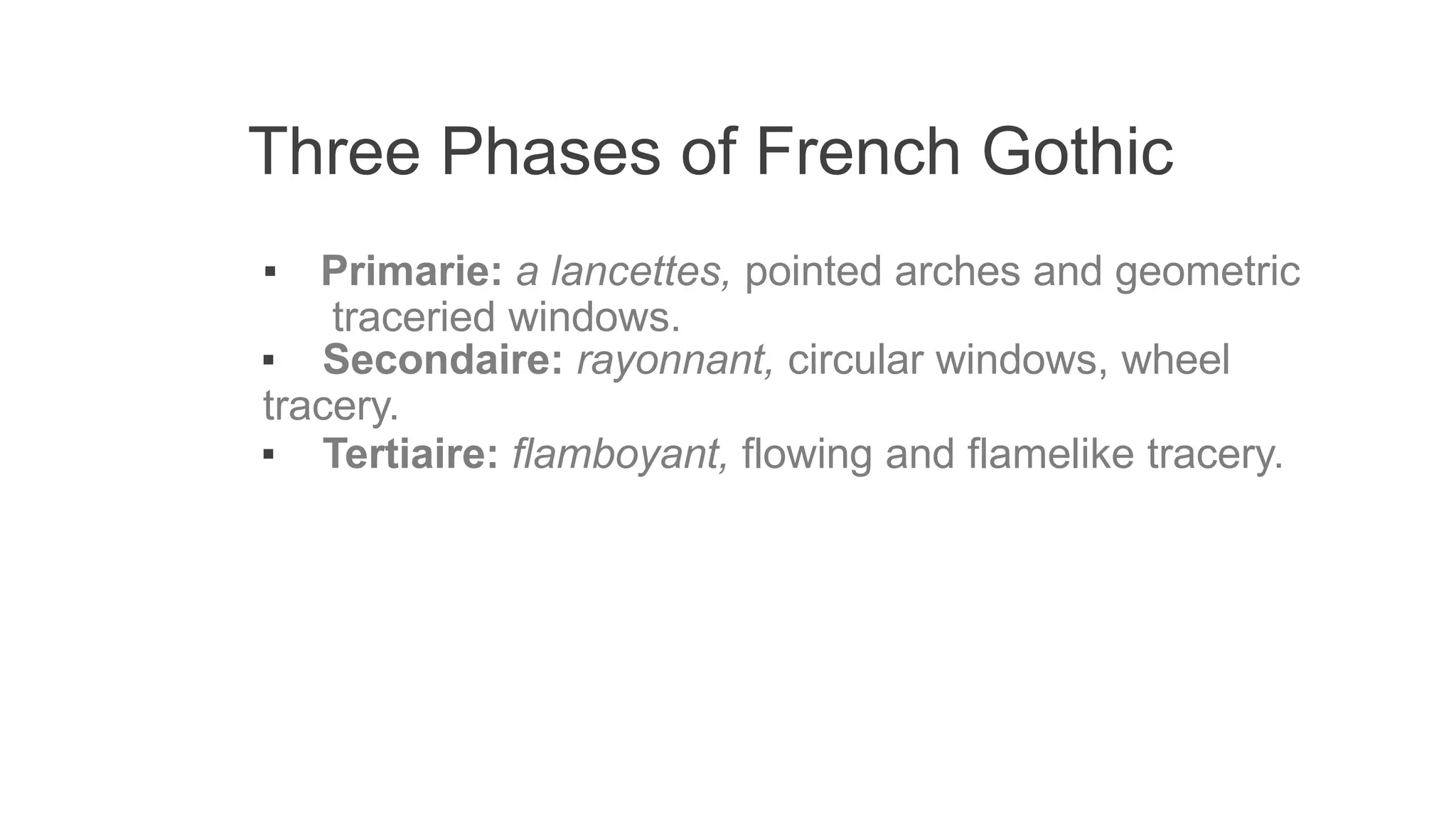
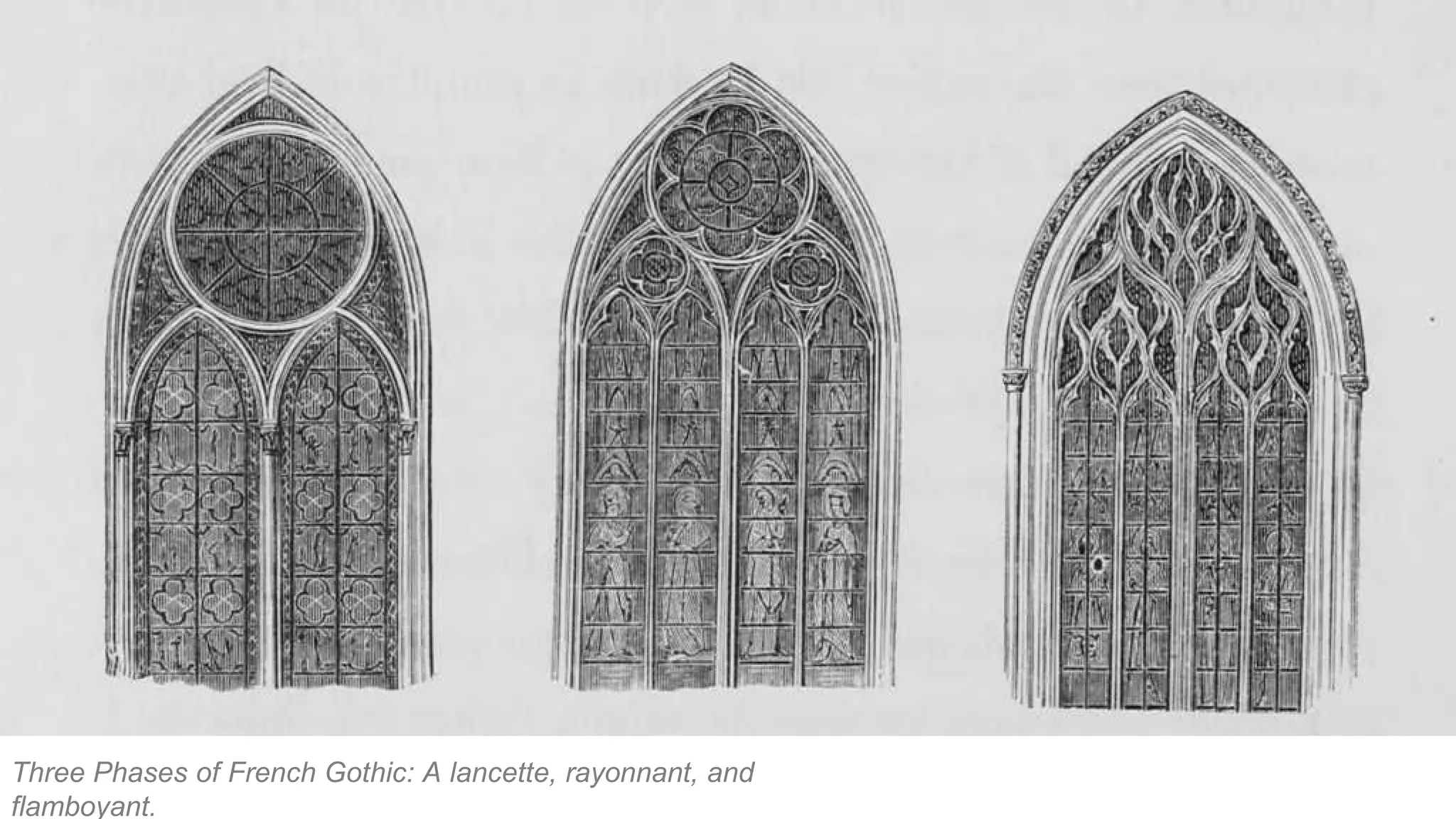
▪ Use of the pointed arch and ribbed vault.
▪ Richly decorated fenestration.
49.
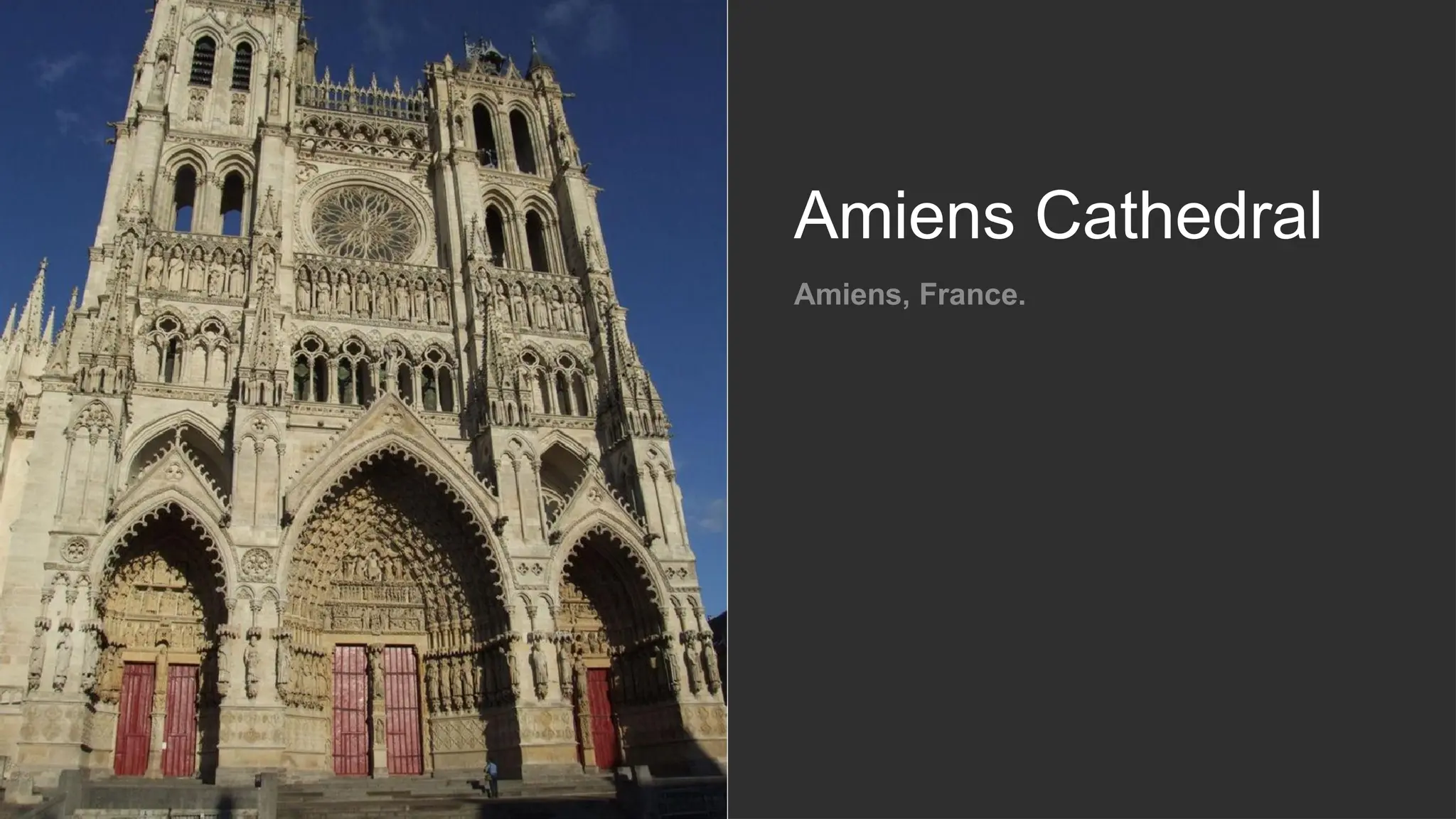
Cathedral
A large andprincipal church of a diocese (district
under the pastoral care of a bishop), cathedra, the
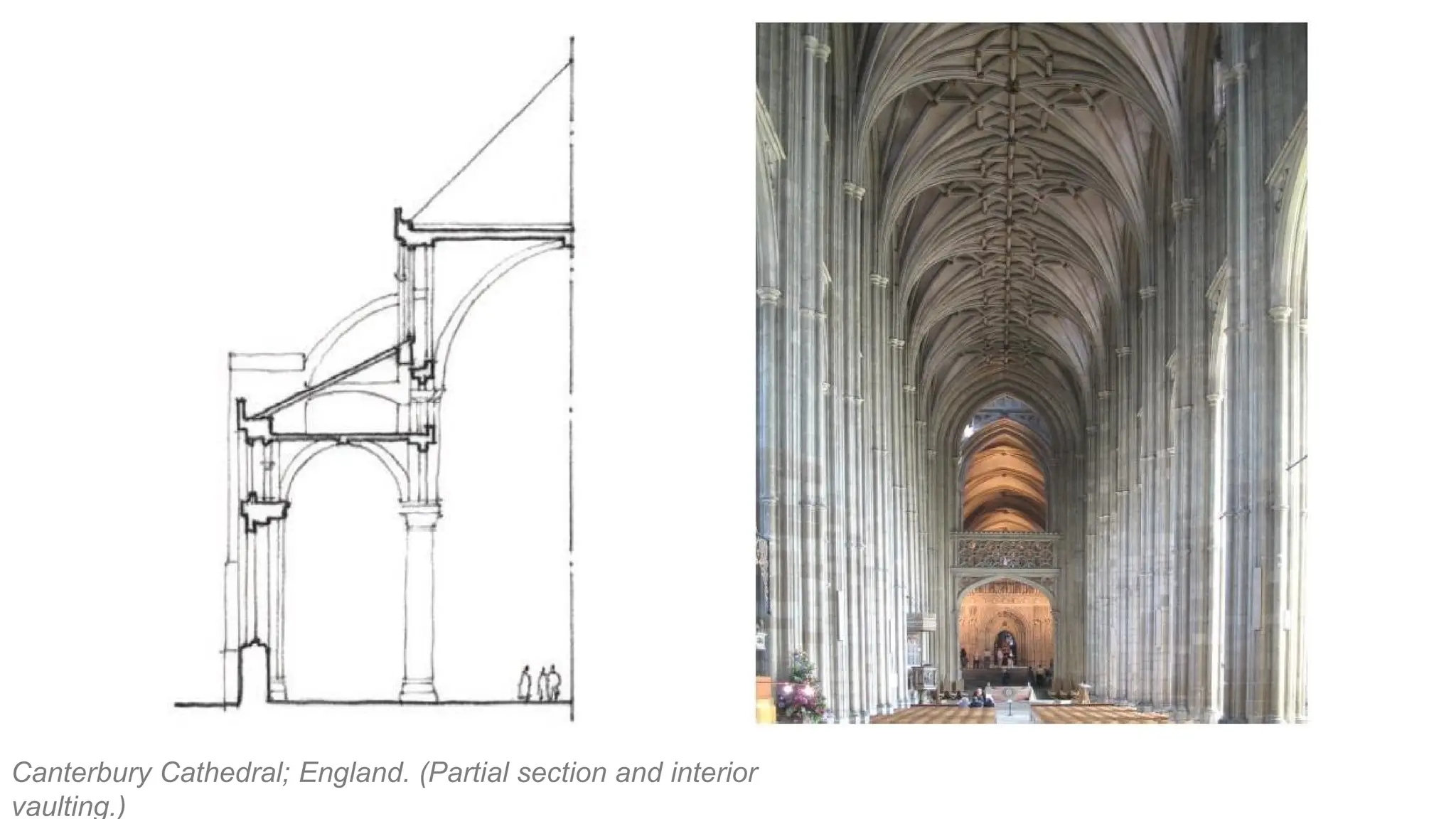
seat of a bishop.
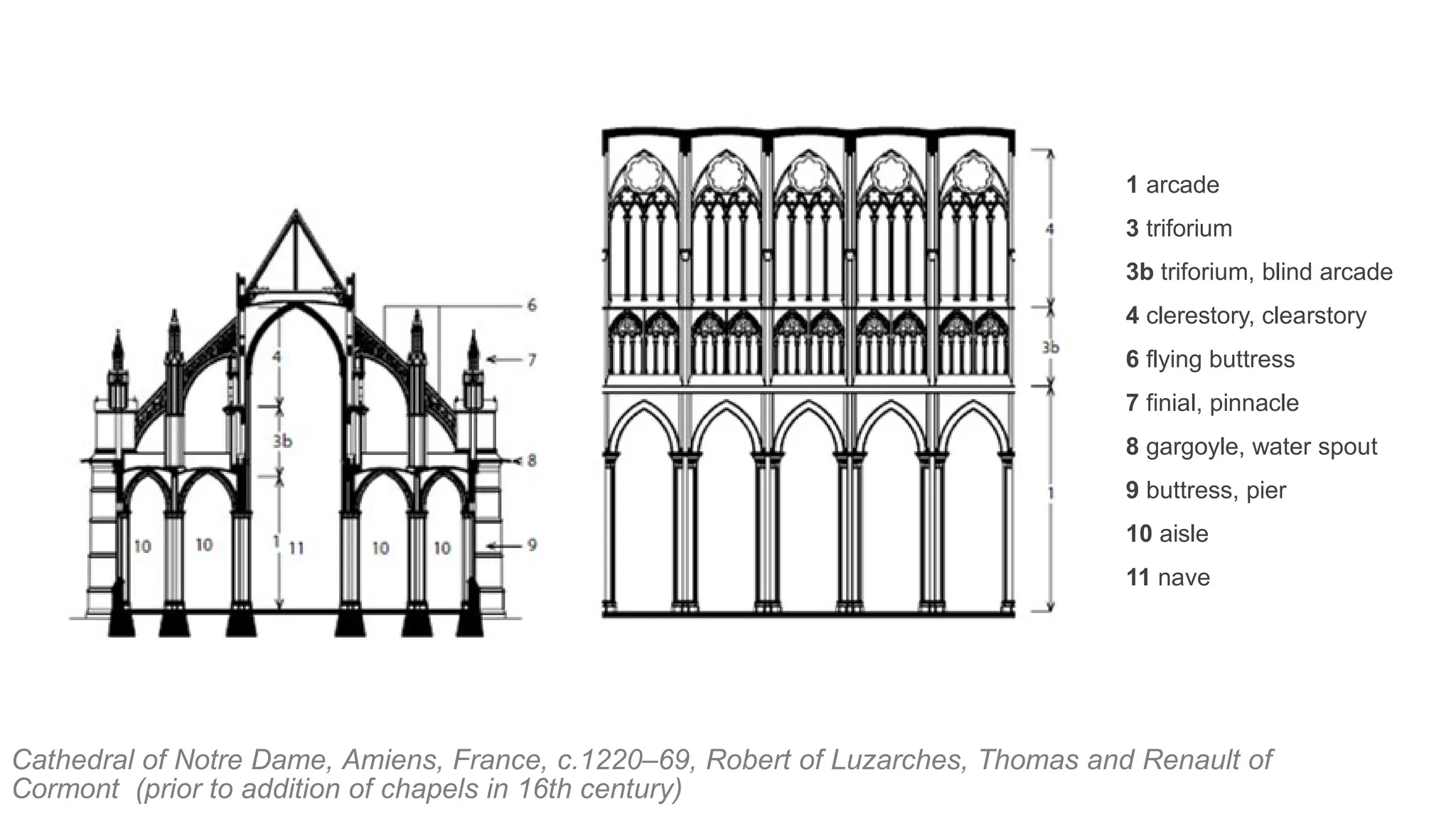
Cathedral of NotreDame, Amiens, France, c.1220–69, Robert of Luzarches, Thomas and Renault of
Cormont (prior to addition of chapels in 16th century)
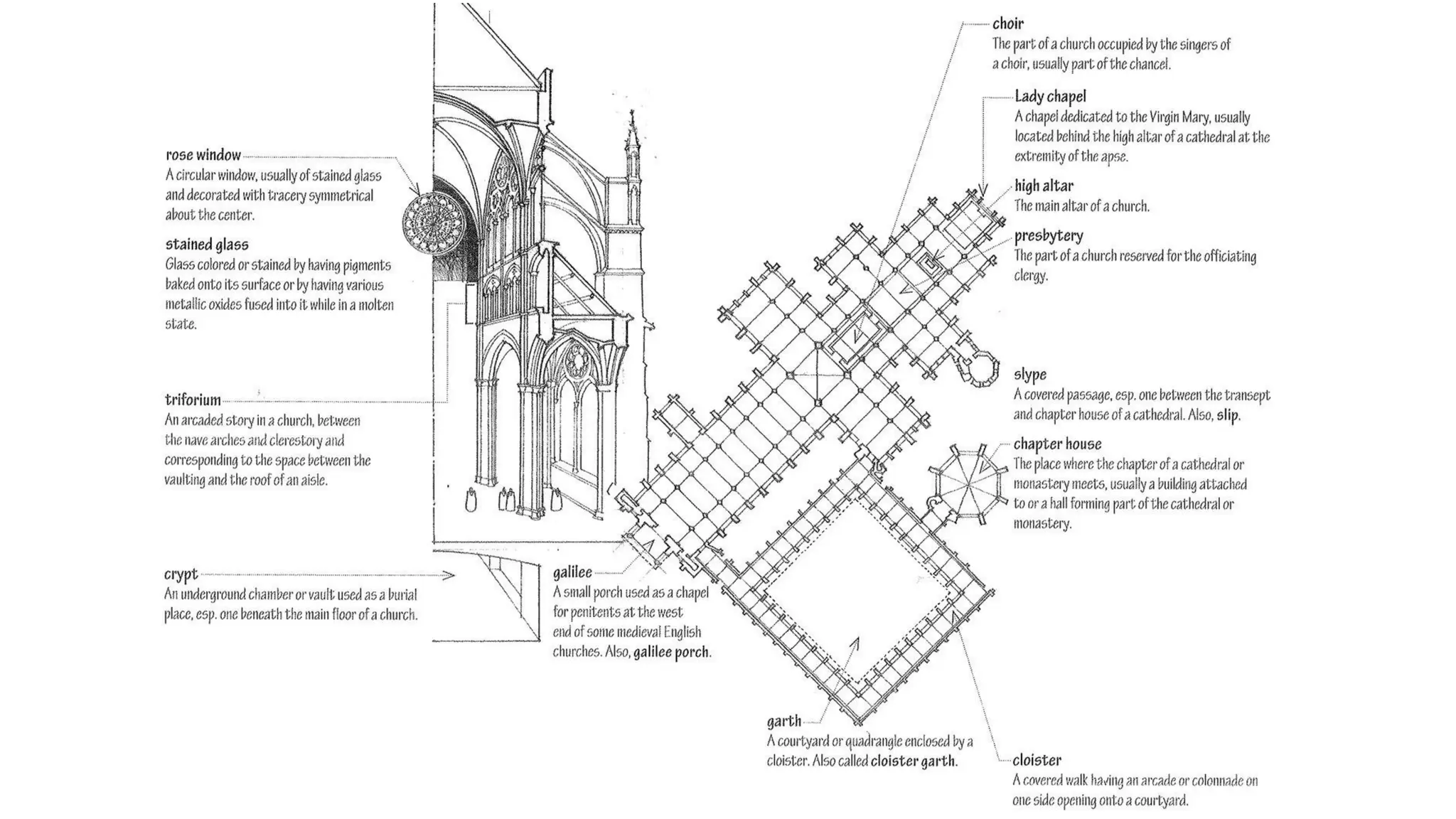
1 arcade
3 triforium
3b triforium, blind arcade
4 clerestory, clearstory
6 flying buttress
7 finial, pinnacle
8 gargoyle, water spout
9 buttress, pier
10 aisle
11 nave
54.
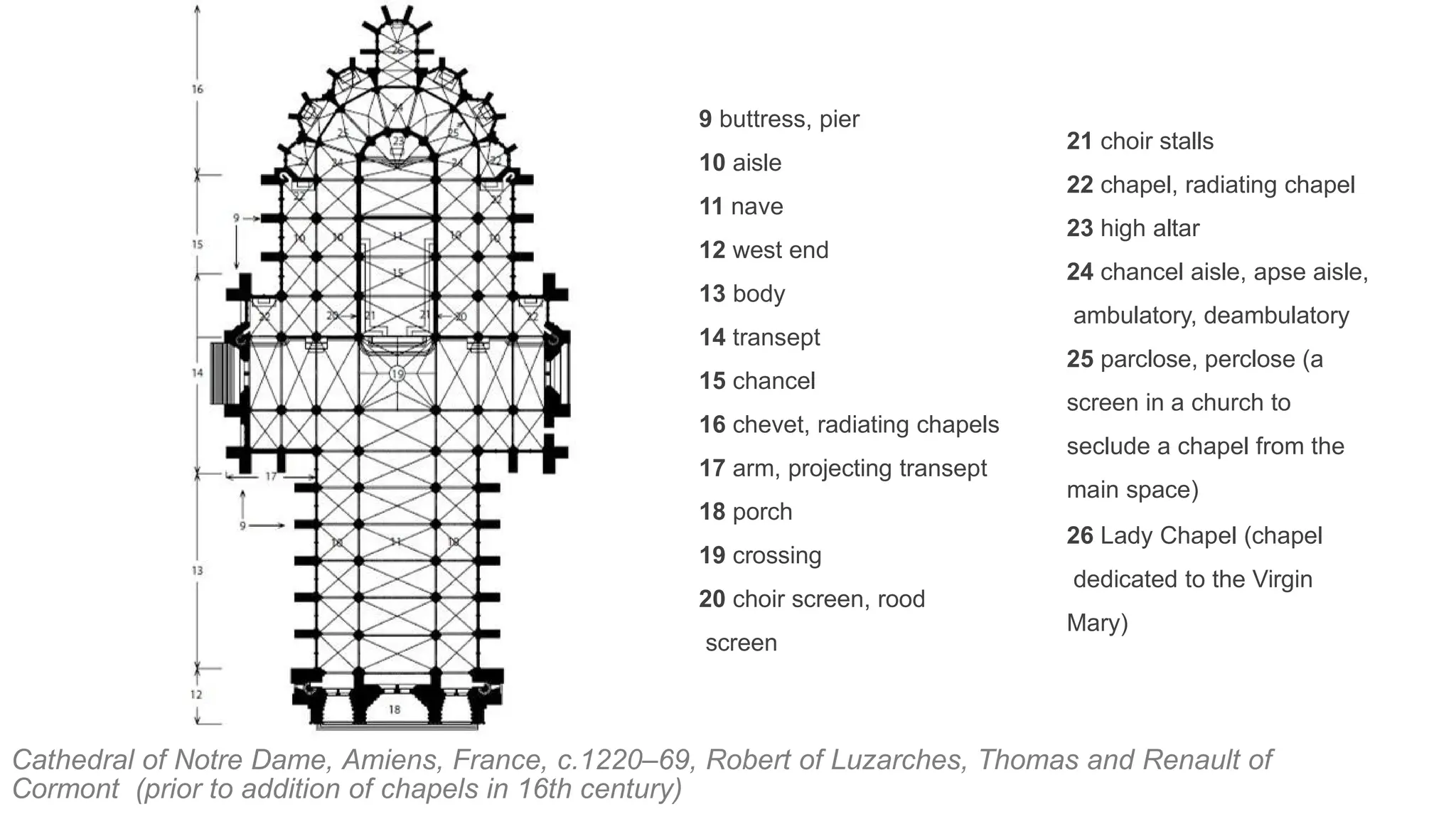
Cathedral of NotreDame, Amiens, France, c.1220–69, Robert of Luzarches, Thomas and Renault of
Cormont (prior to addition of chapels in 16th century)
9 buttress, pier
10 aisle
11 nave
12 west end
13 body
14 transept
15 chancel
16 chevet, radiating chapels
17 arm, projecting transept
18 porch
19 crossing
20 choir screen, rood
screen
21 choir stalls
22 chapel, radiating chapel
23 high altar
24 chancel aisle, apse aisle,
ambulatory, deambulatory
25 parclose, perclose (a
screen in a church to
seclude a chapel from the
main space)
26 Lady Chapel (chapel
dedicated to the Virgin
Mary)
55.
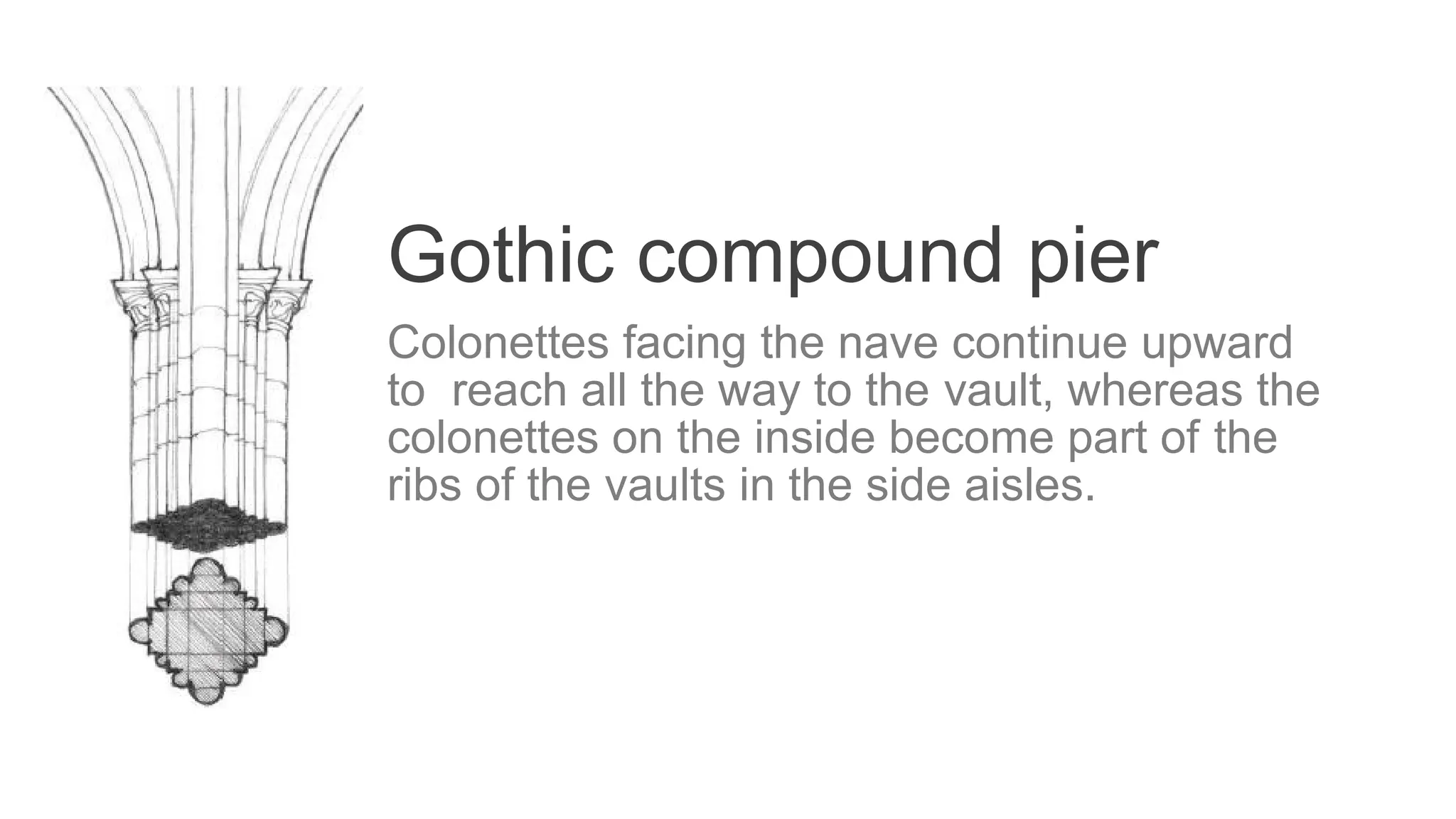
Gothic compound pier
Colonettesfacing the nave continue upward
to reach all the way to the vault, whereas the
colonettes on the inside become part of the
ribs of the vaults in the side aisles.
56.
Rib or Ribbedvault
A vault constructed of structural arched
stone
members or ribs with an infill of masonry.
57.
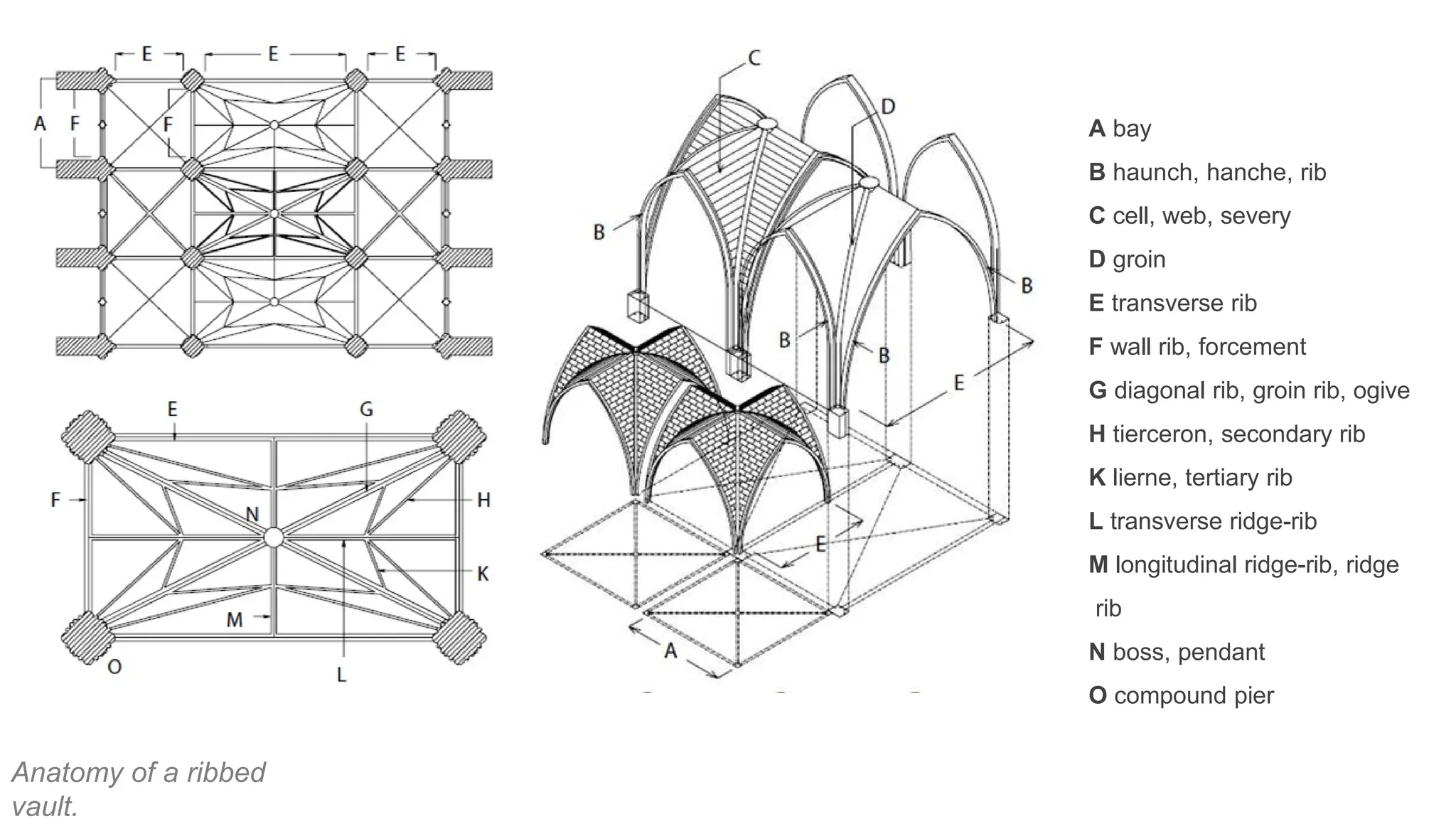
Anatomy of aribbed
vault.
A bay
B haunch, hanche, rib
C cell, web, severy
D groin
E transverse rib
F wall rib, forcement
G diagonal rib, groin rib, ogive
H tierceron, secondary rib
K lierne, tertiary rib
L transverse ridge-rib
M longitudinal ridge-rib, ridge
rib
N boss, pendant
O compound pier
58.
Parts of aRib Vault
▪ Diagonal Rib
A rib crossing a compartment of a rib vault on a diagonal.
▪ Ridge Rib
A horizontal rib marking the crown of a vaulting
compartment.
▪ Boss
An ornamental, knob-like projection at the intersection of
ogives.
59.
Parts of aRib Vault
▪ Lierne
A tertiary rib in a vault often for decorative rather than
structural purposes.
▪ Tierceron
A subsidiary rib which connects a point on the ridge
rib or
central boss with one of the main springers or
supports.
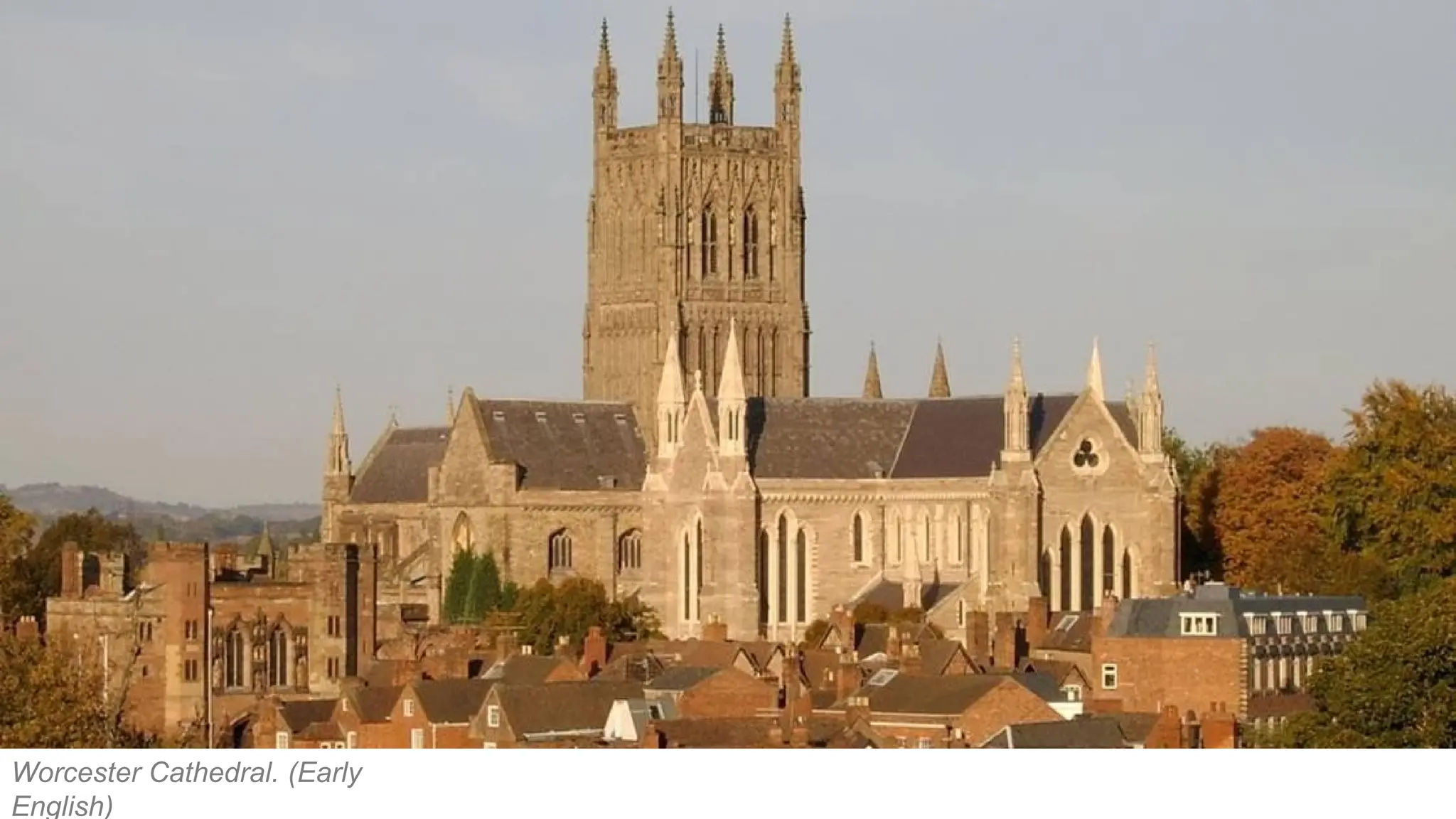
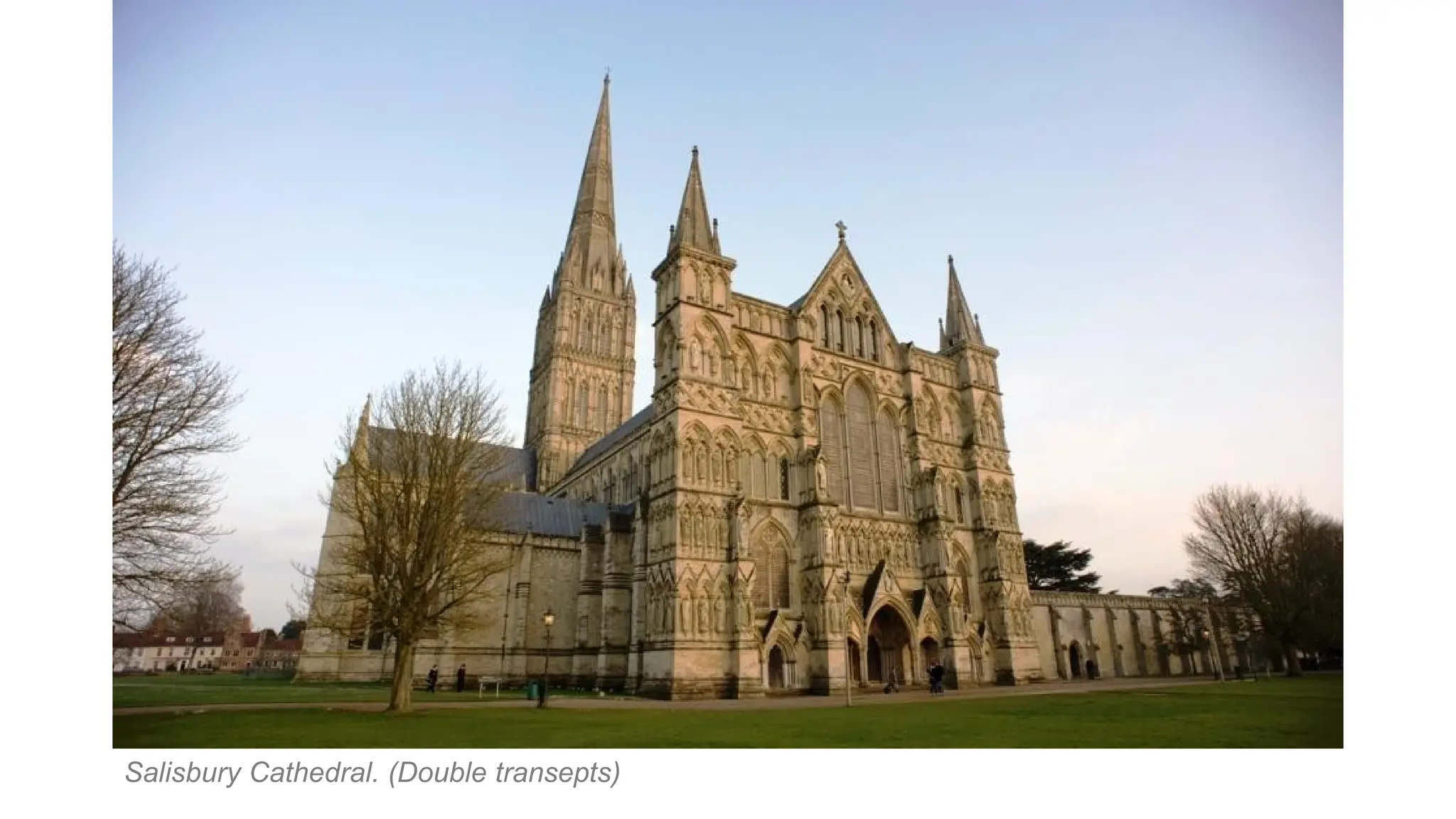
Early English
▪ Alsoknown as Lancet, First Pointed or Early
Plantagenet.
▪ Use of lancet-shaped arches and plate tracery
(tracery using masonry into which shapes has been
cut).
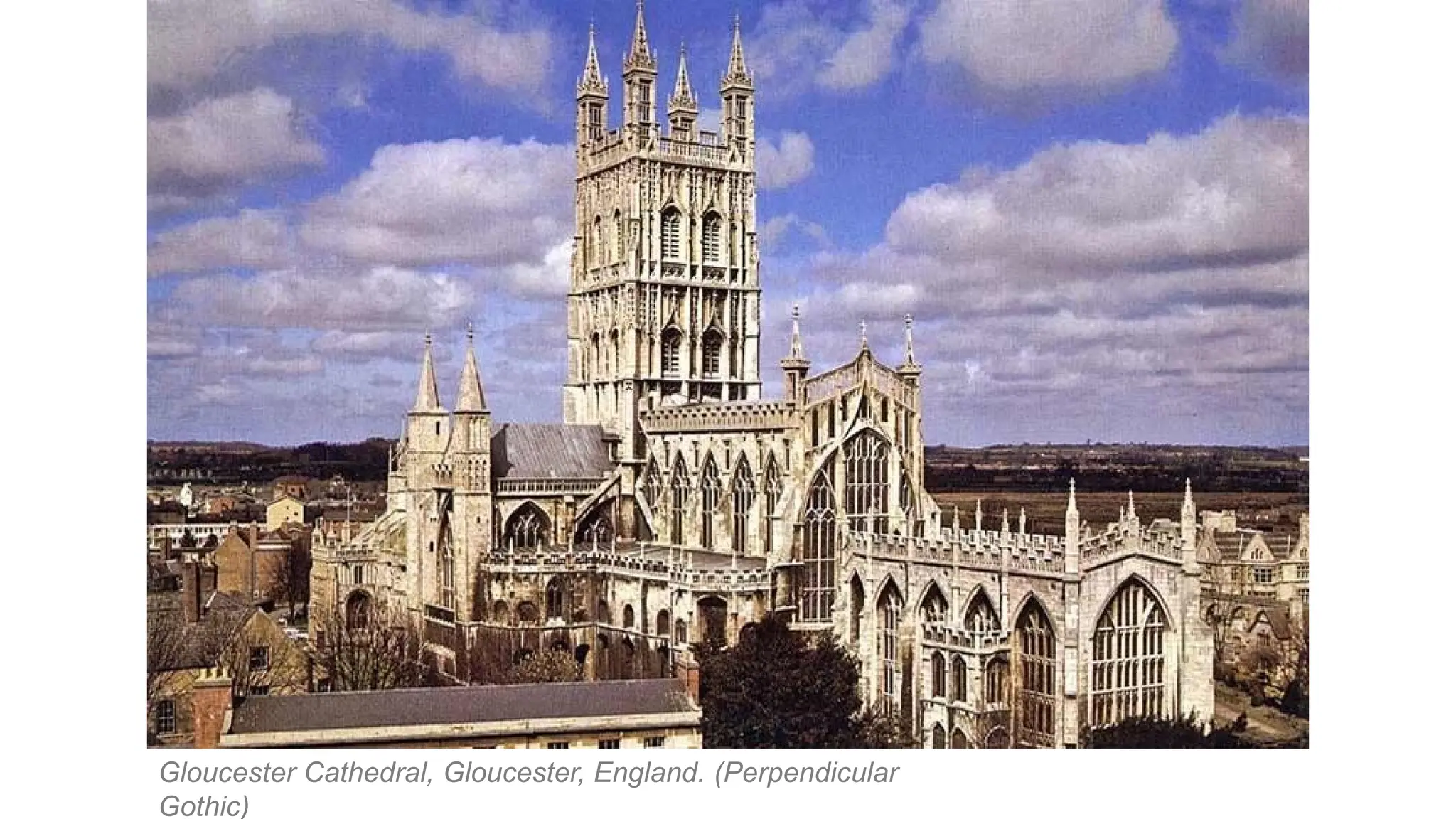
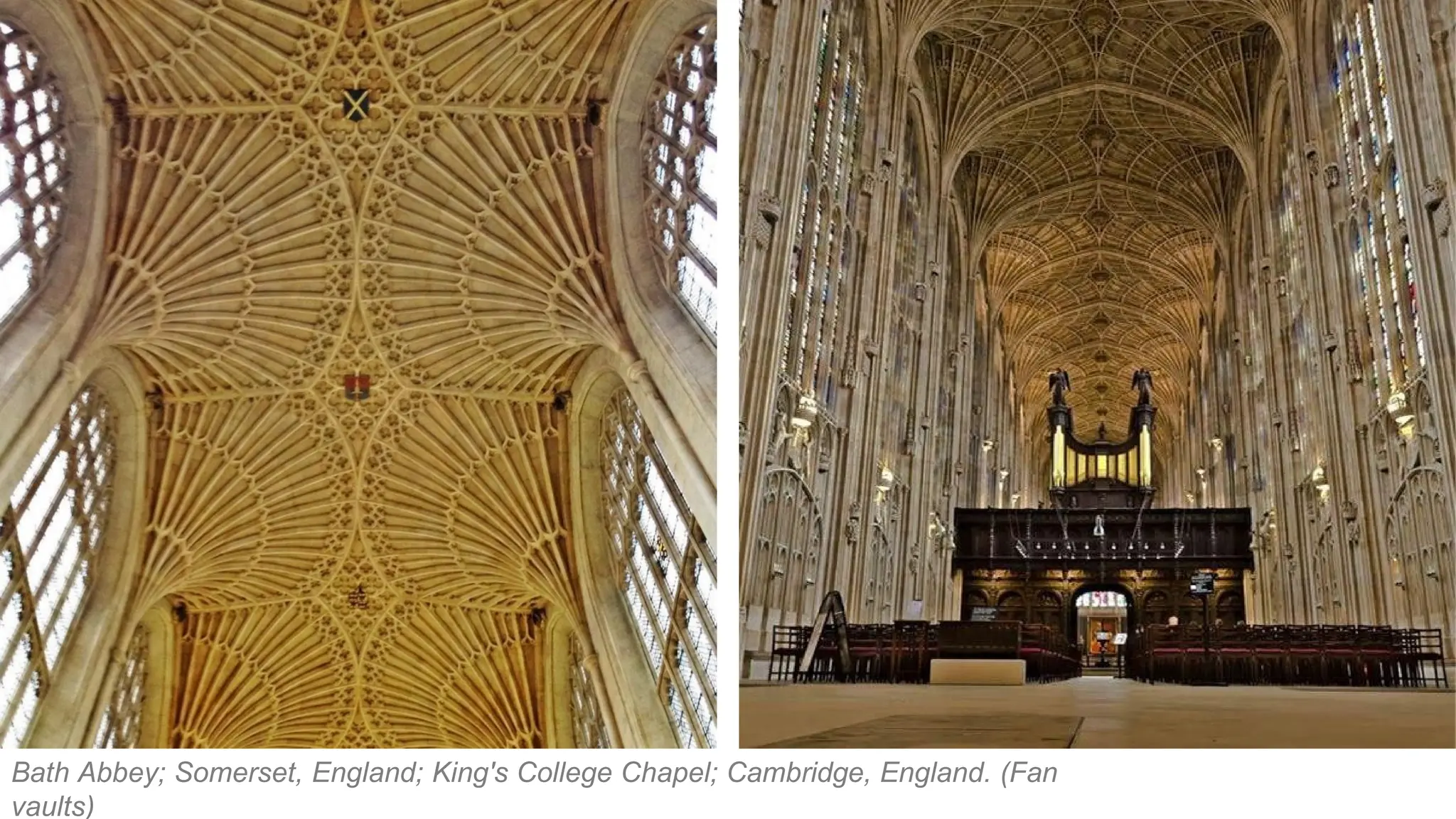
Perpendicular
▪ Also Rectilinear,Late Pointed, or Lancastrian.
▪ Perpendicular tracery (use of a lacework of vertical
glazing bars), fine intricate stonework, and elaborate
fan vaults.
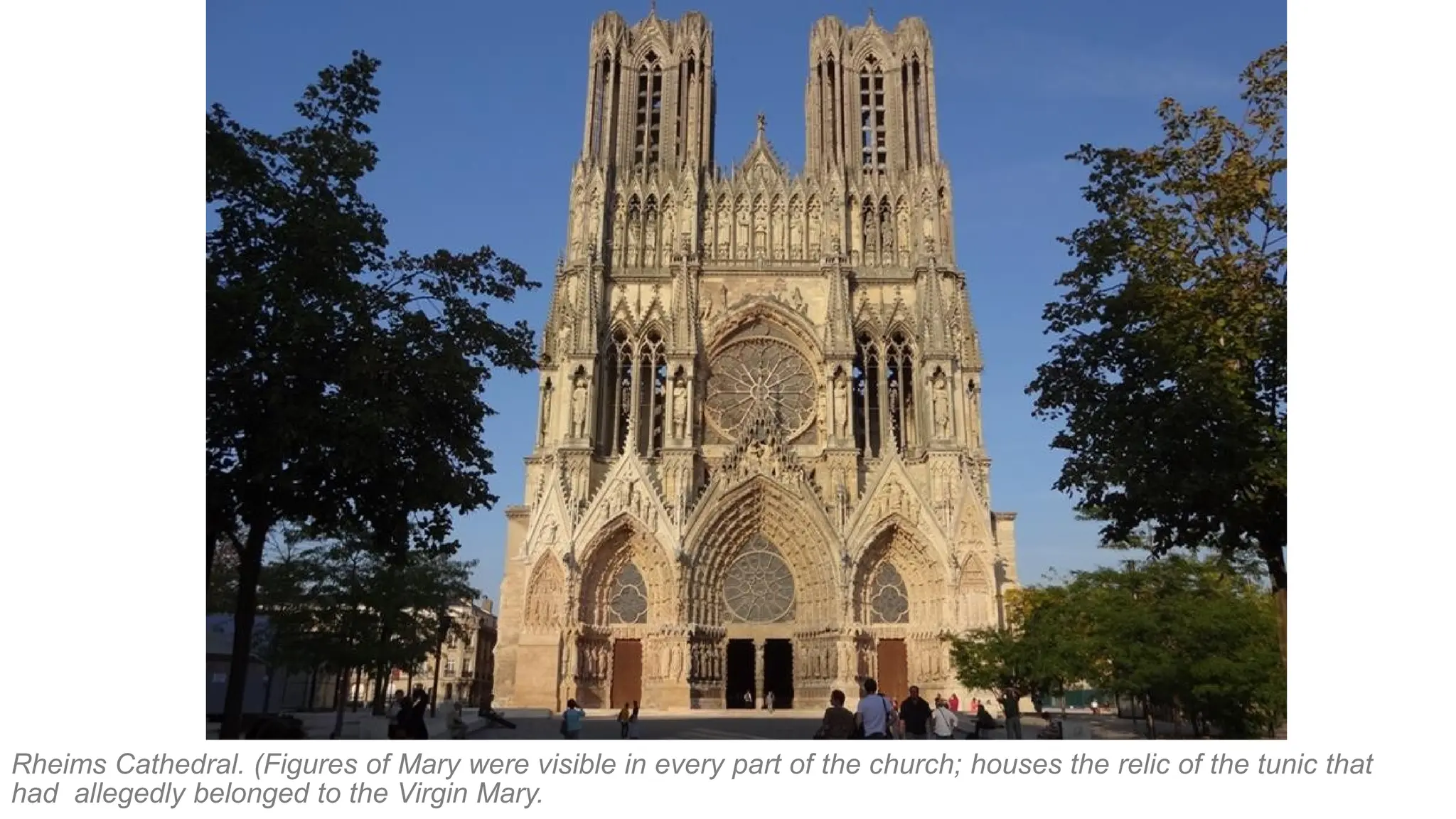
Rheims Cathedral. (Figuresof Mary were visible in every part of the church; houses the relic of the tunic that
had allegedly belonged to the Virgin Mary.
79.
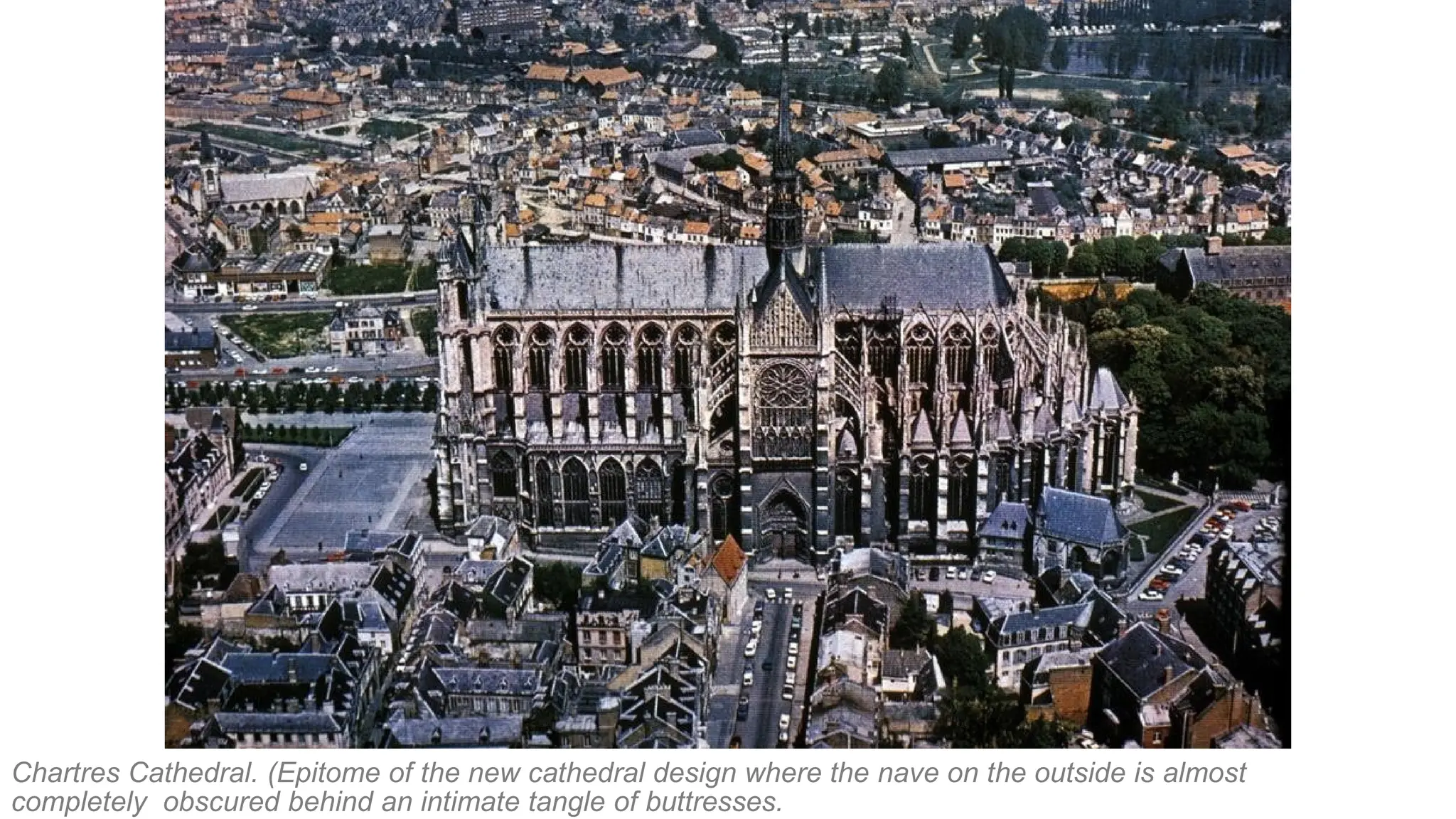
Chartres Cathedral. (Epitomeof the new cathedral design where the nave on the outside is almost
completely obscured behind an intimate tangle of buttresses.
Renaissance (1420-1550)
▪ Developedduring the rebirth of classical art and
learning in Europe.
▪ Initially characterized by the use of the classical
orders, round arches, and symmetrical
proportions.
▪ Pure Renaissance architecture was based on regular
order, symmetry, and a central axis with grandiose
plans and impressive facades.
▪ Personality of the architect has increased in
importance.
97.
Renaissance (1420-1550)
▪ Silhouetteswere clean and simple, with flat
roofs.
▪ Walls of large dressed masonry blocks (rusticated
masonry) gave buildings an imposing sense of dignity
and strength.
▪ Emphasis on horizontality.
▪ Ornamentation was based on pagan or
classical
mythological subjects.
▪ Sgraffito, scratched and colored plaster.
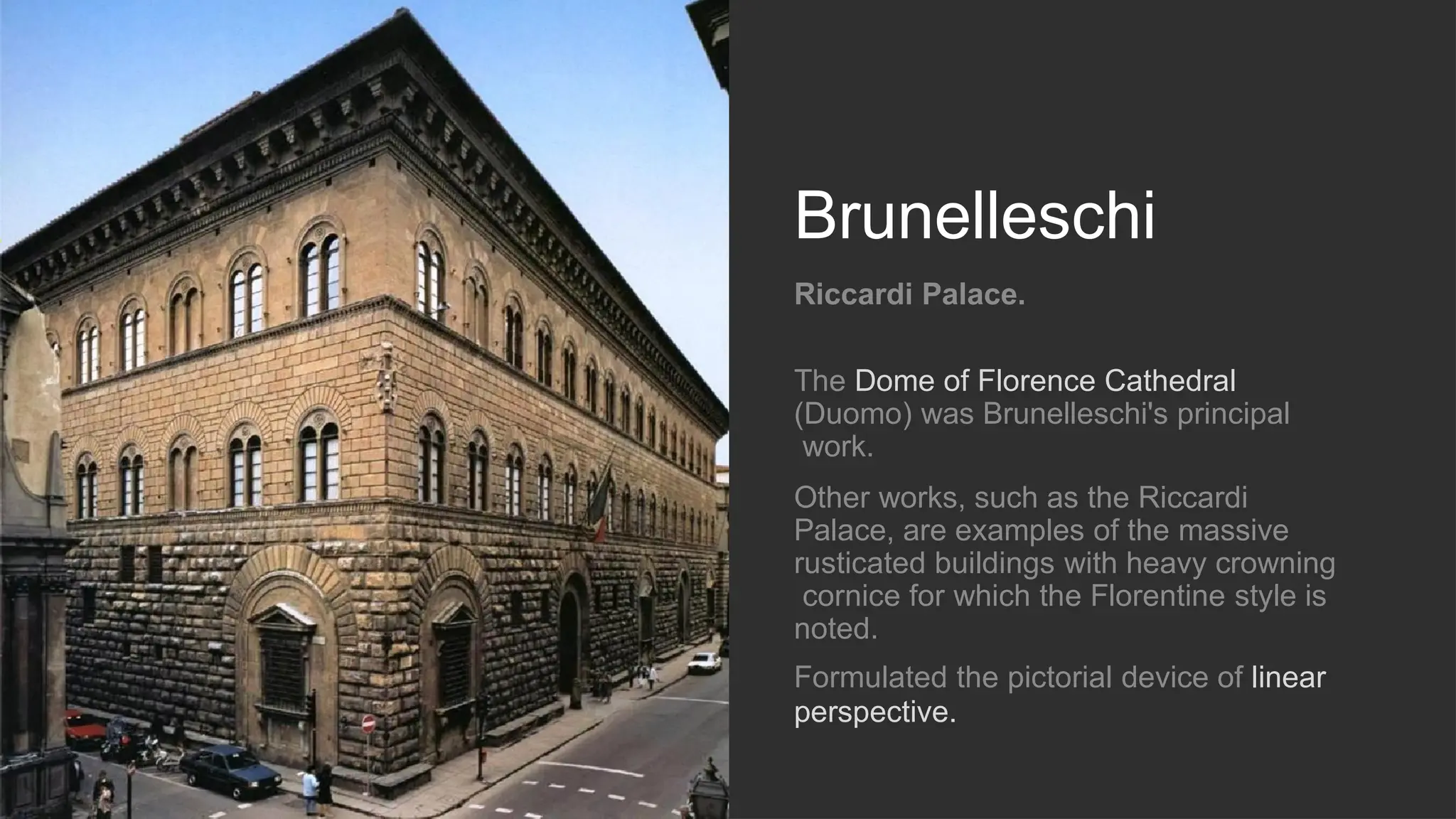
Brunelleschi
Riccardi Palace.
The Domeof Florence Cathedral
(Duomo) was Brunelleschi's principal
work.
Other works, such as the Riccardi
Palace, are examples of the massive
rusticated buildings with heavy crowning
cornice for which the Florentine style is
noted.
Formulated the pictorial device of linear
perspective.
101.
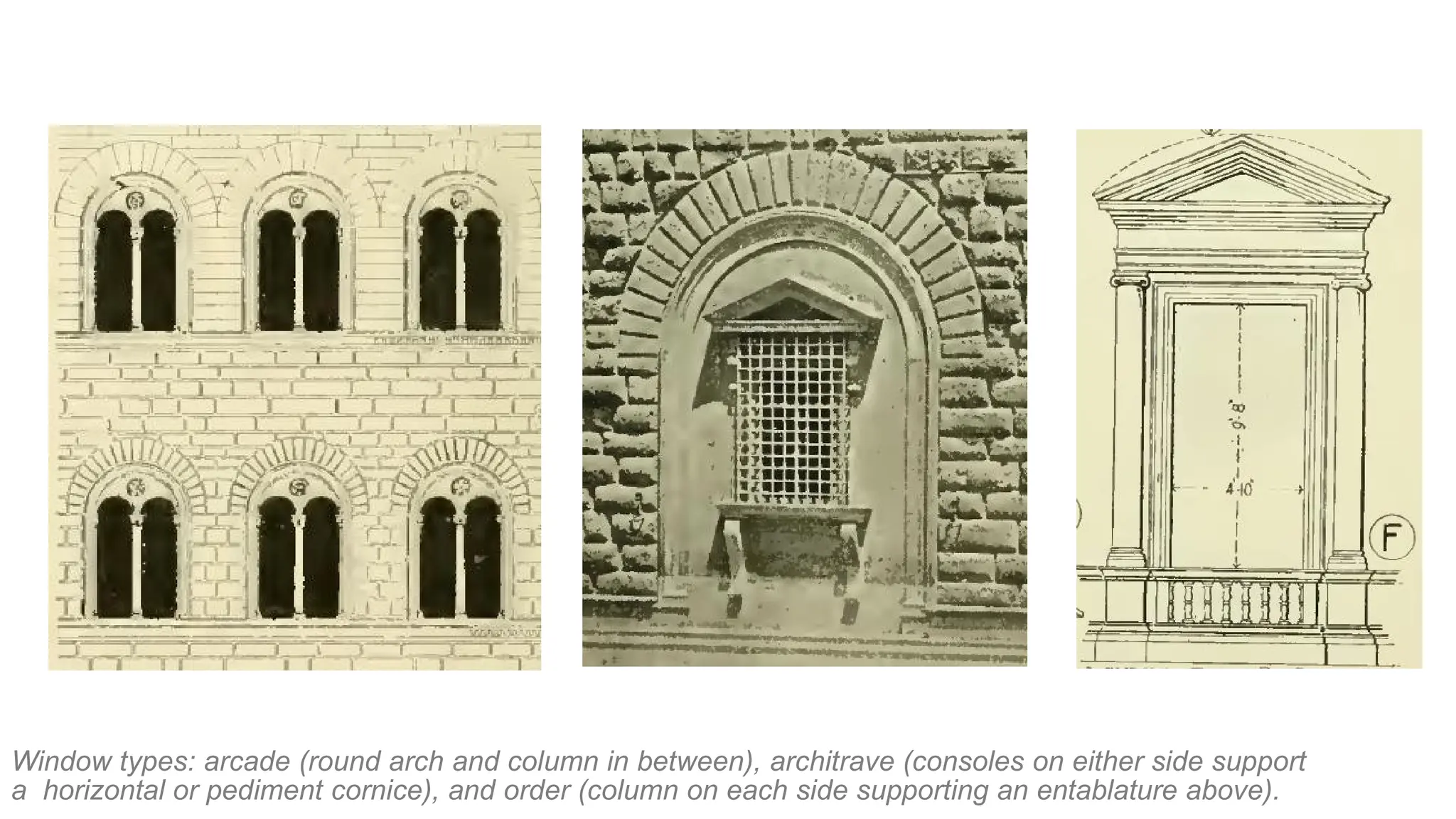
Window types: arcade(round arch and column in between), architrave (consoles on either side support
a horizontal or pediment cornice), and order (column on each side supporting an entablature above).
102.
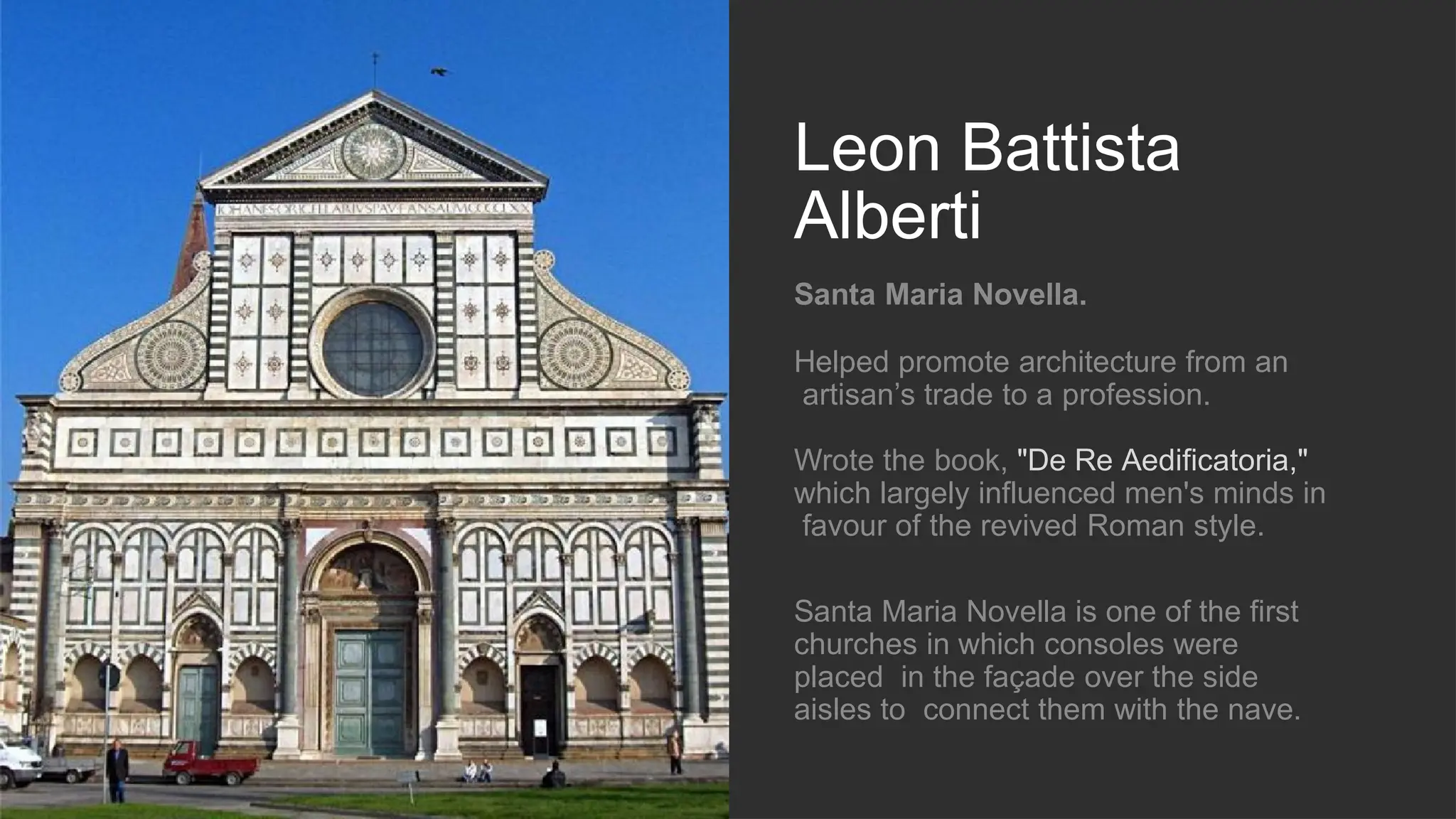
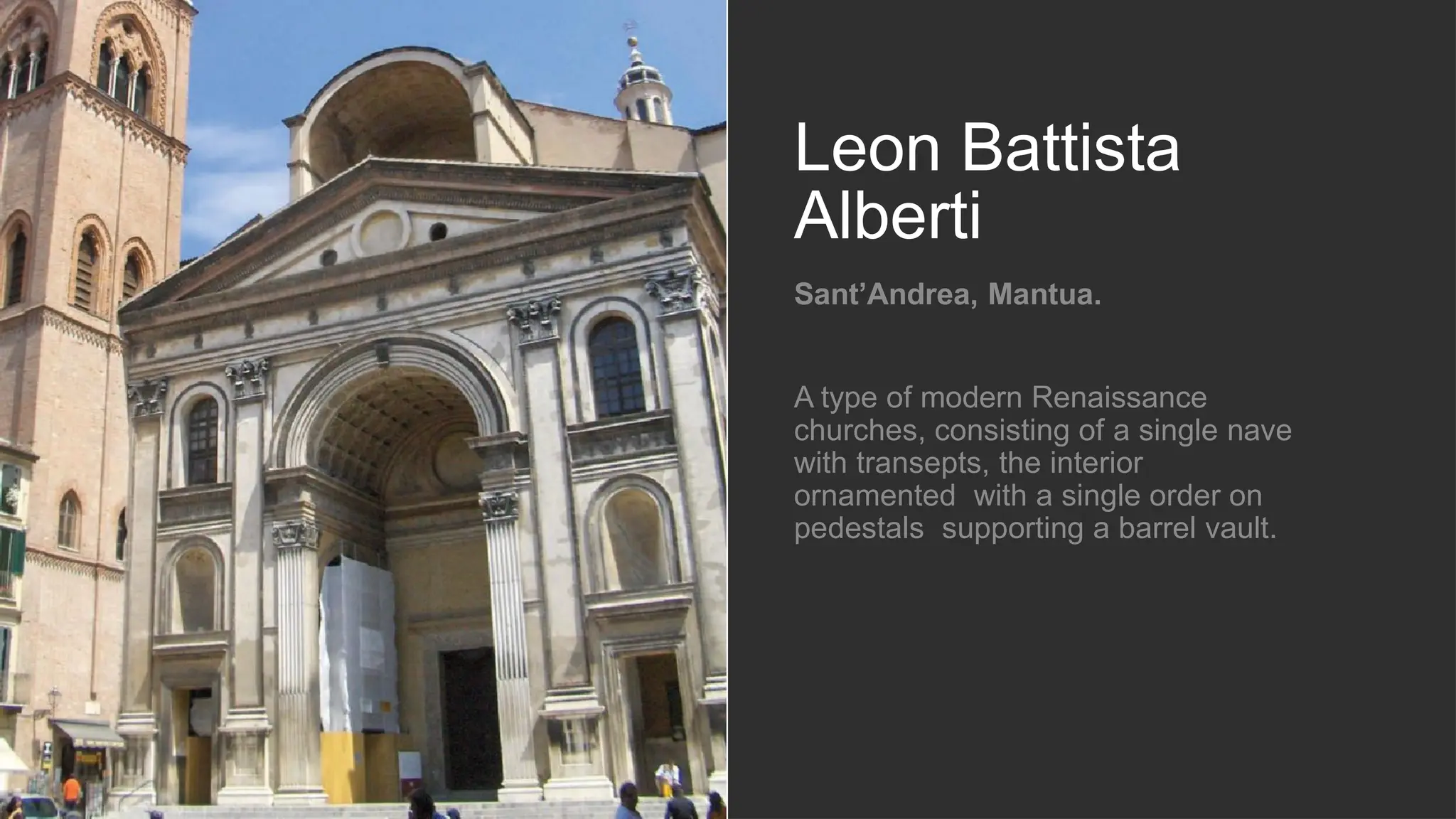
Leon Battista
Alberti
Santa MariaNovella.
Helped promote architecture from an
artisan’s trade to a profession.
Wrote the book, "De Re Aedificatoria,"
which largely influenced men's minds in
favour of the revived Roman style.
Santa Maria Novella is one of the first
churches in which consoles were
placed in the façade over the side
aisles to connect them with the nave.
103.
Leon Battista
Alberti
Sant’Andrea, Mantua.
Atype of modern Renaissance
churches, consisting of a single nave
with transepts, the interior
ornamented with a single order on
pedestals supporting a barrel vault.
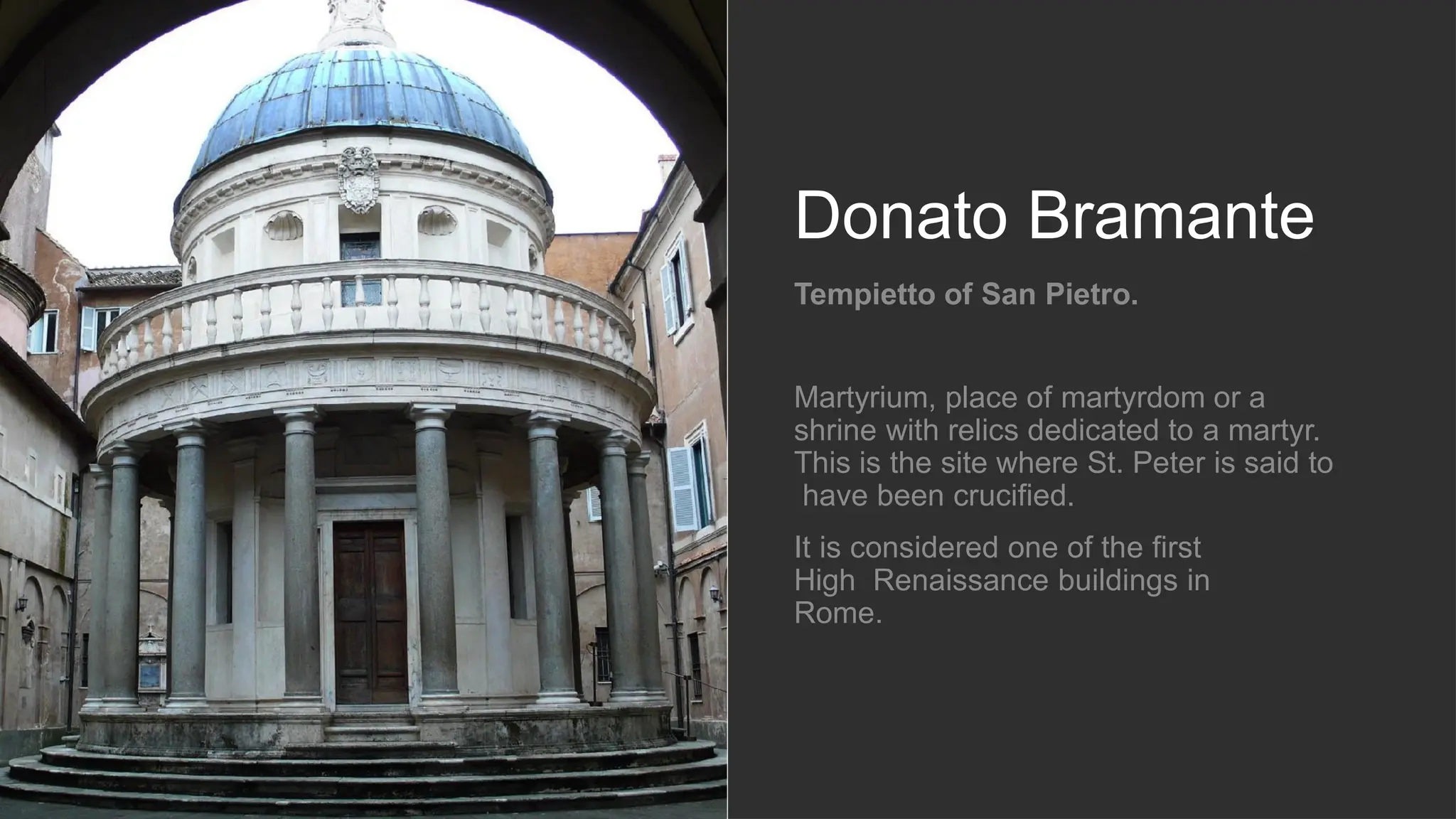
Donato Bramante
Tempietto ofSan Pietro.
Martyrium, place of martyrdom or a
shrine with relics dedicated to a martyr.
This is the site where St. Peter is said to
have been crucified.
It is considered one of the first
High Renaissance buildings in
Rome.
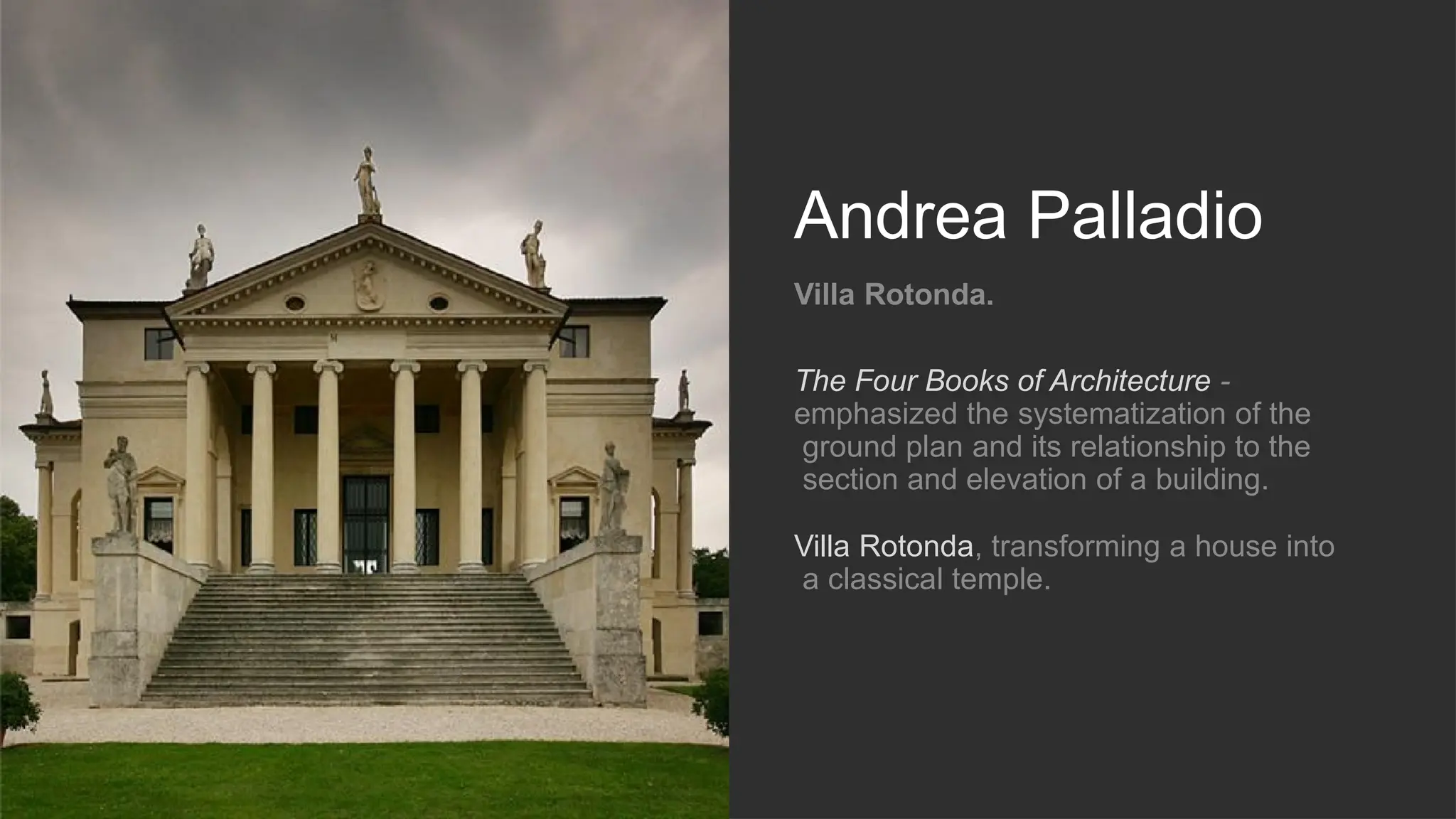
Andrea Palladio
Villa Rotonda.
TheFour Books of Architecture -
emphasized the systematization of the
ground plan and its relationship to the
section and elevation of a building.
Villa Rotonda, transforming a house into
a classical temple.
108.
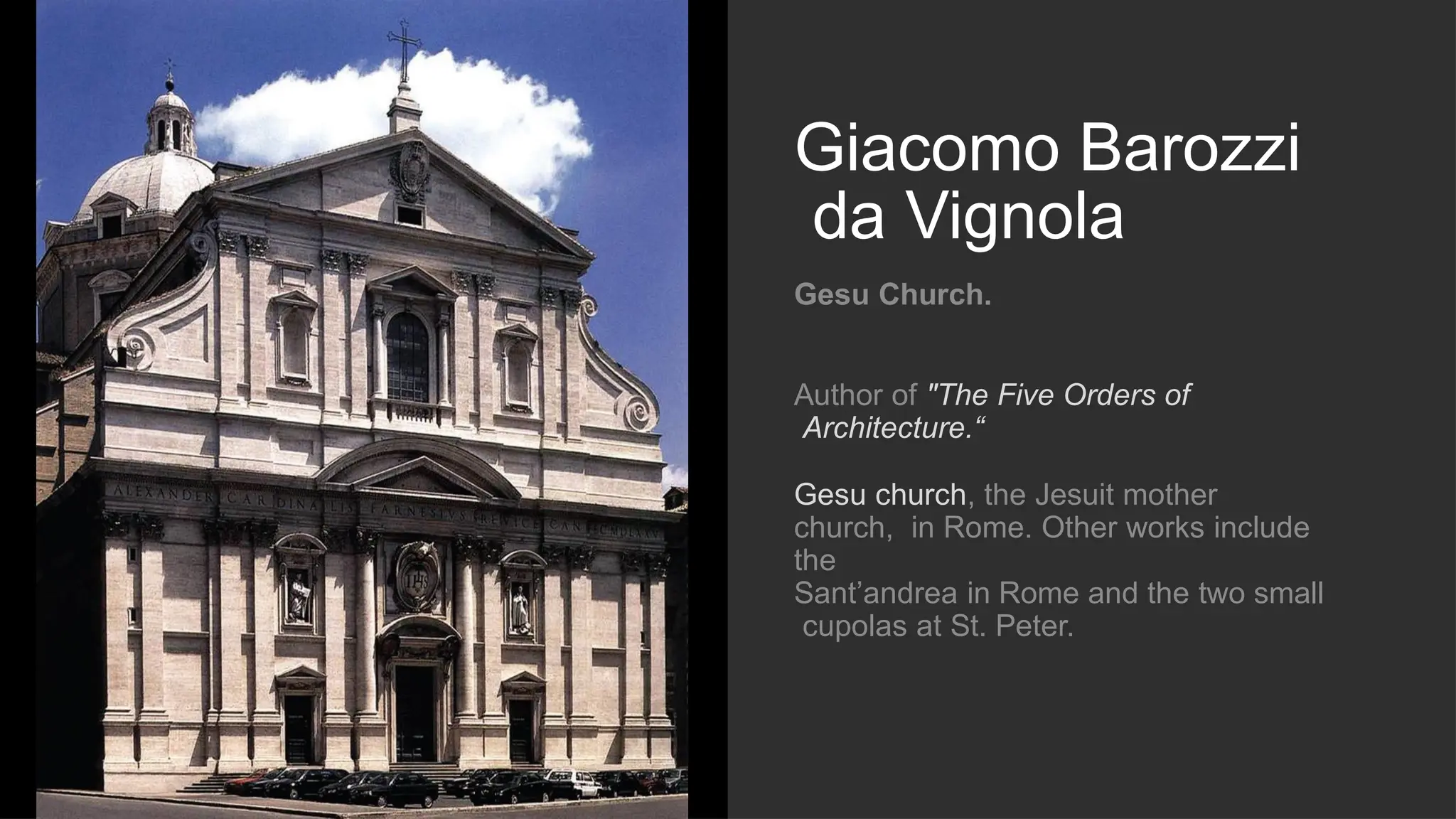
Giacomo Barozzi
da Vignola
GesuChurch.
Author of "The Five Orders of
Architecture.“
Gesu church, the Jesuit mother
church, in Rome. Other works include
the
Sant’andrea in Rome and the two small
cupolas at St. Peter.
109.
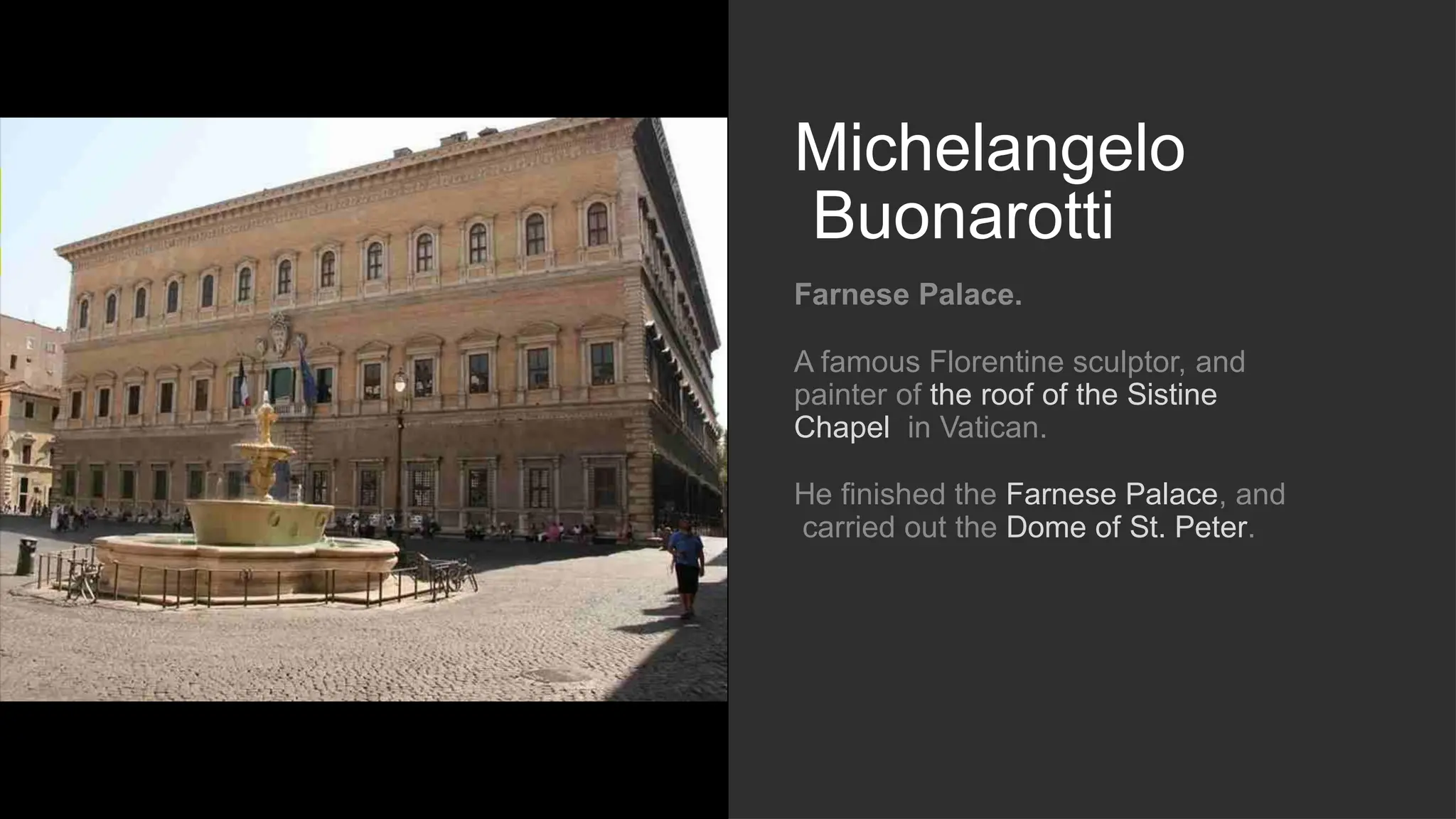
Michelangelo
Buonarotti
Farnese Palace.
A famousFlorentine sculptor, and
painter of the roof of the Sistine
Chapel in Vatican.
He finished the Farnese Palace, and
carried out the Dome of St. Peter.
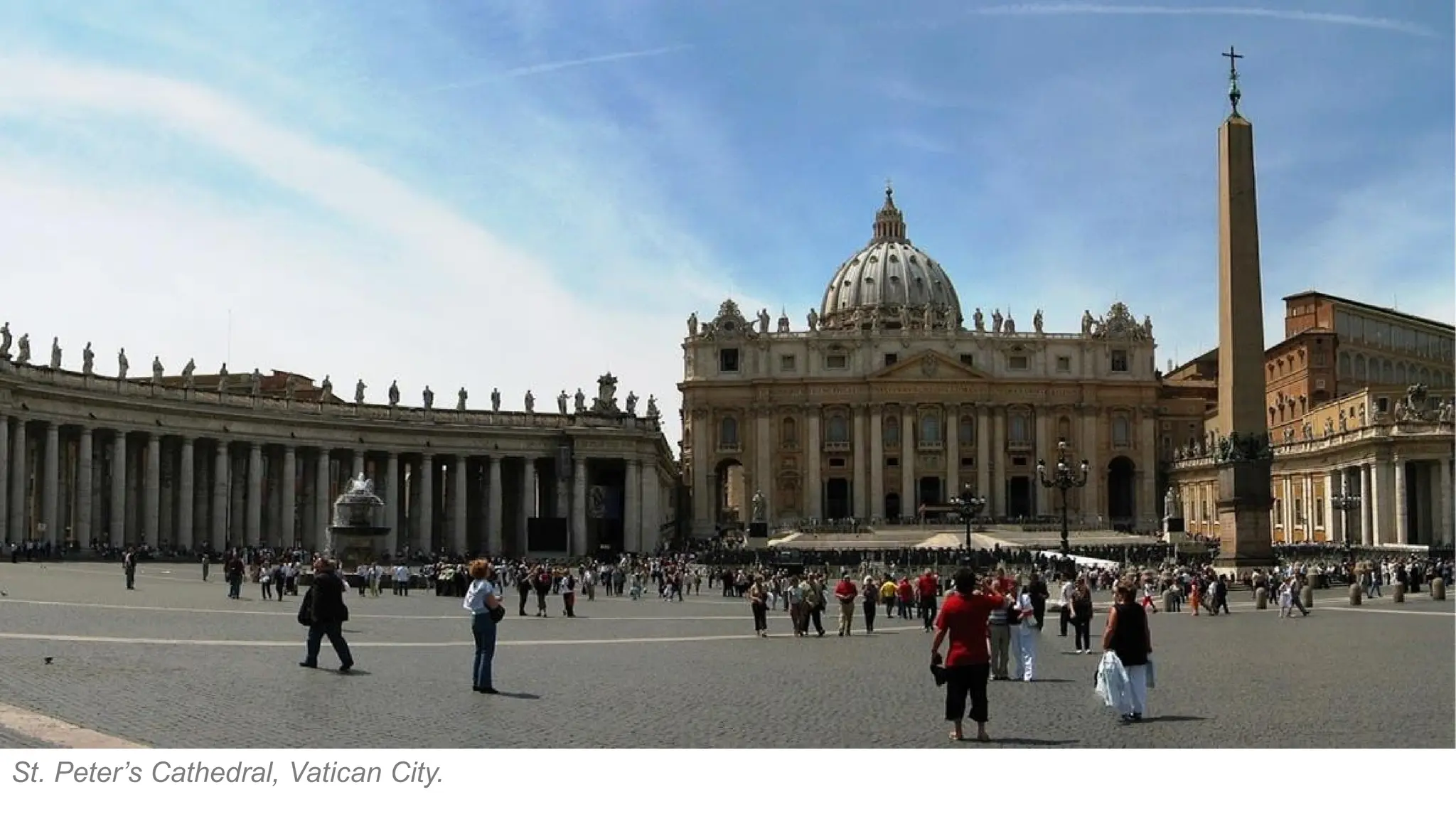
110.
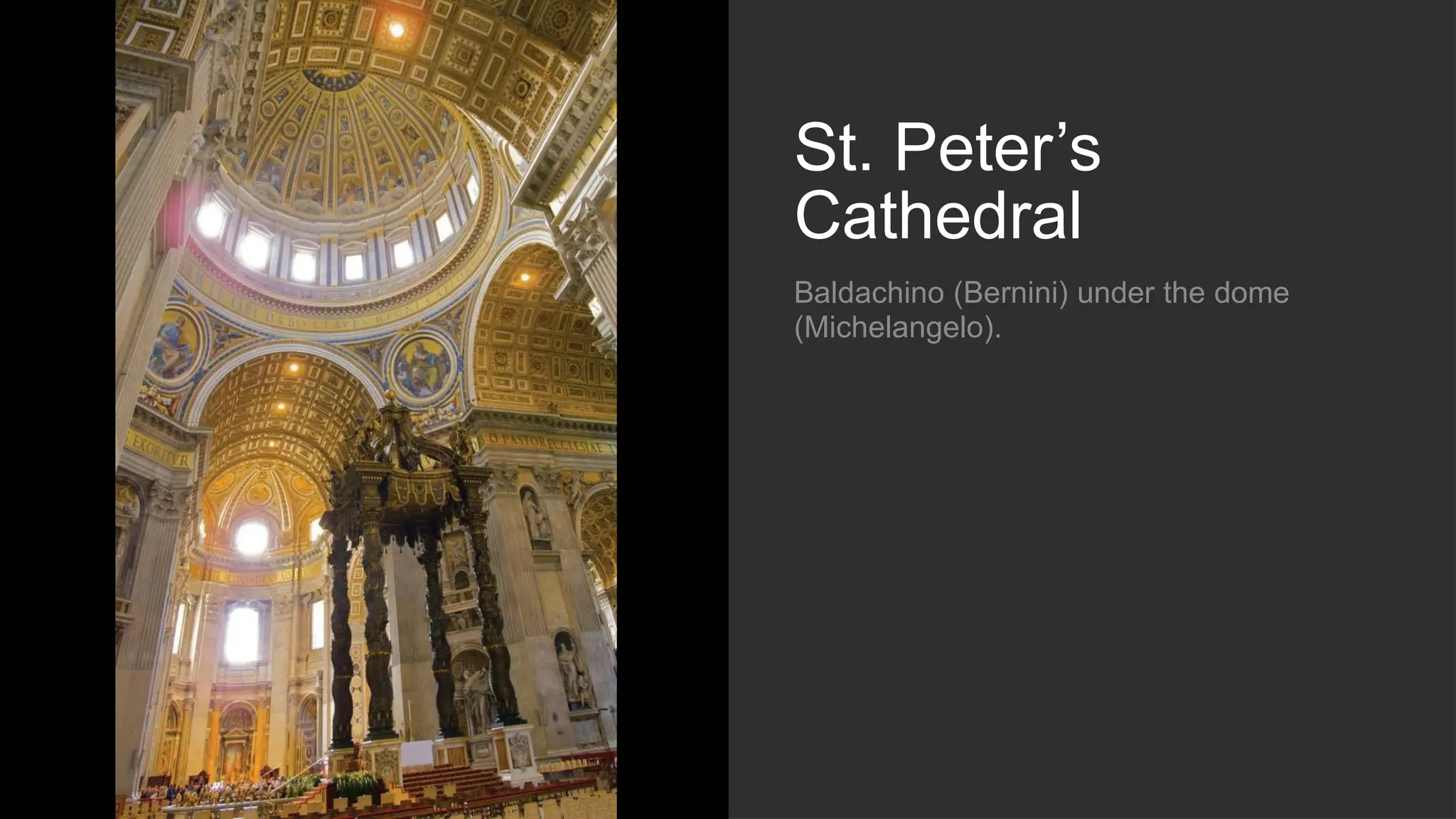
St. Peter’s Cathedral
▪Officially the Basilica di San Pietro in Vaticano;
▪ Architects increased the importance of the dome by
lifting it boldly from its substructure and placing it on a
"drum.“
111.
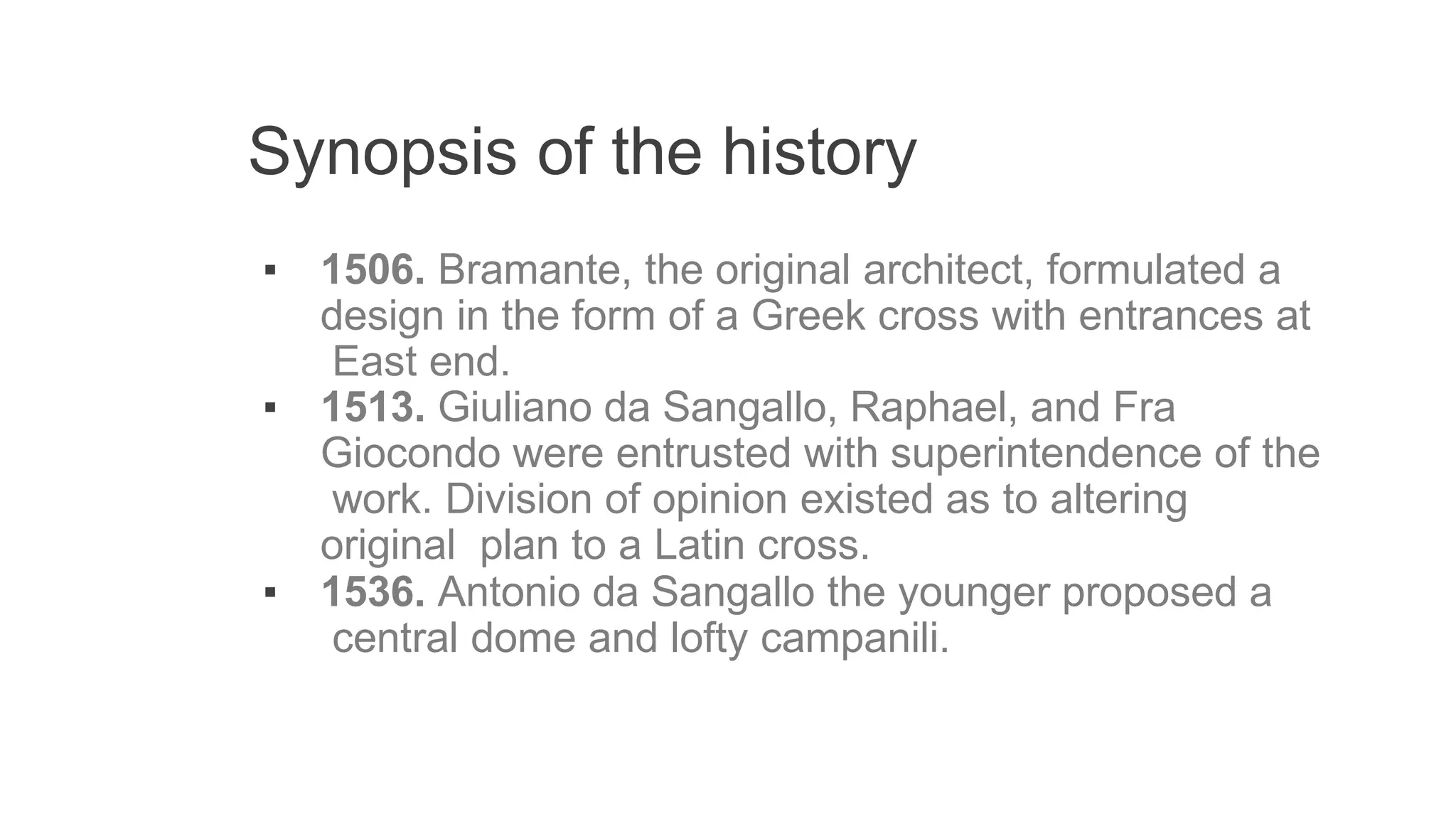
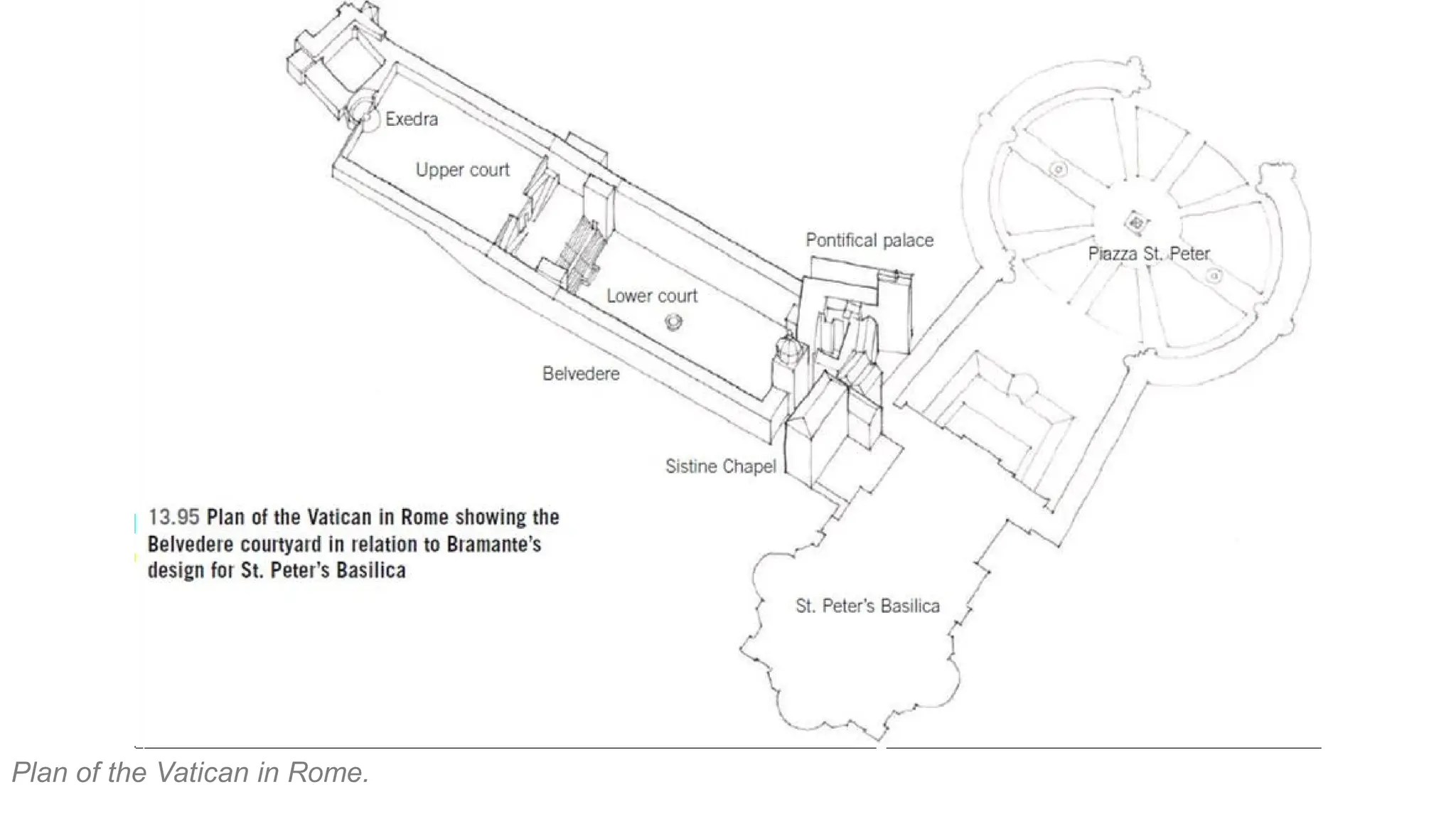
Synopsis of thehistory
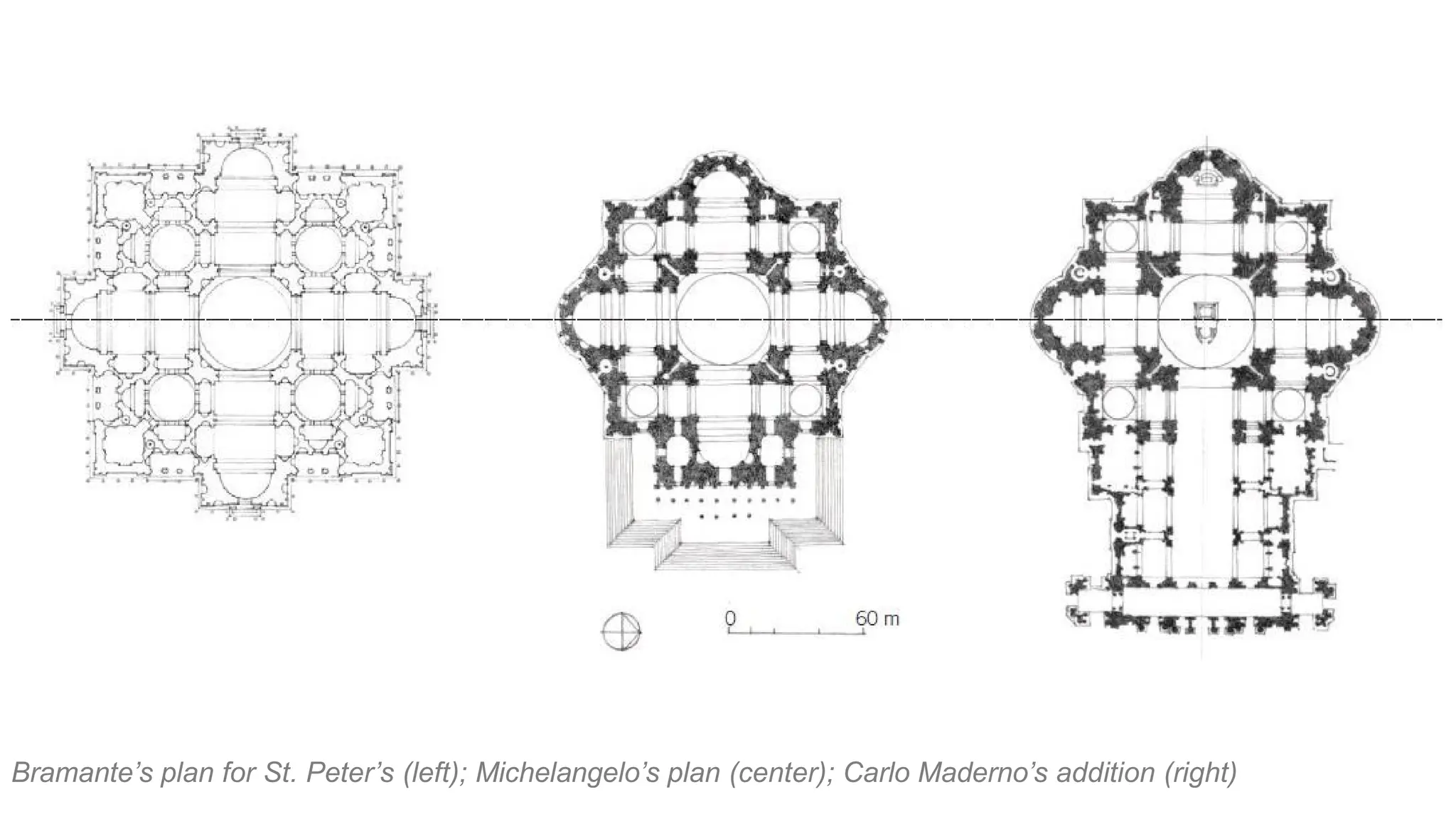
▪ 1506. Bramante, the original architect, formulated a
design in the form of a Greek cross with entrances at
East end.
▪ 1513. Giuliano da Sangallo, Raphael, and Fra
Giocondo were entrusted with superintendence of the
work. Division of opinion existed as to altering
original plan to a Latin cross.
▪ 1536. Antonio da Sangallo the younger proposed a
central dome and lofty campanili.
112.
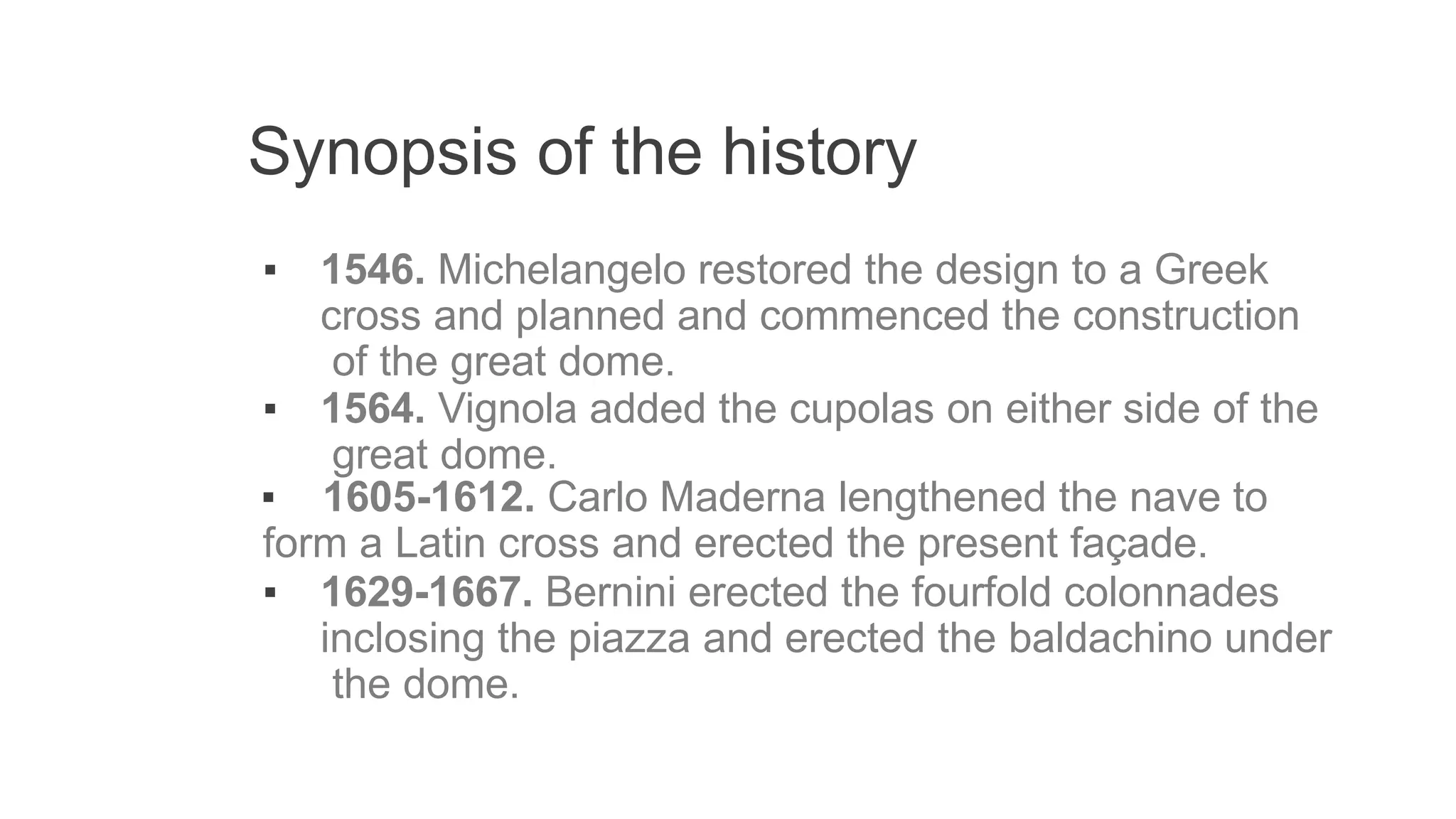
Synopsis of thehistory
▪ 1546. Michelangelo restored the design to a Greek
cross and planned and commenced the construction
of the great dome.
▪ 1564. Vignola added the cupolas on either side of the
great dome.
▪ 1605-1612. Carlo Maderna lengthened the nave to
form a Latin cross and erected the present façade.
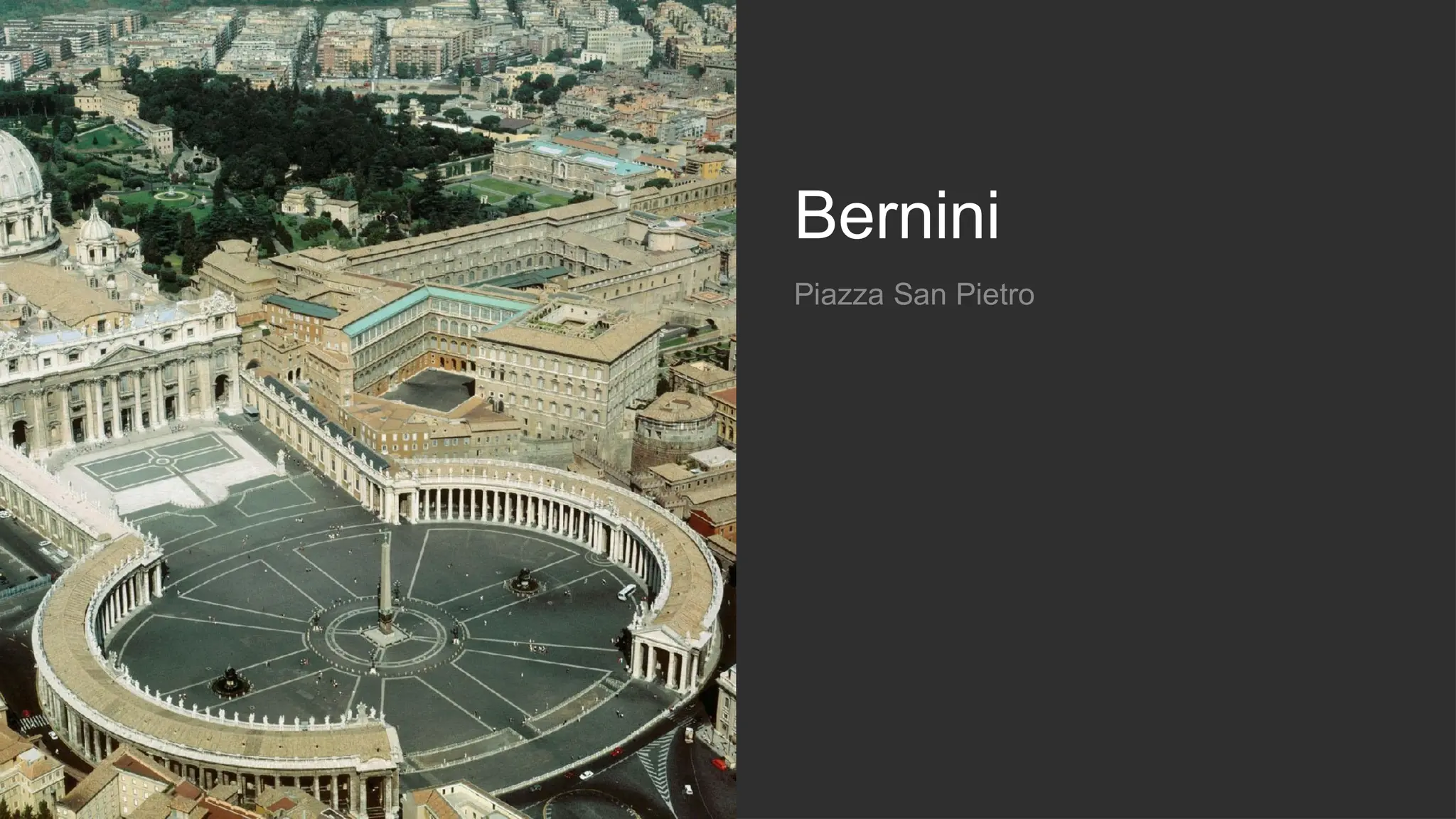
▪ 1629-1667. Bernini erected the fourfold colonnades
inclosing the piazza and erected the baldachino under
the dome.
113.
Bramante’s plan forSt. Peter’s (left); Michelangelo’s plan (center); Carlo Maderno’s addition (right)
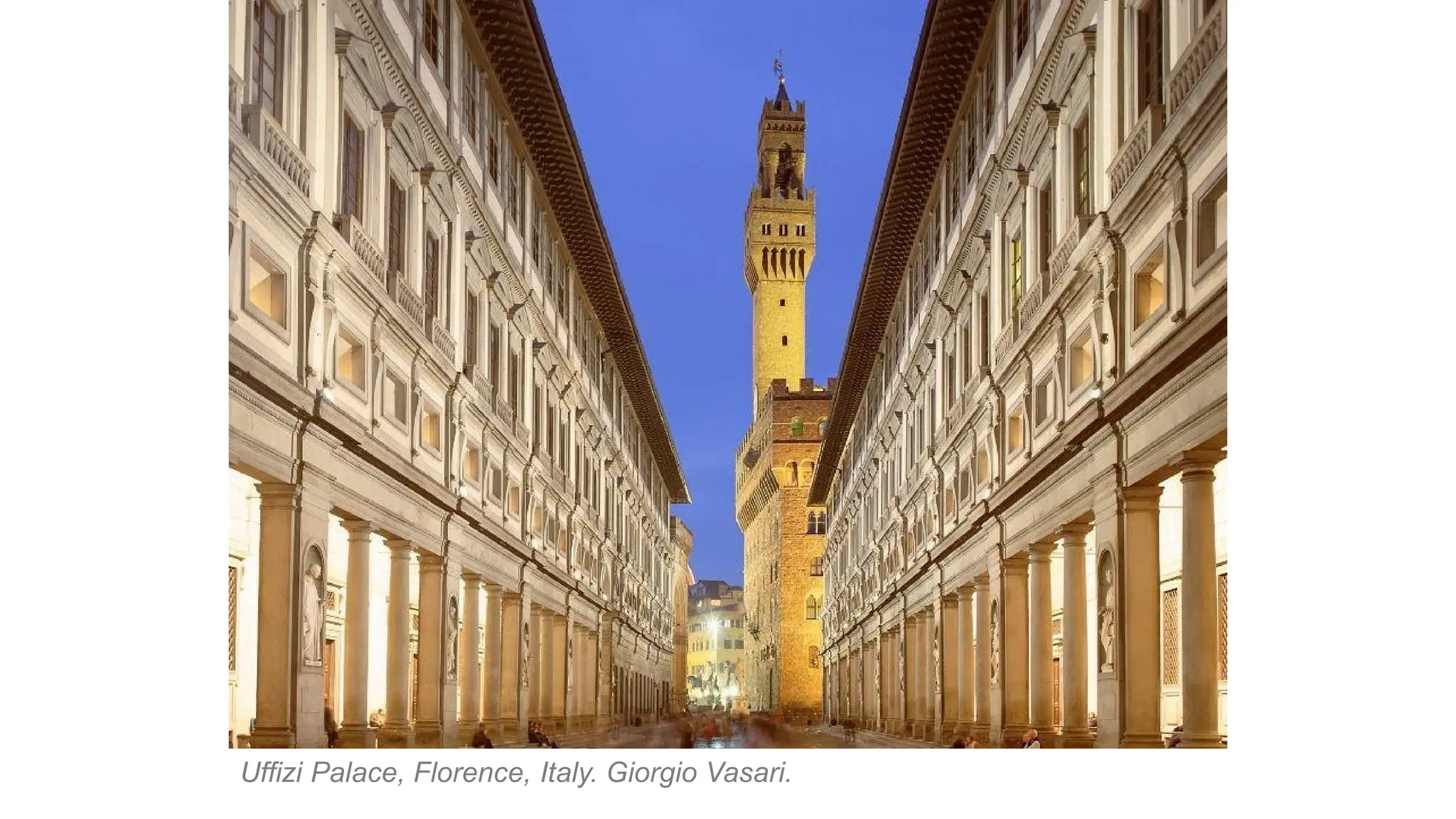
Mannerism
A reaction againstthe classical perfection of the High
Renaissance; it either responded with a rigorous
application of classical rules, or flaunted classical
convention, in terms of scale and shape.
Baroque
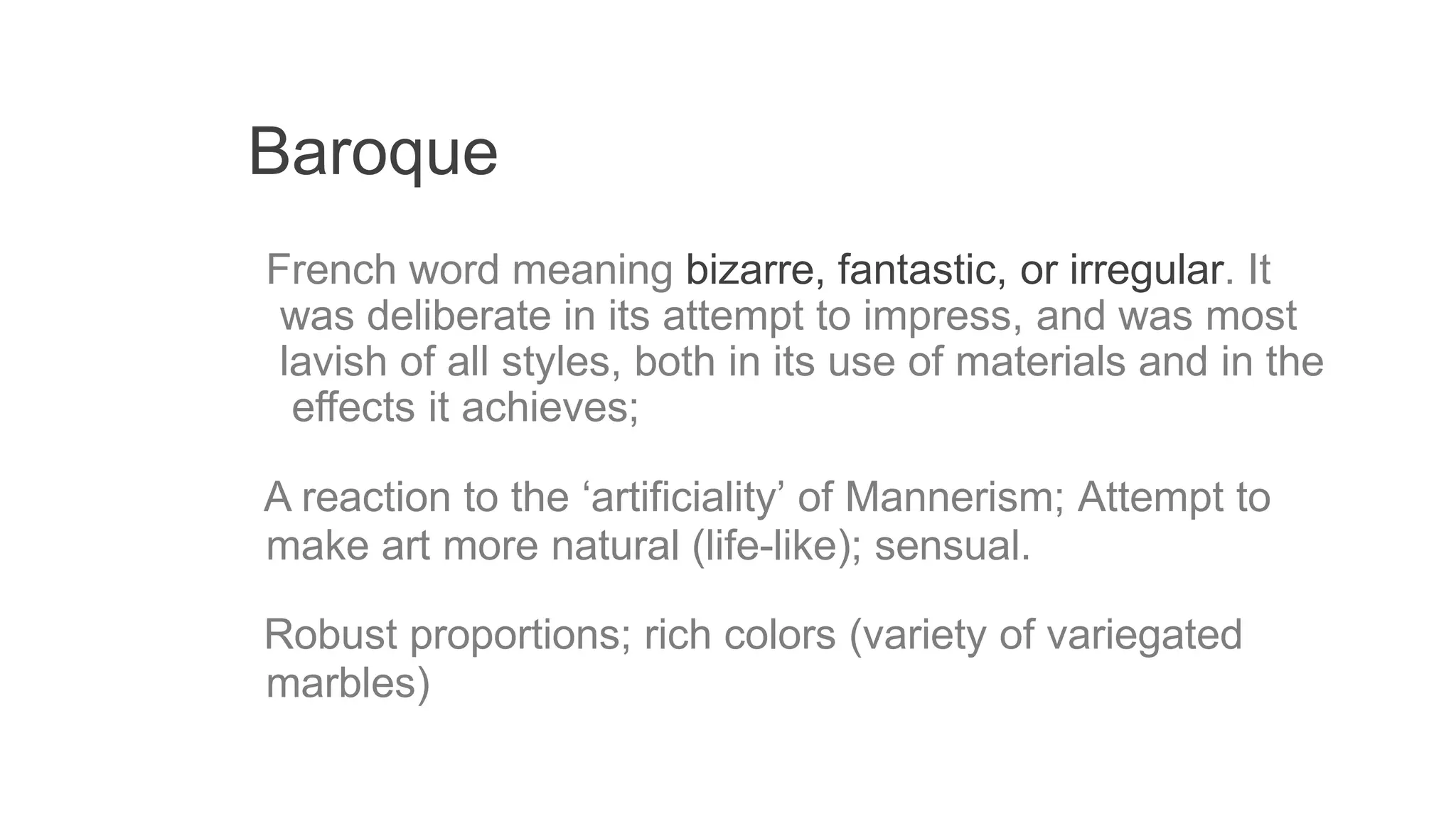
French word meaningbizarre, fantastic, or irregular. It
was deliberate in its attempt to impress, and was most
lavish of all styles, both in its use of materials and in the
effects it achieves;
A reaction to the ‘artificiality’ of Mannerism; Attempt to
make art more natural (life-like); sensual.
Robust proportions; rich colors (variety of variegated
marbles)
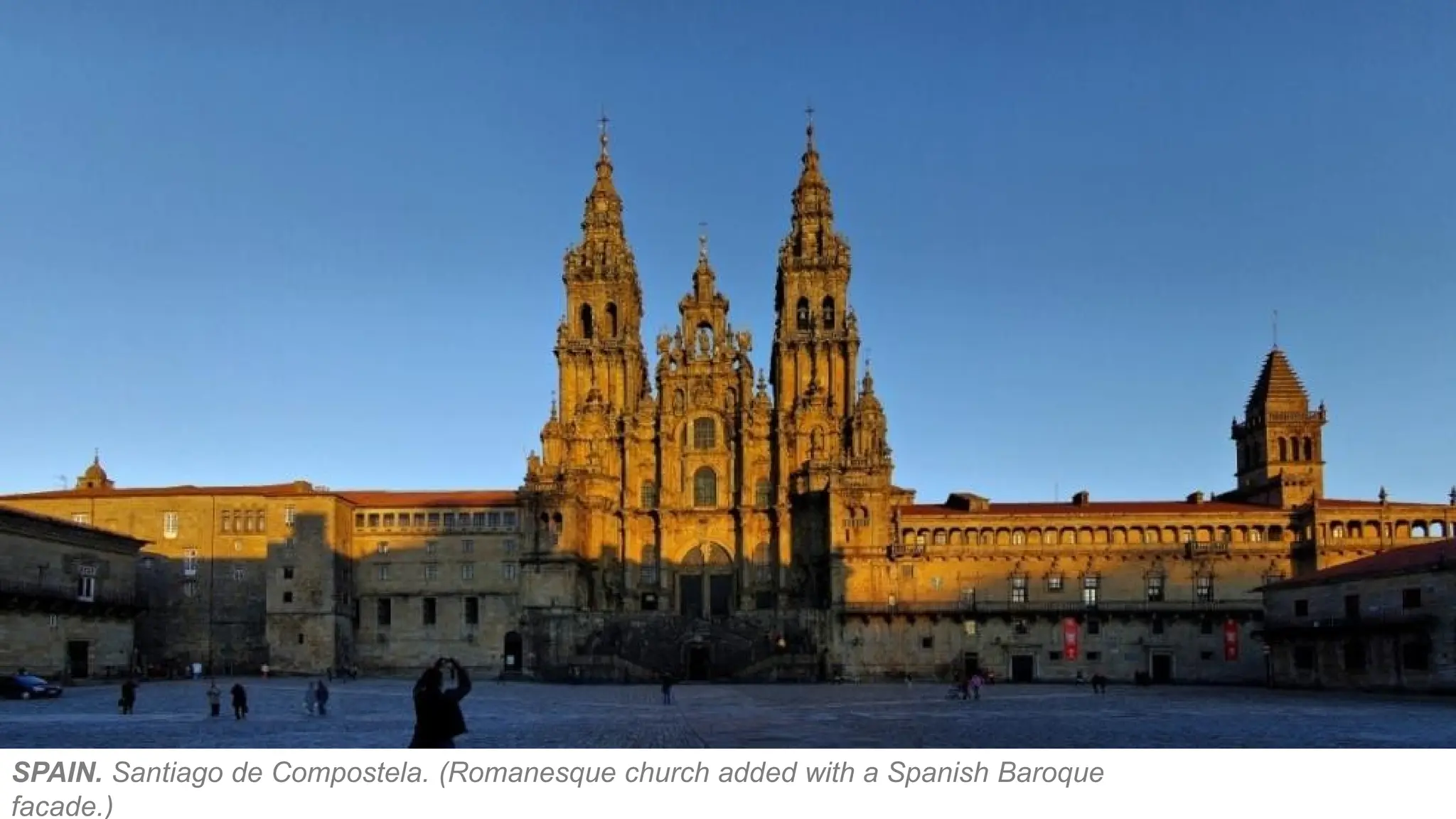
SPAIN. Santiago deCompostela. (Romanesque church added with a Spanish Baroque
facade.)
124.
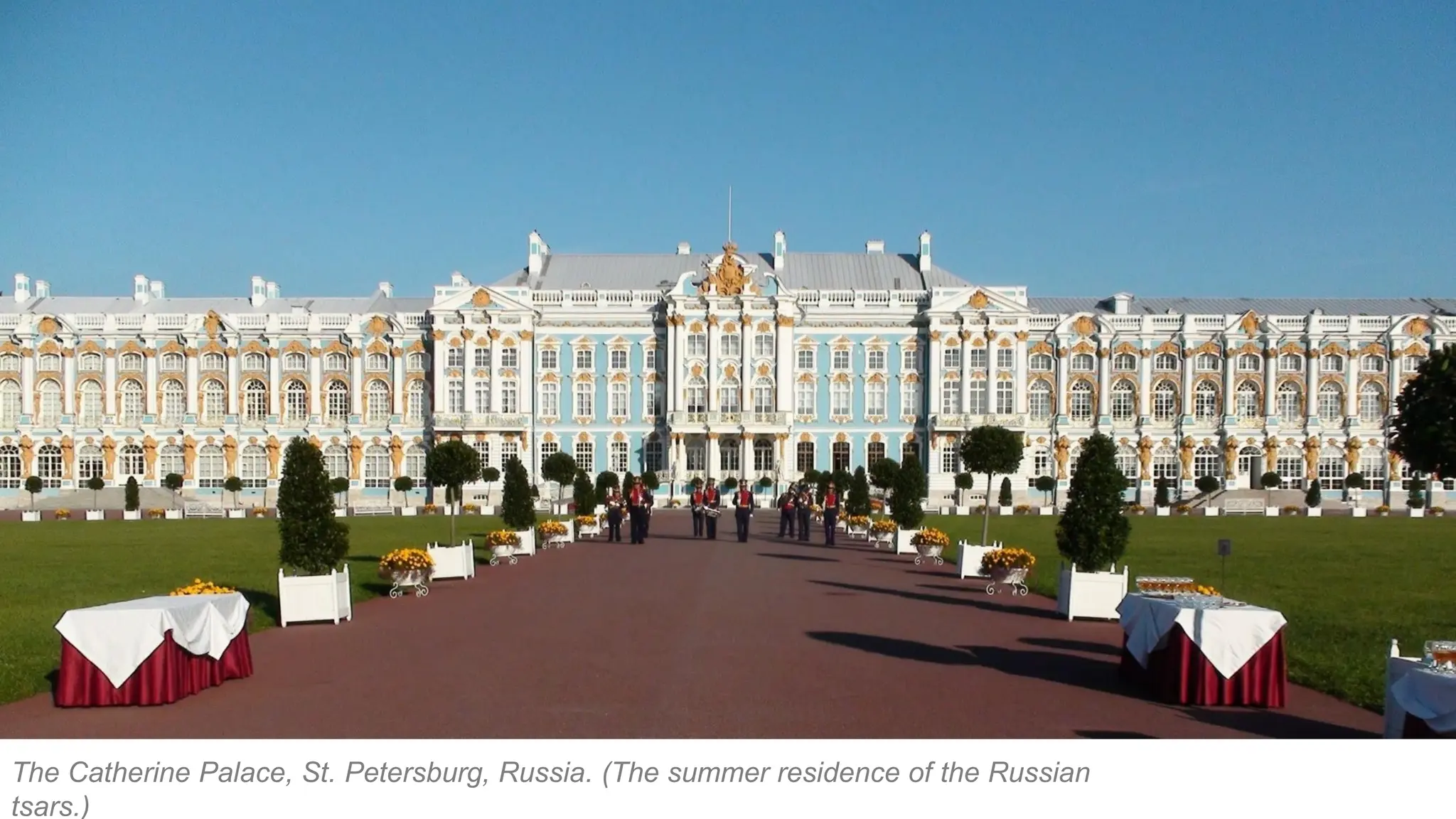
Rococo
Baroco; Final phaseof the Baroque; It was associated
with lightness, swirling forms, flowing lines, ornate
stucco work, and arabesque ornament.
Lighter proportions; lighter colors (white with gold
trim);