We are teachers.
We are talented teacher
We are creative teacher
We are fantastic teacher
We are the best teacher
the world.
Learning Styles and Teaching
The aim
to become aware of students’ learning styles
and learn how they are revealed
to practice some of the relevant activities
What is a learningstyle?
more or less consistent way
in which a person perceives,
conceptualizes, organizes
and recalls information.
Rod Ellis
Where dolearningstyles come from?
genetic make-up,
previous learning experiences,
culture and society
Whyshouldteachers knowabout
learningstyles ?
•Students learn better and more quickly if the teaching
methods used match their preferred learning styles.
•As learning improves, so too does self-esteem.
This has a further positive effect on learning.
•Students who have become bored with learning may
become interested again.
•The student-teacher relationship can improve because
the student is more successful and more interested in
learning.
What types of learning styles are there?
VAK
visual
auditory
kinesthetic
Visual Learners
Learn Best With:
• pictures
• illustrations
• photos
• graphs
• diagrams
• maps
Auditory Learners:
• Prefer to listen to instructions
• Often like to talk on the phone
or listen to music
• Learn best if they can hear and
see the assignment
Kinesthetic
/Tactile Learners:
• Learn the assignment best by using physical
activity
Activities bank
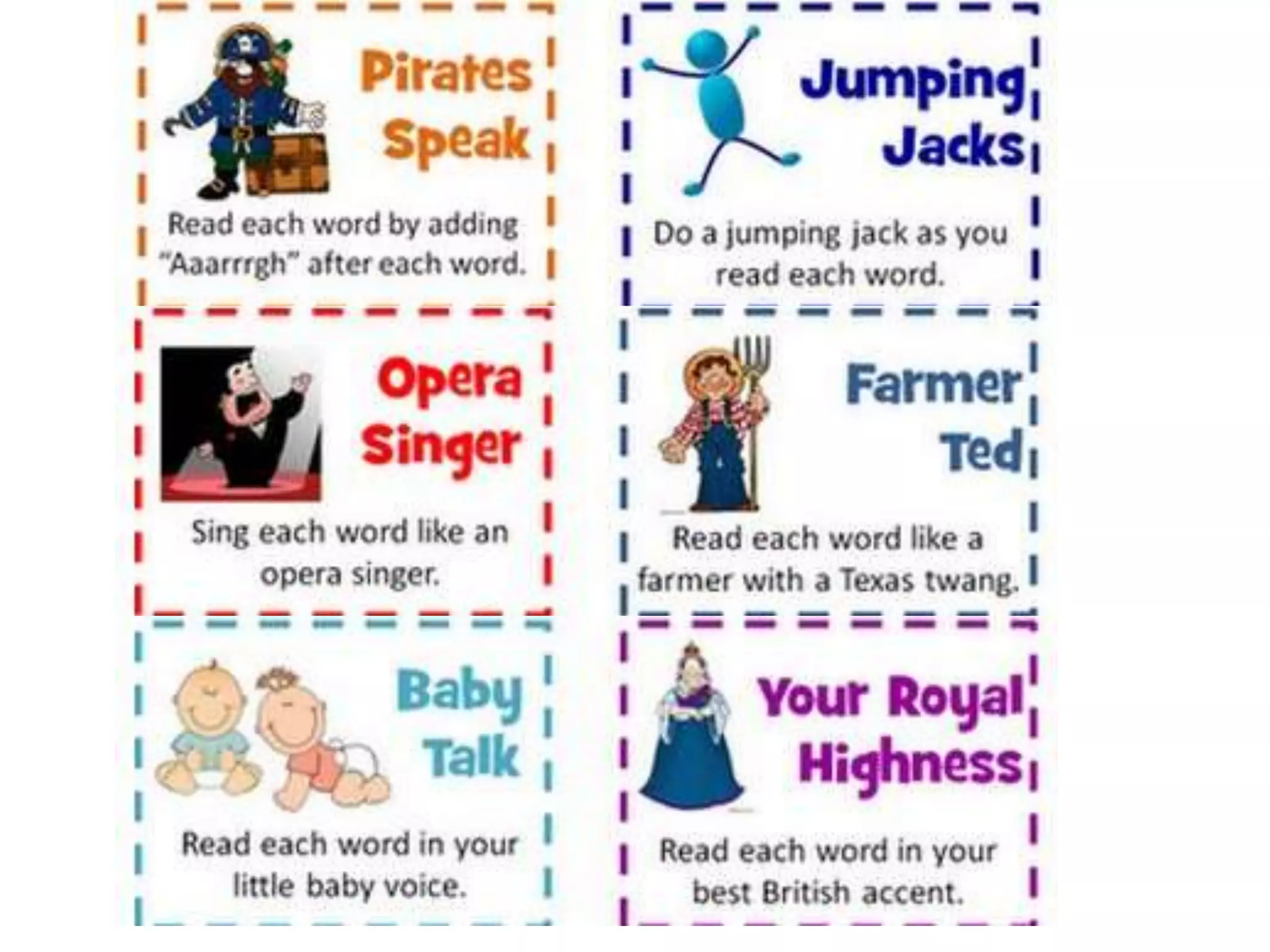
1.Warm-up.
Activity “Letter boat”
Activities bank
1.New vocabulary
presentation
Activities bank
3. Consolidation of new
vocabulary
Activity “Race”
Activities bank
4. Speaking.
Activity “Musical chairs”
Activities bank
TPR.
“Do the monkeys song”
Activities bank
5. Speaking/Listening.
Activity “Tiny Zoo”
Activities bank
6. Summary
Activity “Jeopardy
game”
Feedback
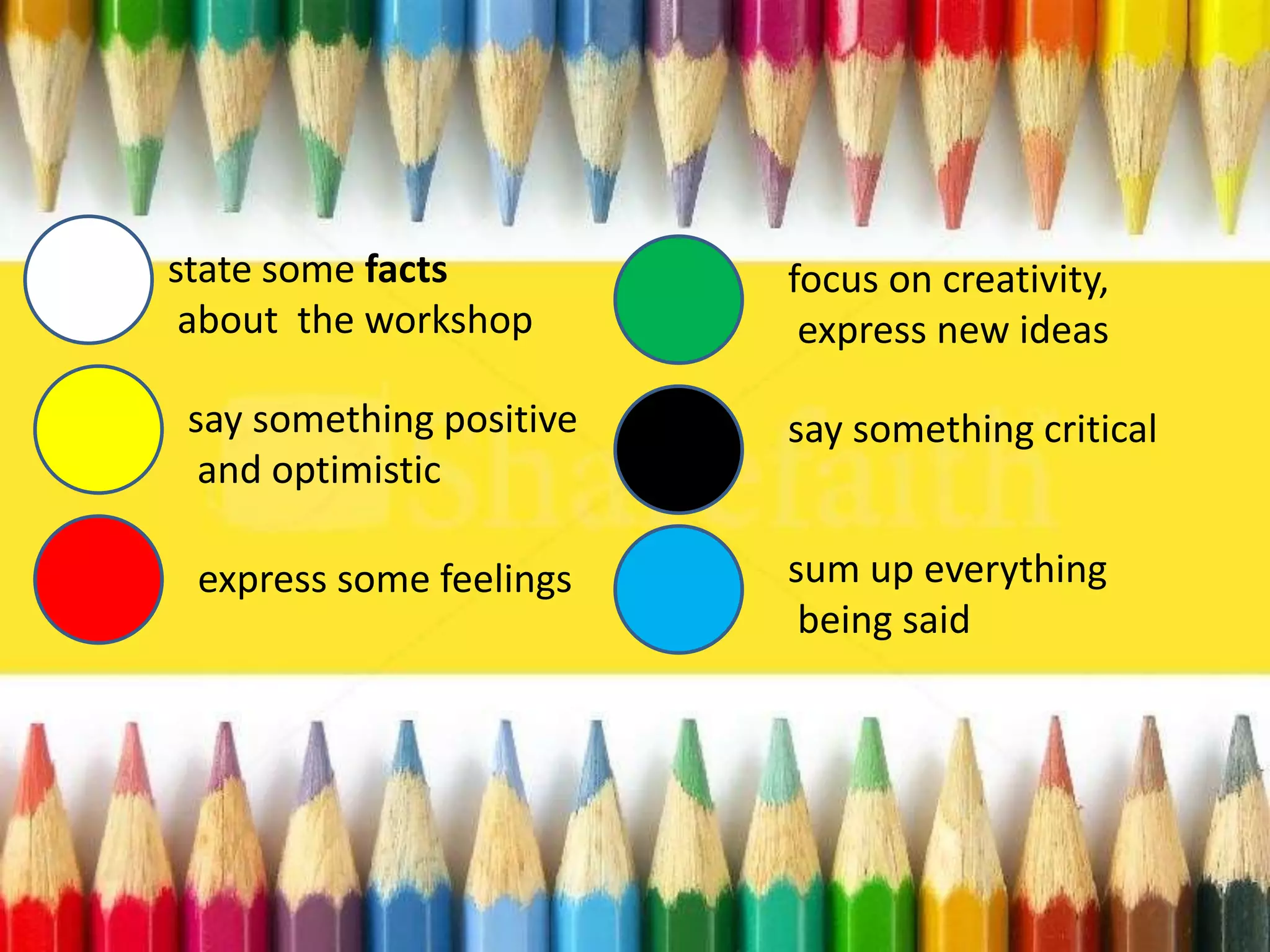
state some facts
about the workshop
say something positive
and optimistic
express some feelings
focus on creativity,
express new ideas
say something critical
sum up everything
being said
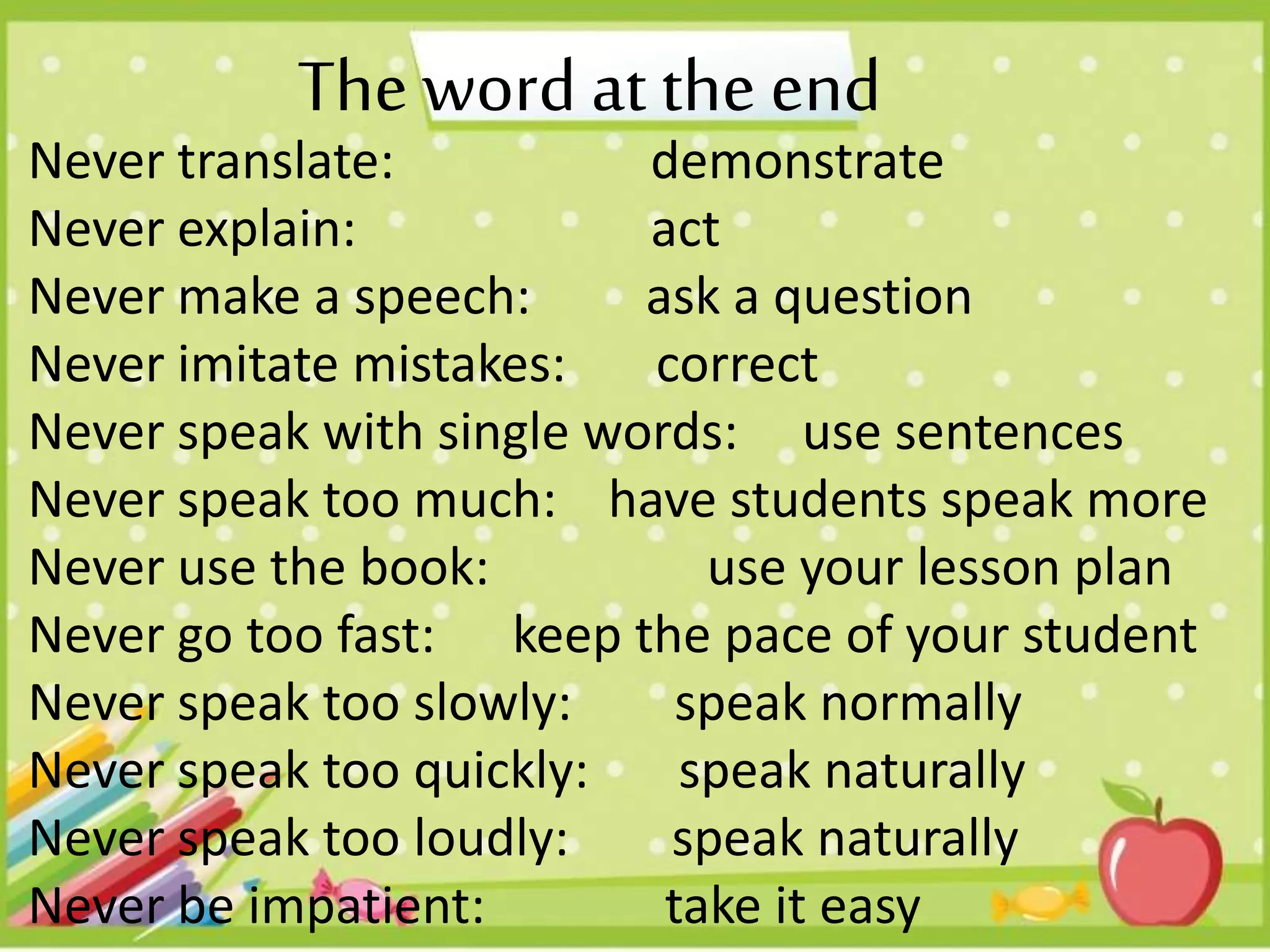
Never translate: demonstrate
Never explain: act
Never make a speech: ask a question
Never imitate mistakes: correct
Never speak with single words: use sentences
Never speak too much: have students speak more
Never use the book: use your lesson plan
Never go too fast: keep the pace of your student
Never speak too slowly: speak normally
Never speak too quickly: speak naturally
Never speak too loudly: speak naturally
Never be impatient: take it easy
The word at the end

майстер клас