•Everybody has a preferred learning style.

•Knowing and understanding our learning
 style helps us to learn more effectively.


   •Through identifying your learning
 style, you will be able to capitalize on
 your strengths and improve your skills.
Characteristics of a Visual Learner:

•Reader/observer

•Scans everything; wants to see
things, enjoys visual stimulation

•Enjoys maps, pictures, diagrams, and color

•Needs to see the teacher’s body
language/facial expression to fully
understand information
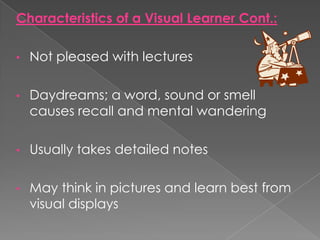
Characteristics of a Visual Learner Cont.:

•   Not pleased with lectures

•   Daydreams; a word, sound or smell
    causes recall and mental wandering

•   Usually takes detailed notes

•   May think in pictures and learn best from
    visual displays
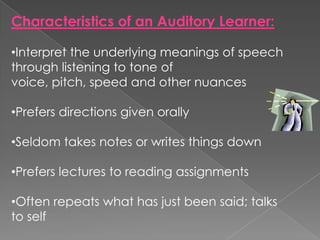
Characteristics of an Auditory Learner:

•Interpret the underlying meanings of speech
through listening to tone of
voice, pitch, speed and other nuances

•Prefers directions given orally

•Seldom takes notes or writes things down

•Prefers lectures to reading assignments

•Often repeats what has just been said; talks
to self
Characteristics of a Tactile/Kinesthetic Learner:

•The “Do-er”

•Needs to touch, handle, manipulate materials and
objects, especially while studying or listening

•Counts on fingers and talks with hands

•Good at drawing designs

•Often doodles while listening, thus processing
information
•   Good at sports, mechanics, using
    appliances and tools

•   Often adventurous

•   May find it hard to sit still for long periods
    of time

•   May become distracted by their need
    for activity and exploration
Make your Learning Style work for you!
Visual Learners:

•Have a clear view of your teachers when they
are speaking so you can see their body
language and facial expression

•Use color to highlight important points in text

•Illustrate your ideas as a picture and use mind
maps

•Use multi-media such as computers or videos
Visual Learners Cont.:

•   Study in a quiet place away from verbal disturbances

•   Visualize information as a picture to aid learning

•   Make charts, graphs and tables in your notes

•   Participate actively in class—this will keep you
    involved and alert

•   When memorizing material, write it over and over

•   Keep pencil and paper handy so you can write
    down good ideas
Auditory Learners:

•Think aloud and talk to yourself

•Participate in class discussions/debates

•Make speeches and presentations

•Read text out loud—especially when
proofreading or when tired

•Create musical jingles and mnemonics to aid
memorization
Auditory Learners Cont.:

•   Use a tape recorder

•   Discuss your ideas verbally with a friend or small
    group

•   Use verbal analogies

•   When doing math computations by hand, use graph
    paper to help you keep your columns aligned

•   Recite information over and over to better memorize
    material
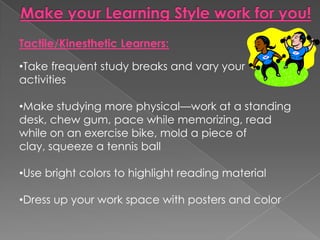
Tactile/Kinesthetic Learners:

•Take frequent study breaks and vary your
activities

•Make studying more physical—work at a standing
desk, chew gum, pace while memorizing, read
while on an exercise bike, mold a piece of
clay, squeeze a tennis ball

•Use bright colors to highlight reading material

•Dress up your work space with posters and color
Tactile/Kinesthetic Learners Cont.:

•   Play music in the background while you study

•   When reading, first skim through the whole
    thing to get a feel for what it’s about, then
    read the chapter carefully

•   Use spatial note taking techniques such as
    mind mapping

•   Visualize complex projects from start to finish
    before beginning—this will allow you to keep
    the big picture in mind

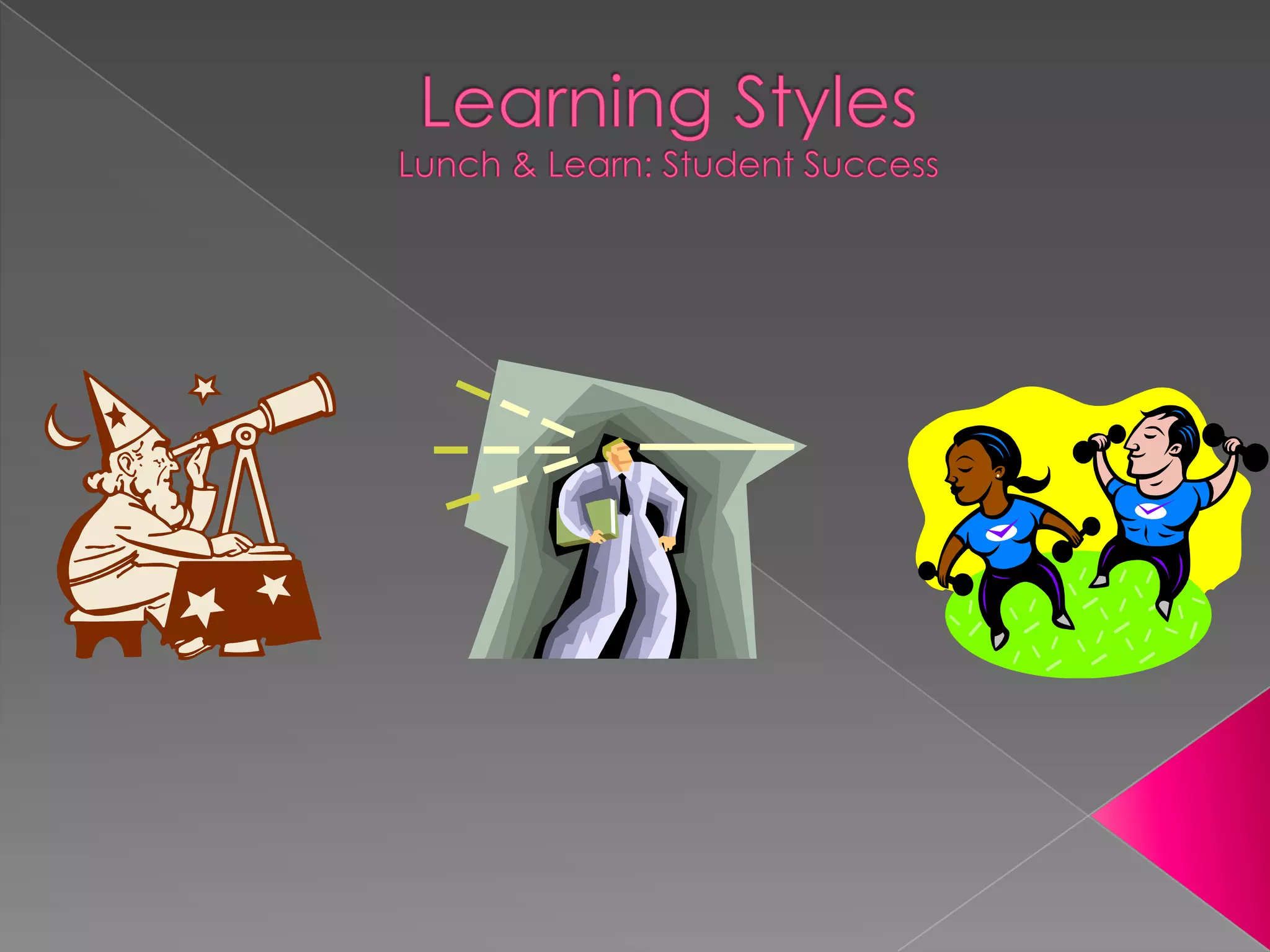
Learning Styles

  • 2.
    •Everybody has apreferred learning style. •Knowing and understanding our learning style helps us to learn more effectively. •Through identifying your learning style, you will be able to capitalize on your strengths and improve your skills.
  • 3.
    Characteristics of aVisual Learner: •Reader/observer •Scans everything; wants to see things, enjoys visual stimulation •Enjoys maps, pictures, diagrams, and color •Needs to see the teacher’s body language/facial expression to fully understand information
  • 4.
    Characteristics of aVisual Learner Cont.: • Not pleased with lectures • Daydreams; a word, sound or smell causes recall and mental wandering • Usually takes detailed notes • May think in pictures and learn best from visual displays
  • 5.
    Characteristics of anAuditory Learner: •Interpret the underlying meanings of speech through listening to tone of voice, pitch, speed and other nuances •Prefers directions given orally •Seldom takes notes or writes things down •Prefers lectures to reading assignments •Often repeats what has just been said; talks to self
  • 6.
    Characteristics of aTactile/Kinesthetic Learner: •The “Do-er” •Needs to touch, handle, manipulate materials and objects, especially while studying or listening •Counts on fingers and talks with hands •Good at drawing designs •Often doodles while listening, thus processing information
  • 7.
    Good at sports, mechanics, using appliances and tools • Often adventurous • May find it hard to sit still for long periods of time • May become distracted by their need for activity and exploration
  • 8.
    Make your LearningStyle work for you! Visual Learners: •Have a clear view of your teachers when they are speaking so you can see their body language and facial expression •Use color to highlight important points in text •Illustrate your ideas as a picture and use mind maps •Use multi-media such as computers or videos
  • 9.
    Visual Learners Cont.: • Study in a quiet place away from verbal disturbances • Visualize information as a picture to aid learning • Make charts, graphs and tables in your notes • Participate actively in class—this will keep you involved and alert • When memorizing material, write it over and over • Keep pencil and paper handy so you can write down good ideas
  • 10.
    Auditory Learners: •Think aloudand talk to yourself •Participate in class discussions/debates •Make speeches and presentations •Read text out loud—especially when proofreading or when tired •Create musical jingles and mnemonics to aid memorization
  • 11.
    Auditory Learners Cont.: • Use a tape recorder • Discuss your ideas verbally with a friend or small group • Use verbal analogies • When doing math computations by hand, use graph paper to help you keep your columns aligned • Recite information over and over to better memorize material
  • 12.
    Tactile/Kinesthetic Learners: •Take frequentstudy breaks and vary your activities •Make studying more physical—work at a standing desk, chew gum, pace while memorizing, read while on an exercise bike, mold a piece of clay, squeeze a tennis ball •Use bright colors to highlight reading material •Dress up your work space with posters and color
  • 13.
    Tactile/Kinesthetic Learners Cont.: • Play music in the background while you study • When reading, first skim through the whole thing to get a feel for what it’s about, then read the chapter carefully • Use spatial note taking techniques such as mind mapping • Visualize complex projects from start to finish before beginning—this will allow you to keep the big picture in mind