



Kinna P. Siarro, RN

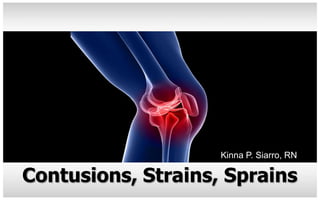
Contusions, Strains, Sprains
OVERVIEW
• Contusion
   – an injury to the soft tissue produced
     by a blunt force
   – blow, kick, or fall

• Strain
   – a microscopic tearing of the muscle
     caused by excessive force,
     stretching, or overuse
• Sprain
   – An injury to ligamentous structures
     surrounding a joint
   – Usually caused by a wrench or twist
     resulting in a decrease in joint
     stability
CLINICAL MANIFESTATIONS
Contusion
• Hemorrhage into injured part
  (ecchymosis)—from rupture of small
  blood vessels; also associated with
  fractures.
• Pain, swelling, and ecchymosis.
• Hyperkalemia may be present with
  extensive contusions, resulting in
  destruction of body tissue and loss of
  blood
Strain
•   Hemorrhage into the muscle.
•   Swelling.
•   Tenderness.
•   Pain with isometric contraction.
•   May be associated spasm.
Sprain
• Rapid swelling—due to extravasation of
  blood within tissues.
• Pain on passive movement of joint.
• Increasing pain during first few hours
  due to continued swelling.
MANAGEMENT
• X-ray may be done to rule out fracture.
• Immobilize in splint, elastic wrap, or
  compression dressing to support
  painful structures and control swelling.
• Apply ice while swelling is present.
• Analgesics usually include nonsteroidal
  anti-inflammatory drugs (NSAIDs).
• Severe sprains may require surgical
  repair or cast immobilization.
NURSING INTERVENTIONS
AND PATIENT EDUCATION
• Elevate the affected part to reduce
  swelling
• Maintain splint or immobilization as
  prescribed.
• Apply cold compresses for the first
  several days (15-20 min at a time every
  few hours)—to produce
  vasoconstriction, decrease edema, and
  reduce discomfort
• Do not apply ice directly to skin
• Ice may be needed for up to a week to
  control acute swelling
• Assess neurovascular status of
  contused extremity every 1 to 4 hours
  as patient's condition indicates
• Instruct patient on use of pain
  medication as prescribed
• Ensure correct use of crutches or other
  mobility aid with or without weight
  bearing, as prescribed.
• Educate on need to rest injured part for
  about a month to allow for healing.
• Teach patient to resume activities
  gradually.
• Teach patient to avoid excessive
  exercise of injured part.
• Teach patient to avoid reinjury by
  “warming up” before exercise and
  stretching tendons and muscles before
  and after exercise.
• Complementary methods, such as
  acupuncture, biofeedback, and
  imagery, may contribute to healing by
  reducing anxiety and pain.
NURSING ALERT
Teach patients to use PRICE at home for minor injuries:
 Protection—of the affected part from injury
 Rest—to promote healing
 Ice—to control swelling (do not use heat until acute
  swelling is relieved)
 Compression—with an elastic wrap or splint to control
  swelling and prevent stiffness, can be removed at
  night
 Elevation —above the level of the heart to reduce
  swelling
Contusions, strains and sprains

Contusions, strains and sprains

  • 1.
    Kinna P. Siarro,RN Contusions, Strains, Sprains
  • 2.
  • 3.
    • Contusion – an injury to the soft tissue produced by a blunt force – blow, kick, or fall • Strain – a microscopic tearing of the muscle caused by excessive force, stretching, or overuse
  • 4.
    • Sprain – An injury to ligamentous structures surrounding a joint – Usually caused by a wrench or twist resulting in a decrease in joint stability
  • 5.
  • 6.
    Contusion • Hemorrhage intoinjured part (ecchymosis)—from rupture of small blood vessels; also associated with fractures. • Pain, swelling, and ecchymosis. • Hyperkalemia may be present with extensive contusions, resulting in destruction of body tissue and loss of blood
  • 7.
    Strain • Hemorrhage into the muscle. • Swelling. • Tenderness. • Pain with isometric contraction. • May be associated spasm.
  • 8.
    Sprain • Rapid swelling—dueto extravasation of blood within tissues. • Pain on passive movement of joint. • Increasing pain during first few hours due to continued swelling.
  • 9.
  • 10.
    • X-ray maybe done to rule out fracture. • Immobilize in splint, elastic wrap, or compression dressing to support painful structures and control swelling. • Apply ice while swelling is present. • Analgesics usually include nonsteroidal anti-inflammatory drugs (NSAIDs). • Severe sprains may require surgical repair or cast immobilization.
  • 11.
  • 12.
    • Elevate theaffected part to reduce swelling • Maintain splint or immobilization as prescribed. • Apply cold compresses for the first several days (15-20 min at a time every few hours)—to produce vasoconstriction, decrease edema, and reduce discomfort • Do not apply ice directly to skin
  • 13.
    • Ice maybe needed for up to a week to control acute swelling • Assess neurovascular status of contused extremity every 1 to 4 hours as patient's condition indicates • Instruct patient on use of pain medication as prescribed • Ensure correct use of crutches or other mobility aid with or without weight bearing, as prescribed.
  • 14.
    • Educate onneed to rest injured part for about a month to allow for healing. • Teach patient to resume activities gradually. • Teach patient to avoid excessive exercise of injured part. • Teach patient to avoid reinjury by “warming up” before exercise and stretching tendons and muscles before and after exercise.
  • 15.
    • Complementary methods,such as acupuncture, biofeedback, and imagery, may contribute to healing by reducing anxiety and pain.
  • 16.
    NURSING ALERT Teach patientsto use PRICE at home for minor injuries:  Protection—of the affected part from injury  Rest—to promote healing  Ice—to control swelling (do not use heat until acute swelling is relieved)  Compression—with an elastic wrap or splint to control swelling and prevent stiffness, can be removed at night  Elevation —above the level of the heart to reduce swelling