SPRAIN AND STRAIN
INTRODUCTION
• A sprain is the abnormal strectching or tearing of a
ligament that supports a joint.
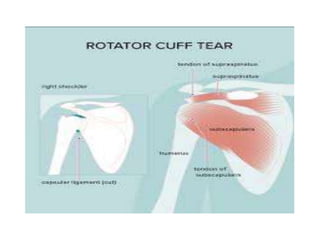
• A strain is the abnormal strectching or tearing of a
muscle or tendon
PATHO-PHYSIOLOGY
• Sprains and strains can be caused by repetitive
activities or
• by a single over use injury
EPIDEMIOLOGY
• Sprains and strains mostly occurs in athletes
• Common site of sprain injury includes;
• Ankle: An ankle sprain presents when the mechanism
of injury is a rapid rolling or twisting of the ankle and
turning it inward (inversion) so that the some of the
foot starts to point upwards (supination
• Knee : knee sprain affects the collateral and cruciate
ligaments
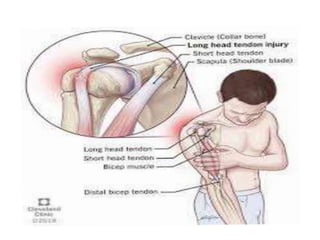
• For strain: quadriceps, hamstrings, Achilles tendon,
biceps muscle or tendon
SYMPTOMS OF SPRAIN AND
STRAIN
• Pain
• Swelling
• Bruises
• Spasm.
DIAGNOSIS OF A SPRAIN OF STRAIN
• A diagnosis can be made after the health care
professional takes a history of injury and performs
a physical examination
• X-rays and CT scan may be required depending on
the severity of the condition to confirm your
diagnosis
CLASSIFICATION OF SPRAIN
• The grading system for sprain injury is similar to
that of strains
• Grade 1: sprain occurs when fibres of the ligaments
are stretched and not torn
• Grade 2: ligaments are partially torn
• Grade 3: ligaments are completely torn or ruptured
PHYSIOTHERAPY MANAGEMENT OF
SPRAIN AND STRAIN
• The PRICE method is always applied immediately the injury
occurs to aid gaster healing
• The P: Protection
• R: rest
• I: Ice
• C: compression
• E: elevation
• Teaching and monitoring range of motion and strengthening
exercises allow recovery from thier injury in a controlled
way.
• Ultrasound, EMS, STM and massage.
OTHER MANAGEMENT OF SPTAIN
AND STRAIN
• These includes drug therapy like Anti- inflammatory
medications eg. Ibuprofen and naproxen to
decrease pain and inflammation of the injury.
• Surgery
PROGNOSIS
• A muscle strain may resolve with PRICE in one to
two days and a sprain two to four weeks.
• However, when the injury is garde 3, it requires
surgery and takes up to months of Physical therapy
to enable a resolution of the injury.
PREVENTION
• Sprain and strain are caused by accidents.
• People do not plan on becoming injured
• But there are some practices that help prevent
injuries
• Muscles need to be warmed up before exercise and
work
CONCLUSION
• Muscle strain and ligamentous sprain can acute or
chronic
• But means of treatment remains the same

SPRAIN AND STRA.pptx

  • 1.
  • 2.
    INTRODUCTION • A sprainis the abnormal strectching or tearing of a ligament that supports a joint. • A strain is the abnormal strectching or tearing of a muscle or tendon
  • 3.
    PATHO-PHYSIOLOGY • Sprains andstrains can be caused by repetitive activities or • by a single over use injury
  • 4.
    EPIDEMIOLOGY • Sprains andstrains mostly occurs in athletes • Common site of sprain injury includes; • Ankle: An ankle sprain presents when the mechanism of injury is a rapid rolling or twisting of the ankle and turning it inward (inversion) so that the some of the foot starts to point upwards (supination • Knee : knee sprain affects the collateral and cruciate ligaments • For strain: quadriceps, hamstrings, Achilles tendon, biceps muscle or tendon
  • 8.
    SYMPTOMS OF SPRAINAND STRAIN • Pain • Swelling • Bruises • Spasm.
  • 9.
    DIAGNOSIS OF ASPRAIN OF STRAIN • A diagnosis can be made after the health care professional takes a history of injury and performs a physical examination • X-rays and CT scan may be required depending on the severity of the condition to confirm your diagnosis
  • 10.
    CLASSIFICATION OF SPRAIN •The grading system for sprain injury is similar to that of strains • Grade 1: sprain occurs when fibres of the ligaments are stretched and not torn • Grade 2: ligaments are partially torn • Grade 3: ligaments are completely torn or ruptured
  • 11.
    PHYSIOTHERAPY MANAGEMENT OF SPRAINAND STRAIN • The PRICE method is always applied immediately the injury occurs to aid gaster healing • The P: Protection • R: rest • I: Ice • C: compression • E: elevation • Teaching and monitoring range of motion and strengthening exercises allow recovery from thier injury in a controlled way. • Ultrasound, EMS, STM and massage.
  • 12.
    OTHER MANAGEMENT OFSPTAIN AND STRAIN • These includes drug therapy like Anti- inflammatory medications eg. Ibuprofen and naproxen to decrease pain and inflammation of the injury. • Surgery
  • 13.
    PROGNOSIS • A musclestrain may resolve with PRICE in one to two days and a sprain two to four weeks. • However, when the injury is garde 3, it requires surgery and takes up to months of Physical therapy to enable a resolution of the injury.
  • 14.
    PREVENTION • Sprain andstrain are caused by accidents. • People do not plan on becoming injured • But there are some practices that help prevent injuries • Muscles need to be warmed up before exercise and work
  • 15.
    CONCLUSION • Muscle strainand ligamentous sprain can acute or chronic • But means of treatment remains the same