
The Spleen
HANU PRATAP
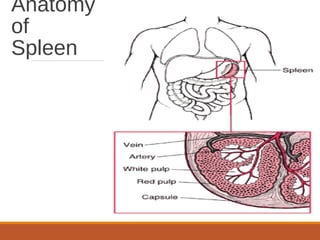
Anatomy
of
Spleen
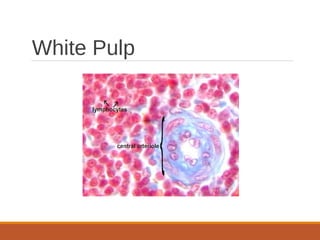
White Pulp
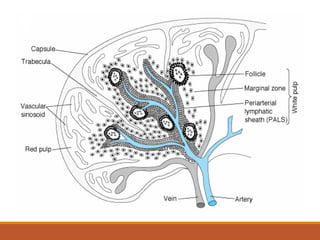
Spleen Structure
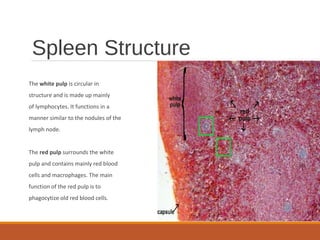
The white pulp is circular in
structure and is made up mainly
of lymphocytes. It functions in a
manner similar to the nodules of the
lymph node.
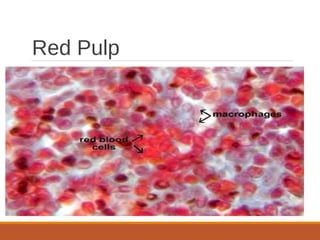
The red pulp surrounds the white
pulp and contains mainly red blood
cells and macrophages. The main
function of the red pulp is to
phagocytize old red blood cells.
Red Pulp
Function
The spleen is a sophisticated filter that monitors and manages
blood cells and immune functions
During fetal development the spleen produces red and white
blood cells
By the fifth month of gestation the spleen no longer has
hematopoietic function but retains the capacity throughout
life
Red cells that pass through the spleen undergo a “cleaning”
or repair
Abnormal and old cells are destroyed
Function
Reticulocytes loose their nuclear remnants and
excess membrane before entering the circulation
RBC’s coated with IgG and IgM are removed and
destroyed
◦The spleen is the site of destruction in autoimmune
disease states (ITTP and hemolytic anemia)
◦Parasites such as malaria can be removed as well
The spleen is involved in specific and nonspecific
immune responses (promotes phagocytosis and
destruction of bacteria)
Splenic Trauma
Diagnosis
◦Injury should be suspected in blunt upper abdominal injuries
( MVA and Bike)
◦Injuries are often associated with fractured ribs of the left
chest
◦Splenic injuries can cause extensive and continued
hemorrhage, others can cause subcapsular hematomas that
are subject to rupture at any time
◦If splenic injury is suspected, admission to the hospital for
monitoring is mandatory
◦The signs and symptoms of splenic trauma are those of
hemoperitoneum (generalized LUQ pain)
Treatment of Ruptured
Spleen
Splenic preservation operations
Partial splenectomy
Capsular repair
Non operative treatment
Delayed Rupture of the
Spleen
Injury to the pulp sometimes cannot be contained
indefinitely by the splenic capsule
The usual interval between injury and hemorrhage
is within two weeks (longer intervals have been
reported)
The incidence is between 15-30%
It is hoped that as imaging techniques improve the
incidence will decrease
Splenosis
Is the auto transplantation of splenic tissue after
splenic trauma
They vary from a few millimeters to several
centimeters in diameter
May occur anywhere in the peritoneal cavity
Seldom causes symptoms and is usually discovered
as an incidental finding at reoperation
Post splenectomy sepsis has renewed interest in
splenosis
Causes of splenomegaly
Infection
◦ Bacterial: Typhoid fever, endocarditis, septicemia, abscess
◦ Viral:E-B virus, CMV, and others
◦ Protozoal: Malaria, toxoplasmosis
Hematologic processes
◦ Hemolytic anemia: Congenital, acquired
◦ Extramedullary hematopoiesis: thalassemia, osteopetrosis, myelofibrosis
Neoplasms
◦ Malignant: Leukemia, lymphoma, histiocytoses, metastatic tumors
◦ Benign: Hemagioma, hamartoma
Metabolic diseases
◦ Lipidosis: Niemann-Pick, Gaucher disease
◦ Mucopolysaccharidosis infiltration: Histiocytosis
Congestion
Cirrhosis
Cysts
Miscellaneous
Hypersplenism
Refers to a variety of ill effects resulting from
increased splenic function that may be improved
by splenectomy
The criteria for diagnosis included:
◦Anemia, leukopenia, thrombocytopenia or a combination
of the three
◦Compensatory bone marrow hyperplasia
◦Splenomegaly
Hypersplenism can be categorized as primary or
secondary
Splenic Involvement in
Hodgkin’s lymphoma
The probability of splenic involvement increases with
increasing spleen size
The absence of splenomegaly does not exclude splenic
involvement
Upon gross examination of the spleen a grayish white
nodule ranging from several millimeters to several
centimeters is apparent with Hodgkin’s disease
Liver involvement with Hodgkin’s disease rarely occurs
in the absence of splenic disease
Felty’s Syndrome
Is a syndrome consisting of severe rheumatoid
arthritis, granulocytopenia and splenomegaly
It usually occurs in patients with a long history of
rheumatoid arthritis
Severe, persistent and recurrent infections are
characteristic
Moderate splenomegaly is common
Splenectomy is effective in most patients
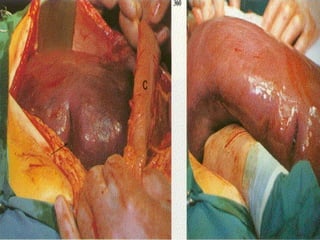
Gaucher’s Disease
Is a disorder of lipid metabolism that may result in
massive splenomegaly and hypersplenism
Commonly found in the Jewish population
Diagnosis is made by finding the typical Gaucher’s cells
in biopsy tissue
Massive splenomegaly is usually the most common
form of presentation
The adult form is the most common form
Splenomegaly (subtotal) shows great benefits
Cysts and Tumors of the
Spleen
The differential diagnosis of splenomegaly should
include splenic masses and primary tumors (these
conditions are rare however they must be
considered)
◦Cystic lesions comprise parasitic and nonparasitic cysts
◦Parasitic cysts are due almost exclusively to echinococcal disease
(rare in the United States)
◦Nonparasitic cysts are classified as primary (true) which have an
epithelial lining or pseudocysts (more common
◦Symptoms of splenic cysts are vague and are caused
primarily by mass effect (compression of adjacent
viscera)
Cysts and Tumors of the
Spleen
◦ Selected nonparasitic cyst may be managed by aspiration
◦ Splenectomy should be performed for all large cyst and those with an
uncertain diagnosis
◦ Malignant and benign primary tumors of the spleen are rare
◦ Most primary malignant tumors are angiosarcomas
Infectious Mononucleosis
A disease characterized by fever, sore throat,
lymphadenopathy and atypical lymphocytes
Most patients are young
Clinical symptoms are similar to those of a severe
upper respiratory tract infection
The spleen is enlarged and palpable in over 50% of
patients
Splenic rupture may occur
Incidental Splenectomy
The spleen is vulnerable to injury during operative procedures in the
upper abdomen
◦ When the splenic capsule is torn, splenectomy is frequently performed
◦ Morbidity and mortality is higher with iatrogenic injury requiring
splenectomy
Splenectomy
Prior to removing the spleen specific preoperative preparation is
necessary
◦ All patients should receive polyvalent pneumococcal vaccine, polyvalent
meningococcal vaccine and Haemophilus influenzae type b conjugant
vaccine
◦ Blood and blood products should be available well in advance of surgery
Postsplenectomy Sepsis
Asplenic patients have an increased susceptibility to
the development of overwhelming infection
The risk of sepsis is approximately 60 times greater
than normal after splenectomy
The risk is greatest in children younger than four years
of age
The risk of sepsis is higher among patients requiring
splenectomy for inherited diseases
The risk of sepsis after splenectomy is lowest after
trauma
Postsplenectomy Sepsis
The most common bacteria isolated our
streptococcus pneumoniae, Neisseria meningitidis,
E. coli or Haemophilus influenzae
Because half of the patients develop sepsis from
strep pneumoniae, penicillin can be administered
immediately with onset of a febrile URI
Patients are instructed to obtain and wear a Medic
alert tag
Hyposplenism
Is a potentially lethal syndrome characterized by diminished
splenic function
The patient peripheral blood smears appear as if they are
asplenic
Hyposplenism can occur in the presence of abnormal sized or
enlarged spleen
The danger of hyposplenism is the risk of developing potentially
lethal sepsis
Sickle cell anemia is the most common disease associated with
hyposplenism
The most common surgical disease associated with hyposplenism
is chronic UC
Hyposplenism
Overview
Definition of Hyposplenism
Medical History
The function of the spleen
Congenital asplenia vs. splenectomy
Immunological consequences of Hyposplenism
Diagnosis and complications
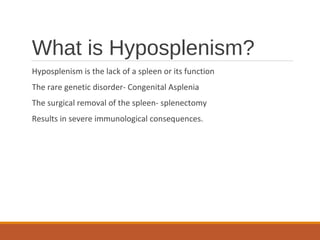
What is Hyposplenism?
Hyposplenism is the lack of a spleen or its function
The rare genetic disorder- Congenital Asplenia
The surgical removal of the spleen- splenectomy
Results in severe immunological consequences.
History
Immunological importance of the spleen
◦ Morris and Bullock-1919
First post-splenectomy infection
◦ O’Donnell-1929
Effects of Hyposplenism
◦ King and Shumacker-1952
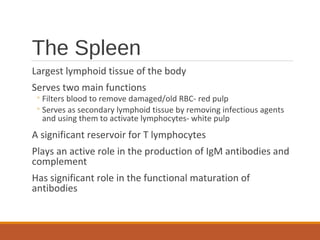
The Spleen
Largest lymphoid tissue of the body
Serves two main functions
◦Filters blood to remove damaged/old RBC- red pulp
◦Serves as secondary lymphoid tissue by removing infectious agents
and using them to activate lymphocytes- white pulp
A significant reservoir for T lymphocytes
Plays an active role in the production of IgM antibodies and
complement
Has significant role in the functional maturation of
antibodies
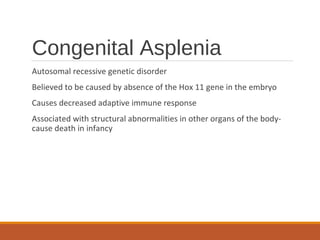
Congenital Asplenia
Autosomal recessive genetic disorder
Believed to be caused by absence of the Hox 11 gene in the embryo
Causes decreased adaptive immune response
Associated with structural abnormalities in other organs of the body-
cause death in infancy
Splenectomy
Removal of spleen tissue (partial or complete)
Usually needed because of trauma
Residual splenic function in ¼ to ⅔ of patients
IgM levels decreases, IgG levels remain constant or increase, IgA and
IgE levels increase
Immunological
Consequences
Causes slower and incomplete adaptive immune response
against bacteria
Low levels of tuftsin, which stimulates phagocytosis by
neutrophils, macrophages, and monocytes
Decreased neutrophil and macrophage activity
Increased NK cell activity
Limited capacity of circulating B-cells to differentiate into
antibody-secreting cells
Decreased level of T-cells
Diagnosis
Determined by anatomic presence or absence of
the organ, its size, and any lesions.
Function can be assessed by
◦Radiologic Techniques
◦X-ray, ultrasound, tomography, MRI, radionucleotide scanning
◦Morphologically
◦Peripheral blood smear- presence of Howell-Jolly bodies
Complications
Lifelong risk for Overwhelming Postsplenectomy infection
(OPSI)
◦Caused by Streptococcus pneumoniae and gram negative bacteria
◦Initial Symptoms: fever, chills, muscle aches, headache, vomiting,
diarrhea, and abdominal pain
◦Progressive symptoms: bacteremic septic shock, extremity gangrene,
convulsions, and coma
◦Mortality rate of 50-80%
◦ from onset of initial symptoms, 68% of those deaths occur within 24 hours
and 80% occur within 48 hours
◦Prevention: routine vaccinations and prophylactic antibiotics
Summary
Hyposplenism is the lack of a spleen or its function
Can be either genetic or surgically induced
It has detrimental effects on the immune system by
decreasing the body’s ability to fight bacterial
infections and reducing the adaptive immune
response
Infections in
Asplenic
Patients
Causes of Asplenia
Congenital
◦ Often associated with serious organ malformations
Acquired
◦ Post surgical removal
◦ Functional hyposplenism
Function of the Spleen
Immunological functions
◦ Main site of opsonic antibody production
◦ Especially efficient in removal of encapsulated bacteria
◦ Remaining RES may compensate but not in case of encapsulated bacteria
Filtration
◦ Removal of abnormal erythrocytes and intraerythrocytic inclusions eg nuclear inclusions and
parasitised RBC
Overwhelming Infection
Overall incidence of sepsis is low
◦ 3,2% in adults
◦ 3,3% in children
◦ Risk stratified according to cause, being highest in patients with
thalassaemia major and sickle-cell anaemia (J Infect 2001 Oct;43: 182-6)
◦ Lifetime risk for OPSI of 5%
Mortality
◦ Death rates 600 times greater than general population
◦ Higher in children (1,7% vs 1,3%), but other reports say higher in > 16
years
◦ Mandel say doesn’t correspond to indication but Bisharat et al suggest
higher in haematological disorders
Duration of risk
Most occur within 2 years post splenectomy
Risk is lifelong as cases have been reported up to 20 years post surgery
Early complications may be underreported as surgical complication
Microbiology
S. pneumonia
◦ 50 – 90% of cases
◦ Common in all age groups
◦ Distribution of serotypes seems to be same as other forms of pneumococcal infection
◦ 75% belonged to serotypes covered in 23 valent vaccine (ibid)
Micro cont…
H. influenza
◦ Regarded as 2nd
most common cause
◦ Incidence reduced with vaccination
◦ Non-typable strains do not seem to predominate in PSS
N. meningitidis
◦ Reported by some studies as associated but others as well as animal experiments seem to
support a lack of association
Other Micro-organisms
Listeria monocytogenes
E. coli
Klebsiella sp
Salmonella typhimurium
S. aureus
Cytocapnophagia canimorsus
Plesiomonas shigelloides
Recently occupational exposures have been
highlighted
Management
Immunisations
◦ Pneumococcal – 2 weeks prior to elective surgery otherwise when patient is recovered prior to
discharge. Boosters every 5-10 years
◦ H. influenza – recommended but evidence for immunogenicity and boosters lacking
◦ Meningococcal – not routinely recommended
◦ Influenza – may be of value especially in reducing risk of secondary bacterial infection
Mx continued…
Antibiotic prophylaxis
◦ Controversial
◦ Penicillin
◦ In all cases, esp in first 2 years post surgery
◦ All up to 16 and if underlying immune dysfunction
◦ May not prevent sepsis
◦ Local resistence patterns need to accounted for
◦ Home antibiotic supply
Cont………
Travellers
◦ MALARIA PROPHYLAXIS
◦ Meningococcal vaccine
◦ Antibiotic prophylaxis
Education
Medic alert bracelet etc.
THANK YOU

Spleen

  • 1.
  • 2.
  • 3.
  • 5.
    Spleen Structure The whitepulp is circular in structure and is made up mainly of lymphocytes. It functions in a manner similar to the nodules of the lymph node. The red pulp surrounds the white pulp and contains mainly red blood cells and macrophages. The main function of the red pulp is to phagocytize old red blood cells.
  • 6.
  • 7.
    Function The spleen isa sophisticated filter that monitors and manages blood cells and immune functions During fetal development the spleen produces red and white blood cells By the fifth month of gestation the spleen no longer has hematopoietic function but retains the capacity throughout life Red cells that pass through the spleen undergo a “cleaning” or repair Abnormal and old cells are destroyed
  • 8.
    Function Reticulocytes loose theirnuclear remnants and excess membrane before entering the circulation RBC’s coated with IgG and IgM are removed and destroyed ◦The spleen is the site of destruction in autoimmune disease states (ITTP and hemolytic anemia) ◦Parasites such as malaria can be removed as well The spleen is involved in specific and nonspecific immune responses (promotes phagocytosis and destruction of bacteria)
  • 9.
    Splenic Trauma Diagnosis ◦Injury shouldbe suspected in blunt upper abdominal injuries ( MVA and Bike) ◦Injuries are often associated with fractured ribs of the left chest ◦Splenic injuries can cause extensive and continued hemorrhage, others can cause subcapsular hematomas that are subject to rupture at any time ◦If splenic injury is suspected, admission to the hospital for monitoring is mandatory ◦The signs and symptoms of splenic trauma are those of hemoperitoneum (generalized LUQ pain)
  • 10.
    Treatment of Ruptured Spleen Splenicpreservation operations Partial splenectomy Capsular repair Non operative treatment
  • 11.
    Delayed Rupture ofthe Spleen Injury to the pulp sometimes cannot be contained indefinitely by the splenic capsule The usual interval between injury and hemorrhage is within two weeks (longer intervals have been reported) The incidence is between 15-30% It is hoped that as imaging techniques improve the incidence will decrease
  • 12.
    Splenosis Is the autotransplantation of splenic tissue after splenic trauma They vary from a few millimeters to several centimeters in diameter May occur anywhere in the peritoneal cavity Seldom causes symptoms and is usually discovered as an incidental finding at reoperation Post splenectomy sepsis has renewed interest in splenosis
  • 13.
    Causes of splenomegaly Infection ◦Bacterial: Typhoid fever, endocarditis, septicemia, abscess ◦ Viral:E-B virus, CMV, and others ◦ Protozoal: Malaria, toxoplasmosis Hematologic processes ◦ Hemolytic anemia: Congenital, acquired ◦ Extramedullary hematopoiesis: thalassemia, osteopetrosis, myelofibrosis Neoplasms ◦ Malignant: Leukemia, lymphoma, histiocytoses, metastatic tumors ◦ Benign: Hemagioma, hamartoma Metabolic diseases ◦ Lipidosis: Niemann-Pick, Gaucher disease ◦ Mucopolysaccharidosis infiltration: Histiocytosis Congestion Cirrhosis Cysts Miscellaneous
  • 14.
    Hypersplenism Refers to avariety of ill effects resulting from increased splenic function that may be improved by splenectomy The criteria for diagnosis included: ◦Anemia, leukopenia, thrombocytopenia or a combination of the three ◦Compensatory bone marrow hyperplasia ◦Splenomegaly Hypersplenism can be categorized as primary or secondary
  • 15.
    Splenic Involvement in Hodgkin’slymphoma The probability of splenic involvement increases with increasing spleen size The absence of splenomegaly does not exclude splenic involvement Upon gross examination of the spleen a grayish white nodule ranging from several millimeters to several centimeters is apparent with Hodgkin’s disease Liver involvement with Hodgkin’s disease rarely occurs in the absence of splenic disease
  • 16.
    Felty’s Syndrome Is asyndrome consisting of severe rheumatoid arthritis, granulocytopenia and splenomegaly It usually occurs in patients with a long history of rheumatoid arthritis Severe, persistent and recurrent infections are characteristic Moderate splenomegaly is common Splenectomy is effective in most patients
  • 17.
    Gaucher’s Disease Is adisorder of lipid metabolism that may result in massive splenomegaly and hypersplenism Commonly found in the Jewish population Diagnosis is made by finding the typical Gaucher’s cells in biopsy tissue Massive splenomegaly is usually the most common form of presentation The adult form is the most common form Splenomegaly (subtotal) shows great benefits
  • 19.
    Cysts and Tumorsof the Spleen The differential diagnosis of splenomegaly should include splenic masses and primary tumors (these conditions are rare however they must be considered) ◦Cystic lesions comprise parasitic and nonparasitic cysts ◦Parasitic cysts are due almost exclusively to echinococcal disease (rare in the United States) ◦Nonparasitic cysts are classified as primary (true) which have an epithelial lining or pseudocysts (more common ◦Symptoms of splenic cysts are vague and are caused primarily by mass effect (compression of adjacent viscera)
  • 20.
    Cysts and Tumorsof the Spleen ◦ Selected nonparasitic cyst may be managed by aspiration ◦ Splenectomy should be performed for all large cyst and those with an uncertain diagnosis ◦ Malignant and benign primary tumors of the spleen are rare ◦ Most primary malignant tumors are angiosarcomas
  • 21.
    Infectious Mononucleosis A diseasecharacterized by fever, sore throat, lymphadenopathy and atypical lymphocytes Most patients are young Clinical symptoms are similar to those of a severe upper respiratory tract infection The spleen is enlarged and palpable in over 50% of patients Splenic rupture may occur
  • 22.
    Incidental Splenectomy The spleenis vulnerable to injury during operative procedures in the upper abdomen ◦ When the splenic capsule is torn, splenectomy is frequently performed ◦ Morbidity and mortality is higher with iatrogenic injury requiring splenectomy
  • 23.
    Splenectomy Prior to removingthe spleen specific preoperative preparation is necessary ◦ All patients should receive polyvalent pneumococcal vaccine, polyvalent meningococcal vaccine and Haemophilus influenzae type b conjugant vaccine ◦ Blood and blood products should be available well in advance of surgery
  • 24.
    Postsplenectomy Sepsis Asplenic patientshave an increased susceptibility to the development of overwhelming infection The risk of sepsis is approximately 60 times greater than normal after splenectomy The risk is greatest in children younger than four years of age The risk of sepsis is higher among patients requiring splenectomy for inherited diseases The risk of sepsis after splenectomy is lowest after trauma
  • 25.
    Postsplenectomy Sepsis The mostcommon bacteria isolated our streptococcus pneumoniae, Neisseria meningitidis, E. coli or Haemophilus influenzae Because half of the patients develop sepsis from strep pneumoniae, penicillin can be administered immediately with onset of a febrile URI Patients are instructed to obtain and wear a Medic alert tag
  • 26.
    Hyposplenism Is a potentiallylethal syndrome characterized by diminished splenic function The patient peripheral blood smears appear as if they are asplenic Hyposplenism can occur in the presence of abnormal sized or enlarged spleen The danger of hyposplenism is the risk of developing potentially lethal sepsis Sickle cell anemia is the most common disease associated with hyposplenism The most common surgical disease associated with hyposplenism is chronic UC
  • 27.
  • 28.
    Overview Definition of Hyposplenism MedicalHistory The function of the spleen Congenital asplenia vs. splenectomy Immunological consequences of Hyposplenism Diagnosis and complications
  • 29.
    What is Hyposplenism? Hyposplenismis the lack of a spleen or its function The rare genetic disorder- Congenital Asplenia The surgical removal of the spleen- splenectomy Results in severe immunological consequences.
  • 30.
    History Immunological importance ofthe spleen ◦ Morris and Bullock-1919 First post-splenectomy infection ◦ O’Donnell-1929 Effects of Hyposplenism ◦ King and Shumacker-1952
  • 31.
    The Spleen Largest lymphoidtissue of the body Serves two main functions ◦Filters blood to remove damaged/old RBC- red pulp ◦Serves as secondary lymphoid tissue by removing infectious agents and using them to activate lymphocytes- white pulp A significant reservoir for T lymphocytes Plays an active role in the production of IgM antibodies and complement Has significant role in the functional maturation of antibodies
  • 32.
    Congenital Asplenia Autosomal recessivegenetic disorder Believed to be caused by absence of the Hox 11 gene in the embryo Causes decreased adaptive immune response Associated with structural abnormalities in other organs of the body- cause death in infancy
  • 33.
    Splenectomy Removal of spleentissue (partial or complete) Usually needed because of trauma Residual splenic function in ¼ to ⅔ of patients IgM levels decreases, IgG levels remain constant or increase, IgA and IgE levels increase
  • 34.
    Immunological Consequences Causes slower andincomplete adaptive immune response against bacteria Low levels of tuftsin, which stimulates phagocytosis by neutrophils, macrophages, and monocytes Decreased neutrophil and macrophage activity Increased NK cell activity Limited capacity of circulating B-cells to differentiate into antibody-secreting cells Decreased level of T-cells
  • 35.
    Diagnosis Determined by anatomicpresence or absence of the organ, its size, and any lesions. Function can be assessed by ◦Radiologic Techniques ◦X-ray, ultrasound, tomography, MRI, radionucleotide scanning ◦Morphologically ◦Peripheral blood smear- presence of Howell-Jolly bodies
  • 36.
    Complications Lifelong risk forOverwhelming Postsplenectomy infection (OPSI) ◦Caused by Streptococcus pneumoniae and gram negative bacteria ◦Initial Symptoms: fever, chills, muscle aches, headache, vomiting, diarrhea, and abdominal pain ◦Progressive symptoms: bacteremic septic shock, extremity gangrene, convulsions, and coma ◦Mortality rate of 50-80% ◦ from onset of initial symptoms, 68% of those deaths occur within 24 hours and 80% occur within 48 hours ◦Prevention: routine vaccinations and prophylactic antibiotics
  • 37.
    Summary Hyposplenism is thelack of a spleen or its function Can be either genetic or surgically induced It has detrimental effects on the immune system by decreasing the body’s ability to fight bacterial infections and reducing the adaptive immune response
  • 38.
  • 39.
    Causes of Asplenia Congenital ◦Often associated with serious organ malformations Acquired ◦ Post surgical removal ◦ Functional hyposplenism
  • 40.
    Function of theSpleen Immunological functions ◦ Main site of opsonic antibody production ◦ Especially efficient in removal of encapsulated bacteria ◦ Remaining RES may compensate but not in case of encapsulated bacteria Filtration ◦ Removal of abnormal erythrocytes and intraerythrocytic inclusions eg nuclear inclusions and parasitised RBC
  • 41.
    Overwhelming Infection Overall incidenceof sepsis is low ◦ 3,2% in adults ◦ 3,3% in children ◦ Risk stratified according to cause, being highest in patients with thalassaemia major and sickle-cell anaemia (J Infect 2001 Oct;43: 182-6) ◦ Lifetime risk for OPSI of 5% Mortality ◦ Death rates 600 times greater than general population ◦ Higher in children (1,7% vs 1,3%), but other reports say higher in > 16 years ◦ Mandel say doesn’t correspond to indication but Bisharat et al suggest higher in haematological disorders
  • 42.
    Duration of risk Mostoccur within 2 years post splenectomy Risk is lifelong as cases have been reported up to 20 years post surgery Early complications may be underreported as surgical complication
  • 43.
    Microbiology S. pneumonia ◦ 50– 90% of cases ◦ Common in all age groups ◦ Distribution of serotypes seems to be same as other forms of pneumococcal infection ◦ 75% belonged to serotypes covered in 23 valent vaccine (ibid)
  • 44.
    Micro cont… H. influenza ◦Regarded as 2nd most common cause ◦ Incidence reduced with vaccination ◦ Non-typable strains do not seem to predominate in PSS N. meningitidis ◦ Reported by some studies as associated but others as well as animal experiments seem to support a lack of association
  • 45.
    Other Micro-organisms Listeria monocytogenes E.coli Klebsiella sp Salmonella typhimurium S. aureus Cytocapnophagia canimorsus Plesiomonas shigelloides Recently occupational exposures have been highlighted
  • 46.
    Management Immunisations ◦ Pneumococcal –2 weeks prior to elective surgery otherwise when patient is recovered prior to discharge. Boosters every 5-10 years ◦ H. influenza – recommended but evidence for immunogenicity and boosters lacking ◦ Meningococcal – not routinely recommended ◦ Influenza – may be of value especially in reducing risk of secondary bacterial infection
  • 47.
    Mx continued… Antibiotic prophylaxis ◦Controversial ◦ Penicillin ◦ In all cases, esp in first 2 years post surgery ◦ All up to 16 and if underlying immune dysfunction ◦ May not prevent sepsis ◦ Local resistence patterns need to accounted for ◦ Home antibiotic supply
  • 48.
    Cont……… Travellers ◦ MALARIA PROPHYLAXIS ◦Meningococcal vaccine ◦ Antibiotic prophylaxis Education Medic alert bracelet etc.
  • 49.