Embryogenesis
M.PhooL Badshah
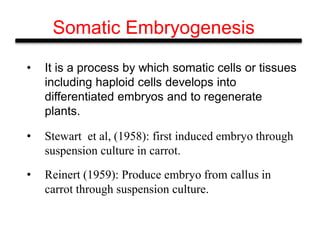
Somatic Embryogenesis
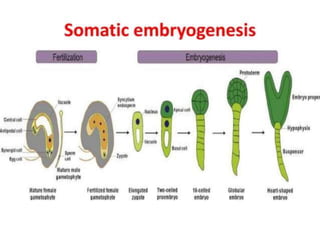
• It is a process by which somatic cells or tissues
including haploid cells develops into
differentiated embryos and to regenerate
plants.
• Stewart et al, (1958): first induced embryo through
suspension culture in carrot.
• Reinert (1959): Produce embryo from callus in
carrot through suspension culture.
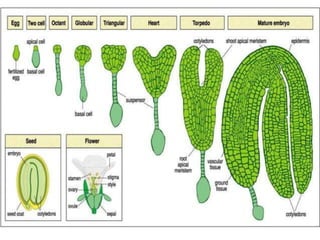
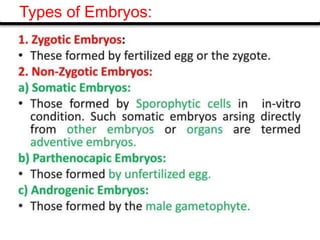
Types of Embryos:
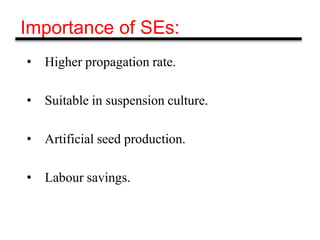
Importance of SEs:
• Higher propagation rate.
• Suitable in suspension culture.
• Artificial seed production.
• Labour savings.
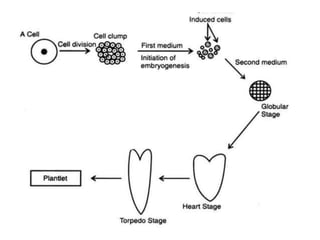
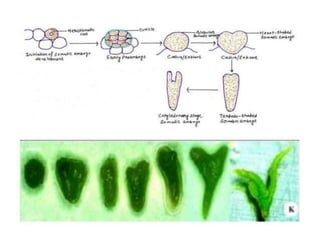
Stages of Somatic Embryogenesis:
• Various stages are involved:
 Callus initiation
 Embryo Development and Maturation
 Plantlet formation.
Types of Somatic Embryogenesis:
• Two types of Somatic Embryogenesis:
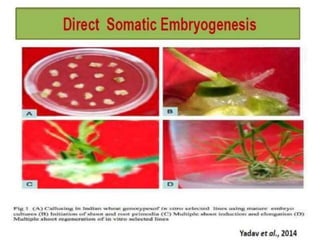
 Direct Somatic Embryogenesis:
The embryos initiate directly from explants in the
absence of callus formation. Embryos are formed
due to PEDCs(pre-embryogenic determined cells)
cells.
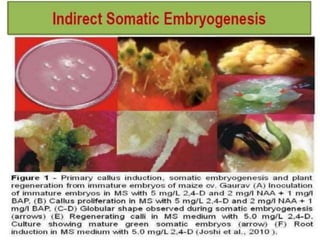
 Indirect Somatic Embryogenesis:
Callus from explants takes place from which
embryos are developed. Embryos are formed due to
IEDCs(induced embryogenic determined cells)
cells.
Advantages:
• It is observable as its various culture conditions can
be controlled.
• Lack of material is not a limiting factor for
experimentation.
• High propagation rate.
• Somaclonal variation.
• Germplasm Conservation.
• Labour saving
• Elimination of Diseases and Viruses.
Disadvantages:
• Confined to few species.
• The somatic embryos show very poor germination
because of their physiological and biochemical
immaturity.
• Instability of cultured cells in long term cultures is
a major limitation in commercial exploitation and
mass propagation of somatic embryogenesis.

7- Embryogenesis.pptx

  • 1.
  • 4.
    Somatic Embryogenesis • Itis a process by which somatic cells or tissues including haploid cells develops into differentiated embryos and to regenerate plants. • Stewart et al, (1958): first induced embryo through suspension culture in carrot. • Reinert (1959): Produce embryo from callus in carrot through suspension culture.
  • 5.
  • 7.
    Importance of SEs: •Higher propagation rate. • Suitable in suspension culture. • Artificial seed production. • Labour savings.
  • 8.
    Stages of SomaticEmbryogenesis: • Various stages are involved:  Callus initiation  Embryo Development and Maturation  Plantlet formation.
  • 10.
    Types of SomaticEmbryogenesis: • Two types of Somatic Embryogenesis:  Direct Somatic Embryogenesis: The embryos initiate directly from explants in the absence of callus formation. Embryos are formed due to PEDCs(pre-embryogenic determined cells) cells.  Indirect Somatic Embryogenesis: Callus from explants takes place from which embryos are developed. Embryos are formed due to IEDCs(induced embryogenic determined cells) cells.
  • 13.
    Advantages: • It isobservable as its various culture conditions can be controlled. • Lack of material is not a limiting factor for experimentation. • High propagation rate. • Somaclonal variation. • Germplasm Conservation. • Labour saving • Elimination of Diseases and Viruses.
  • 14.
    Disadvantages: • Confined tofew species. • The somatic embryos show very poor germination because of their physiological and biochemical immaturity. • Instability of cultured cells in long term cultures is a major limitation in commercial exploitation and mass propagation of somatic embryogenesis.