Solid fuel Combustion
By
Er. T. AYISHA NAZIBA, Dr. D. RAMESH, Dr. S. PUGALENDHI
Solidfuel
combustion
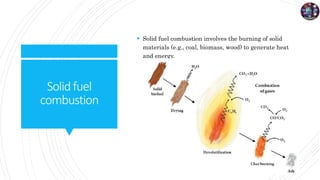
 Solid fuel combustion involves the burning of solid
materials (e.g., coal, biomass, wood) to generate heat
and energy.
Fixedbed
combustion
 Fixed bed combustion is a widely used method for burning
solid fuels like coal, biomass, and wood pellets.
 Solid fuel rests on a grate within a combustion chamber.
 Air is supplied from below the grate to support
combustion.
 Ash, the incombustible residue, falls through the grate
and is collected.
Advantages
 Simple design and operation
 Easy maintenance and fuel loading
 Ability to burn a variety of solid fuels
 Suitable for small- to medium-scale applications
Gratefurnaces
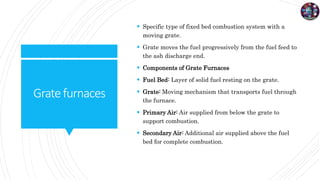
 Specific type of fixed bed combustion system with a
moving grate.
 Grate moves the fuel progressively from the fuel feed to
the ash discharge end.
 Components of Grate Furnaces
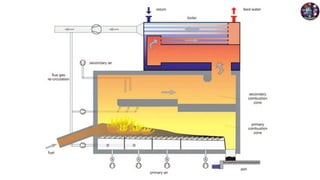
 Fuel Bed: Layer of solid fuel resting on the grate.
 Grate: Moving mechanism that transports fuel through
the furnace.
 Primary Air: Air supplied from below the grate to
support combustion.
 Secondary Air: Additional air supplied above the fuel
bed for complete combustion.
Underfeed
stokers
 Underfeed stokers provide a continuous feeding
mechanism for solid fuels.
 Solid fuel is fed from a hopper into a ram box located
beneath the grate.
 A ram mechanism pushes the fuel continuously onto the
grate from below.
 Airflow for combustion occurs from below the grate,
similar to fixed bed systems.
 Operation of Underfeed Stoker Feeders
 Fuel Feeding: Solid fuel is fed into the combustion
chamber from beneath the fuel bed.
 Combustion Zone: Heat from burning fuel initiates
combustion.
 Ash Removal: Ash is continuously removed from the
combustion zone.
Advantagesof
FixedBed
Combustionwith
GrateFurnaces
 Efficient combustion of solid fuels with controlled air
supply.
 Continuous and stable operation.
 Suitable for a wide range of solid fuels, including
biomass and coal.
 Effective ash removal minimizes maintenance
requirements.
Challengesand
Considerations
 Proper fuel sizing and preparation are essential for
efficient combustion.
 Air distribution must be optimized to ensure complete
combustion.
 Ash handling and disposal require attention to
maintain system performance.
Applicationsof
FixedBed
Combustion
Systems
 Industrial boilers and steam generators.
 Power generation plants.
 Heating systems for residential and commercial
buildings.
THANKYOU

Solid fuel Combustion - Fixed bed combustion

  • 1.
    Solid fuel Combustion By Er.T. AYISHA NAZIBA, Dr. D. RAMESH, Dr. S. PUGALENDHI
  • 2.
    Solidfuel combustion  Solid fuelcombustion involves the burning of solid materials (e.g., coal, biomass, wood) to generate heat and energy.
  • 3.
    Fixedbed combustion  Fixed bedcombustion is a widely used method for burning solid fuels like coal, biomass, and wood pellets.  Solid fuel rests on a grate within a combustion chamber.  Air is supplied from below the grate to support combustion.  Ash, the incombustible residue, falls through the grate and is collected.
  • 4.
    Advantages  Simple designand operation  Easy maintenance and fuel loading  Ability to burn a variety of solid fuels  Suitable for small- to medium-scale applications
  • 5.
    Gratefurnaces  Specific typeof fixed bed combustion system with a moving grate.  Grate moves the fuel progressively from the fuel feed to the ash discharge end.  Components of Grate Furnaces  Fuel Bed: Layer of solid fuel resting on the grate.  Grate: Moving mechanism that transports fuel through the furnace.  Primary Air: Air supplied from below the grate to support combustion.  Secondary Air: Additional air supplied above the fuel bed for complete combustion.
  • 7.
    Underfeed stokers  Underfeed stokersprovide a continuous feeding mechanism for solid fuels.  Solid fuel is fed from a hopper into a ram box located beneath the grate.  A ram mechanism pushes the fuel continuously onto the grate from below.  Airflow for combustion occurs from below the grate, similar to fixed bed systems.  Operation of Underfeed Stoker Feeders  Fuel Feeding: Solid fuel is fed into the combustion chamber from beneath the fuel bed.  Combustion Zone: Heat from burning fuel initiates combustion.  Ash Removal: Ash is continuously removed from the combustion zone.
  • 9.
    Advantagesof FixedBed Combustionwith GrateFurnaces  Efficient combustionof solid fuels with controlled air supply.  Continuous and stable operation.  Suitable for a wide range of solid fuels, including biomass and coal.  Effective ash removal minimizes maintenance requirements.
  • 10.
    Challengesand Considerations  Proper fuelsizing and preparation are essential for efficient combustion.  Air distribution must be optimized to ensure complete combustion.  Ash handling and disposal require attention to maintain system performance.
  • 11.
    Applicationsof FixedBed Combustion Systems  Industrial boilersand steam generators.  Power generation plants.  Heating systems for residential and commercial buildings.
  • 12.