Biomass Introduction The sources of Biomass. The uses of Biomass. The advantages and  disadvantages. Biomass in the future. Conclusion. Recommendations Reference Bibliography.
Introduction What is biomass?? The total mass of living matter within a given unit of environmental area.  Plant material, vegetation or agricultural waste used as a fuel or energy source.
 
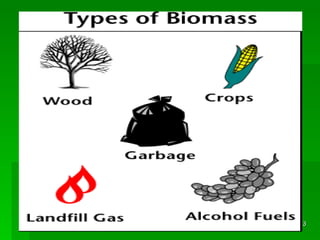
Biomass Resouces 1.Wood and agricultural biomass(wood logs, chips, sawdust, bark and other organic material. 2. Solid waste, by burning garbage heat and energy is produced. 3. Landfill gas, Methane gas is produced by the bacterial decay of dead plants and animals. 4. Alcohol fuels, Wheat, corn and other crops can be converted into a variety of liquid fuels including ethanol and methanol.  -
Converting biomass energy into a useable energy source 1.Direct incineration 2.Bacterial Decay. (methane gas produced  by the bacterial decay of dead plants or animals. 3. Fermentation, Adding a yeast to biomass produces an alcohol called ethanol.  4. Conversion, Biomass can be converted into  gas or liquid fuels by using chemicals or heat.
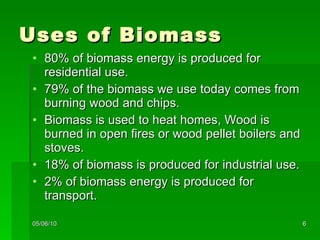
Uses of Biomass 80% of biomass energy is produced for residential use. 79% of the biomass we use today comes from burning wood and chips. Biomass is used to heat homes, Wood is burned in open fires or wood pellet boilers and stoves.  18% of biomass is produced for industrial use. 2% of biomass energy is produced for transport.
Advantages of Biomass The main Advantages of Biomass are: Biomass is a renewable fuel source. Biomass energy production results in minimal environmental impact. Employment generation in rural areas. Alcohol fuels are efficient and clean burning. The availability of biomass fuels is universal.
Disadvantages of Biomass When combusted to produce energy it contributes directly to global warming. An expensive source to produce and convert. On a small scale there is a likely net loss in energy; as energy must be put in to grow the plant mass.
The future of Biomass Infinite fossil fuel resources are depleting. Our dependency on oil must be reduced. Renewable forms of energy generation will be requireded to serve the global energy requirements. Ireland has a goal of 16%use of renewable energy by2020(3.9% in 2008) Today it accounts for 10% of the worlds energy consumption.
Conclusions Today we have looked at the varies different aspects of Biomass including: The sources. The conversion of biomass to useable energy sources. The uses of Biomass. The advantages and disadvantages The future of Biomass.
Recommendations Biomass offers a renewable solution to the fast approaching global energy crisis. Biomass is more eco friendly on the environment than most other energy generation methods. E.U.policy is setting onerous targets for renewable energy generation and biomass can be used to help meet these targets. Biomass will create much needed employment in this Irish recession economy.
Thank you for your time. Are there any questions?
Bibliography reference Introduction: http://lsa.colorado.edu/summarystreet/texts/biomass.htm Sources of biomass:  http://www.thefreedictionary.com/biomass Uses of biomass and image: biomass: http://www.greenfacts.org/en/biofuels/figtableboxes/figure-5.htm Advantages and disadvantages: http://library.thinkquest.org/20331/types/biomass/advant.html http://www.seai.ie/Renewables/

Biomass

  • 1.
    Biomass Introduction Thesources of Biomass. The uses of Biomass. The advantages and disadvantages. Biomass in the future. Conclusion. Recommendations Reference Bibliography.
  • 2.
    Introduction What isbiomass?? The total mass of living matter within a given unit of environmental area. Plant material, vegetation or agricultural waste used as a fuel or energy source.
  • 3.
  • 4.
    Biomass Resouces 1.Woodand agricultural biomass(wood logs, chips, sawdust, bark and other organic material. 2. Solid waste, by burning garbage heat and energy is produced. 3. Landfill gas, Methane gas is produced by the bacterial decay of dead plants and animals. 4. Alcohol fuels, Wheat, corn and other crops can be converted into a variety of liquid fuels including ethanol and methanol. -
  • 5.
    Converting biomass energyinto a useable energy source 1.Direct incineration 2.Bacterial Decay. (methane gas produced by the bacterial decay of dead plants or animals. 3. Fermentation, Adding a yeast to biomass produces an alcohol called ethanol. 4. Conversion, Biomass can be converted into gas or liquid fuels by using chemicals or heat.
  • 6.
    Uses of Biomass80% of biomass energy is produced for residential use. 79% of the biomass we use today comes from burning wood and chips. Biomass is used to heat homes, Wood is burned in open fires or wood pellet boilers and stoves. 18% of biomass is produced for industrial use. 2% of biomass energy is produced for transport.
  • 7.
    Advantages of BiomassThe main Advantages of Biomass are: Biomass is a renewable fuel source. Biomass energy production results in minimal environmental impact. Employment generation in rural areas. Alcohol fuels are efficient and clean burning. The availability of biomass fuels is universal.
  • 8.
    Disadvantages of BiomassWhen combusted to produce energy it contributes directly to global warming. An expensive source to produce and convert. On a small scale there is a likely net loss in energy; as energy must be put in to grow the plant mass.
  • 9.
    The future ofBiomass Infinite fossil fuel resources are depleting. Our dependency on oil must be reduced. Renewable forms of energy generation will be requireded to serve the global energy requirements. Ireland has a goal of 16%use of renewable energy by2020(3.9% in 2008) Today it accounts for 10% of the worlds energy consumption.
  • 10.
    Conclusions Today wehave looked at the varies different aspects of Biomass including: The sources. The conversion of biomass to useable energy sources. The uses of Biomass. The advantages and disadvantages The future of Biomass.
  • 11.
    Recommendations Biomass offersa renewable solution to the fast approaching global energy crisis. Biomass is more eco friendly on the environment than most other energy generation methods. E.U.policy is setting onerous targets for renewable energy generation and biomass can be used to help meet these targets. Biomass will create much needed employment in this Irish recession economy.
  • 12.
    Thank you foryour time. Are there any questions?
  • 13.
    Bibliography reference Introduction:http://lsa.colorado.edu/summarystreet/texts/biomass.htm Sources of biomass: http://www.thefreedictionary.com/biomass Uses of biomass and image: biomass: http://www.greenfacts.org/en/biofuels/figtableboxes/figure-5.htm Advantages and disadvantages: http://library.thinkquest.org/20331/types/biomass/advant.html http://www.seai.ie/Renewables/