Sodium hydroxide
Sodium hydroxide:
Manufacture: (Kellner Solvay cell)
Sodium hydroxide is manufactured by Kellner Solvay cell as follows:
Principle: Brine(sodium chloride solution) is electrolysed between a pool of
mercury acting as cathode and graphite rod as anode. When a electric
current is passed, sodium ions are discharged at mercury cathode and forms
amalgam. At anode, chloride ions discharged which escape out as chlorine
gas.
NaCl → Na+ + Cl-
At cathode: Na+ + e- → Na
Na + Hg → Na.Hg
At anode: 2Cl- - 2e- → 2Cl
Cl + Cl → Cl2
The sodium amalgam formed at the cathode is treated with water
whereby sodium hydroxide is formed and mercury is regenerated.
2Na.Hg + 2H2O → 2Hg + 2NaOH + H2
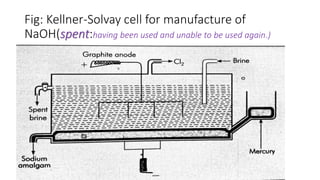
Process: The Kellner Solvay consists of two big tanks interconnected,
one is called the electrolyser and the other one is decomposer. The
electrolyser consists of a number of graphite anode and flowing
mercury cathode.
………………………….figure
Fig: Kellner-Solvay cell for manufacture of
NaOH(spent:having been used and unable to be used again.)
When electricity is passed in electrolyser, sodium ions are discharged at
mercury cathode and sodium amalgam is formed.
The amalgam thus formed is allowed to flow to another tank known as
decomposer whose the amalgam is reached with water. The amalgam
decomposed by water to sodium hydroxide and mercury is
regenerated. The mercury is pumped into electrolyser for reuse. The
sodium hydroxide solution thus formed is evaporated to dryness to get
solid sodium hydroxide.
Castner- Kellner cell:
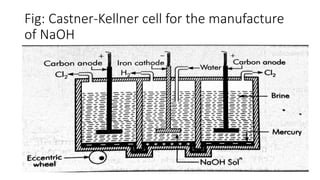
The Castner Kellner cell consists of a large rectangular vessel which is
divided into three compartments with the help of slate partitions,
which do not touch the bottom of the cell.
The two outer compartments contain sodium chloride solution with
graphite anode. The central compartment contains water and iron
cathode. The bottom of the cell contain layer of mercury which serves
as cathode in outer two compartment and anode in the central
compartment. The mercury is allowed to move from one compartment
to other with the help of eccentric wheel.
Slate: Due to its thermal stability and chemical inertness, slate has been used for laboratory
During the electrolysis, at the outer compartment, sodium ions are
discharge or reduce at mercury cathode and form amalgam. Thus
formed sodium amalgam passes into the central compartment due to
the rocking motion of the eccentric wheel.
In the central compartment, iron acts as cathode while mercury acts as
anode. At cathode H+ are discharged and H2 gas are liberated which
goes out through the outlet provided in the central compartment. The
OH- ion liberated at the anode combine with sodium amalgam to form
NaOH.
Fig: Castner-Kellner cell for the manufacture
of NaOH
Reaction involved are:
At two outer compartments:
At cathode: Na+ + e- + Hg →NaHg (sodium amalgam)
At anode: Cl- - e- → Cl
Cl + Cl → Cl2
In central compartment:
At cathode: H+ + e- → H
H + H → H2
At anode: OH- - e- → OH
NaHg + OH → NaOH + Hg
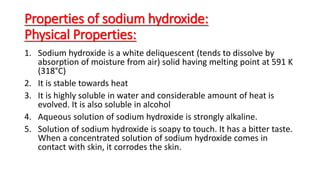
Properties of sodium hydroxide:
Physical Properties:
1. Sodium hydroxide is a white deliquescent (tends to dissolve by
absorption of moisture from air) solid having melting point at 591 K
(318°C)
2. It is stable towards heat
3. It is highly soluble in water and considerable amount of heat is
evolved. It is also soluble in alcohol
4. Aqueous solution of sodium hydroxide is strongly alkaline.
5. Solution of sodium hydroxide is soapy to touch. It has a bitter taste.
When a concentrated solution of sodium hydroxide comes in
contact with skin, it corrodes the skin.
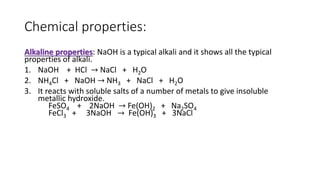
Chemical properties:
Alkaline properties: NaOH is a typical alkali and it shows all the typical
properties of alkali.
1. NaOH + HCl → NaCl + H2O
2. NH4Cl + NaOH → NH3 + NaCl + H2O
3. It reacts with soluble salts of a number of metals to give insoluble
metallic hydroxide.
FeSO4 + 2NaOH → Fe(OH)2 + Na2SO4
FeCl3 + 3NaOH → Fe(OH)3 + 3NaCl
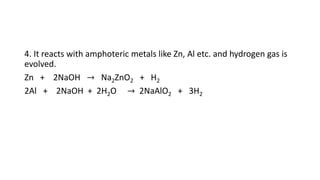
4. It reacts with amphoteric metals like Zn, Al etc. and hydrogen gas is
evolved.
Zn + 2NaOH → Na2ZnO2 + H2
2Al + 2NaOH + 2H2O → 2NaAlO2 + 3H2
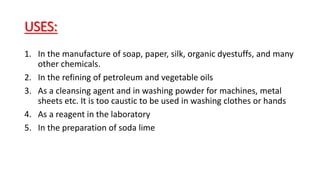
USES:
1. In the manufacture of soap, paper, silk, organic dyestuffs, and many
other chemicals.
2. In the refining of petroleum and vegetable oils
3. As a cleansing agent and in washing powder for machines, metal
sheets etc. It is too caustic to be used in washing clothes or hands
4. As a reagent in the laboratory
5. In the preparation of soda lime

Sodium hydroxide

  • 1.
  • 2.
    Sodium hydroxide: Manufacture: (KellnerSolvay cell) Sodium hydroxide is manufactured by Kellner Solvay cell as follows: Principle: Brine(sodium chloride solution) is electrolysed between a pool of mercury acting as cathode and graphite rod as anode. When a electric current is passed, sodium ions are discharged at mercury cathode and forms amalgam. At anode, chloride ions discharged which escape out as chlorine gas. NaCl → Na+ + Cl- At cathode: Na+ + e- → Na Na + Hg → Na.Hg At anode: 2Cl- - 2e- → 2Cl Cl + Cl → Cl2
  • 3.
    The sodium amalgamformed at the cathode is treated with water whereby sodium hydroxide is formed and mercury is regenerated. 2Na.Hg + 2H2O → 2Hg + 2NaOH + H2 Process: The Kellner Solvay consists of two big tanks interconnected, one is called the electrolyser and the other one is decomposer. The electrolyser consists of a number of graphite anode and flowing mercury cathode. ………………………….figure
  • 4.
    Fig: Kellner-Solvay cellfor manufacture of NaOH(spent:having been used and unable to be used again.)
  • 5.
    When electricity ispassed in electrolyser, sodium ions are discharged at mercury cathode and sodium amalgam is formed. The amalgam thus formed is allowed to flow to another tank known as decomposer whose the amalgam is reached with water. The amalgam decomposed by water to sodium hydroxide and mercury is regenerated. The mercury is pumped into electrolyser for reuse. The sodium hydroxide solution thus formed is evaporated to dryness to get solid sodium hydroxide.
  • 6.
    Castner- Kellner cell: TheCastner Kellner cell consists of a large rectangular vessel which is divided into three compartments with the help of slate partitions, which do not touch the bottom of the cell. The two outer compartments contain sodium chloride solution with graphite anode. The central compartment contains water and iron cathode. The bottom of the cell contain layer of mercury which serves as cathode in outer two compartment and anode in the central compartment. The mercury is allowed to move from one compartment to other with the help of eccentric wheel. Slate: Due to its thermal stability and chemical inertness, slate has been used for laboratory
  • 7.
    During the electrolysis,at the outer compartment, sodium ions are discharge or reduce at mercury cathode and form amalgam. Thus formed sodium amalgam passes into the central compartment due to the rocking motion of the eccentric wheel. In the central compartment, iron acts as cathode while mercury acts as anode. At cathode H+ are discharged and H2 gas are liberated which goes out through the outlet provided in the central compartment. The OH- ion liberated at the anode combine with sodium amalgam to form NaOH.
  • 8.
    Fig: Castner-Kellner cellfor the manufacture of NaOH
  • 9.
    Reaction involved are: Attwo outer compartments: At cathode: Na+ + e- + Hg →NaHg (sodium amalgam) At anode: Cl- - e- → Cl Cl + Cl → Cl2 In central compartment: At cathode: H+ + e- → H H + H → H2 At anode: OH- - e- → OH NaHg + OH → NaOH + Hg
  • 10.
    Properties of sodiumhydroxide: Physical Properties: 1. Sodium hydroxide is a white deliquescent (tends to dissolve by absorption of moisture from air) solid having melting point at 591 K (318°C) 2. It is stable towards heat 3. It is highly soluble in water and considerable amount of heat is evolved. It is also soluble in alcohol 4. Aqueous solution of sodium hydroxide is strongly alkaline. 5. Solution of sodium hydroxide is soapy to touch. It has a bitter taste. When a concentrated solution of sodium hydroxide comes in contact with skin, it corrodes the skin.
  • 11.
    Chemical properties: Alkaline properties:NaOH is a typical alkali and it shows all the typical properties of alkali. 1. NaOH + HCl → NaCl + H2O 2. NH4Cl + NaOH → NH3 + NaCl + H2O 3. It reacts with soluble salts of a number of metals to give insoluble metallic hydroxide. FeSO4 + 2NaOH → Fe(OH)2 + Na2SO4 FeCl3 + 3NaOH → Fe(OH)3 + 3NaCl
  • 12.
    4. It reactswith amphoteric metals like Zn, Al etc. and hydrogen gas is evolved. Zn + 2NaOH → Na2ZnO2 + H2 2Al + 2NaOH + 2H2O → 2NaAlO2 + 3H2
  • 13.
    USES: 1. In themanufacture of soap, paper, silk, organic dyestuffs, and many other chemicals. 2. In the refining of petroleum and vegetable oils 3. As a cleansing agent and in washing powder for machines, metal sheets etc. It is too caustic to be used in washing clothes or hands 4. As a reagent in the laboratory 5. In the preparation of soda lime