

This document discusses symmetric and asymmetric multiprocessor systems. Symmetric multiprocessing involves two or more identical processors that connect to a single shared memory and are controlled by a single operating system instance. An example is a Solaris system that can use multiple processors equally. Asymmetric multiprocessing means processors are not treated equally, such as only allowing one processor to perform I/O. Burroughs B5000/B5500 systems are examples where only one processor could access peripherals. Symmetric multiprocessing provides better load balancing and fault tolerance compared to asymmetric multiprocessing, which is simpler but can fail entirely if the operating system processor fails.
Computer System Architecture
•Categorization according to number of
processors used:
Single processor systems
Multiprocessor systems
3.
Single Processor Systems
•1 General purpose processor
Any kind of instruction
• Many special purpose processors
Device specific processors, such as disk, keyboard,
graphic controllers, I/O
Disk-controller microprocessor receives a sequence of
requests from main CPU and implements its own disk
queue and scheduling algorithm
Relieves the main CPU of the overhead of disk
scheduling
4.
Multi-Processor Systems
• 2or more general purpose processors
• Parallel systems
• Tightly coupled systems
• Advantages:
Increased throughput
Economy of scale
Increased reliability
5.
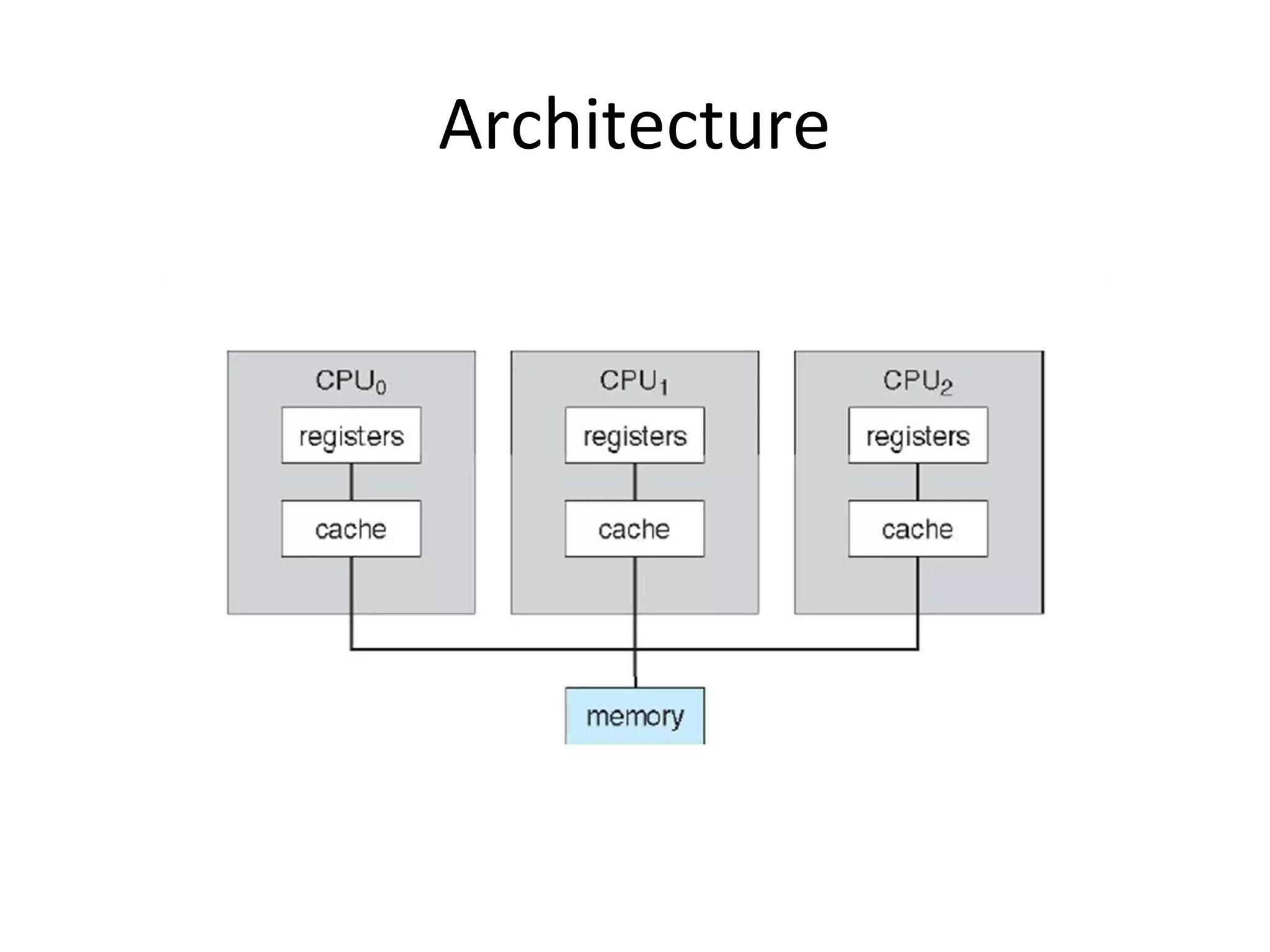
Symmetric Multiprocessor model
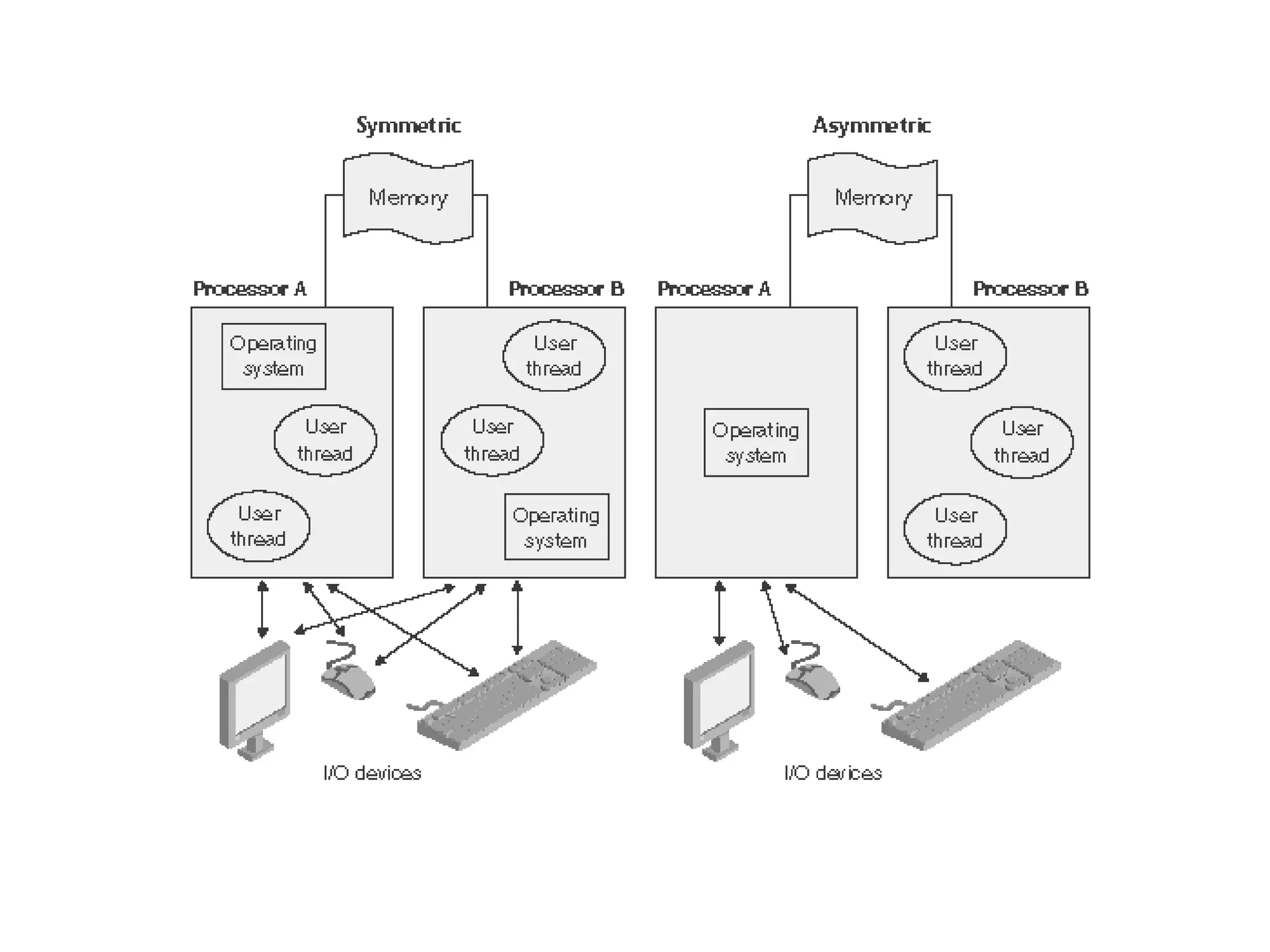
•Symmetric multiprocessing (SMP) involves a
symmetric multiprocessor system hardware
and software architecture where two or more
identical processors connect to a single,
shared main memory, have full access to all
I/O devices, and are controlled by a single
operating system instance that treats all
processors equally, reserving none for special
purposes.
Example
• Example system– Solaris
• Solaris system can be configured to use many
processors, all running Solaris
• All current OSes provide support for SMP.
8.
Alternative
• SMP usinga single shared system bus represents
one of the earliest styles of multiprocessor
machine architectures, typically used for building
smaller computers with up to 8 processors.
• Larger computer systems might use newer
architectures such as NUMA (Non-Uniform
Memory Access).
• The benefits of NUMA are limited to particular
workloads, notably on servers where the data are
often associated strongly with certain tasks or
users.
9.
Asymmetric Multiprocessing
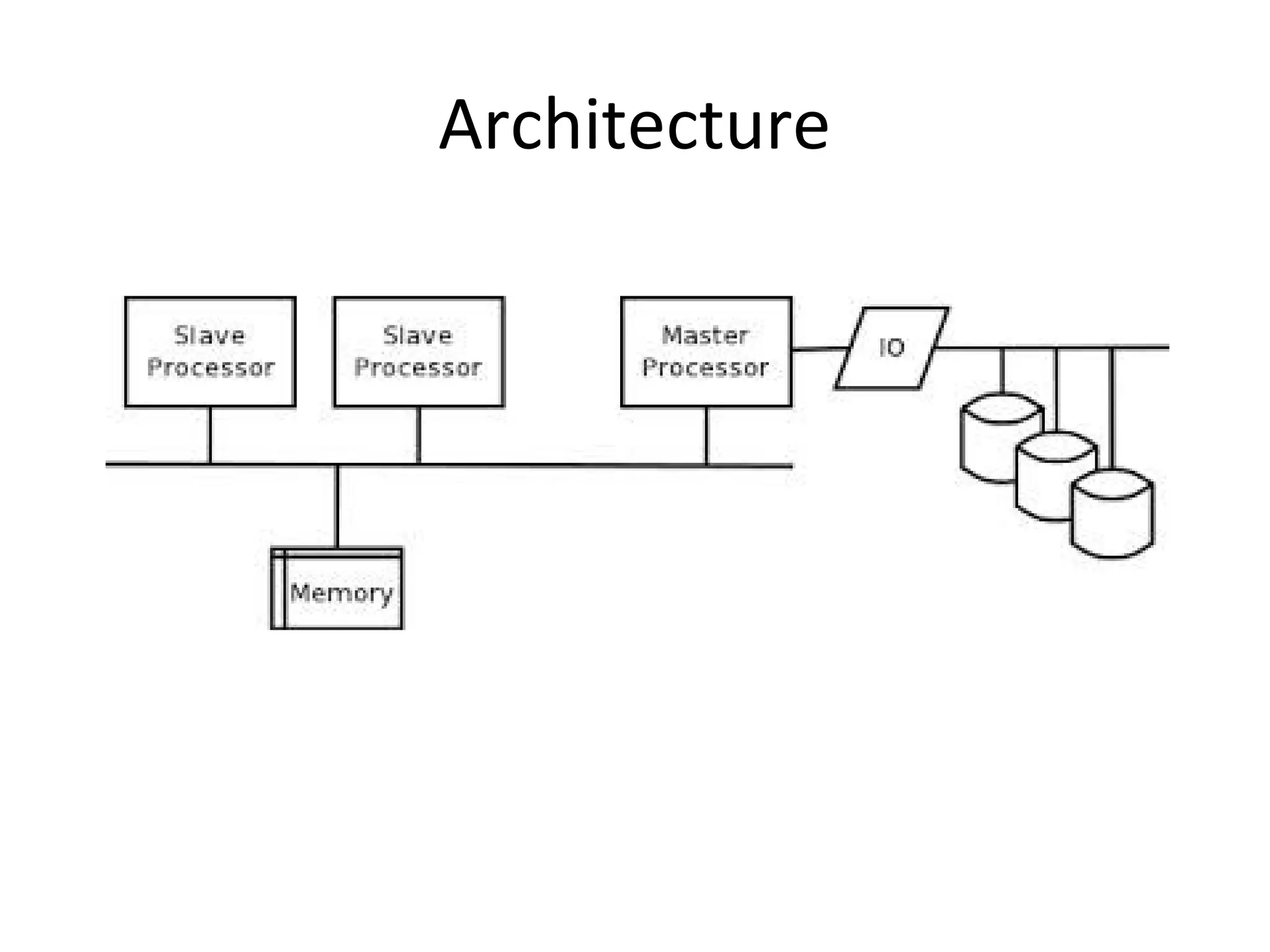
• Inan asymmetric multiprocessing system, not
all CPUs are treated equally; for example, a
system might only allow (either at the
hardware or operating system level) one CPU
to execute operating system code or might
only allow one CPU to perform I/O operations.
Example
• Burroughs B5000and B5500.
– An option on the Burroughs B5000 was “Processor B”.
This second processor, unlike “Processor A” had no
connection to the peripherals, though the two
processors shared main memory, and Processor B
could not run in Control State.
– On the B5500, either Processor A or Processor B could
be designated as Processor 1 by a switch on the
engineer's panel, with the other processor being
Processor 2; both processors shared main memory
and had hardware access to the I/O processors hence
the peripherals, but only Processor 1 could respond to
peripheral interrupts.
12.
Comparision
• In theASMP model, if the processor that fails is an
operating system processor, the whole computer can
go down.
• In symmetric multiprocessing, any processor can run
any type of thread. The processors communicate with
each other through shared memory. SMP systems
provide better load-balancing and fault tolerance.
• SMP systems are inherently more complex than ASMP
systems. A tremendous amount of coordination must
take place within the operating system to keep
everything synchronized.