Download to read offline
![Take Away Question Should Smart Grid development be large scale and centralized or small-scale distributed, to enable consumer participation? Mike Hoffman [email_address] 503 260-4397](https://image.slidesharecdn.com/portlandstateuniversitysmartgridclass-12402742023-phpapp01/85/Portland-State-University-Smart-Grid-Class-13-320.jpg)

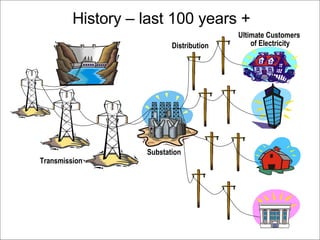
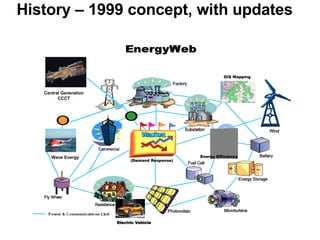
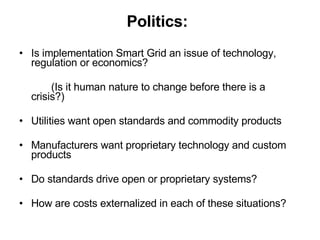
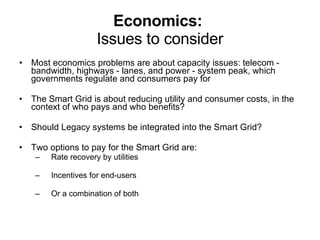
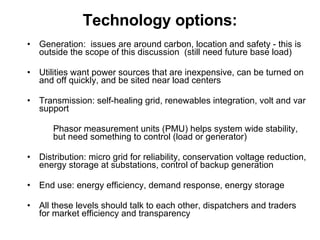
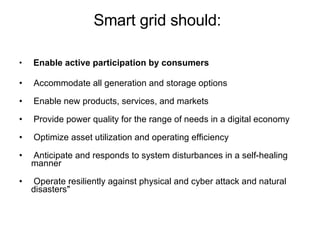
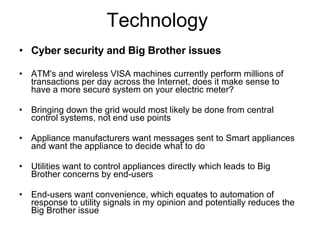
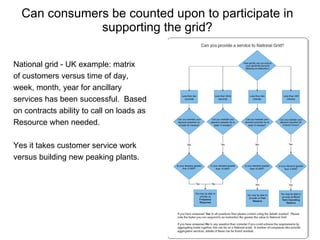
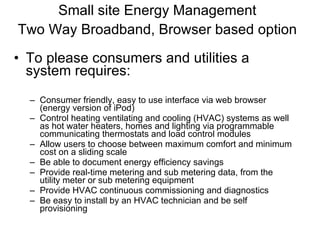
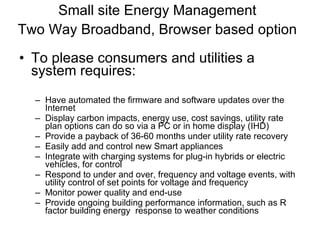
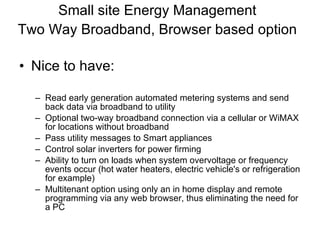
The document discusses a class on smart grids at Portland State University that covered the history, politics, economics, and technology of smart grids. It focuses on enabling active consumer participation through distributed, small-scale smart grid technologies at the distribution level. This includes technologies that allow two-way communication and control of appliances and energy use. The key is developing solutions that benefit both utilities and consumers by reducing costs and increasing system reliability and resilience.


![[Smart Grid Market Research] Energy 2.0: Smart Grid Roadmap, 2012 – 2022, May...](https://cdn.slidesharecdn.com/ss_thumbnails/energy20smartgridroadmap20122022may2012zprymeandclasma-120530111428-phpapp01-thumbnail.jpg?width=640&height=640&fit=bounds)


