1
Smart Grid Distribution System
ANG Sovann
Contents
I. Introduction
II. What is the Smart Grid?
III. Smart Metter
IV. Micro Grid
V. Smart Grid Unites Transmission and Distribution
VI. SCADA System
VII. Energy Storage
VIII. Advantages
IX. Application
X. Case Study
XI. Recommendation for Future
XII. Conclusion
2
Introduction
• In recent years the term “Smart Grid” has
become a widely used buzz word with respect
to the operation of Electric Power Systems
• A smart grid is a modern electric system
• It is used in development countries like USA
Japan China and European.
• It is used to improve reliability, efficiency,
safety and reduce Co2 by using renewable
energies.
What is the Smart Grid?
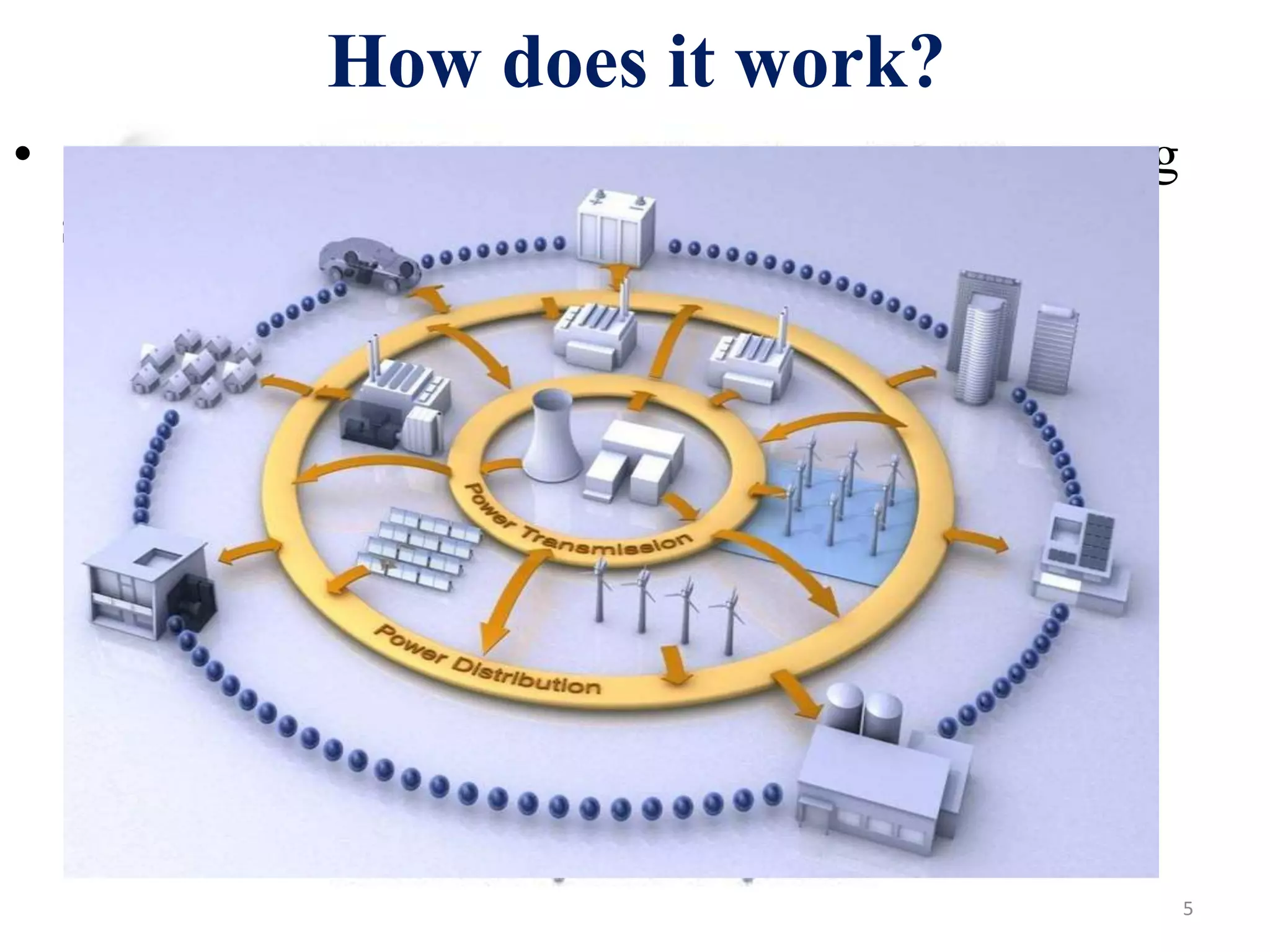
• Short Answer: Smart Grid = IT + Electric Grid
• It is operated by interconnection of elements—
from the central and distributed generator
through the high-voltage network and
distribution system, to industrial users, energy
storage installations and consumers.
How does it work?
• Power plants are integrated and connect in ring
system to support the loads.
5
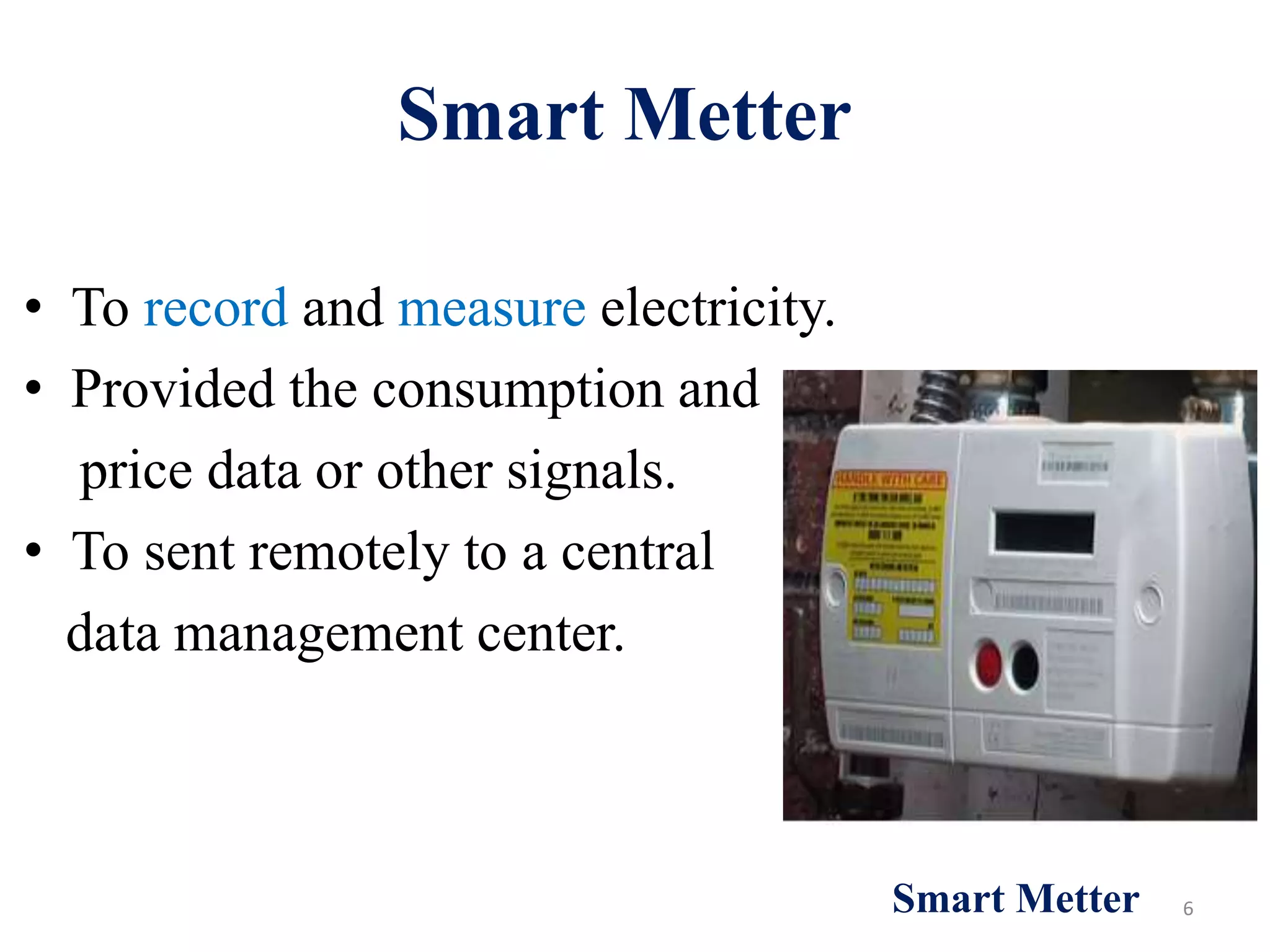
Smart Metter
• To record and measure electricity.
• Provided the consumption and
price data or other signals.
• To sent remotely to a central
data management center.
6
Smart Metter
Benefits of smart meters
• Accurate bills
• Less time waiting in for the meter reader
• Could help you save money
• Reduced theft of energy
• Faster resolution of problems
• Micro-generation
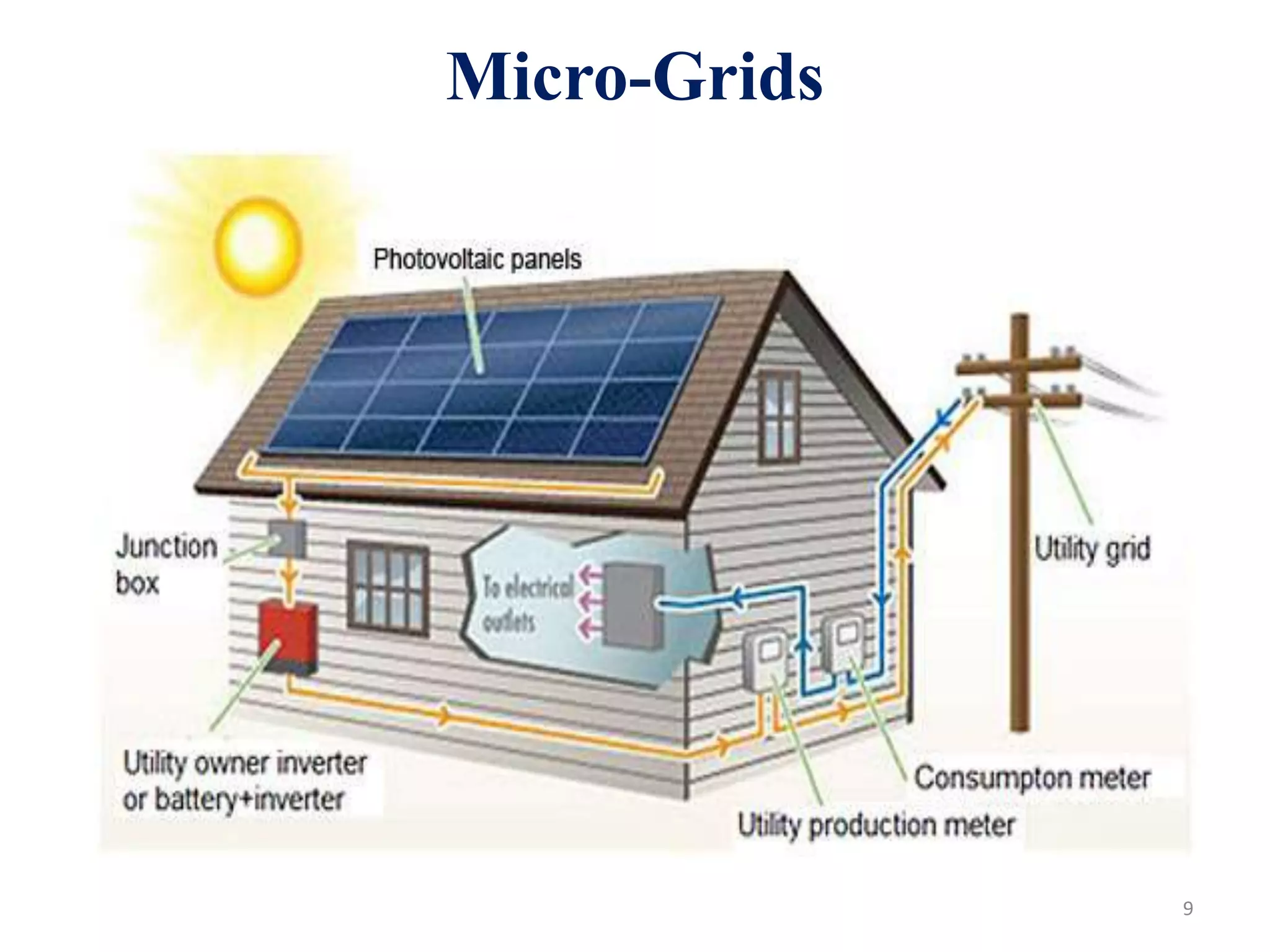
Micro-Grids
• A micro-grid is an integrated energy
solution that serves a group of consumers.
• We can buy and sell electricity from the
grid.
Present by: Vuty
Micro-Grids
9
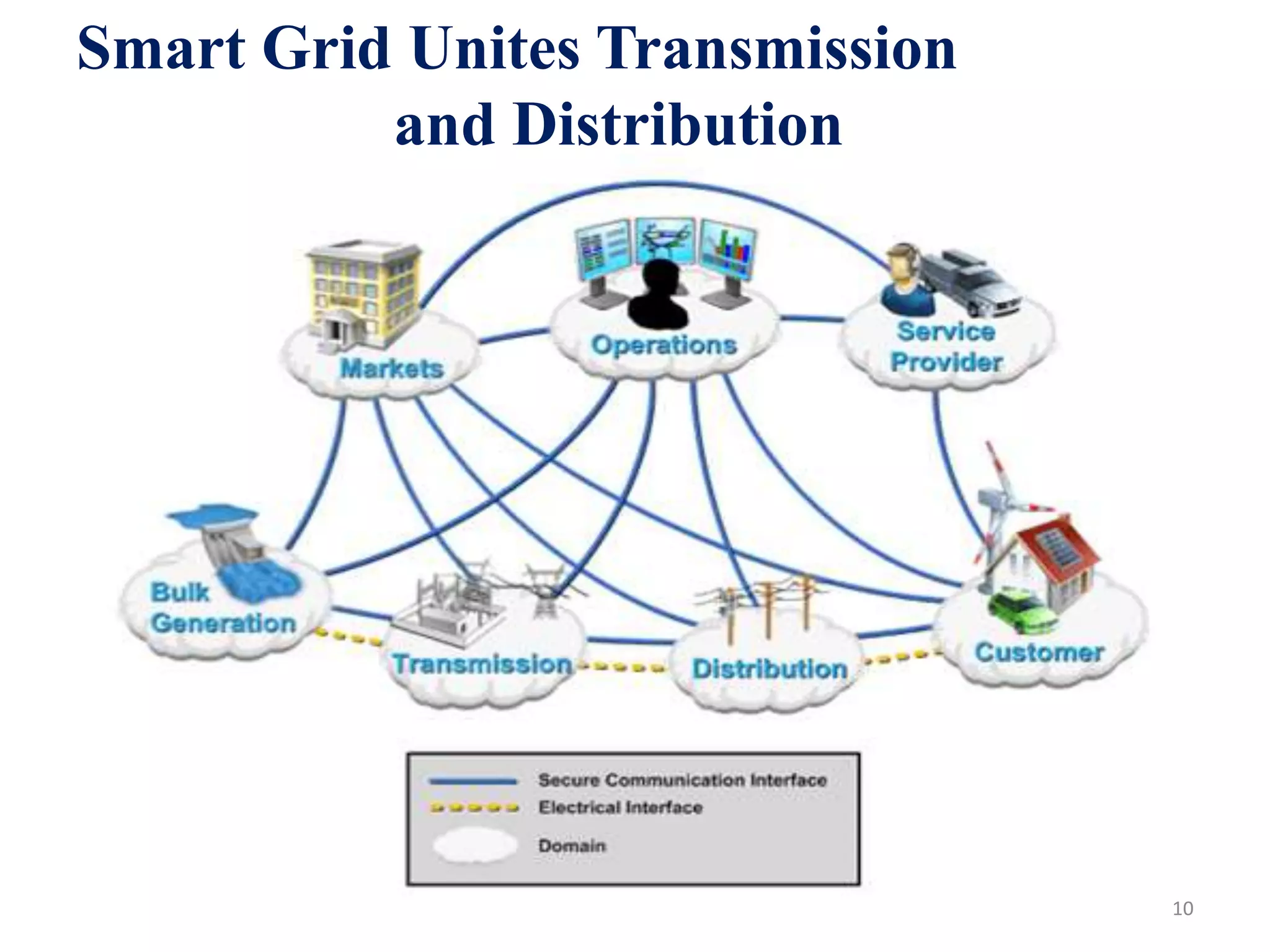
Smart Grid Unites Transmission
and Distribution
10
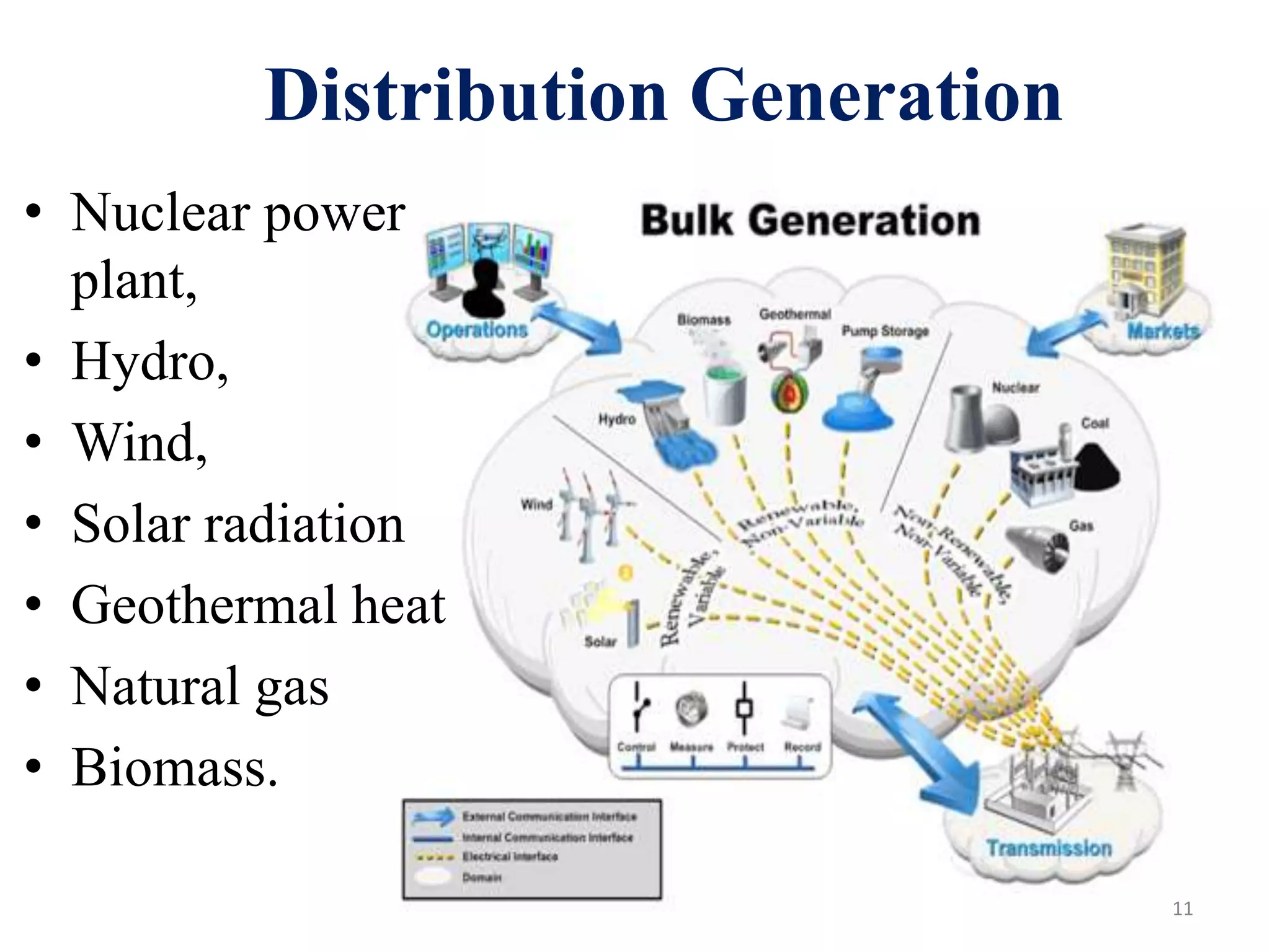
• Nuclear power
plant,
• Hydro,
• Wind,
• Solar radiation
• Geothermal heat
• Natural gas
• Biomass.
Distribution Generation
11
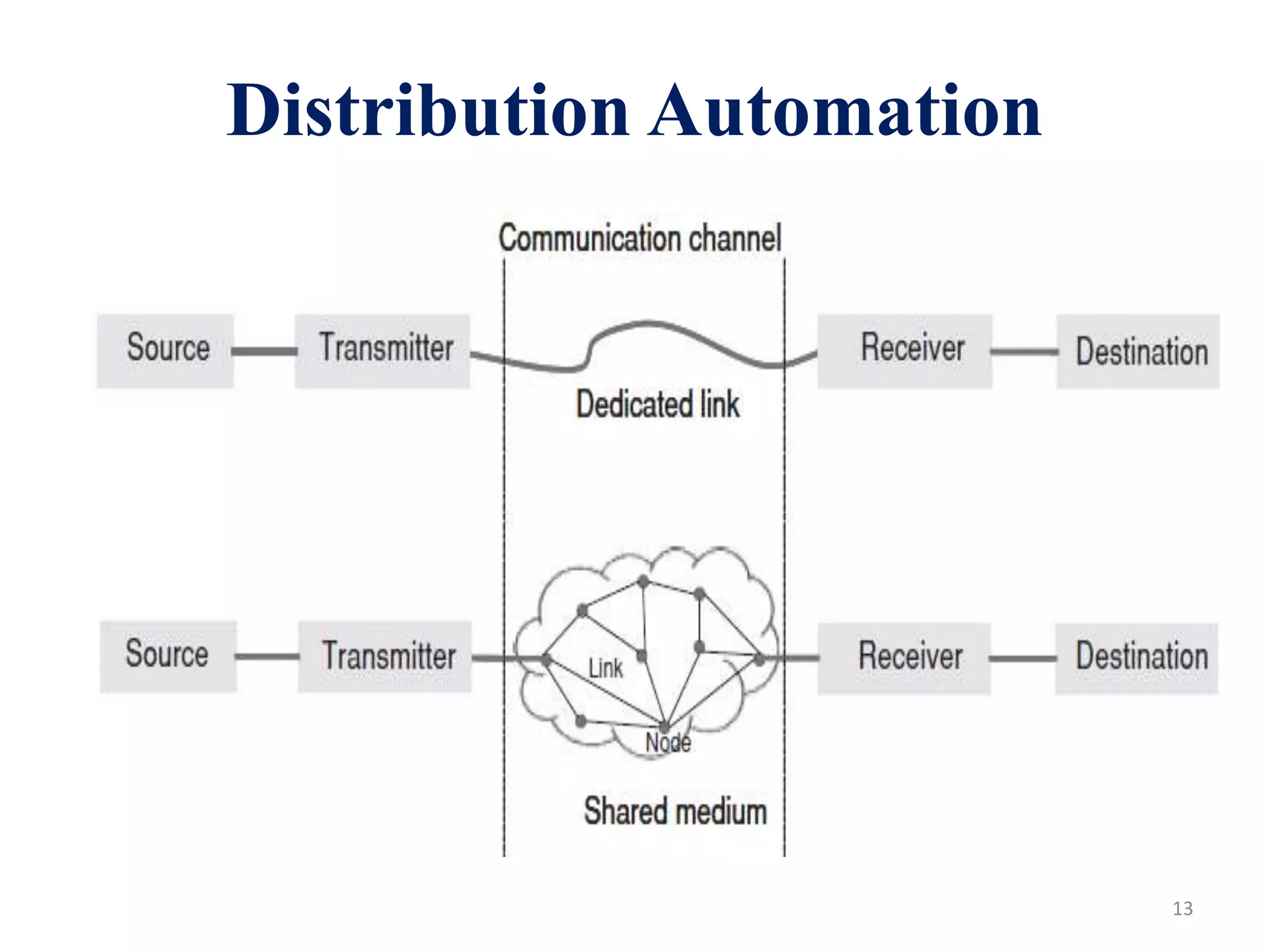
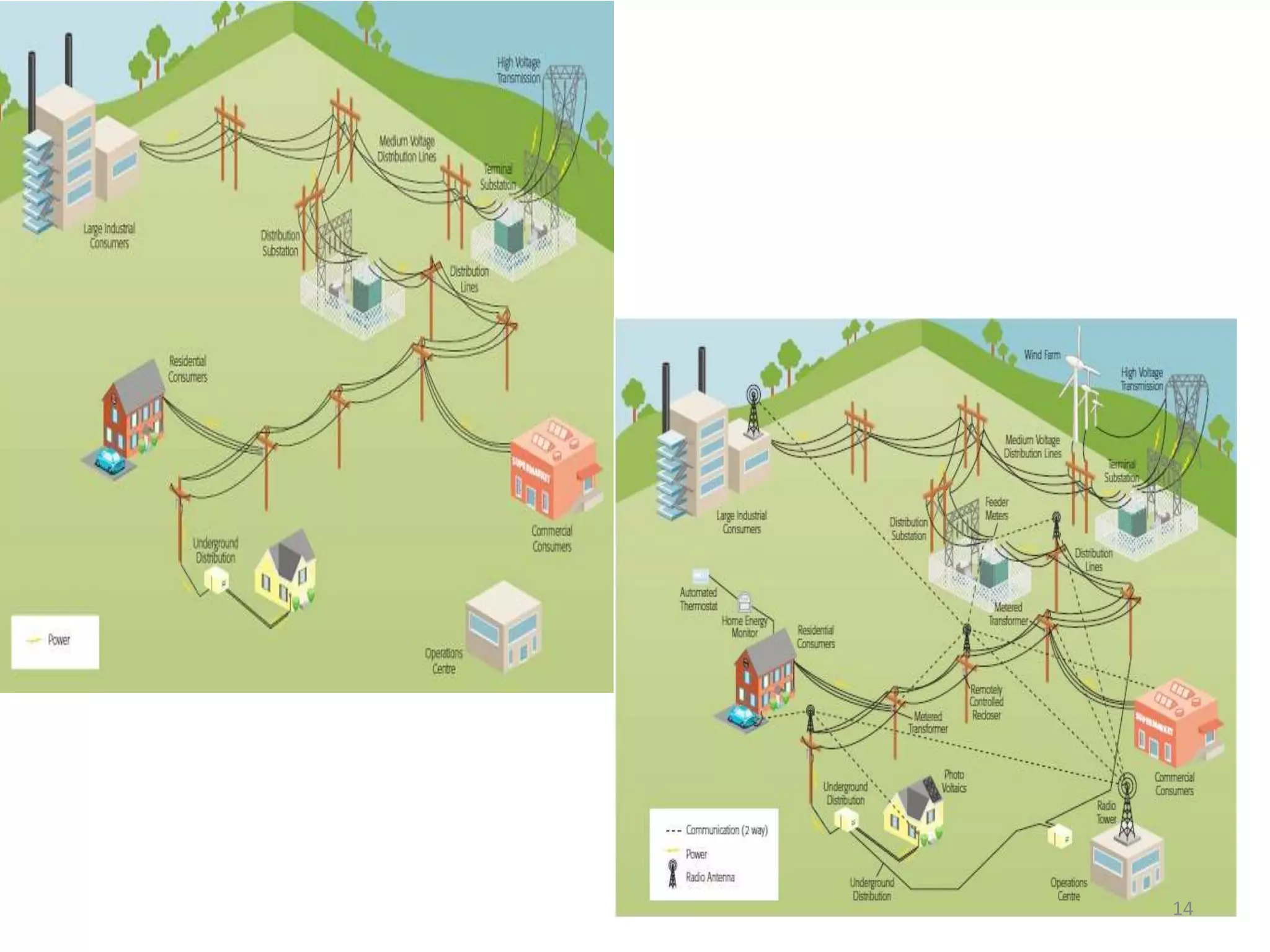
Distribution Automation
• DA is a family of technologies including
sensors, processors, communication networks,
and switches that can perform a number of
distribution system functions depending on
how they are implemented.
• utilities have been applying DA to improve
reliability, service quality and operational
efficiency.
12
Distribution Automation
13
14
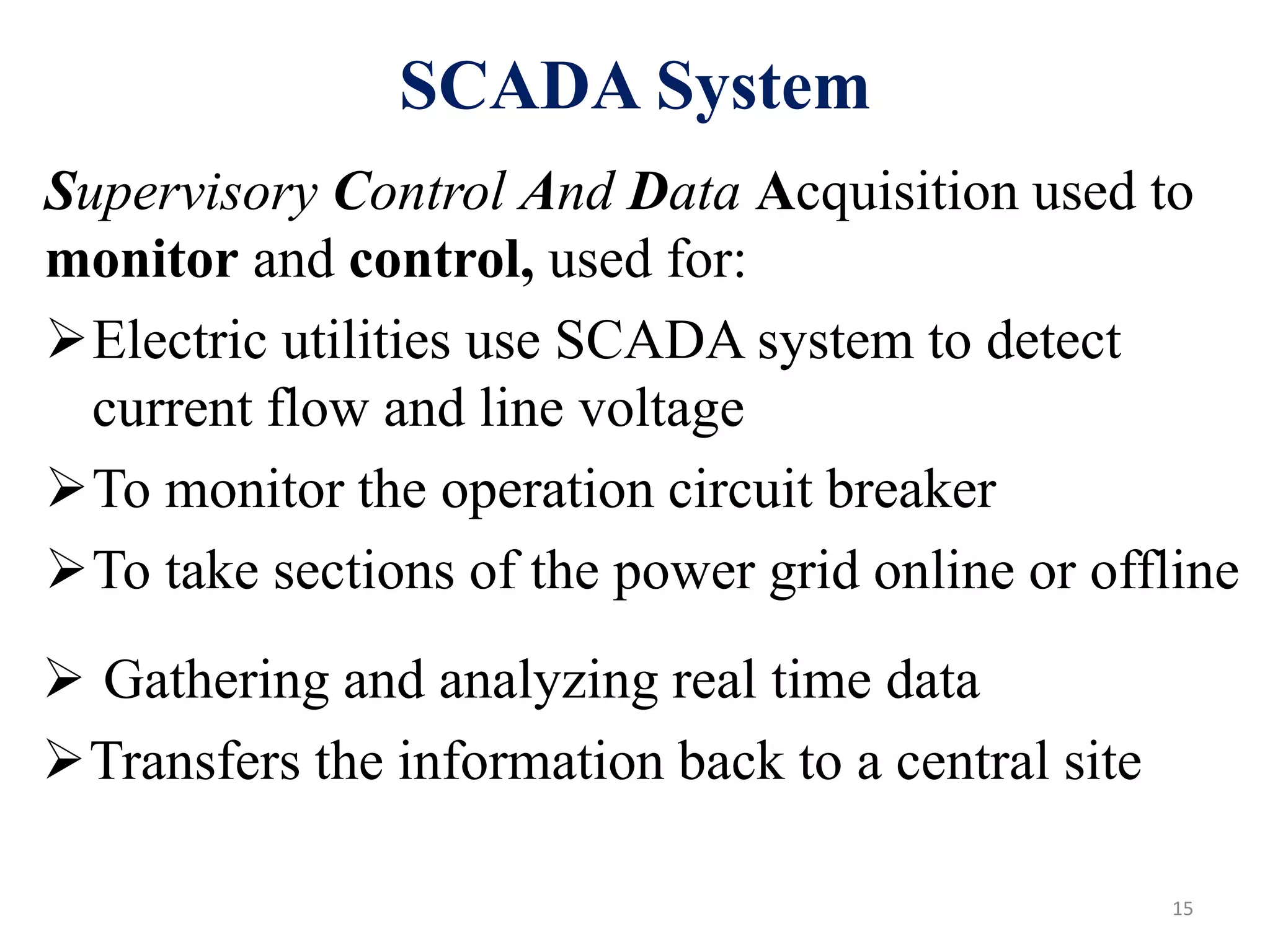
SCADA System
Supervisory Control And Data Acquisition used to
monitor and control, used for:
Electric utilities use SCADA system to detect
current flow and line voltage
To monitor the operation circuit breaker
To take sections of the power grid online or offline
15
 Gathering and analyzing real time data
Transfers the information back to a central site
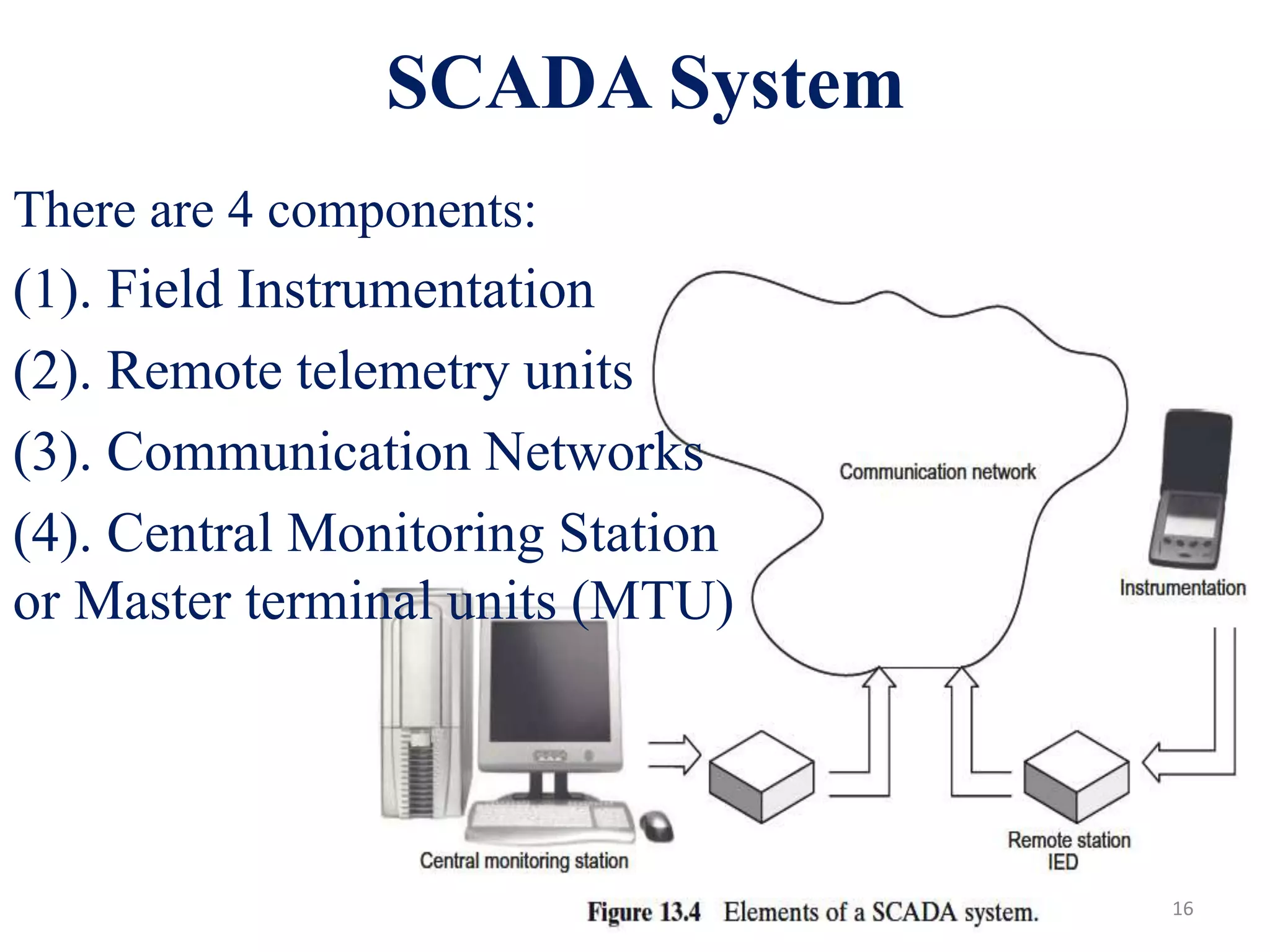
There are 4 components:
(1). Field Instrumentation
(2). Remote telemetry units
(3). Communication Networks
(4). Central Monitoring Station
or Master terminal units (MTU)
16
SCADA System
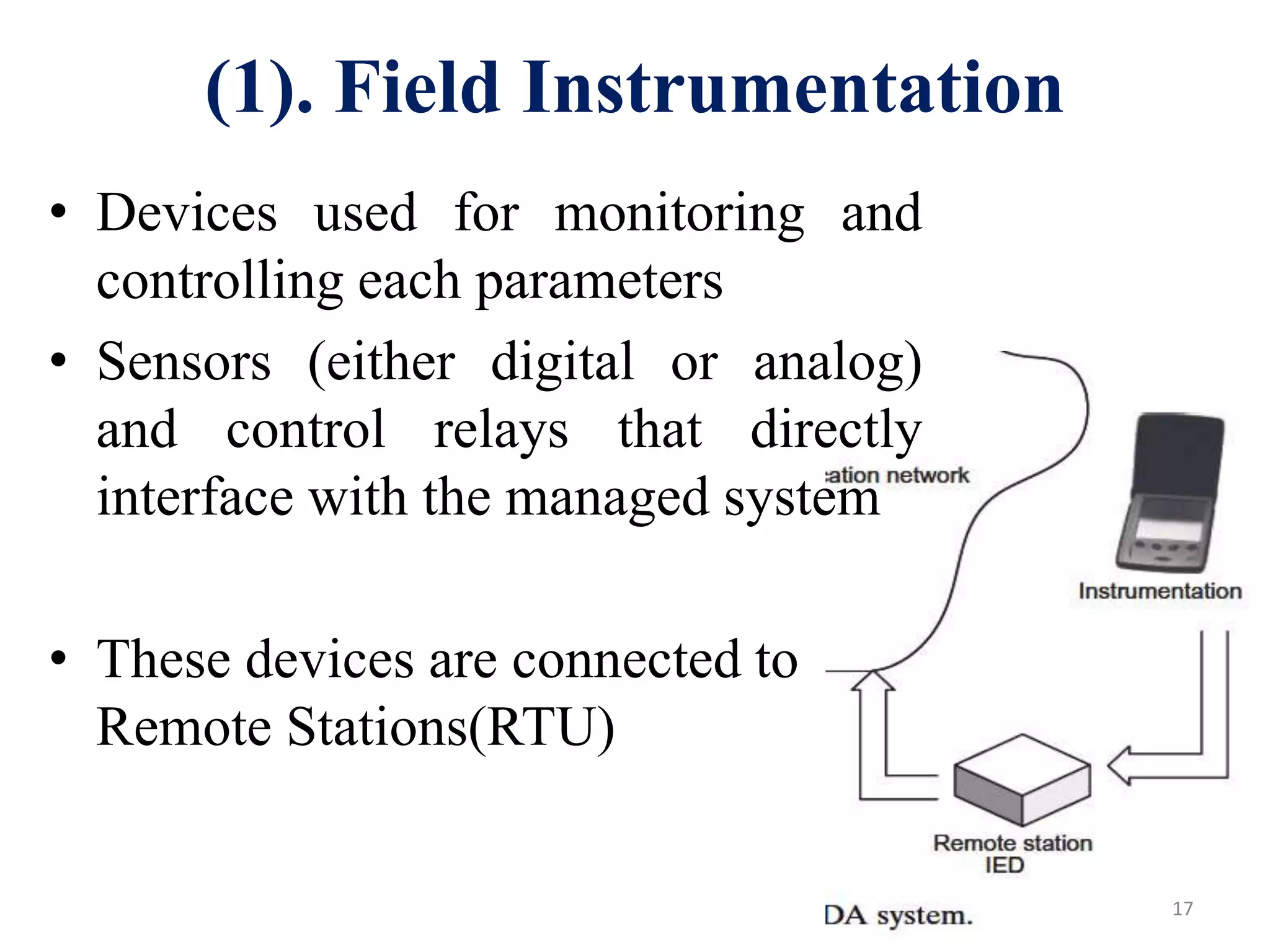
• Devices used for monitoring and
controlling each parameters
• Sensors (either digital or analog)
and control relays that directly
interface with the managed system
• These devices are connected to
Remote Stations(RTU)
17
(1). Field Instrumentation
(2). Remote telemetry units
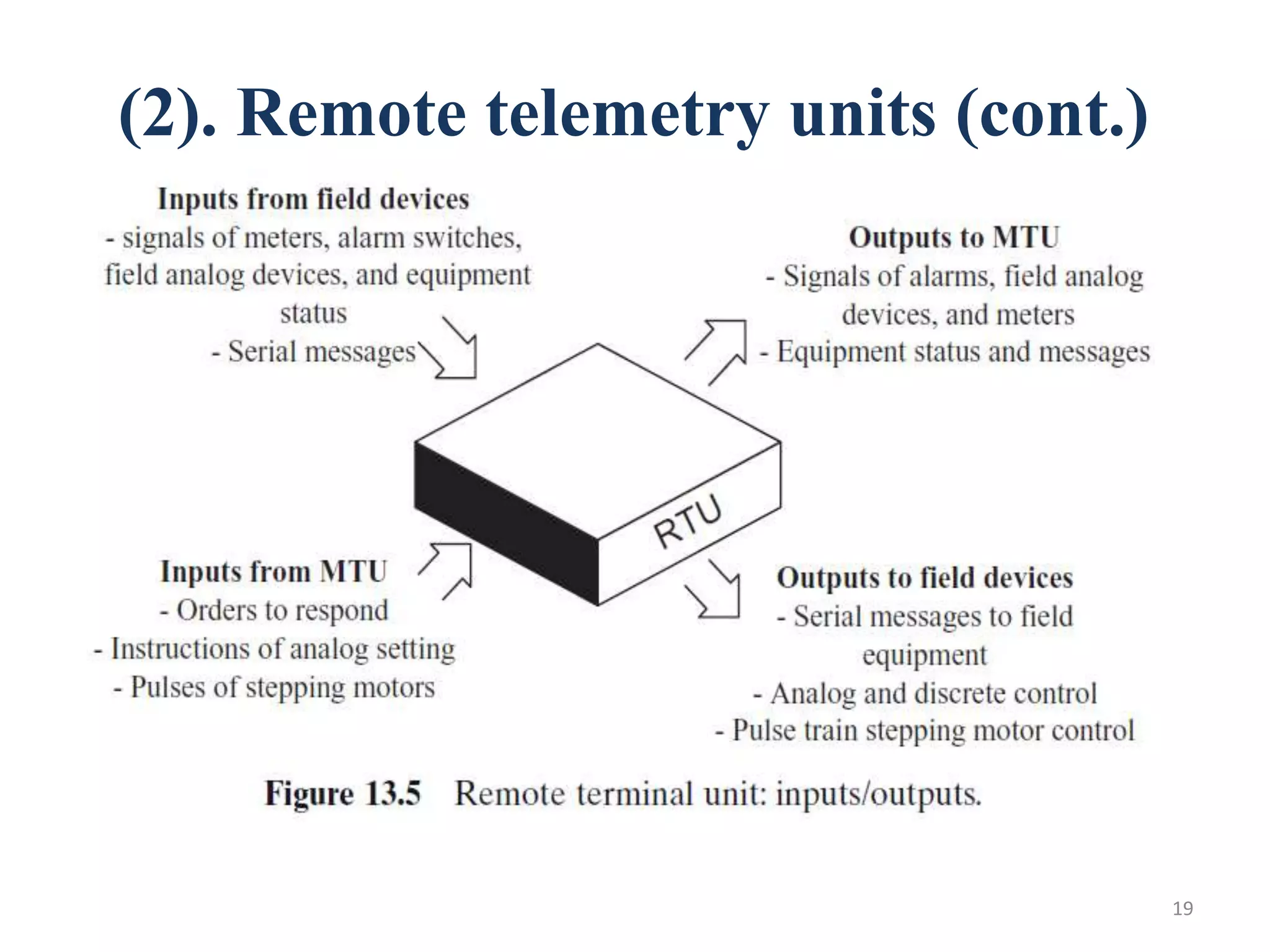
• These are small computerized units deployed
in the field at specific sites and locations.
• RTUs serve at local collection points for
gathering reports from sensors and delivering
command to control relay
• Receiving data and control signals from MTU
and transmitting the control signals to the plant
devices.
18
(2). Remote telemetry units (cont.)
19
(3). Communications Network
20
• The communications Network that connect to the
SCADA master terminal unit to Remote Telemetry
unit (MTU to RUT).
• SCADA communication techniques include
– Modulation
– Multiplexing
– Message format
– Information transfer
(4). Central Monitoring Station
• It is considered as the heart of the system where
its main functions are:
• Making the communication, gathering data, storing
information, sending information to other systems
• Processing the data gathered by remote stations to
generate the necessary actions
• Interfacing to the operators mainly via monitors
and printers. The inputs and outputs of the MTU.
21
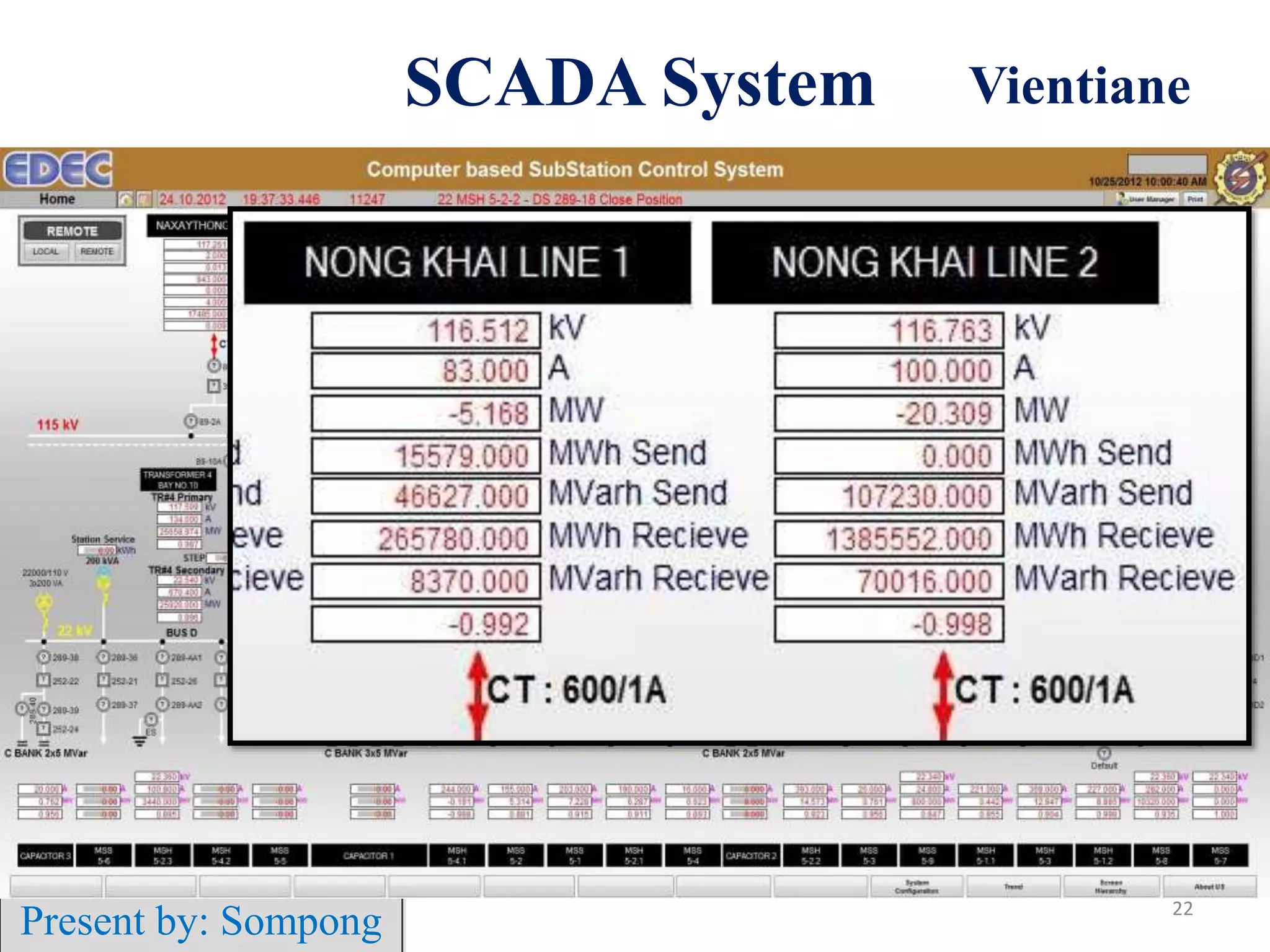
SCADA System
22
Present by: Sompong
Vientiane
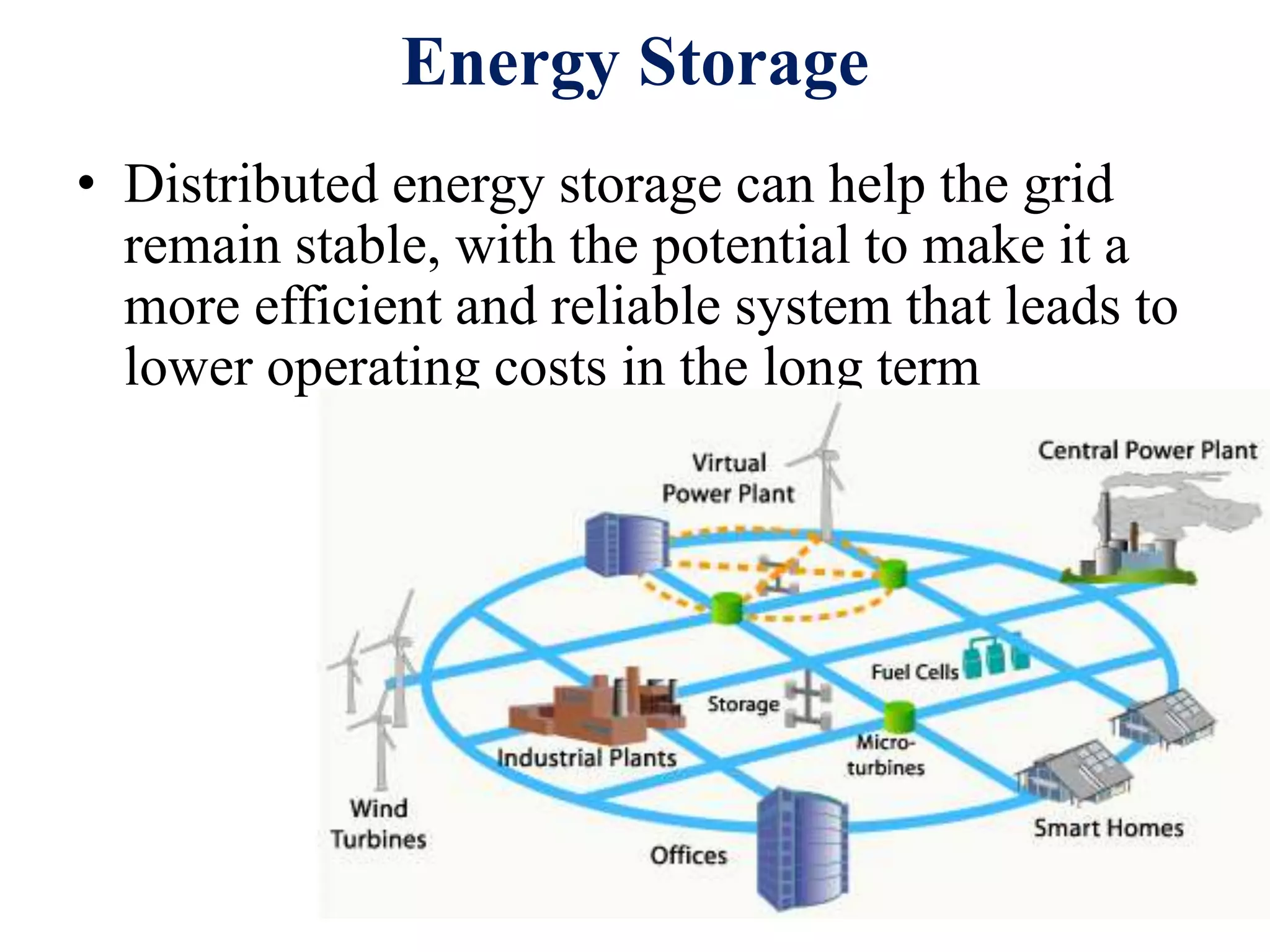
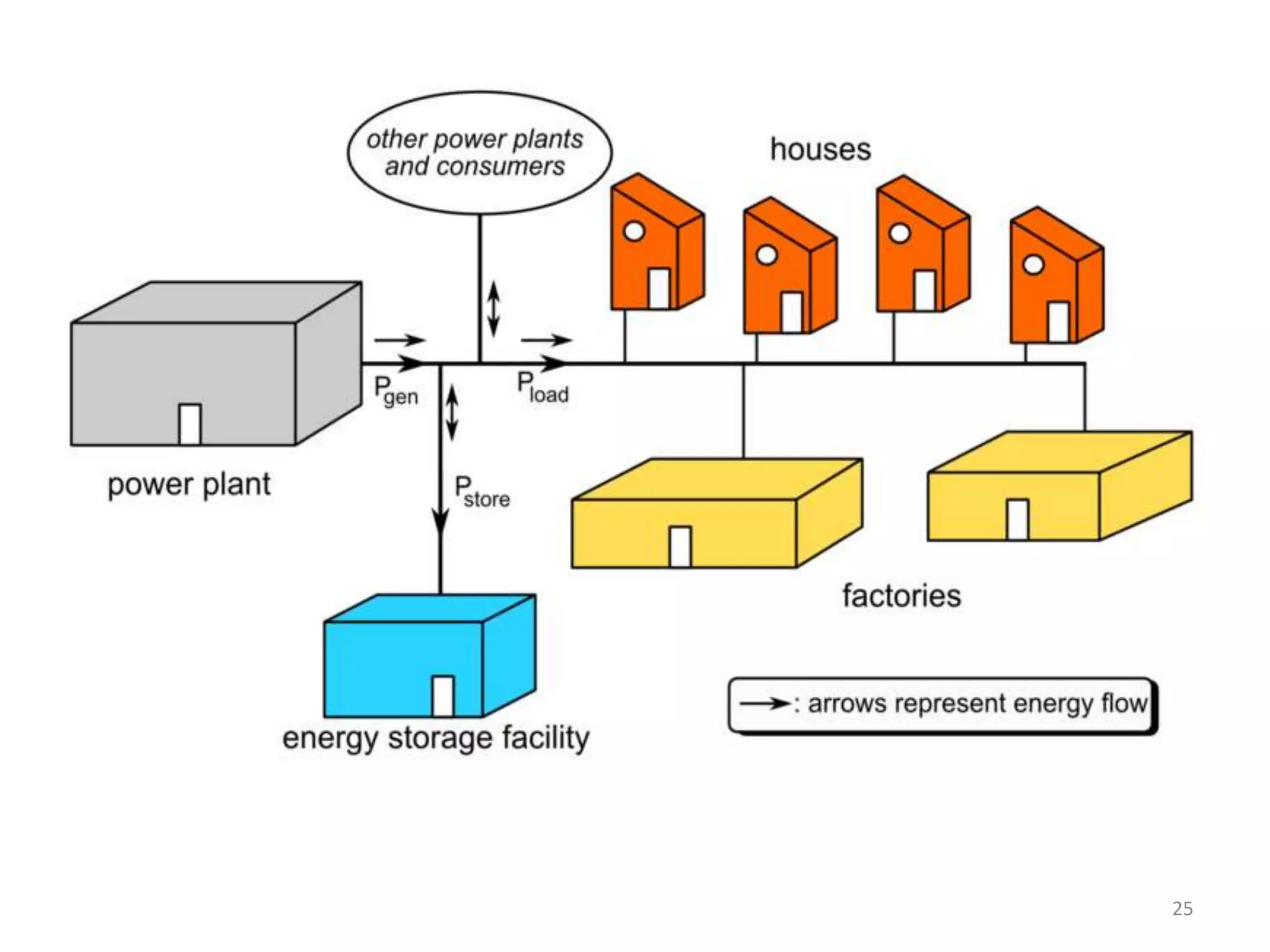
Energy Storage
• Distributed energy storage can help the grid
remain stable, with the potential to make it a
more efficient and reliable system that leads to
lower operating costs in the long term
23
24
25
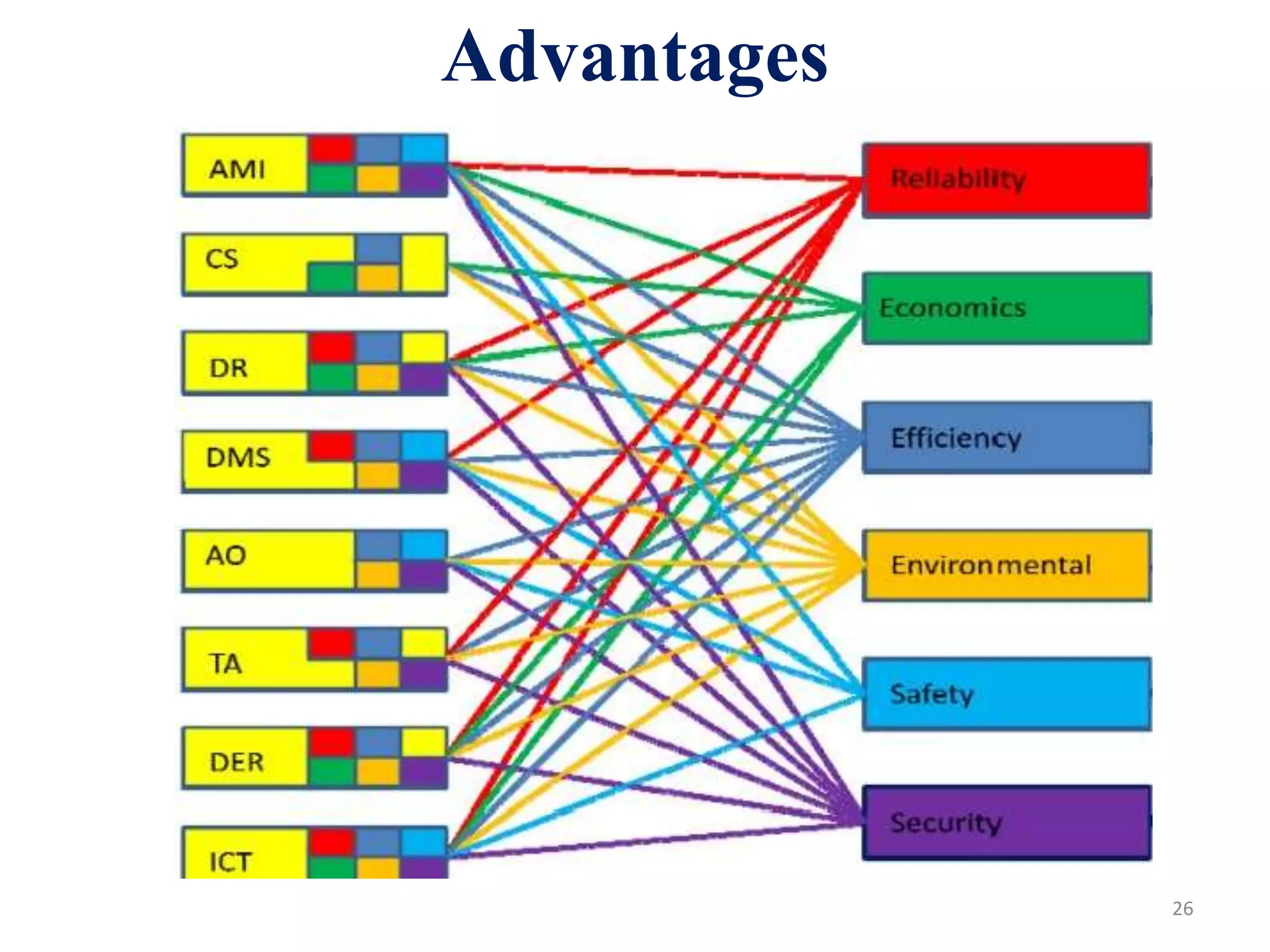
Advantages
26
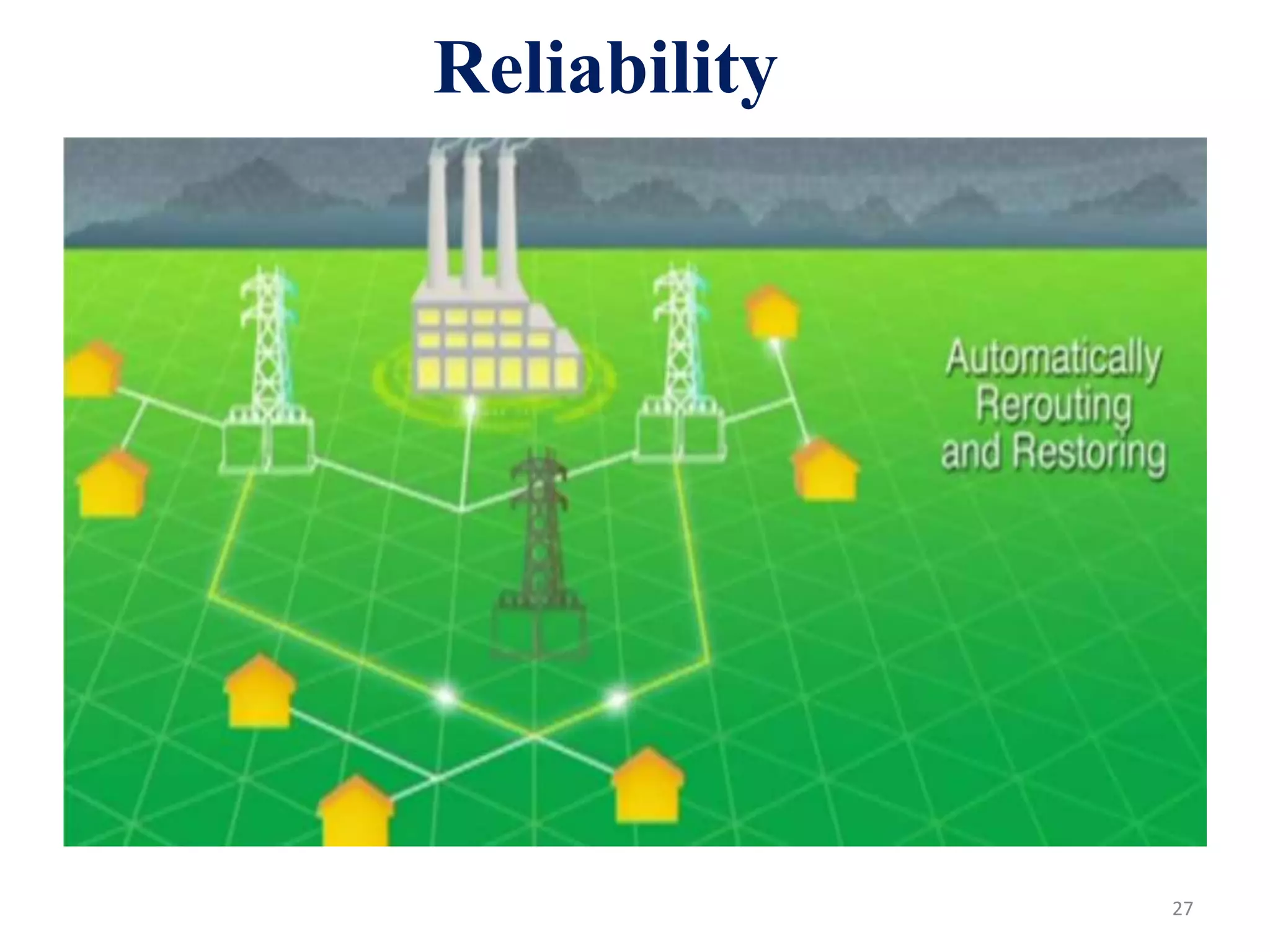
Reliability
27
28
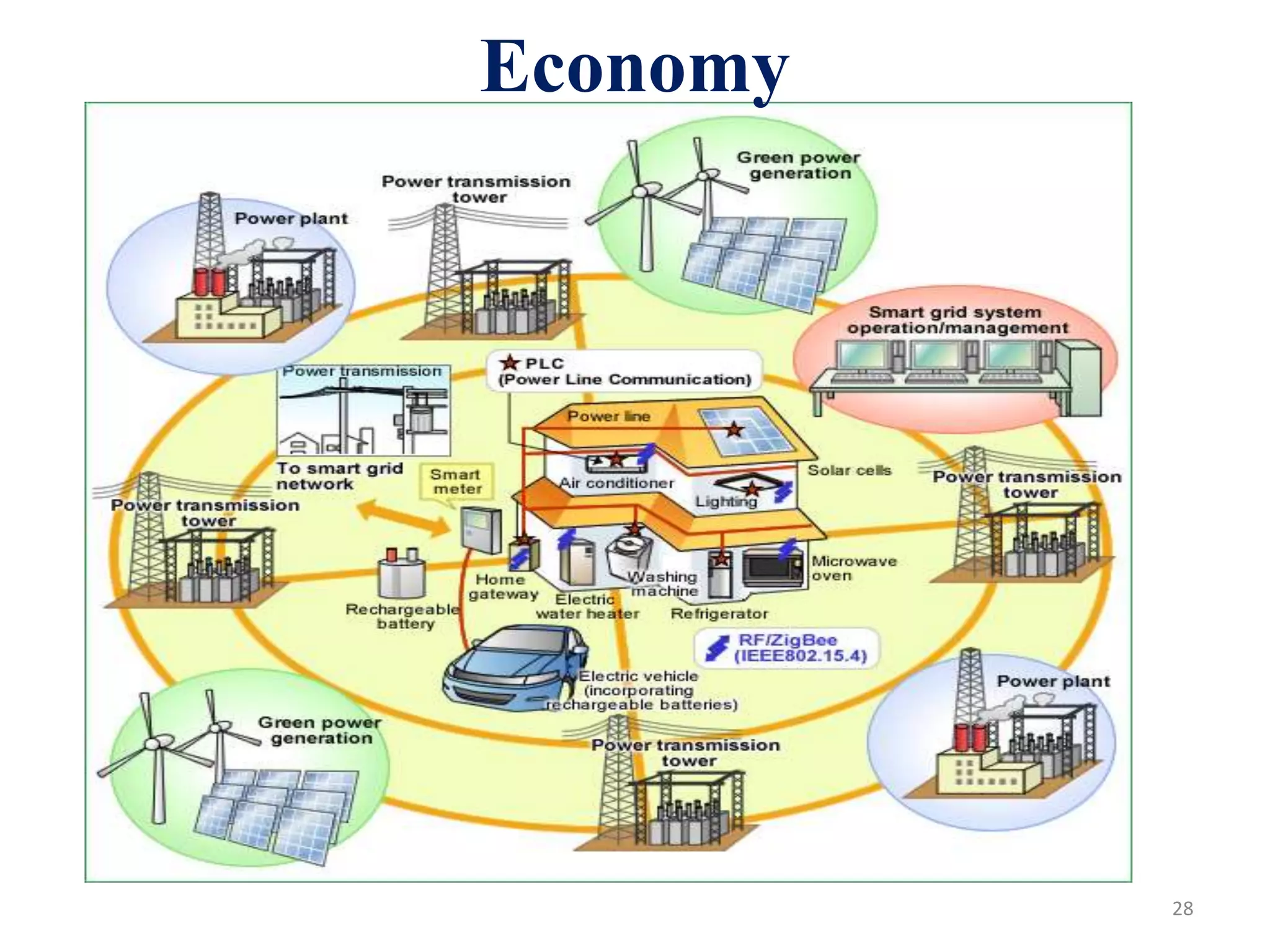
Economy
29
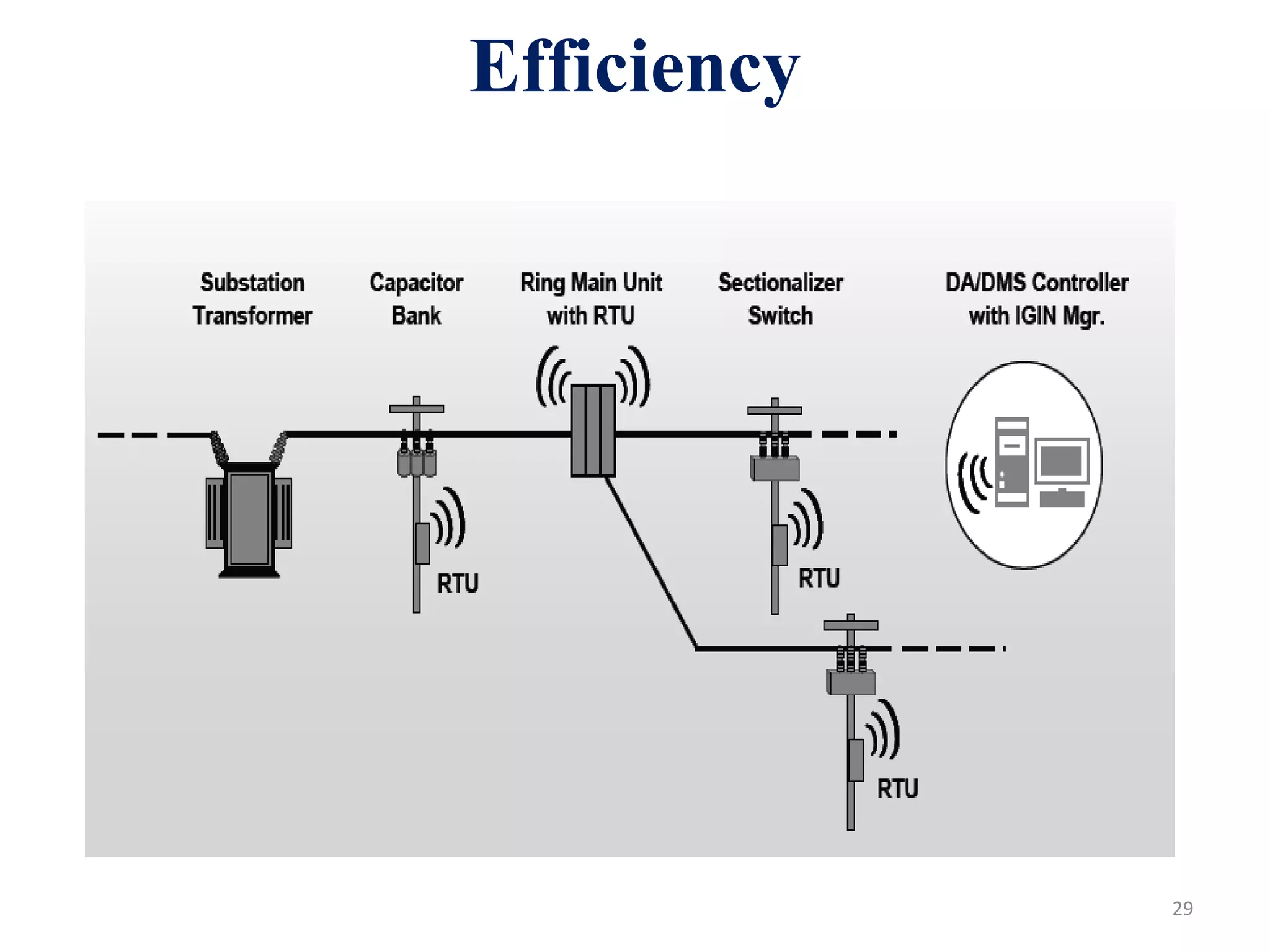
Efficiency
30
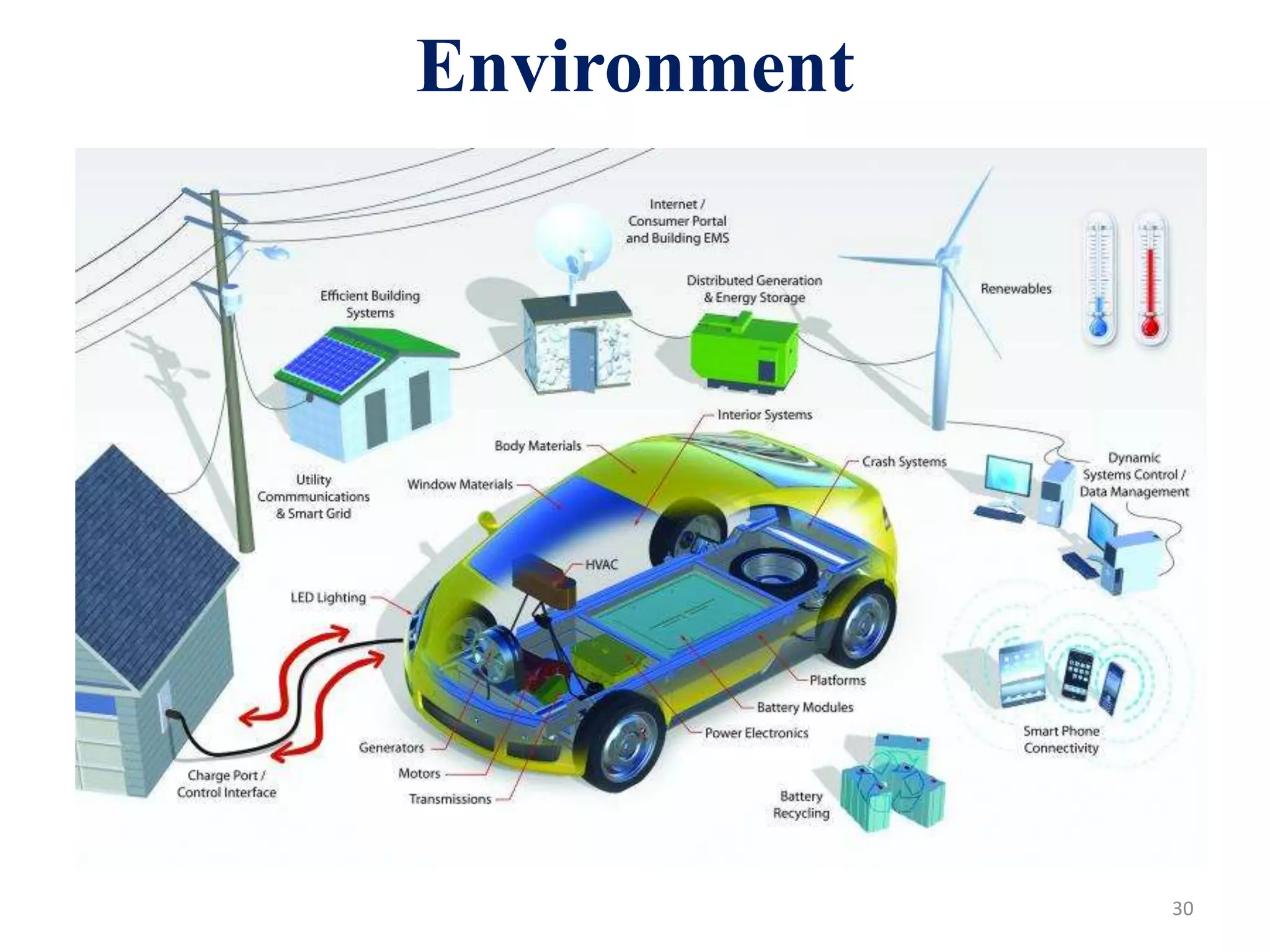
Environment
31
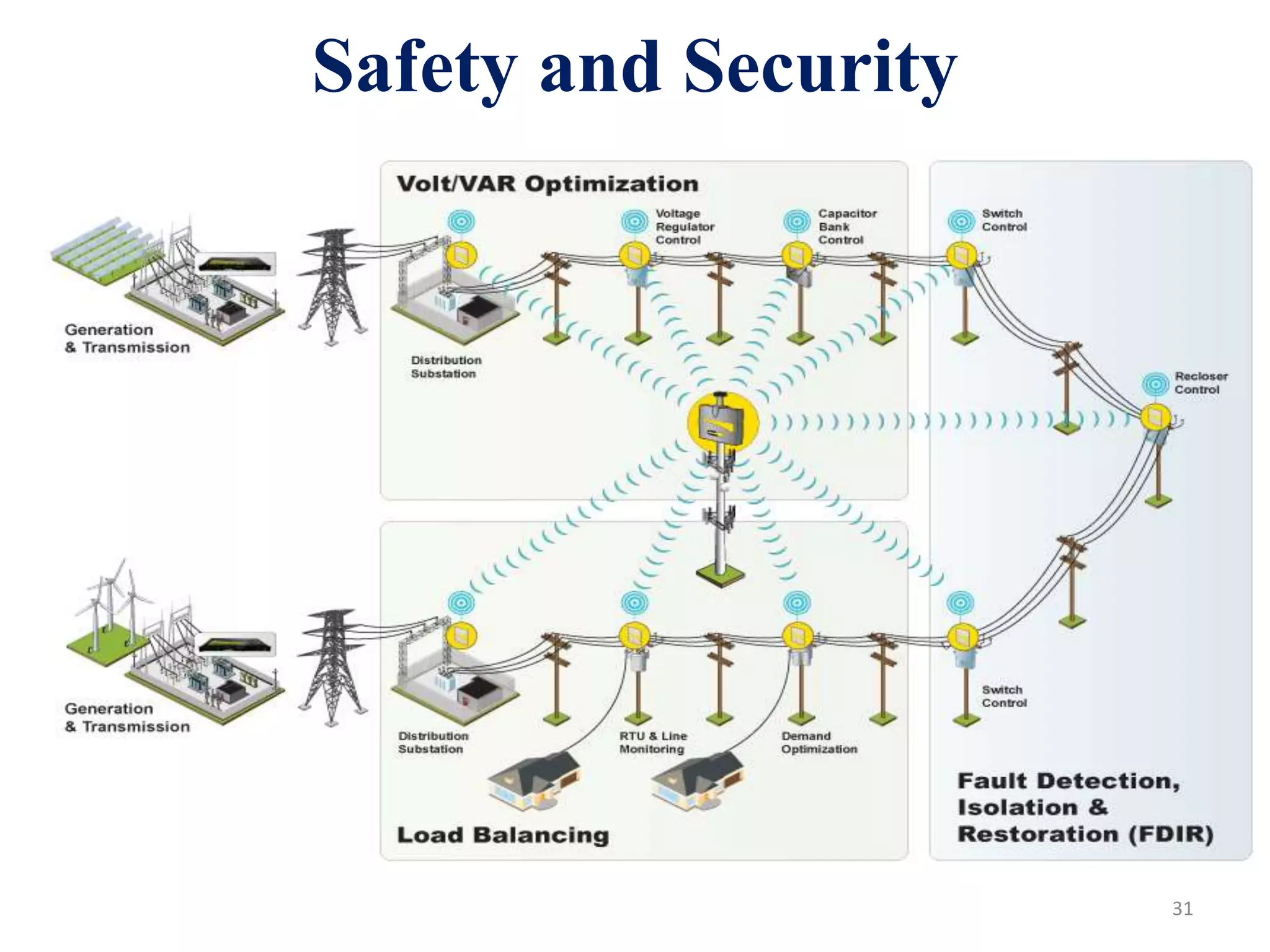
Safety and Security
Application
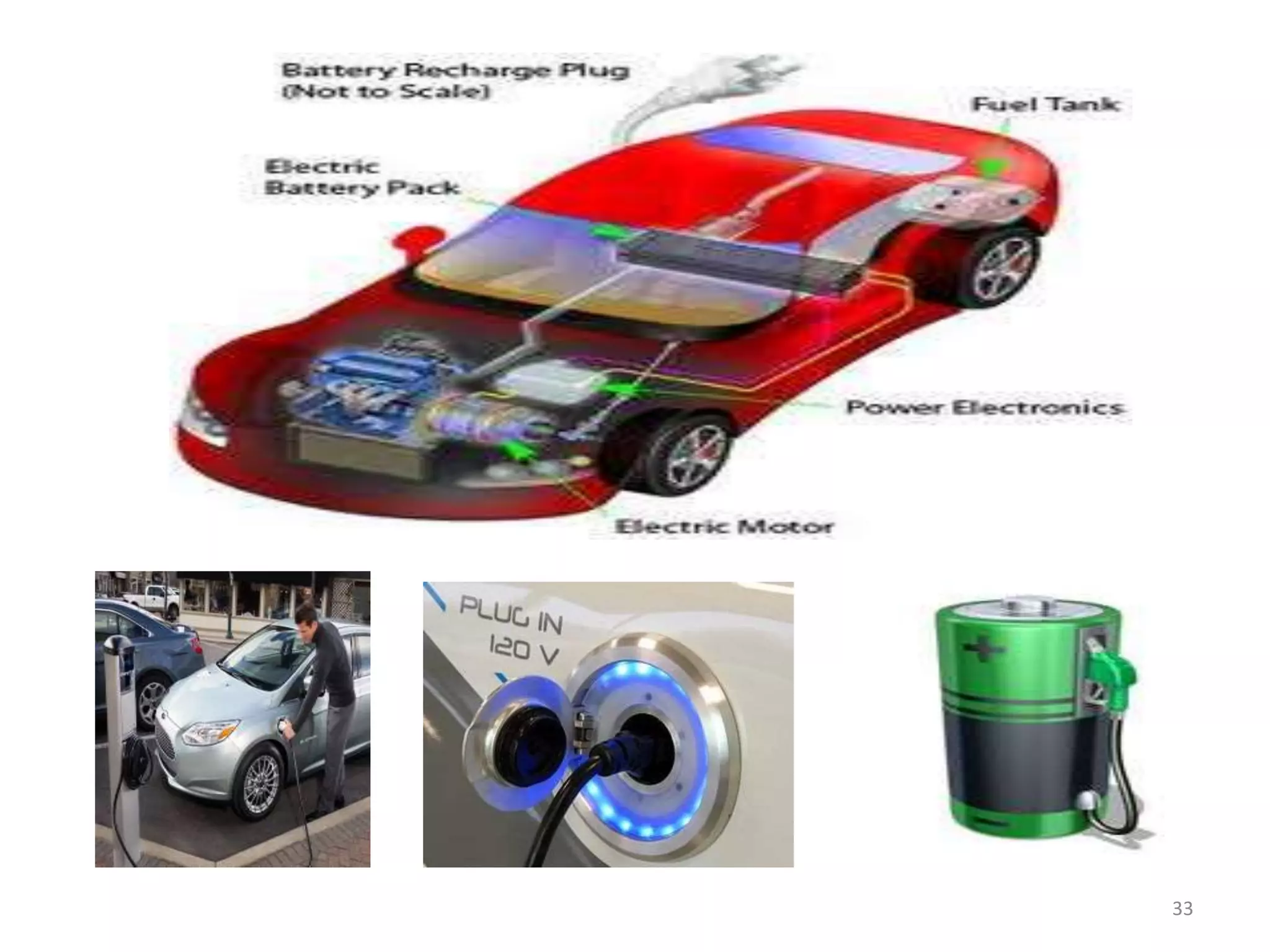
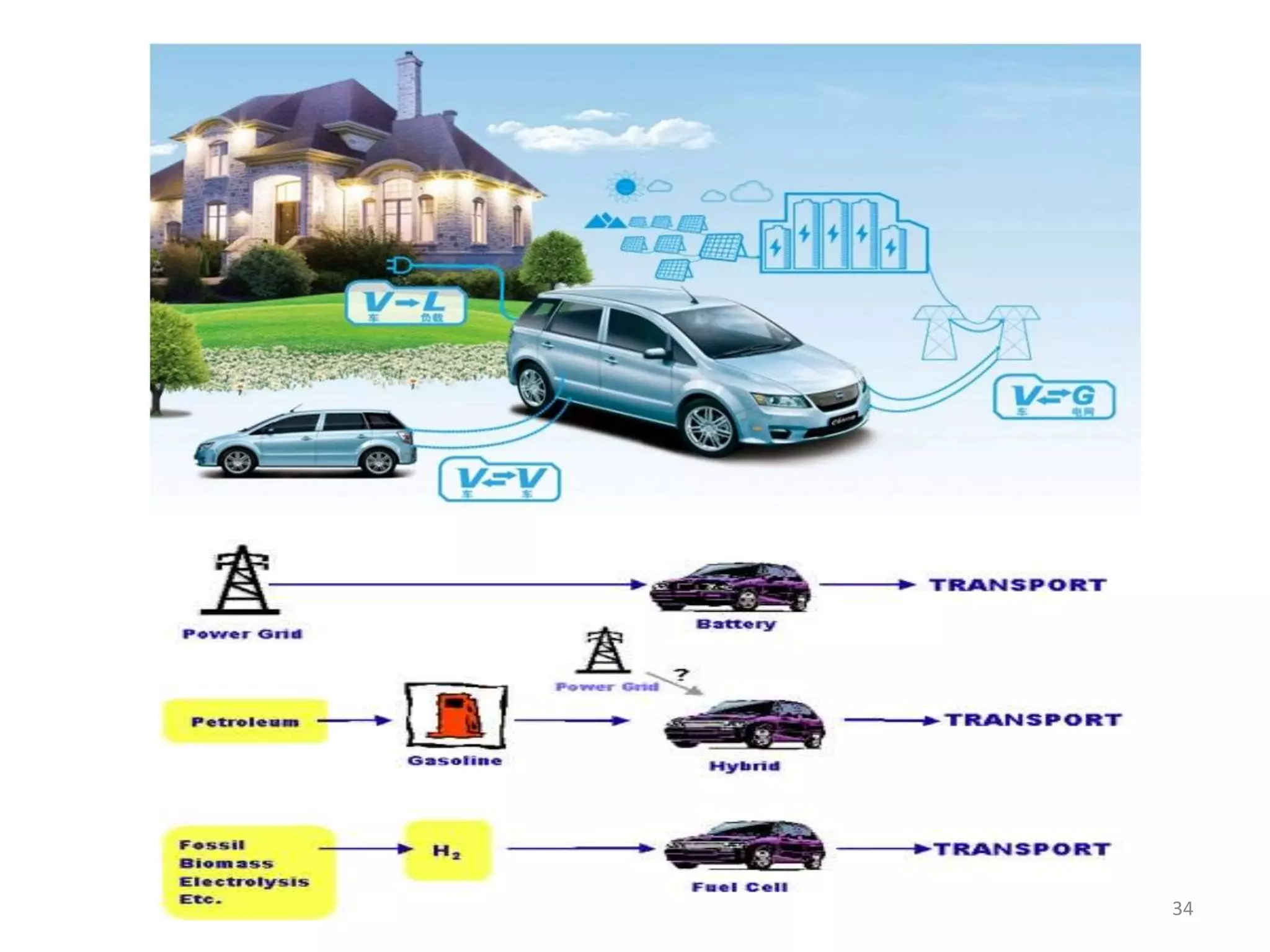
• Application of mitigating impacts of Plug-in
Hybrid and Battery Electric Vehicles and allowing
the implementation of Vehicle-to-Grid (V2G)
strategies.
32
33
34
• Application for optimal operation and control
of distribution systems and allowing the
implementation of micro-grids.
35
Application
Case Study of Smart Grid at Austin
Energy, Texas, USA
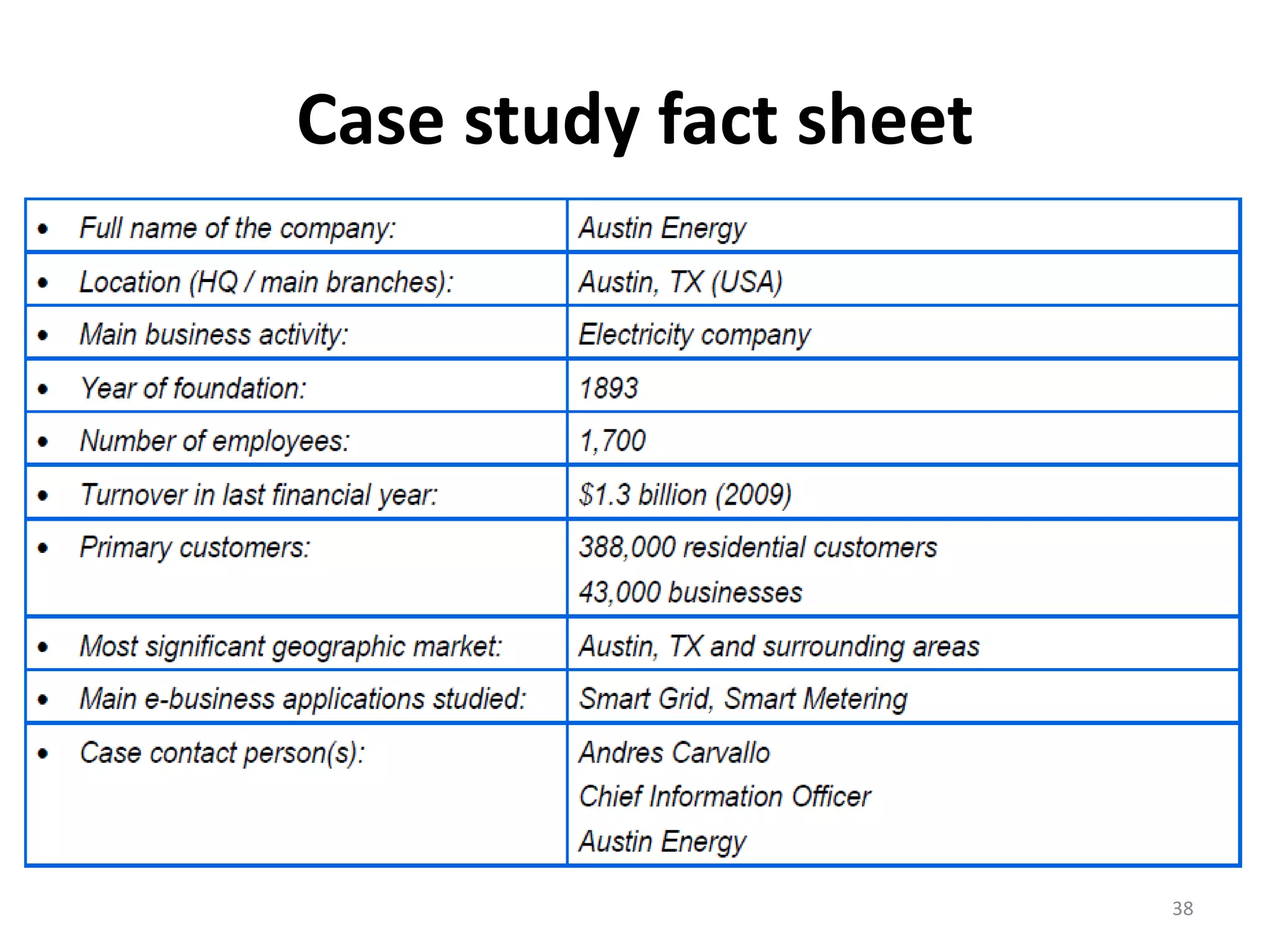
• The first part of Austin Energy's programmer, called
Smart Grid 1.0, to be concluded at the end of 2009,
focuses on the utility side of the grid, going from the
central power plant through the transmission and
distribution systems and all the way to the meter and
back.
36
• Use generation mix, including nuclear, coal,
natural gas, and renewable energy for a total of
2,600 MW.
• By 2020, Austin Energy plans to obtain 700 MW
of energy efficiency and a share of 30% of
renewable energy in its generation portfolio, of
which 100 MW coming from solar.
37
Case study fact sheet
38
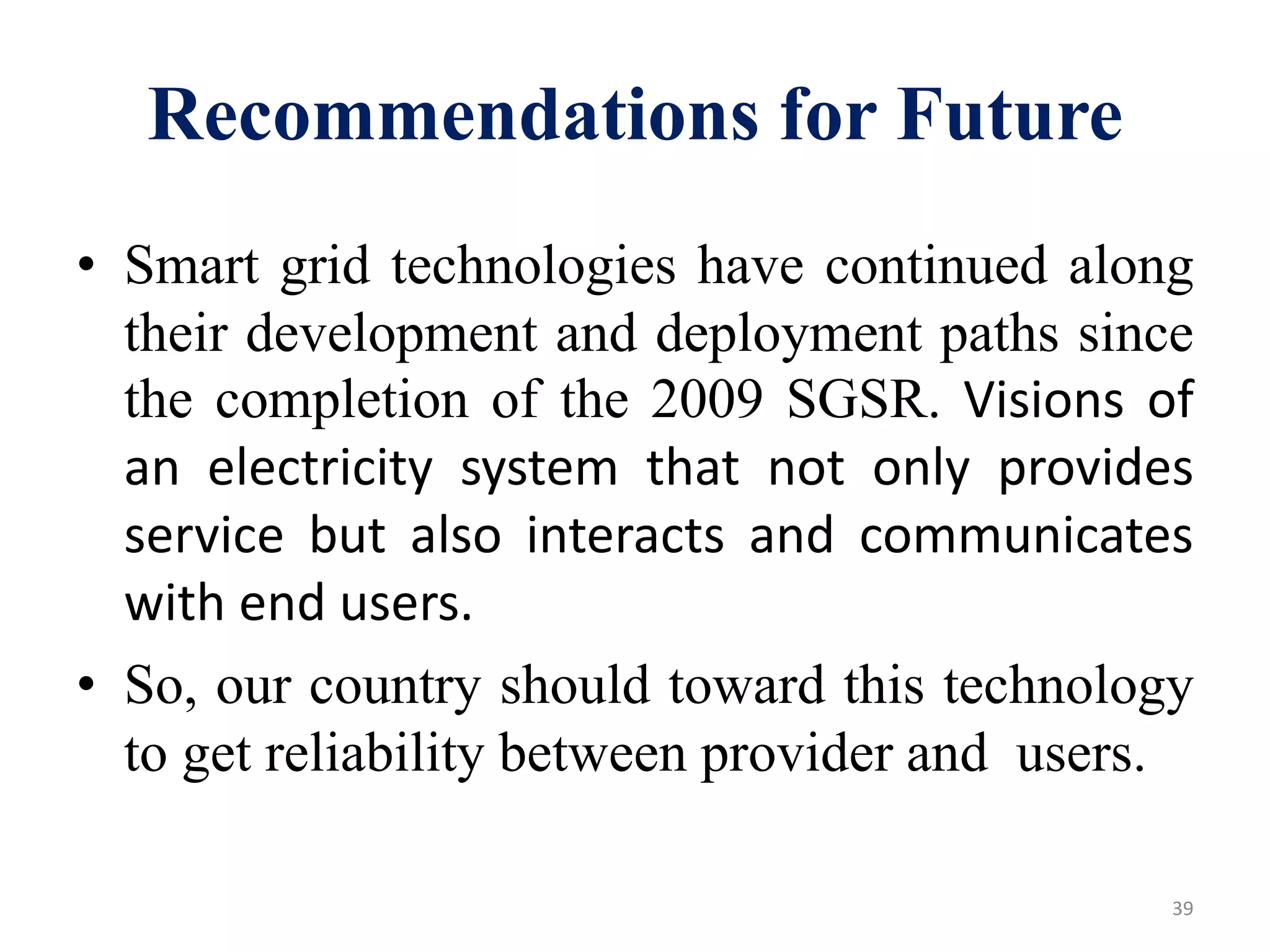
Recommendations for Future
• Smart grid technologies have continued along
their development and deployment paths since
the completion of the 2009 SGSR. Visions of
an electricity system that not only provides
service but also interacts and communicates
with end users.
• So, our country should toward this technology
to get reliability between provider and users.
39
 Future reports should consider addressing the
following potential improvements:
 Further evaluation of stakeholder feedback
 Further investigation and analysis of the risks and
challenges organizations
 Review progress toward resolving smart grid
challenges
40
Recommendations for Future
Conclusion
• Smart grid use communications and information
technology, with the objective to improve
reliability, operating efficiency and reduce impact
to the environment.
• Smart Grid Technology can play a key role in
Green Power Installed at the Distribution Systems.
• Technological Advances are developing Some
Unique Generators, especially in the Wind Turbine
Area and PV.
41
Questions &
Answers
Good Luck!!!

Smart grid distribution system

  • 1.
    1 Smart Grid DistributionSystem ANG Sovann
  • 2.
    Contents I. Introduction II. Whatis the Smart Grid? III. Smart Metter IV. Micro Grid V. Smart Grid Unites Transmission and Distribution VI. SCADA System VII. Energy Storage VIII. Advantages IX. Application X. Case Study XI. Recommendation for Future XII. Conclusion 2
  • 3.
    Introduction • In recentyears the term “Smart Grid” has become a widely used buzz word with respect to the operation of Electric Power Systems • A smart grid is a modern electric system • It is used in development countries like USA Japan China and European. • It is used to improve reliability, efficiency, safety and reduce Co2 by using renewable energies.
  • 4.
    What is theSmart Grid? • Short Answer: Smart Grid = IT + Electric Grid • It is operated by interconnection of elements— from the central and distributed generator through the high-voltage network and distribution system, to industrial users, energy storage installations and consumers.
  • 5.
    How does itwork? • Power plants are integrated and connect in ring system to support the loads. 5
  • 6.
    Smart Metter • Torecord and measure electricity. • Provided the consumption and price data or other signals. • To sent remotely to a central data management center. 6 Smart Metter
  • 7.
    Benefits of smartmeters • Accurate bills • Less time waiting in for the meter reader • Could help you save money • Reduced theft of energy • Faster resolution of problems • Micro-generation
  • 8.
    Micro-Grids • A micro-gridis an integrated energy solution that serves a group of consumers. • We can buy and sell electricity from the grid. Present by: Vuty
  • 9.
  • 10.
    Smart Grid UnitesTransmission and Distribution 10
  • 11.
    • Nuclear power plant, •Hydro, • Wind, • Solar radiation • Geothermal heat • Natural gas • Biomass. Distribution Generation 11
  • 12.
    Distribution Automation • DAis a family of technologies including sensors, processors, communication networks, and switches that can perform a number of distribution system functions depending on how they are implemented. • utilities have been applying DA to improve reliability, service quality and operational efficiency. 12
  • 13.
  • 14.
  • 15.
    SCADA System Supervisory ControlAnd Data Acquisition used to monitor and control, used for: Electric utilities use SCADA system to detect current flow and line voltage To monitor the operation circuit breaker To take sections of the power grid online or offline 15  Gathering and analyzing real time data Transfers the information back to a central site
  • 16.
    There are 4components: (1). Field Instrumentation (2). Remote telemetry units (3). Communication Networks (4). Central Monitoring Station or Master terminal units (MTU) 16 SCADA System
  • 17.
    • Devices usedfor monitoring and controlling each parameters • Sensors (either digital or analog) and control relays that directly interface with the managed system • These devices are connected to Remote Stations(RTU) 17 (1). Field Instrumentation
  • 18.
    (2). Remote telemetryunits • These are small computerized units deployed in the field at specific sites and locations. • RTUs serve at local collection points for gathering reports from sensors and delivering command to control relay • Receiving data and control signals from MTU and transmitting the control signals to the plant devices. 18
  • 19.
    (2). Remote telemetryunits (cont.) 19
  • 20.
    (3). Communications Network 20 •The communications Network that connect to the SCADA master terminal unit to Remote Telemetry unit (MTU to RUT). • SCADA communication techniques include – Modulation – Multiplexing – Message format – Information transfer
  • 21.
    (4). Central MonitoringStation • It is considered as the heart of the system where its main functions are: • Making the communication, gathering data, storing information, sending information to other systems • Processing the data gathered by remote stations to generate the necessary actions • Interfacing to the operators mainly via monitors and printers. The inputs and outputs of the MTU. 21
  • 22.
    SCADA System 22 Present by:Sompong Vientiane
  • 23.
    Energy Storage • Distributedenergy storage can help the grid remain stable, with the potential to make it a more efficient and reliable system that leads to lower operating costs in the long term 23
  • 24.
  • 25.
  • 26.
  • 27.
  • 28.
  • 29.
  • 30.
  • 31.
  • 32.
    Application • Application ofmitigating impacts of Plug-in Hybrid and Battery Electric Vehicles and allowing the implementation of Vehicle-to-Grid (V2G) strategies. 32
  • 33.
  • 34.
  • 35.
    • Application foroptimal operation and control of distribution systems and allowing the implementation of micro-grids. 35 Application
  • 36.
    Case Study ofSmart Grid at Austin Energy, Texas, USA • The first part of Austin Energy's programmer, called Smart Grid 1.0, to be concluded at the end of 2009, focuses on the utility side of the grid, going from the central power plant through the transmission and distribution systems and all the way to the meter and back. 36
  • 37.
    • Use generationmix, including nuclear, coal, natural gas, and renewable energy for a total of 2,600 MW. • By 2020, Austin Energy plans to obtain 700 MW of energy efficiency and a share of 30% of renewable energy in its generation portfolio, of which 100 MW coming from solar. 37
  • 38.
  • 39.
    Recommendations for Future •Smart grid technologies have continued along their development and deployment paths since the completion of the 2009 SGSR. Visions of an electricity system that not only provides service but also interacts and communicates with end users. • So, our country should toward this technology to get reliability between provider and users. 39
  • 40.
     Future reportsshould consider addressing the following potential improvements:  Further evaluation of stakeholder feedback  Further investigation and analysis of the risks and challenges organizations  Review progress toward resolving smart grid challenges 40 Recommendations for Future
  • 41.
    Conclusion • Smart griduse communications and information technology, with the objective to improve reliability, operating efficiency and reduce impact to the environment. • Smart Grid Technology can play a key role in Green Power Installed at the Distribution Systems. • Technological Advances are developing Some Unique Generators, especially in the Wind Turbine Area and PV. 41
  • 42.