ARTIFICIAL INTELLIGENCE IN
POWER PLANT
MADE BY:VIVEK PRAJAPATI
ECE 3rd YEAR
INTRODUCTION TO ARTIFICIAL
INTELLIGENCE
General definition:
AI is the branch of computer science that is concerned
with the automation of intelligent behavior.
OR SIMPLY
AI is the science of automating intelligent
behaviors currently achievable by humans
only.
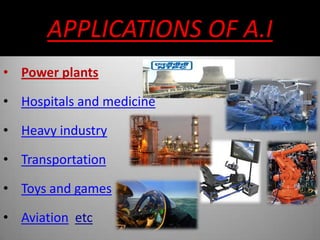
APPLICATIONS OF A.I
• Power plants
• Hospitals and medicine
• Heavy industry
• Transportation
• Toys and games
• Aviation etc
A.I IN POWER STATIONS
THERE ARE THREE TYPES OF MAJOR POWER PLANTS
KNOWN FOR THE MASSIVE ELECTICITY GENARATION
1. THERMAL POWER PLANTS
2. HYDAL POWER PLANTS
3. NUCLEAR POWER PLANTS
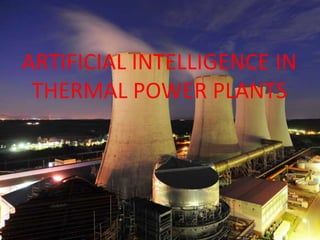
ARTIFICIAL INTELLIGENCE IN
THERMAL POWER PLANTS
Mobile monitoring of power
system
• The mobile monitoring of power system means the controlling and
maintenance of the plant by various automated means from a safe
distance.
• To solve this task,
multidisciplinary efforts are needed from fields such as sensing,
signal processing, control, communications, optimization theory,
and, more recently, robotics.
• The developments in robotic maintenance for power systems
indicate significant potential of this technological approach.
• The mobile monitoring of the power plant includes various sensors like
Acoustic sensing, Fringing electric field sensing, and infrared sensing
Advantages of robots in power system
maintenance
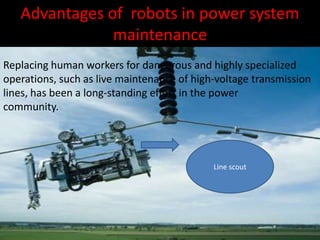
Replacing human workers for dangerous and highly specialized
operations, such as live maintenance of high-voltage transmission
lines, has been a long-standing effort in the power
community.
Line scout
Specifications of line scout robot
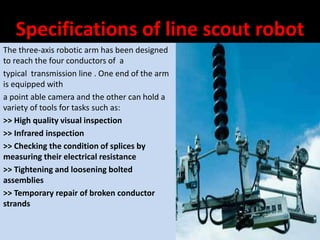
The three-axis robotic arm has been designed
to reach the four conductors of a
typical transmission line . One end of the arm
is equipped with
a point able camera and the other can hold a
variety of tools for tasks such as:
>> High quality visual inspection
>> Infrared inspection
>> Checking the condition of splices by
measuring their electrical resistance
>> Tightening and loosening bolted
assemblies
>> Temporary repair of broken conductor
strands
Applications of Robots in
nuclear power plants
• Other needs of robotics in power systems include
operation in hazardous environments, such as
radioactive locations in nuclear plants, access to tight
spaces, such as cable viaducts and cooling pipes, and
precise positioning of measurement equipment.
• Therefore, one may expect that the mobile sensing
will play an increasingly important role in the
monitoring of power systems.
Snake-arm robot
.
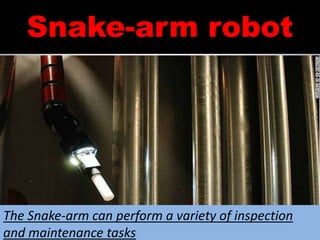
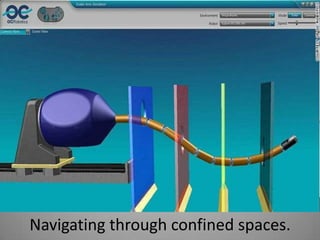
The Snake-arm can perform a variety of inspection
and maintenance tasks
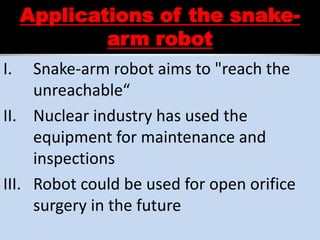
Applications of the snake-
arm robot
I. Snake-arm robot aims to "reach the
unreachable“
II. Nuclear industry has used the
equipment for maintenance and
inspections
III. Robot could be used for open orifice
surgery in the future
Navigating through confined spaces.
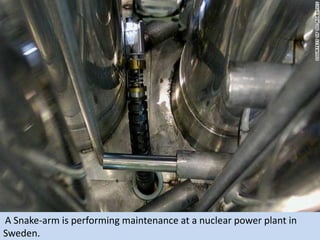
A Snake-arm is performing maintenance at a nuclear power plant in
Sweden.
Thank you .

Artificial intelligence in power plants

  • 1.
    ARTIFICIAL INTELLIGENCE IN POWERPLANT MADE BY:VIVEK PRAJAPATI ECE 3rd YEAR
  • 2.
    INTRODUCTION TO ARTIFICIAL INTELLIGENCE Generaldefinition: AI is the branch of computer science that is concerned with the automation of intelligent behavior. OR SIMPLY AI is the science of automating intelligent behaviors currently achievable by humans only.
  • 4.
    APPLICATIONS OF A.I •Power plants • Hospitals and medicine • Heavy industry • Transportation • Toys and games • Aviation etc
  • 5.
    A.I IN POWERSTATIONS THERE ARE THREE TYPES OF MAJOR POWER PLANTS KNOWN FOR THE MASSIVE ELECTICITY GENARATION 1. THERMAL POWER PLANTS 2. HYDAL POWER PLANTS 3. NUCLEAR POWER PLANTS
  • 6.
  • 7.
    Mobile monitoring ofpower system • The mobile monitoring of power system means the controlling and maintenance of the plant by various automated means from a safe distance. • To solve this task, multidisciplinary efforts are needed from fields such as sensing, signal processing, control, communications, optimization theory, and, more recently, robotics. • The developments in robotic maintenance for power systems indicate significant potential of this technological approach. • The mobile monitoring of the power plant includes various sensors like Acoustic sensing, Fringing electric field sensing, and infrared sensing
  • 8.
    Advantages of robotsin power system maintenance Replacing human workers for dangerous and highly specialized operations, such as live maintenance of high-voltage transmission lines, has been a long-standing effort in the power community. Line scout
  • 9.
    Specifications of linescout robot The three-axis robotic arm has been designed to reach the four conductors of a typical transmission line . One end of the arm is equipped with a point able camera and the other can hold a variety of tools for tasks such as: >> High quality visual inspection >> Infrared inspection >> Checking the condition of splices by measuring their electrical resistance >> Tightening and loosening bolted assemblies >> Temporary repair of broken conductor strands
  • 10.
    Applications of Robotsin nuclear power plants • Other needs of robotics in power systems include operation in hazardous environments, such as radioactive locations in nuclear plants, access to tight spaces, such as cable viaducts and cooling pipes, and precise positioning of measurement equipment. • Therefore, one may expect that the mobile sensing will play an increasingly important role in the monitoring of power systems.
  • 11.
    Snake-arm robot . The Snake-armcan perform a variety of inspection and maintenance tasks
  • 12.
    Applications of thesnake- arm robot I. Snake-arm robot aims to "reach the unreachable“ II. Nuclear industry has used the equipment for maintenance and inspections III. Robot could be used for open orifice surgery in the future
  • 13.
  • 14.
    A Snake-arm isperforming maintenance at a nuclear power plant in Sweden.
  • 15.