1
National Polytechnic Institute of Cambodia
Ang Sovann
Archimedes and Buoyancy ‘s Law
2
Introduction to fluid
 Fluids are divided into liquids and gases.
 In general, liquids are called incompressible fluids and gases
compressible fluids.
3
Pressure
4
Pressure
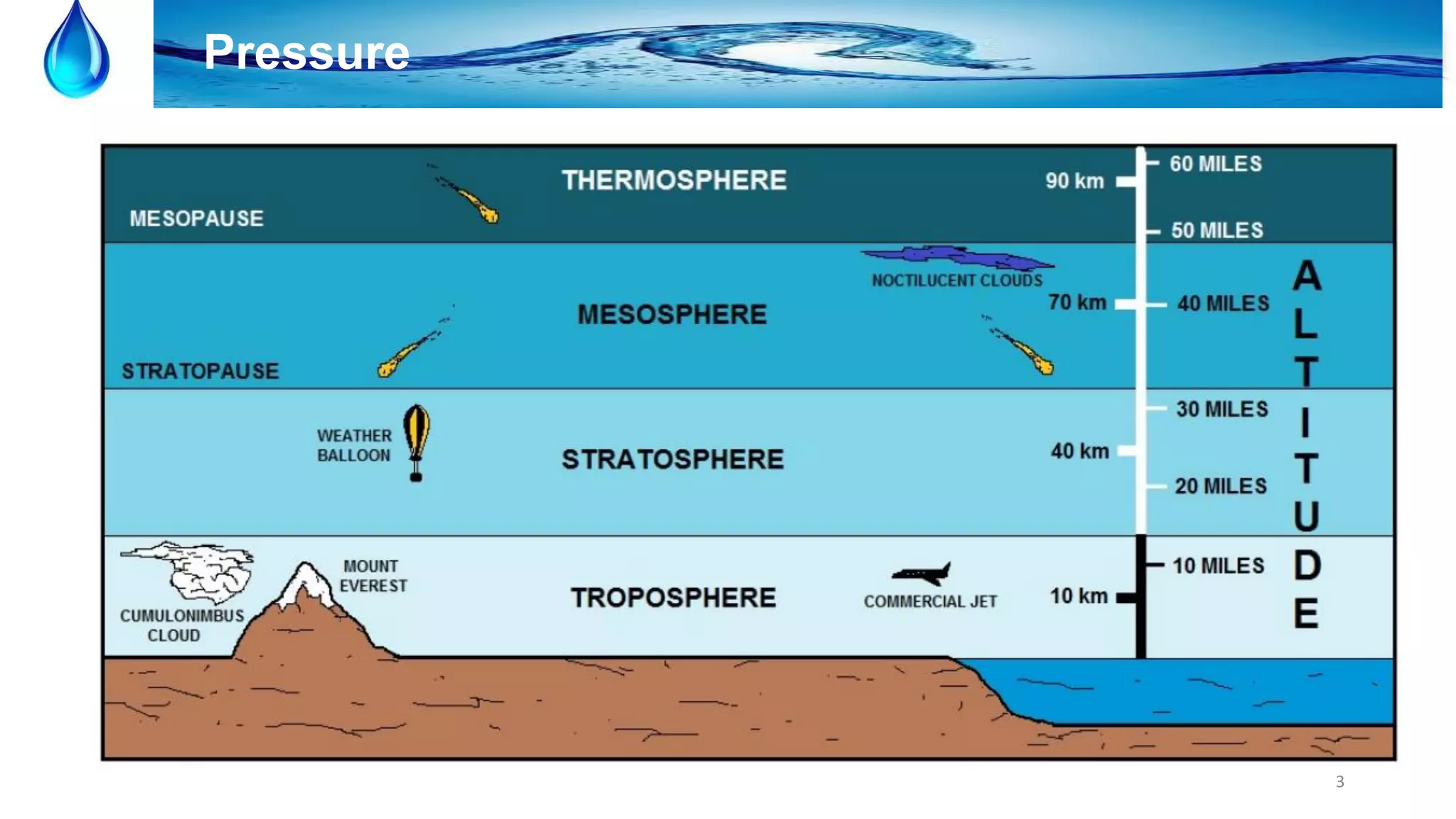
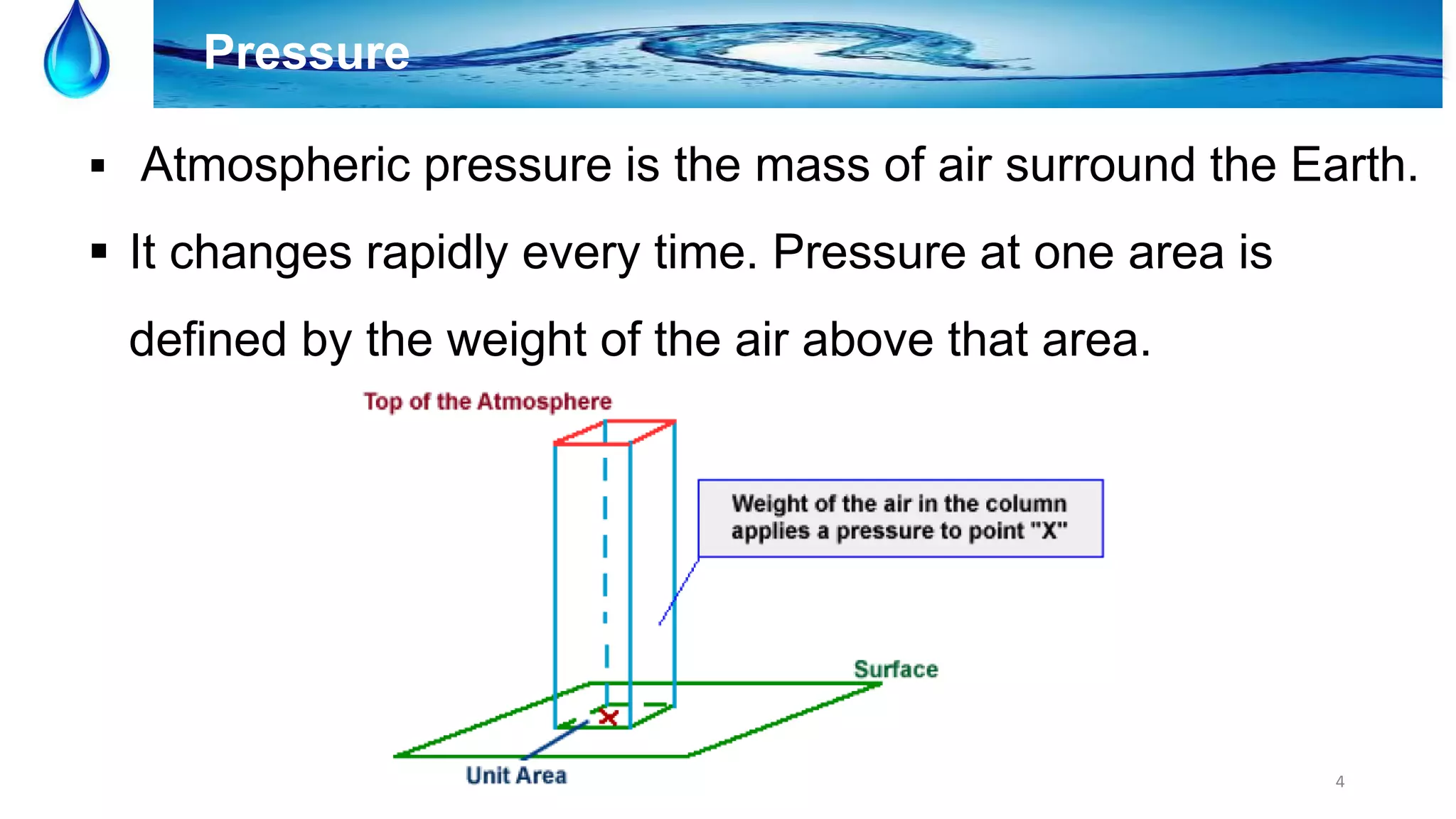
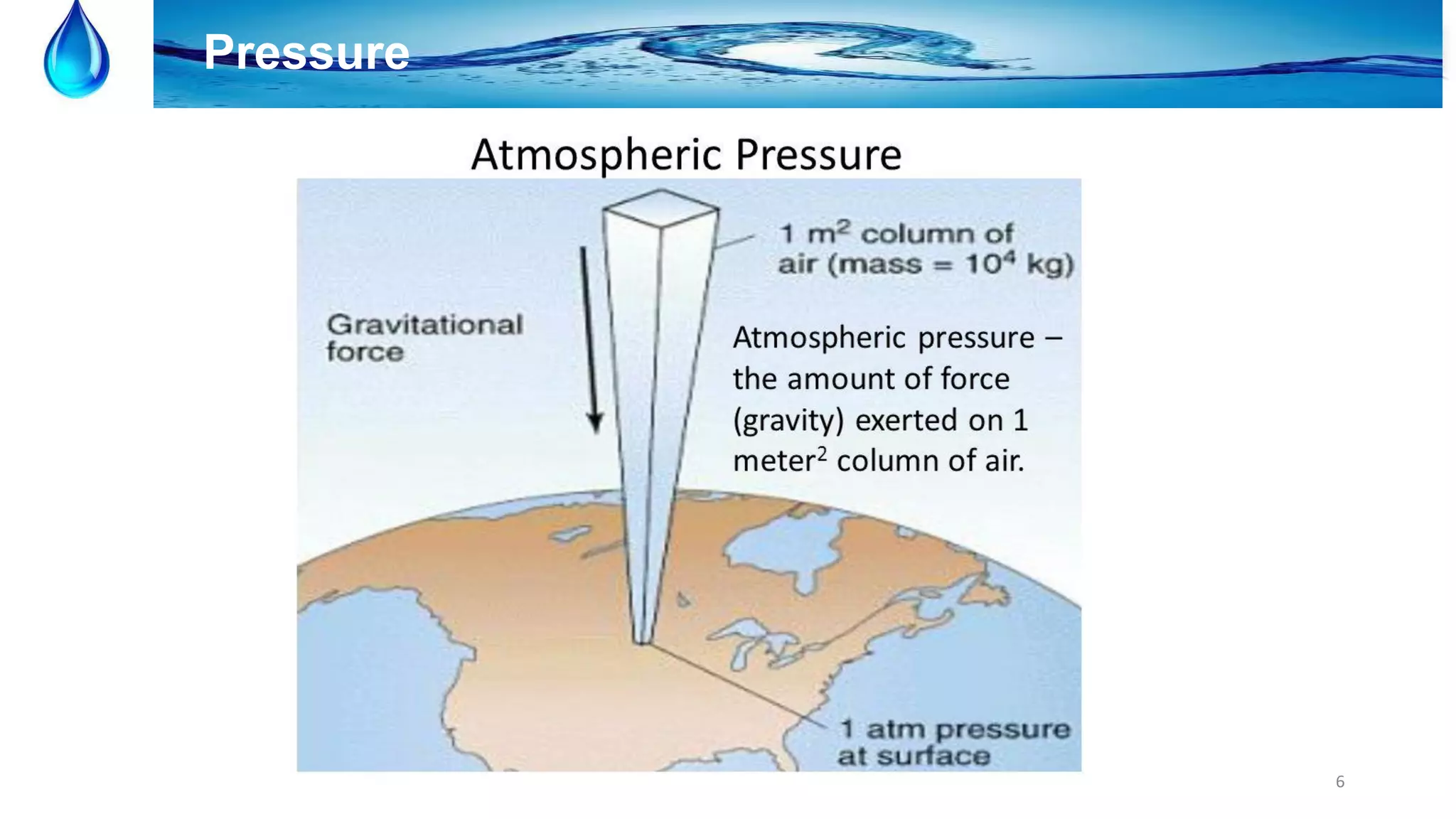
 Atmospheric pressure is the mass of air surround the Earth.
 It changes rapidly every time. Pressure at one area is
defined by the weight of the air above that area.
5
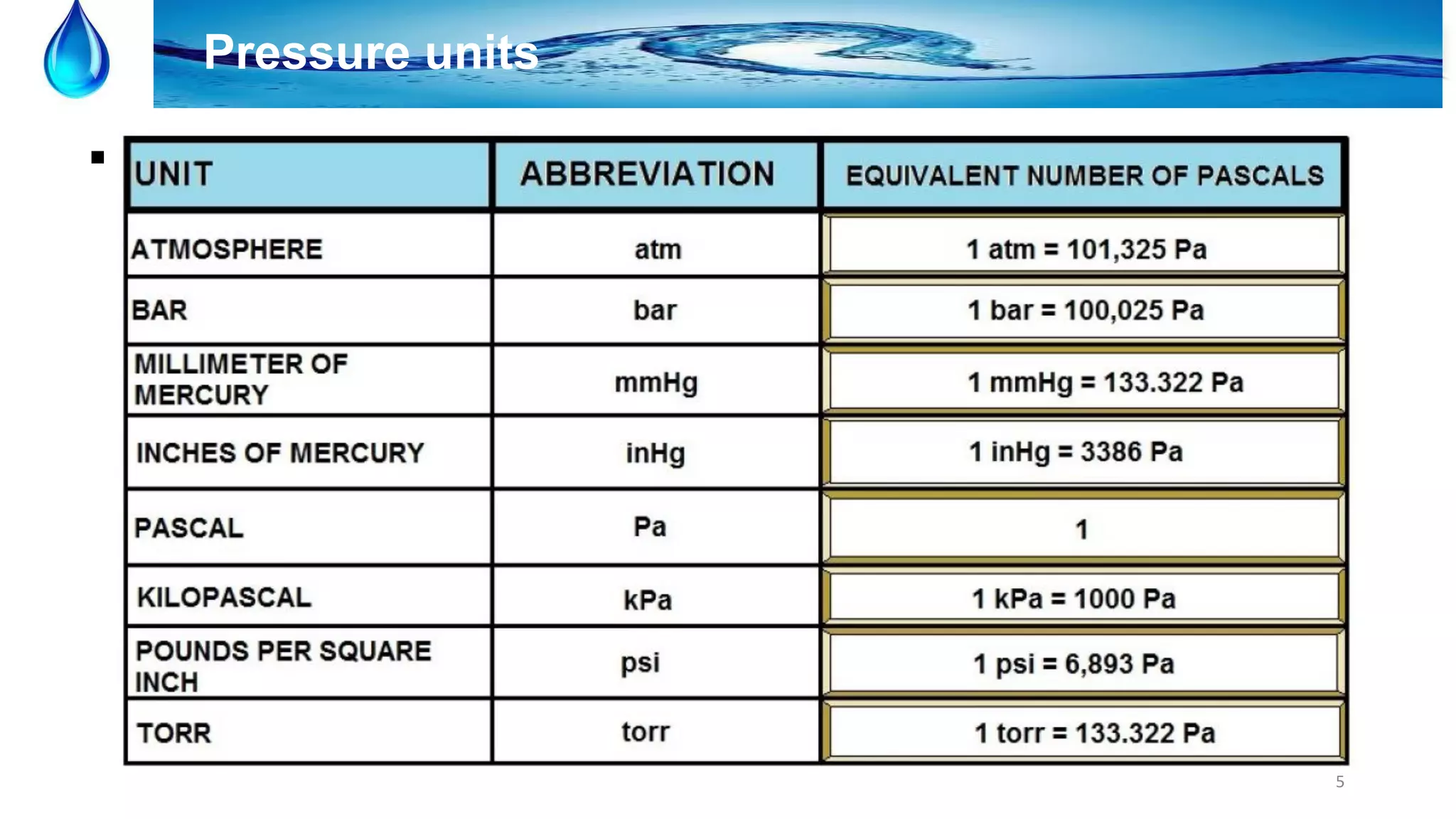
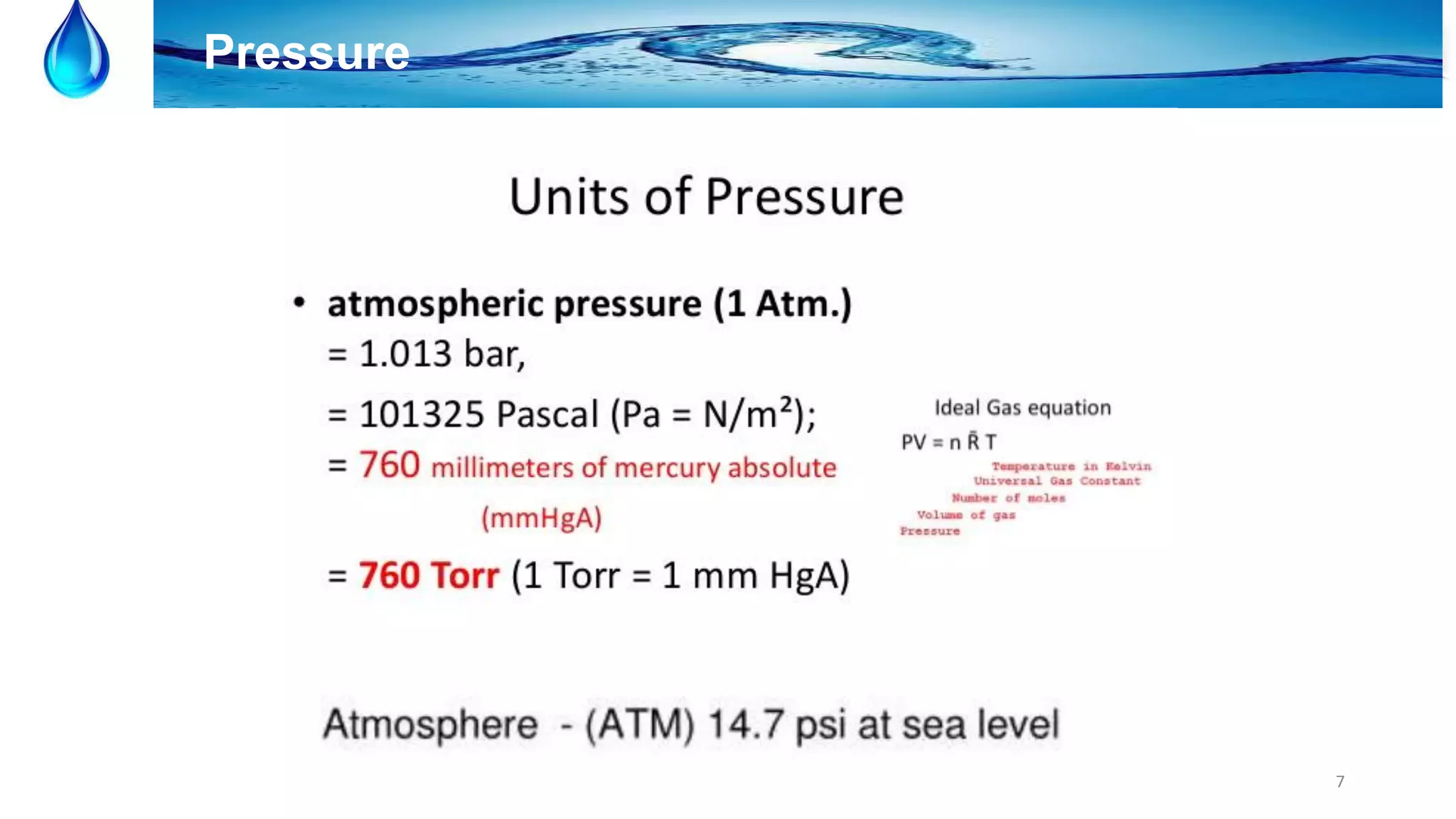
Pressure units

6
Pressure
7
Pressure
8
Pressure
9
Water Pressure
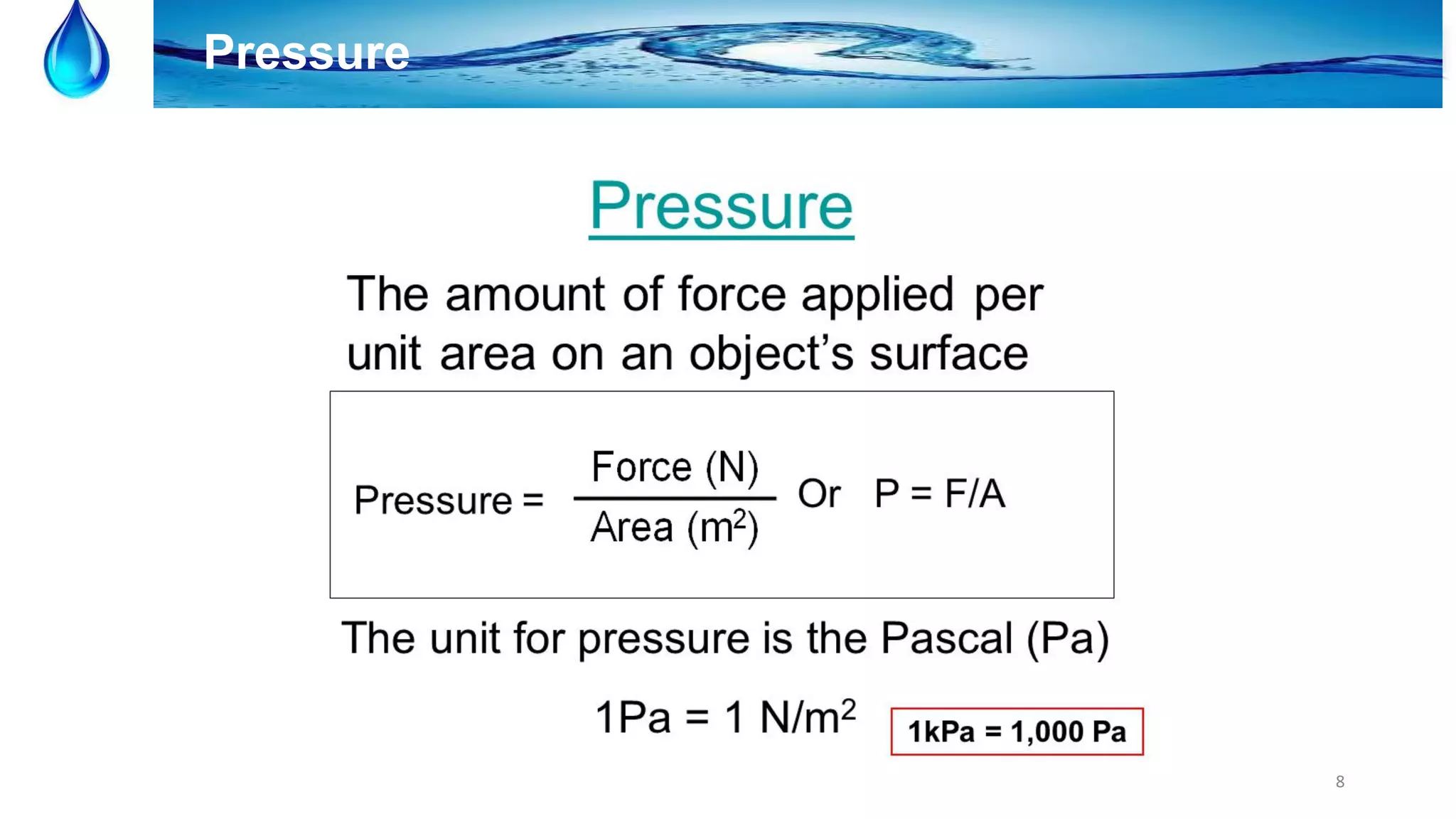
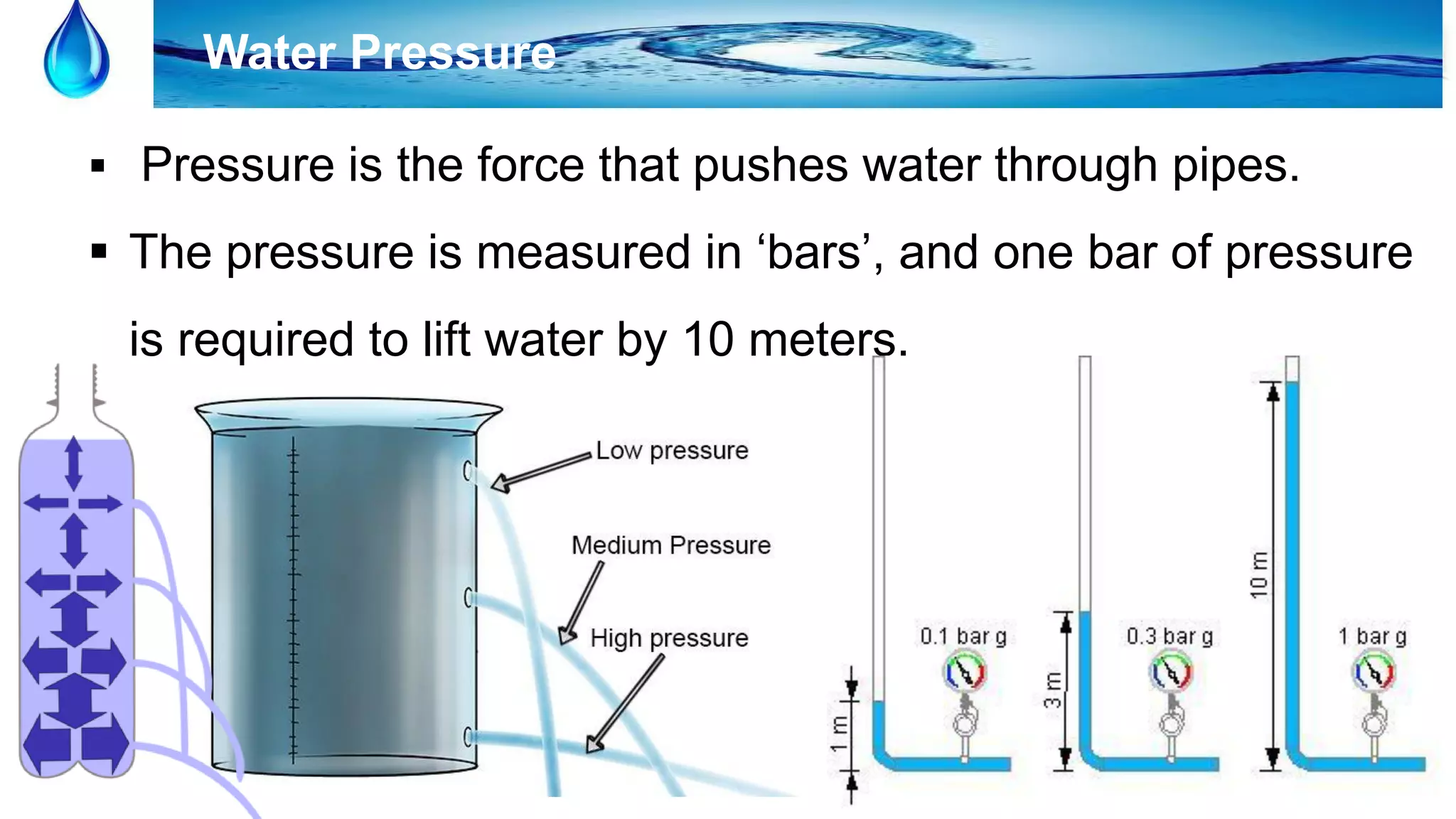
 Pressure is the force that pushes water through pipes.
 The pressure is measured in ‘bars’, and one bar of pressure
is required to lift water by 10 meters.
10
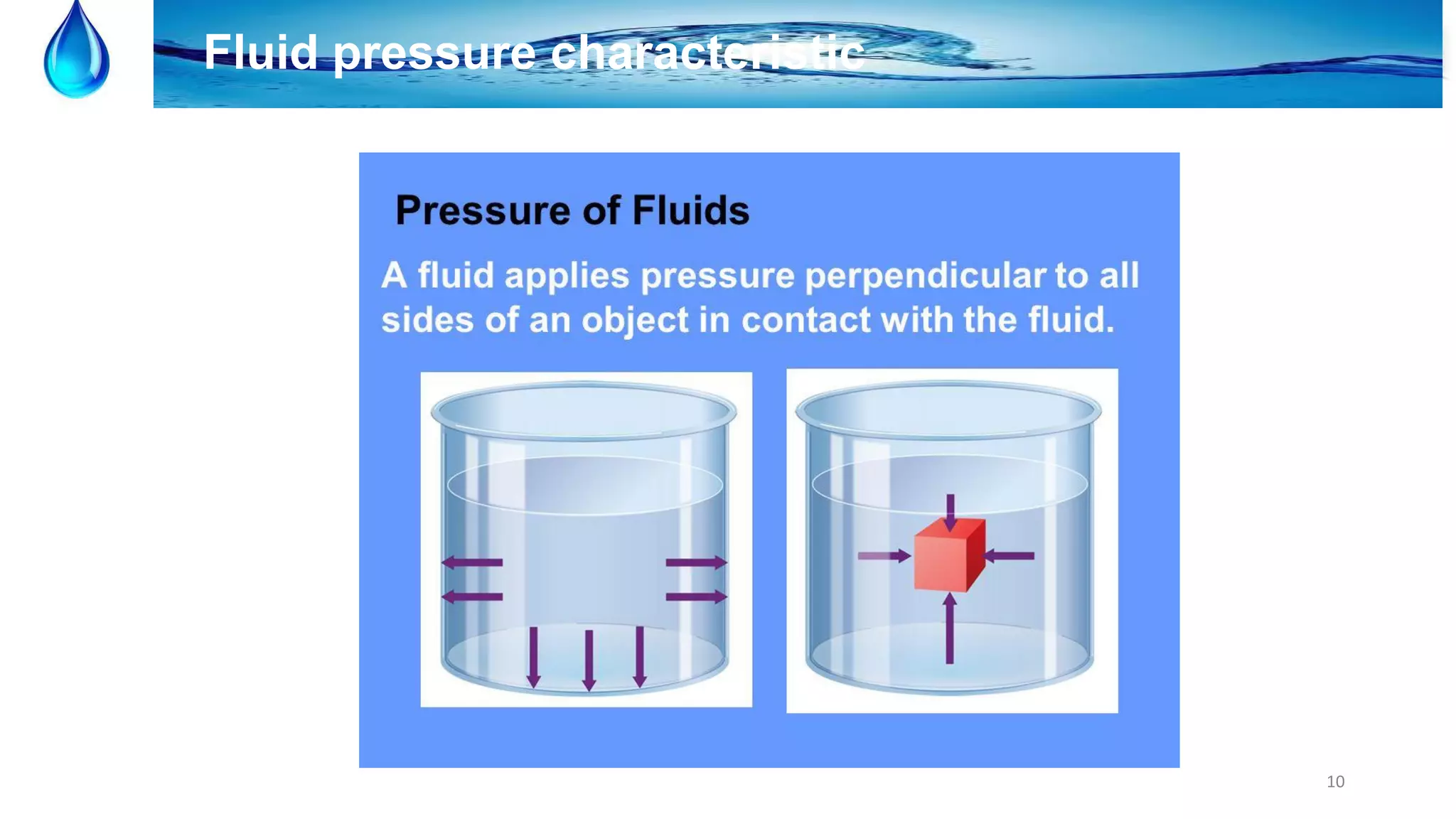
Fluid pressure characteristic
11
Water Pressure
 Water pressure does not remain constant and can vary
when demand for water is high. For example, during busy
morning and evening periods, water pressure in the mains
network may reduce.
 Low pressure can occur when the pressure in the water main
is not enough
12
Water Pressure
 Water pressure is measured at the point where it leaves our
pipework.
 All water companies are legally required to supply a
minimum water pressure of 0.7 bar to the point that their
pipework meets the homeowner's supply pipe.
13
Water Pressure
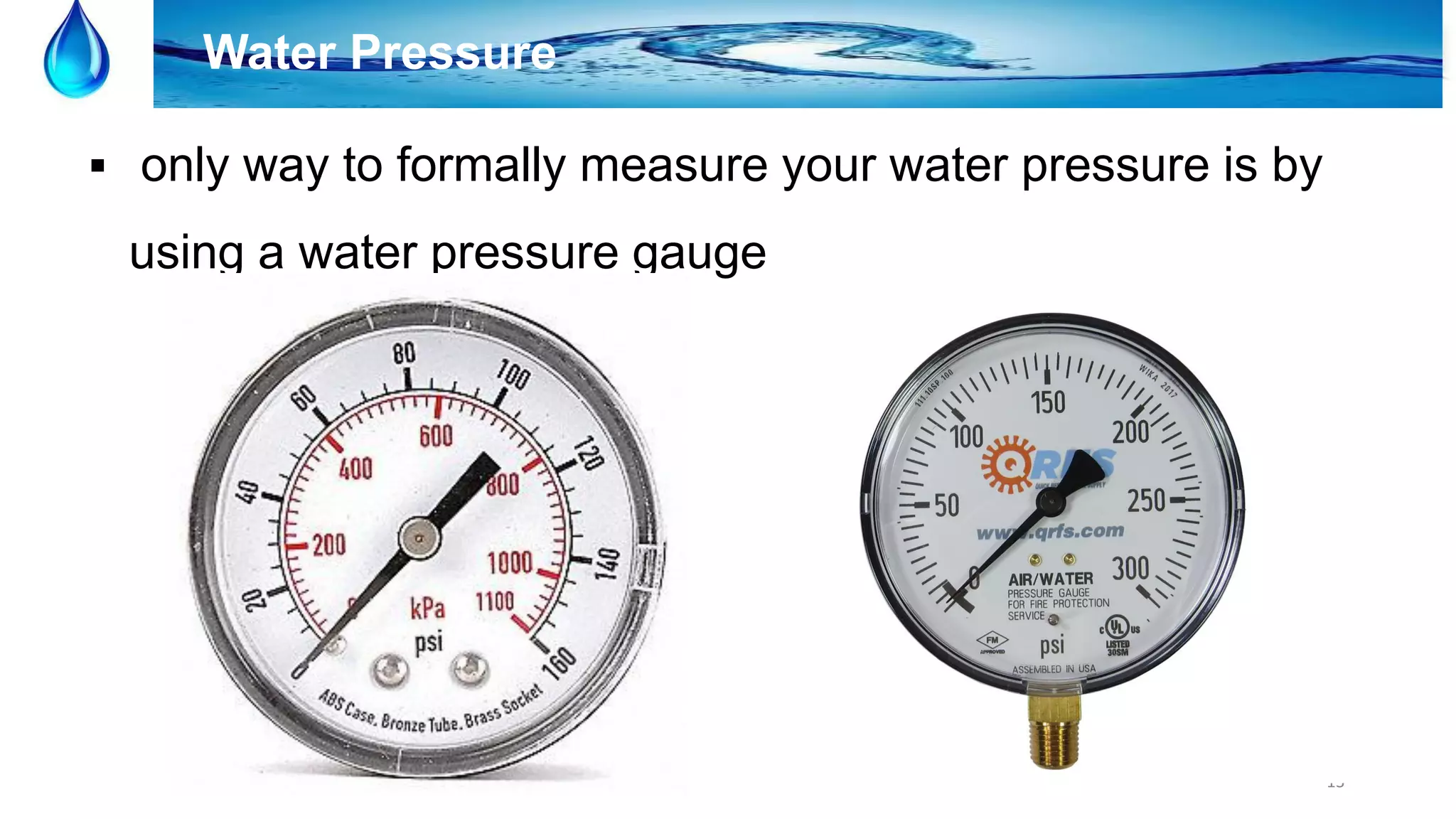
 only way to formally measure your water pressure is by
using a water pressure gauge
14
Water Pressure
 Water pressure can vary at different times of the day.
Pressure is normally higher late at night when very little
water is being taken from our network and most people's
taps are turned off.
 In the morning when people are taking a bath or shower, or
watering their garden on a hot evening, there is a bigger
demand for water which can cause low pressures.
15
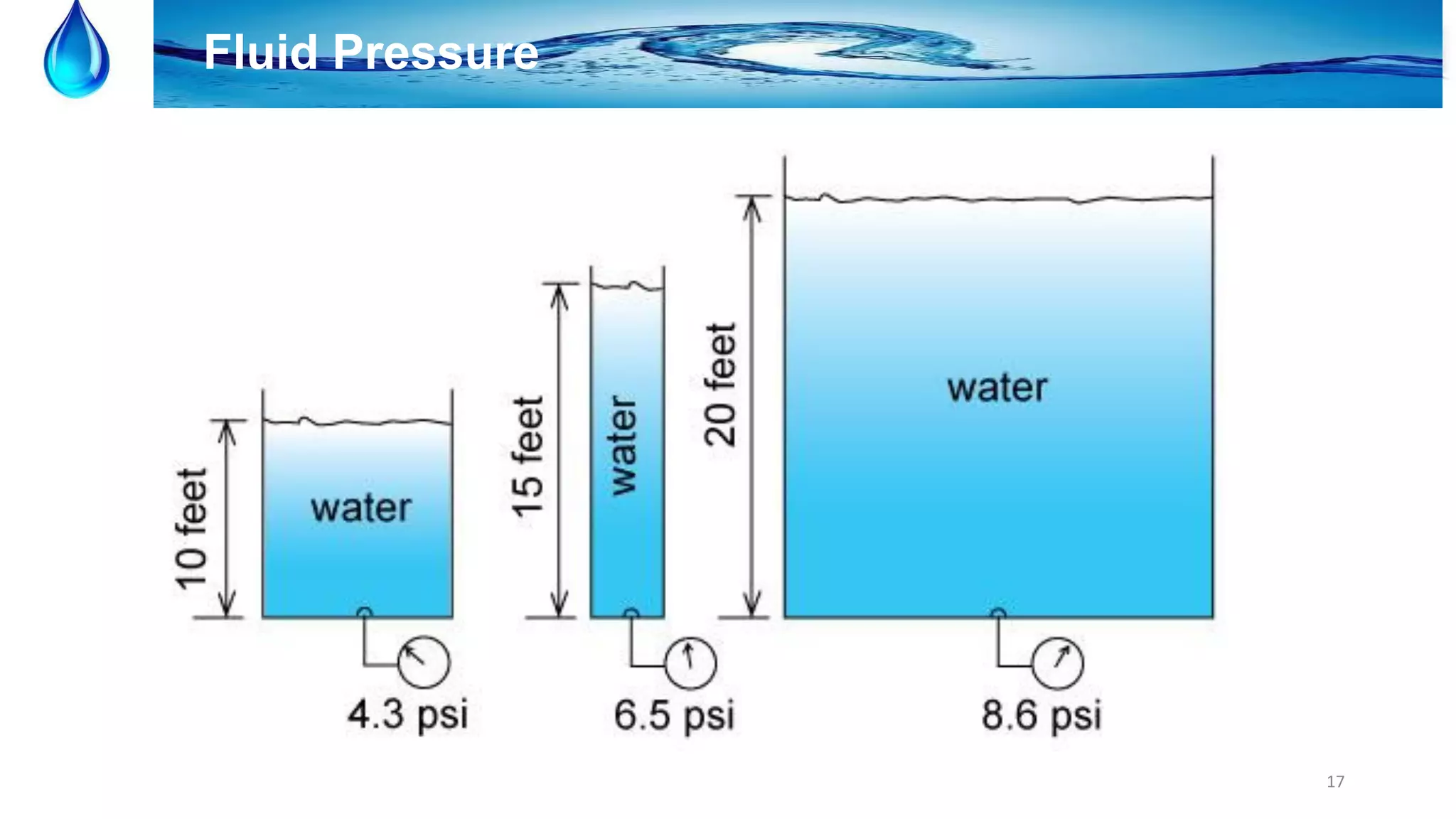
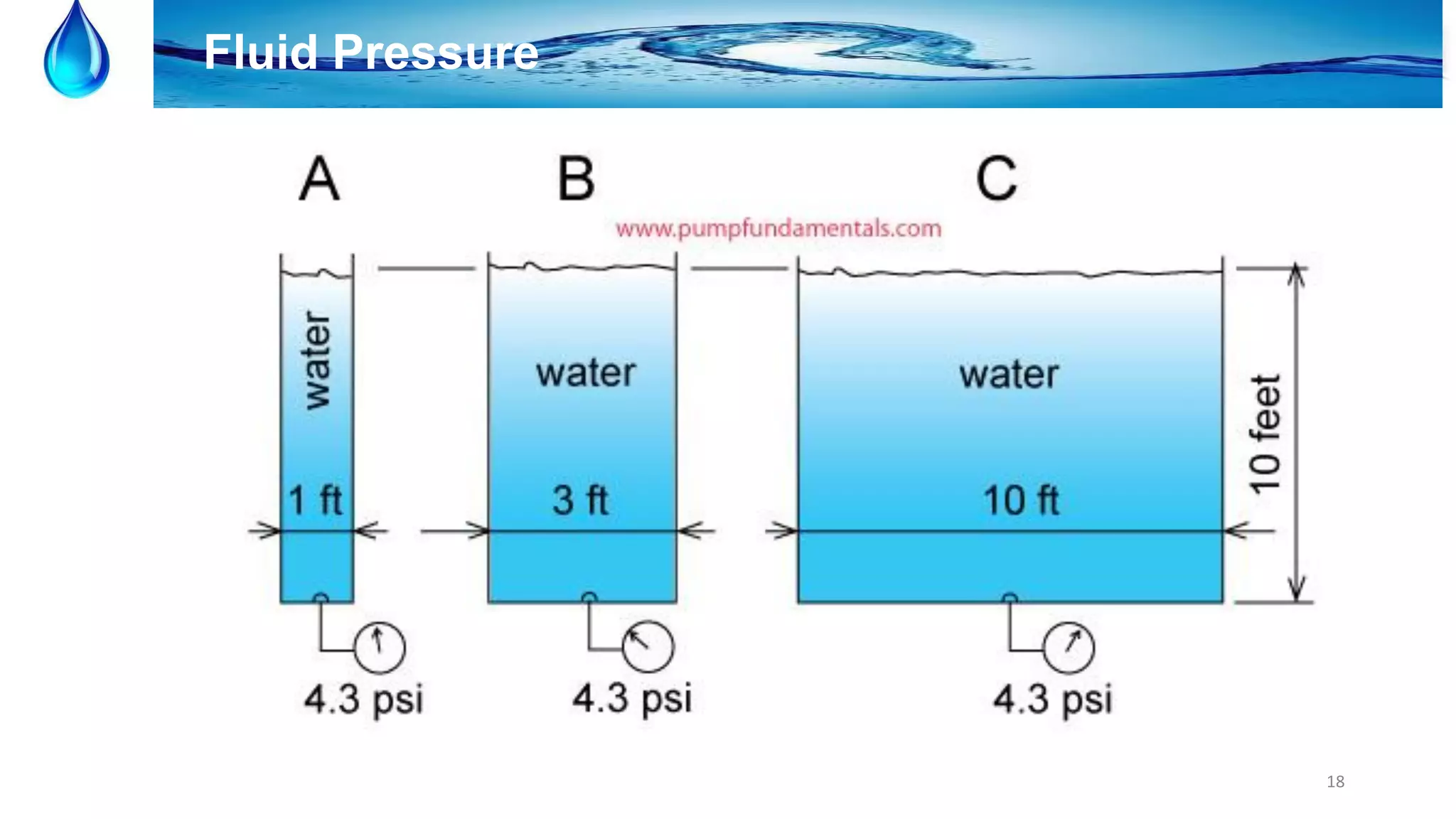
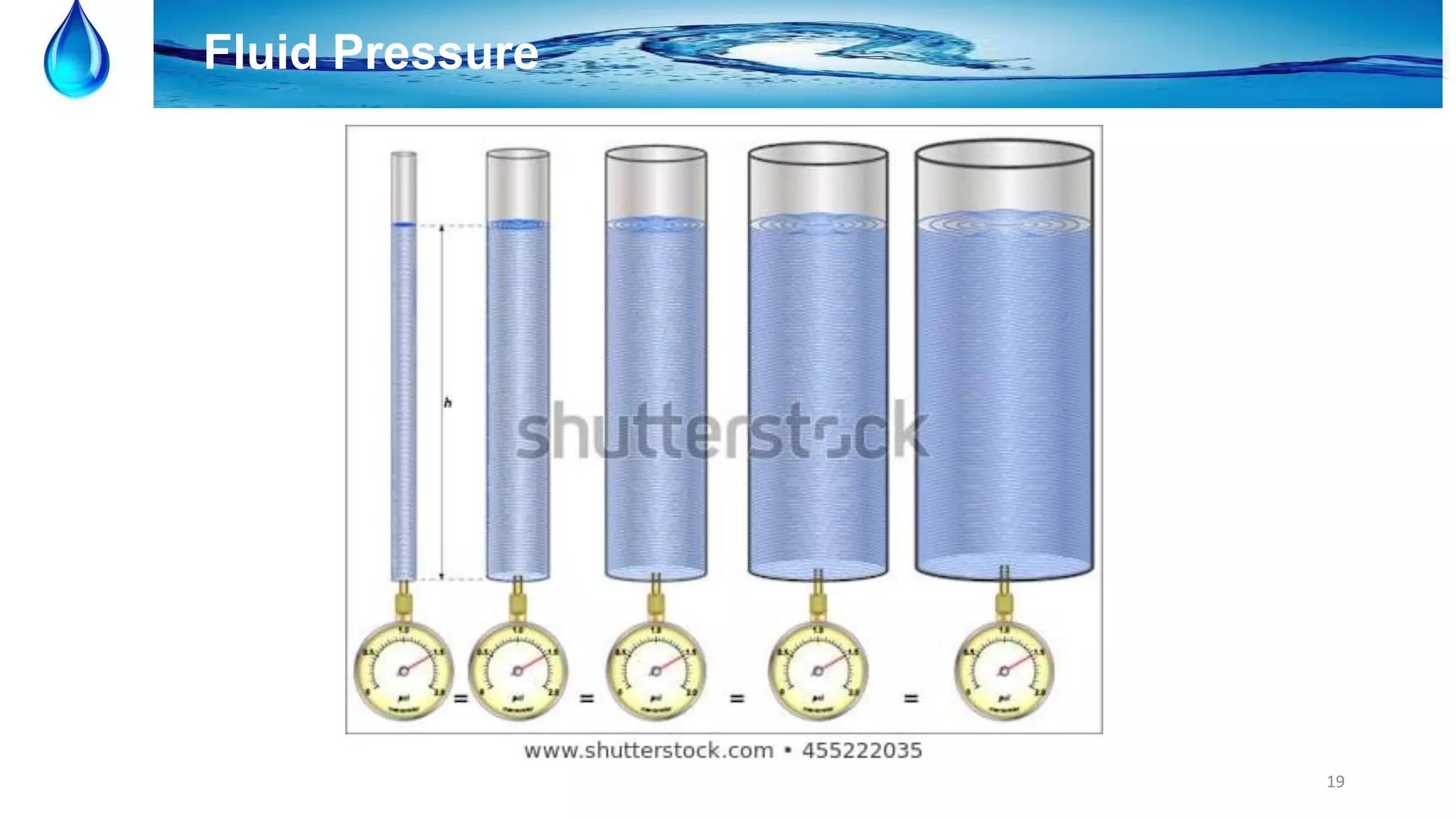
Fluid Pressure
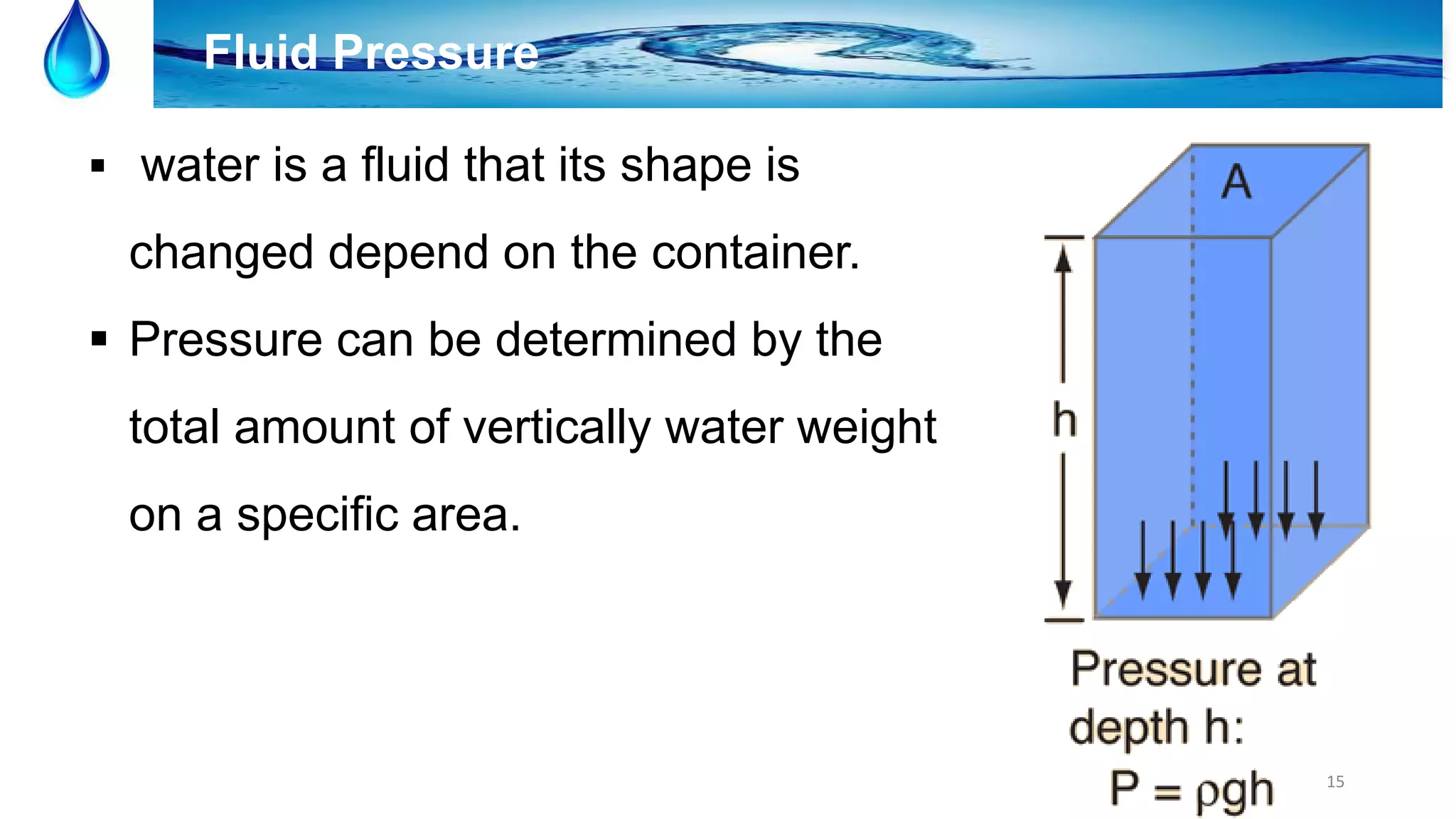
 water is a fluid that its shape is
changed depend on the container.
 Pressure can be determined by the
total amount of vertically water weight
on a specific area.
16
Fluid Pressure
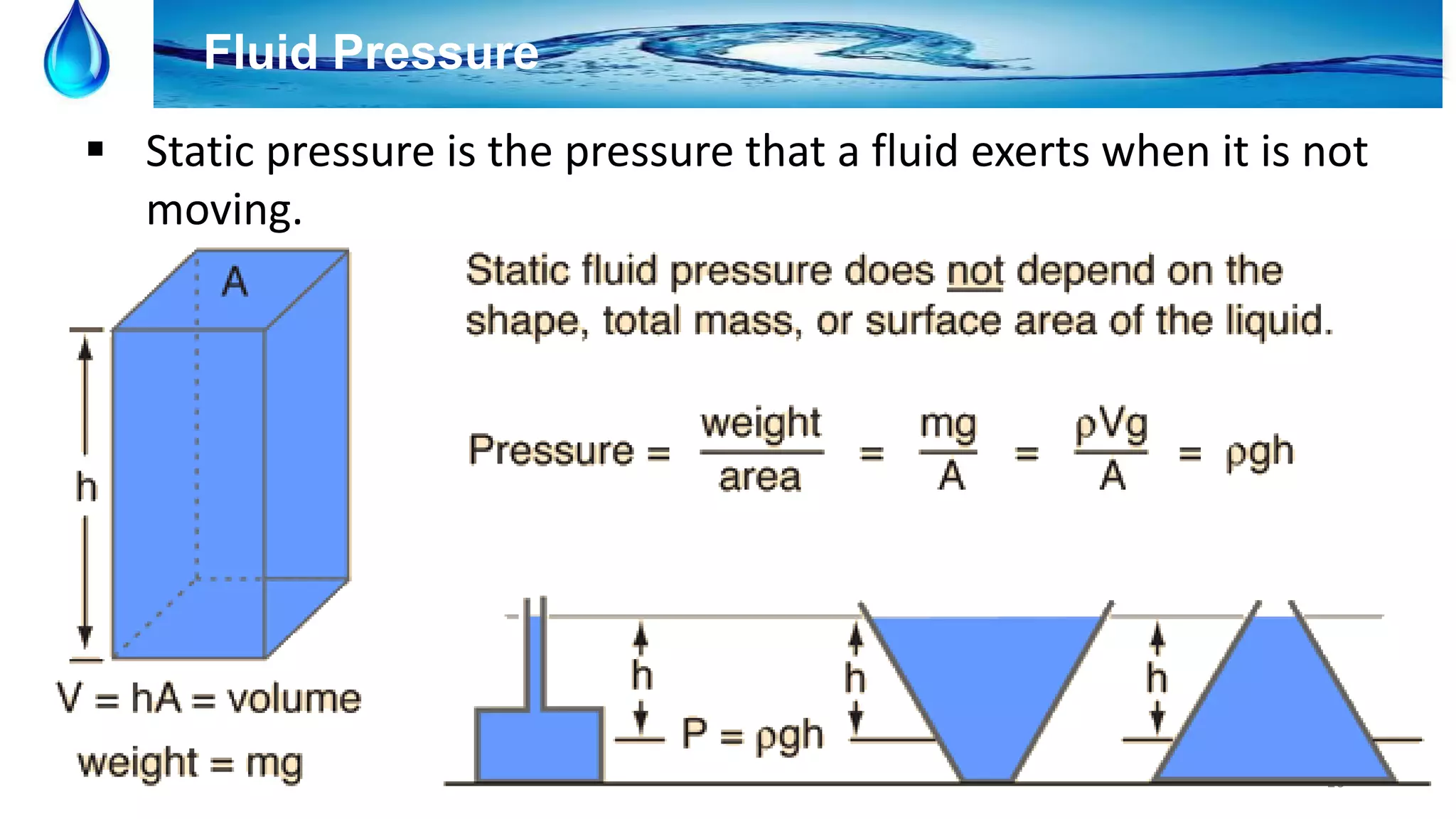
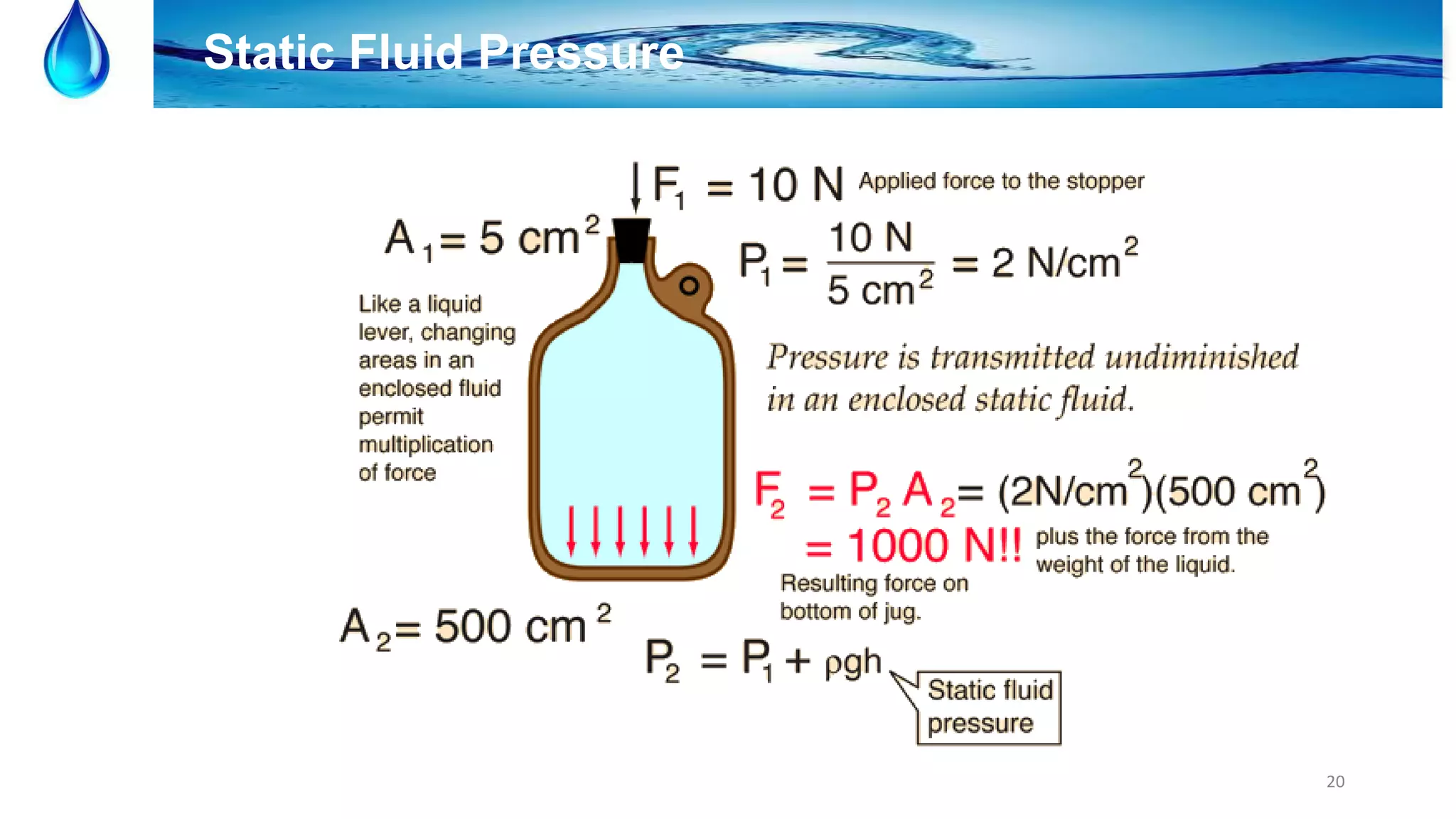
 Static pressure is the pressure that a fluid exerts when it is not
moving.
17
Fluid Pressure
18
Fluid Pressure
19
Fluid Pressure
20
Static Fluid Pressure
21
Archimedes principle
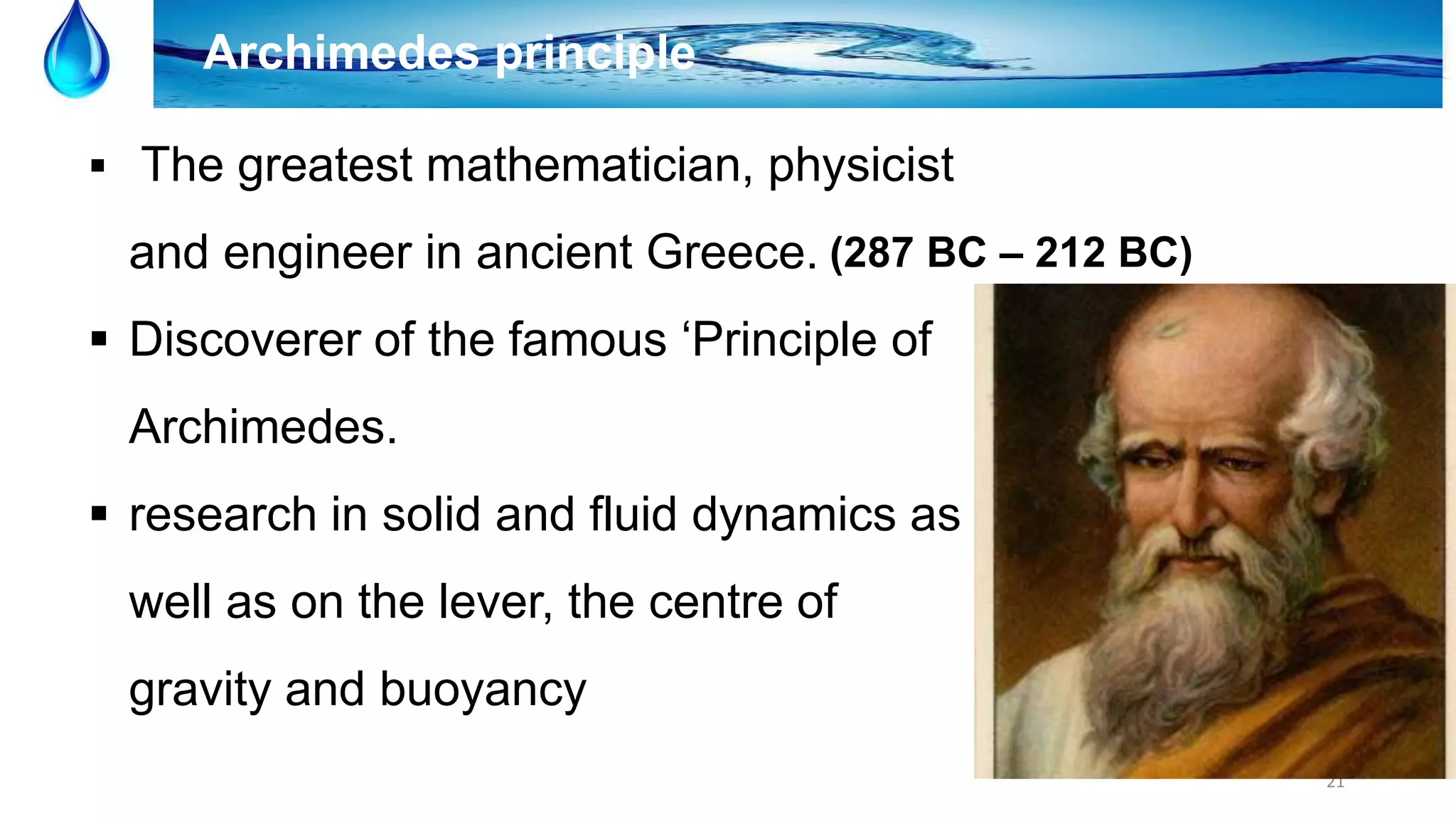
 The greatest mathematician, physicist
and engineer in ancient Greece.
 Discoverer of the famous ‘Principle of
Archimedes.
 research in solid and fluid dynamics as
well as on the lever, the centre of
gravity and buoyancy
(287 BC – 212 BC)
22
Archimedes principle- King’s crown problem
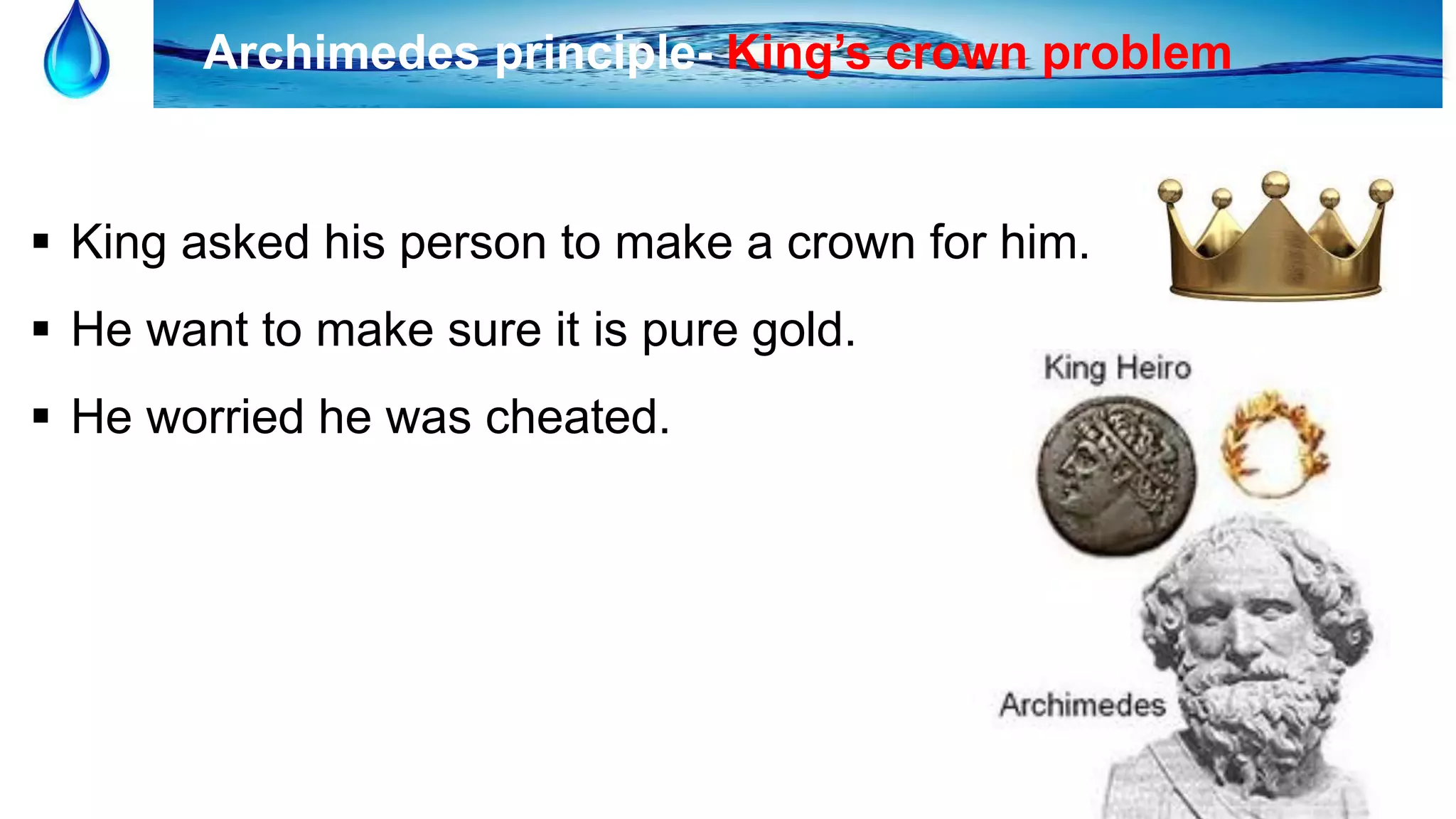
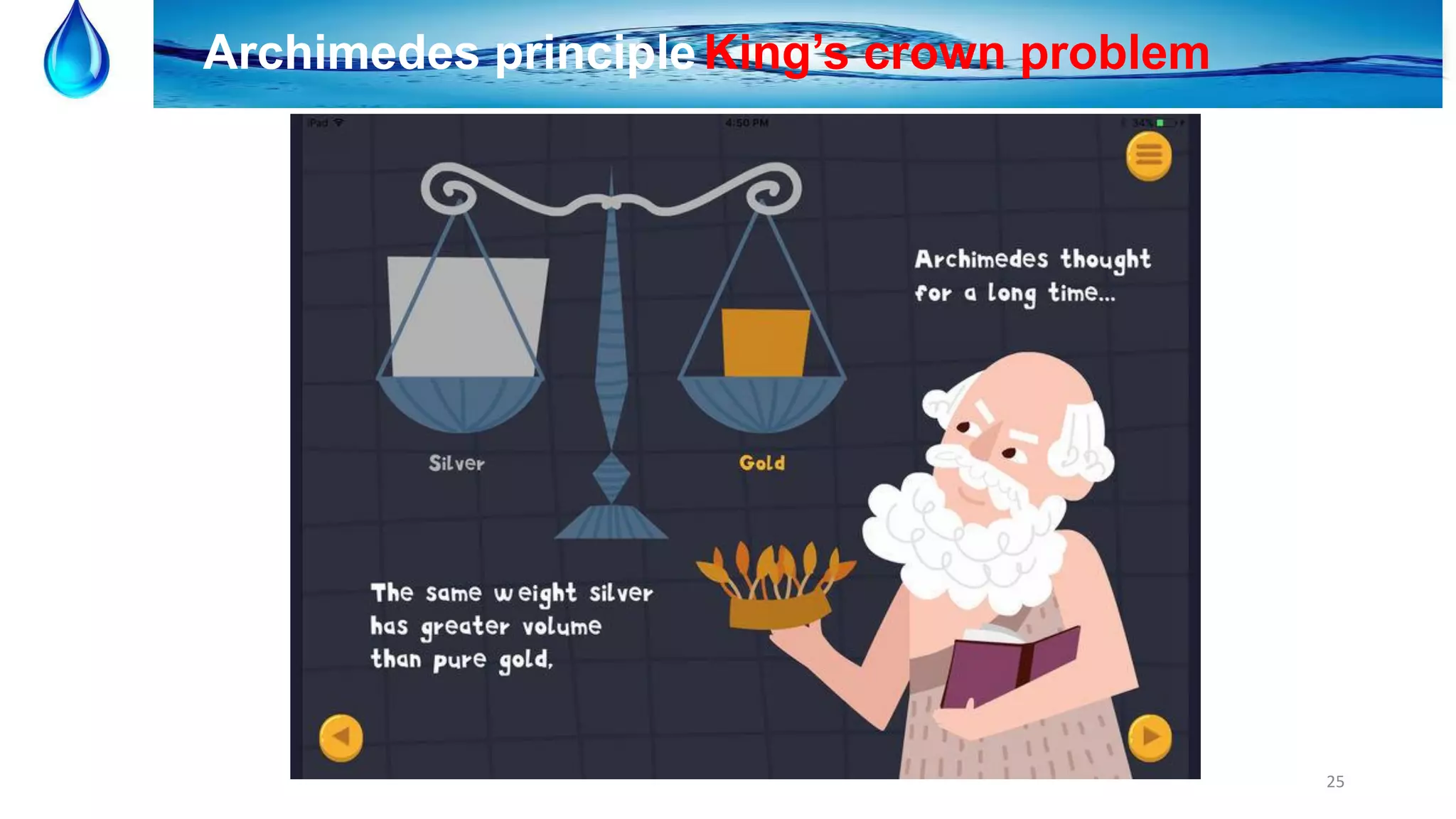
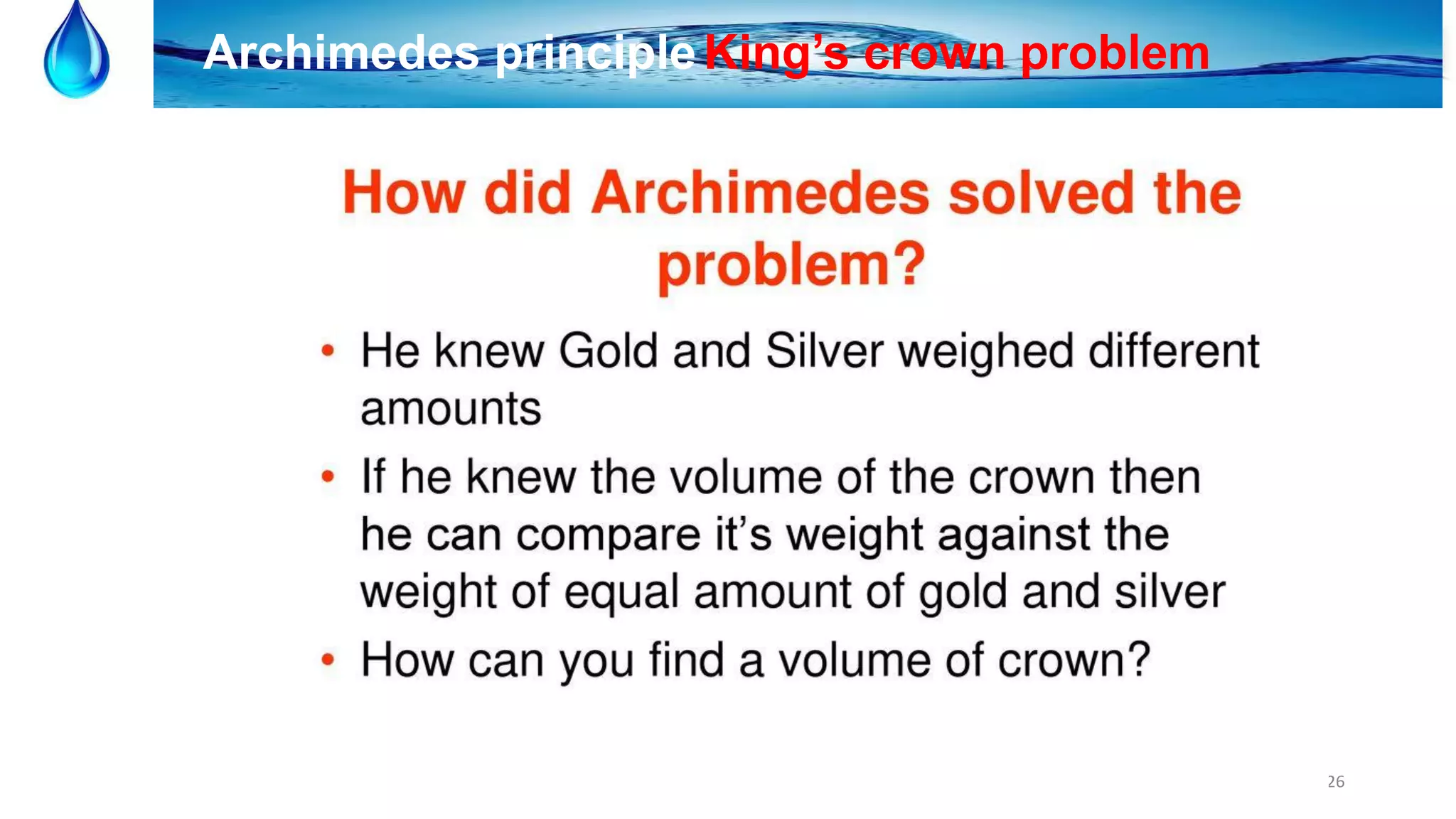
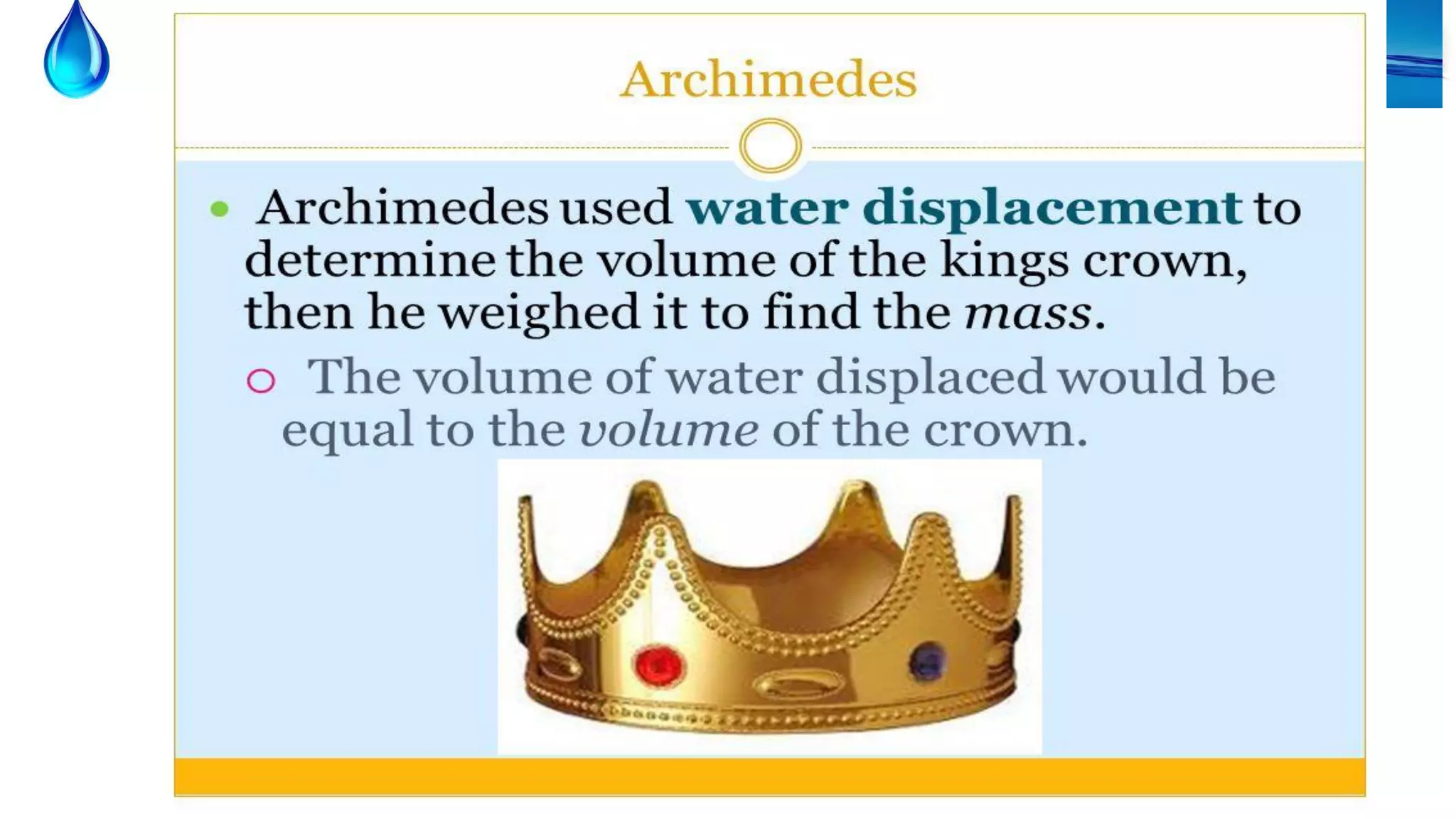
 King asked his person to make a crown for him.
 He want to make sure it is pure gold.
 He worried he was cheated.
23
Archimedes principleKing’s crown problem
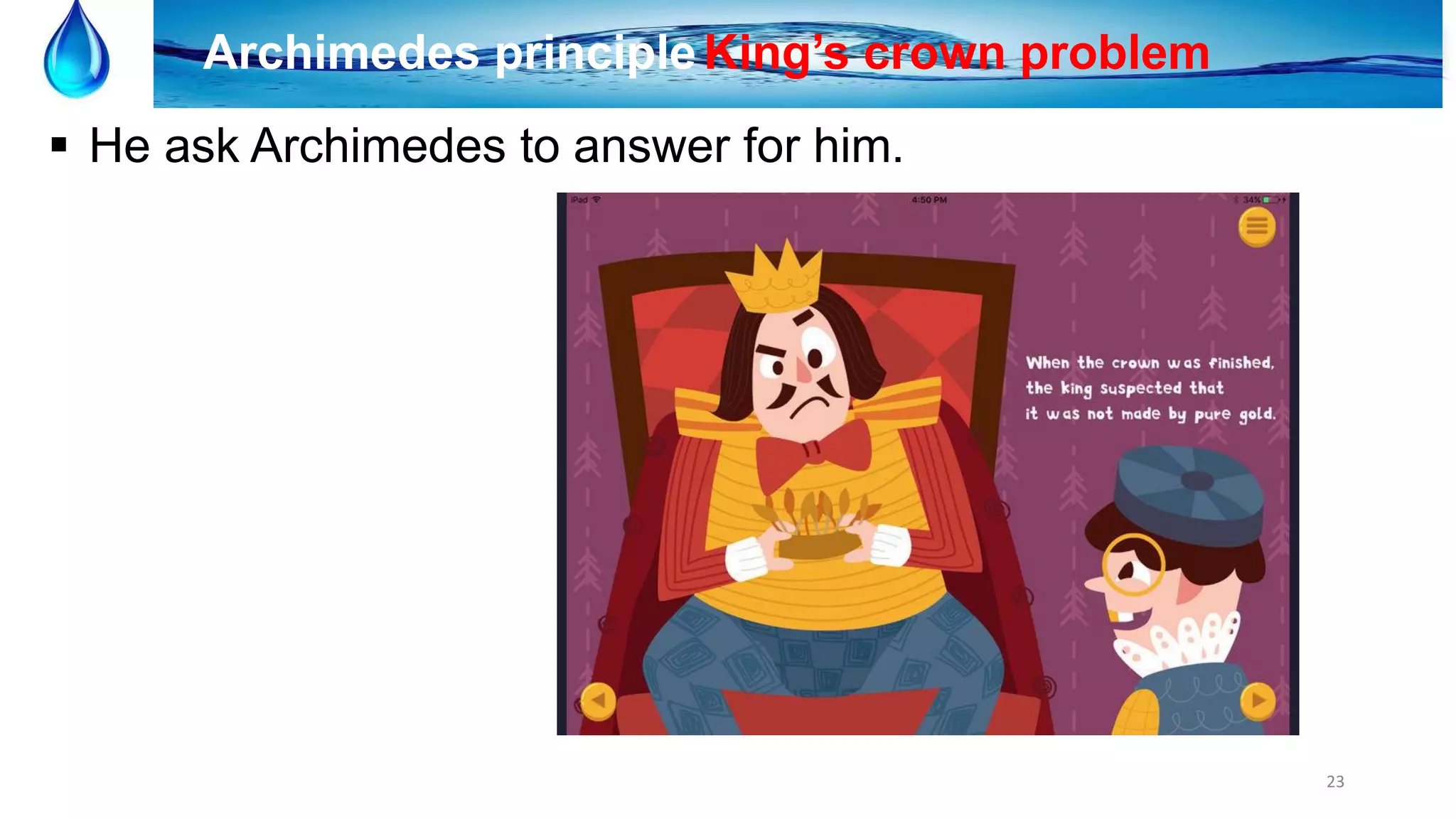
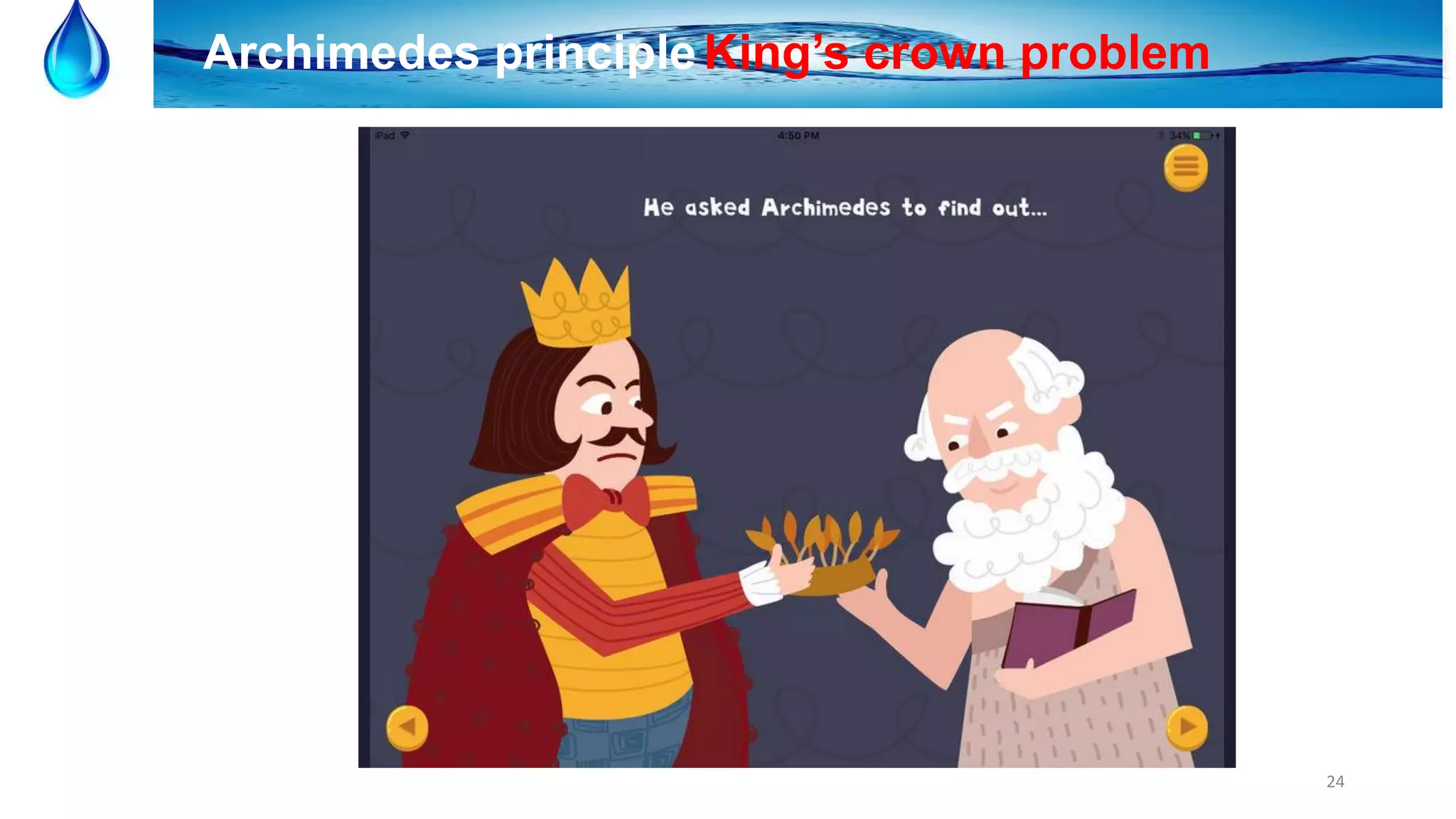
 He ask Archimedes to answer for him.
24
Archimedes principleKing’s crown problem
25
Archimedes principleKing’s crown problem
26
Archimedes principleKing’s crown problem
27
Archimedes principleKing’s crown problem
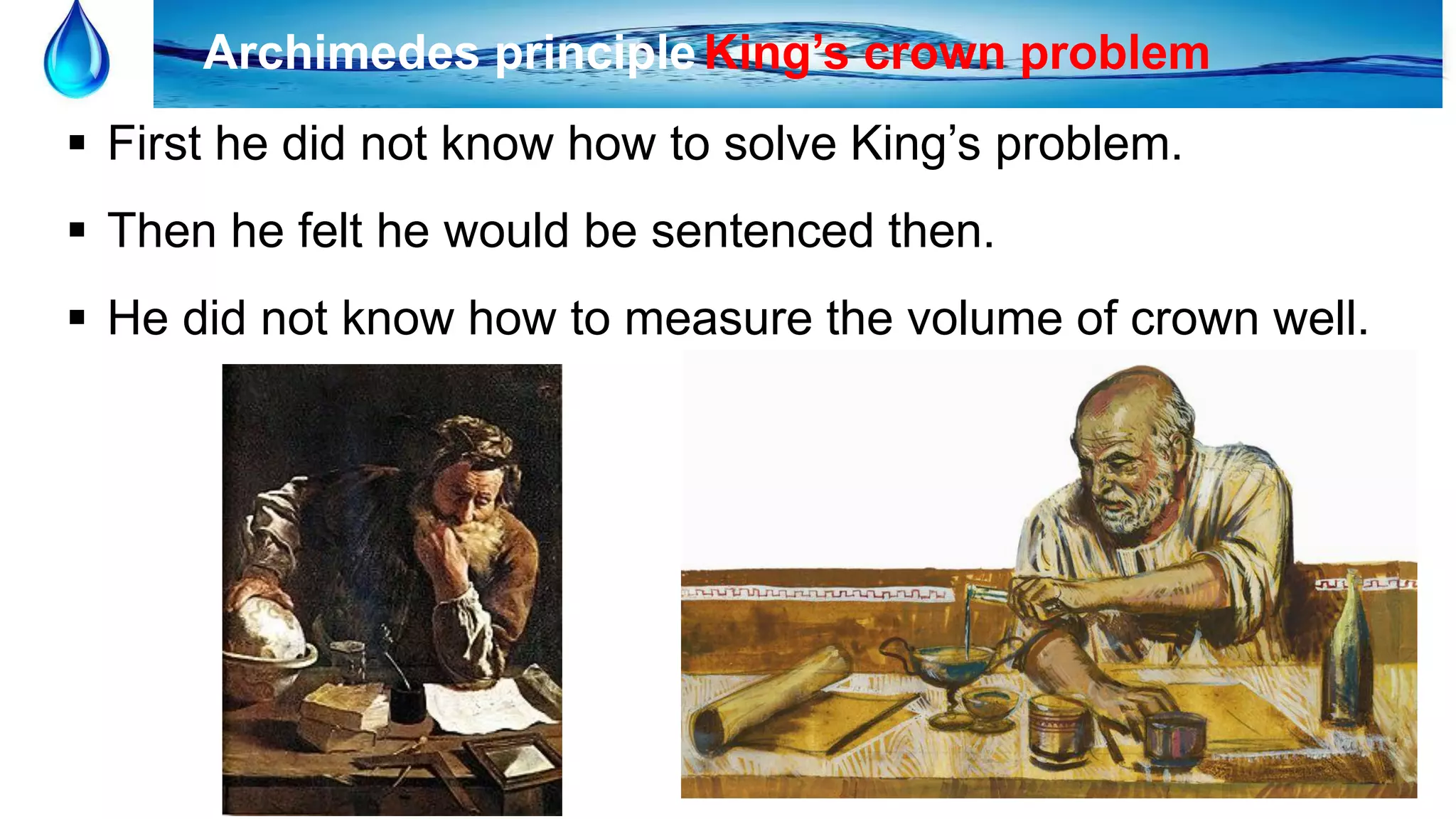
 First he did not know how to solve King’s problem.
 Then he felt he would be sentenced then.
 He did not know how to measure the volume of crown well.
28
Archimedes principleKing’s crown problem
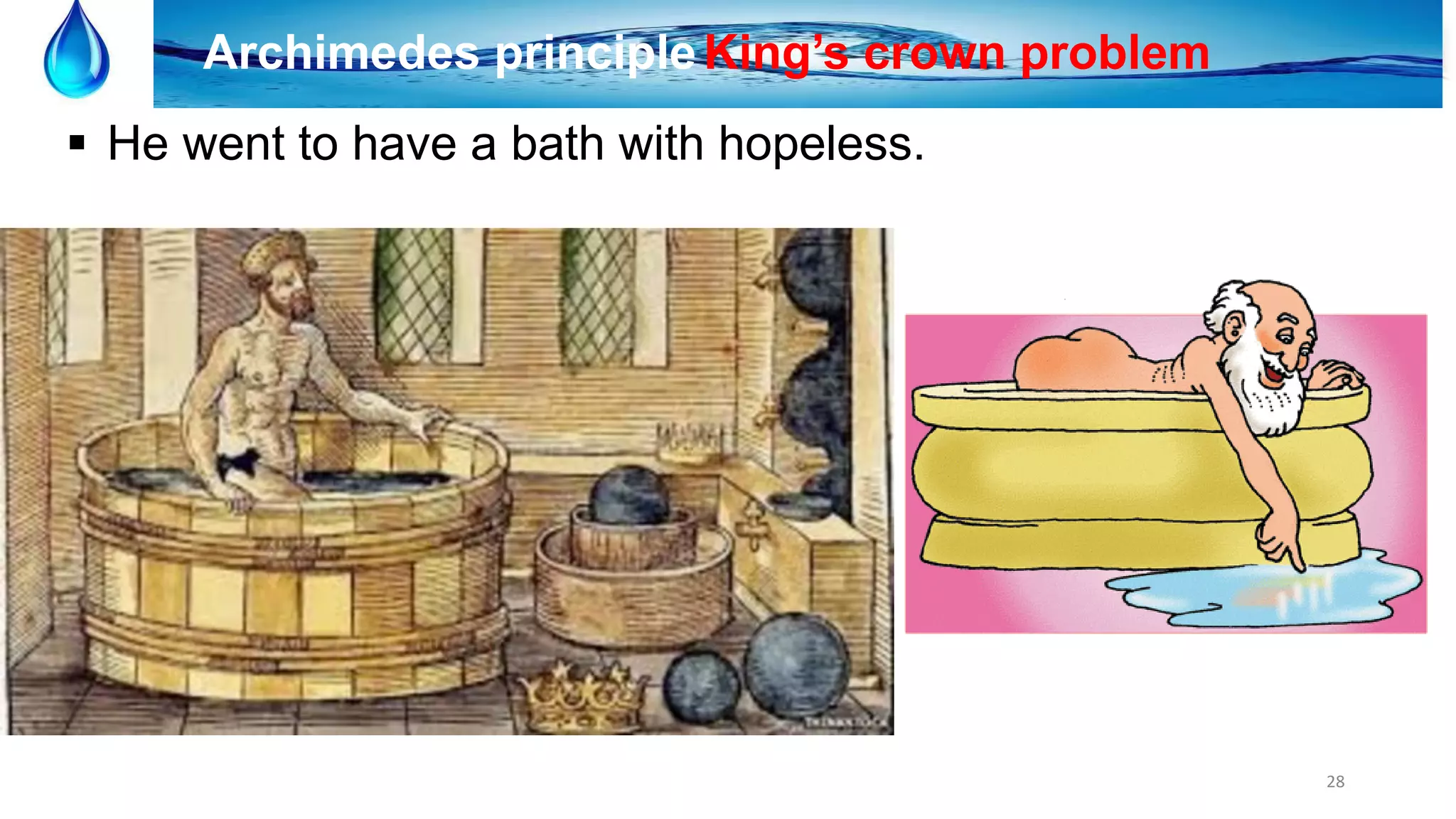
 He went to have a bath with hopeless.
29
Archimedes principleKing’s crown problem
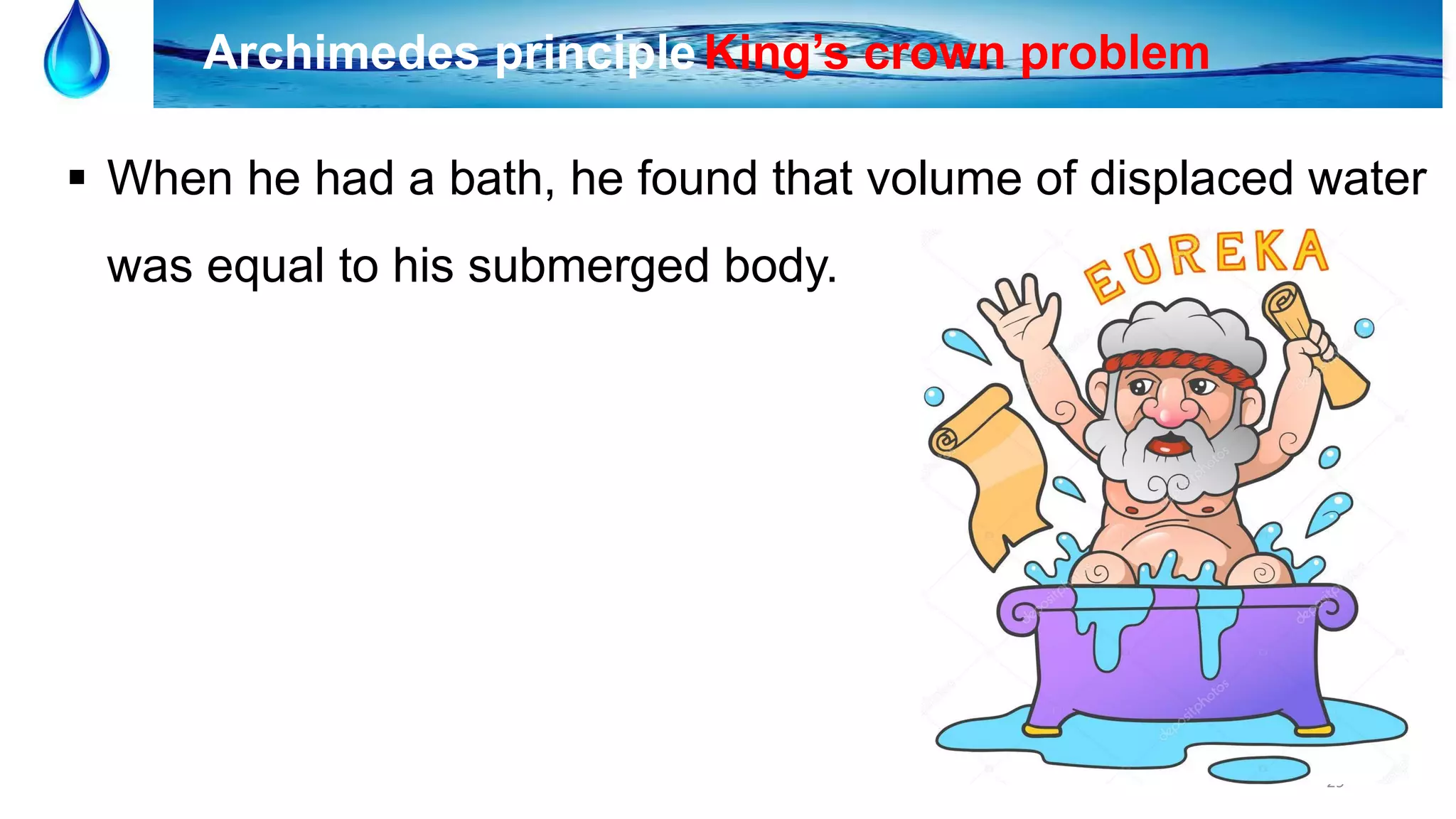
 When he had a bath, he found that volume of displaced water
was equal to his submerged body.
30
Archimedes principleKing’s crown problem
31
Archimedes principle
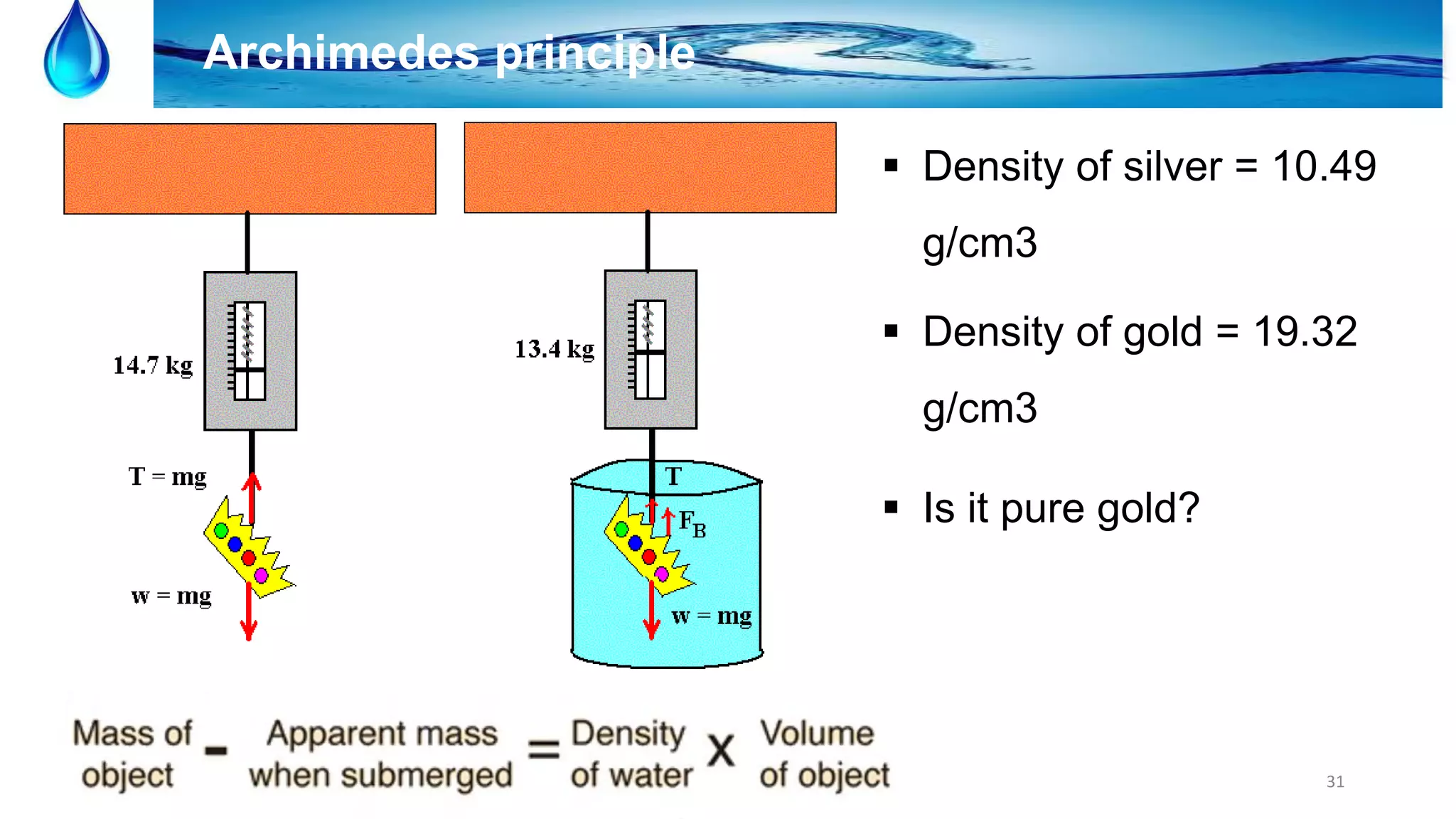
 Density of silver = 10.49
g/cm3
 Density of gold = 19.32
g/cm3
 Is it pure gold?
32
Archimedes principle
33
Archimedes principle
 Example
Determine the density of a liquid if an object of known
volume (50cm3) and mass (0.150kg) has an apparent
mass of 0.105kg in the liquid.
34
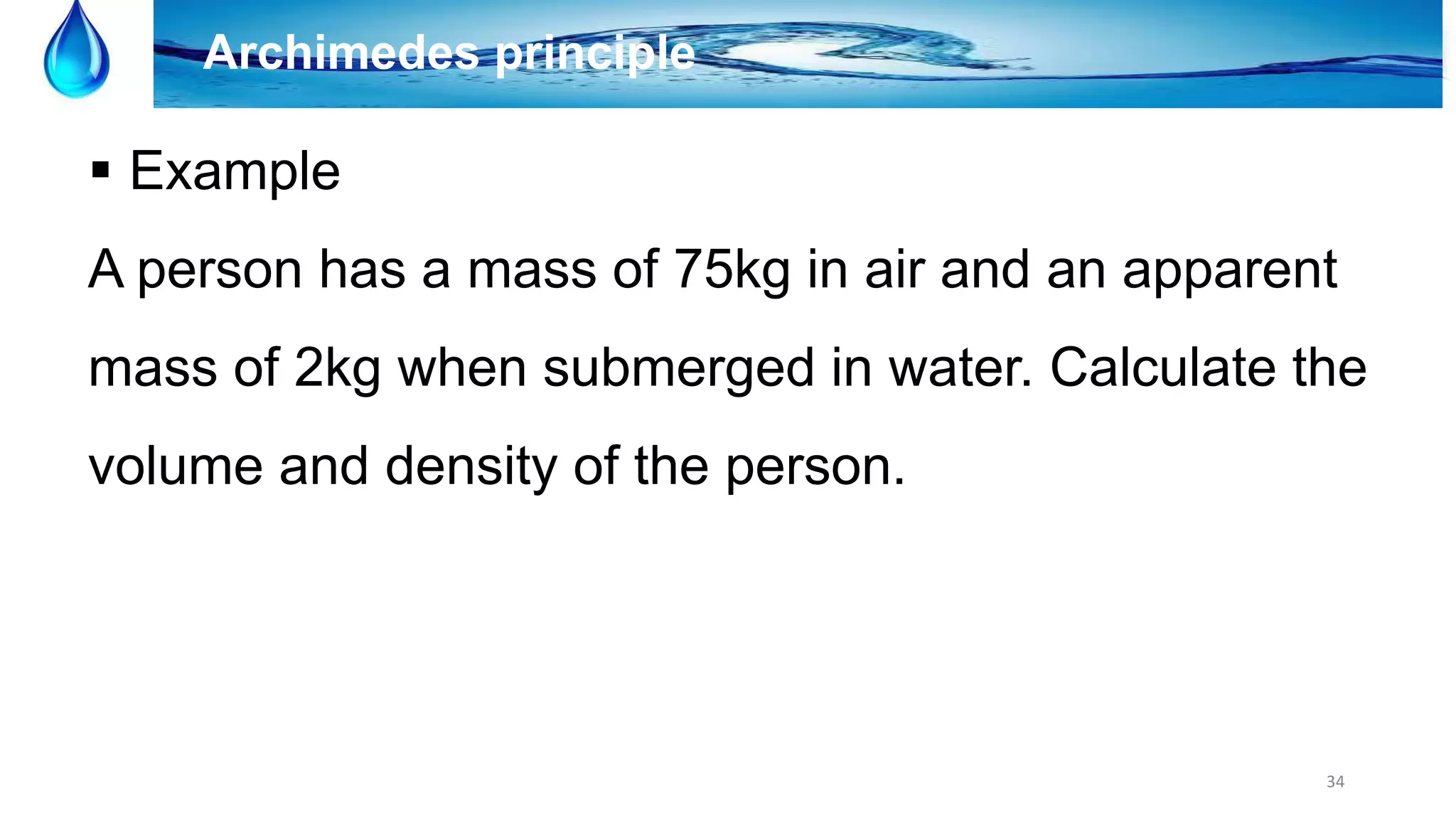
Archimedes principle
 Example
A person has a mass of 75kg in air and an apparent
mass of 2kg when submerged in water. Calculate the
volume and density of the person.
35
Archimedes principle
 Example
Calculate the apparent mass of an object that has
mass of 5.7kg in air when submerged in vegetable oil
with density of 92g/cm3 if the displaced oil is
16.30cm3.
36
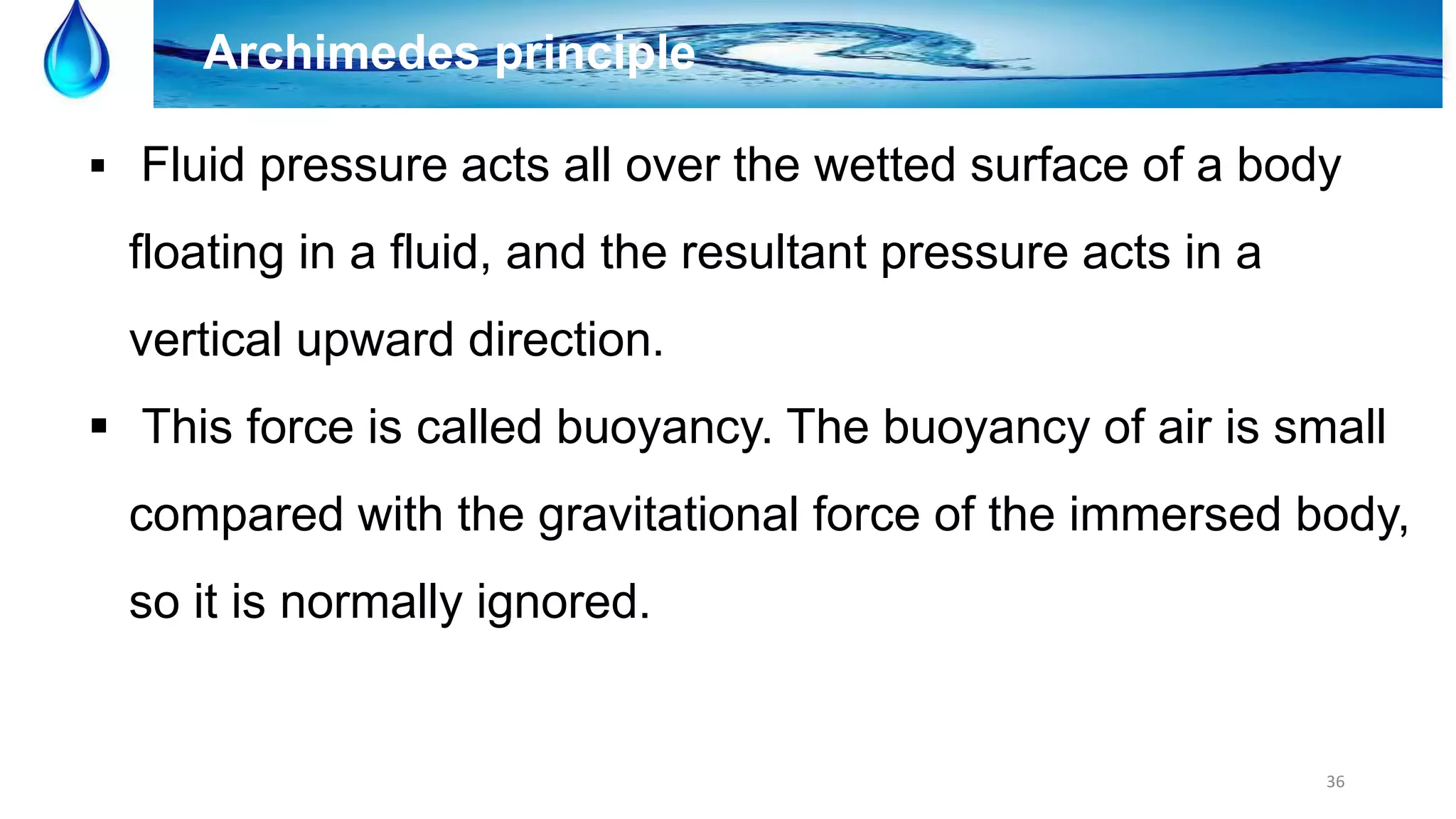
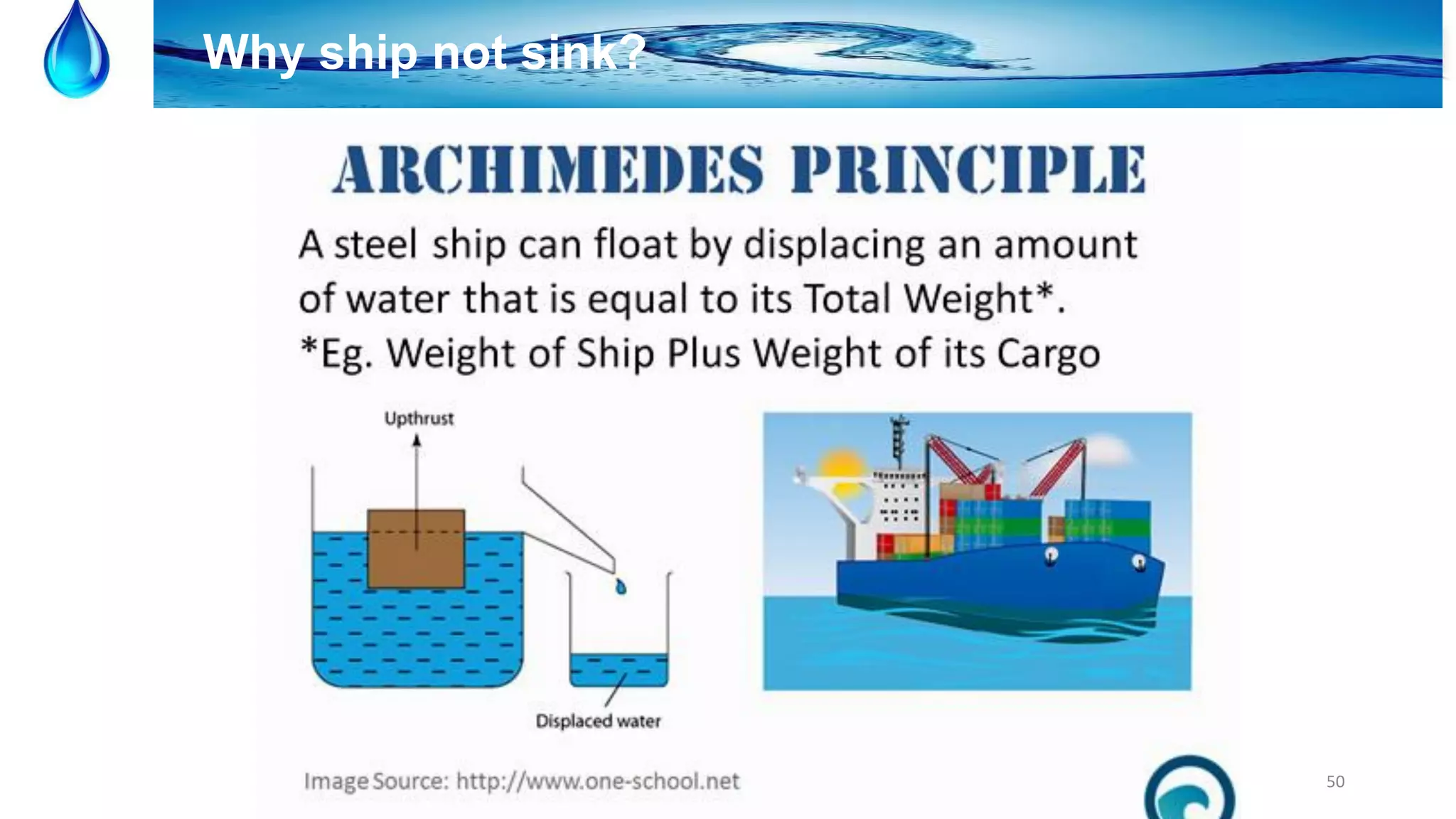
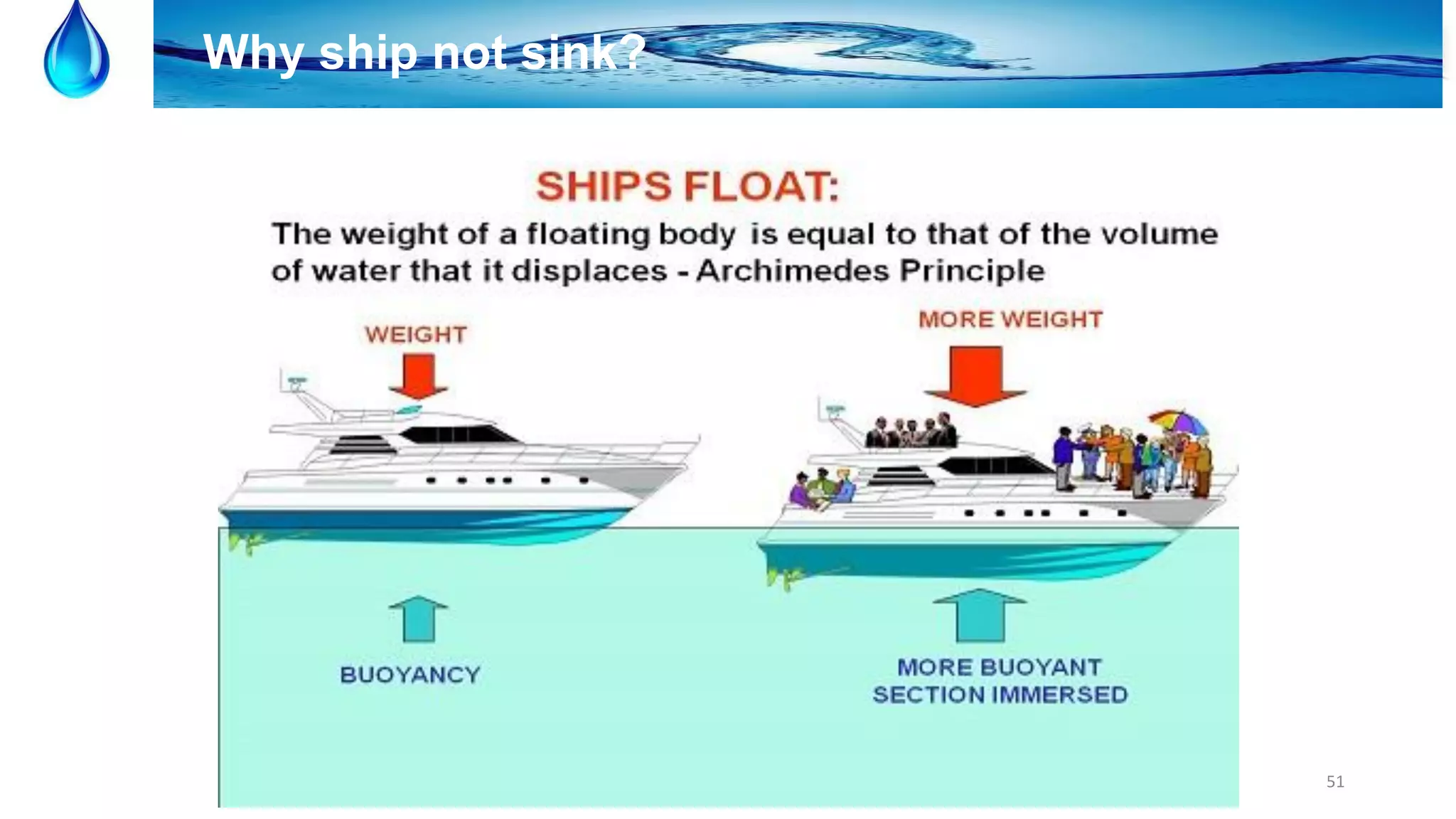
Archimedes principle
 Fluid pressure acts all over the wetted surface of a body
floating in a fluid, and the resultant pressure acts in a
vertical upward direction.
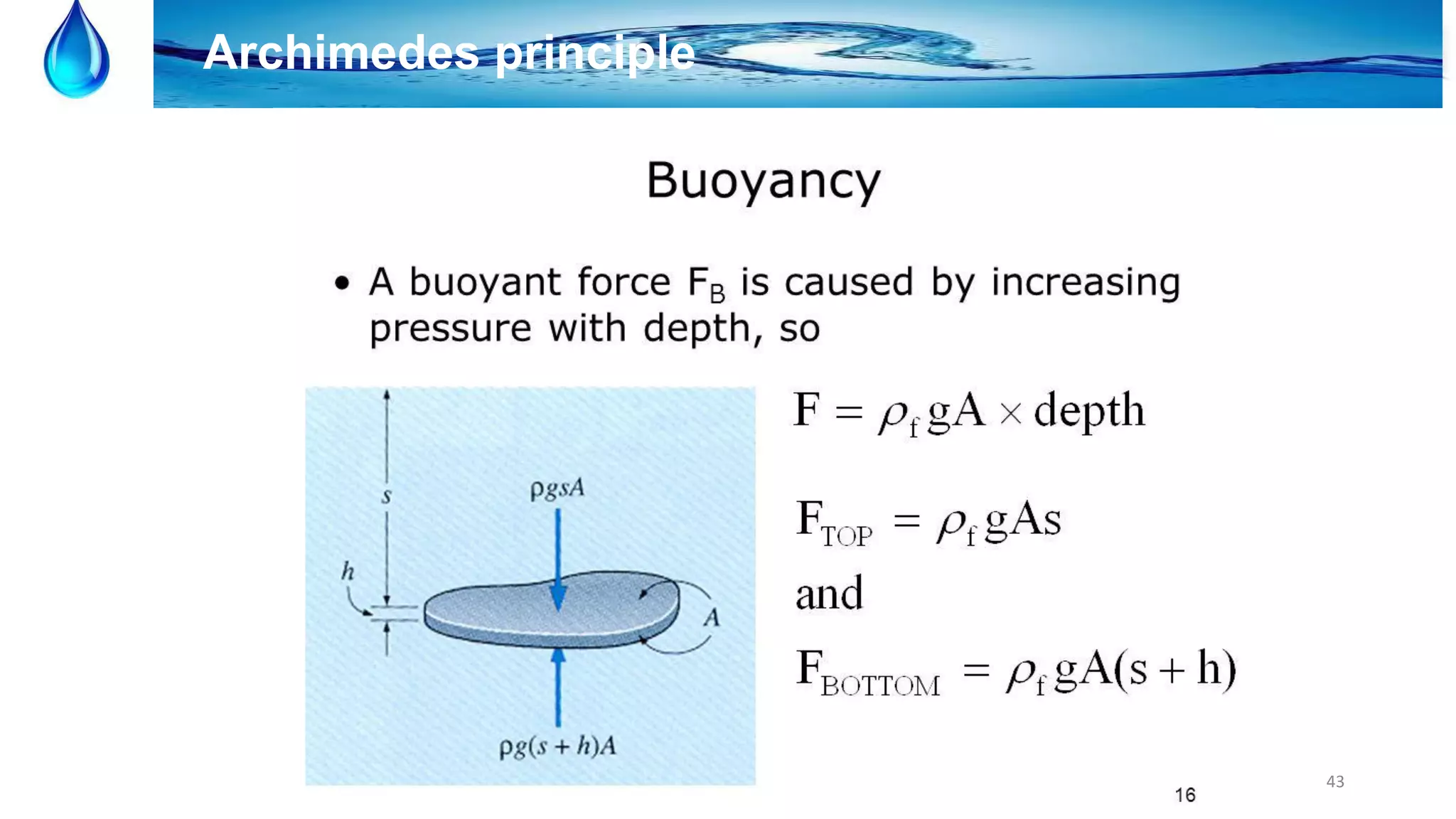
 This force is called buoyancy. The buoyancy of air is small
compared with the gravitational force of the immersed body,
so it is normally ignored.
37
Archimedes principle
38
Archimedes principle
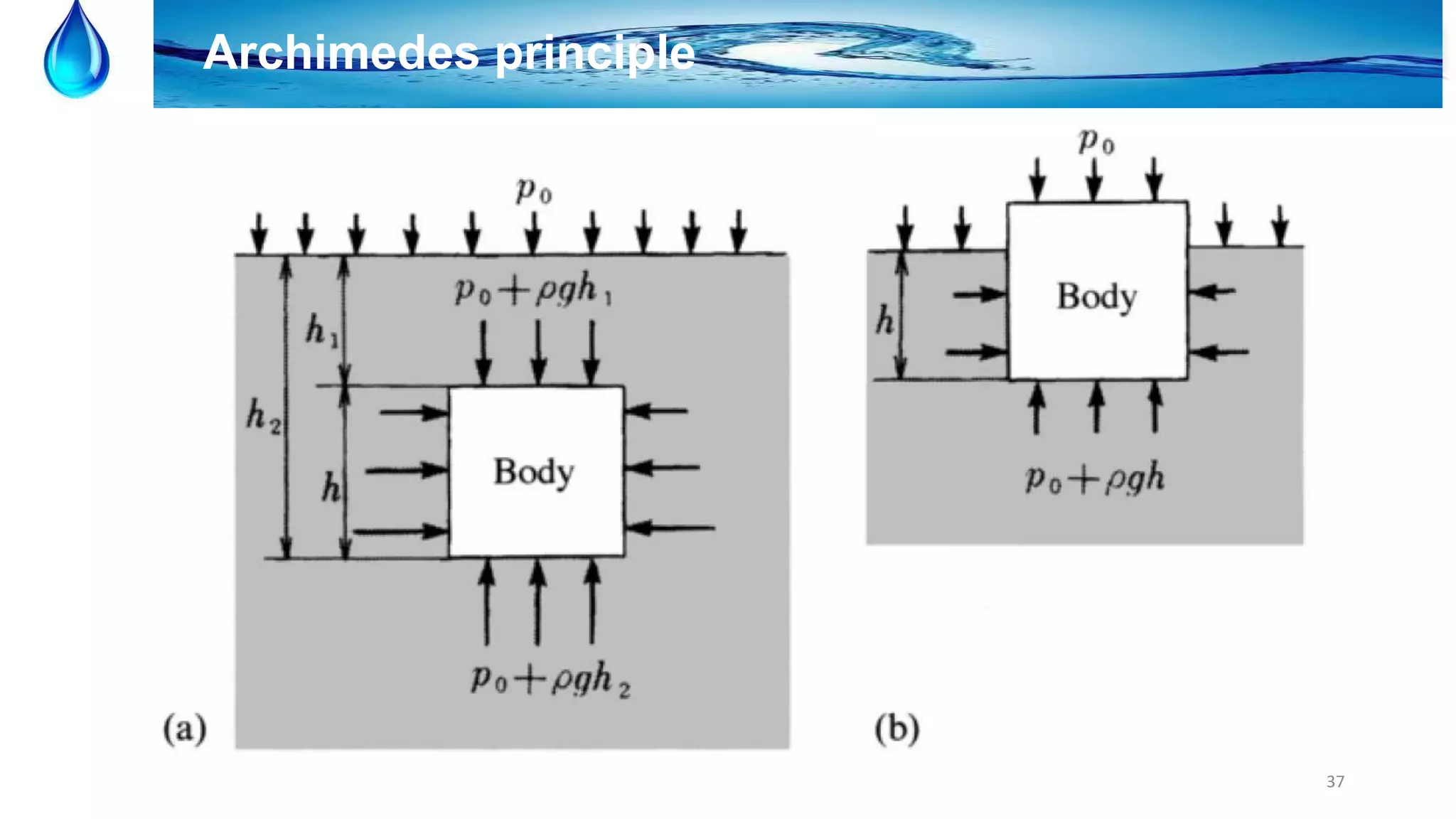
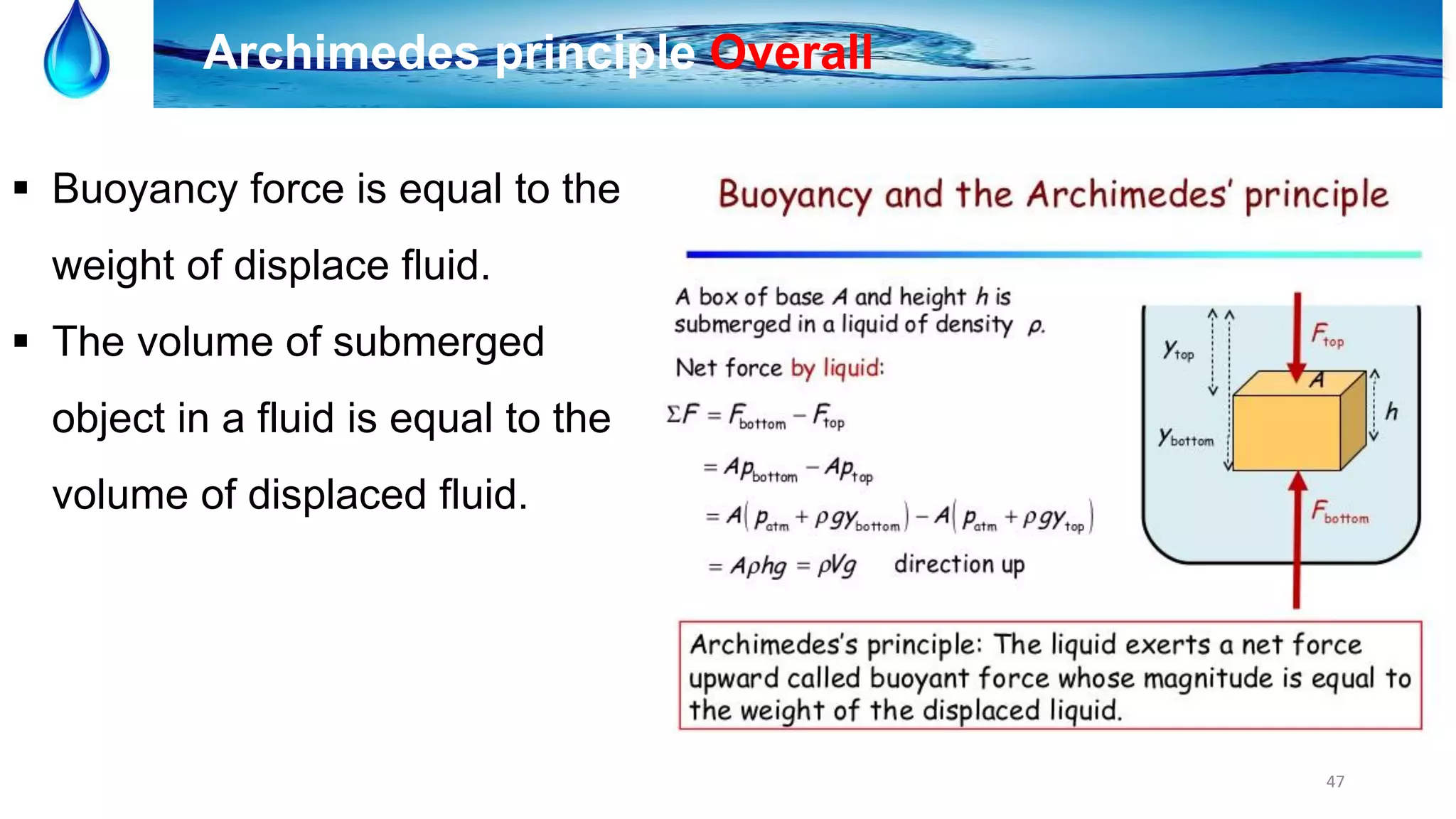
 The pressure acting on the cube due to the liquid in the
horizontal direction is balanced right and left.
 For the vertical direction, where the atmospheric pressure is
P0.
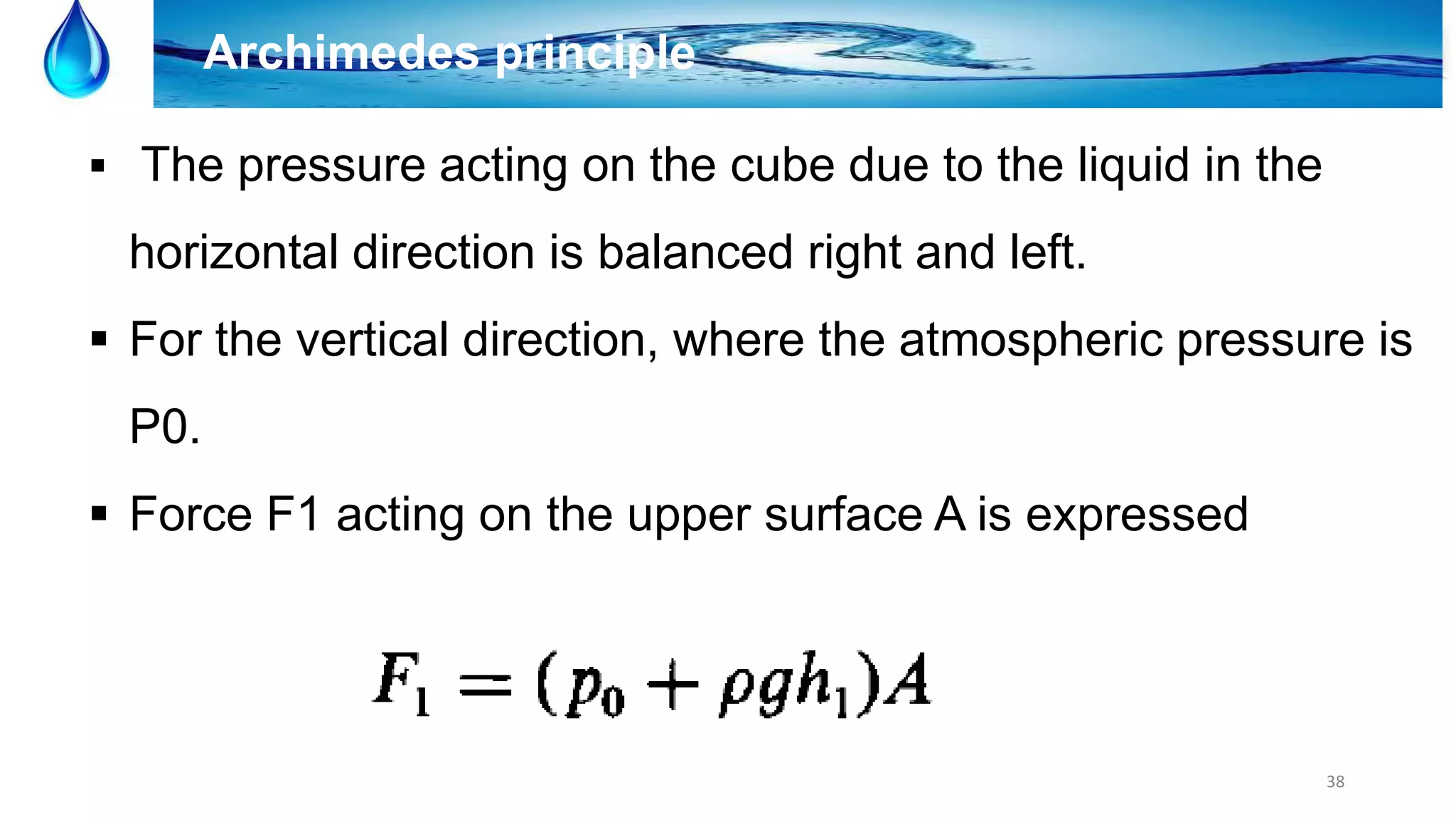
 Force F1 acting on the upper surface A is expressed
39
Archimedes principle
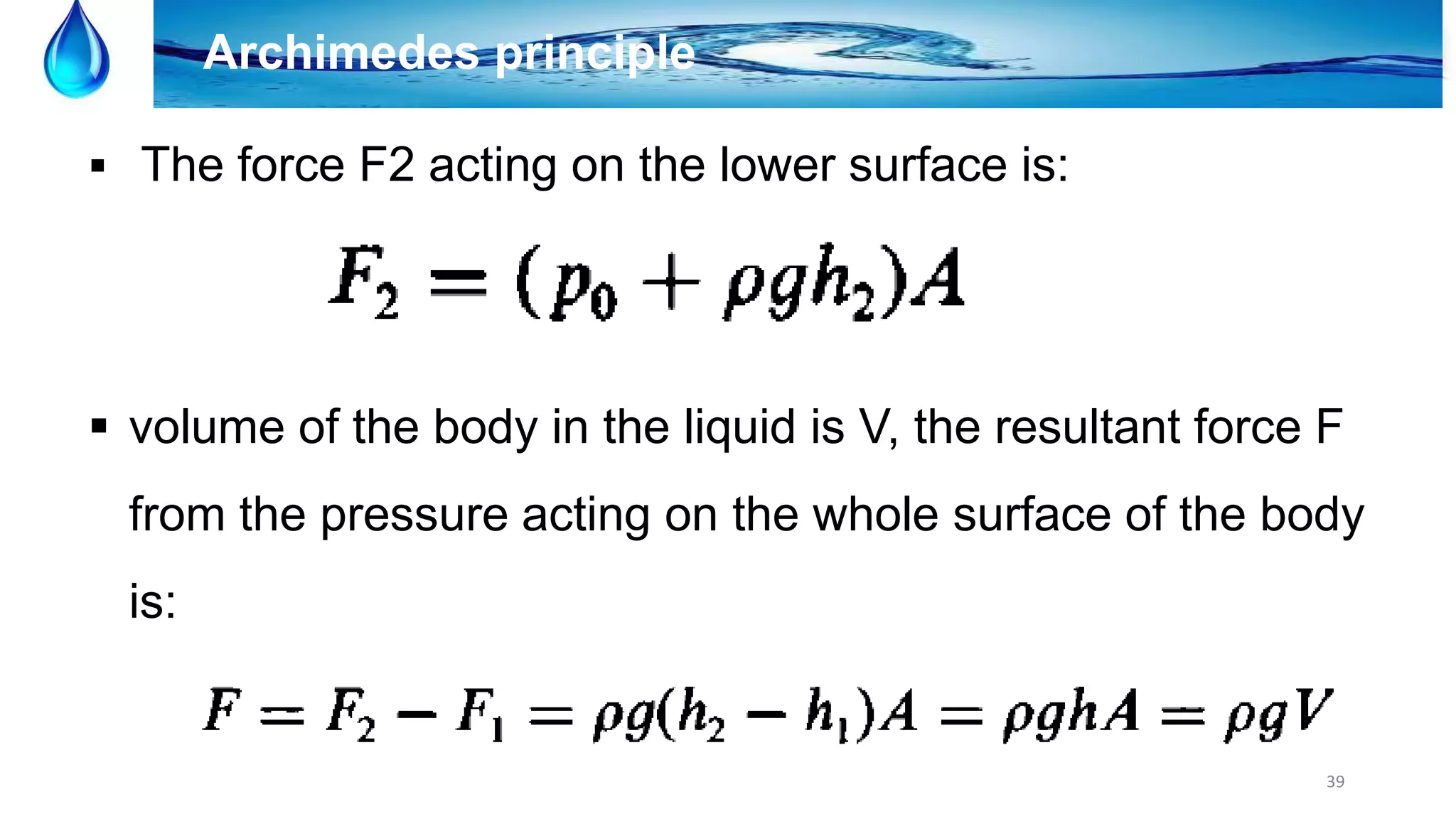
 The force F2 acting on the lower surface is:
 volume of the body in the liquid is V, the resultant force F
from the pressure acting on the whole surface of the body
is:
40
Archimedes principle
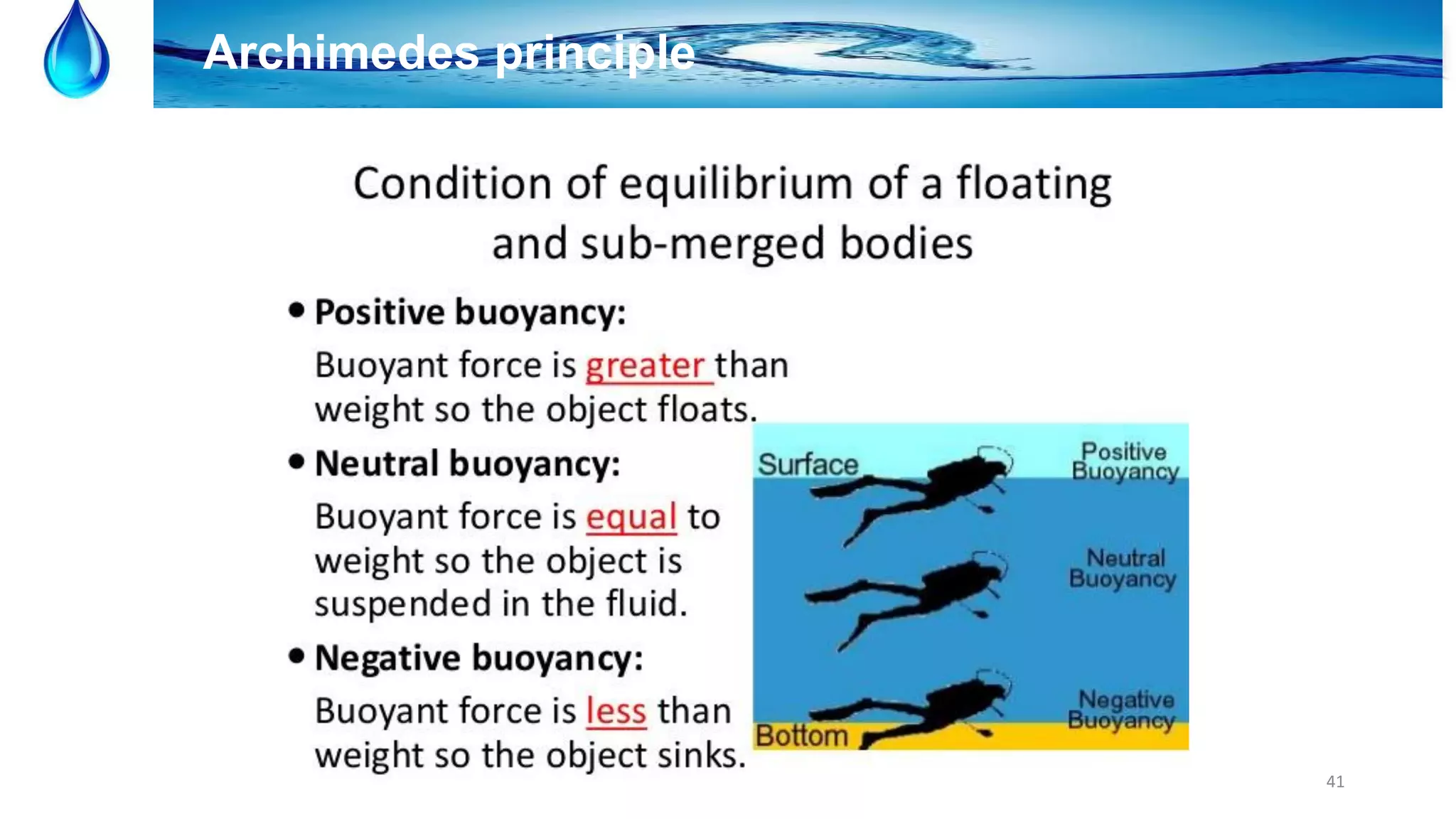
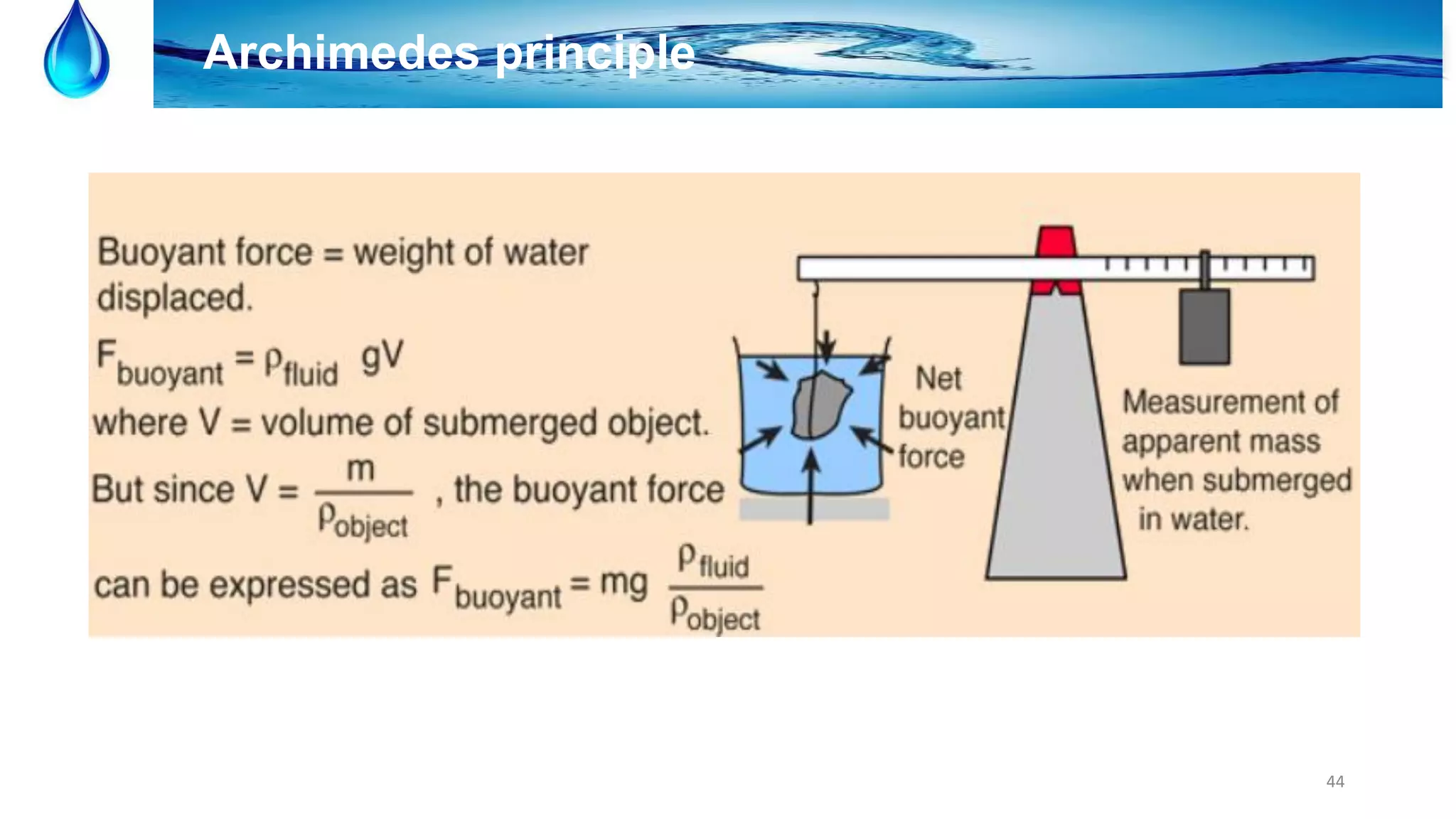
 Buoyant force is the net upward
force on any object in any fluid
41
Archimedes principle
42
Archimedes principle
43
Archimedes principle
44
Archimedes principle
45
Archimedes principle
46
Archimedes principle
47
Archimedes principle Overall
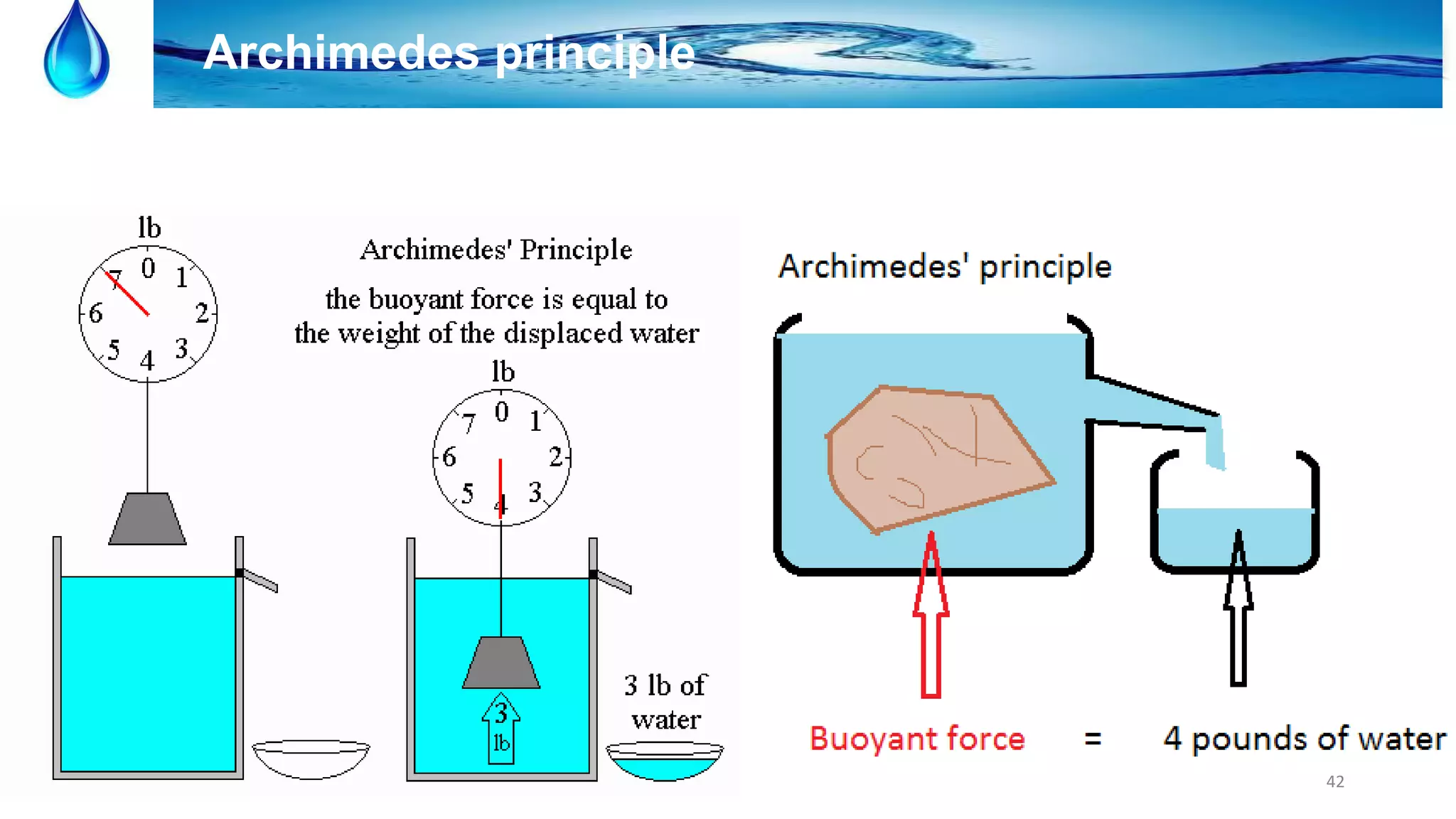
 Buoyancy force is equal to the
weight of displace fluid.
 The volume of submerged
object in a fluid is equal to the
volume of displaced fluid.
48
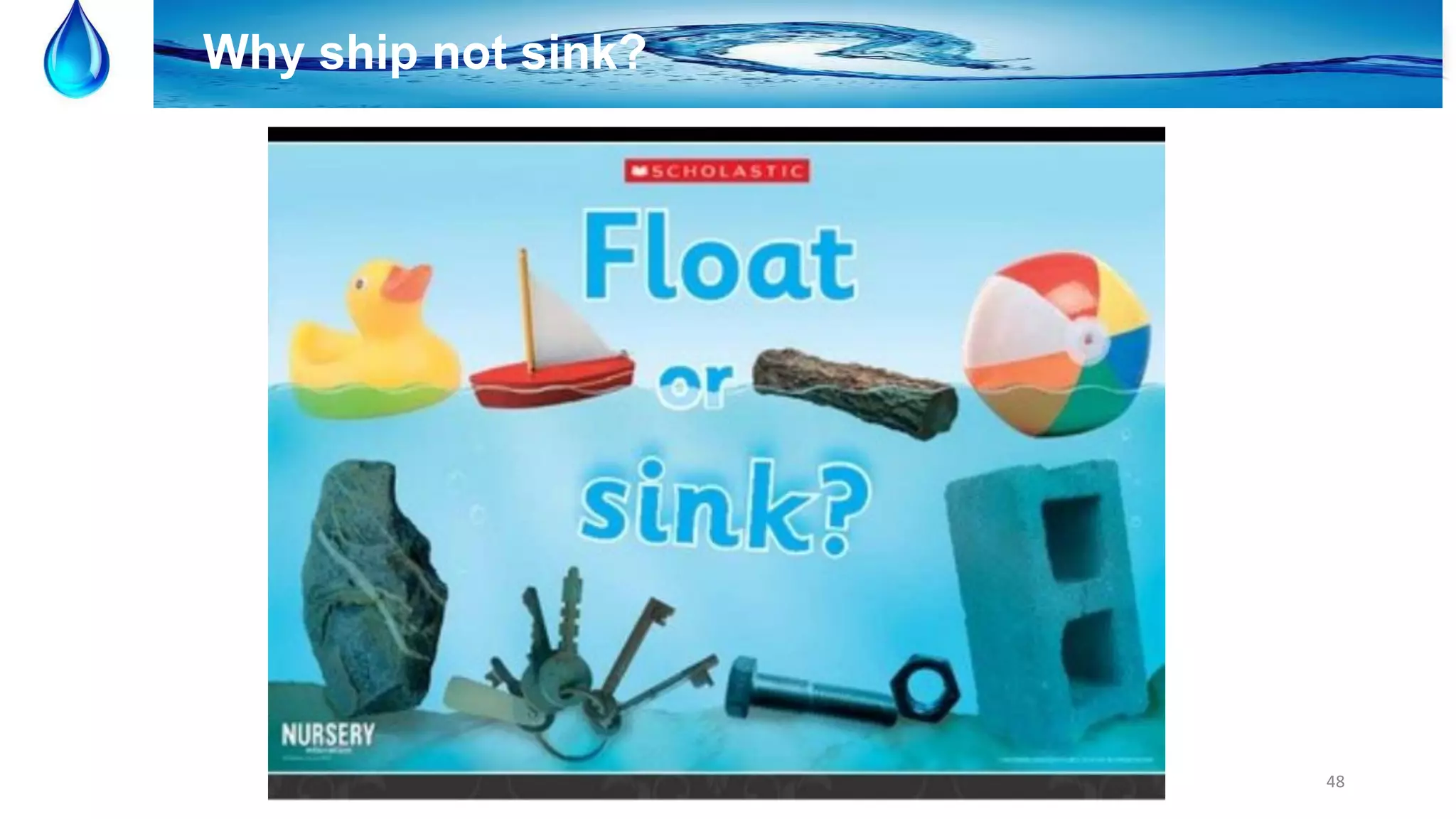
Why ship not sink?
49
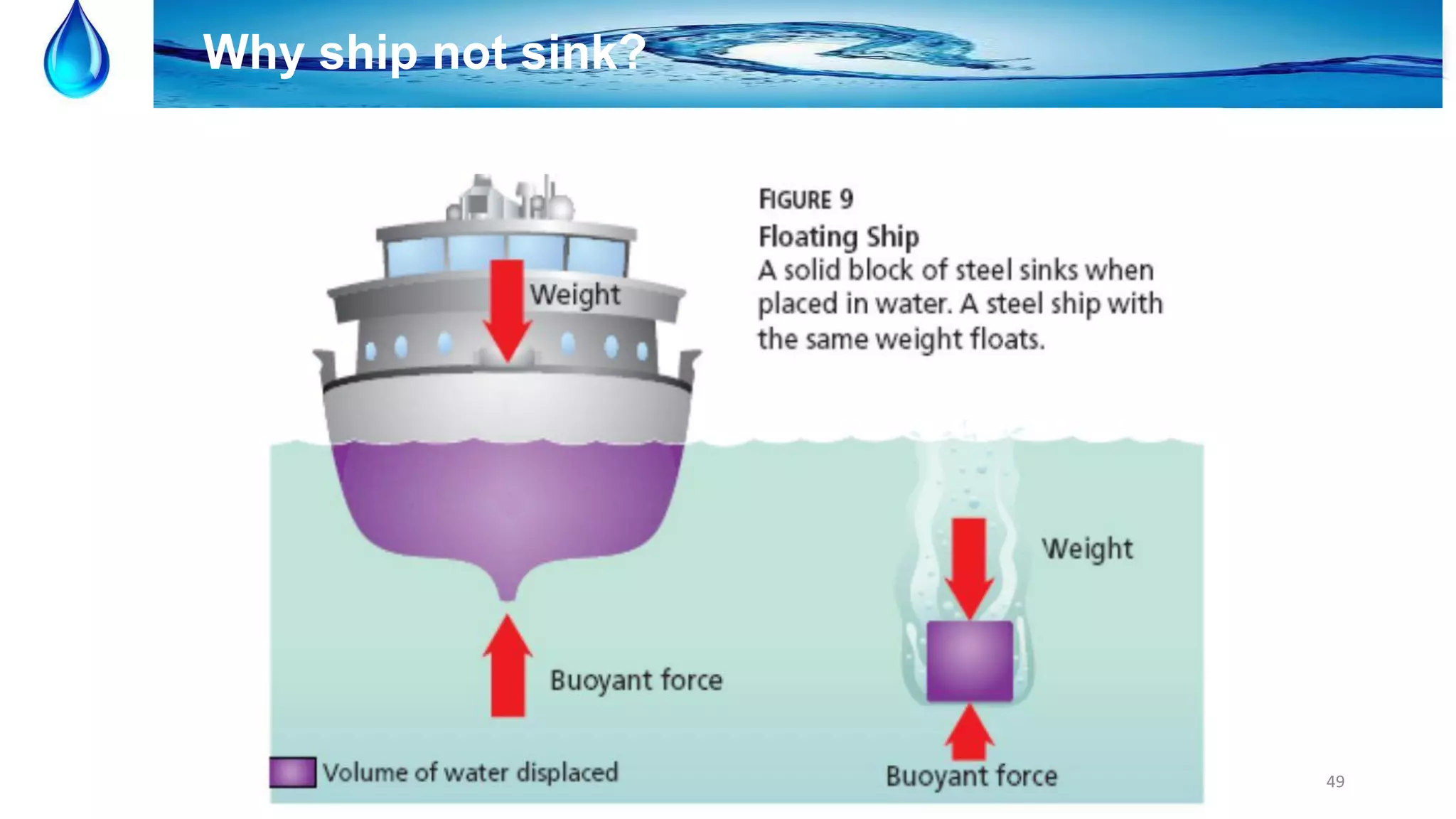
Why ship not sink?
50
Why ship not sink?
51
Why ship not sink?
52
Why ship not sink?

Fluid mechanic: Archimedes and buoyancy's principles