SITUATIONAL SYLLABUS
CONTENT 
Definition of Situational Syllabus 
Theoretical assumption 
Components 
The Process of Situational Syllabus 
The Product of Situational Syllabus 
Advantage 
Disadvantage 
Conclusion
? 
Syllabus
A situational syllabus 
is often defined as one in which the 
contents are organized according to 
situations in which certain language is 
likely to be employed 
(Richards, et al, 1985:260; Ur, 2000:178; Schulz, 
2005). 
DEFINITIONS
THEORITICAL ASSUMPTION 
Language is always used in context, never in isolation and the choice 
of linguistic forms are restricted by social situations. 
(Dr. Andrew Finch, EFL Syllabus Design ,2008) 
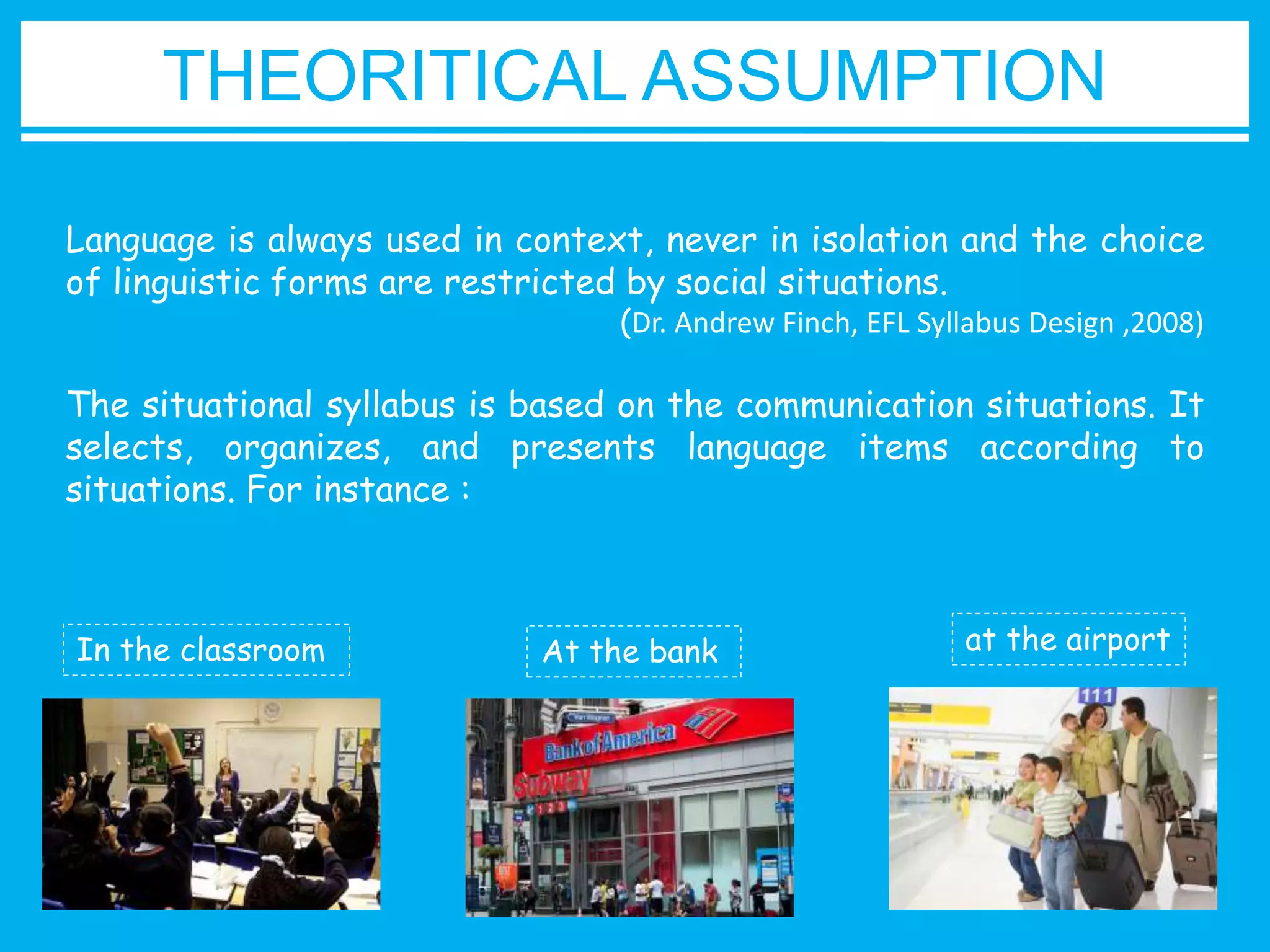
The situational syllabus is based on the communication situations. It 
selects, organizes, and presents language items according to 
situations. For instance : 
In the classroom At the bank at the airport
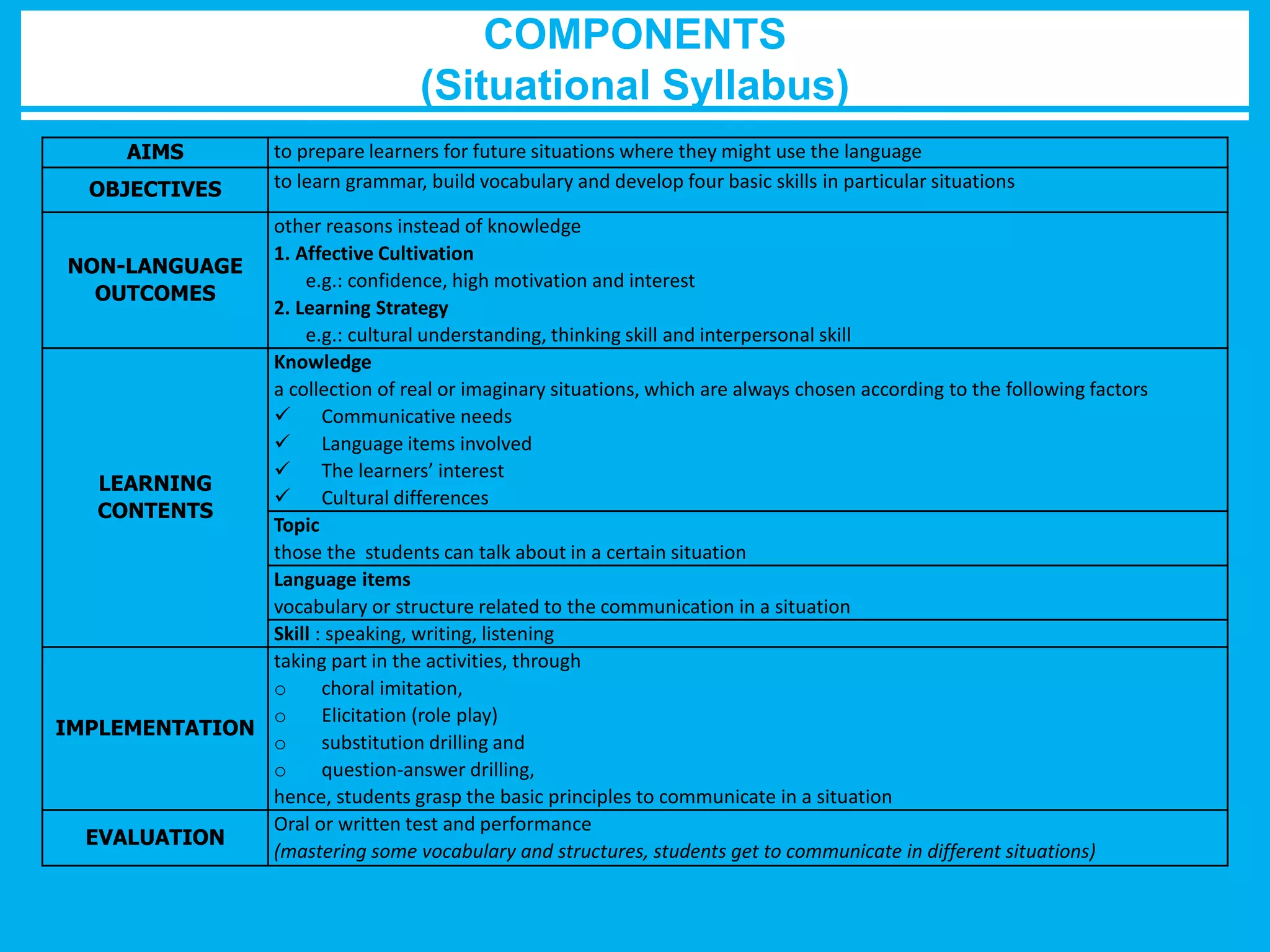
COMPONENTS 
(Situational Syllabus) 
AIMS to prepare learners for future situations where they might use the language 
OBJECTIVES to learn grammar, build vocabulary and develop four basic skills in particular situations 
NON-LANGUAGE 
OUTCOMES 
other reasons instead of knowledge 
1. Affective Cultivation 
e.g.: confidence, high motivation and interest 
2. Learning Strategy 
e.g.: cultural understanding, thinking skill and interpersonal skill 
LEARNING 
CONTENTS 
Knowledge 
a collection of real or imaginary situations, which are always chosen according to the following factors 
 Communicative needs 
 Language items involved 
 The learners’ interest 
 Cultural differences 
Topic 
those the students can talk about in a certain situation 
Language items 
vocabulary or structure related to the communication in a situation 
Skill : speaking, writing, listening 
IMPLEMENTATION 
taking part in the activities, through 
o choral imitation, 
o Elicitation (role play) 
o substitution drilling and 
o question-answer drilling, 
hence, students grasp the basic principles to communicate in a situation 
EVALUATION 
Oral or written test and performance 
(mastering some vocabulary and structures, students get to communicate in different situations)
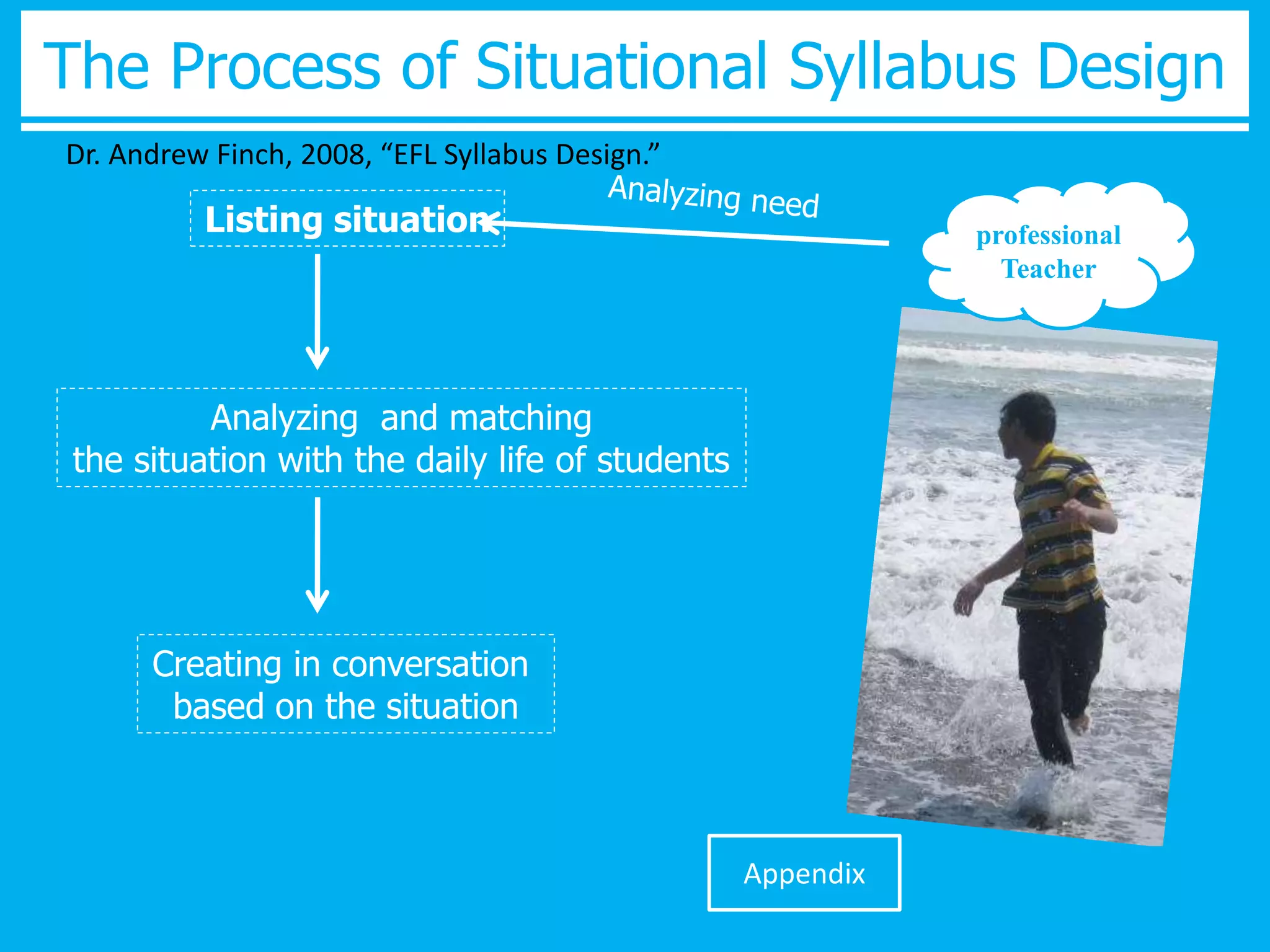
The Process of Situational Syllabus Design 
Listing situation 
Analyzing and matching 
the situation with the daily life of students 
Creating in conversation 
based on the situation 
professional 
Teacher 
Appendix 
Dr. Andrew Finch, 2008, “EFL Syllabus Design.”
The Product of Situational Syllabus 
Product in syllabus design is mainly concerned with 
what students are expected to learn; or in other words, 
the objectives of the syllabus. 
The main priority in product of situational syllabus is 
communicative competence
ADVANTAGES 
Wilkins (1976) 
 Motivating learners 
Learner-centered not subject-centered. 
It takes account of the learner and his needs 
Concrete contexts: learners learn language structures within those 
contexts thus making it easier to visualize and then remember
Advantage 2 
Improving 
communicative 
competence 
Language teaching begins with 
the spoken language, and 
material is taught orally before 
it is presented in written forms
Advantage 3 
Enhancing inductive ability 
Though the conversation (dialogue) 
students are expected to 
understand the application of 
structure and vocabulary indirectly 
in a conversation.
Disadvantage 1 
Syllabus can not include all the 
situations in the real life 
A situational syllabus will be limited for 
students whose needs were not 
encompassed by the situations in the 
syllabus 
Physical situational setting doesn’t 
necessarily predict the language 
forms that will be used 
Wilkins (1976)
Disadvantage 2 
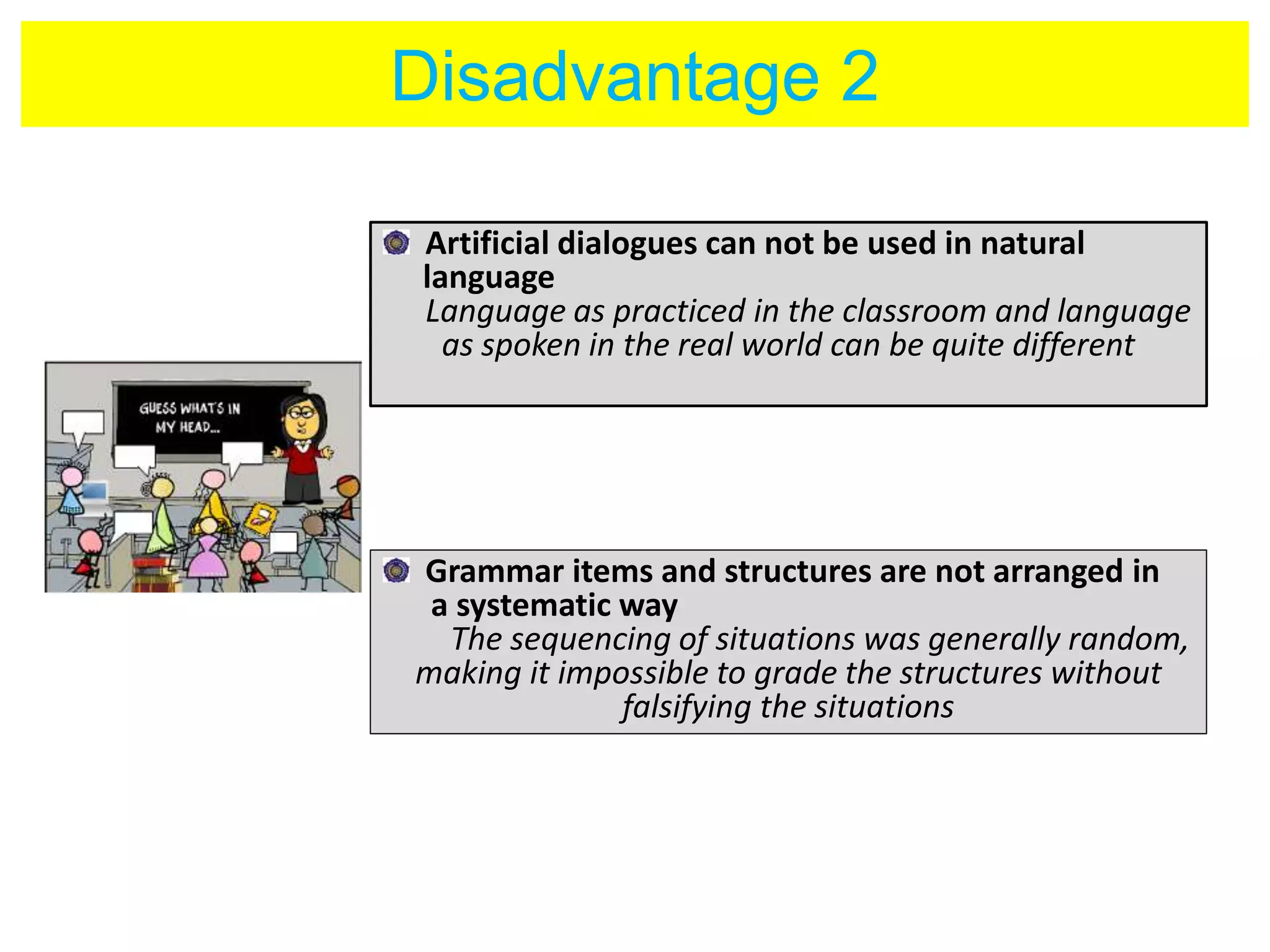
Artificial dialogues can not be used in natural 
language 
Language as practiced in the classroom and language 
as spoken in the real world can be quite different 
Grammar items and structures are not arranged in 
a systematic way 
The sequencing of situations was generally random, 
making it impossible to grade the structures without 
falsifying the situations
CONCLUSION 
“useful as a situational syllabus 
may be in certain circumstances…… 
it does not offer a general solution to problems of syllabus design.” 
(Wilkins)
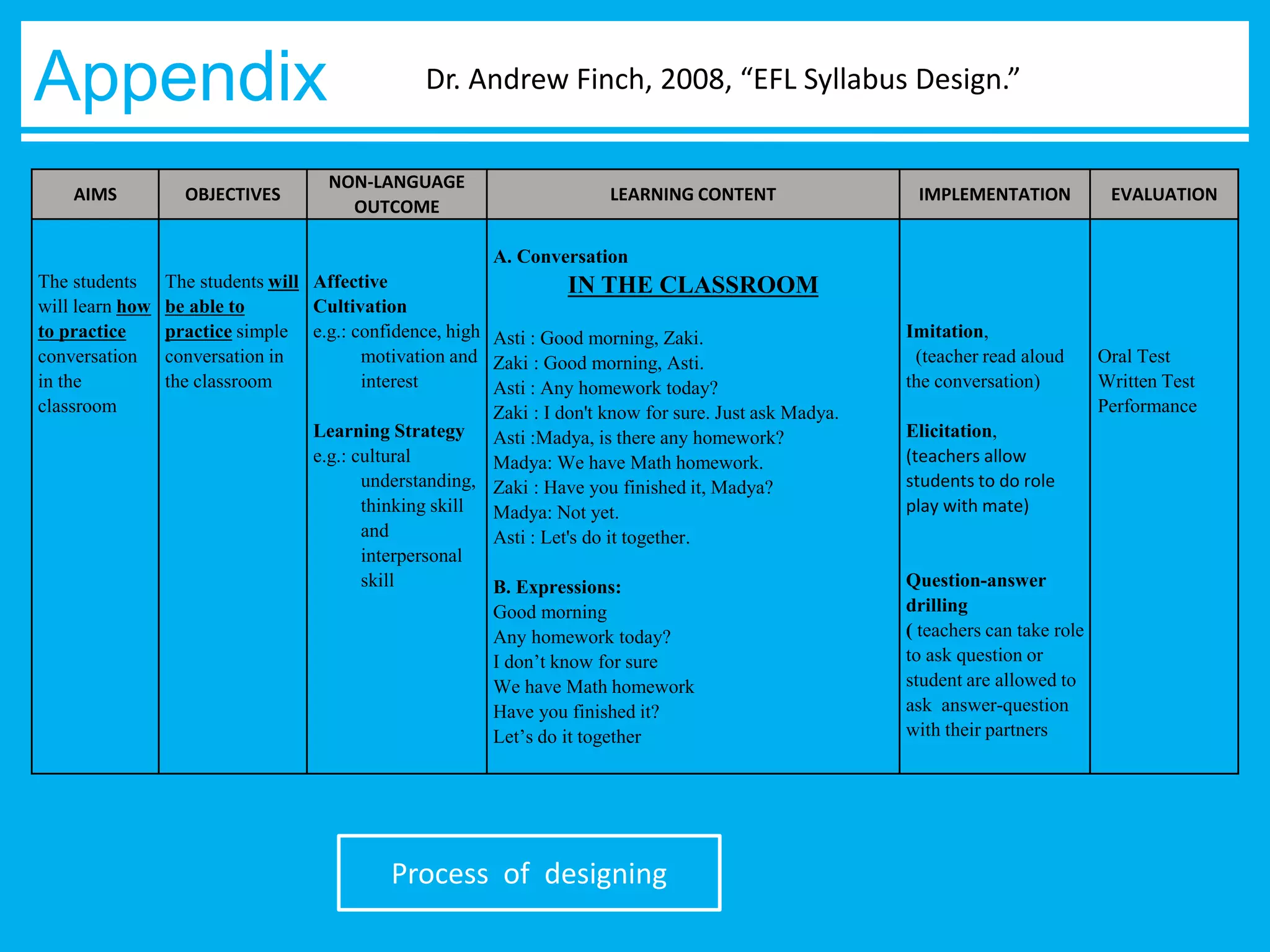
Appendix 
AIMS OBJECTIVES 
Dr. Andrew Finch, 2008, “EFL Syllabus Design.” 
NON-LANGUAGE 
OUTCOME 
LEARNING CONTENT IMPLEMENTATION EVALUATION 
The students 
will learn how 
to practice 
conversation 
in the 
classroom 
The students will 
be able to 
practice simple 
conversation in 
the classroom 
Affective 
Cultivation 
e.g.: confidence, high 
motivation and 
interest 
Learning Strategy 
e.g.: cultural 
understanding, 
thinking skill 
and 
interpersonal 
skill 
A. Conversation 
IN THE CLASSROOM 
Asti : Good morning, Zaki. 
Zaki : Good morning, Asti. 
Asti : Any homework today? 
Zaki : I don't know for sure. Just ask Madya. 
Asti :Madya, is there any homework? 
Madya: We have Math homework. 
Zaki : Have you finished it, Madya? 
Madya: Not yet. 
Asti : Let's do it together. 
B. Expressions: 
Good morning 
Any homework today? 
I don’t know for sure 
We have Math homework 
Have you finished it? 
Let’s do it together 
Imitation, 
(teacher read aloud 
the conversation) 
Elicitation, 
(teachers allow 
students to do role 
play with mate) 
Question-answer 
drilling 
( teachers can take role 
to ask question or 
student are allowed to 
ask answer-question 
with their partners 
Oral Test 
Written Test 
Performance 
Process of designing
Conclusion 2 
In closing, it is a great importance to note that 
“no single type of syllabus is appropriate for all 
teaching settings” 
This is due to the fact that 
We can choose a syllabus to implement 
must be based on all present investigation and valuable 
insights to create a language program and course.

Situational syllabus

  • 1.
  • 2.
    CONTENT Definition ofSituational Syllabus Theoretical assumption Components The Process of Situational Syllabus The Product of Situational Syllabus Advantage Disadvantage Conclusion
  • 3.
  • 4.
    A situational syllabus is often defined as one in which the contents are organized according to situations in which certain language is likely to be employed (Richards, et al, 1985:260; Ur, 2000:178; Schulz, 2005). DEFINITIONS
  • 5.
    THEORITICAL ASSUMPTION Languageis always used in context, never in isolation and the choice of linguistic forms are restricted by social situations. (Dr. Andrew Finch, EFL Syllabus Design ,2008) The situational syllabus is based on the communication situations. It selects, organizes, and presents language items according to situations. For instance : In the classroom At the bank at the airport
  • 6.
    COMPONENTS (Situational Syllabus) AIMS to prepare learners for future situations where they might use the language OBJECTIVES to learn grammar, build vocabulary and develop four basic skills in particular situations NON-LANGUAGE OUTCOMES other reasons instead of knowledge 1. Affective Cultivation e.g.: confidence, high motivation and interest 2. Learning Strategy e.g.: cultural understanding, thinking skill and interpersonal skill LEARNING CONTENTS Knowledge a collection of real or imaginary situations, which are always chosen according to the following factors  Communicative needs  Language items involved  The learners’ interest  Cultural differences Topic those the students can talk about in a certain situation Language items vocabulary or structure related to the communication in a situation Skill : speaking, writing, listening IMPLEMENTATION taking part in the activities, through o choral imitation, o Elicitation (role play) o substitution drilling and o question-answer drilling, hence, students grasp the basic principles to communicate in a situation EVALUATION Oral or written test and performance (mastering some vocabulary and structures, students get to communicate in different situations)
  • 7.
    The Process ofSituational Syllabus Design Listing situation Analyzing and matching the situation with the daily life of students Creating in conversation based on the situation professional Teacher Appendix Dr. Andrew Finch, 2008, “EFL Syllabus Design.”
  • 8.
    The Product ofSituational Syllabus Product in syllabus design is mainly concerned with what students are expected to learn; or in other words, the objectives of the syllabus. The main priority in product of situational syllabus is communicative competence
  • 9.
    ADVANTAGES Wilkins (1976)  Motivating learners Learner-centered not subject-centered. It takes account of the learner and his needs Concrete contexts: learners learn language structures within those contexts thus making it easier to visualize and then remember
  • 10.
    Advantage 2 Improving communicative competence Language teaching begins with the spoken language, and material is taught orally before it is presented in written forms
  • 11.
    Advantage 3 Enhancinginductive ability Though the conversation (dialogue) students are expected to understand the application of structure and vocabulary indirectly in a conversation.
  • 12.
    Disadvantage 1 Syllabuscan not include all the situations in the real life A situational syllabus will be limited for students whose needs were not encompassed by the situations in the syllabus Physical situational setting doesn’t necessarily predict the language forms that will be used Wilkins (1976)
  • 13.
    Disadvantage 2 Artificialdialogues can not be used in natural language Language as practiced in the classroom and language as spoken in the real world can be quite different Grammar items and structures are not arranged in a systematic way The sequencing of situations was generally random, making it impossible to grade the structures without falsifying the situations
  • 14.
    CONCLUSION “useful asa situational syllabus may be in certain circumstances…… it does not offer a general solution to problems of syllabus design.” (Wilkins)
  • 15.
    Appendix AIMS OBJECTIVES Dr. Andrew Finch, 2008, “EFL Syllabus Design.” NON-LANGUAGE OUTCOME LEARNING CONTENT IMPLEMENTATION EVALUATION The students will learn how to practice conversation in the classroom The students will be able to practice simple conversation in the classroom Affective Cultivation e.g.: confidence, high motivation and interest Learning Strategy e.g.: cultural understanding, thinking skill and interpersonal skill A. Conversation IN THE CLASSROOM Asti : Good morning, Zaki. Zaki : Good morning, Asti. Asti : Any homework today? Zaki : I don't know for sure. Just ask Madya. Asti :Madya, is there any homework? Madya: We have Math homework. Zaki : Have you finished it, Madya? Madya: Not yet. Asti : Let's do it together. B. Expressions: Good morning Any homework today? I don’t know for sure We have Math homework Have you finished it? Let’s do it together Imitation, (teacher read aloud the conversation) Elicitation, (teachers allow students to do role play with mate) Question-answer drilling ( teachers can take role to ask question or student are allowed to ask answer-question with their partners Oral Test Written Test Performance Process of designing
  • 16.
    Conclusion 2 Inclosing, it is a great importance to note that “no single type of syllabus is appropriate for all teaching settings” This is due to the fact that We can choose a syllabus to implement must be based on all present investigation and valuable insights to create a language program and course.