By:
Neylis Coffre
Paola Flores
Eva Batista
Marcos Otero
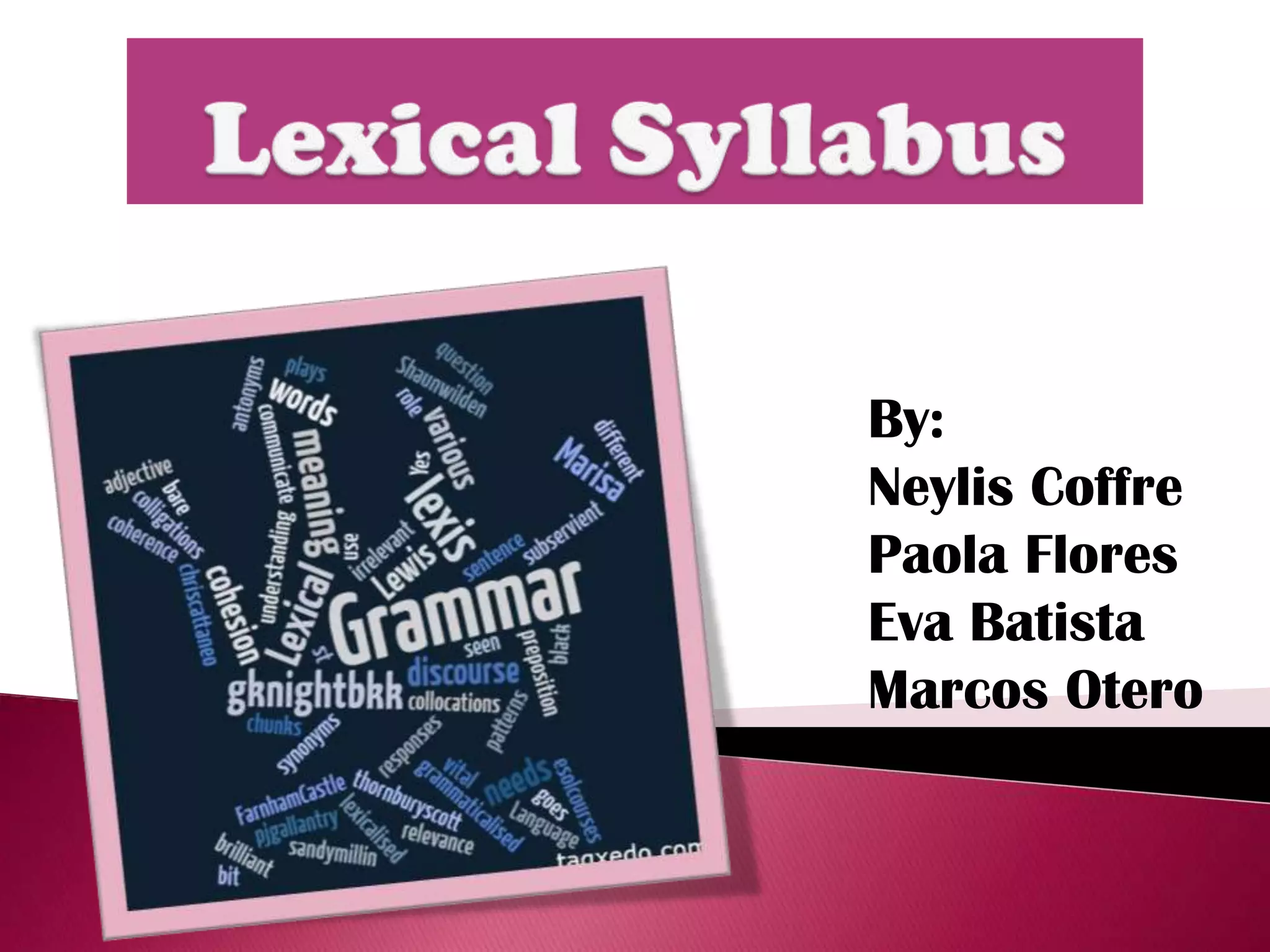
Lexical syllabus is based on vocabulary and lexical
  units.
There are many linguistics issues that can be
  applied to the lexical syllabus. For example:
 Vocabulary related to topics
 Word formation( suffixes, morphemes,)
 Compound items
 Connotations
 Dennotations
The similarity or the relationship between lexis and
  grammar makes difficult to create lexical syllabus
  because the designers may be confused in
  selecting an appropriate topic.
Students will learn new

vocabulary in order to talk

 about different jobs and

   occupations through

different in class activities.
1. Students will be able to participate in class by giving
    different responses to the teacher appropriately.

2. Given a set of examples, Students will be able to name
different types of jobs by watching pictures accurately.

3. Students will be able to ask questions to the partners in
order to share their jobs preferences appropriately.
Content: jobs and occupations
Level: Beginners
   VOCABULARY RELATED TO TOPICS:
          JOBS AND OCCUPATIONS
PRE-ACTIVITY

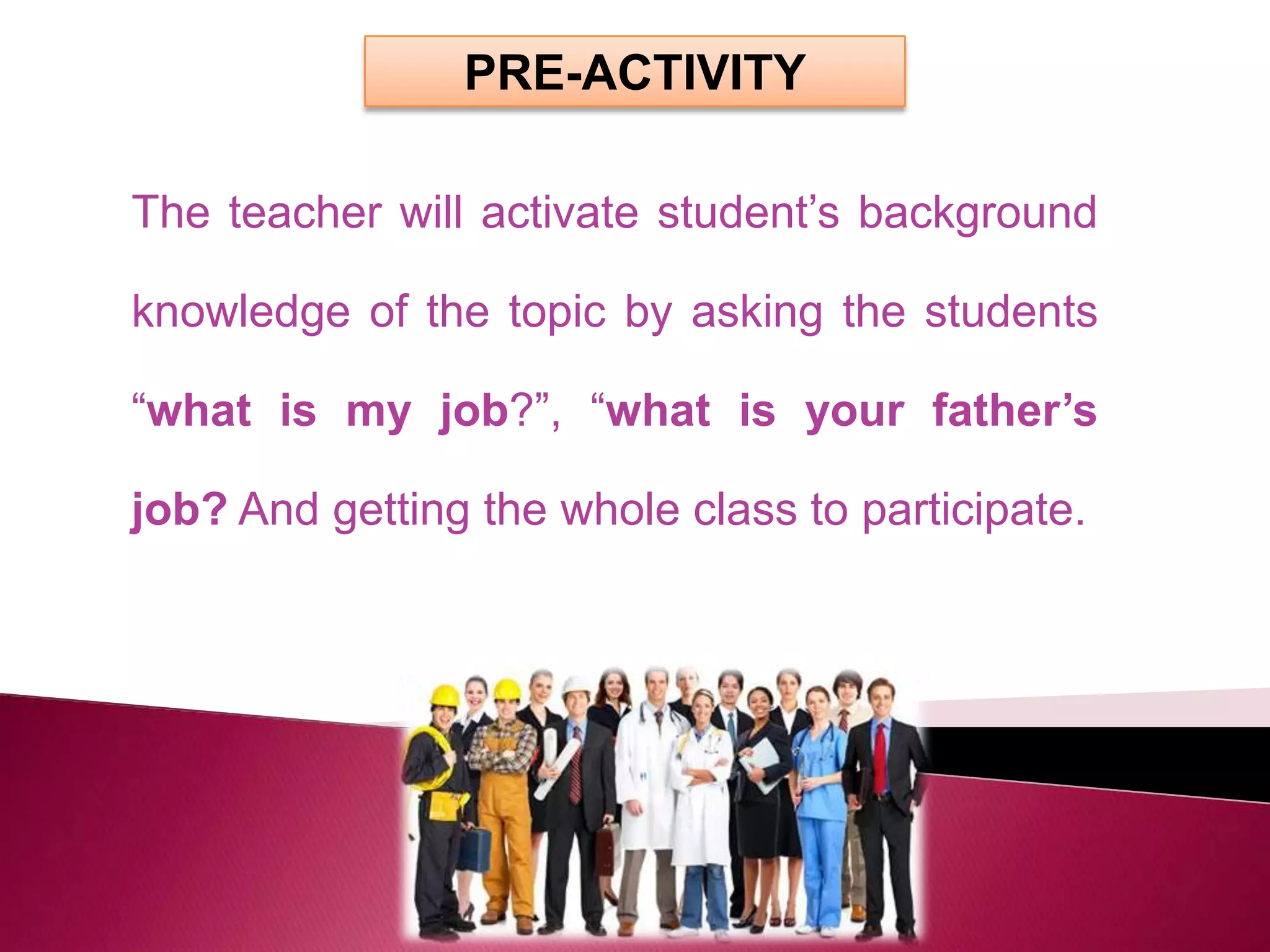
The teacher will activate student’s background

knowledge of the topic by asking the students

“what is my job?”, “what is your father’s

job? And getting the whole class to participate.
WHILE_ACTIVITY

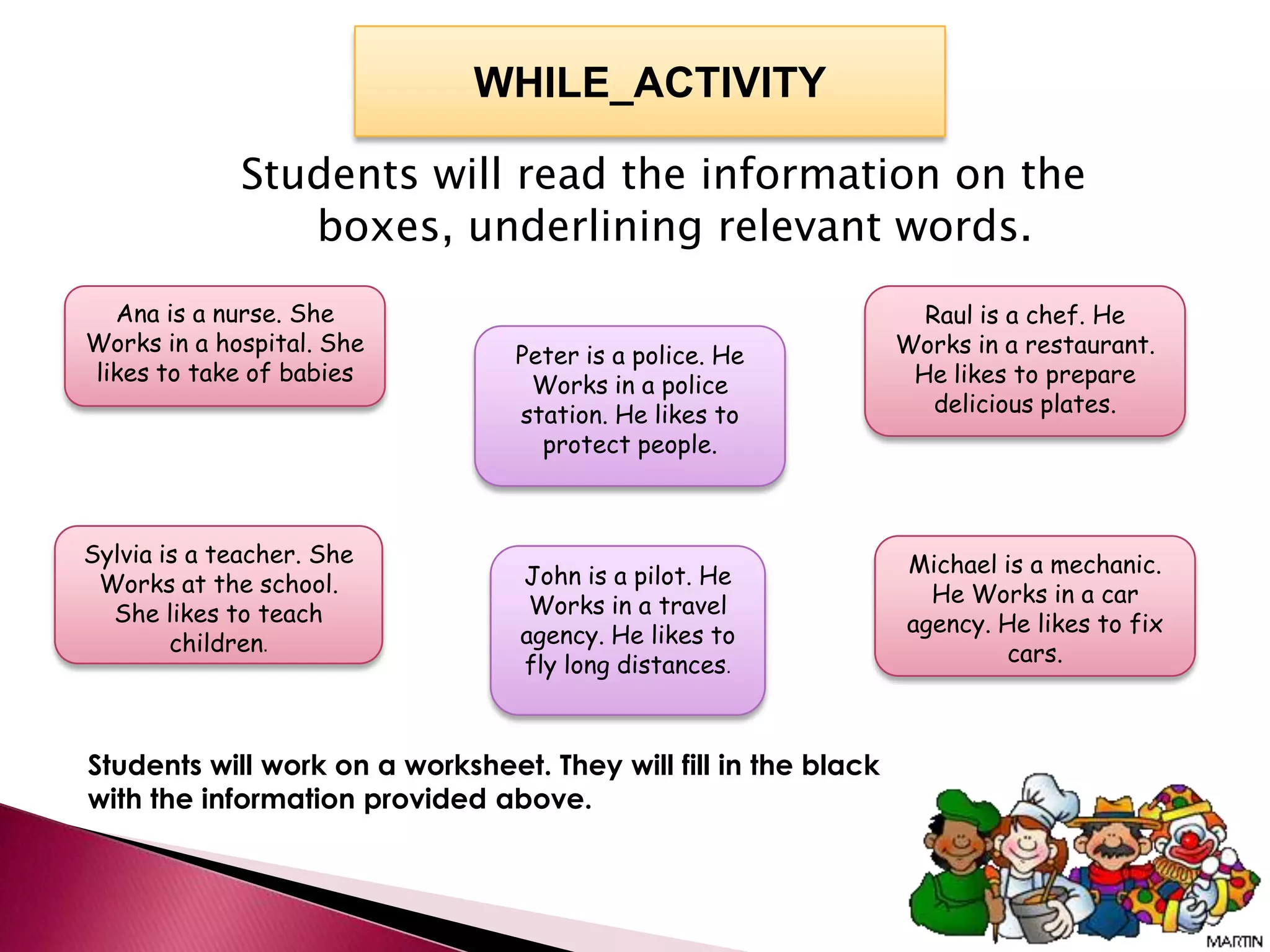
             Students will read the information on the
                boxes, underlining relevant words.
  Ana is a nurse. She                                              Raul is a chef. He
Works in a hospital. She         Peter is a police. He           Works in a restaurant.
likes to take of babies           Works in a police               He likes to prepare
                                 station. He likes to               delicious plates.
                                   protect people.


Sylvia is a teacher. She                                         Michael is a mechanic.
 Works at the school.            John is a pilot. He
                                  Works in a travel                He Works in a car
  She likes to teach                                             agency. He likes to fix
        children.                agency. He likes to
                                 fly long distances.                      cars.


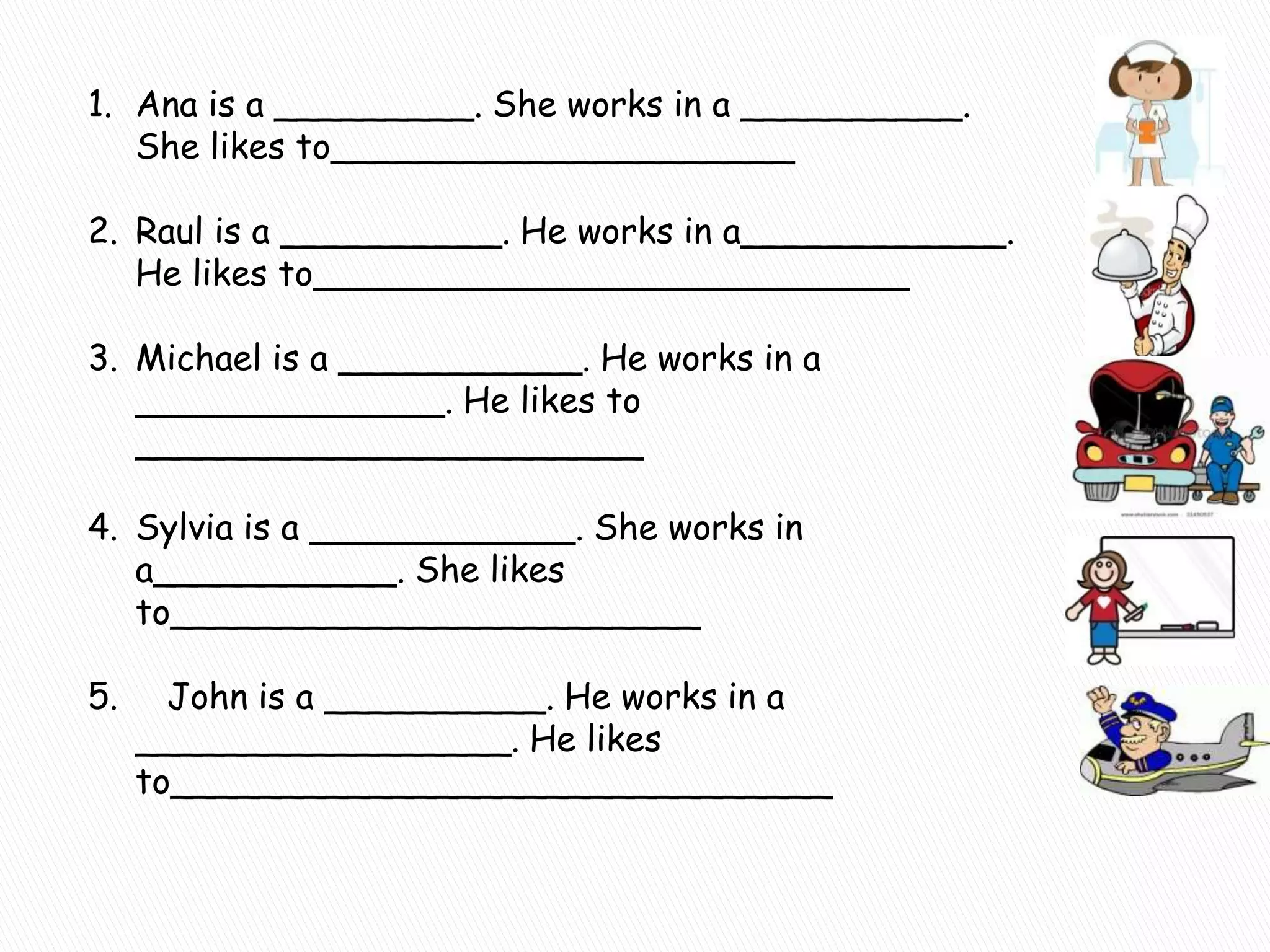
Students will work on a worksheet. They will fill in the black
with the information provided above.
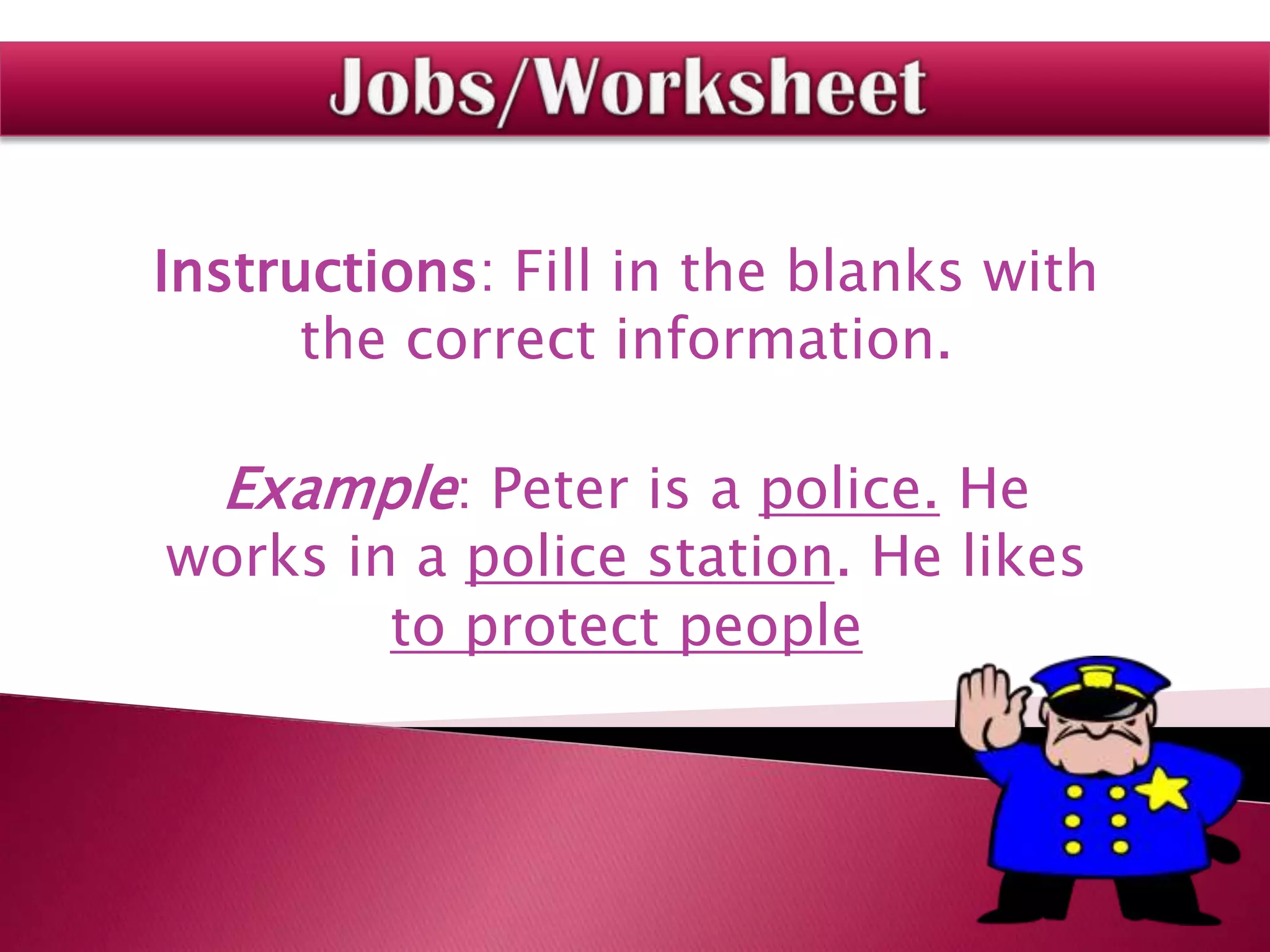
Instructions: Fill in the blanks with
      the correct information.

  Example: Peter is a police. He
works in a police station. He likes
        to protect people
1. Ana is a _________. She works in a __________.
   She likes to_____________________

2. Raul is a __________. He works in a____________.
   He likes to___________________________

3. Michael is a ___________. He works in a
   ______________. He likes to
   _______________________

4. Sylvia is a ____________. She works in
   a___________. She likes
   to________________________

5.     John is a __________. He works in a
     _________________. He likes
     to______________________________
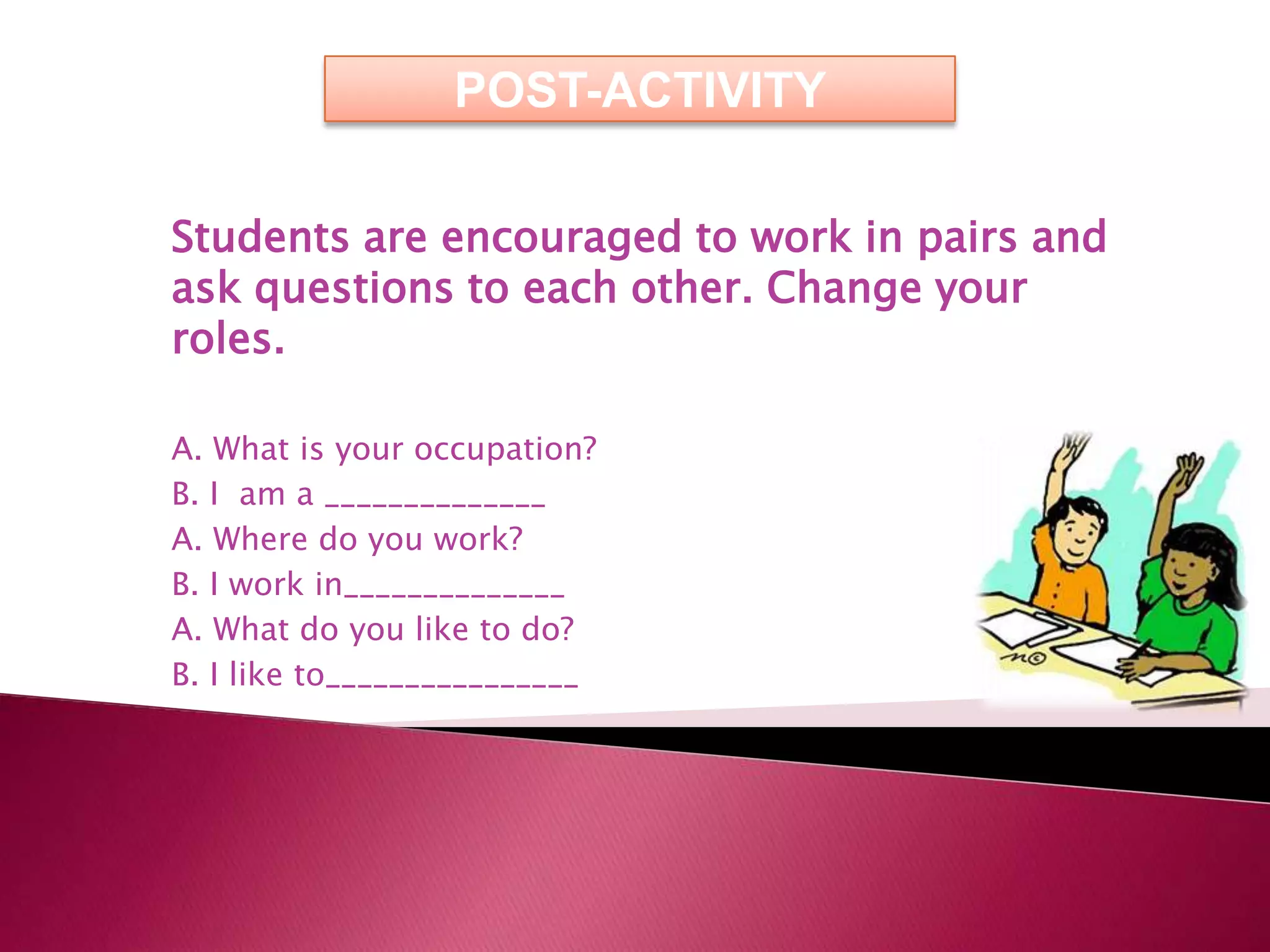
POST-ACTIVITY

Students are encouraged to work in pairs and
ask questions to each other. Change your
roles.

A. What is your occupation?
B. I am a ______________
A. Where do you work?
B. I work in______________
A. What do you like to do?
B. I like to________________
Lexical syllabus
Lexical syllabus

Lexical syllabus

  • 1.
  • 2.
    Lexical syllabus isbased on vocabulary and lexical units. There are many linguistics issues that can be applied to the lexical syllabus. For example:  Vocabulary related to topics  Word formation( suffixes, morphemes,)  Compound items  Connotations  Dennotations The similarity or the relationship between lexis and grammar makes difficult to create lexical syllabus because the designers may be confused in selecting an appropriate topic.
  • 3.
    Students will learnnew vocabulary in order to talk about different jobs and occupations through different in class activities.
  • 4.
    1. Students willbe able to participate in class by giving different responses to the teacher appropriately. 2. Given a set of examples, Students will be able to name different types of jobs by watching pictures accurately. 3. Students will be able to ask questions to the partners in order to share their jobs preferences appropriately. Content: jobs and occupations Level: Beginners
  • 5.
    VOCABULARY RELATED TO TOPICS: JOBS AND OCCUPATIONS
  • 7.
    PRE-ACTIVITY The teacher willactivate student’s background knowledge of the topic by asking the students “what is my job?”, “what is your father’s job? And getting the whole class to participate.
  • 8.
    WHILE_ACTIVITY Students will read the information on the boxes, underlining relevant words. Ana is a nurse. She Raul is a chef. He Works in a hospital. She Peter is a police. He Works in a restaurant. likes to take of babies Works in a police He likes to prepare station. He likes to delicious plates. protect people. Sylvia is a teacher. She Michael is a mechanic. Works at the school. John is a pilot. He Works in a travel He Works in a car She likes to teach agency. He likes to fix children. agency. He likes to fly long distances. cars. Students will work on a worksheet. They will fill in the black with the information provided above.
  • 9.
    Instructions: Fill inthe blanks with the correct information. Example: Peter is a police. He works in a police station. He likes to protect people
  • 10.
    1. Ana isa _________. She works in a __________. She likes to_____________________ 2. Raul is a __________. He works in a____________. He likes to___________________________ 3. Michael is a ___________. He works in a ______________. He likes to _______________________ 4. Sylvia is a ____________. She works in a___________. She likes to________________________ 5. John is a __________. He works in a _________________. He likes to______________________________
  • 11.
    POST-ACTIVITY Students are encouragedto work in pairs and ask questions to each other. Change your roles. A. What is your occupation? B. I am a ______________ A. Where do you work? B. I work in______________ A. What do you like to do? B. I like to________________