Instructional  Simulation Alaa Sadik, Ph.D. Department of Instructional & Learning Technologies College of Education, Sultan Qaboos University www.alaasadik.net [email_address]
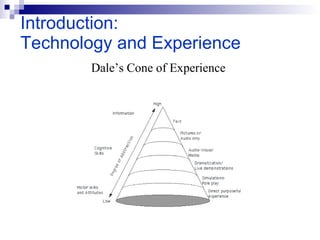
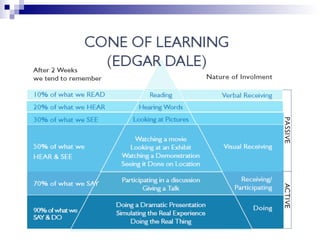
Introduction: Technology and Experience Dale’s Cone of Experience
 
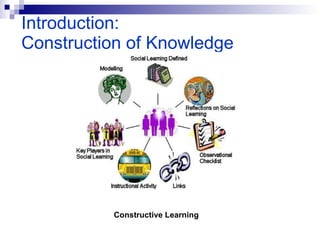
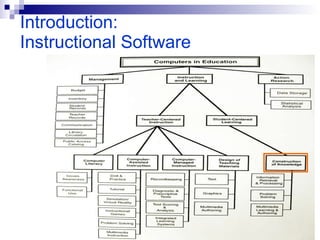
Introduction:   Construction of Knowledge Constructive Learning
Assumptions   Learning is an active and individualized process. The learner must construct new knowledge based on his/her own individualized experience. The student is the producer of information rather than the consumer. The teacher is a member of learning community rather than the only source of information (facilitator). Construction of Knowledge
Teaching must fosters critical thinking and creates active and motivated learners.  Learning emphasizes the application of knowledge in real life situations.  Learning is a cooperative process constructed within the social context of the classroom. Assessment is a continuous and interactive process. Construction of Knowledge
Simulation Simulation is the imitation of some real thing or process.
Simulation Simulation is not new. It has been with us for as long as there has been education. Simulation requires no other technology than the ability to think. Most simulations take place entirely in the mind, via mental what-ifs.
Simulation Types of Simulations Physical simulation :  is a simulation in which physical objects are substituted for the real thing. These physical objects are often chosen because they are smaller or cheaper than the actual object or system. Interactive simulation :  is a special kind of physical simulation in which physical simulations include  human operators , such as in a flight simulator or a driving simulator.
Simulation Constructive simulation:   is a hypothetical   model of real or imagined system (usually computerized) designed to learn how a system works and allows learners to create their own sequence for using simulation.
Simulation Constructive simulation:  is a hypothetical   model of real or imagined system (usually computerized) designed to learn how a system works and allows learners to create their own sequence for using simulation.   Why? Computer simulation has become a useful part of modeling many natural systems in physics, chemistry and biology, and human systems in economics and social science as well as in engineering to gain insight into the operation of those systems.
Simulation Computer simulation:  is a computerized hypothetical   model of real or imagined system designed to learn how a system works and allows learners to create their own sequence for using simulation.   Features Involve students  into learning process. Compress time  or slow down processes. Save money  and resources.  Make experimentation safe.  Make impossible situations possible  and controllable. Let student repeat events  as many times as they want.
Simulation Computer simulation:  is a computerized hypothetical   model of real or imagined system designed to learn how a system works and allows learners to create their own sequence for using simulation.   Examples Several software packages exist for running computer-based simulation modeling  ( e.g. ChemLab, Infinite Physics Simulator, Curvilinear, VirtLab, Essential Science, GastroPlus, Flight Simulator, Truck Simulator, etc. )
The term “micro-world” is used to refer to educational simulations which:   model some  abstract concept  rather than simulating a realistic object or environment.  model a  real world environment in a simplistic way  so as to help a learner develop an understanding of the key concepts. Simulation in Education
The term “micro-world” is used to refer to educational simulations which:   Normally, a learner can  create some sort of construction  within the micro-world that will behave in a way consistent with the concepts being modeled. Simulation in Education
Types of Educational Simulations Animation This is a technology-supported graphic representation of a physical object or space. The learner is able to simulate user interaction within the animated space. Role Playing Simulation may also take the form of role playing. A scenario is presented, one or more individuals are assigned roles, and the learners act out their roles within the simulation to solve a problem, reconcile a relationship issue or learn about a process. Simulation in Education
Types of Educational Simulations “ If-Then” Process Simulation Technology-enabled simulation can provide an if-then methodology for learning. The student is presented a situation that has multiple outcomes, and he or she responds by choosing an outcome. “ What-If” Interactive Models What-if models are built using a set of factors that collectively determine the outcome of a question or problem, for example, "What size big screen TV should I buy?" The learner is able to modify the value of the factors and is provided an outcome. Simulation in Education
Types of Educational Simulations Intelligent Tutoring Systems The ultimate form of simulation, intelligent tutoring systems are computer-based instructional systems that model the  1) content to be taught,  2) instructional models of what and how to teach, and  3) feedback mechanisms to correct student errors.  Thus, intelligent tutoring systems  simulate the content and process of learning . Simulation in Education
Examples Simulation in Education
Instructional Simulation Example Curvilinear Friendly design,  users do not need to get trained to operate these tools. Using buttons, textboxes and slide bars learners can run or stop the experiment and change the parameters of the phenomena.
Instructional Simulation Example ChemLab Model ChemLab simulates the steps involved in performing an experiment. Users step-through the actual lab procedure while interacting with animated equipment in a way that is similar to the real lab experience.
Instructional Simulation Example Interactive Physics  Interactive Physics teaches students the same motion tools used by professional scientists and engineers. We are confident that Interactive Physics is a valuable tool for your classroom and laboratory.
Instructional Simulation Example Infinite Physics Simulator Infinite physics simulator has a large collection of objects useful for optics simulation including mirrors, prisms, lenses and other transparent objects.
Instructional Simulation Example Infinite Physics Simulator Perform labs on the screen and analyze them with different tools.
More Examples Interactive Simulations http://phet.colorado.edu/simulations/sims.php?sim=Projectile_Motion VirtLab http://www.virtlab.com/index.aspx simSchool https://simschool.org/my/ Essential Science http ://www.focuseducational.com/html/product_overview.php/pid/1 GastroPlus http://www.simulations-plus.com/Products.aspx?grpID=3&cID=16&pID=11 Simulation in Education
Barriers Lack of money.  Lack of time. Lack of knowledge.  Lack of technology. Lack of sharing Simulation in Education
Thank you Simulation in Education

Instructional Simulation

  • 1.
    Instructional SimulationAlaa Sadik, Ph.D. Department of Instructional & Learning Technologies College of Education, Sultan Qaboos University www.alaasadik.net [email_address]
  • 2.
    Introduction: Technology andExperience Dale’s Cone of Experience
  • 3.
  • 4.
    Introduction: Construction of Knowledge Constructive Learning
  • 5.
    Assumptions Learning is an active and individualized process. The learner must construct new knowledge based on his/her own individualized experience. The student is the producer of information rather than the consumer. The teacher is a member of learning community rather than the only source of information (facilitator). Construction of Knowledge
  • 6.
    Teaching must fosterscritical thinking and creates active and motivated learners. Learning emphasizes the application of knowledge in real life situations. Learning is a cooperative process constructed within the social context of the classroom. Assessment is a continuous and interactive process. Construction of Knowledge
  • 7.
    Simulation Simulation isthe imitation of some real thing or process.
  • 8.
    Simulation Simulation isnot new. It has been with us for as long as there has been education. Simulation requires no other technology than the ability to think. Most simulations take place entirely in the mind, via mental what-ifs.
  • 9.
    Simulation Types ofSimulations Physical simulation : is a simulation in which physical objects are substituted for the real thing. These physical objects are often chosen because they are smaller or cheaper than the actual object or system. Interactive simulation : is a special kind of physical simulation in which physical simulations include human operators , such as in a flight simulator or a driving simulator.
  • 10.
    Simulation Constructive simulation: is a hypothetical model of real or imagined system (usually computerized) designed to learn how a system works and allows learners to create their own sequence for using simulation.
  • 11.
    Simulation Constructive simulation: is a hypothetical model of real or imagined system (usually computerized) designed to learn how a system works and allows learners to create their own sequence for using simulation. Why? Computer simulation has become a useful part of modeling many natural systems in physics, chemistry and biology, and human systems in economics and social science as well as in engineering to gain insight into the operation of those systems.
  • 12.
    Simulation Computer simulation: is a computerized hypothetical model of real or imagined system designed to learn how a system works and allows learners to create their own sequence for using simulation. Features Involve students into learning process. Compress time or slow down processes. Save money and resources. Make experimentation safe. Make impossible situations possible and controllable. Let student repeat events as many times as they want.
  • 13.
    Simulation Computer simulation: is a computerized hypothetical model of real or imagined system designed to learn how a system works and allows learners to create their own sequence for using simulation. Examples Several software packages exist for running computer-based simulation modeling ( e.g. ChemLab, Infinite Physics Simulator, Curvilinear, VirtLab, Essential Science, GastroPlus, Flight Simulator, Truck Simulator, etc. )
  • 14.
    The term “micro-world”is used to refer to educational simulations which: model some abstract concept rather than simulating a realistic object or environment. model a real world environment in a simplistic way so as to help a learner develop an understanding of the key concepts. Simulation in Education
  • 15.
    The term “micro-world”is used to refer to educational simulations which: Normally, a learner can create some sort of construction within the micro-world that will behave in a way consistent with the concepts being modeled. Simulation in Education
  • 16.
    Types of EducationalSimulations Animation This is a technology-supported graphic representation of a physical object or space. The learner is able to simulate user interaction within the animated space. Role Playing Simulation may also take the form of role playing. A scenario is presented, one or more individuals are assigned roles, and the learners act out their roles within the simulation to solve a problem, reconcile a relationship issue or learn about a process. Simulation in Education
  • 17.
    Types of EducationalSimulations “ If-Then” Process Simulation Technology-enabled simulation can provide an if-then methodology for learning. The student is presented a situation that has multiple outcomes, and he or she responds by choosing an outcome. “ What-If” Interactive Models What-if models are built using a set of factors that collectively determine the outcome of a question or problem, for example, "What size big screen TV should I buy?" The learner is able to modify the value of the factors and is provided an outcome. Simulation in Education
  • 18.
    Types of EducationalSimulations Intelligent Tutoring Systems The ultimate form of simulation, intelligent tutoring systems are computer-based instructional systems that model the 1) content to be taught, 2) instructional models of what and how to teach, and 3) feedback mechanisms to correct student errors. Thus, intelligent tutoring systems simulate the content and process of learning . Simulation in Education
  • 19.
  • 20.
    Instructional Simulation ExampleCurvilinear Friendly design, users do not need to get trained to operate these tools. Using buttons, textboxes and slide bars learners can run or stop the experiment and change the parameters of the phenomena.
  • 21.
    Instructional Simulation ExampleChemLab Model ChemLab simulates the steps involved in performing an experiment. Users step-through the actual lab procedure while interacting with animated equipment in a way that is similar to the real lab experience.
  • 22.
    Instructional Simulation ExampleInteractive Physics Interactive Physics teaches students the same motion tools used by professional scientists and engineers. We are confident that Interactive Physics is a valuable tool for your classroom and laboratory.
  • 23.
    Instructional Simulation ExampleInfinite Physics Simulator Infinite physics simulator has a large collection of objects useful for optics simulation including mirrors, prisms, lenses and other transparent objects.
  • 24.
    Instructional Simulation ExampleInfinite Physics Simulator Perform labs on the screen and analyze them with different tools.
  • 25.
    More Examples InteractiveSimulations http://phet.colorado.edu/simulations/sims.php?sim=Projectile_Motion VirtLab http://www.virtlab.com/index.aspx simSchool https://simschool.org/my/ Essential Science http ://www.focuseducational.com/html/product_overview.php/pid/1 GastroPlus http://www.simulations-plus.com/Products.aspx?grpID=3&cID=16&pID=11 Simulation in Education
  • 26.
    Barriers Lack ofmoney. Lack of time. Lack of knowledge. Lack of technology. Lack of sharing Simulation in Education
  • 27.