Simulations is considered the «third
 form of science» since it is possible to
create events, with calculations like in
       authentic and real events.
Simulations:                                   The features
Learning with
                                      structuring and                                 and functions
 simulations
                                      experimenting                                   of simulations
 Problem solving content learning                                                                    Definitions
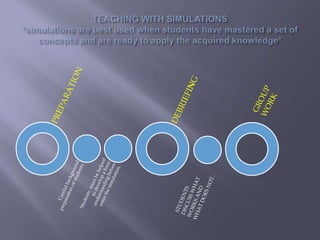
                                               Teaching with simulations


    Advantages of simulations                                                                   Simulation categories
                                                       Preparation


     Limitations of simulations                                                                 Sources of simulation

                                                       Debriefing
                                                                                          Educational software publishers.
      Simulaltions for sicience                                                        Commercial software publishers on-line
                                                                                       simulationCharacteristics of Simultaions


                                                      Group work
 Simulations for workplace training                                                          Caracteristics of simulations


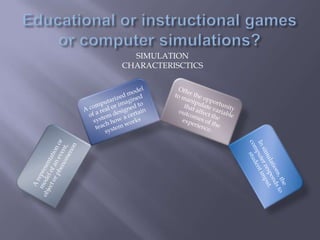
                                       Simulations as an integral part of classroom   A vision of knowledge. Authentic problem
  Simulations for K-12 classrooms.                     instruction.                       context or setting variable rules of
                                                                                                      interaction.
It is important
 to know basis
    content of
knowledge but
the importance
is the ability to
     put that
 knowledge to
       work
SIMULATION
CHARACTERISCTICS
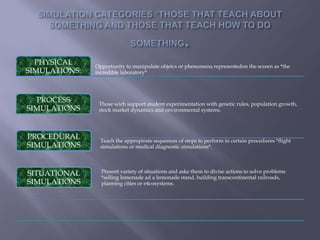
PHYSICAL     Opportunity to manipulate objetcs or phenomena representedon the screen as *the
SIMULATIONS:   incredible laboratory*


  PROCESS       Those wich support student experimentation with genetic rules, population growth,
SIMULATIONS     stock market dynamics and environmental systems.


PROCEDURAL       Teach the appropirate sequences of steps to perform in certain procedures *flight
SIMULATIONS      simulations or medical diagnostic simulations*.


SITUATIONAL      Present variety of situations and aske them to divise actions to solve problems
                 *selling lemonade ad a lemonade stand, building transcontinental railroads,
SIMULATIONS      planning cities or e4cosystems.
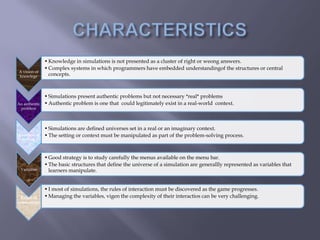
• Knowledge in simulations is not presented as a cluster of right or weong answers.
               • Complex systems in which programmers have embedded understandingof the structures or central
A vision of
knowlege         concepts.


               • Simulations present authentic problems but not necessary *real* problems
An authentic   • Authentic problem is one that could legitimately exist in a real-world context.
 problem


               • Simulations are defined universes set in a real or an imaginary context.
A context of   • The setting or context must be manipulated as part of the problem-solving process.
  setting


               • Good strategy is to study carefully the menus available on the menu bar.
               • The basic structures that define the universe of a simulation are generallly represented as variables that
 Variables       learners manipulate.


               • I most of simulations, the rules of interaction must be discovered as the game progresses.
 Rules of      • Managing the variables, vigen the complexity of their interactios can be very challenging.
interaction
   The field of science seems to include more
    simulations than any other area. The term
    *Edutainment* is applied for software
    publishers with educational value.
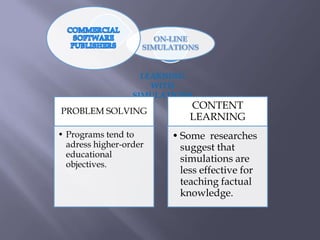
LEARNING
                      WITH
                  SIMULATIONS
                             CONTENT
PROBLEM SOLVING
                             LEARNING
• Programs tend to       • Some researches
  adress higher-order      suggest that
  educational
                           simulations are
  objectives.
                           less effective for
                           teaching factual
                           knowledge.
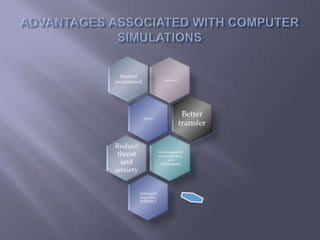
Student
                          Low cost
involvement


              Safety
                                      Better
                                     transfer

Reduce
 threat                Encouragement
                       of socialization
  and                        and
                        collaboration
anxiety


          Making the
          imposible,
          POSSIBLE
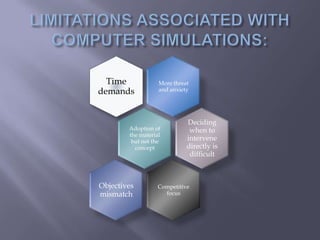
Time             More threat
demands            and anxiety


                             Deciding
        Adoption of           when to
        the material
         but not the         intervene
          concept            directly is
                              difficult


Objectives        Competitive
mismatch            focus
   1. Simulations bring real-life context to the
    learners.
   2. Simulations helps with situations that could
    happen in different scenarios.
   3. Creativity is increased when learners
    develop a project, with virtual ingredients.
   4. Improve the level of knowledge through
    different virtual activities.

Simulations chapter 7

  • 1.
    Simulations is consideredthe «third form of science» since it is possible to create events, with calculations like in authentic and real events.
  • 2.
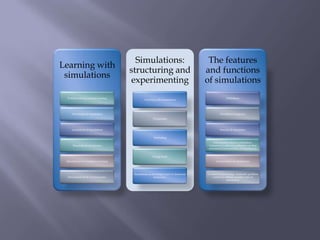
    Simulations: The features Learning with structuring and and functions simulations experimenting of simulations Problem solving content learning Definitions Teaching with simulations Advantages of simulations Simulation categories Preparation Limitations of simulations Sources of simulation Debriefing Educational software publishers. Simulaltions for sicience Commercial software publishers on-line simulationCharacteristics of Simultaions Group work Simulations for workplace training Caracteristics of simulations Simulations as an integral part of classroom A vision of knowledge. Authentic problem Simulations for K-12 classrooms. instruction. context or setting variable rules of interaction.
  • 3.
    It is important to know basis content of knowledge but the importance is the ability to put that knowledge to work
  • 4.
  • 5.
    PHYSICAL Opportunity to manipulate objetcs or phenomena representedon the screen as *the SIMULATIONS: incredible laboratory* PROCESS Those wich support student experimentation with genetic rules, population growth, SIMULATIONS stock market dynamics and environmental systems. PROCEDURAL Teach the appropirate sequences of steps to perform in certain procedures *flight SIMULATIONS simulations or medical diagnostic simulations*. SITUATIONAL Present variety of situations and aske them to divise actions to solve problems *selling lemonade ad a lemonade stand, building transcontinental railroads, SIMULATIONS planning cities or e4cosystems.
  • 6.
    • Knowledge insimulations is not presented as a cluster of right or weong answers. • Complex systems in which programmers have embedded understandingof the structures or central A vision of knowlege concepts. • Simulations present authentic problems but not necessary *real* problems An authentic • Authentic problem is one that could legitimately exist in a real-world context. problem • Simulations are defined universes set in a real or an imaginary context. A context of • The setting or context must be manipulated as part of the problem-solving process. setting • Good strategy is to study carefully the menus available on the menu bar. • The basic structures that define the universe of a simulation are generallly represented as variables that Variables learners manipulate. • I most of simulations, the rules of interaction must be discovered as the game progresses. Rules of • Managing the variables, vigen the complexity of their interactios can be very challenging. interaction
  • 7.
    The field of science seems to include more simulations than any other area. The term *Edutainment* is applied for software publishers with educational value.
  • 8.
    LEARNING WITH SIMULATIONS CONTENT PROBLEM SOLVING LEARNING • Programs tend to • Some researches adress higher-order suggest that educational simulations are objectives. less effective for teaching factual knowledge.
  • 9.
    Student Low cost involvement Safety Better transfer Reduce threat Encouragement of socialization and and collaboration anxiety Making the imposible, POSSIBLE
  • 10.
    Time More threat demands and anxiety Deciding Adoption of when to the material but not the intervene concept directly is difficult Objectives Competitive mismatch focus
  • 12.
    1. Simulations bring real-life context to the learners.  2. Simulations helps with situations that could happen in different scenarios.  3. Creativity is increased when learners develop a project, with virtual ingredients.  4. Improve the level of knowledge through different virtual activities.