CLASSIFICATION OF
HORMONES
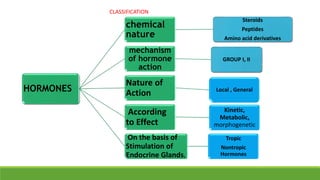
HORMONES
chemical
nature
Steroids
Peptides
Amino acid derivatives
mechanism
of hormone
action
GROUP I, II
Nature of
Action Local , General
According
to Effect
Kinetic,
Metabolic,
morphogenetic
On the basis of
Stimulation of
Endocrine Glands.
Tropic
Nontropic
Hormones
CLASSIFICATION
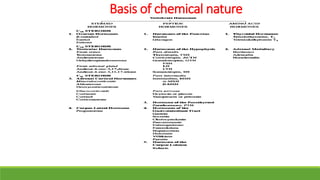
Basis of chemical nature
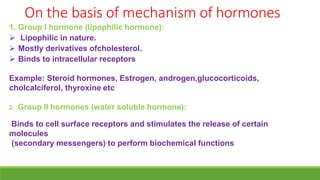
On the basis of mechanism of hormones
1. Group I hormone (lipophilic hormone):
 Lipophilic in nature.
 Mostly derivatives ofcholesterol.
 Binds to intracellular receptors
Example: Steroid hormones, Estrogen, androgen,glucocorticoids,
cholcalciferol, thyroxine etc
2. Group II hormones (water soluble hormone):
Binds to cell surface receptors and stimulates the release of certain
molecules
(secondary messengers) to perform biochemical functions
On the basis of secondary messengers group II hormones are of 3
types;
i. Secondary messenger is cAMP:
eg. Adrenocorticotropic hormone, FSH, LH, PTH,ADH, calcitonin,
glucagon,
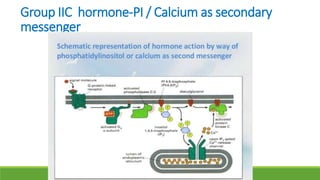
ii. Secondary messenger is phosphotidylinocitol/calcium or both:
eg. Acetylcholine, vasopressin, cholecystokinin, gastrin, gonadotropin
releasing hormone, thyrotropin releasing hormone,
Insulin, chorynoic somato mamotropin, epidermal growth factors,
fibroblast growth factors, GH,
Prolactin
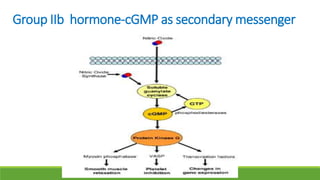
iii.Secondary messenger is cGMP:
Atrial natriuretic peptide (ANP)
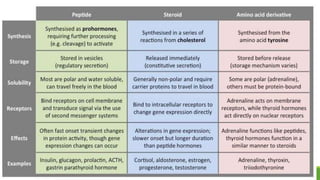
Hormones can be categorised into three distinct groups according to their chemical composition
The three types of hormones are steroid hormones, peptide hormones and amino acid derivatives
The different types of hormones will have different mechanisms of action due to their distinct chemical
properties
Steroid Hormones
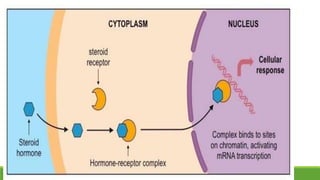
Steroid hormones are lipophilic (fat-loving) – meaning they can freely diffuse across the plasma membrane
of a cell
They bind to receptors in either the cytoplasm or nucleus of the target cell, to form an active receptor-
hormone complex
This activated complex will move into the nucleus and bind directly to DNA, acting as a transcription factor
for gene expression
Examples of steroid hormones include those produced by the gonads (i.e. estrogen, progesterone and
testosterone)
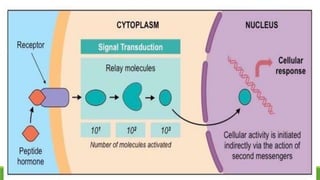
Peptide Hormones: Peptide hormones are hydrophylic and lipophobic (fat- hating) – meaning
they cannot freely cross the plasma membrane
They bind to receptors on the surface of the cell, which are typically coupled to
internally anchored proteins (e.g. G proteins)
The receptor complex activates a series of intracellular molecules called second
messengers, which initiate cell activity
This process is called signal transduction, because the external signal (hormone)
is transduced via internal intermediaries
Examples of second messengers include cyclic AMP (cAMP), calcium ions (Ca2+),
nitric oxide (NO) and protein kinases
The use of second messengers enables the amplification of the initial signal (as
more molecules are activated)
Peptide hormones include insulin, glucagon, leptin, ADH and oxytocin
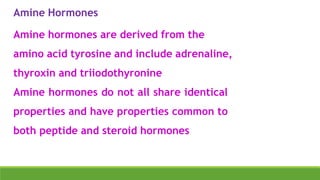
Amine Hormones
Amine hormones are derived from the
amino acid tyrosine and include adrenaline,
thyroxin and triiodothyronine
Amine hormones do not all share identical
properties and have properties common to
both peptide and steroid hormones
Group II a hormone-cAMP as secondary
messenger
Group IIb hormone-cGMP as secondary messenger
Group IIC hormone-PI / Calcium as secondary
messenger
According to Nature of Action
(a) Local Hormones:
Hormones exert specific local effects by paracrine secretion. e .g. Testosterone.
(b) General Hormones:
General hormones are secreted by specific endocrine glands and are transported in the blood to
cause physiologic actions at points remote from their place of origin. e.g. Insulin, Thyroid hormone etc.
According to Effect
(a) Kinetic Hormones: These hormones may cause pigment migration, muscle contraction, glandular
secretion etc. e.g. Pinealin, MSH, Epinephrine etc.
(b) Metabolic Hormones:
These hormones mainly changes the rate of metabolism and balance the reaction. e.g. Insulin,
Glucagon, PTH etc.
(c) Morphogenetic Hormones:
These hormones are involved in growth and differentiation.e.g.STH, LTH, FSH, Thyroid hormones
etc.
Basis of Stimulation of Endocrine Glands
(a) Tropic Hormones:
These hormones stimulate other endocrine glands for secretion. e.g. TSH of pituitary
stimulates secretion of thyroid gland.
(b) Non-tropic Hormones:
These hormones exert their effect on non-endocrine target tissues. e.g. Thyroid hormone
increases the O2 consumption rate and metabolic activity of almost every cells.

classification of hormones.pptx

  • 1.
  • 2.
    HORMONES chemical nature Steroids Peptides Amino acid derivatives mechanism ofhormone action GROUP I, II Nature of Action Local , General According to Effect Kinetic, Metabolic, morphogenetic On the basis of Stimulation of Endocrine Glands. Tropic Nontropic Hormones CLASSIFICATION
  • 3.
  • 4.
    On the basisof mechanism of hormones 1. Group I hormone (lipophilic hormone):  Lipophilic in nature.  Mostly derivatives ofcholesterol.  Binds to intracellular receptors Example: Steroid hormones, Estrogen, androgen,glucocorticoids, cholcalciferol, thyroxine etc 2. Group II hormones (water soluble hormone): Binds to cell surface receptors and stimulates the release of certain molecules (secondary messengers) to perform biochemical functions
  • 5.
    On the basisof secondary messengers group II hormones are of 3 types; i. Secondary messenger is cAMP: eg. Adrenocorticotropic hormone, FSH, LH, PTH,ADH, calcitonin, glucagon, ii. Secondary messenger is phosphotidylinocitol/calcium or both: eg. Acetylcholine, vasopressin, cholecystokinin, gastrin, gonadotropin releasing hormone, thyrotropin releasing hormone, Insulin, chorynoic somato mamotropin, epidermal growth factors, fibroblast growth factors, GH, Prolactin iii.Secondary messenger is cGMP: Atrial natriuretic peptide (ANP)
  • 6.
    Hormones can becategorised into three distinct groups according to their chemical composition The three types of hormones are steroid hormones, peptide hormones and amino acid derivatives The different types of hormones will have different mechanisms of action due to their distinct chemical properties Steroid Hormones Steroid hormones are lipophilic (fat-loving) – meaning they can freely diffuse across the plasma membrane of a cell They bind to receptors in either the cytoplasm or nucleus of the target cell, to form an active receptor- hormone complex This activated complex will move into the nucleus and bind directly to DNA, acting as a transcription factor for gene expression Examples of steroid hormones include those produced by the gonads (i.e. estrogen, progesterone and testosterone)
  • 8.
    Peptide Hormones: Peptidehormones are hydrophylic and lipophobic (fat- hating) – meaning they cannot freely cross the plasma membrane They bind to receptors on the surface of the cell, which are typically coupled to internally anchored proteins (e.g. G proteins) The receptor complex activates a series of intracellular molecules called second messengers, which initiate cell activity This process is called signal transduction, because the external signal (hormone) is transduced via internal intermediaries Examples of second messengers include cyclic AMP (cAMP), calcium ions (Ca2+), nitric oxide (NO) and protein kinases The use of second messengers enables the amplification of the initial signal (as more molecules are activated) Peptide hormones include insulin, glucagon, leptin, ADH and oxytocin
  • 10.
    Amine Hormones Amine hormonesare derived from the amino acid tyrosine and include adrenaline, thyroxin and triiodothyronine Amine hormones do not all share identical properties and have properties common to both peptide and steroid hormones
  • 12.
    Group II ahormone-cAMP as secondary messenger
  • 13.
    Group IIb hormone-cGMPas secondary messenger
  • 14.
    Group IIC hormone-PI/ Calcium as secondary messenger
  • 15.
    According to Natureof Action (a) Local Hormones: Hormones exert specific local effects by paracrine secretion. e .g. Testosterone. (b) General Hormones: General hormones are secreted by specific endocrine glands and are transported in the blood to cause physiologic actions at points remote from their place of origin. e.g. Insulin, Thyroid hormone etc.
  • 16.
    According to Effect (a)Kinetic Hormones: These hormones may cause pigment migration, muscle contraction, glandular secretion etc. e.g. Pinealin, MSH, Epinephrine etc. (b) Metabolic Hormones: These hormones mainly changes the rate of metabolism and balance the reaction. e.g. Insulin, Glucagon, PTH etc. (c) Morphogenetic Hormones: These hormones are involved in growth and differentiation.e.g.STH, LTH, FSH, Thyroid hormones etc.
  • 17.
    Basis of Stimulationof Endocrine Glands (a) Tropic Hormones: These hormones stimulate other endocrine glands for secretion. e.g. TSH of pituitary stimulates secretion of thyroid gland. (b) Non-tropic Hormones: These hormones exert their effect on non-endocrine target tissues. e.g. Thyroid hormone increases the O2 consumption rate and metabolic activity of almost every cells.