CHEMICAL SIGNLAING
MECHANISMS
By
Dr. Faraza Javaid
Signal Transduction
Signal transduction (also known as cell signaling) is the
transmission of molecular signals from a cell's
exterior to its interior.
Signals received by cells must be transmitted
effectively into the cell to ensure an appropriate
response.
Hormones act as signals, and receptors act as signal
detectors.
“Second messenger” or effector molecules are part of the
cascade of events that translates agonist binding into a
cellular response.
Receptors
Receptor is a macromolecule in the membrane or
inside the cell that specifically bind a ligand
(chemical/hormone/neurotransmitter/drug).
Unoccupied receptors does not influence
intracellular processes.
Chemical + Receptor Drug receptor complex Response
Receptor Families
Four types of receptors families:
1. Ligand-gated ion channels
2. G-protein coupled receptor
3. Enzyme Linked receptors
4. Intracellular/ Receptor regulating gene expression
(transcription factors/ Steroid )
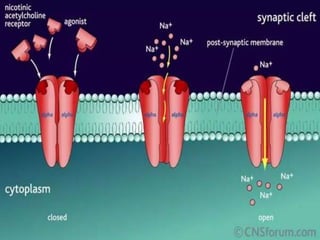
Ligand-Gated Ion Channels
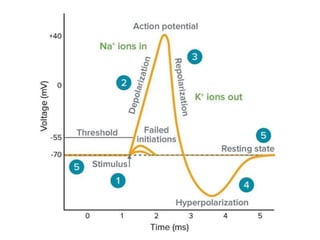
Ion channels are pore-forming membrane proteins whose
function is establishing a resting membrane potential,
shaping action potentials and other electrical signals by
gating the flow of ions across the cell membrane,
controlling the flow of ions across membranes, and
regulating cell volume.
Functions:
Neurotransmission
Muscle contraction
G-Protein Coupled Receptor
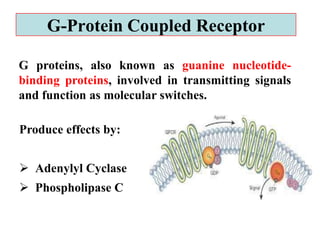
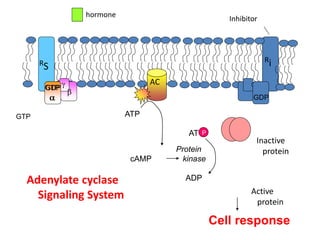
G proteins, also known as guanine nucleotide-
binding proteins, involved in transmitting signals
and function as molecular switches.
Produce effects by:
 Adenylyl Cyclase
 Phospholipase C
There are many kinds of
G proteins (for example,
Gs, Gi, and Gq), but all
types are composed of
three protein subunits.
The α subunit binds
guanosine triphosphate
(GTP), and the β and γ
subunits anchor the G
protein in the cell
membrane.
GTP
GDP
 GDP
GTP

ATP
cAMP
Cell response
AT
Protein
kinase
ADP
P
Inactive
protein
Active
protein
hormone
Adenylate cyclase
Signaling System
AC
RS
Inhibitor
Ri


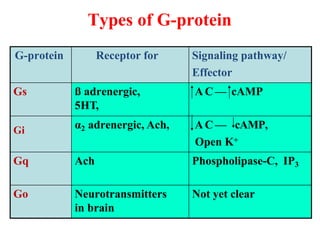
Types of G-protein
G-protein Receptor for Signaling pathway/
Effector
Gs ß adrenergic,
5HT,
AC— cAMP
Gi α2 adrenergic, Ach, AC— cAMP,
Open K+
Gq Ach Phospholipase-C, IP3
Go Neurotransmitters
in brain
Not yet clear
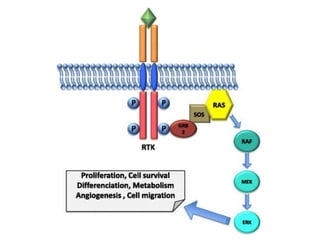
Enzyme Linked Receptors
A group of transmembrane proteins that contain
either intrinsic enzyme activity on their
intracellular domain or associate directly with an
intracellular enzyme. Some of receptors named:
1. Receptor tyrosine kinases
2. Tyrosine-kinase-associated receptors
3. Receptor serine/threonine kinases
4. Histidine-kinase-associated receptors
5. Receptor tyrosine phosphatases
6. Receptor guanylyl cyclase
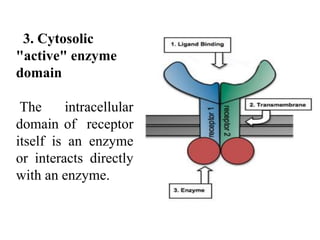
Basic Receptor Structure
1. Ligand-binding domain
Extracellular to allow easy access for ligands.
Bind to same receptor to produce particular
cellular responses.
2. Transmembrane domain
Contains a series of hydrophobic amino acids.
3. Cytosolic
"active" enzyme
domain
The intracellular
domain of receptor
itself is an enzyme
or interacts directly
with an enzyme.
Intracellular/ Receptor
The fourth family of receptors differs considerably from
the other three in that the receptor is entirely intracellular,
and, therefore, the ligand (for example, steroid hormones)
must have sufficient lipid solubility to diffuse into the cell to
interact with the receptor.
The primary targets of activated intracellular receptors are
transcription factors in the cell nucleus that regulate gene
expression. The activation or inactivation of transcription
factors alters the transcription of DNA into RNA and
subsequently translation of RNA into proteins.
Other targets of intracellular ligands are structural
proteins, enzymes, RNA, and ribosomes.
Characteristics of Receptor Families
Ligand
gated
G-protein
coupled
Enzymatic Nuclear
Location Membrane Membrane Membrane Intracellular
Effector Ion channel Ion Channel
or enzyme
Enzyme Gene
coupling Direct G-protein Direct Via DNA
Example Nicotinic Muscarinic Insulin Steroid
hormone
Characteristics of Signal Transduction
Signal transduction has two important features:
1)The ability to amplify small signals and
2)Mechanisms to protect the cell from excessive
stimulation
THANK YOU

Chemical Signalling.pptx

  • 1.
  • 2.
    Signal Transduction Signal transduction(also known as cell signaling) is the transmission of molecular signals from a cell's exterior to its interior. Signals received by cells must be transmitted effectively into the cell to ensure an appropriate response. Hormones act as signals, and receptors act as signal detectors. “Second messenger” or effector molecules are part of the cascade of events that translates agonist binding into a cellular response.
  • 3.
    Receptors Receptor is amacromolecule in the membrane or inside the cell that specifically bind a ligand (chemical/hormone/neurotransmitter/drug). Unoccupied receptors does not influence intracellular processes. Chemical + Receptor Drug receptor complex Response
  • 4.
    Receptor Families Four typesof receptors families: 1. Ligand-gated ion channels 2. G-protein coupled receptor 3. Enzyme Linked receptors 4. Intracellular/ Receptor regulating gene expression (transcription factors/ Steroid )
  • 5.
    Ligand-Gated Ion Channels Ionchannels are pore-forming membrane proteins whose function is establishing a resting membrane potential, shaping action potentials and other electrical signals by gating the flow of ions across the cell membrane, controlling the flow of ions across membranes, and regulating cell volume. Functions: Neurotransmission Muscle contraction
  • 8.
    G-Protein Coupled Receptor Gproteins, also known as guanine nucleotide- binding proteins, involved in transmitting signals and function as molecular switches. Produce effects by:  Adenylyl Cyclase  Phospholipase C
  • 9.
    There are manykinds of G proteins (for example, Gs, Gi, and Gq), but all types are composed of three protein subunits. The α subunit binds guanosine triphosphate (GTP), and the β and γ subunits anchor the G protein in the cell membrane.
  • 11.
  • 13.
    Types of G-protein G-proteinReceptor for Signaling pathway/ Effector Gs ß adrenergic, 5HT, AC— cAMP Gi α2 adrenergic, Ach, AC— cAMP, Open K+ Gq Ach Phospholipase-C, IP3 Go Neurotransmitters in brain Not yet clear
  • 14.
    Enzyme Linked Receptors Agroup of transmembrane proteins that contain either intrinsic enzyme activity on their intracellular domain or associate directly with an intracellular enzyme. Some of receptors named: 1. Receptor tyrosine kinases 2. Tyrosine-kinase-associated receptors 3. Receptor serine/threonine kinases 4. Histidine-kinase-associated receptors 5. Receptor tyrosine phosphatases 6. Receptor guanylyl cyclase
  • 15.
    Basic Receptor Structure 1.Ligand-binding domain Extracellular to allow easy access for ligands. Bind to same receptor to produce particular cellular responses. 2. Transmembrane domain Contains a series of hydrophobic amino acids.
  • 16.
    3. Cytosolic "active" enzyme domain Theintracellular domain of receptor itself is an enzyme or interacts directly with an enzyme.
  • 18.
    Intracellular/ Receptor The fourthfamily of receptors differs considerably from the other three in that the receptor is entirely intracellular, and, therefore, the ligand (for example, steroid hormones) must have sufficient lipid solubility to diffuse into the cell to interact with the receptor. The primary targets of activated intracellular receptors are transcription factors in the cell nucleus that regulate gene expression. The activation or inactivation of transcription factors alters the transcription of DNA into RNA and subsequently translation of RNA into proteins. Other targets of intracellular ligands are structural proteins, enzymes, RNA, and ribosomes.
  • 21.
    Characteristics of ReceptorFamilies Ligand gated G-protein coupled Enzymatic Nuclear Location Membrane Membrane Membrane Intracellular Effector Ion channel Ion Channel or enzyme Enzyme Gene coupling Direct G-protein Direct Via DNA Example Nicotinic Muscarinic Insulin Steroid hormone
  • 22.
    Characteristics of SignalTransduction Signal transduction has two important features: 1)The ability to amplify small signals and 2)Mechanisms to protect the cell from excessive stimulation
  • 23.