By – Chaitali Barman
Bsc. Biotechnology
U.G – 2
JIS UNIVERSITY
Bacteria are a type of biological cells that
contain a large domain of prokaryotic
microorganism
They are discovered by AntonLeeuwenhoek
in1676.
In five kingdom classification they are placed in
Kingdom Monera
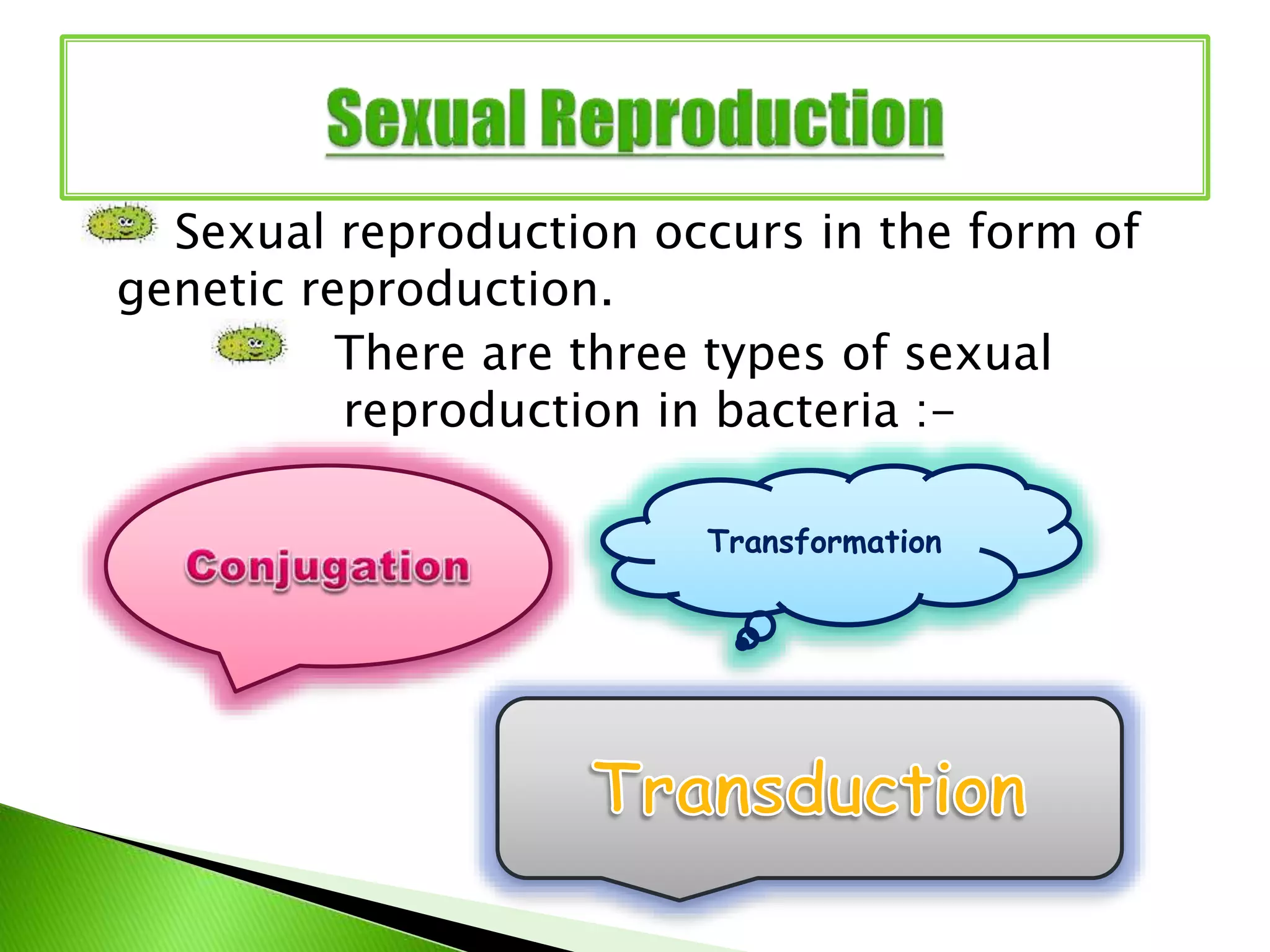
Sexual reproduction occurs in the form of
genetic reproduction.
There are three types of sexual
reproduction in bacteria :-
Transformation
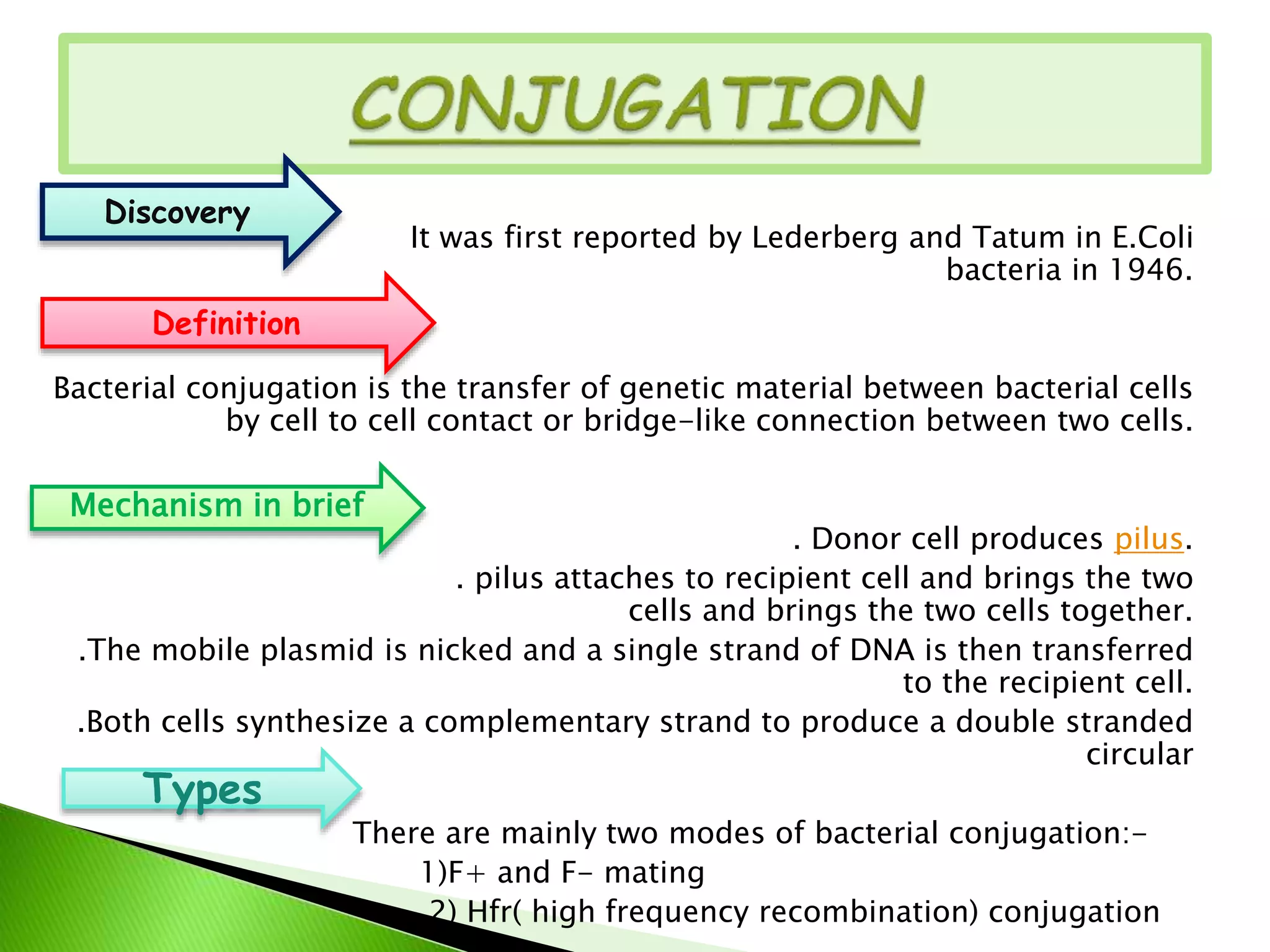
It was first reported by Lederberg and Tatum in E.Coli
bacteria in 1946.
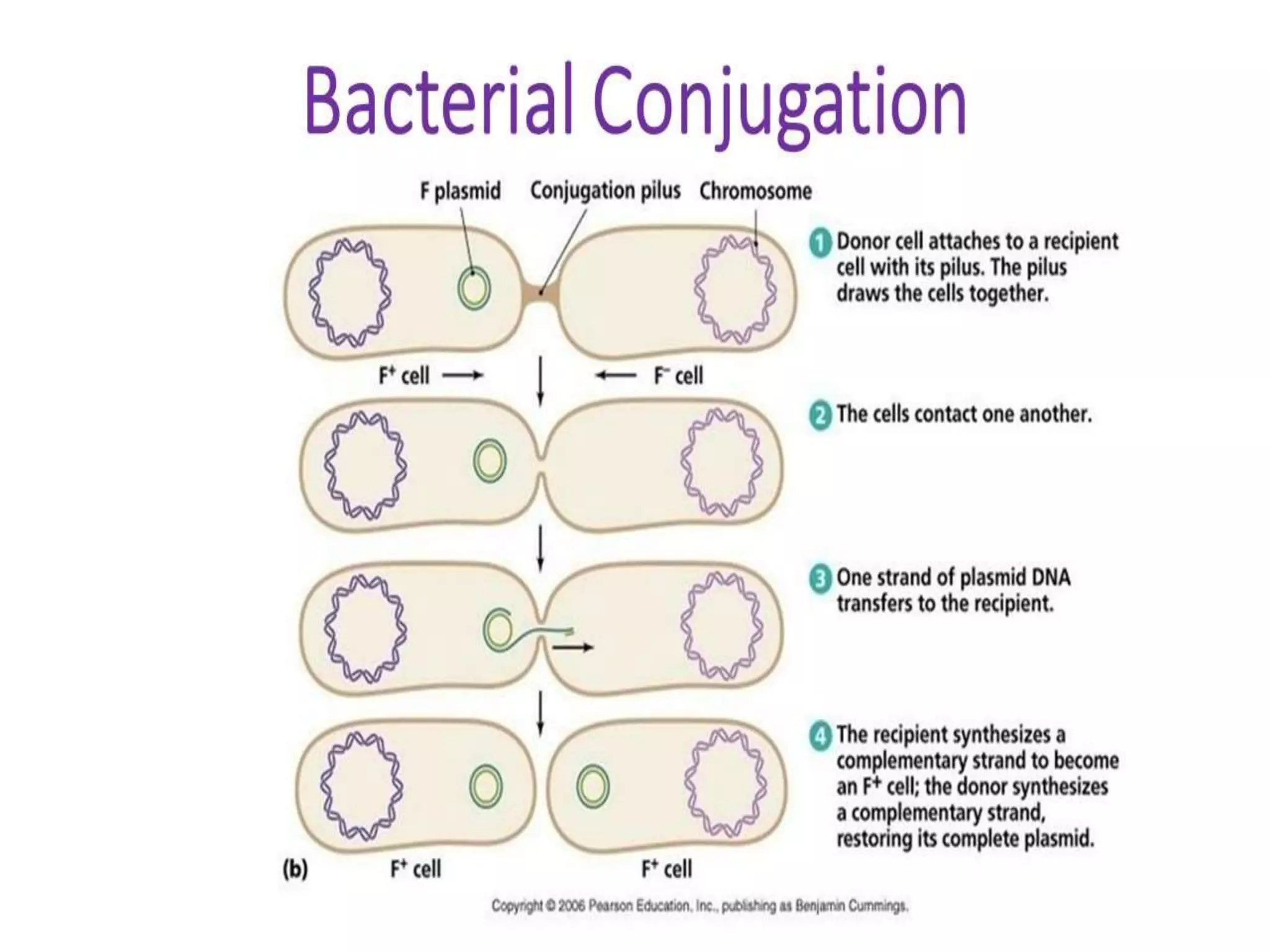
Bacterial conjugation is the transfer of genetic material between bacterial cells
by cell to cell contact or bridge-like connection between two cells.
. Donor cell produces pilus.
. pilus attaches to recipient cell and brings the two
cells and brings the two cells together.
.The mobile plasmid is nicked and a single strand of DNA is then transferred
to the recipient cell.
.Both cells synthesize a complementary strand to produce a double stranded
circular
There are mainly two modes of bacterial conjugation:-
1)F+ and F- mating
2) Hfr( high frequency recombination) conjugation
Discovery
Definition
Mechanism in brief
Types
 This was first studied by Frederick Griffith in diplococcus
pneumoniae in 1928.
 In molecular biology, Transformation is the genetic alteration of
a cell resulting from the direct uptake and incorporation
of exogenous genetic material from its surroundings through the cell
membrane(s).
 when bacteria lyse, they release considerable amounts of DNA
into the surrounding environment. These fragments may be relatively
large and contain several genes. If a fragment contacts a
competent cell— a cell that is able to take up DNA and be
transformed—the DNA can be bound to the cell and taken inside
Transduction was discovered by Norton
Zinder and Joshua Lederberg at the University of Wisconsin–
Madison in 1952 in Salmonella
There are mainly two types of transduction:-
1) Generalized transductuion
2) Sepecialized transduction
In generalized transduction, a phage may carry any bacterial gene from
one cell to another.
In specialized transduction, the transducing particle carries only
specific portions of the bacterial genome.
Types
 All the informations are collected from the
internet and some books like:-
1) The Genetics Of Bacteria by snustad and
simmons
2) Presscott Microbiology
All my teachers and my fellow classmates also
helped me to complete this . I am very
grateful to them and wanted to say
THANK YOU!

Sexual Reproduction In Bacteria

  • 1.
    By – ChaitaliBarman Bsc. Biotechnology U.G – 2 JIS UNIVERSITY
  • 2.
    Bacteria are atype of biological cells that contain a large domain of prokaryotic microorganism They are discovered by AntonLeeuwenhoek in1676. In five kingdom classification they are placed in Kingdom Monera
  • 3.
    Sexual reproduction occursin the form of genetic reproduction. There are three types of sexual reproduction in bacteria :- Transformation
  • 4.
    It was firstreported by Lederberg and Tatum in E.Coli bacteria in 1946. Bacterial conjugation is the transfer of genetic material between bacterial cells by cell to cell contact or bridge-like connection between two cells. . Donor cell produces pilus. . pilus attaches to recipient cell and brings the two cells and brings the two cells together. .The mobile plasmid is nicked and a single strand of DNA is then transferred to the recipient cell. .Both cells synthesize a complementary strand to produce a double stranded circular There are mainly two modes of bacterial conjugation:- 1)F+ and F- mating 2) Hfr( high frequency recombination) conjugation Discovery Definition Mechanism in brief Types
  • 6.
     This wasfirst studied by Frederick Griffith in diplococcus pneumoniae in 1928.  In molecular biology, Transformation is the genetic alteration of a cell resulting from the direct uptake and incorporation of exogenous genetic material from its surroundings through the cell membrane(s).  when bacteria lyse, they release considerable amounts of DNA into the surrounding environment. These fragments may be relatively large and contain several genes. If a fragment contacts a competent cell— a cell that is able to take up DNA and be transformed—the DNA can be bound to the cell and taken inside
  • 9.
    Transduction was discoveredby Norton Zinder and Joshua Lederberg at the University of Wisconsin– Madison in 1952 in Salmonella There are mainly two types of transduction:- 1) Generalized transductuion 2) Sepecialized transduction In generalized transduction, a phage may carry any bacterial gene from one cell to another. In specialized transduction, the transducing particle carries only specific portions of the bacterial genome. Types
  • 12.
     All theinformations are collected from the internet and some books like:- 1) The Genetics Of Bacteria by snustad and simmons 2) Presscott Microbiology All my teachers and my fellow classmates also helped me to complete this . I am very grateful to them and wanted to say THANK YOU!