Series CircuitsSeries Circuits
This presentation is designed to give
you a broad sense of series circuits
Learning Objectives- UponLearning Objectives- Upon
completion of this lesson…completion of this lesson…
Students will know what a series circuit
looks like
Students will know the relationships of
voltage, current and resistance in a series
circuit
Students will know how to compute the
missing variable given the other two in
regards to a series circuit
DefinitionDefinition
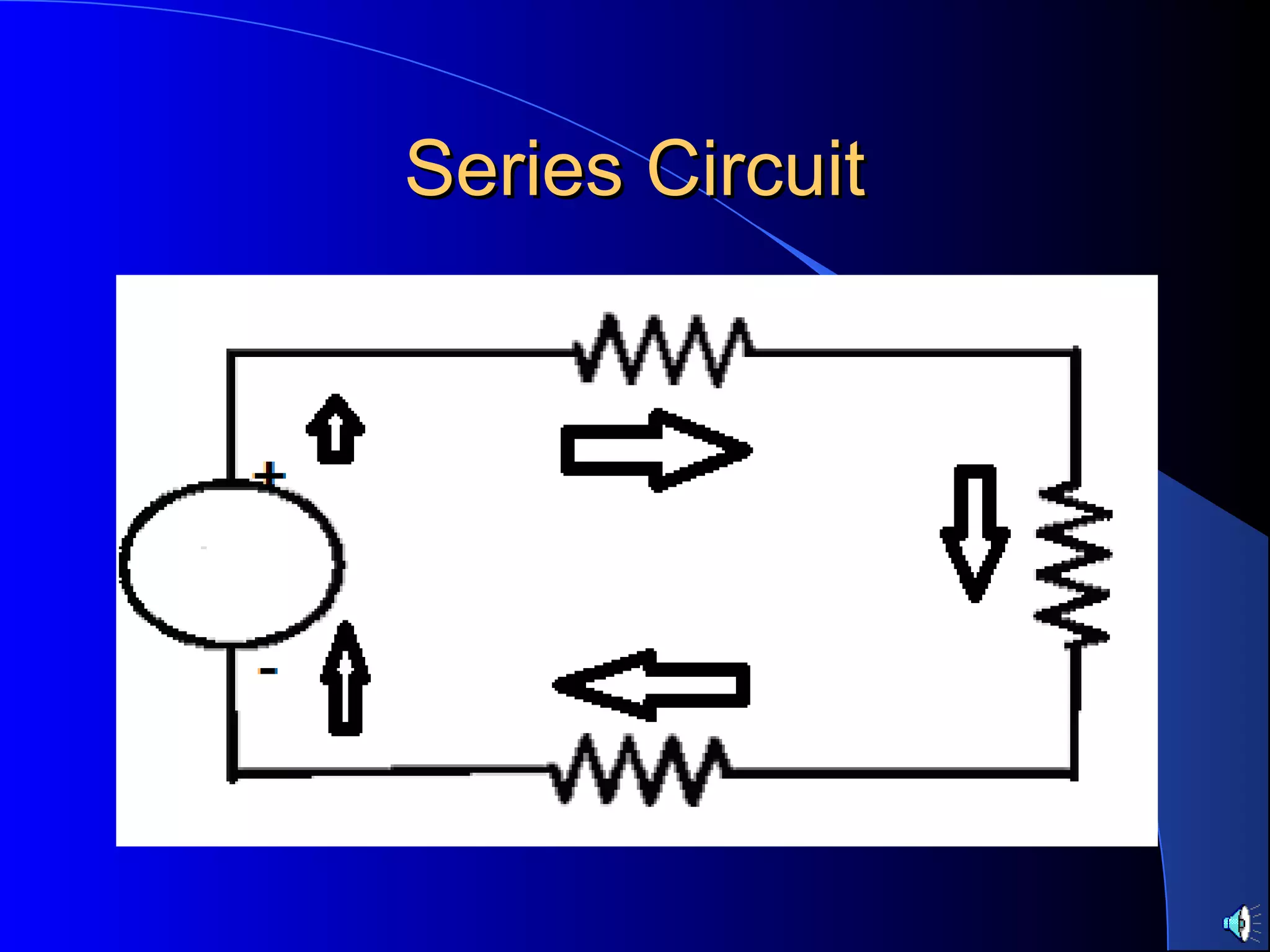
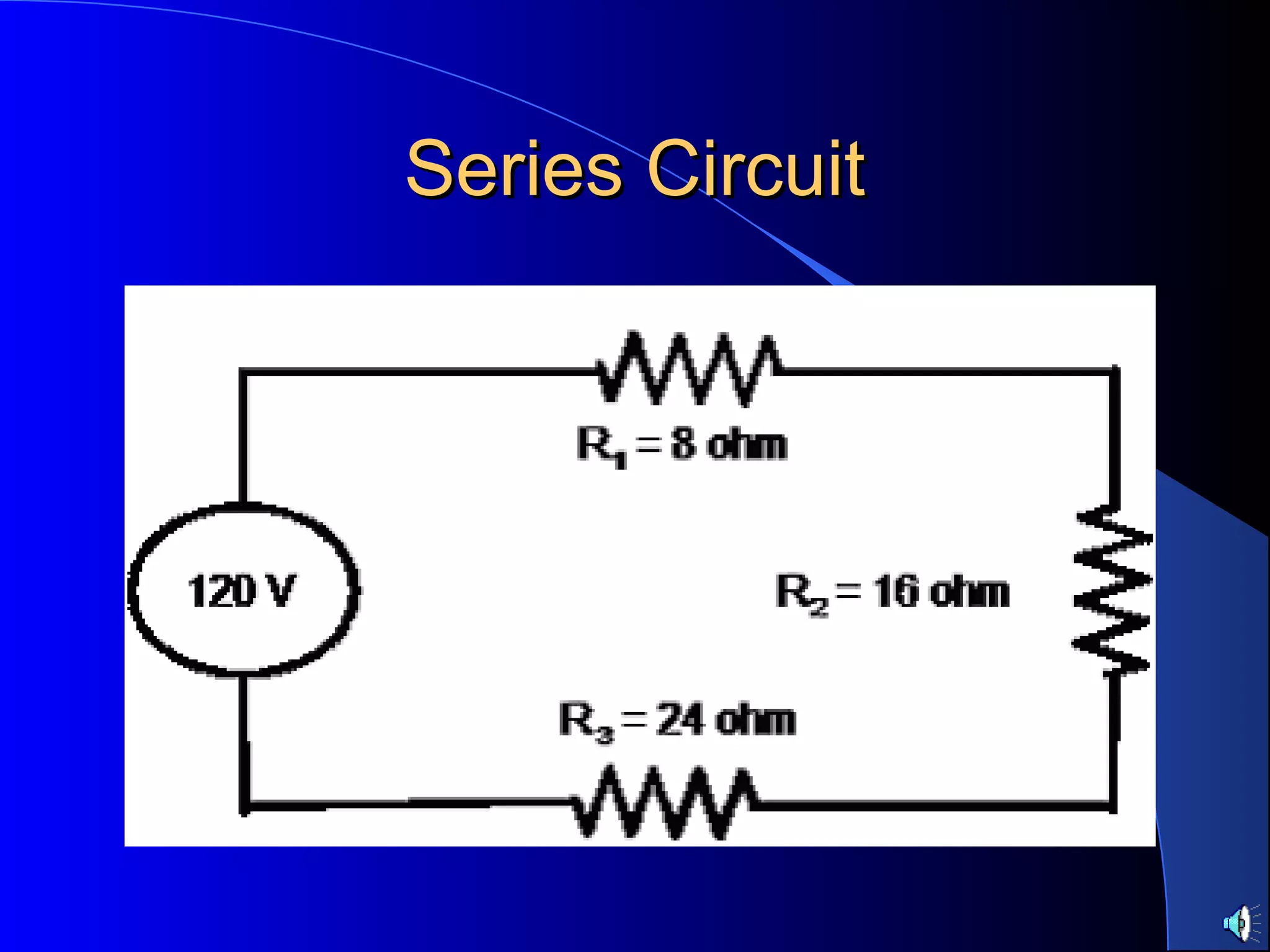
A circuit with only one path through all of
the resistors
Series CircuitSeries Circuit
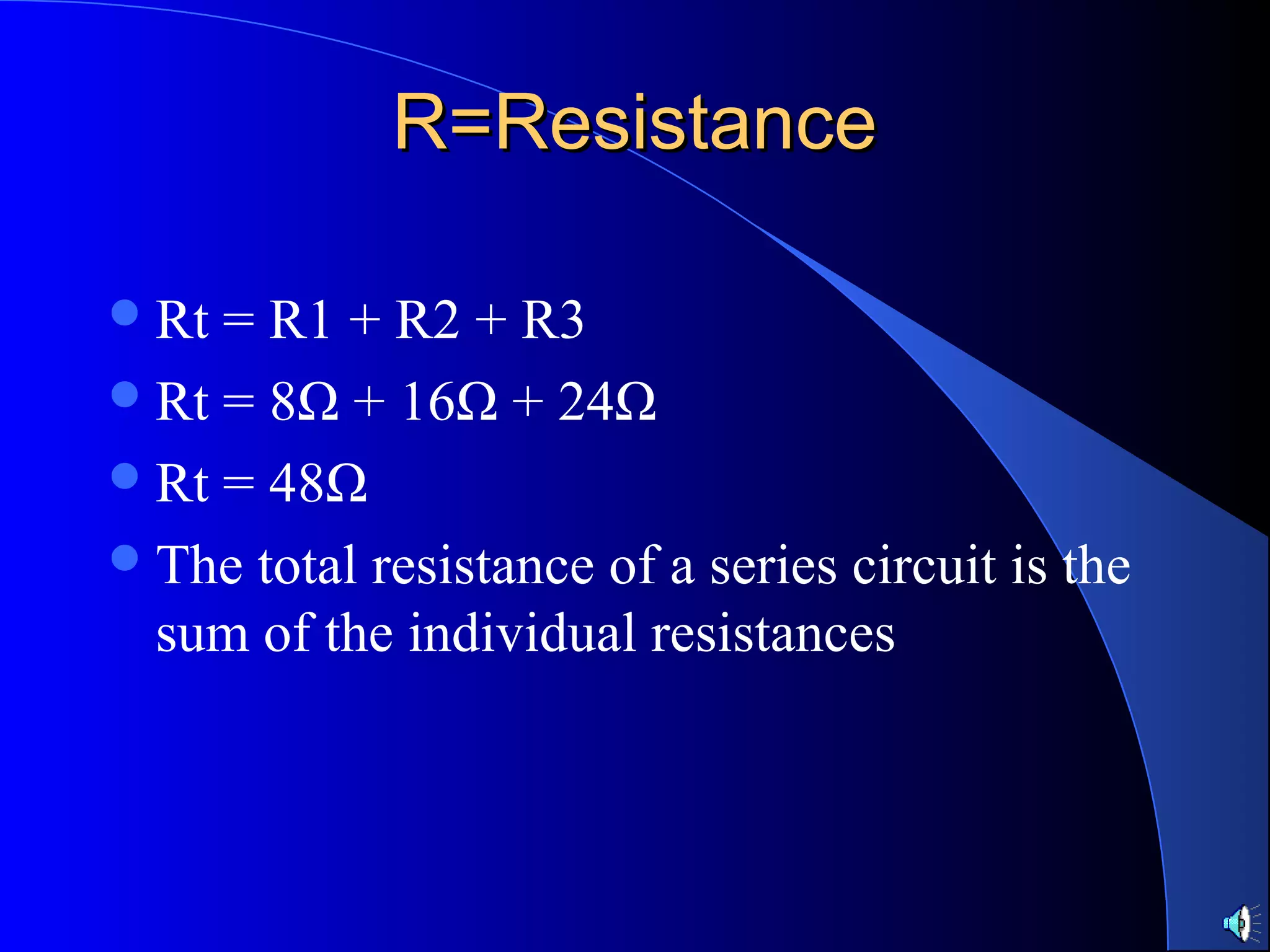
R=ResistanceR=Resistance
Rt = R1 + R2 + R3
Rt = 8Ω + 16Ω + 24Ω
Rt = 48Ω
The total resistance of a series circuit is the
sum of the individual resistances
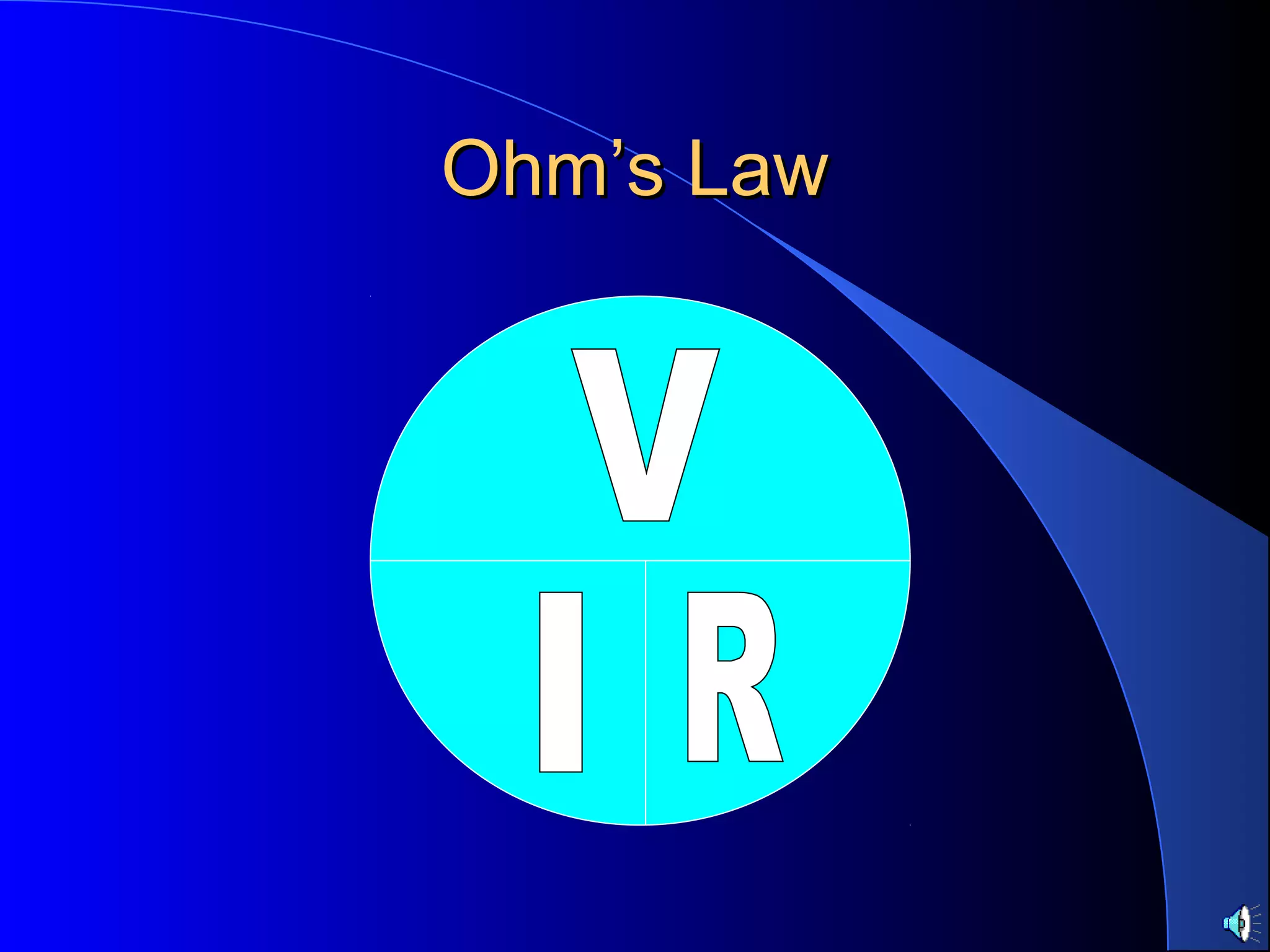
Ohm’s LawOhm’s Law
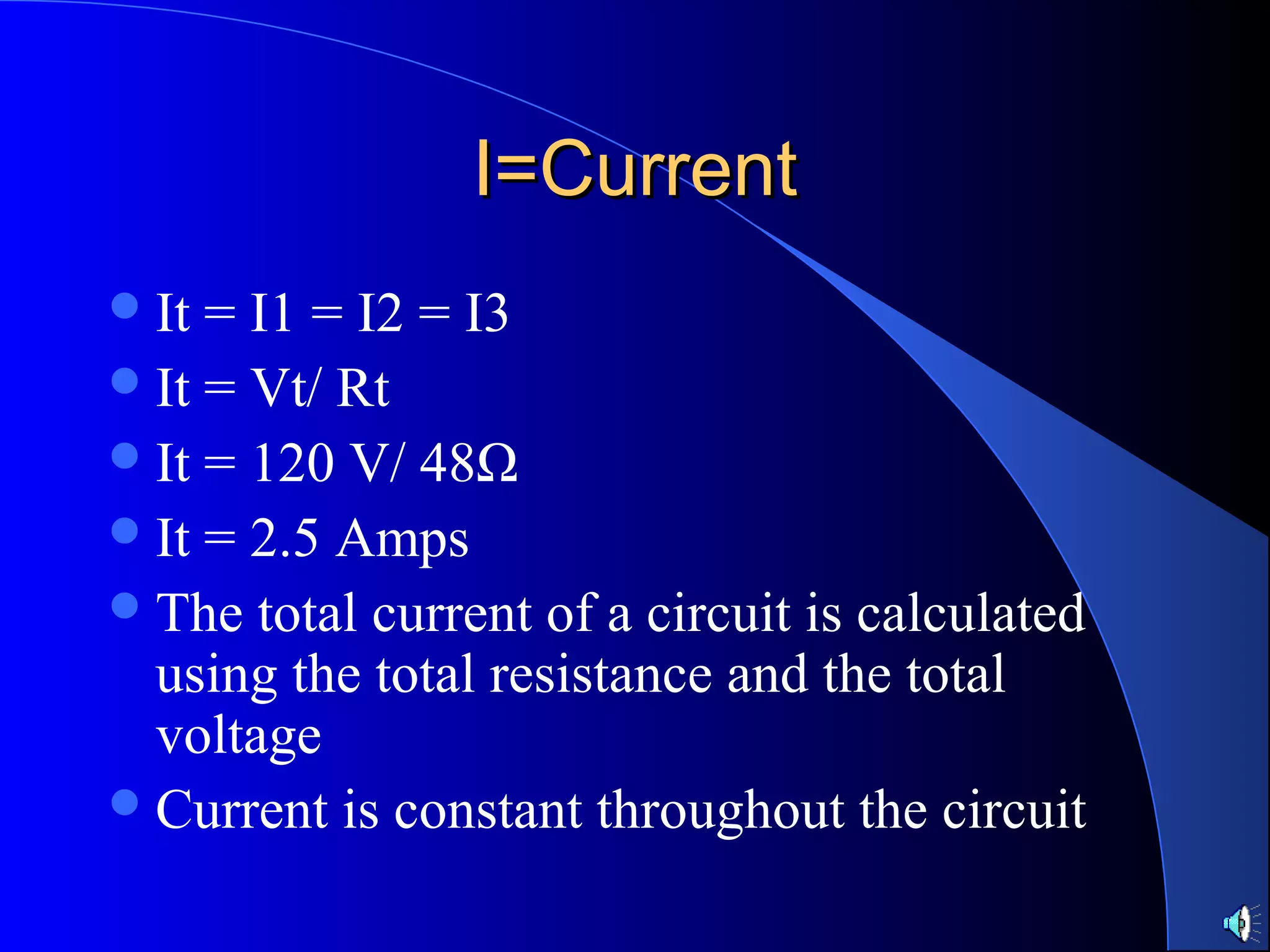
I=CurrentI=Current
It = I1 = I2 = I3
It = Vt/ Rt
It = 120 V/ 48Ω
It = 2.5 Amps
The total current of a circuit is calculated
using the total resistance and the total
voltage
Current is constant throughout the circuit
Voltage DropVoltage Drop
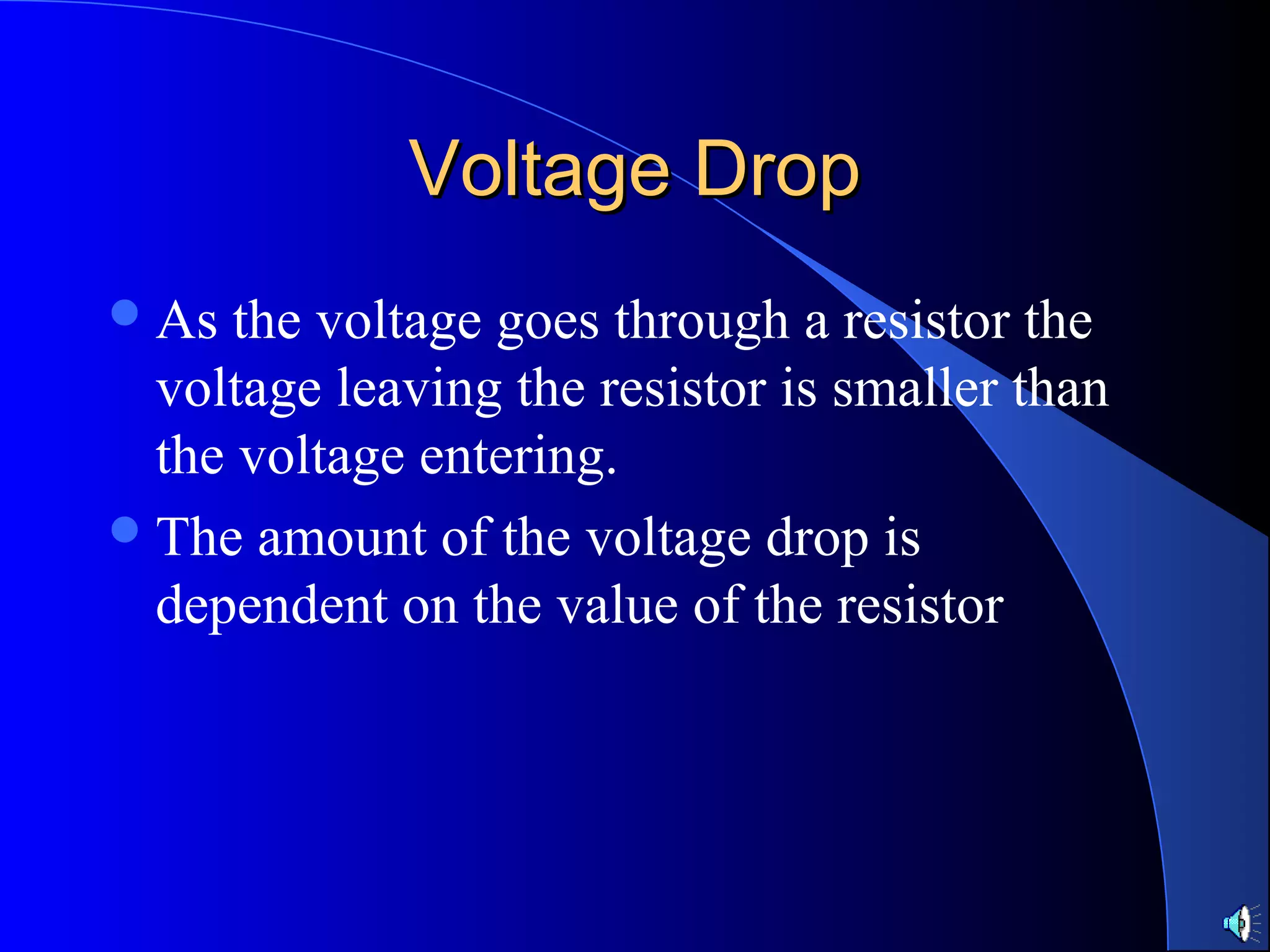
As the voltage goes through a resistor the
voltage leaving the resistor is smaller than
the voltage entering.
The amount of the voltage drop is
dependent on the value of the resistor
V=VoltageV=Voltage
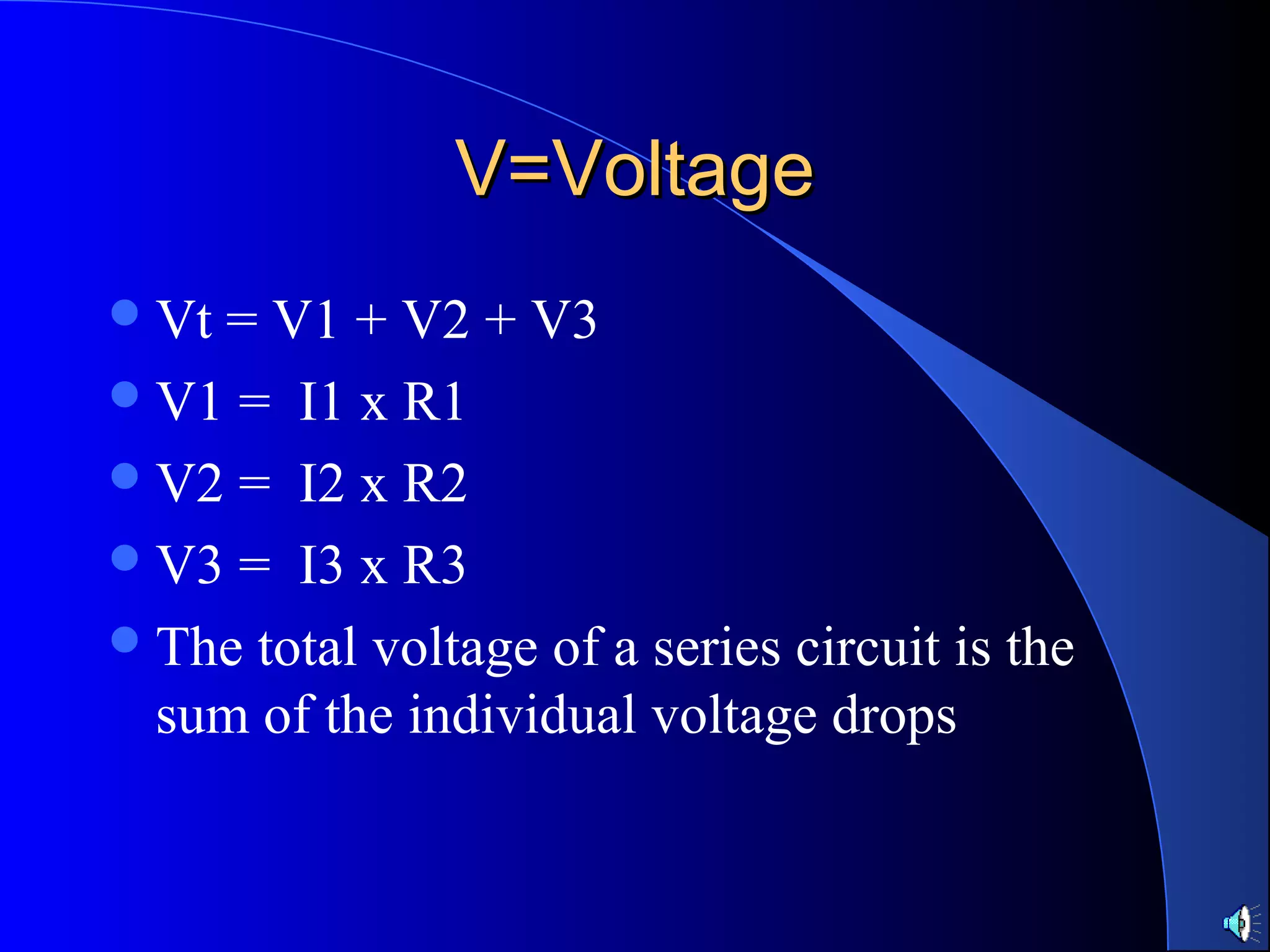
Vt = V1 + V2 + V3
V1 = I1 x R1
V2 = I2 x R2
V3 = I3 x R3
The total voltage of a series circuit is the
sum of the individual voltage drops
V=VoltageV=Voltage
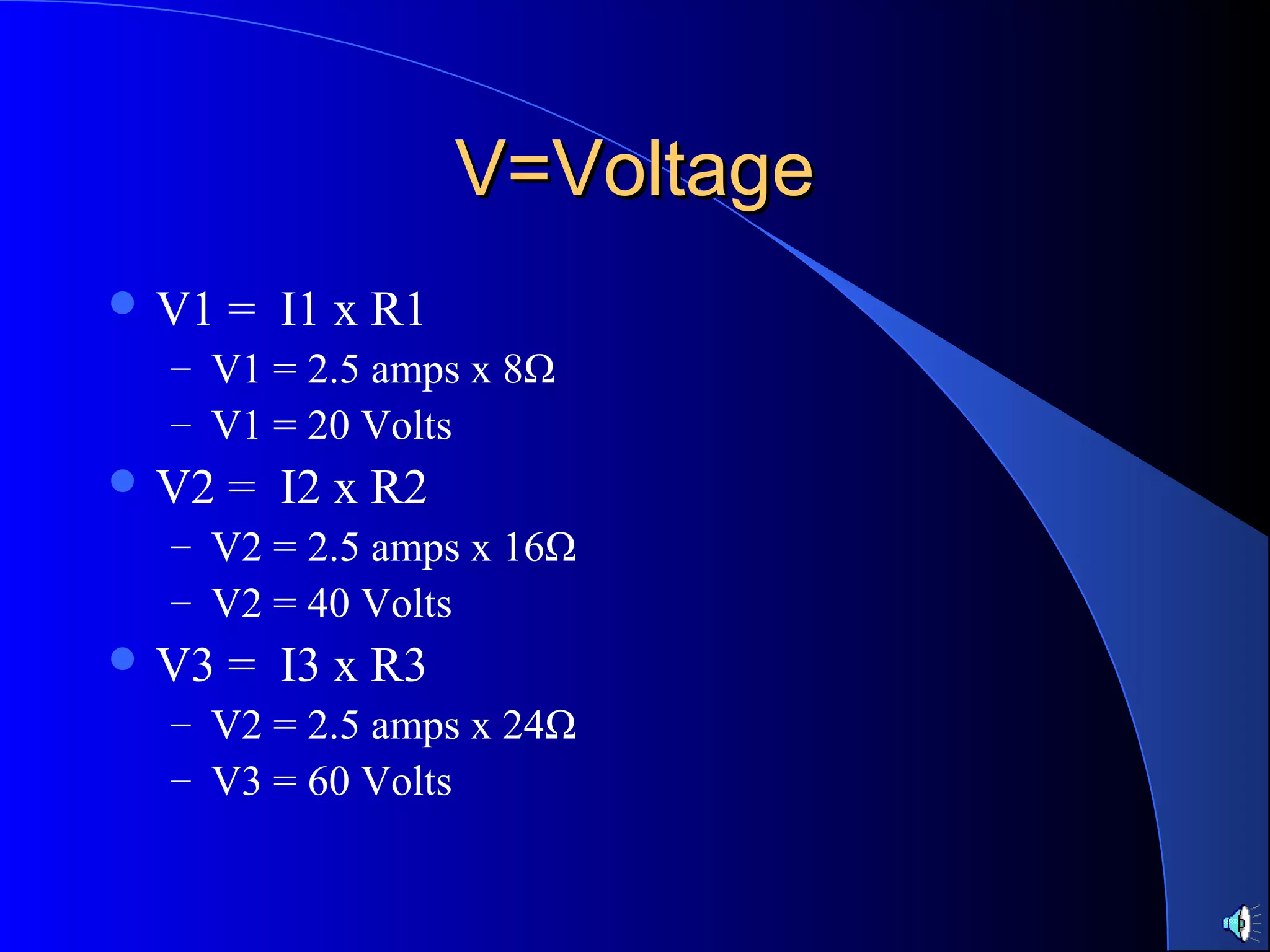
 V1 = I1 x R1
– V1 = 2.5 amps x 8Ω
– V1 = 20 Volts
 V2 = I2 x R2
– V2 = 2.5 amps x 16Ω
– V2 = 40 Volts
 V3 = I3 x R3
– V2 = 2.5 amps x 24Ω
– V3 = 60 Volts
V=VoltageV=Voltage
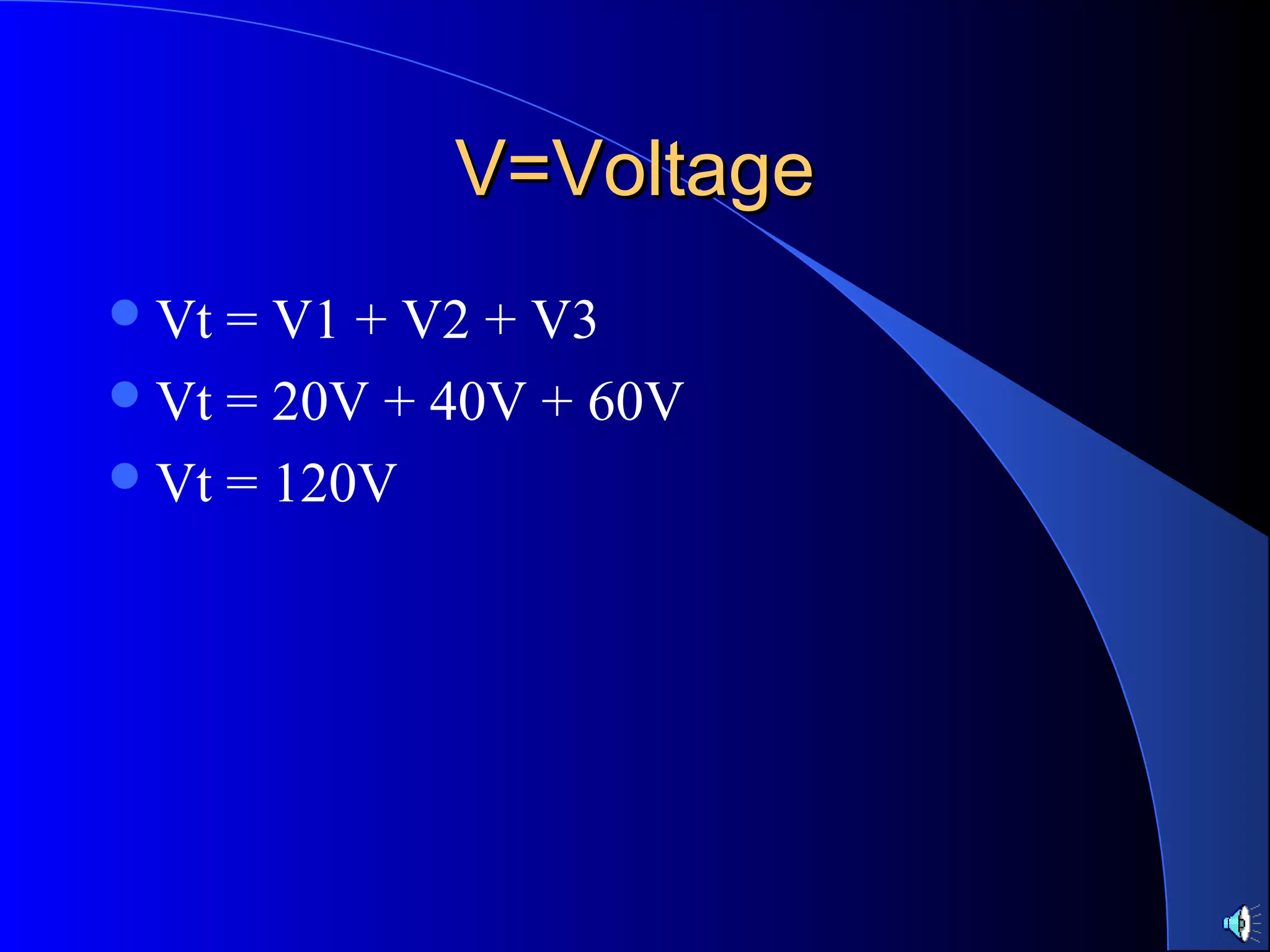
Vt = V1 + V2 + V3
Vt = 20V + 40V + 60V
Vt = 120V
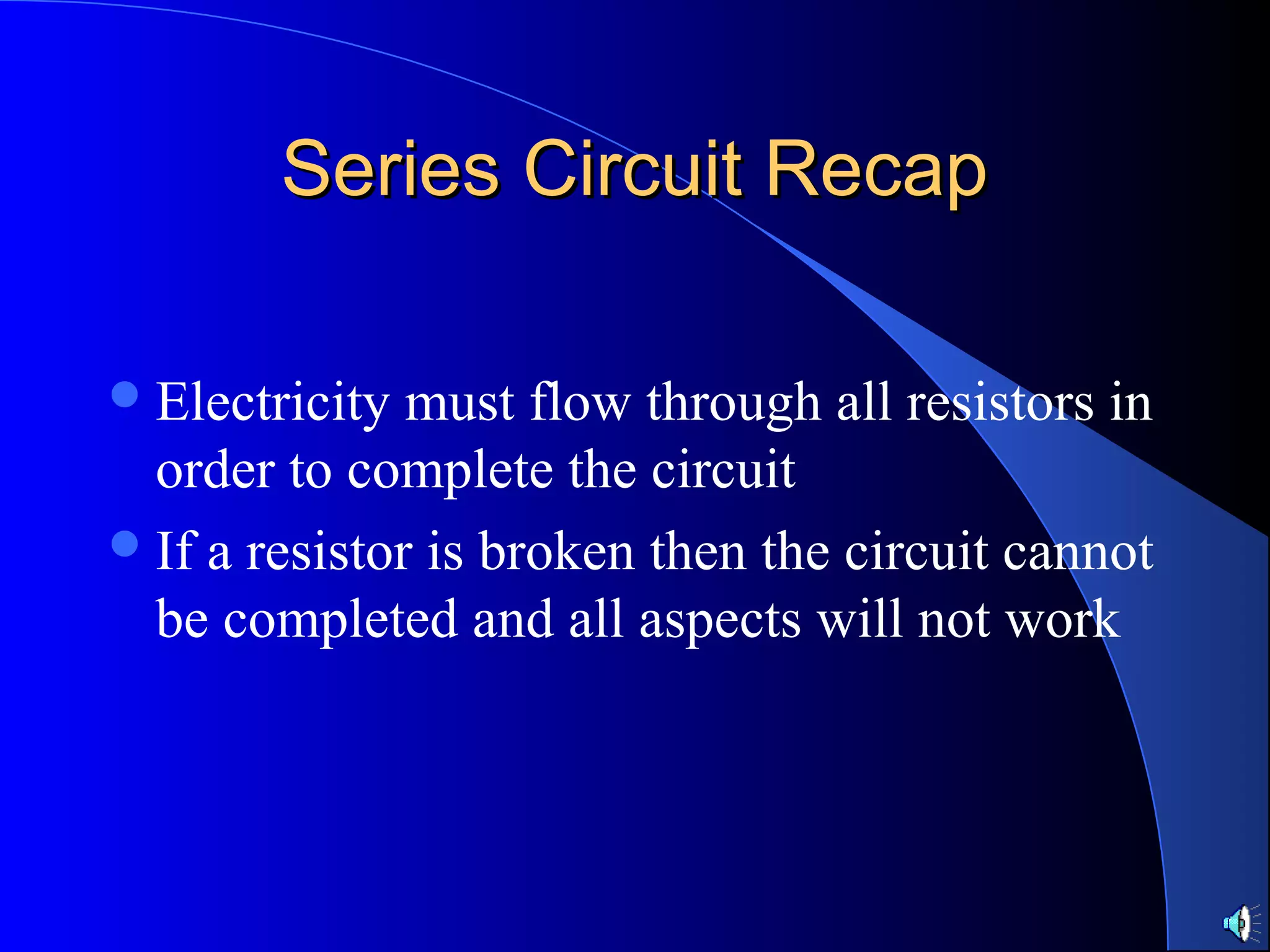
Series Circuit RecapSeries Circuit Recap
Electricity must flow through all resistors in
order to complete the circuit
If a resistor is broken then the circuit cannot
be completed and all aspects will not work
Series Circuit RecapSeries Circuit Recap
Vt = Rt x It
Vt = V1 + V2 + V3
Rt = R1 + R2 + R3
It = I1 = I2 = I3
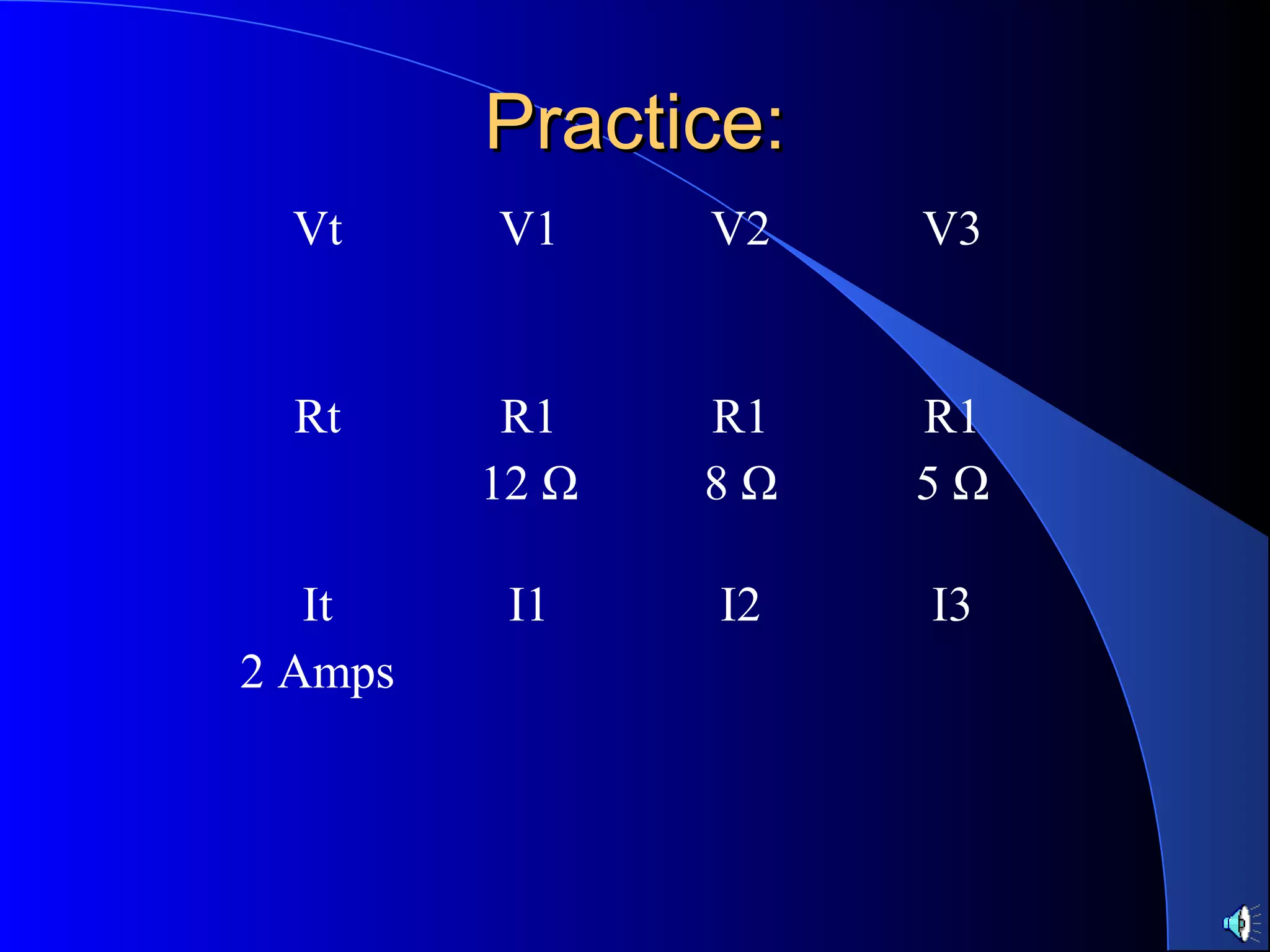
Practice:Practice:
Vt V1 V2 V3
Rt R1
12 Ω
R1
8 Ω
R1
5 Ω
It
2 Amps
I1 I2 I3

Series circuit