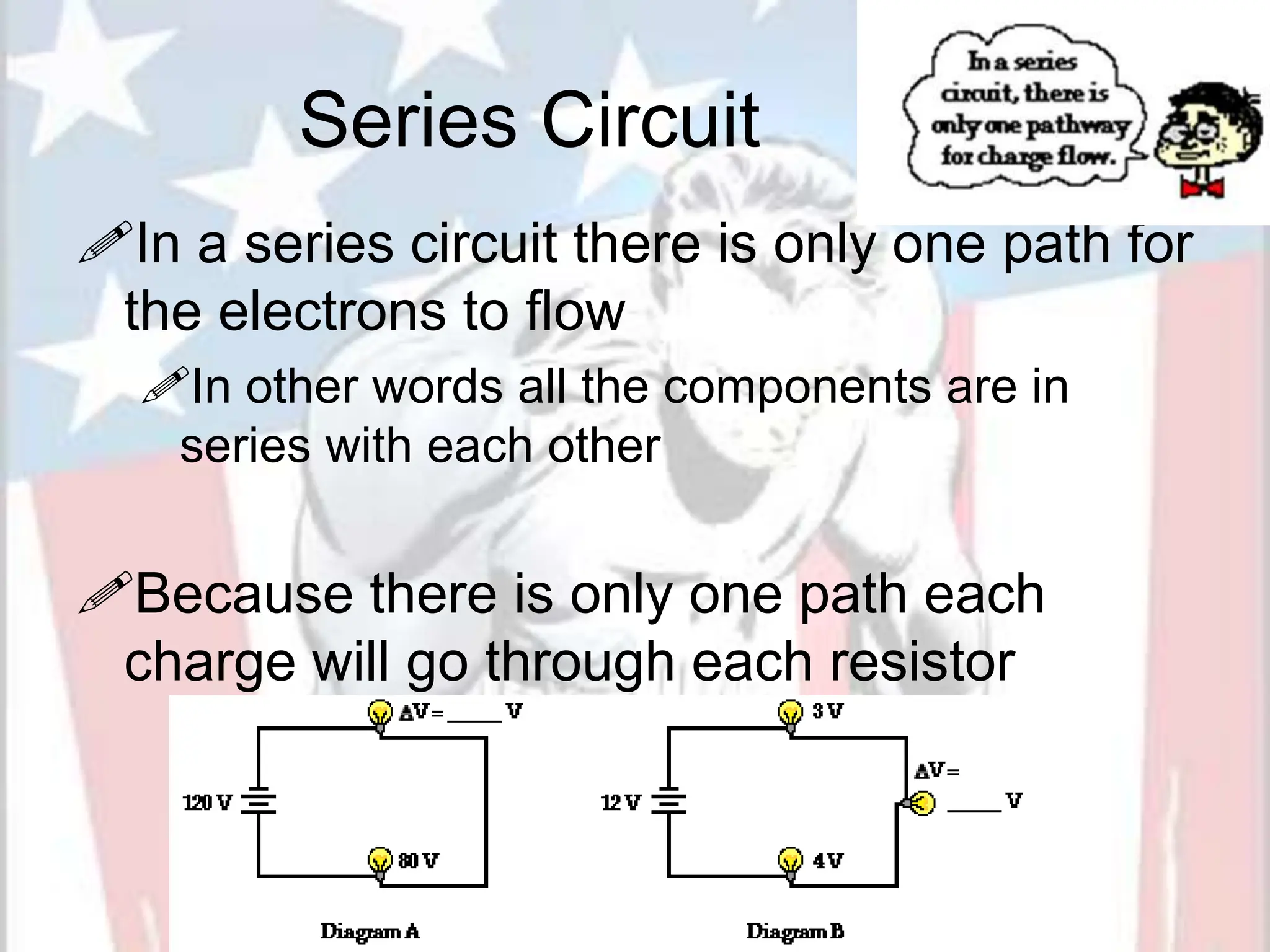
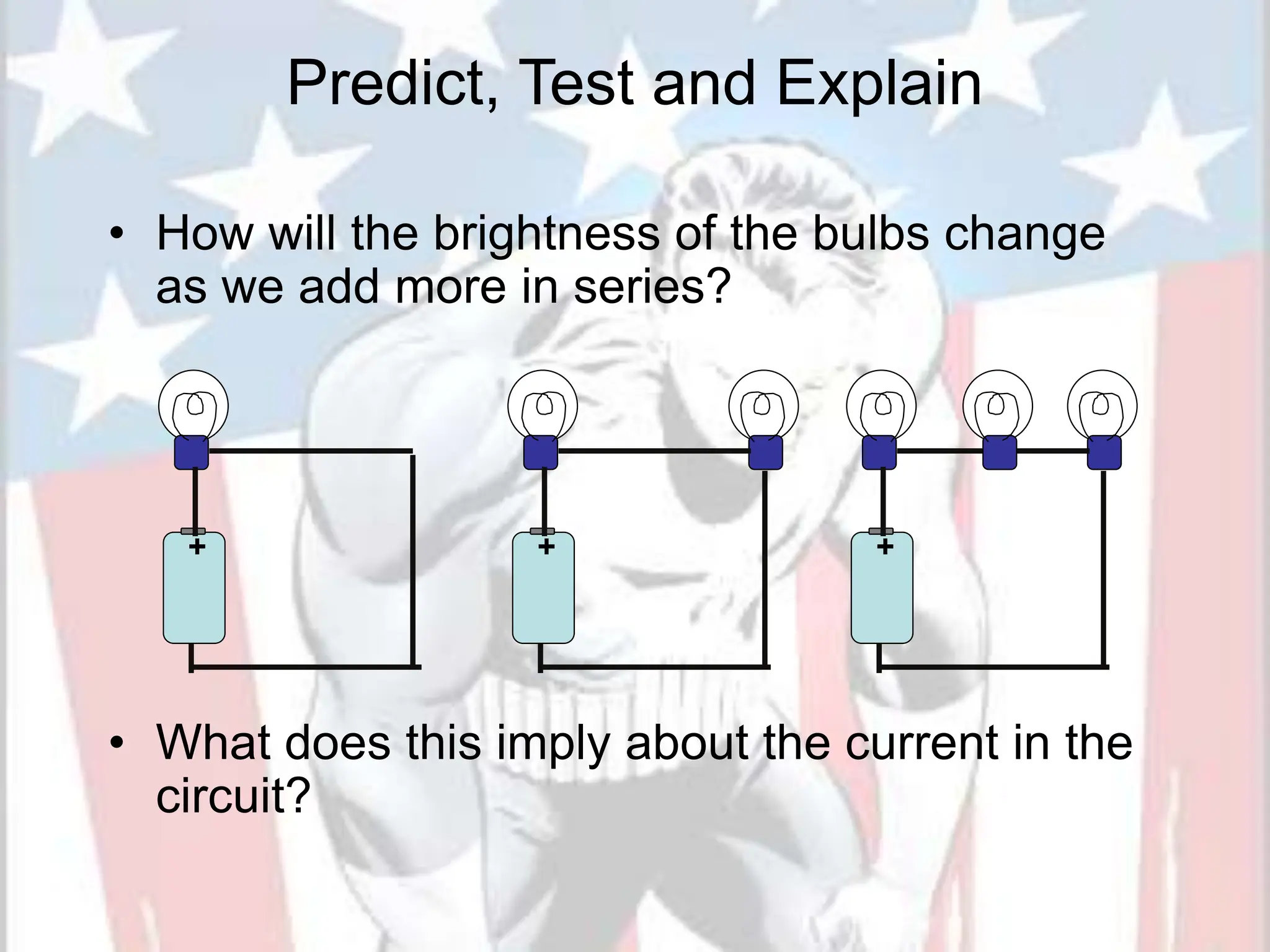
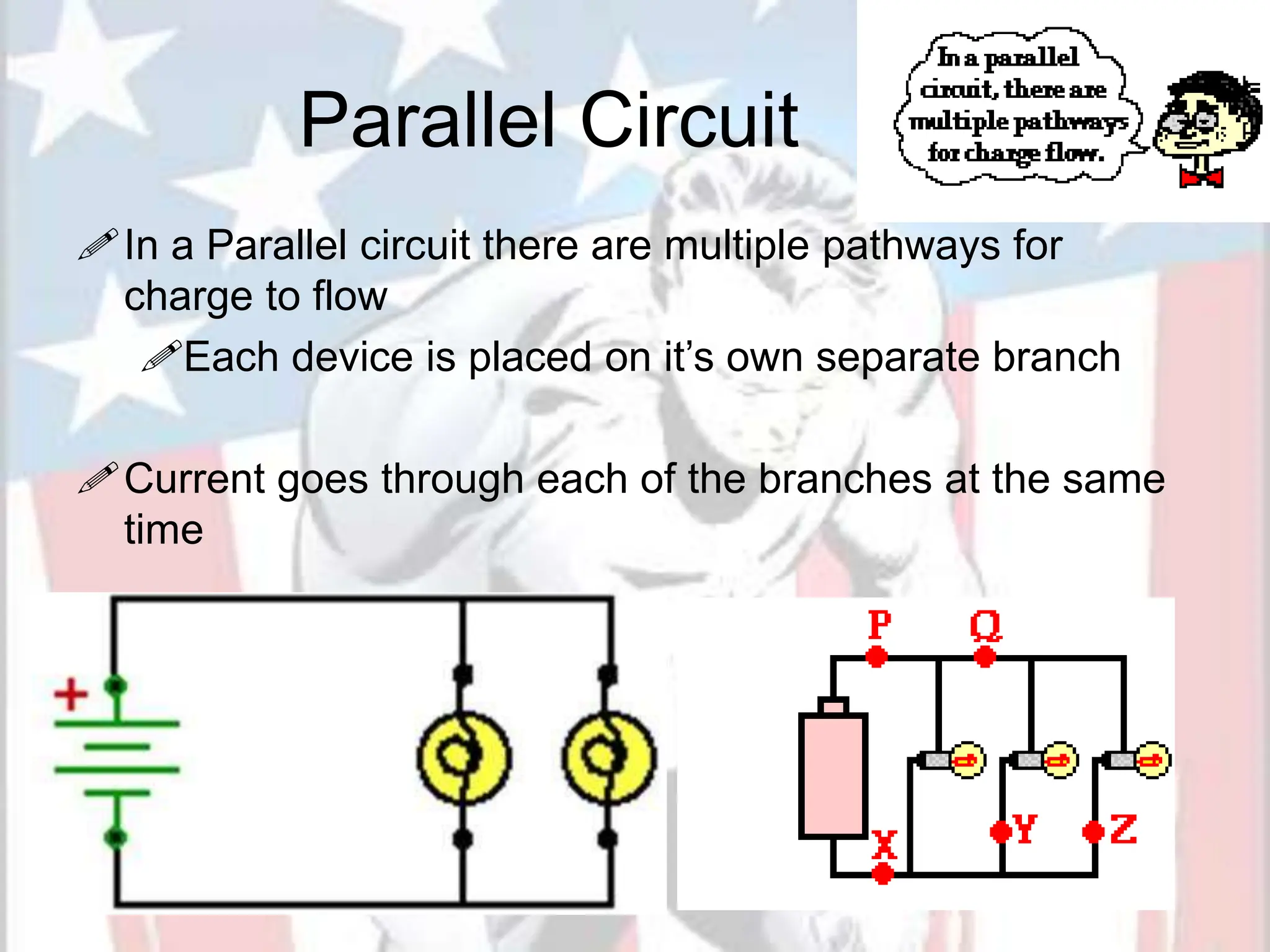
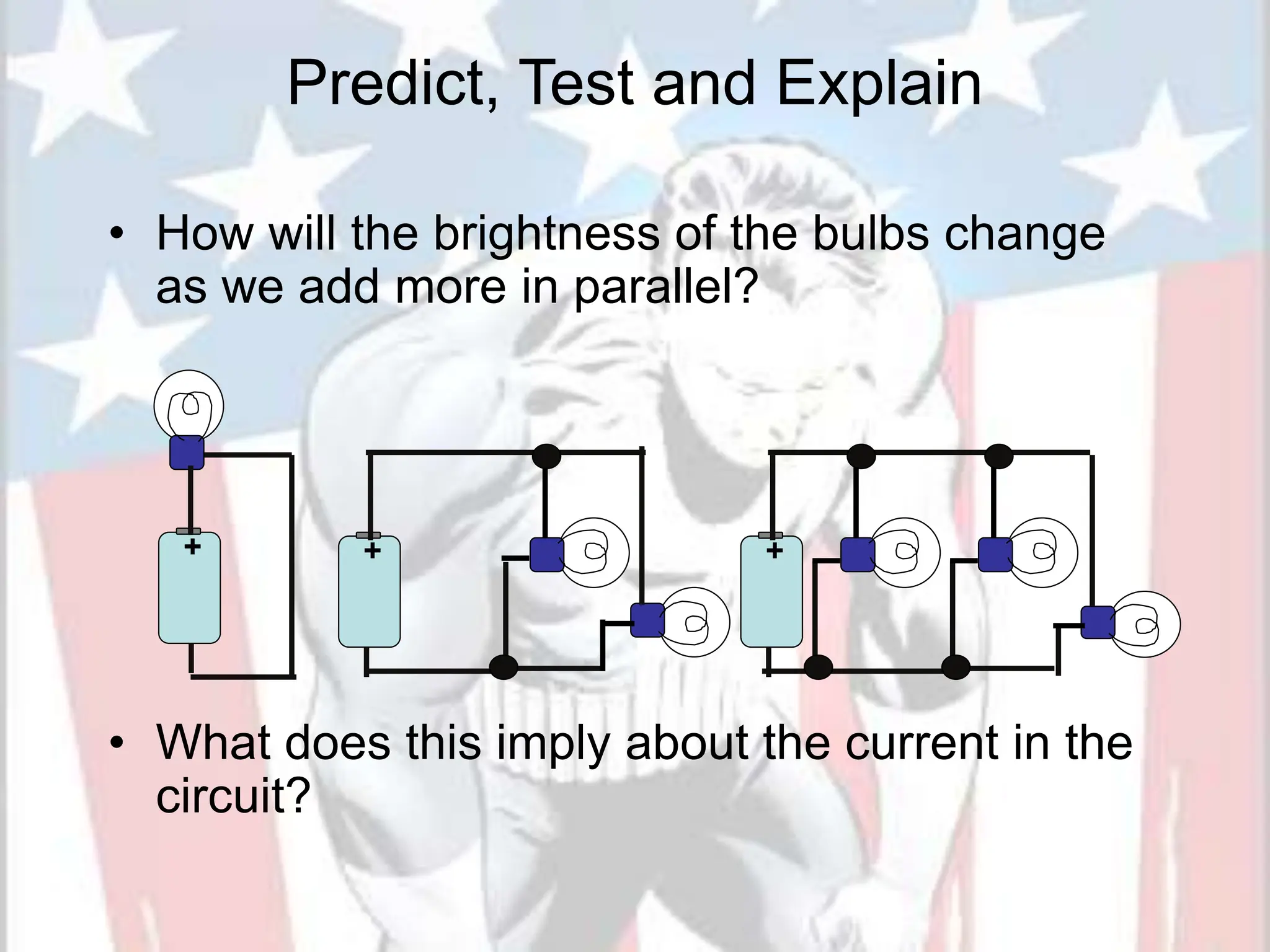
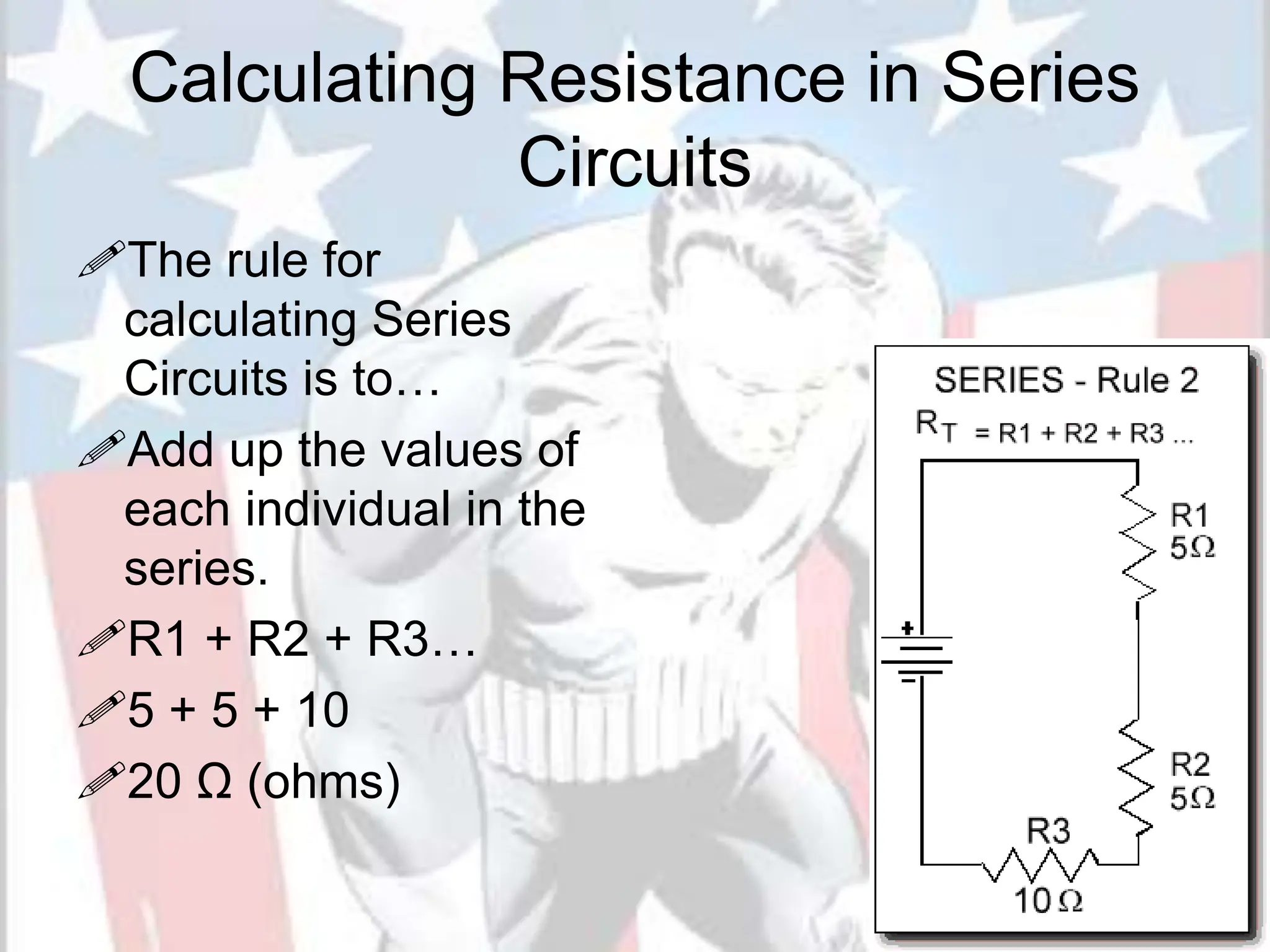
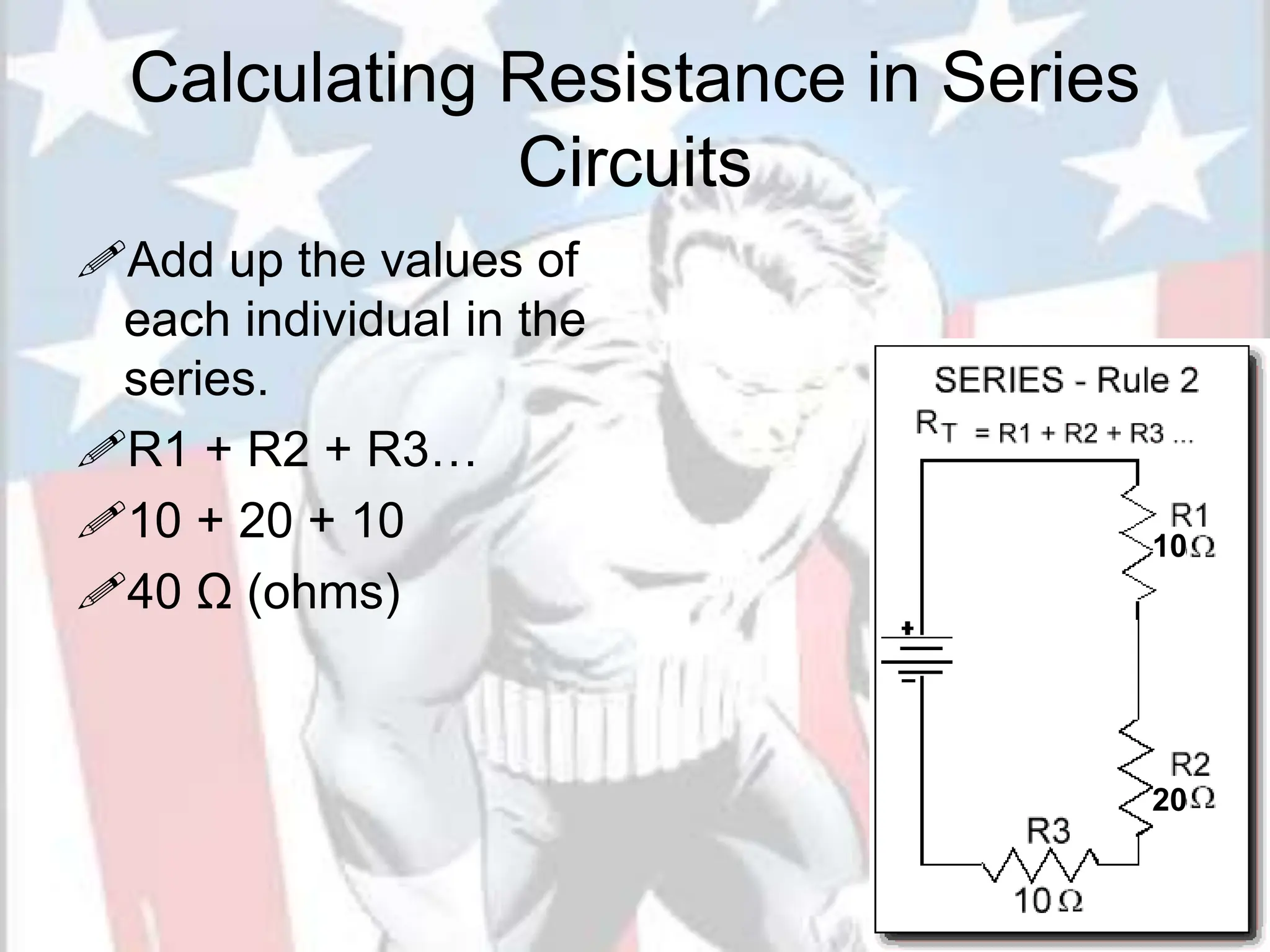
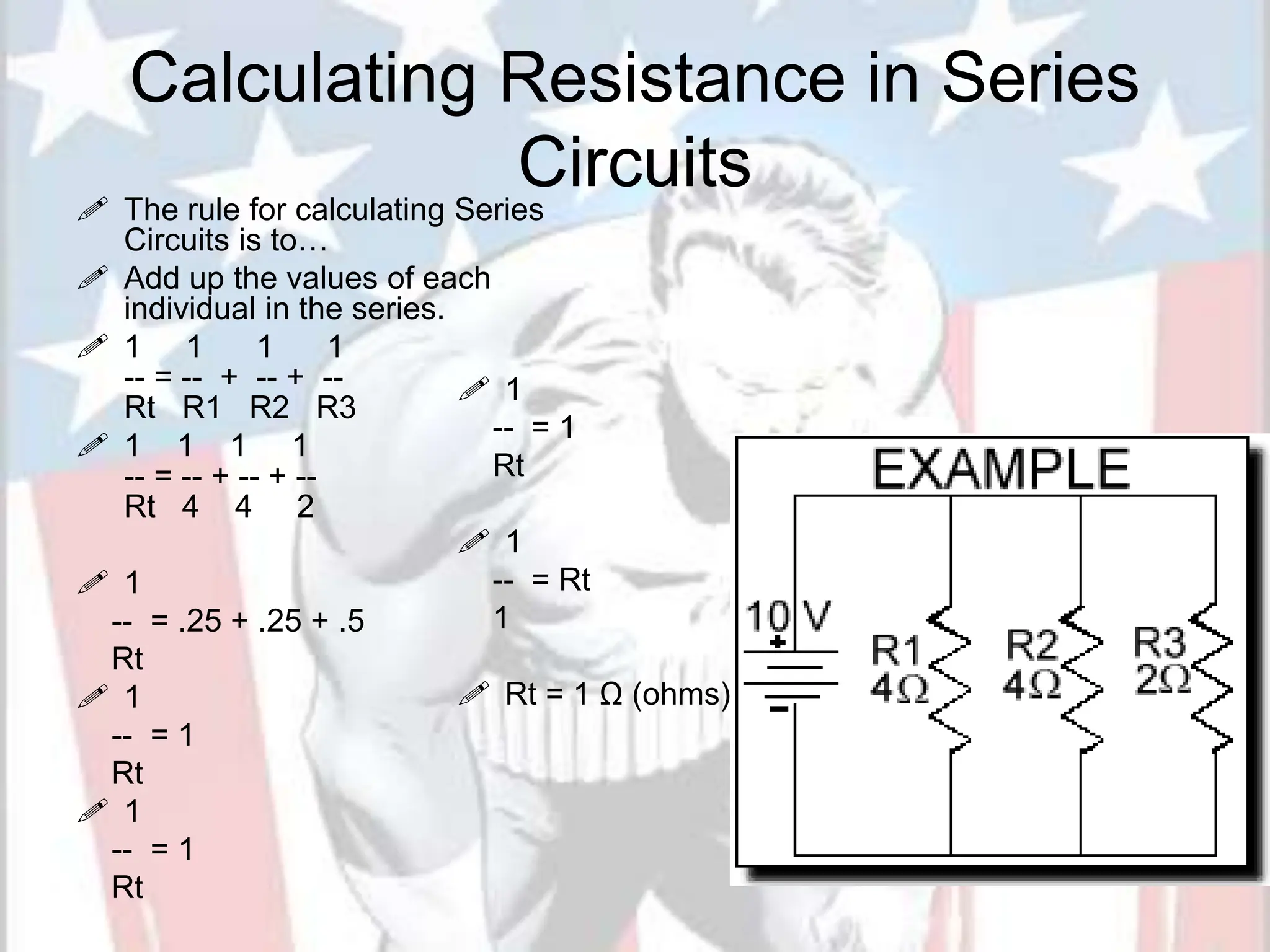
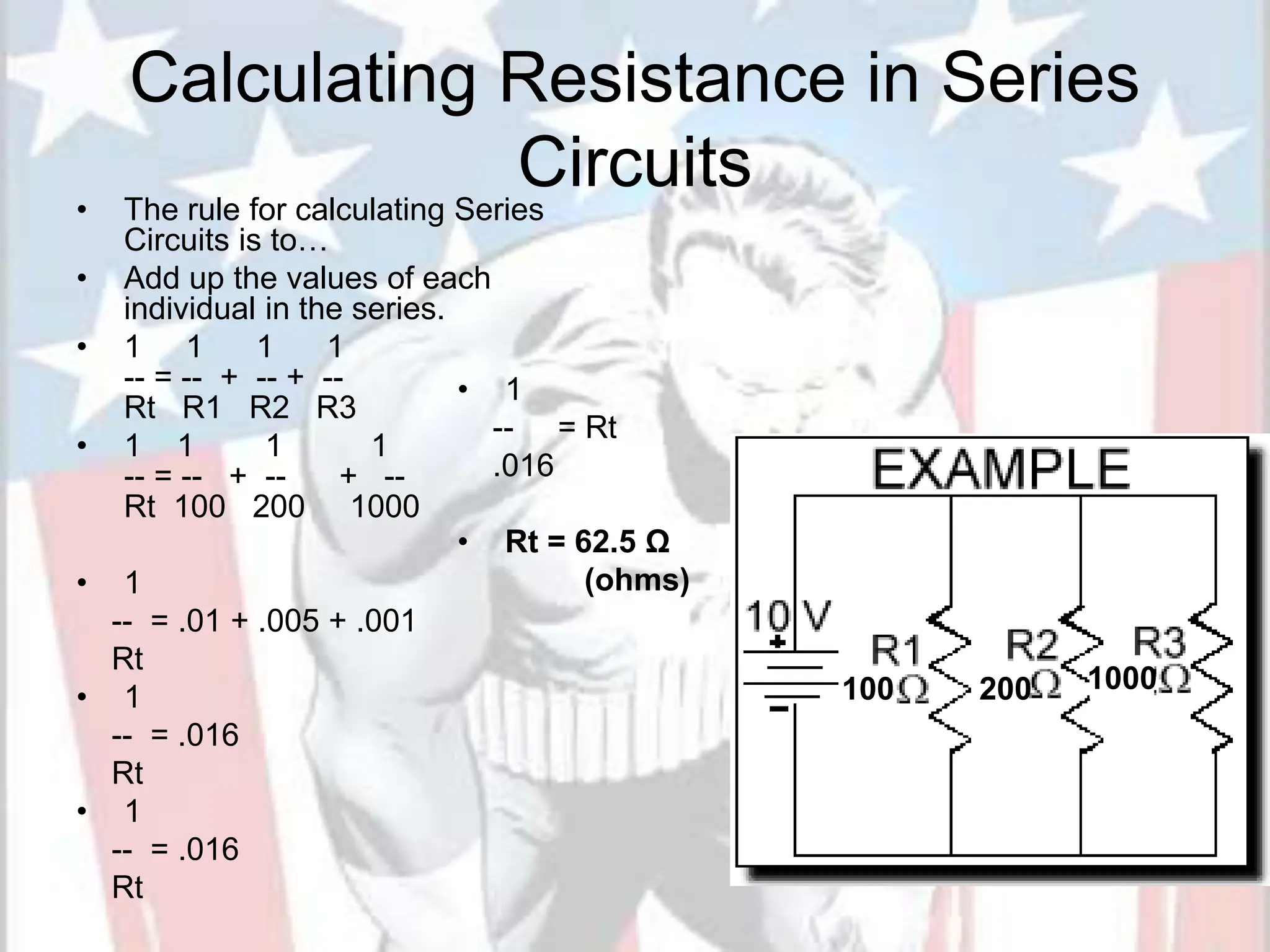
In a series circuit, there is only one path for electrons to flow through each component in the circuit. As more components are added in series, the total resistance increases and the current decreases. In a parallel circuit, there are multiple pathways for current to flow simultaneously through different branches. As more components are added in parallel, the total resistance decreases and the current remains the same. Key concepts are that series circuits represent resistance similar to boulders blocking water flow, while parallel circuits offer additional pathways like stream branches carrying more water. Total resistance in series circuits is calculated by adding the resistance of each component, while resistance in parallel is calculated using reciprocal sums.