SEO:
      Past, Present, Future


Kipp Bodnar       Jeanne Hopkins
@kbodnar32        @JeanneHopkins
SEO Tips from Website Grader


  Lessons from 2,732,332 websites
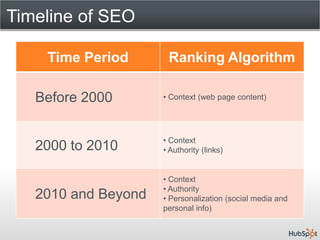
Timeline of SEO

    Time Period       Ranking Algorithm

   Before 2000       • Context (web page content)


                     • Context
   2000 to 2010      • Authority (links)


                     • Context
                     • Authority
   2010 and Beyond   • Personalization (social media and
                     personal info)
SEO Before 2000


  Ranking Algorithm:
        f(n): Context
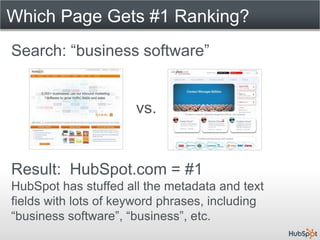
Which Page Gets #1 Ranking?
Search: “business software”


                      vs.


Result: HubSpot.com = #1
HubSpot has stuffed all the metadata and text
fields with lots of keyword phrases, including
“business software”, “business”, etc.
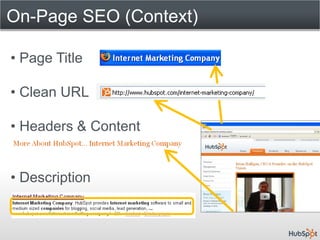
On-Page SEO (Context)

• Page Title

• Clean URL

• Headers & Content


• Description
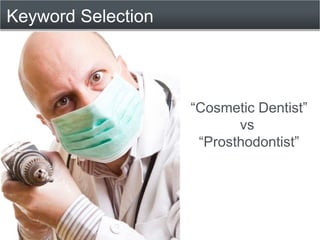
Keyword Selection


                    “Cosmetic Dentist”
                           vs
                     “Prosthodontist”
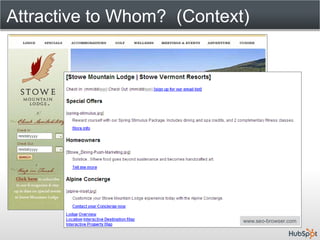
Attractive to Whom? (Context)


                            www.seo-browser.com
Pre-2000 SEO Tips

 • Lots of pages
 • Search spider friendly
 • Keyword-rich content
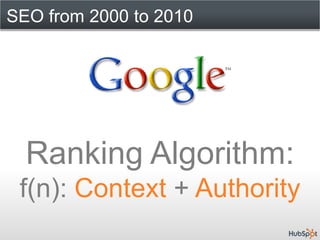
SEO from 2000 to 2010


  Ranking Algorithm:
 f(n): Context + Authority
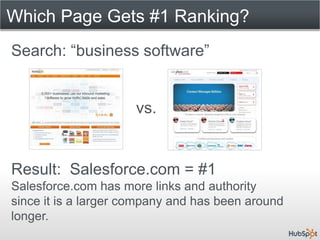
Which Page Gets #1 Ranking?
Search: “business software”


                      vs.


Result: Salesforce.com = #1
Salesforce.com has more links and authority
since it is a larger company and has been around
longer.
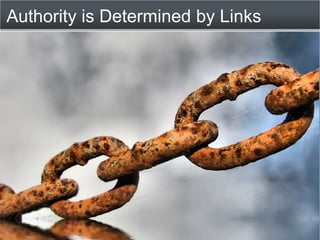
Authority is Determined by Links
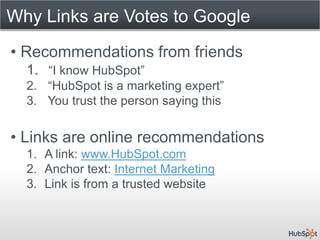
Why Links are Votes to Google
• Recommendations from friends
  1. “I know HubSpot”
  2. “HubSpot is a marketing expert”
  3. You trust the person saying this


• Links are online recommendations
  1. A link: www.HubSpot.com
  2. Anchor text: Internet Marketing
  3. Link is from a trusted website
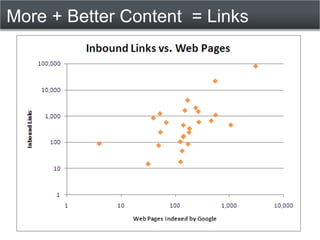
More + Better Content = Links
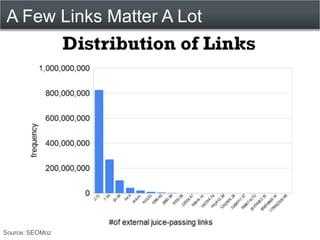
A Few Links Matter A Lot


Source: SEOMoz
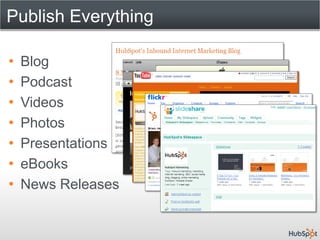
Publish Everything

•   Blog
•   Podcast
•   Videos
•   Photos
•   Presentations
•   eBooks
•   News Releases
Publish Everywhere
Link Worthy Content
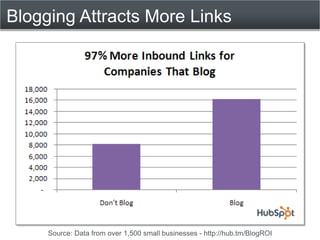
Blogging Attracts More Links


     Source: Data from over 1,500 small businesses - http://hub.tm/BlogROI
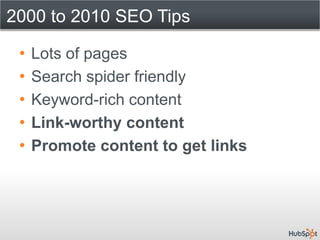
2000 to 2010 SEO Tips

 •   Lots of pages
 •   Search spider friendly
 •   Keyword-rich content
 •   Link-worthy content
 •   Promote content to get links
SEO in 2010 and Beyond


  Ranking Algorithm:
 f(n): Context + Authority
    + Social / Personal
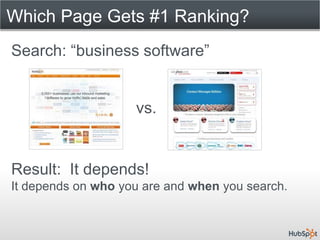
Which Page Gets #1 Ranking?
Search: “business software”


                    vs.


Result: It depends!
It depends on who you are and when you search.
What influences the results?

 •   Browser history of searcher
 •   Location of searcher
 •   Social graph of searcher
 •   Social authority of pages
 •   Up to the second news / trends
What Does SEO Rank Mean?


       SEO rank is now
     a meaningless metric.
What Does SEO Rank Mean?


 At any one time you rank #1 or
   #8 or #40 based on who is
 searching, where they search,
     and what is happening.
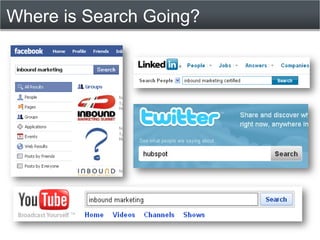
Where is Search Going?
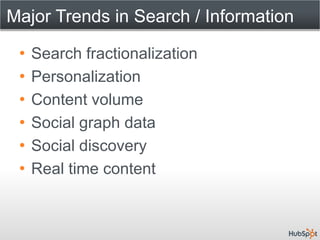
Major Trends in Search / Information

 •   Search fractionalization
 •   Personalization
 •   Content volume
 •   Social graph data
 •   Social discovery
 •   Real time content
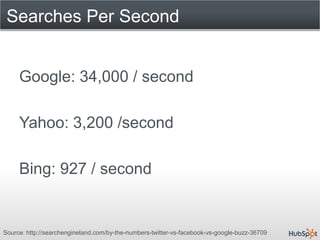
Searches Per Second


     Google: 34,000 / second

     Yahoo: 3,200 /second

     Bing: 927 / second


Source: http://searchengineland.com/by-the-numbers-twitter-vs-facebook-vs-google-buzz-36709
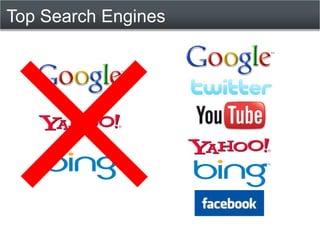
Top Search Engines
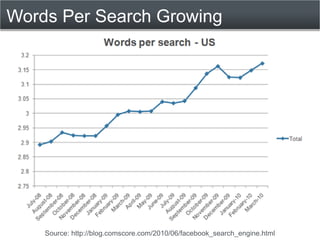
Words Per Search Growing


    Source: http://blog.comscore.com/2010/06/facebook_search_engine.html
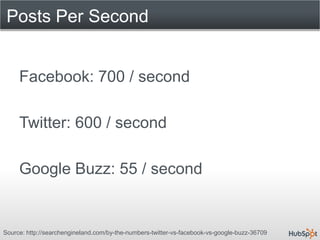
Posts Per Second


     Facebook: 700 / second

     Twitter: 600 / second

     Google Buzz: 55 / second


Source: http://searchengineland.com/by-the-numbers-twitter-vs-facebook-vs-google-buzz-36709
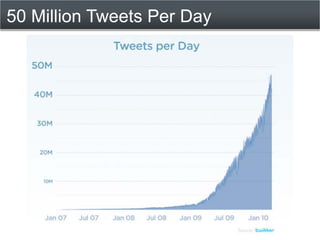
50 Million Tweets Per Day
NEW: Facebook = The Web
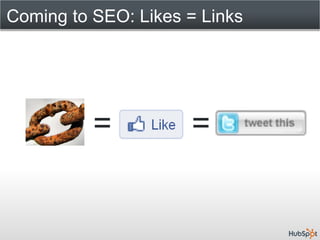
Coming to SEO: Likes = Links


          =          =
What should I do to prepare for
     what’s next in SEO?
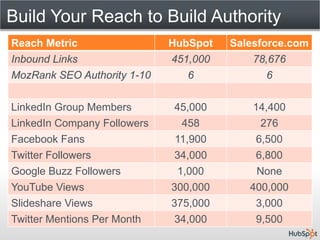
Build Your Reach to Build Authority
Reach Metric                 HubSpot   Salesforce.com
Inbound Links                451,000       78,676
MozRank SEO Authority 1-10      6             6


LinkedIn Group Members        45,000       14,400
LinkedIn Company Followers      458          276
Facebook Fans                 11,900       6,500
Twitter Followers             34,000       6,800
Google Buzz Followers          1,000        None
YouTube Views                300,000      400,000
Slideshare Views             375,000       3,000
Twitter Mentions Per Month    34,000       9,500
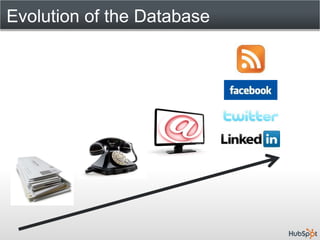
Evolution of the Database
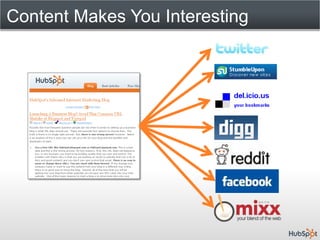
Content Makes You Interesting
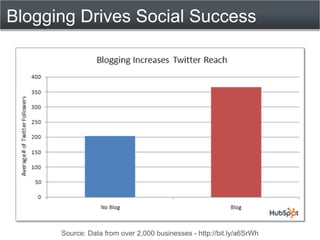
Blogging Drives Social Success


      Source: Data from over 2,000 businesses - http://bit.ly/a6SrWh
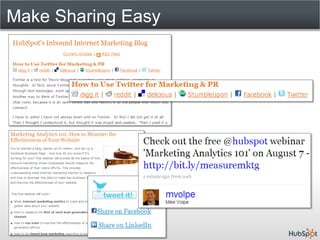
Make Sharing Easy
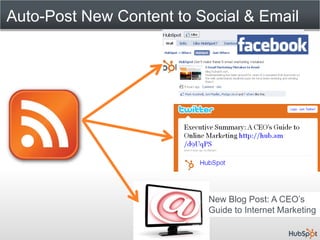
Auto-Post New Content to Social & Email


                          New Blog Post: A CEO’s
                          Guide to Internet Marketing
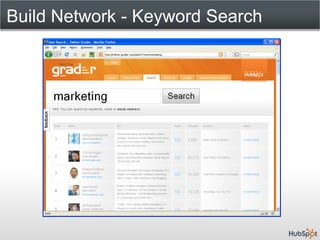
Build Network - Keyword Search
Start Groups on Topics


               Groups

               Group & Page

               Lists
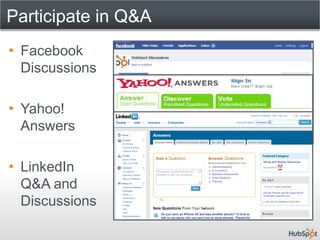
Participate in Q&A
• Facebook
  Discussions

• Yahoo!
  Answers

• LinkedIn
  Q&A and
  Discussions
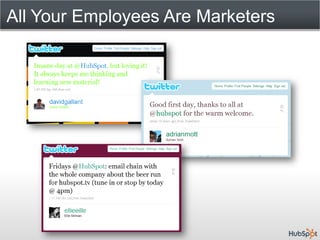
All Your Employees Are Marketers
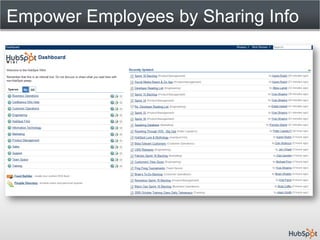
Empower Employees by Sharing Info
SEO Tips for 2010 and Beyond

 •   Lots of pages
 •   Search spider friendly
 •   Keyword-rich content
 •   Link-worthy content
 •   Promote content to get links
 •   Publish more often
 •   Build a large social following
 •   Engage your social following
Suggested Next Steps

 The Basics:
 • Read the “Inbound Marketing” Book
 • Grade your website:
   www.WebsiteGrader.com

 More Advanced:
 • Tips for Twitter, Facebook, LinkedIn:
 • www.HubSpot.com/marketing-hubs
Q&A

SEO - Past, Present, Future

  • 1.
    SEO: Past, Present, Future Kipp Bodnar Jeanne Hopkins @kbodnar32 @JeanneHopkins
  • 2.
    SEO Tips fromWebsite Grader Lessons from 2,732,332 websites
  • 3.
    Timeline of SEO Time Period Ranking Algorithm Before 2000 • Context (web page content) • Context 2000 to 2010 • Authority (links) • Context • Authority 2010 and Beyond • Personalization (social media and personal info)
  • 4.
    SEO Before 2000 Ranking Algorithm: f(n): Context
  • 5.
    Which Page Gets#1 Ranking? Search: “business software” vs. Result: HubSpot.com = #1 HubSpot has stuffed all the metadata and text fields with lots of keyword phrases, including “business software”, “business”, etc.
  • 6.
    On-Page SEO (Context) •Page Title • Clean URL • Headers & Content • Description
  • 7.
    Keyword Selection “Cosmetic Dentist” vs “Prosthodontist”
  • 8.
    Attractive to Whom?(Context) www.seo-browser.com
  • 9.
    Pre-2000 SEO Tips • Lots of pages • Search spider friendly • Keyword-rich content
  • 10.
    SEO from 2000to 2010 Ranking Algorithm: f(n): Context + Authority
  • 11.
    Which Page Gets#1 Ranking? Search: “business software” vs. Result: Salesforce.com = #1 Salesforce.com has more links and authority since it is a larger company and has been around longer.
  • 12.
  • 13.
    Why Links areVotes to Google • Recommendations from friends 1. “I know HubSpot” 2. “HubSpot is a marketing expert” 3. You trust the person saying this • Links are online recommendations 1. A link: www.HubSpot.com 2. Anchor text: Internet Marketing 3. Link is from a trusted website
  • 14.
    More + BetterContent = Links
  • 15.
    A Few LinksMatter A Lot Source: SEOMoz
  • 16.
    Publish Everything • Blog • Podcast • Videos • Photos • Presentations • eBooks • News Releases
  • 17.
  • 18.
  • 19.
    Blogging Attracts MoreLinks Source: Data from over 1,500 small businesses - http://hub.tm/BlogROI
  • 20.
    2000 to 2010SEO Tips • Lots of pages • Search spider friendly • Keyword-rich content • Link-worthy content • Promote content to get links
  • 21.
    SEO in 2010and Beyond Ranking Algorithm: f(n): Context + Authority + Social / Personal
  • 22.
    Which Page Gets#1 Ranking? Search: “business software” vs. Result: It depends! It depends on who you are and when you search.
  • 23.
    What influences theresults? • Browser history of searcher • Location of searcher • Social graph of searcher • Social authority of pages • Up to the second news / trends
  • 24.
    What Does SEORank Mean? SEO rank is now a meaningless metric.
  • 25.
    What Does SEORank Mean? At any one time you rank #1 or #8 or #40 based on who is searching, where they search, and what is happening.
  • 26.
  • 27.
  • 28.
    Major Trends inSearch / Information • Search fractionalization • Personalization • Content volume • Social graph data • Social discovery • Real time content
  • 29.
    Searches Per Second Google: 34,000 / second Yahoo: 3,200 /second Bing: 927 / second Source: http://searchengineland.com/by-the-numbers-twitter-vs-facebook-vs-google-buzz-36709
  • 30.
  • 31.
    Words Per SearchGrowing Source: http://blog.comscore.com/2010/06/facebook_search_engine.html
  • 32.
    Posts Per Second Facebook: 700 / second Twitter: 600 / second Google Buzz: 55 / second Source: http://searchengineland.com/by-the-numbers-twitter-vs-facebook-vs-google-buzz-36709
  • 33.
  • 34.
  • 35.
    Coming to SEO:Likes = Links = =
  • 36.
    What should Ido to prepare for what’s next in SEO?
  • 37.
    Build Your Reachto Build Authority Reach Metric HubSpot Salesforce.com Inbound Links 451,000 78,676 MozRank SEO Authority 1-10 6 6 LinkedIn Group Members 45,000 14,400 LinkedIn Company Followers 458 276 Facebook Fans 11,900 6,500 Twitter Followers 34,000 6,800 Google Buzz Followers 1,000 None YouTube Views 300,000 400,000 Slideshare Views 375,000 3,000 Twitter Mentions Per Month 34,000 9,500
  • 38.
  • 39.
    Content Makes YouInteresting
  • 40.
    Blogging Drives SocialSuccess Source: Data from over 2,000 businesses - http://bit.ly/a6SrWh
  • 41.
  • 42.
    Auto-Post New Contentto Social & Email New Blog Post: A CEO’s Guide to Internet Marketing
  • 43.
    Build Network -Keyword Search
  • 44.
    Start Groups onTopics Groups Group & Page Lists
  • 45.
    Participate in Q&A •Facebook Discussions • Yahoo! Answers • LinkedIn Q&A and Discussions
  • 46.
    All Your EmployeesAre Marketers
  • 47.
  • 48.
    SEO Tips for2010 and Beyond • Lots of pages • Search spider friendly • Keyword-rich content • Link-worthy content • Promote content to get links • Publish more often • Build a large social following • Engage your social following
  • 49.
    Suggested Next Steps The Basics: • Read the “Inbound Marketing” Book • Grade your website: www.WebsiteGrader.com More Advanced: • Tips for Twitter, Facebook, LinkedIn: • www.HubSpot.com/marketing-hubs
  • 50.