WHAT IT MEANS FOR
MARKETERS AND ADVERTISERS
WHY PEOPLE
BLOCK ADS
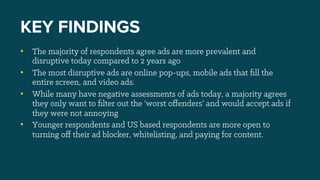
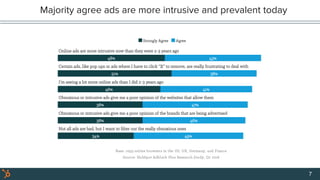
•  The majority of respondents agree ads are more prevalent and
disruptive today compared to 2 years ago
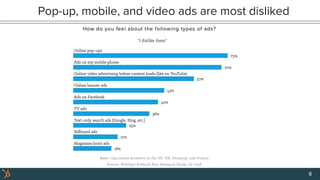
•  The most disruptive ads are online pop-ups, mobile ads that fill the
entire screen, and video ads.
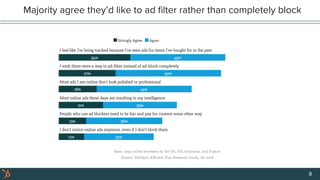
•  While many have negative assessments of ads today, a majority agrees
they only want to filter out the ‘worst offenders’ and would accept ads if
they were not annoying
•  Younger respondents and US based respondents are more open to
turning off their ad blocker, whitelisting, and paying for content.
KEY FINDINGS
CHAPTERS
1  How People Feel About Online Ads
2  Why People Install Ad Blockers
3  Opinions On Mobile Ad Blocking
3
CHAPTERS
=4  Will People Turn Off Their Ad Blocker?
5  Age Differences
6  Global Differences
4
{	 }	1	How People Feel About
Online Ads
5
Pop-up, mobile, and video ads are most disliked
6
Majority agree ads are more intrusive and prevalent today
7
Majority agree they’d like to ad filter rather than completely block
8
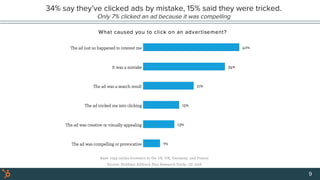
34% say they’ve clicked ads by mistake, 15% said they were tricked.
Only 7% clicked an ad because it was compelling
9
{	 }	2	Why People Install Ad
Blockers
10
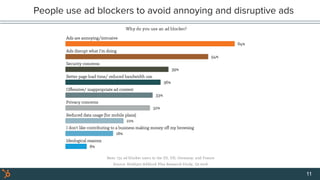
People use ad blockers to avoid annoying and disruptive ads
11
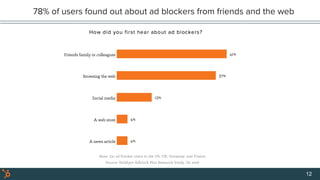
78% of users found out about ad blockers from friends and the web
12
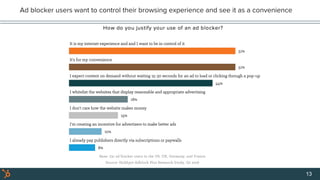
Ad blocker users want to control their browsing experience and see it as a convenience
13
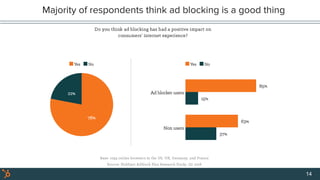
Majority of respondents think ad blocking is a good thing
14
{	 }	3	Opinions On Mobile Ad
Blocking
15
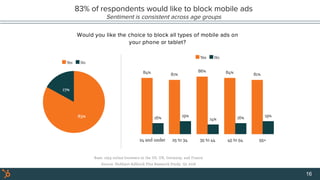
83% of respondents would like to block mobile ads
Sentiment is consistent across age groups
16
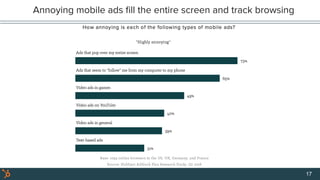
Annoying mobile ads fill the entire screen and track browsing
17
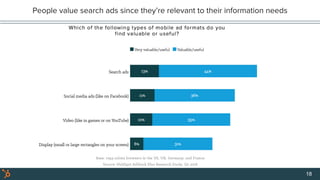
People value search ads since they’re relevant to their information needs
18
{	 }	4	Will People Turn Off
Their Ad Blocker?
19
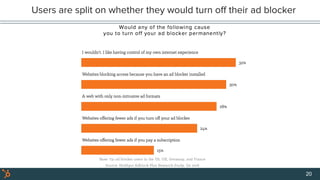
Users are split on whether they would turn off their ad blocker
20
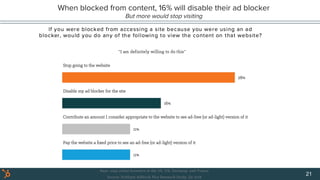
When blocked from content, 16% will disable their ad blocker
But more would stop visiting
21
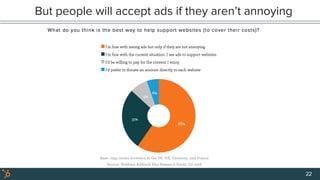
But people will accept ads if they aren’t annoying
22
{	 }	5	Age Differences
23
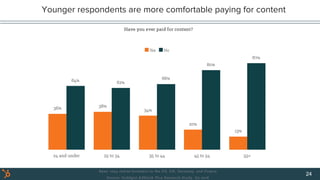
Younger respondents are more comfortable paying for content
24
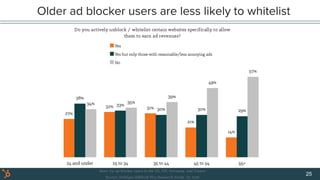
Older ad blocker users are less likely to whitelist
25
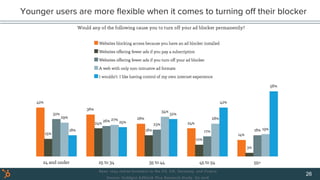
Younger users are more flexible when it comes to turning off their blocker
26
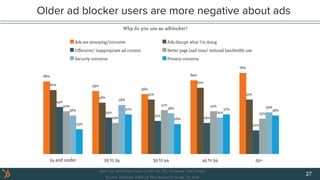
Older ad blocker users are more negative about ads
27
{	 }	5	Global Differences
28
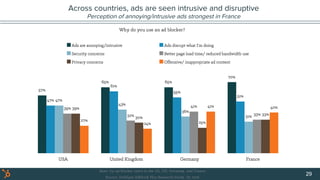
Across countries, ads are seen intrusive and disruptive
Perception of annoying/intrusive ads strongest in France
29
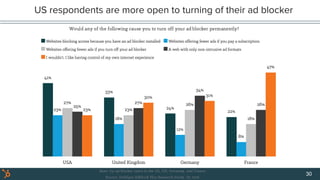
US respondents are more open to turning of their ad blocker
30
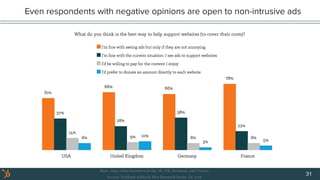
Even respondents with negative opinions are open to non-intrusive ads
31
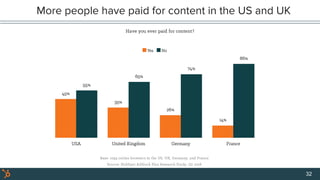
More people have paid for content in the US and UK
32
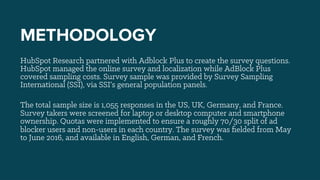
HubSpot Research partnered with Adblock Plus to create the survey questions.
HubSpot managed the online survey and localization while AdBlock Plus
covered sampling costs. Survey sample was provided by Survey Sampling
International (SSI), via SSI’s general population panels.
The total sample size is 1,055 responses in the US, UK, Germany, and France.
Survey takers were screened for laptop or desktop computer and smartphone
ownership. Quotas were implemented to ensure a roughly 70/30 split of ad
blocker users and non-users in each country. The survey was fielded from May
to June 2016, and available in English, German, and French.
METHODOLOGY
SEE THE FULL
RESEARCH REPORT
&
DOWNLOAD THIS
PRESENTATION AND
INDIVIDUAL CHARTS
@ HubSpot Research