The Evolution of Google RankingsHow Google’s algorithm has changed over the years and where it’s heading in the futureRand Fishkin, SEOmoz CEO, March 2011
At SEOmoz, we make SOFTWARE!! We don’t offer any consulting.
Ranking in Google: 1999-2002
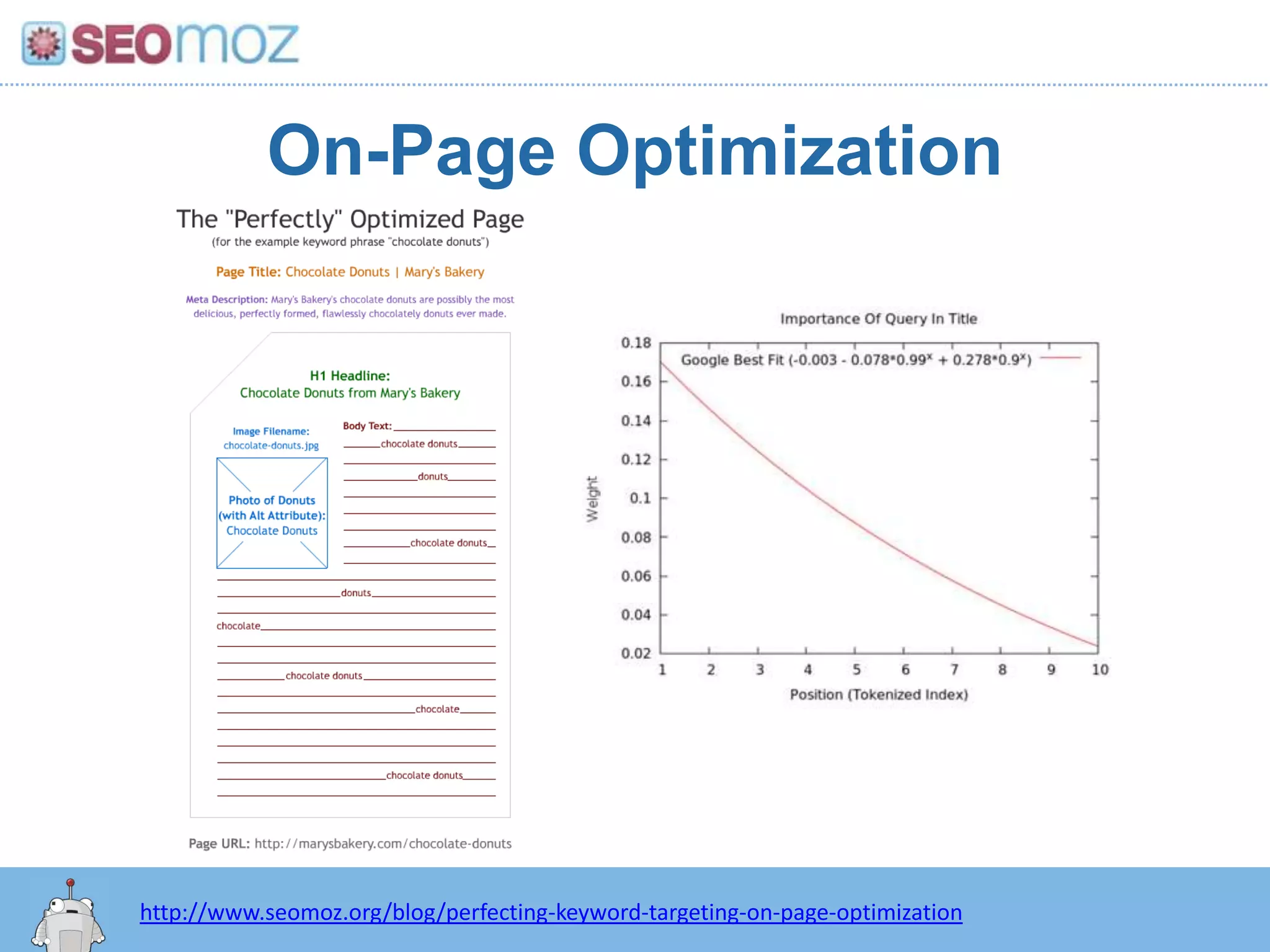
On-Page Optimizationhttp:/googleblog.blogspot.com/2010/06/our-new-search-index-caffeine.htmlhttp://www.seomoz.org/blog/perfecting-keyword-targeting-on-page-optimization
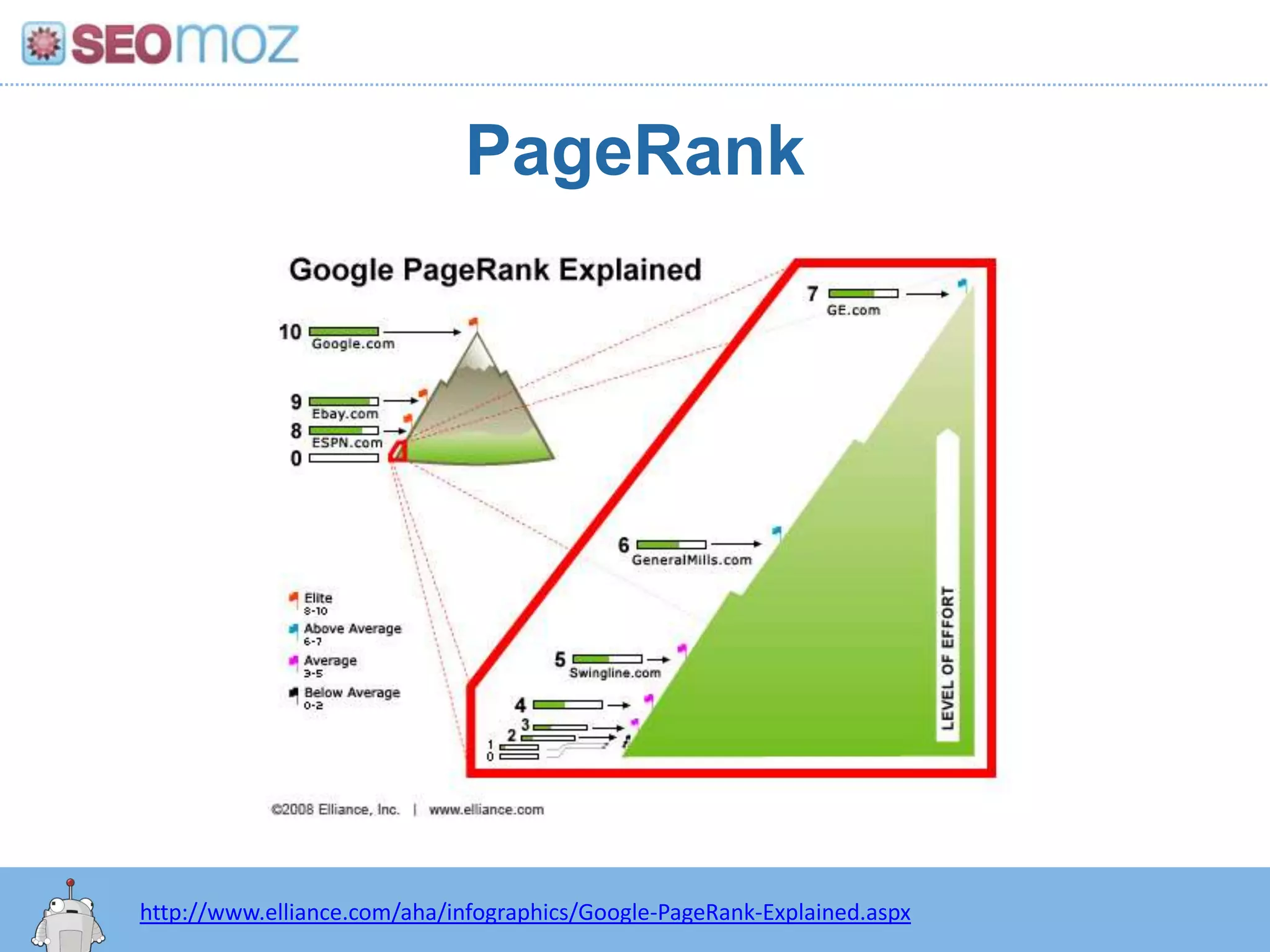
PageRankhttp:/googleblog.blogspot.com/2010/06/our-new-search-index-caffeine.htmlhttp://www.elliance.com/aha/infographics/Google-PageRank-Explained.aspx
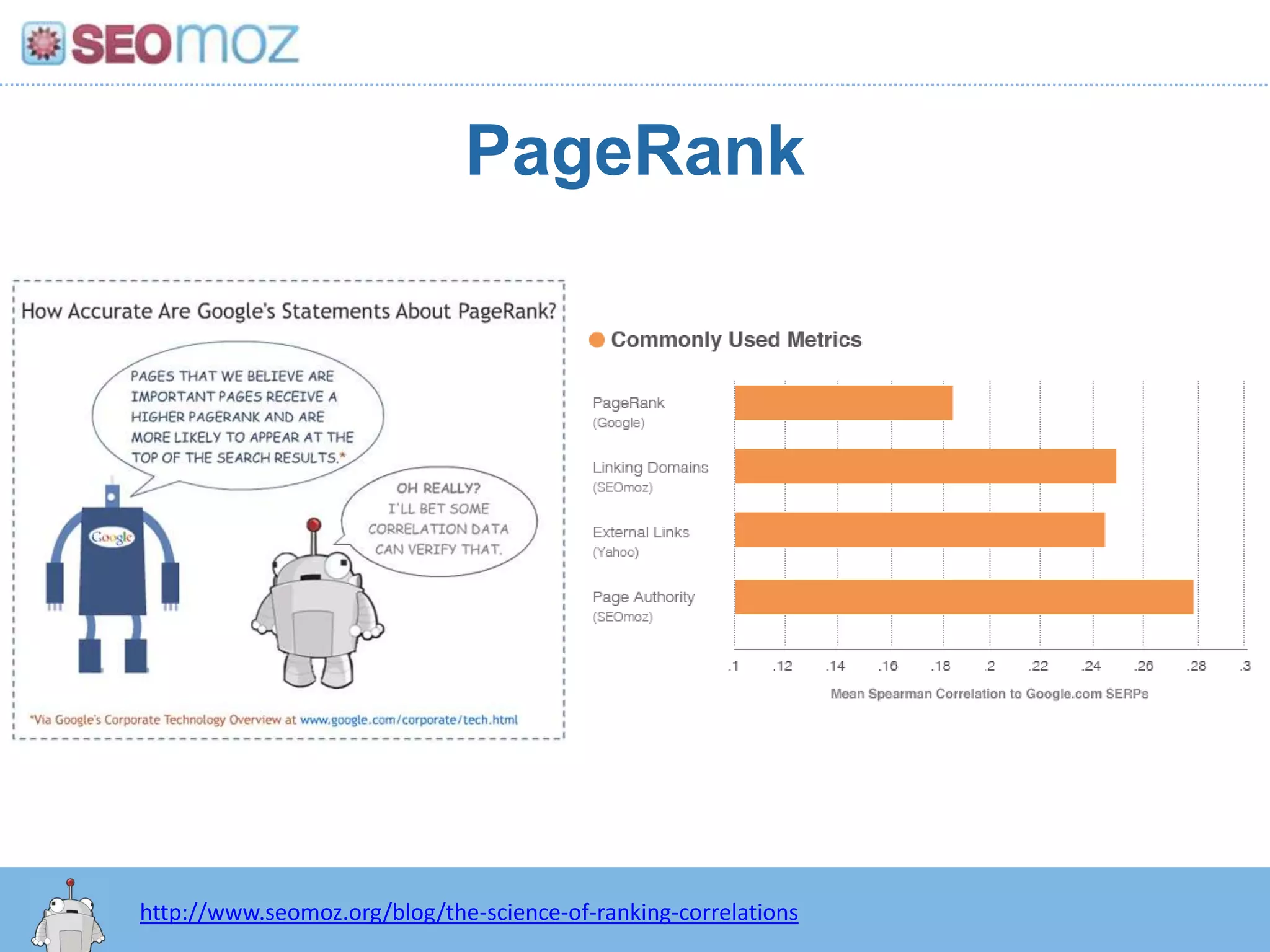
PageRankhttp:/googleblog.blogspot.com/2010/06/our-new-search-index-caffeine.htmlhttp://www.seomoz.org/blog/the-science-of-ranking-correlations
Ranking in Google: 2003 - 2005
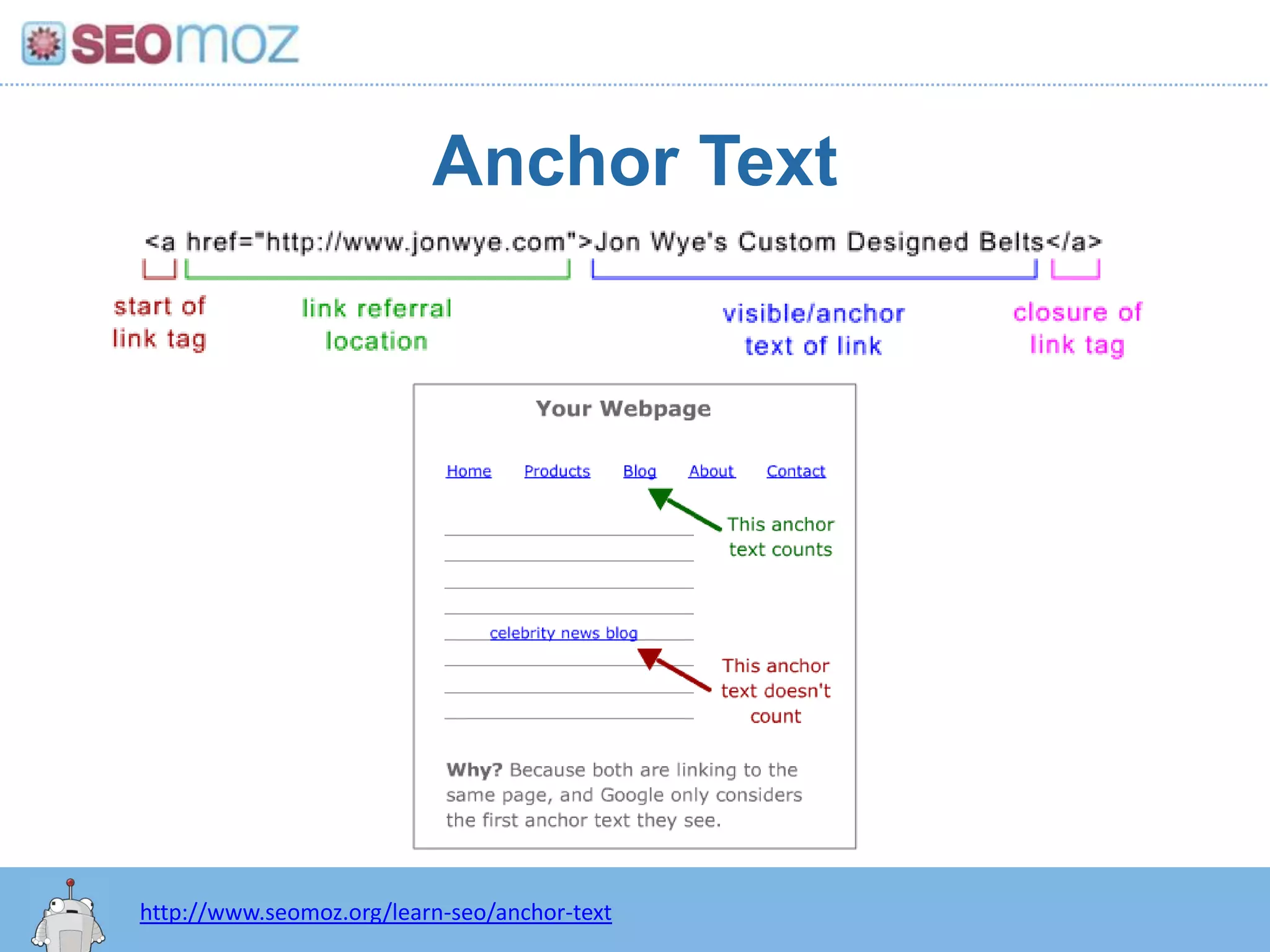
Anchor Texthttp:/googleblog.blogspot.com/2010/06/our-new-search-index-caffeine.htmlhttp://www.seomoz.org/learn-seo/anchor-text
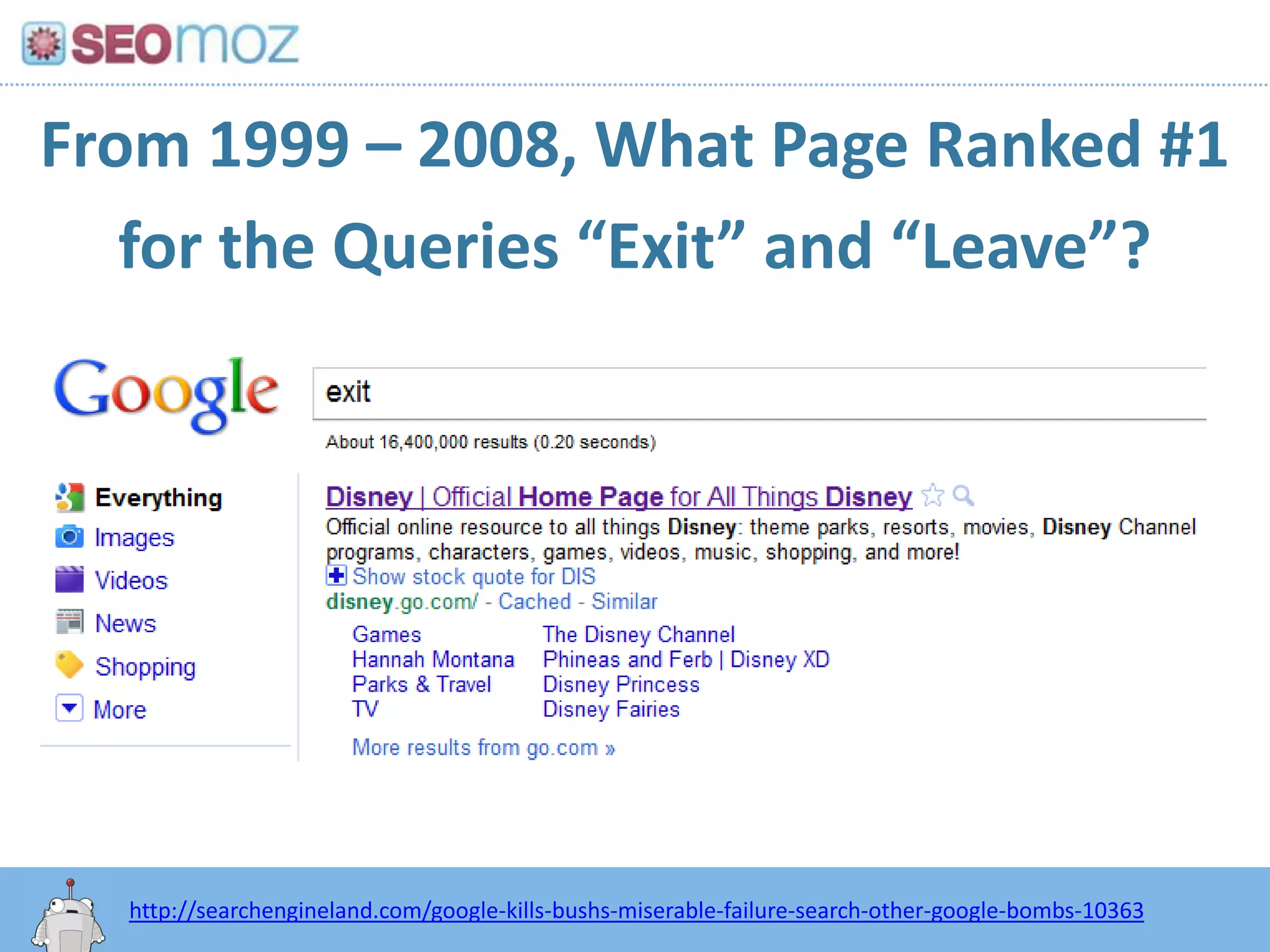
From 1999 – 2008, What Page Ranked #1for the Queries “Exit” and “Leave”?http:/googleblog.blogspot.com/2010/06/our-new-search-index-caffeine.htmlhttp://searchengineland.com/google-kills-bushs-miserable-failure-search-other-google-bombs-10363
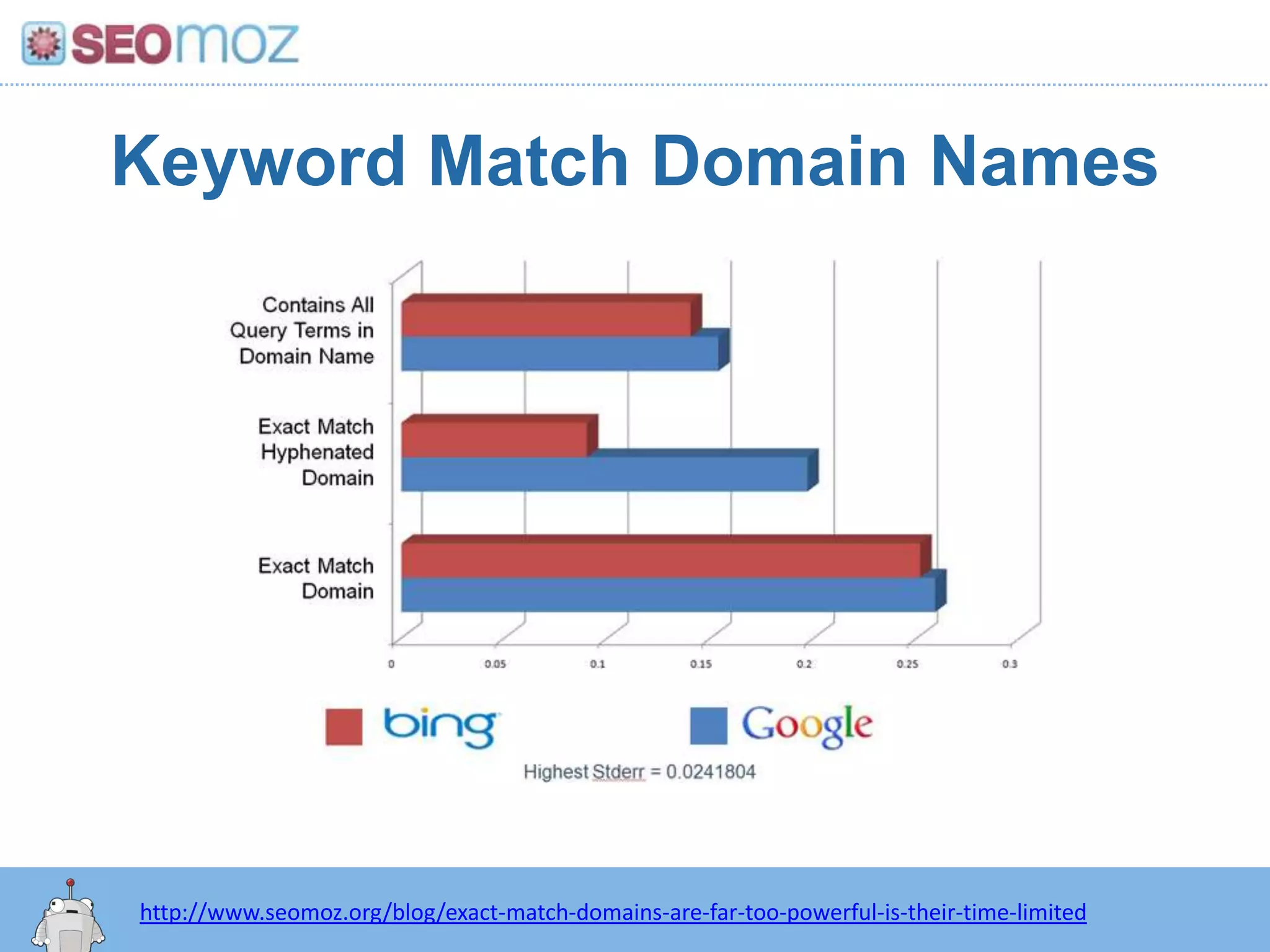
Keyword Match Domain Nameshttp://www.seomoz.org/blog/exact-match-domains-are-far-too-powerful-is-their-time-limited
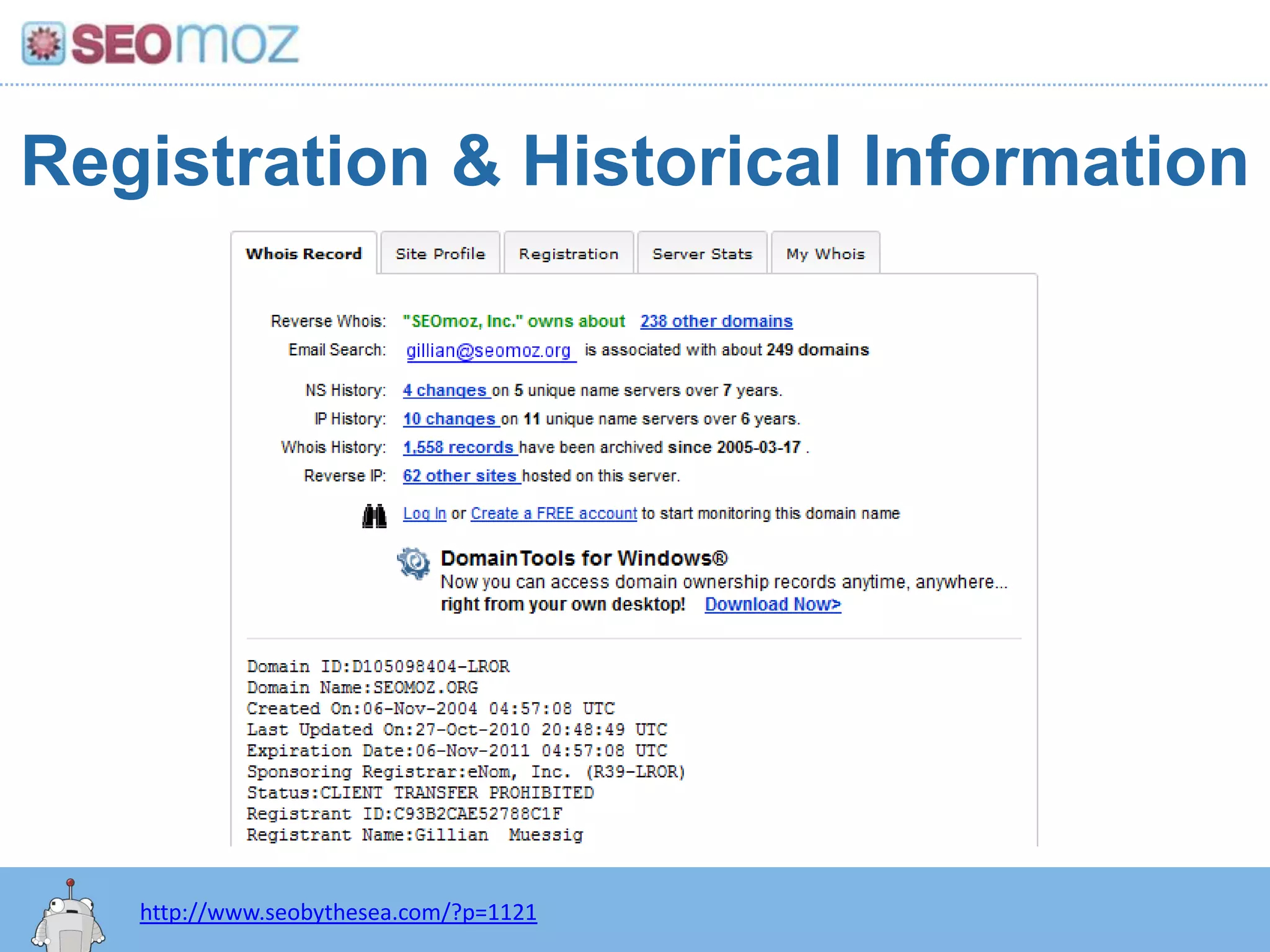
Registration & Historical Informationhttp://www.seobythesea.com/?p=1121
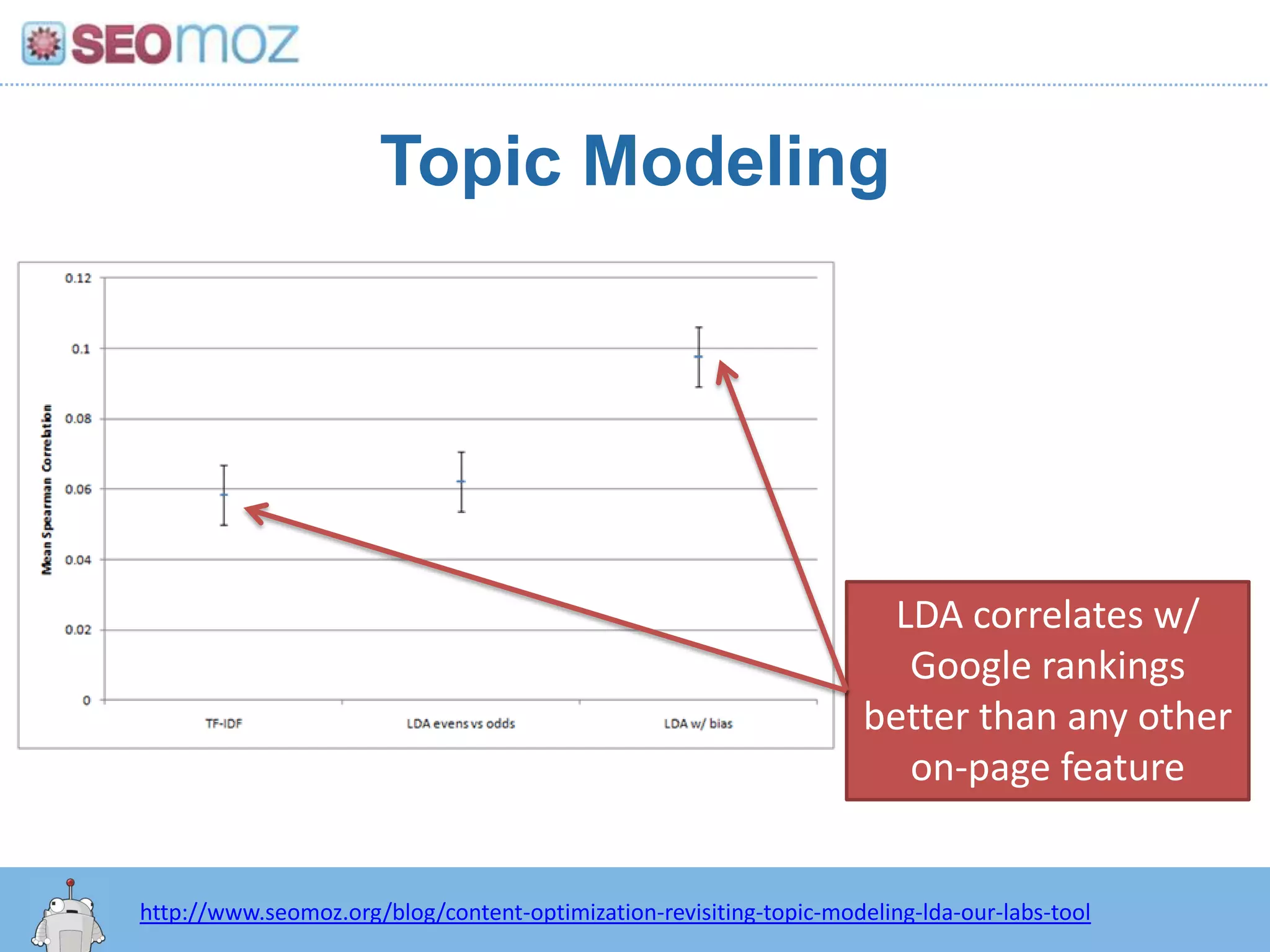
Topic ModelingLDA correlates w/ Google rankings better than any other on-page featurehttp://www.seomoz.org/blog/content-optimization-revisiting-topic-modeling-lda-our-labs-tool
Ranking in Google: 2006 - 2009
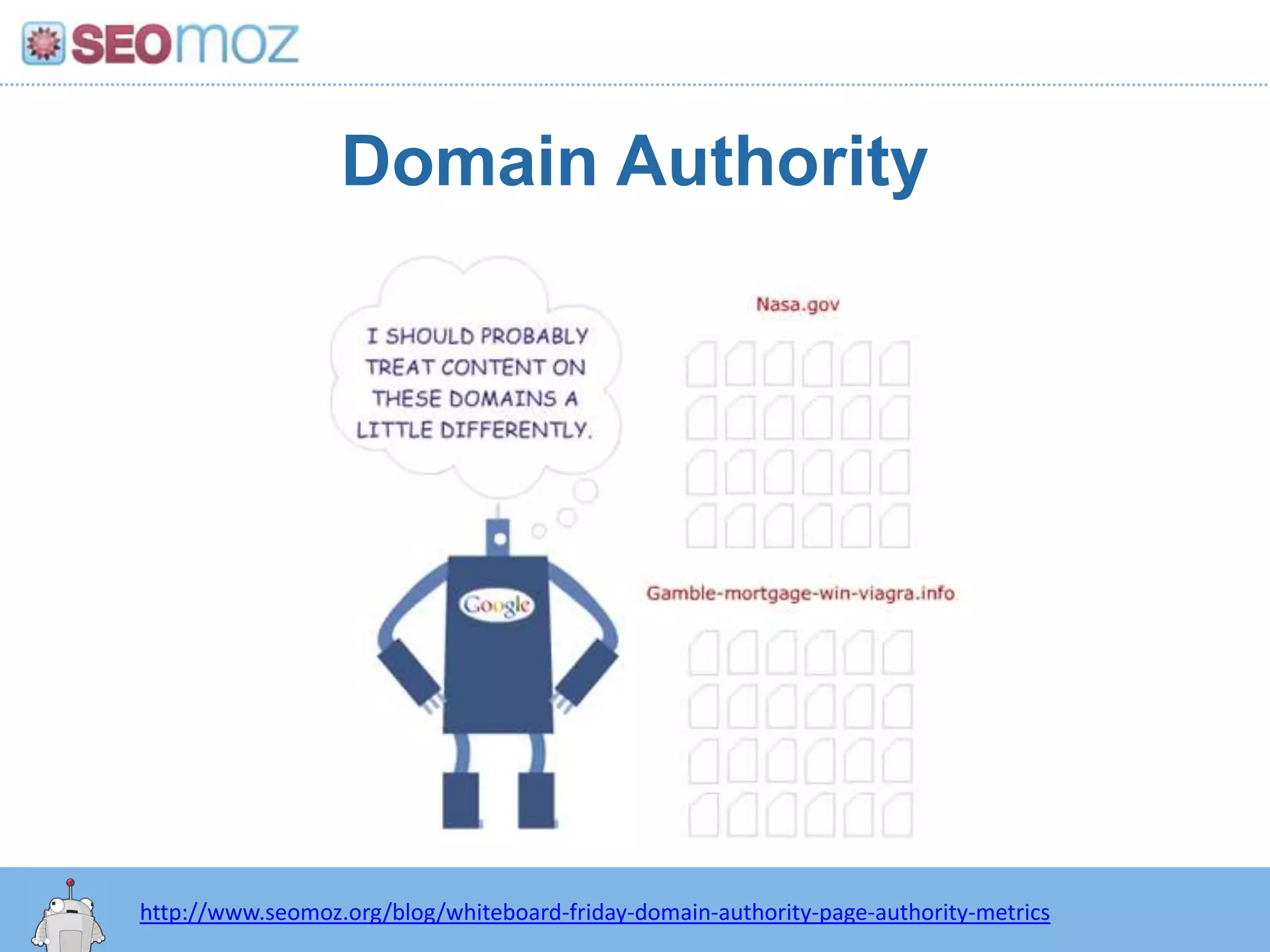
Domain Authorityhttp:/googleblog.blogspot.com/2010/06/our-new-search-index-caffeine.htmlhttp://www.seomoz.org/blog/whiteboard-friday-domain-authority-page-authority-metrics
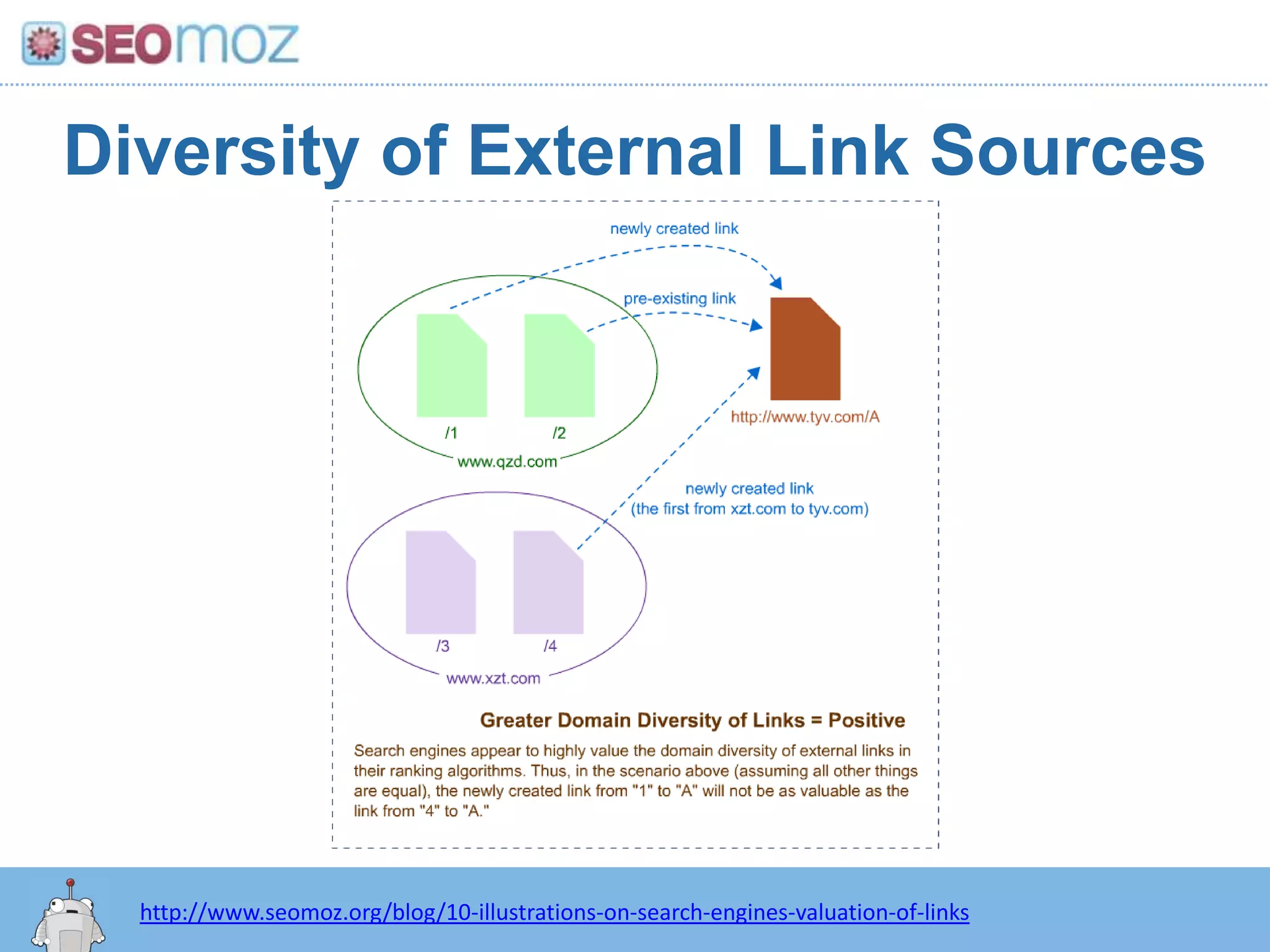
Diversity of External Link Sourceshttp://www.seomoz.org/blog/10-illustrations-on-search-engines-valuation-of-links
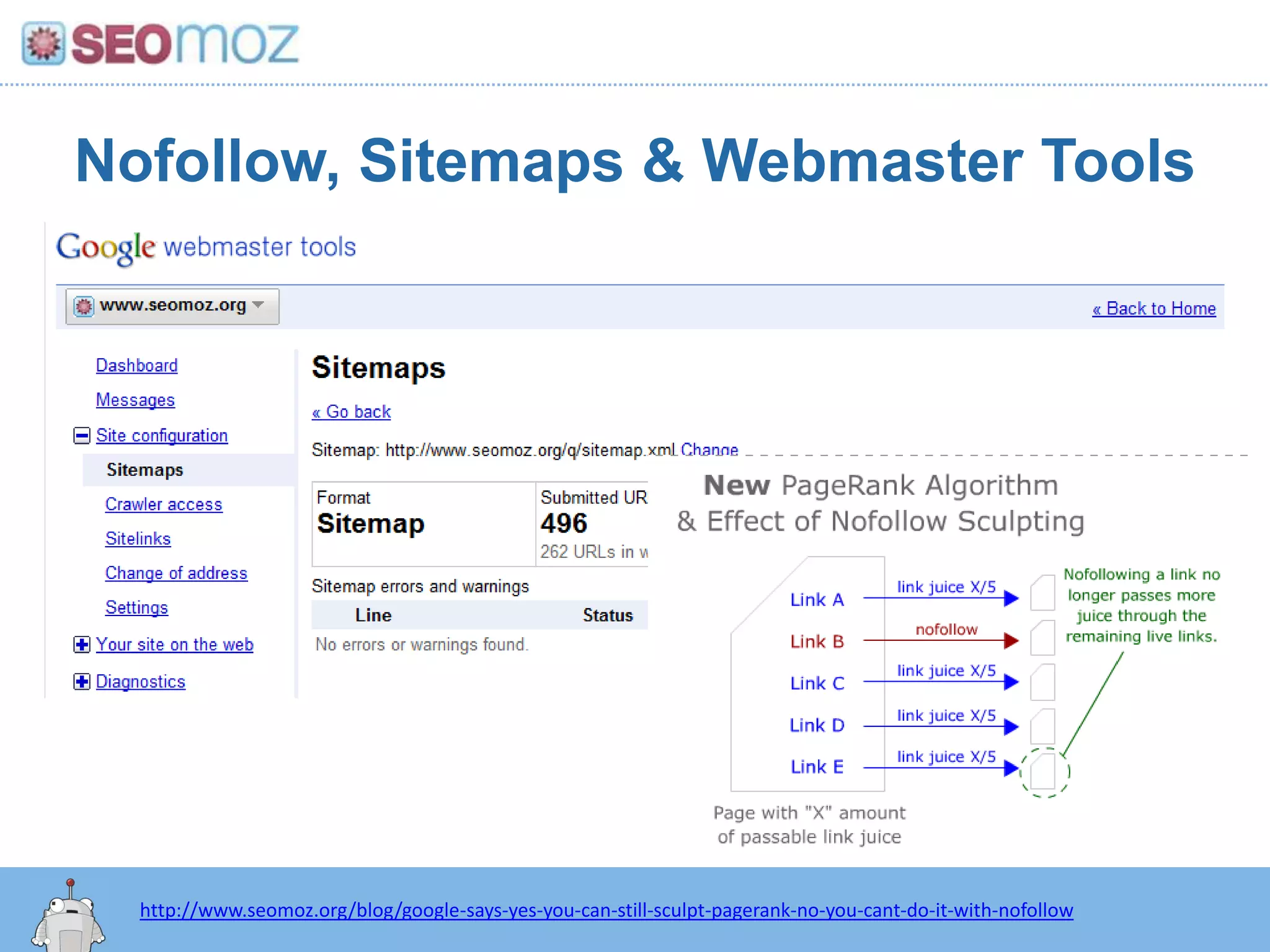
Nofollow, Sitemaps & Webmaster Toolshttp://www.seomoz.org/blog/google-says-yes-you-can-still-sculpt-pagerank-no-you-cant-do-it-with-nofollow
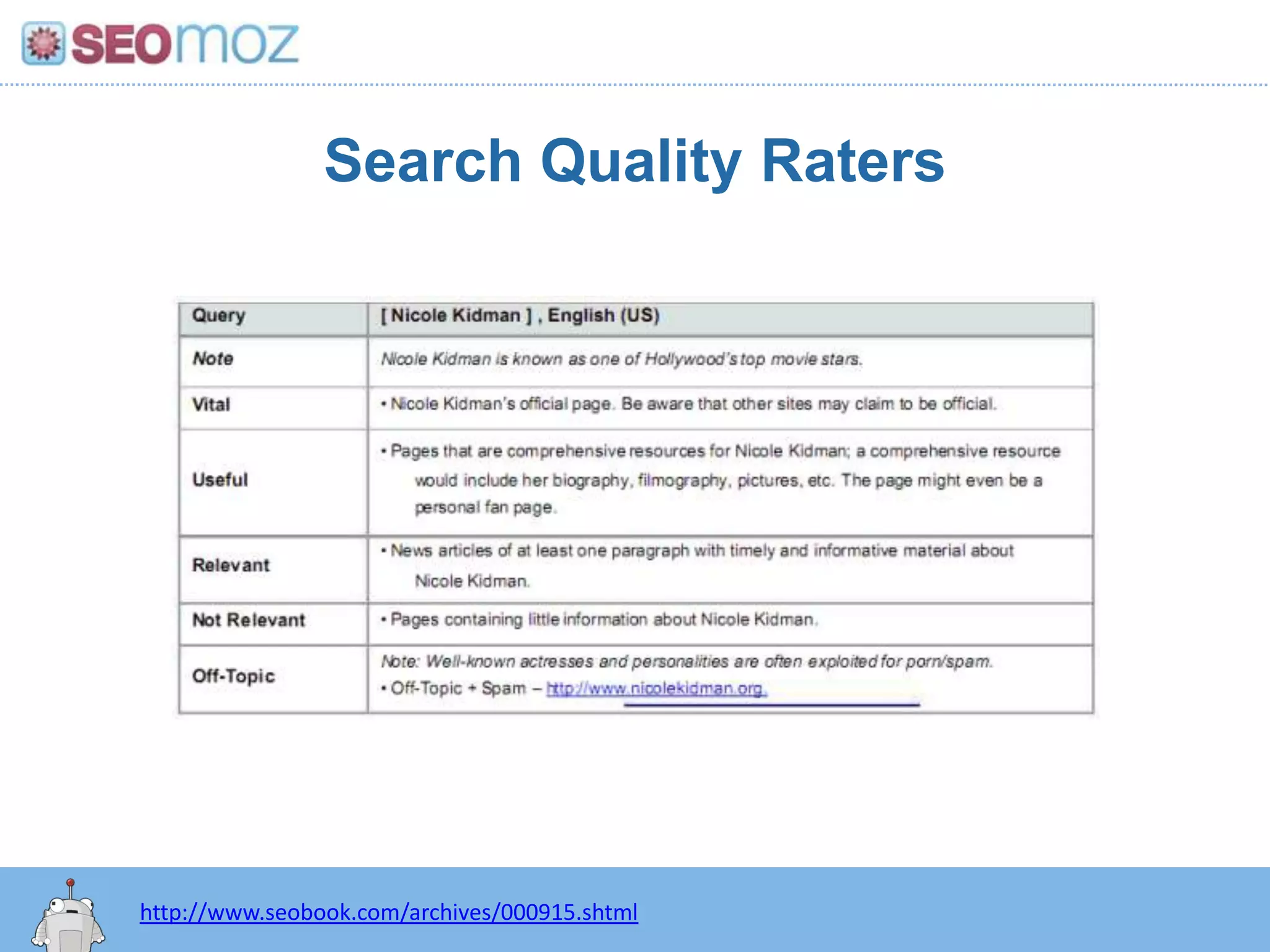
Search Quality Ratershttp://www.seobook.com/archives/000915.shtml
Ranking in Google: 2009 - 2011
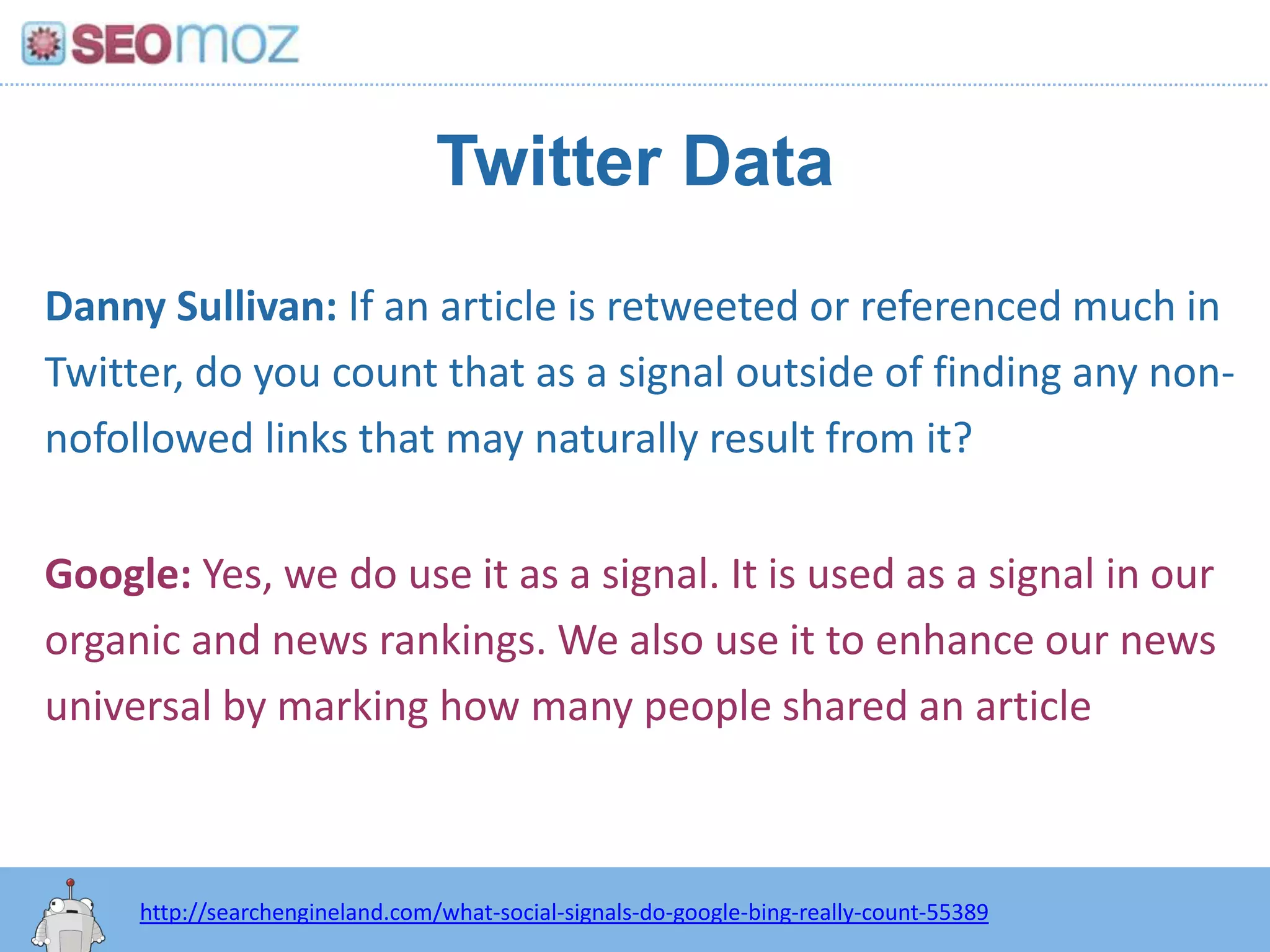
Twitter DataDanny Sullivan: If an article is retweeted or referenced much in Twitter, do you count that as a signal outside of finding any non-nofollowed links that may naturally result from it?Google: Yes, we do use it as a signal. It is used as a signal in our organic and news rankings. We also use it to enhance our news universal by marking how many people shared an article http://searchengineland.com/what-social-signals-do-google-bing-really-count-55389
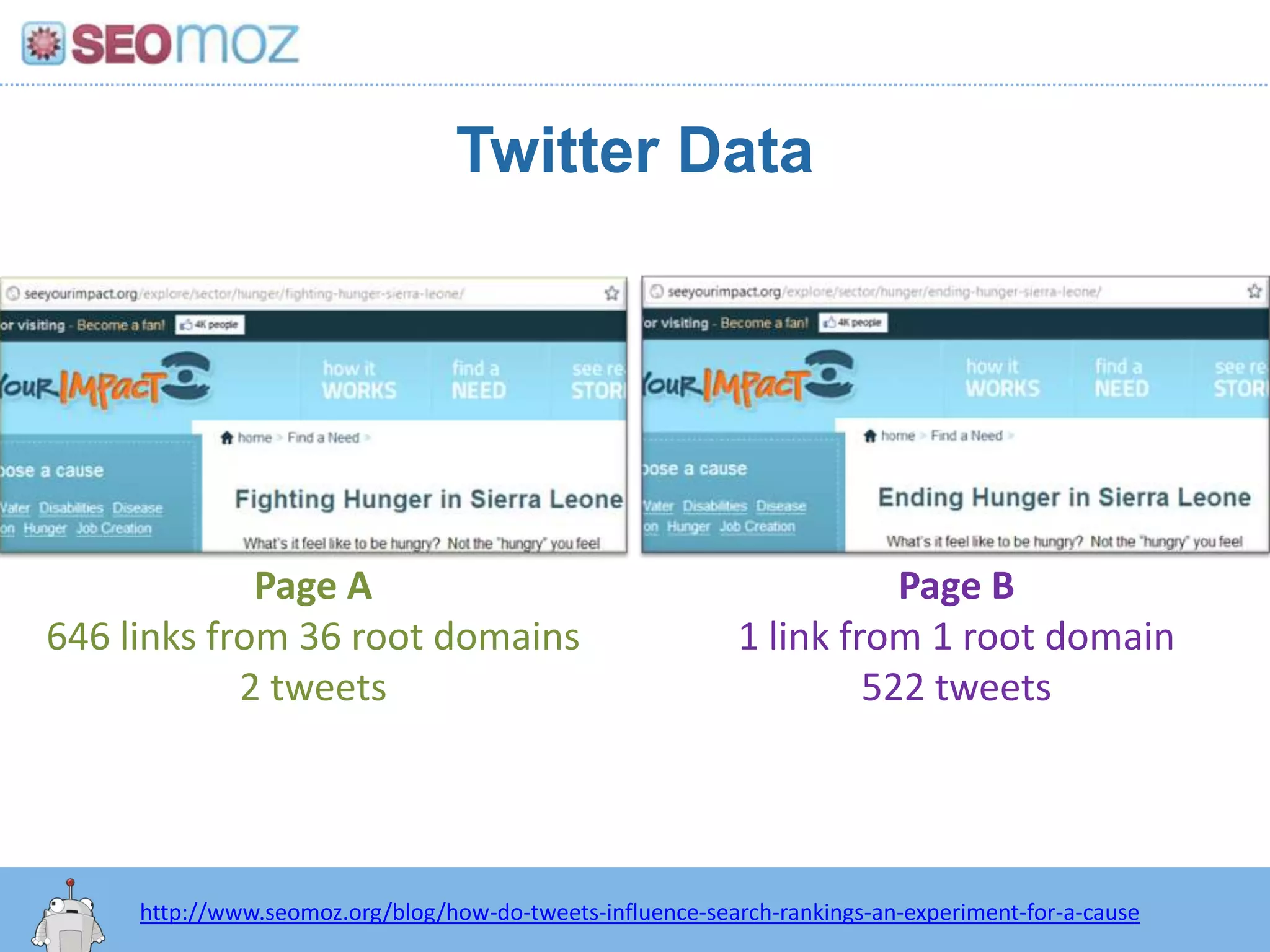
Twitter DataPage A646 links from 36 root domains2 tweetsPage B1 link from 1 root domain522 tweetshttp:/googleblog.blogspot.com/2010/06/our-new-search-index-caffeine.htmlhttp://www.seomoz.org/blog/how-do-tweets-influence-search-rankings-an-experiment-for-a-cause
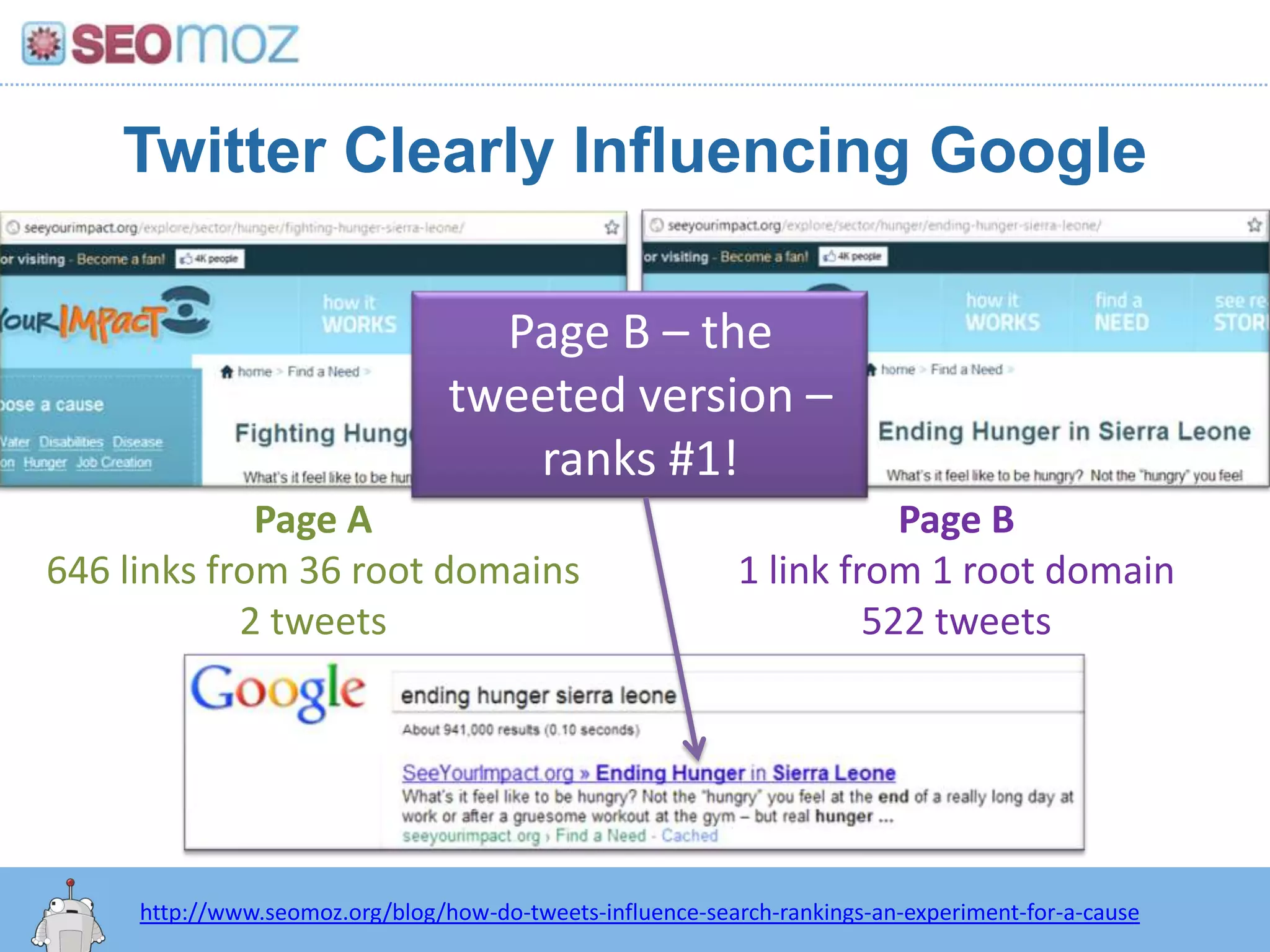
Twitter Clearly Influencing GooglePage B – the tweeted version – ranks #1!Page A646 links from 36 root domains2 tweetsPage B1 link from 1 root domain522 tweetshttp:/googleblog.blogspot.com/2010/06/our-new-search-index-caffeine.htmlhttp://www.seomoz.org/blog/how-do-tweets-influence-search-rankings-an-experiment-for-a-cause
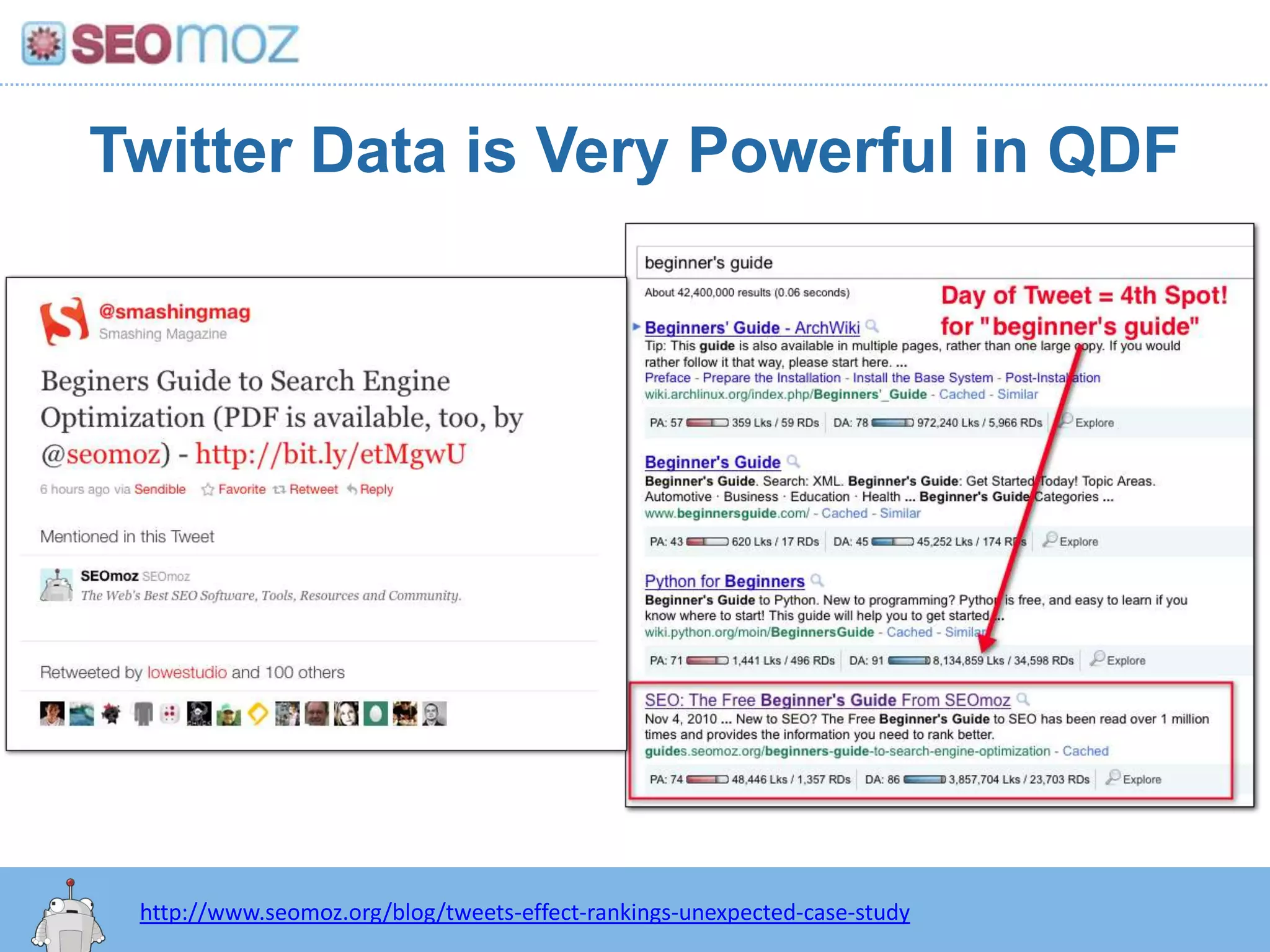
Twitter Data is Very Powerful in QDFhttp:/googleblog.blogspot.com/2010/06/our-new-search-index-caffeine.htmlhttp://www.seomoz.org/blog/tweets-effect-rankings-unexpected-case-study
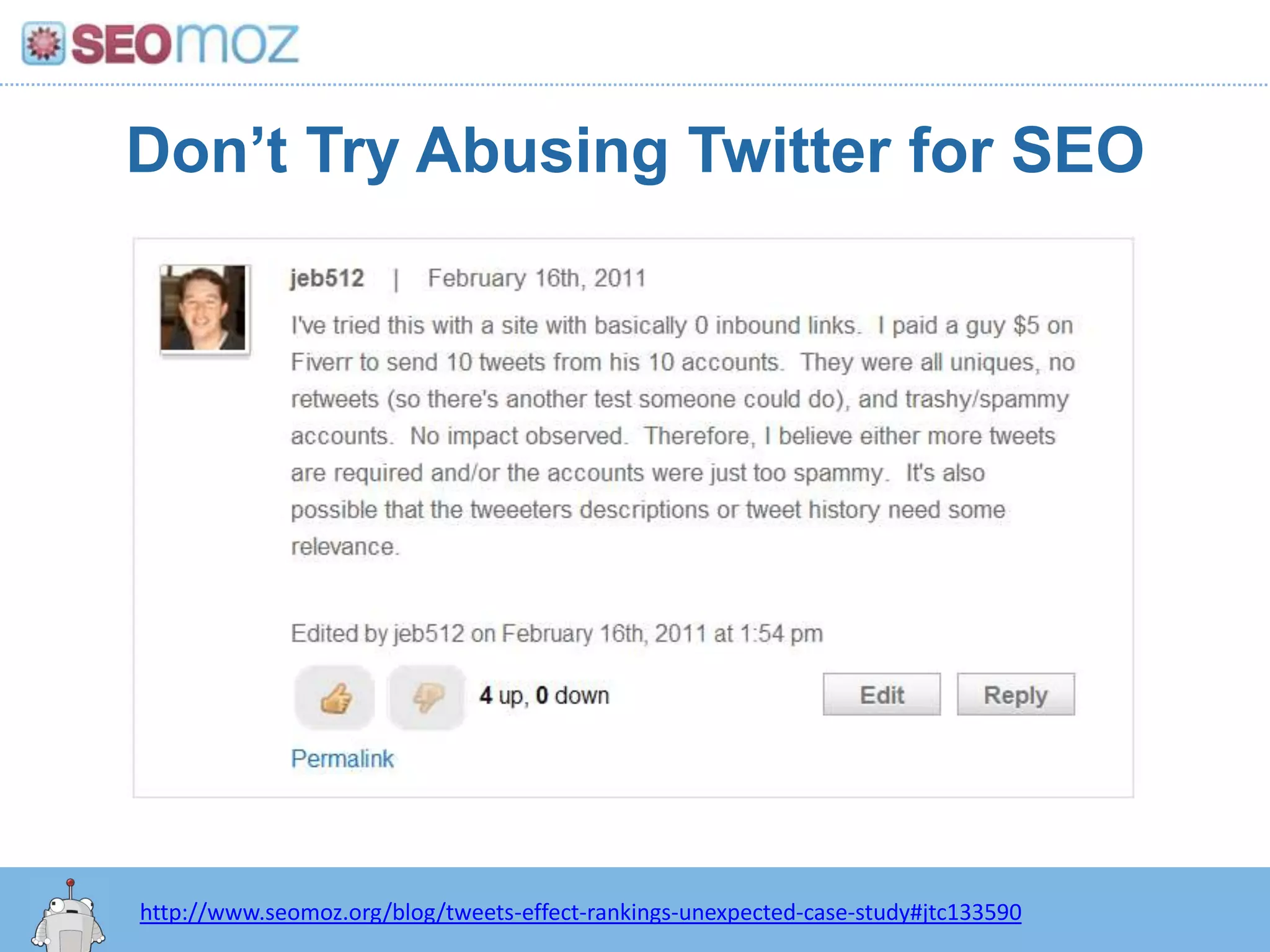
Don’t Try Abusing Twitter for SEOhttp:/googleblog.blogspot.com/2010/06/our-new-search-index-caffeine.htmlhttp://www.seomoz.org/blog/tweets-effect-rankings-unexpected-case-study#jtc133590
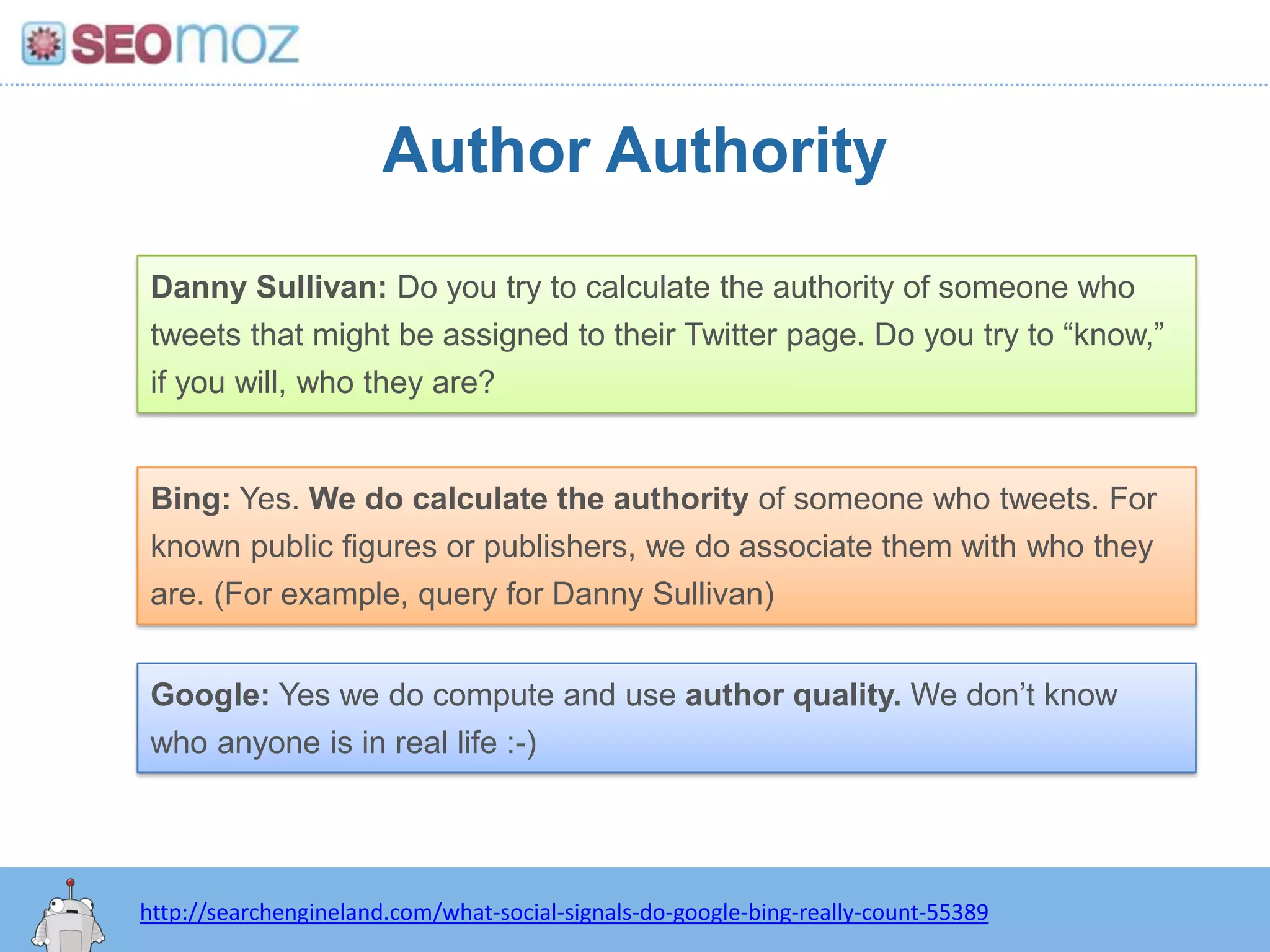
Author AuthorityDanny Sullivan: Do you try to calculate the authority of someone who tweets that might be assigned to their Twitter page. Do you try to “know,” if you will, who they are?Bing: Yes. We do calculate the authority of someone who tweets. For known public figures or publishers, we do associate them with who they are. (For example, query for Danny Sullivan)Google: Yes we do compute and use author quality. We don’t know who anyone is in real life :-)http:/googleblog.blogspot.com/2010/06/our-new-search-index-caffeine.htmlhttp://searchengineland.com/what-social-signals-do-google-bing-really-count-55389
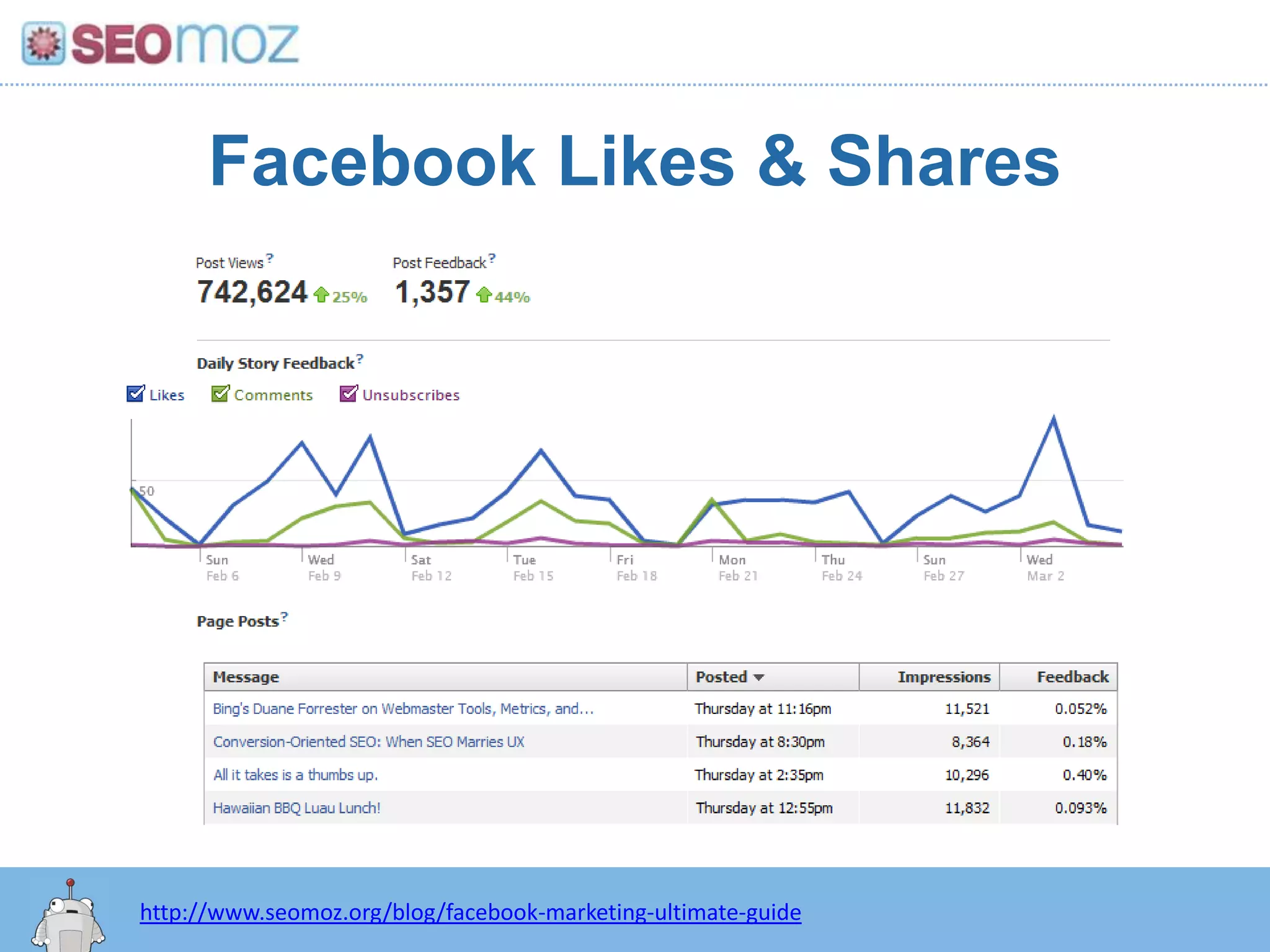
Facebook Likes & Shareshttp://www.seomoz.org/blog/facebook-marketing-ultimate-guide
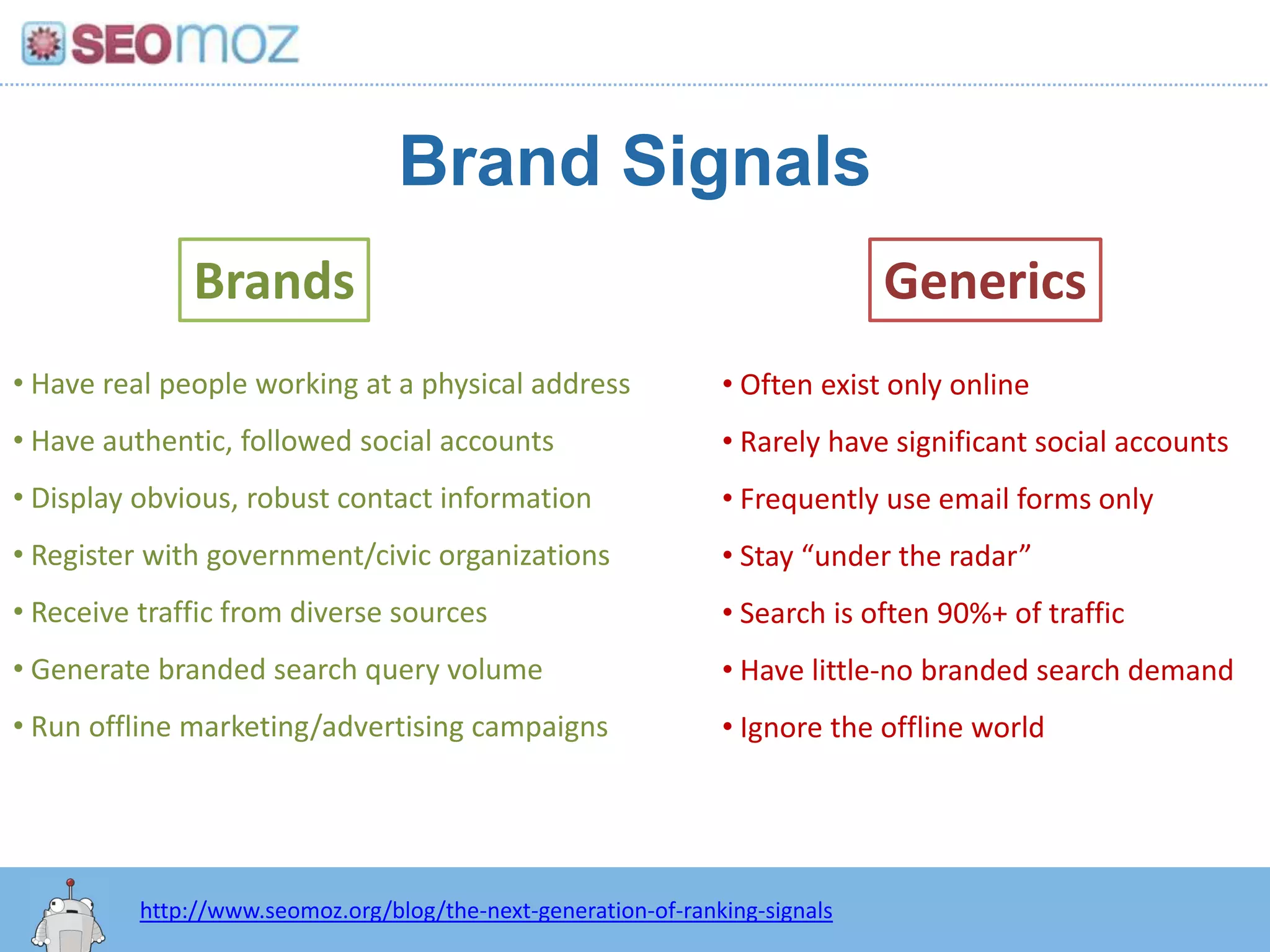
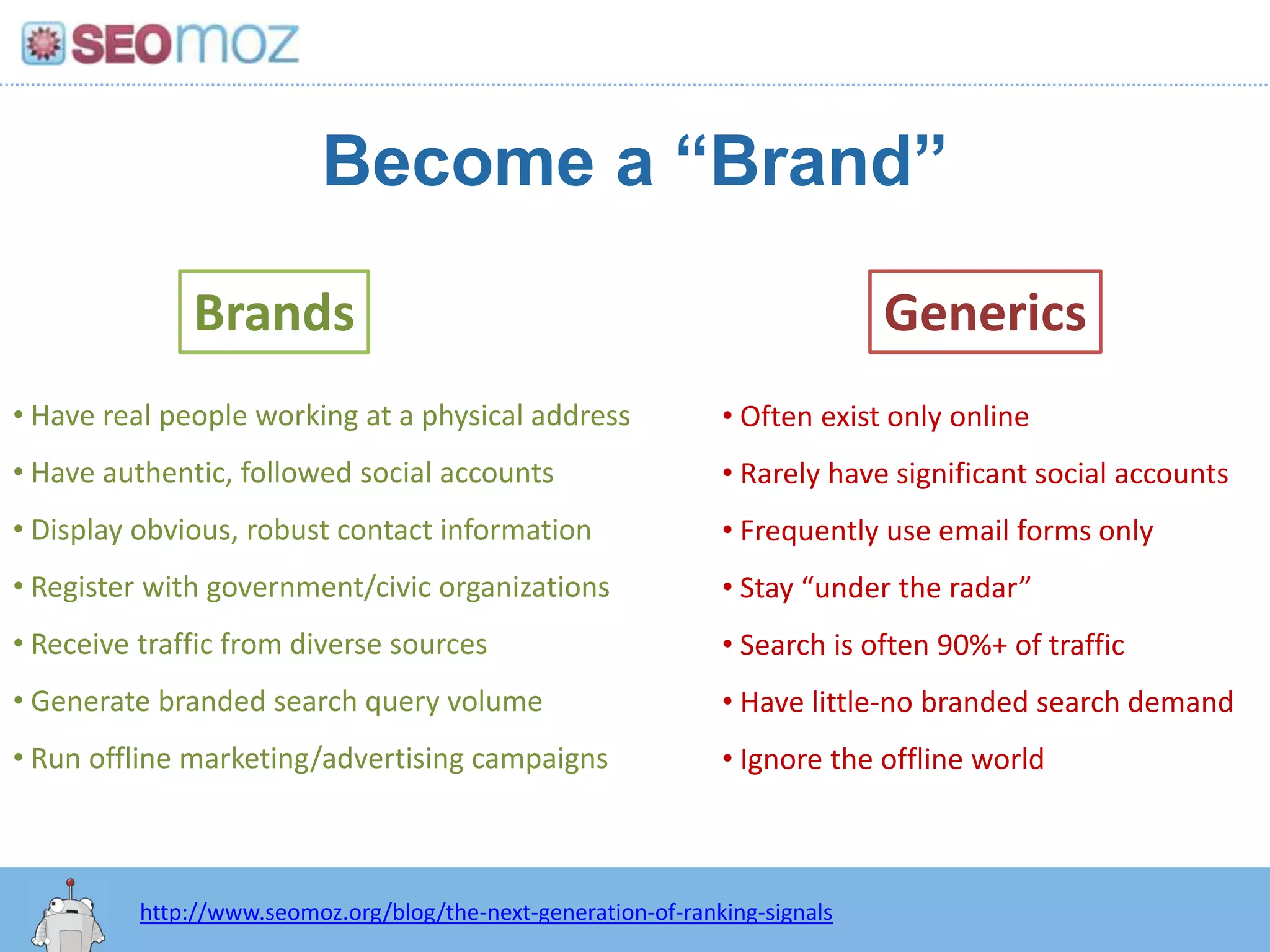
Brand SignalsBrandsGenerics Have real people working at a physical address
 Have authentic, followed social accounts
 Display obvious, robust contact information
 Register with government/civic organizations
 Receive traffic from diverse sources
 Generate branded search query volume
 Run offline marketing/advertising campaigns
 Often exist only online
 Rarely have significant social accounts
 Frequently use email forms only
 Stay “under the radar”
 Search is often 90%+ of traffic
 Have little-no branded search demand
 Ignore the offline worldhttp://www.seomoz.org/blog/the-next-generation-of-ranking-signals
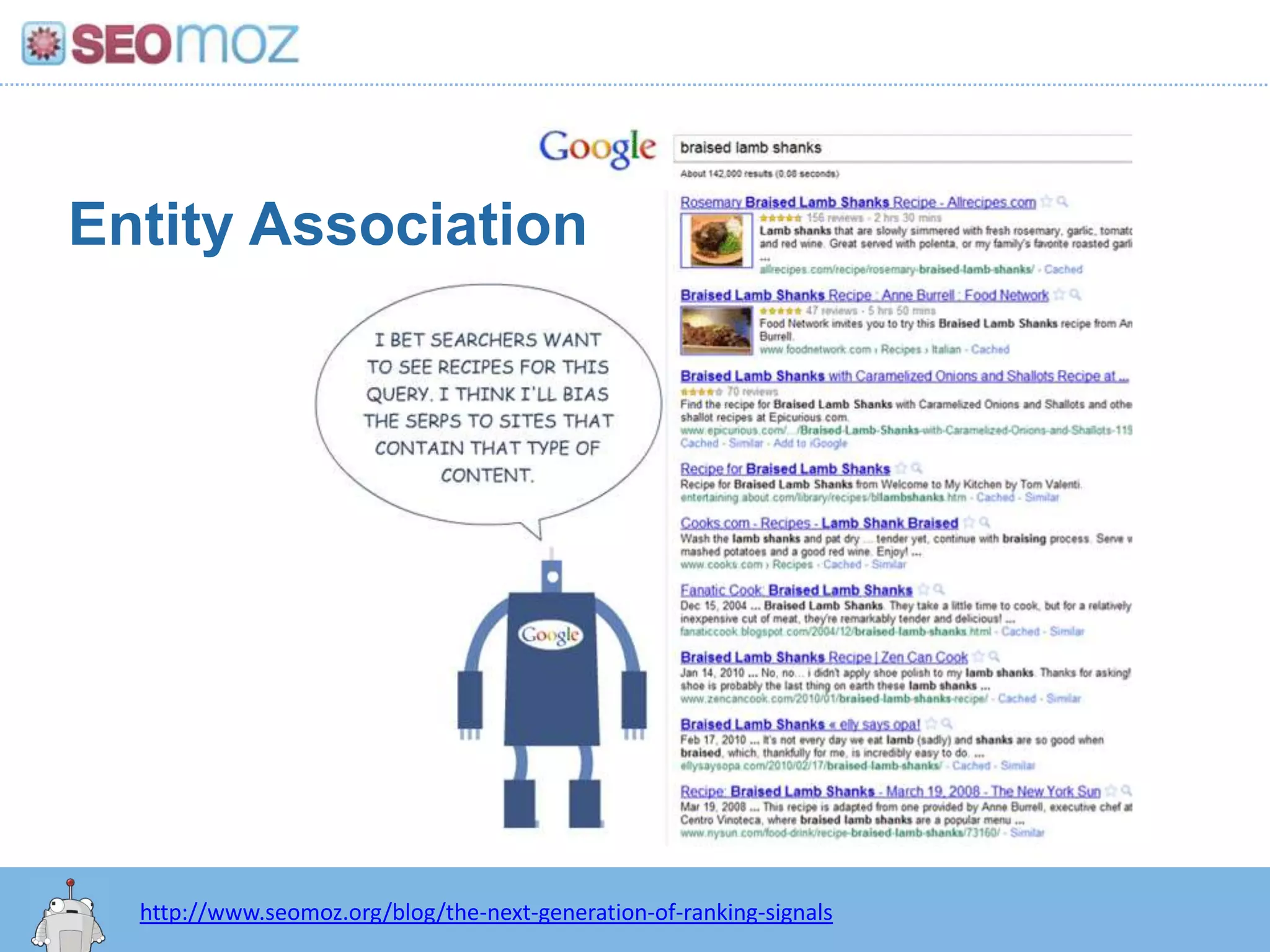
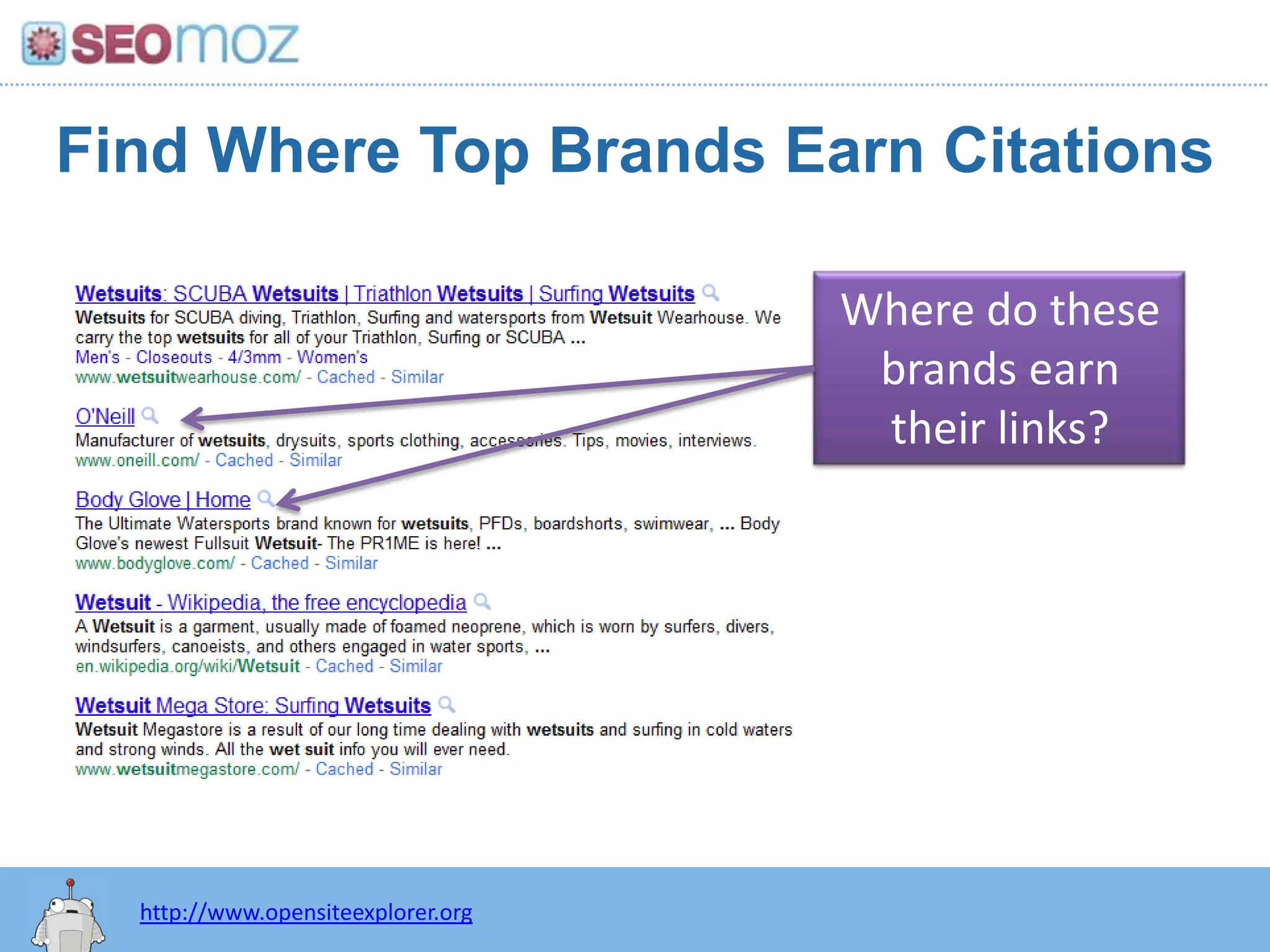
Entity Associationhttp://www.seomoz.org/blog/the-next-generation-of-ranking-signals
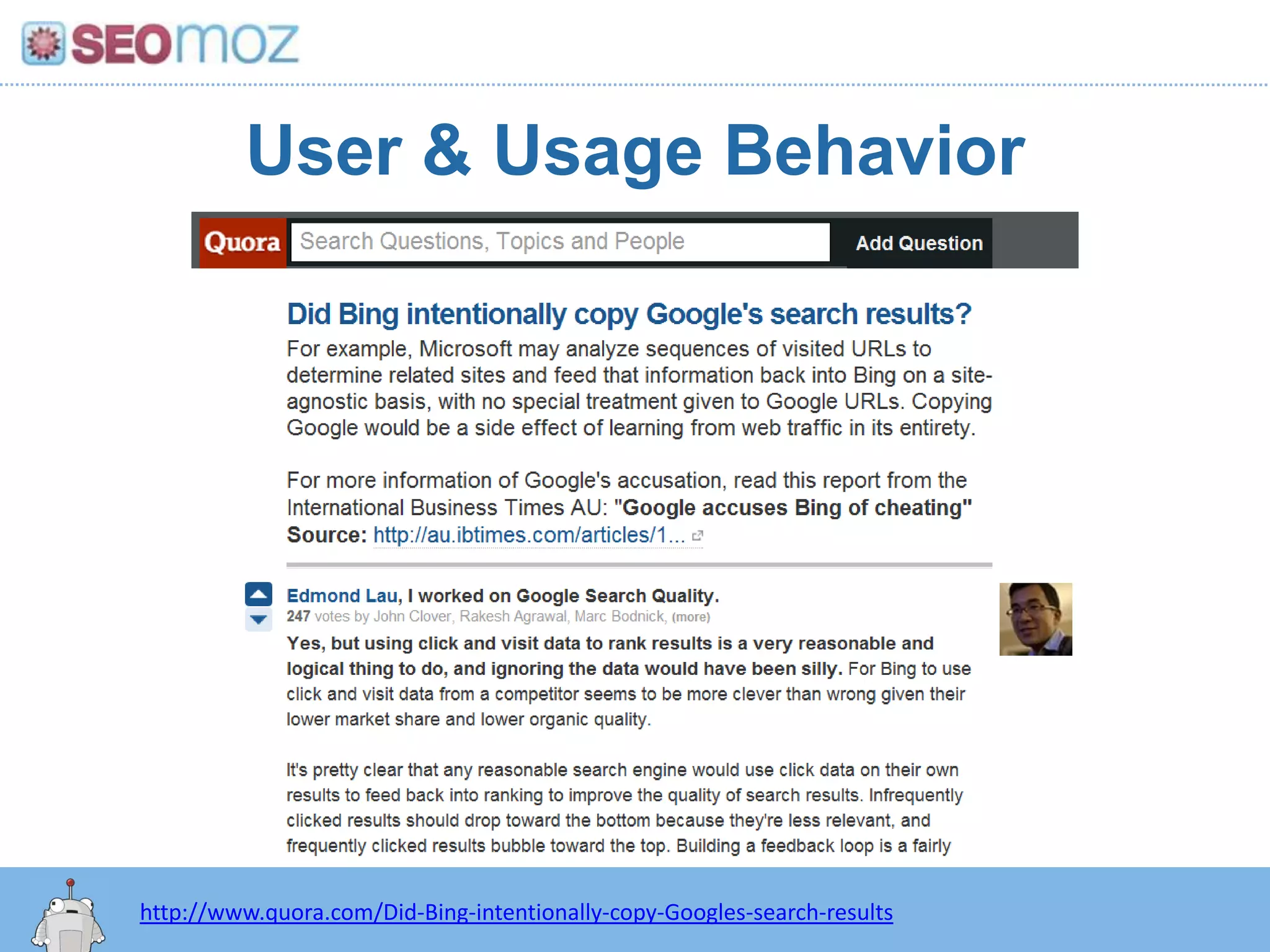
User & Usage Behaviorhttp://www.quora.com/Did-Bing-intentionally-copy-Googles-search-results
How the Search Ranking Factors Have Changed in the Eyes of Experts
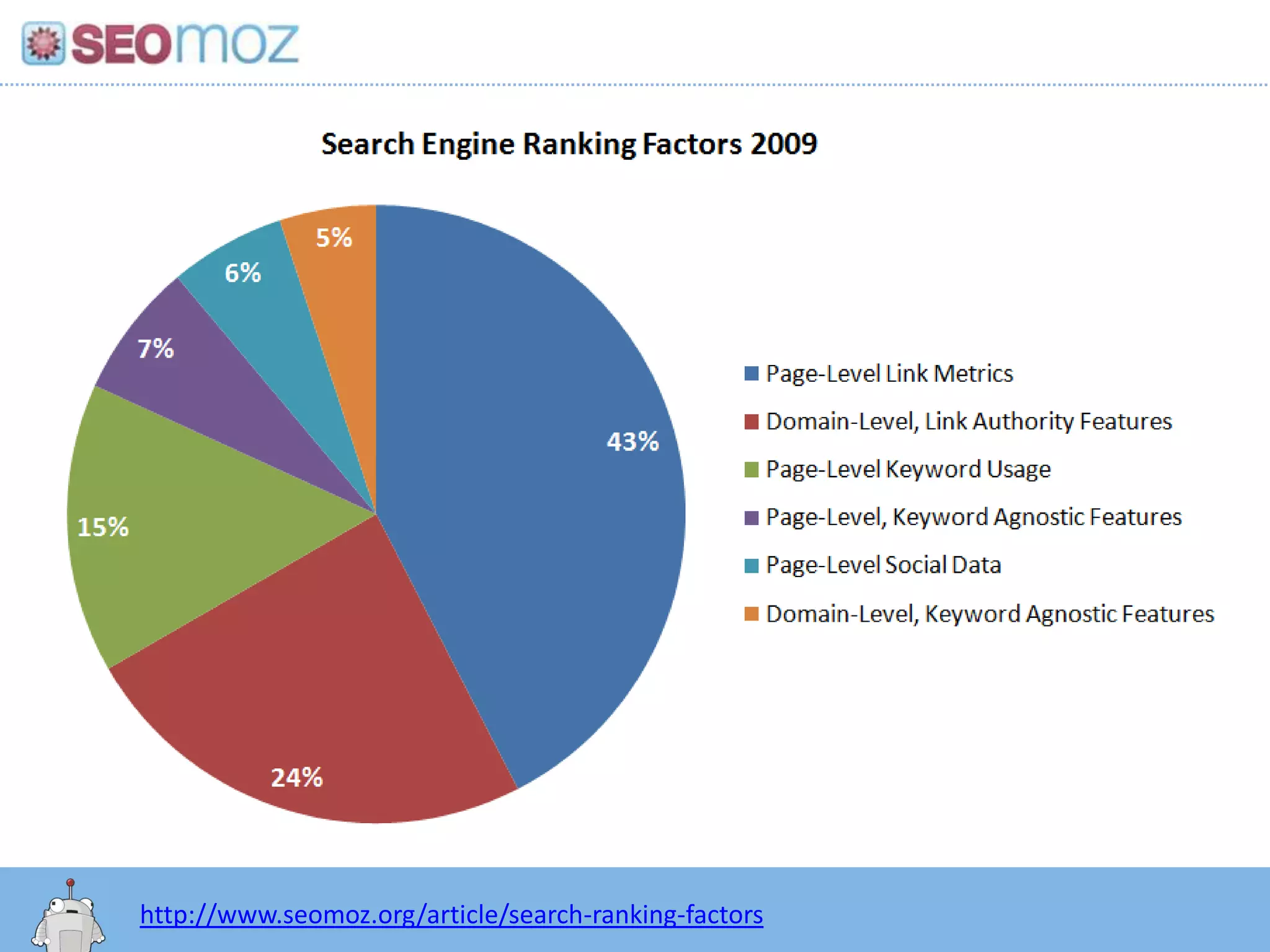
http://www.seomoz.org/article/search-ranking-factors
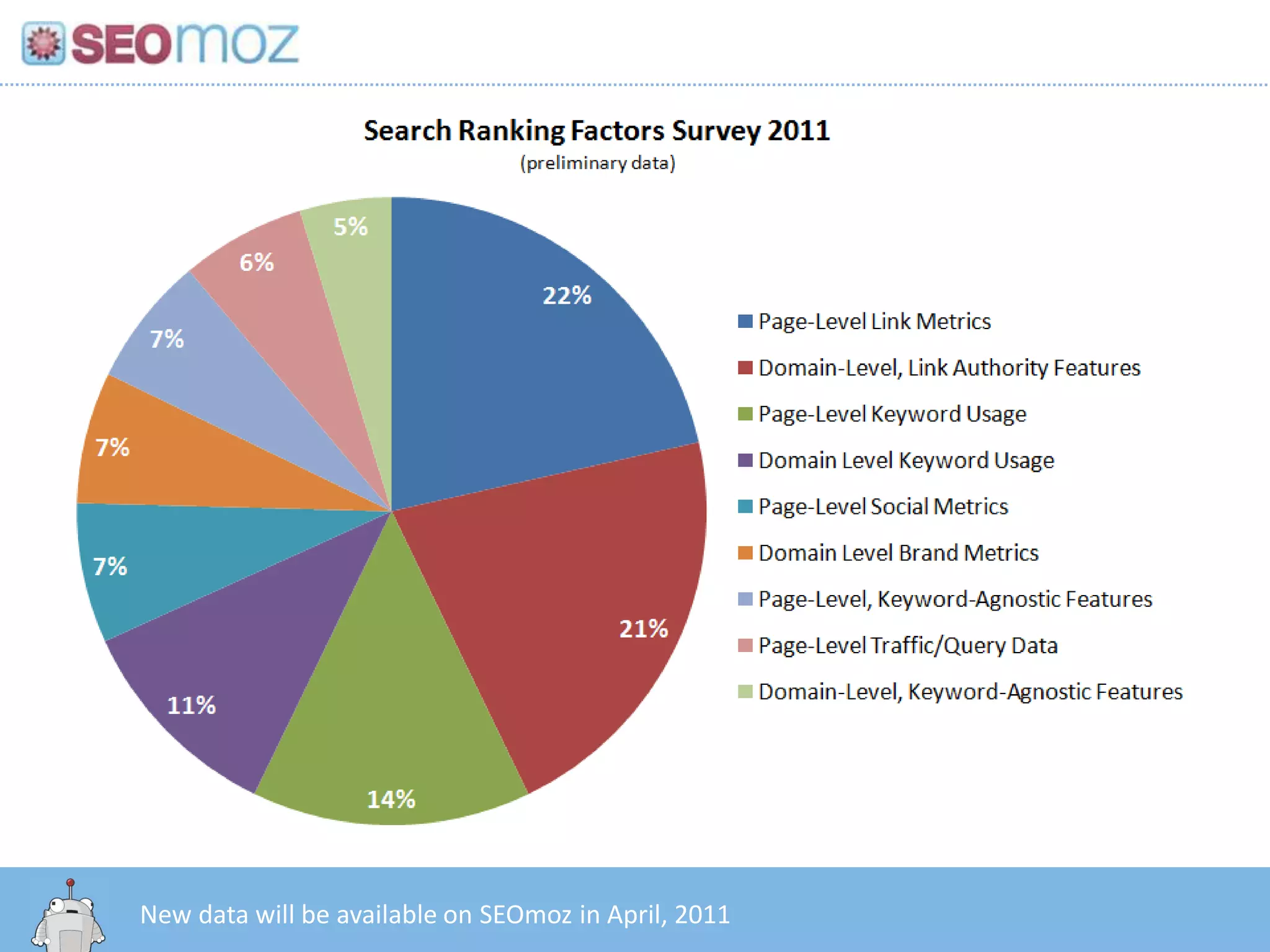
New data will be available on SEOmoz in April, 2011
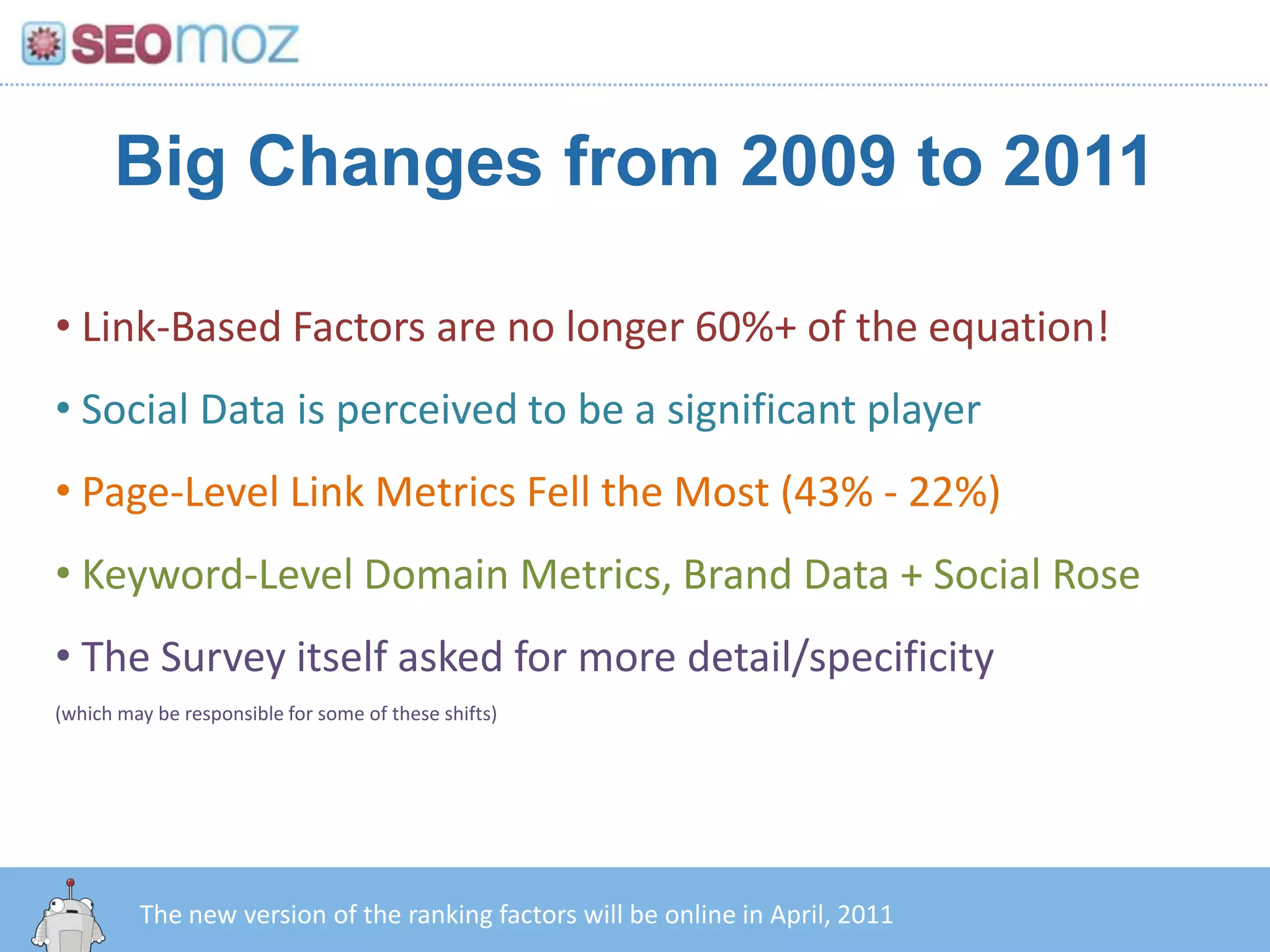
Big Changes from 2009 to 2011 Link-Based Factors are no longer 60%+ of the equation!
 Social Data is perceived to be a significant player
 Page-Level Link Metrics Fell the Most (43% - 22%)
 Keyword-Level Domain Metrics, Brand Data + Social Rose
 The Survey itself asked for more detail/specificity(which may be responsible for some of these shifts)The new version of the ranking factors will be online in April, 2011
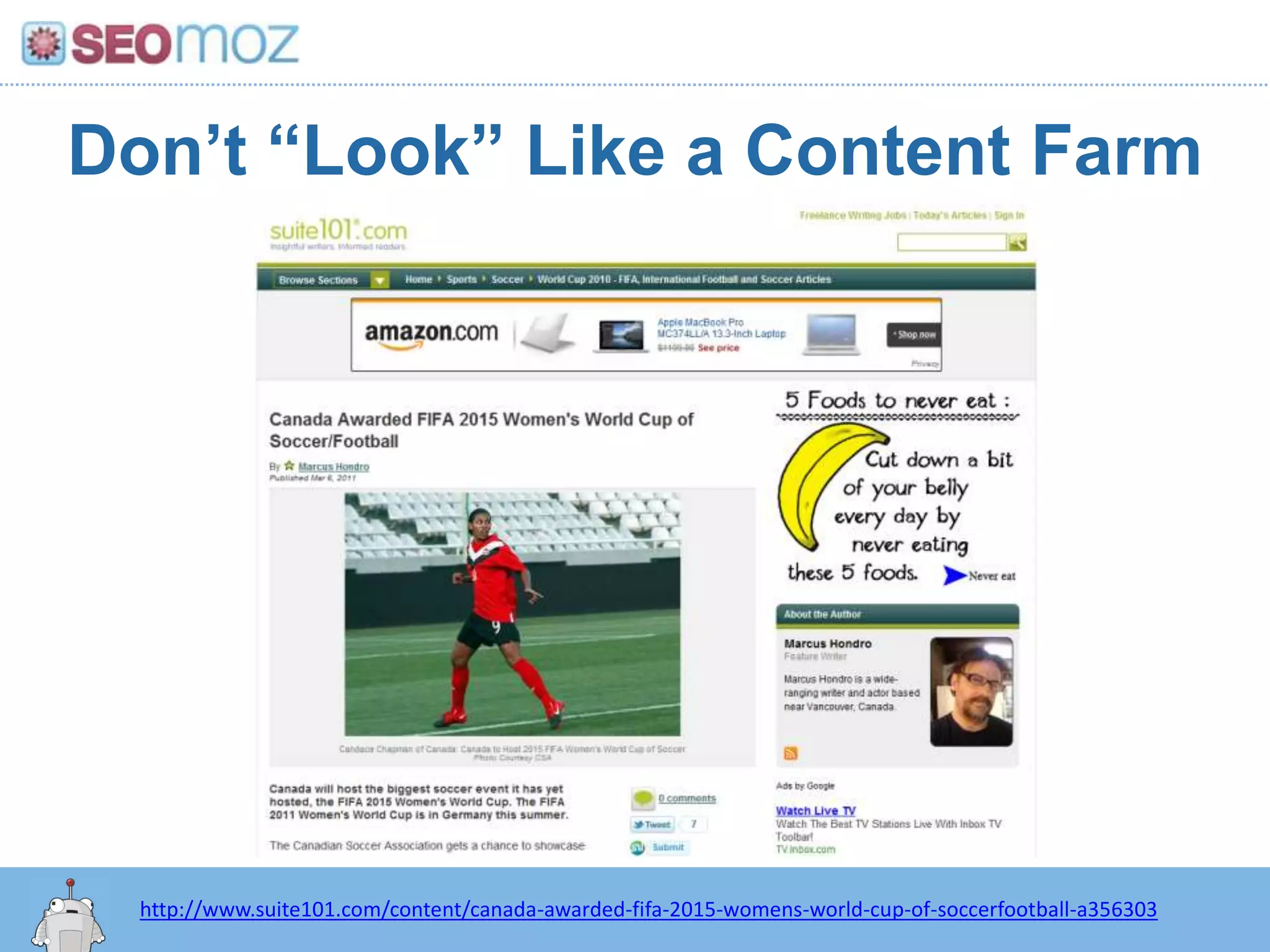
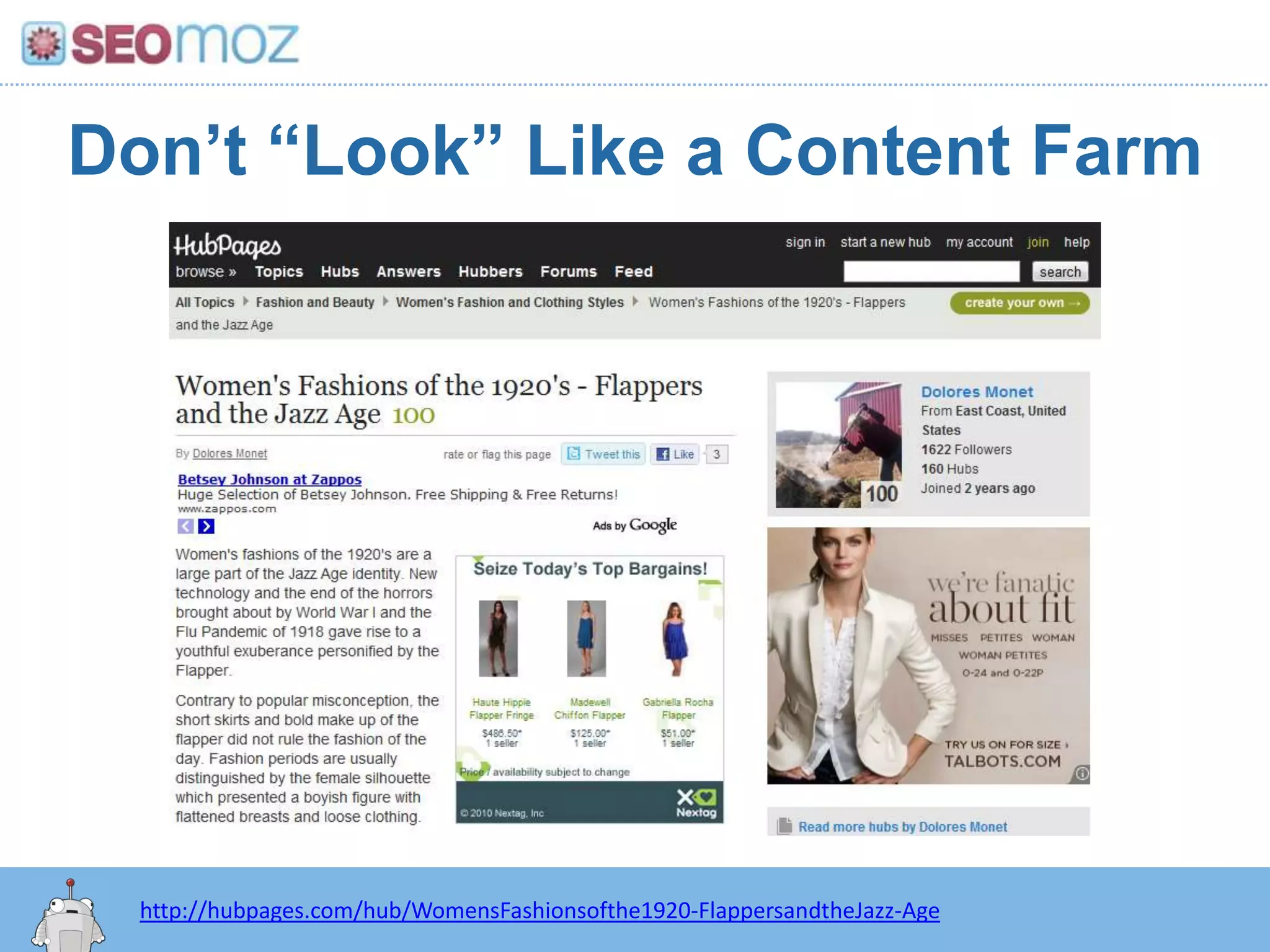
A Look at Google’s “Farmer”(aka “Panda”) Update
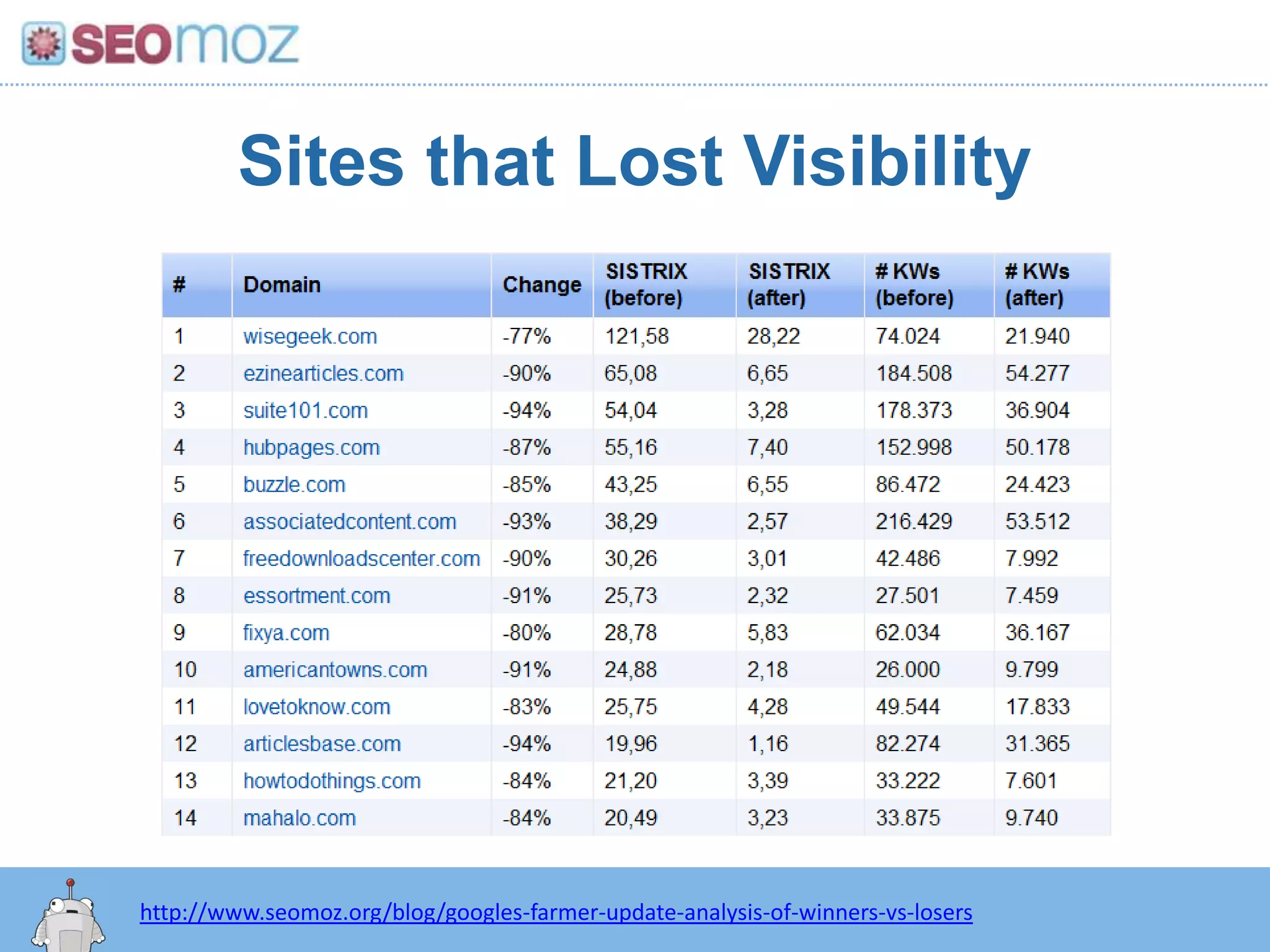
Sites that Lost Visibilityhttp://www.seomoz.org/blog/googles-farmer-update-analysis-of-winners-vs-losers
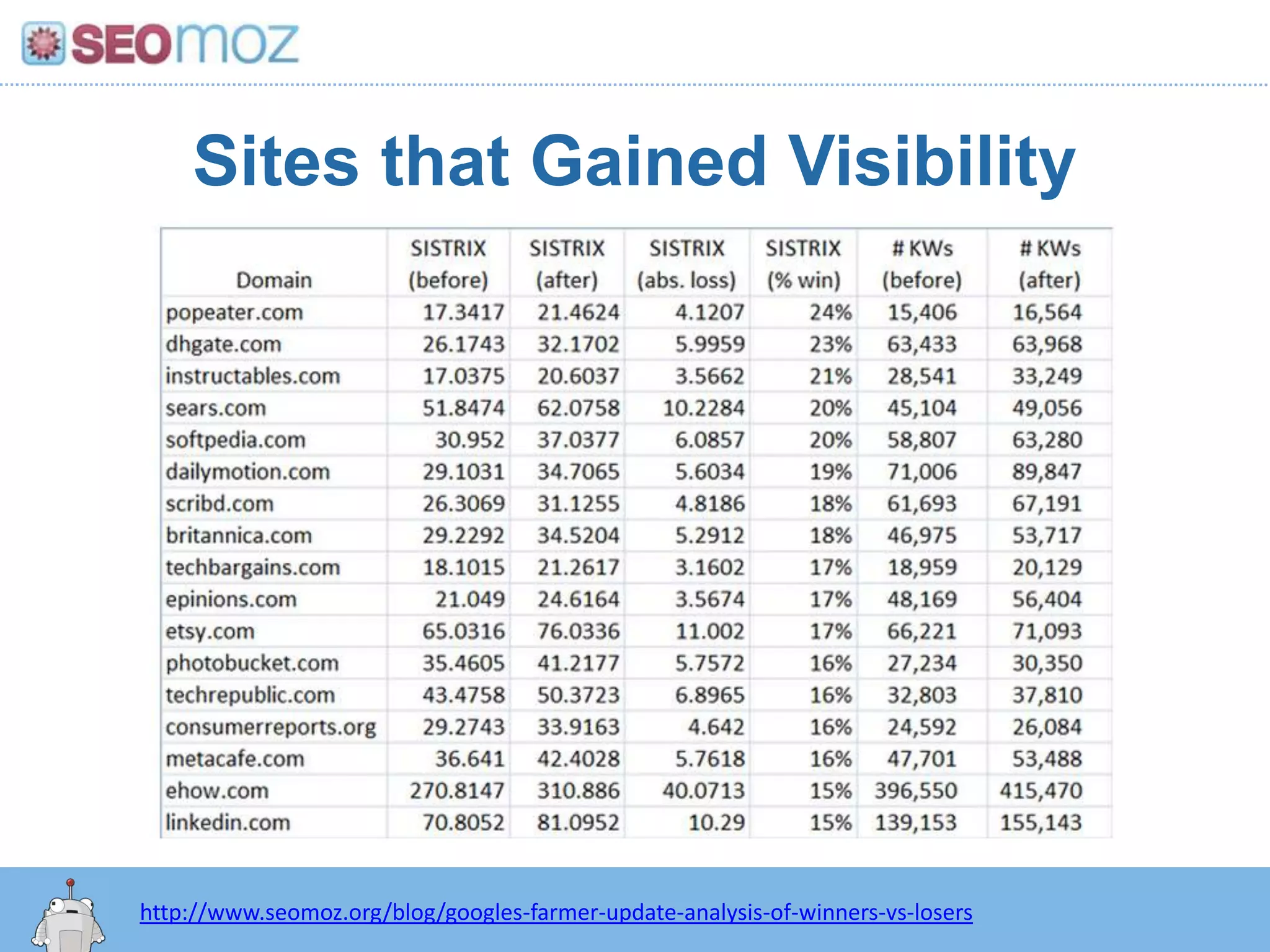
Sites that Gained Visibilityhttp://www.seomoz.org/blog/googles-farmer-update-analysis-of-winners-vs-losers
From the Mouths of GooglersWired.com: How do you recognize a shallow-content site? Singhal: (W)e asked the raters questions like: “Would you be comfortable giving this site your credit card? Would you be comfortable giving medicine prescribed by this site to your kids?”Cutts: (Using) a rigorous set of questions, everything from. “Do you consider this site to be authoritative? Would it be okay if this was in a magazine? Does this site have excessive ads?”Singhal: And based on that, we basically formed some definition of what could be considered low quality. http://www.wired.com/epicenter/2011/03/the-panda-that-hates-farms/all/1
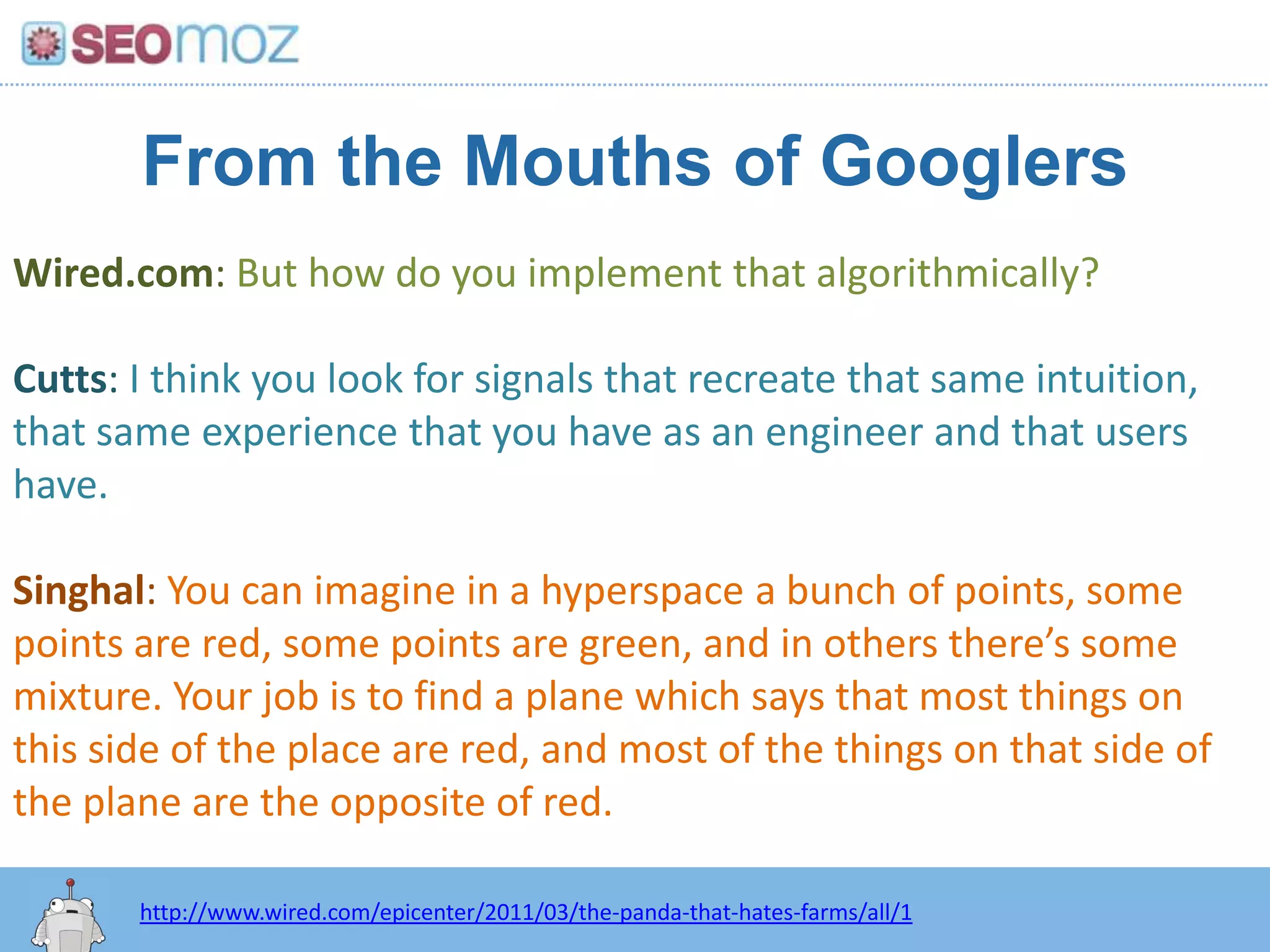
From the Mouths of GooglersWired.com: But how do you implement that algorithmically?Cutts: I think you look for signals that recreate that same intuition, that same experience that you have as an engineer and that users have. Singhal: You can imagine in a hyperspace a bunch of points, some points are red, some points are green, and in others there’s some mixture. Your job is to find a plane which says that most things on this side of the place are red, and most of the things on that side of the plane are the opposite of red.http://www.wired.com/epicenter/2011/03/the-panda-that-hates-farms/all/1
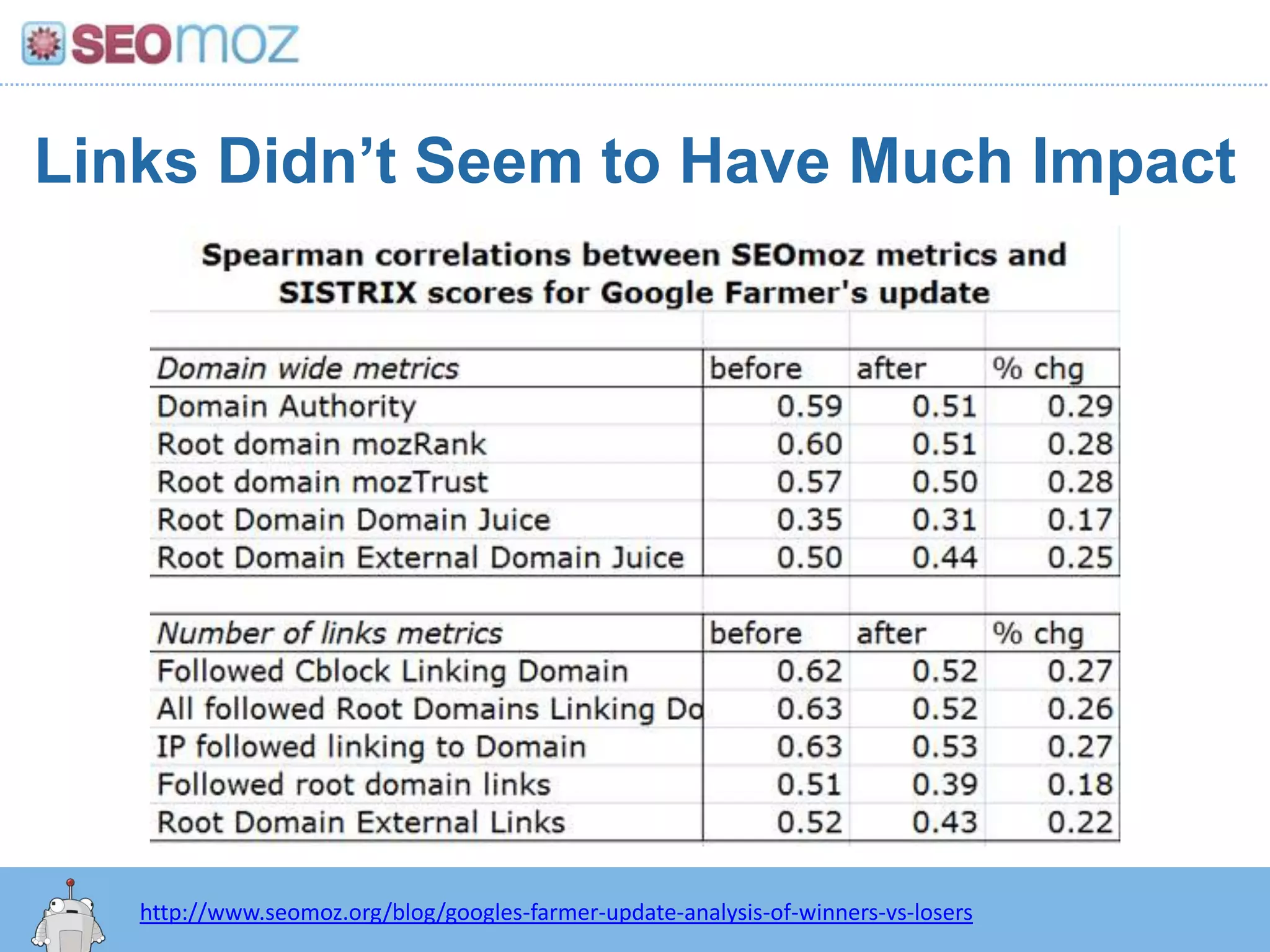
Links Didn’t Seem to Have Much Impacthttp://www.seomoz.org/blog/googles-farmer-update-analysis-of-winners-vs-losers
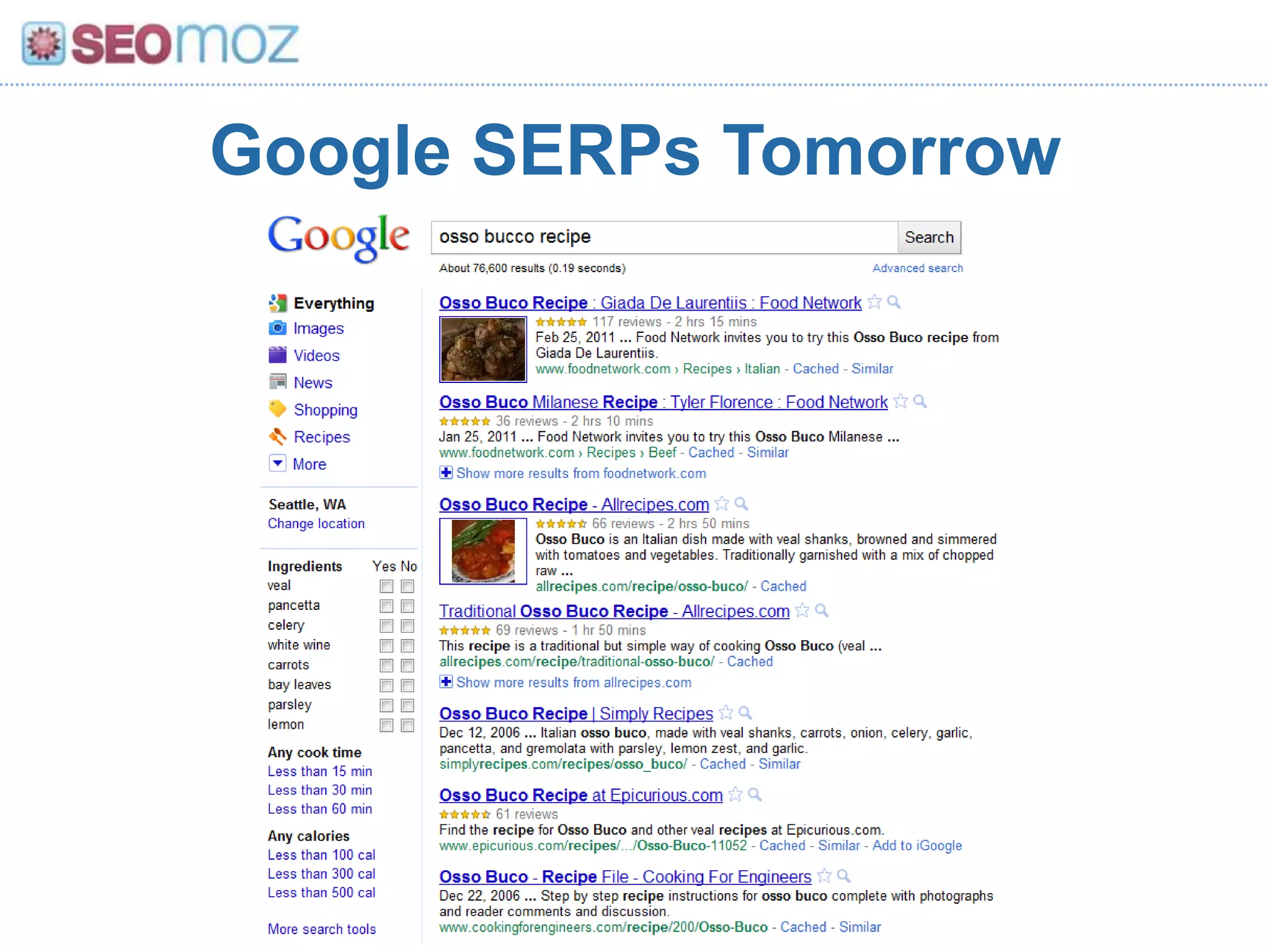
How Google’s Interface Has Evolved

The Evolution of Google's Rankings