Instructed on: 09-Dec-2011 | Session: #04


                                                                           Basics & Applications

                                                                                    By: Mohanad Yehia


                                                                                                                                                                     Topic Code: TCW-03-2012


        All Copy Rights Saved to the 7th Students’ Conference on Communication and Information Based in the Faculty of Computers and Information Cairo University – Egypt 2011/2012 www.scci-cu.com
 What’s a Sensor?!
 Sensors’ quality
 Measurement definitions
 Common errors
 Sensors types
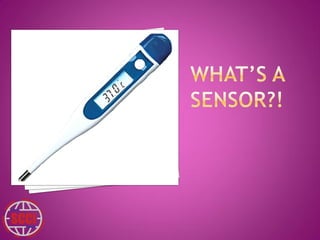
A   sensor is a device that measures a
 physical quantity and converts it into
 a signal which can be read by an
 observer or by an instrument.
A    good sensor should be:

•   Sensitive to the measured property.

•   Insensitive to any other property likely to be
    encountered while measurement.

•   Does not influence the measured property.
Sensitivity


Deviation


Resolution
A sensor's sensitivity indicates how much
the sensor's output changes when the
measured quantity changes.
It’s difference between the real value of
the property and the average value of the
measurements of that property.
The resolution of a sensor is the smallest
change it can detect in the quantity that it
is measuring.
   The output signal is NOT zero when the
    measured property is zero.

   The sensitivity is not constant over the
    range of the sensor.

   The output signal slowly changes
    independent of the measured property.
 Most
     sensors are affected by
 temperature.

 The   approximation of the output value.
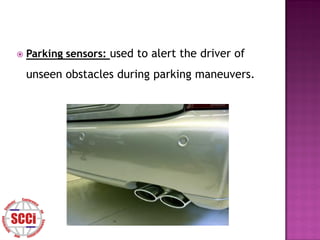
   Parking sensors: used to alert the driver of
    unseen obstacles during parking maneuvers.
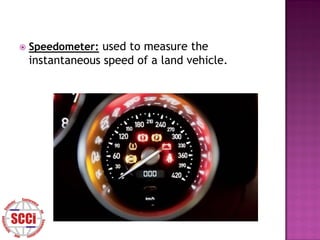
   Speedometer: used to measure the
    instantaneous speed of a land vehicle.
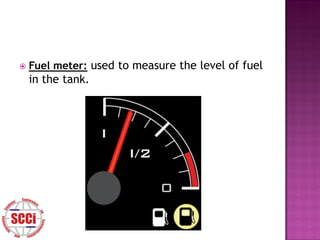
   Fuel meter: used to measure the level of fuel
    in the tank.
 Rain   Sensor.
   Breathalyzer.
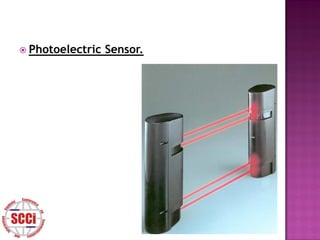
 Photoelectric   Sensor.
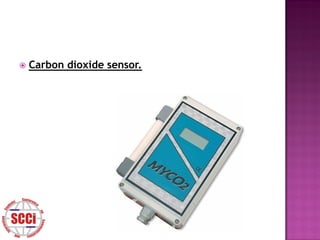
   Carbon dioxide sensor.
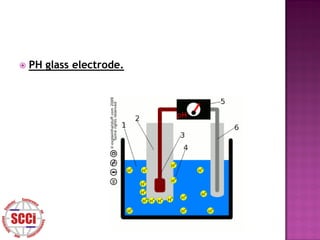
   PH glass electrode.
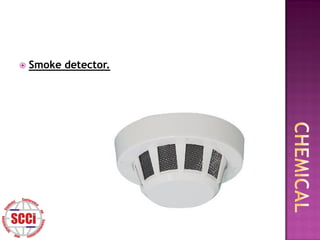
   Smoke detector.
More!!!

Check this link:
               http://en.wikipedia.org/wiki/List_of_sensors
Sensors
Sensors

Sensors

  • 1.
    Instructed on: 09-Dec-2011| Session: #04 Basics & Applications By: Mohanad Yehia Topic Code: TCW-03-2012 All Copy Rights Saved to the 7th Students’ Conference on Communication and Information Based in the Faculty of Computers and Information Cairo University – Egypt 2011/2012 www.scci-cu.com
  • 2.
     What’s aSensor?!  Sensors’ quality  Measurement definitions  Common errors  Sensors types
  • 4.
    A sensor is a device that measures a physical quantity and converts it into a signal which can be read by an observer or by an instrument.
  • 6.
    A good sensor should be: • Sensitive to the measured property. • Insensitive to any other property likely to be encountered while measurement. • Does not influence the measured property.
  • 8.
  • 10.
    A sensor's sensitivityindicates how much the sensor's output changes when the measured quantity changes.
  • 12.
    It’s difference betweenthe real value of the property and the average value of the measurements of that property.
  • 14.
    The resolution ofa sensor is the smallest change it can detect in the quantity that it is measuring.
  • 16.
    The output signal is NOT zero when the measured property is zero.  The sensitivity is not constant over the range of the sensor.  The output signal slowly changes independent of the measured property.
  • 17.
     Most sensors are affected by temperature.  The approximation of the output value.
  • 19.
    Parking sensors: used to alert the driver of unseen obstacles during parking maneuvers.
  • 20.
    Speedometer: used to measure the instantaneous speed of a land vehicle.
  • 21.
    Fuel meter: used to measure the level of fuel in the tank.
  • 22.
     Rain Sensor.
  • 23.
    Breathalyzer.
  • 24.
  • 25.
    Carbon dioxide sensor.
  • 26.
    PH glass electrode.
  • 27.
    Smoke detector.
  • 28.
    More!!! Check this link: http://en.wikipedia.org/wiki/List_of_sensors