SMD
SEMINAR
-Mansi More
Sensors
Technology
Contents
●
A Short Introduction → 4
●
What is sensor → 5
●
Some examples → 6
●
Its uses → 7
●
Infrared Sensors → 8
●
photoelectric sensors → 11
●
Rules for Good sensors → 16
●
Conclusion of sensors → 17
Introduction
➢ A sensor is a device that measures a physical quantity
and converts it into a signal which can be read by an
observer or by an instrument
➢ Example: You can say that our skin, ears, eyes and
nose are also a sensor because the can sense touch,
heat,cold, light, noise and smell.
➢ For accuracy, most of the sensors are calibrated
against some known standards..
What is Sensor ?
➢
A sensor is a device that receives and responds to a signal. A
sensors sensitivity indicates how much the sensors output
changes when the measured quantity changes.
➢
Sensors are a new solution for measuring currents and
voltages in medium voltage power systems.
➢ A Typical example is a mercury used in a glass thermometer
that measures the temperature and converts it into the
expansion of a liquid.
Uses :
➢ Sensors are used in every day objects such as
touch-sensitive elevator buttons and lamps which
dim or brighten by touching the base.
➢ There are innumerable applications of this
technology of which most of people are not aware .
➢ Its applications include Cars, Machines, Aerospace,
Medicines, Manufacturing and Robotics... And many
more.
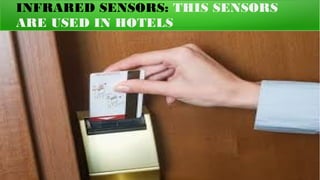
INFRARED SENSORS: THIS SENSORS
ARE USED IN HOTELS
.
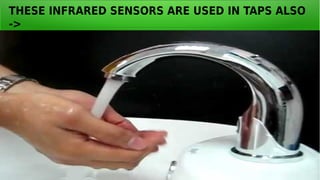
THESE INFRARED SENSORS ARE USED IN TAPS ALSO
->
● .
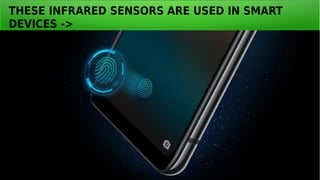
THESE INFRARED SENSORS ARE USED IN SMART
DEVICES ->
● .
Photoelectric Sensor
➢ These are used in Street lights and
Automatic stairs
Street lights
➢
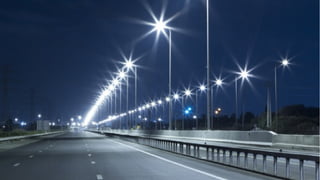
The street lights automatically turns on and off as the
sun rises and sun sets.
➢
This is implemented by using photo electric effect.
➢
The street lights automatically turns on and off on the
basis of darkness measured by a sensor.
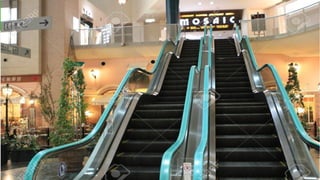
Automatic stairs
➢ It starts running and stops automatically
as it senses the presence or absence of a
person.
Rules for Good Sensors
➢ It is sensitive to the measured property only.
➢ It is insensitive to any other property likely to be
encountered in its applications..
➢ It does not influence the measured property
➢ Ideal sensors are designed to be linear .
Conclusion
➢ The conclusion of a sensor is the smallest change that it
can detect in the quantity that it is measuring..
➢ In a digital display, the least significant digit will fluctuate,
indicating the changes of its magnitude. And Resolution is
related to precision.
➢ Ex: A scanning tunnelling probe resolves into atoms and
molecules.
Sensor Technology ppt

Sensor Technology ppt

  • 1.
  • 2.
  • 3.
    Contents ● A Short Introduction→ 4 ● What is sensor → 5 ● Some examples → 6 ● Its uses → 7 ● Infrared Sensors → 8 ● photoelectric sensors → 11 ● Rules for Good sensors → 16 ● Conclusion of sensors → 17
  • 4.
    Introduction ➢ A sensoris a device that measures a physical quantity and converts it into a signal which can be read by an observer or by an instrument ➢ Example: You can say that our skin, ears, eyes and nose are also a sensor because the can sense touch, heat,cold, light, noise and smell. ➢ For accuracy, most of the sensors are calibrated against some known standards..
  • 5.
    What is Sensor? ➢ A sensor is a device that receives and responds to a signal. A sensors sensitivity indicates how much the sensors output changes when the measured quantity changes. ➢ Sensors are a new solution for measuring currents and voltages in medium voltage power systems. ➢ A Typical example is a mercury used in a glass thermometer that measures the temperature and converts it into the expansion of a liquid.
  • 7.
    Uses : ➢ Sensorsare used in every day objects such as touch-sensitive elevator buttons and lamps which dim or brighten by touching the base. ➢ There are innumerable applications of this technology of which most of people are not aware . ➢ Its applications include Cars, Machines, Aerospace, Medicines, Manufacturing and Robotics... And many more.
  • 8.
    INFRARED SENSORS: THISSENSORS ARE USED IN HOTELS .
  • 9.
    THESE INFRARED SENSORSARE USED IN TAPS ALSO -> ● .
  • 10.
    THESE INFRARED SENSORSARE USED IN SMART DEVICES -> ● .
  • 11.
    Photoelectric Sensor ➢ Theseare used in Street lights and Automatic stairs
  • 12.
    Street lights ➢ The streetlights automatically turns on and off as the sun rises and sun sets. ➢ This is implemented by using photo electric effect. ➢ The street lights automatically turns on and off on the basis of darkness measured by a sensor.
  • 14.
    Automatic stairs ➢ Itstarts running and stops automatically as it senses the presence or absence of a person.
  • 16.
    Rules for GoodSensors ➢ It is sensitive to the measured property only. ➢ It is insensitive to any other property likely to be encountered in its applications.. ➢ It does not influence the measured property ➢ Ideal sensors are designed to be linear .
  • 17.
    Conclusion ➢ The conclusionof a sensor is the smallest change that it can detect in the quantity that it is measuring.. ➢ In a digital display, the least significant digit will fluctuate, indicating the changes of its magnitude. And Resolution is related to precision. ➢ Ex: A scanning tunnelling probe resolves into atoms and molecules.