Stephen Cobb, CISSP
Sr. Security Researcher
What’s the biggest threat to the
success of your wearable project?
A. Lack of funding
B. Competition
C. Skills shortage
D. Technical challenges
E. Bad press and brand damage due to a
data breach that could have been
prevented with better security and
stricter adherence to privacy policies
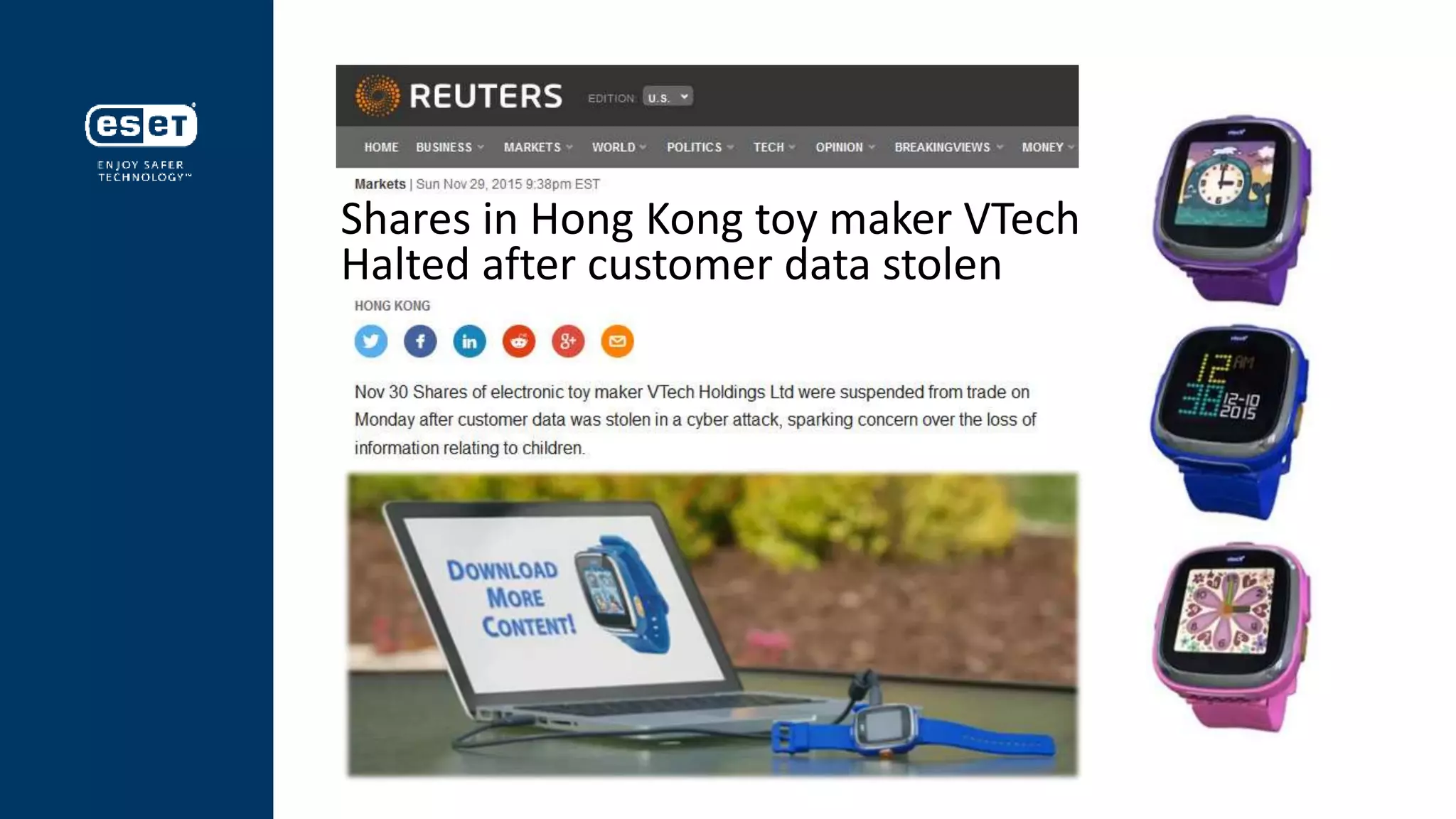
This is not success
Shares in Hong Kong toy maker VTech
Halted after customer data stolen
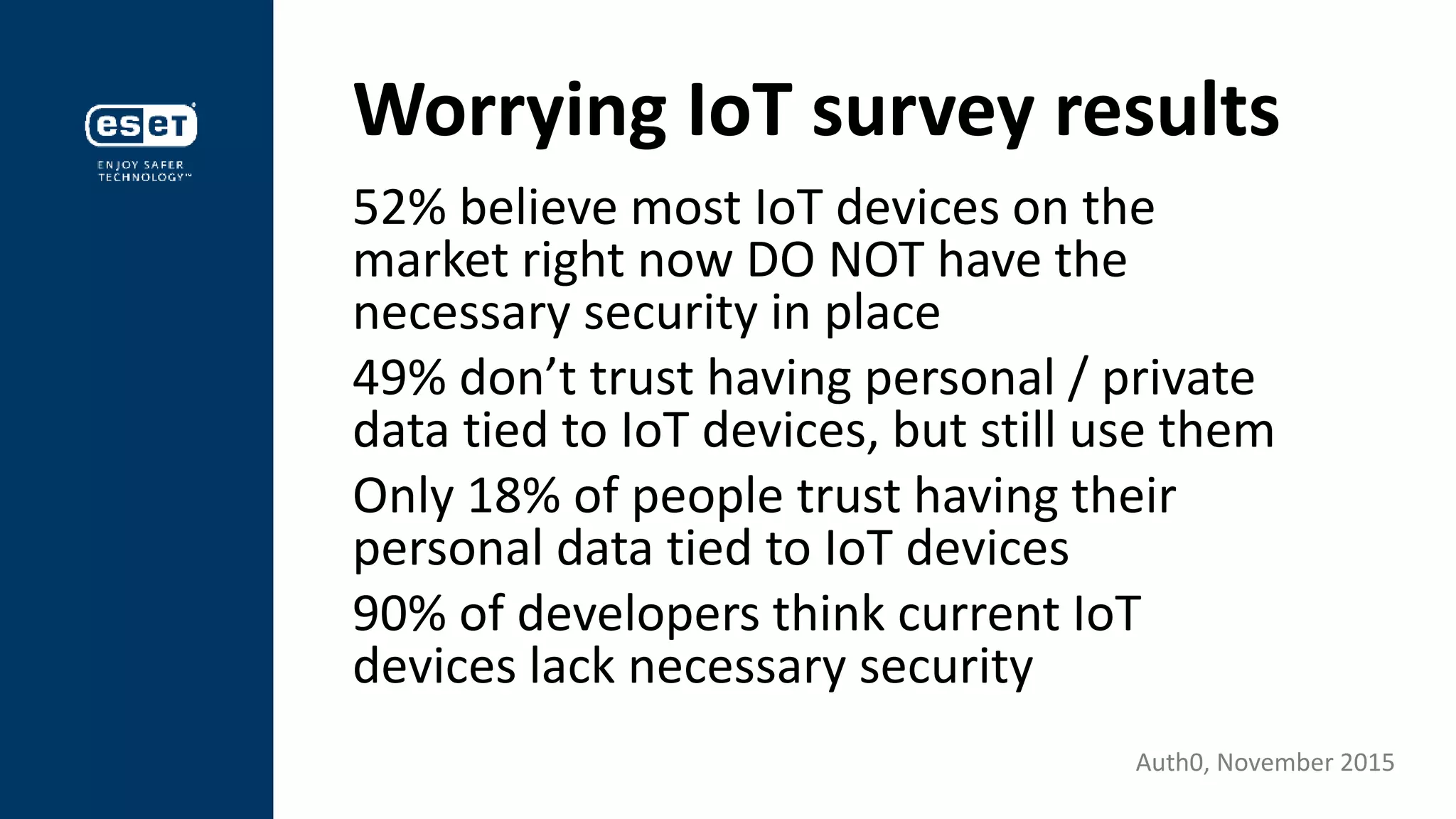
Worrying IoT survey results
52% believe most IoT devices on the
market right now DO NOT have the
necessary security in place
49% don’t trust having personal / private
data tied to IoT devices, but still use them
Only 18% of people trust having their
personal data tied to IoT devices
90% of developers think current IoT
devices lack necessary security
Auth0, November 2015
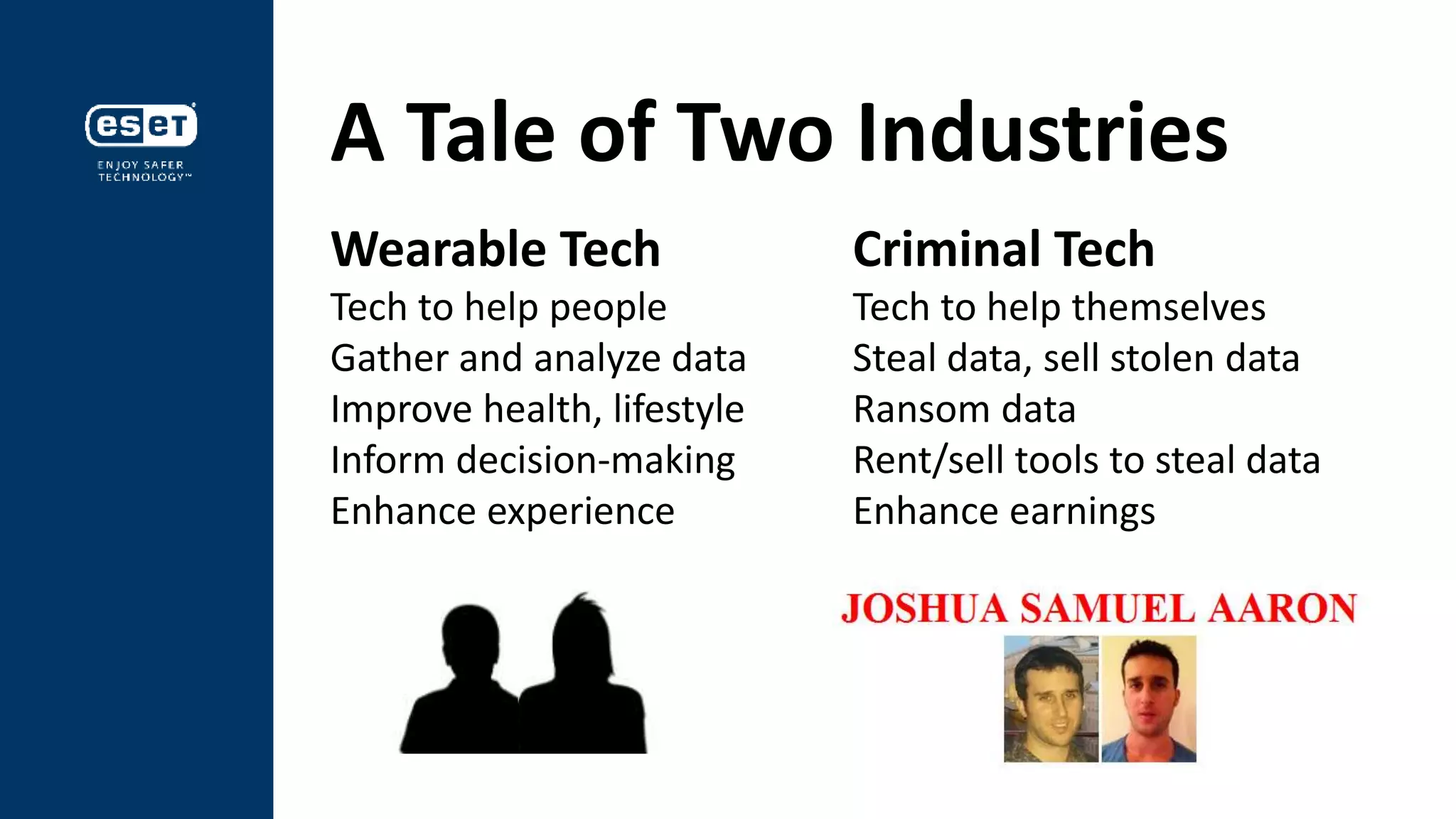
A Tale of Two Industries
Wearable Tech
Tech to help people
Gather and analyze data
Improve health, lifestyle
Inform decision-making
Enhance experience
Criminal Tech
Tech to help themselves
Steal data, sell stolen data
Ransom data
Rent/sell tools to steal data
Enhance earnings
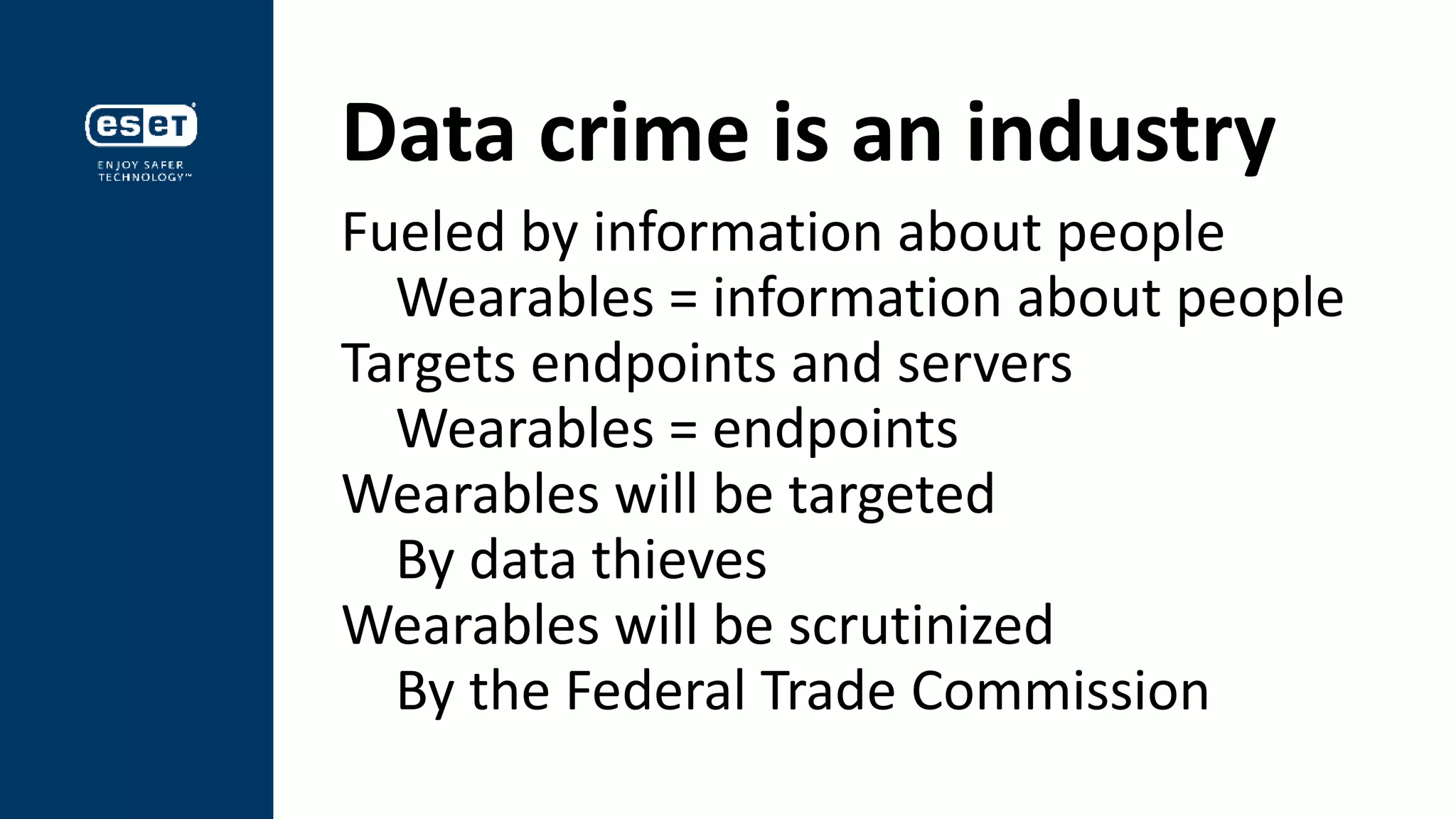
Data crime is an industry
Fueled by information about people
Wearables = information about people
Targets endpoints and servers
Wearables = endpoints
Wearables will be targeted
By data thieves
Wearables will be scrutinized
By the Federal Trade Commission
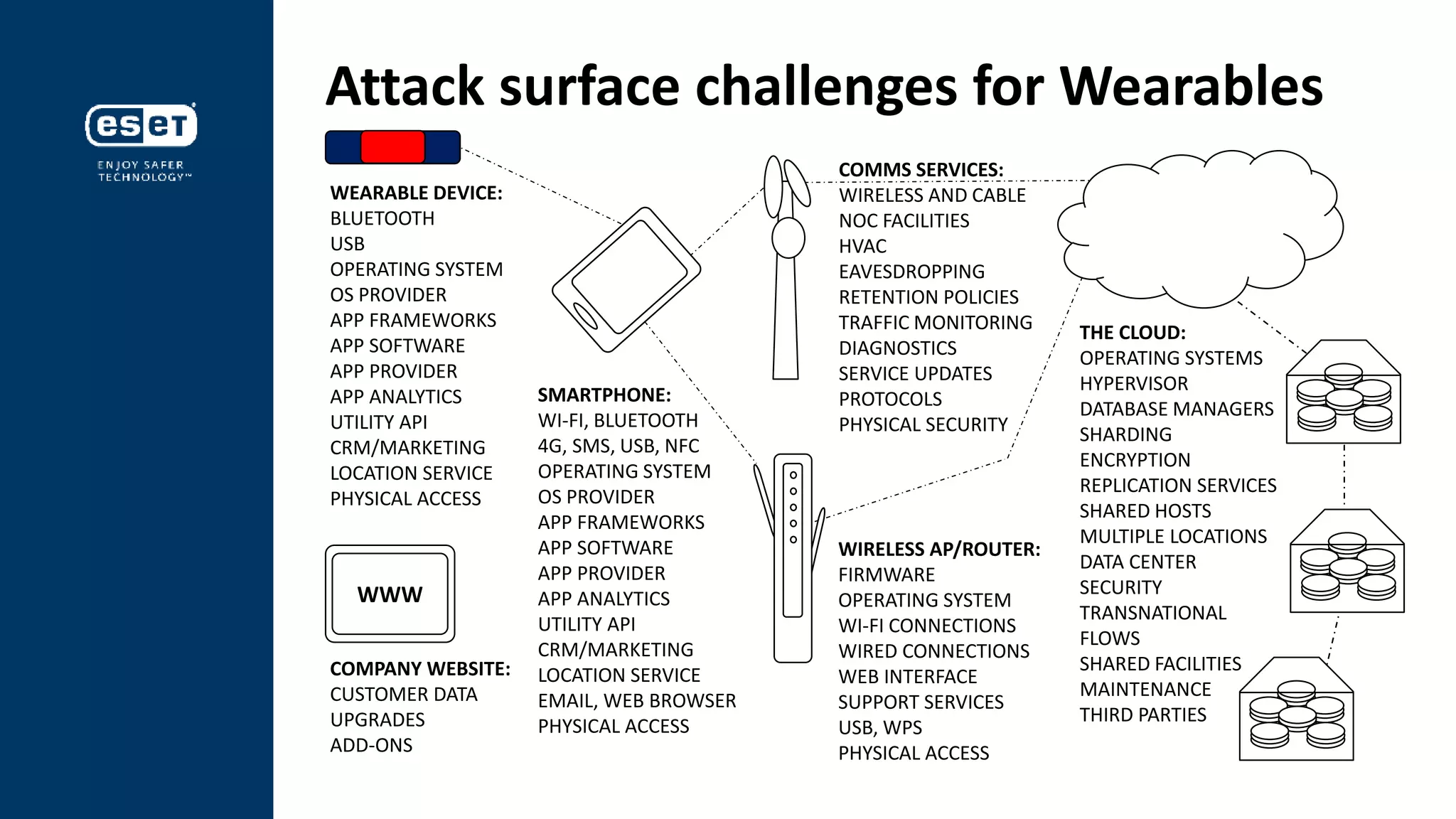
Attack surface challenges for Wearables
SMARTPHONE:
WI-FI, BLUETOOTH
4G, SMS, USB, NFC
OPERATING SYSTEM
OS PROVIDER
APP FRAMEWORKS
APP SOFTWARE
APP PROVIDER
APP ANALYTICS
UTILITY API
CRM/MARKETING
LOCATION SERVICE
EMAIL, WEB BROWSER
PHYSICAL ACCESS
COMMS SERVICES:
WIRELESS AND CABLE
NOC FACILITIES
HVAC
EAVESDROPPING
RETENTION POLICIES
TRAFFIC MONITORING
DIAGNOSTICS
SERVICE UPDATES
PROTOCOLS
PHYSICAL SECURITY
WEARABLE DEVICE:
BLUETOOTH
USB
OPERATING SYSTEM
OS PROVIDER
APP FRAMEWORKS
APP SOFTWARE
APP PROVIDER
APP ANALYTICS
UTILITY API
CRM/MARKETING
LOCATION SERVICE
PHYSICAL ACCESS
WIRELESS AP/ROUTER:
FIRMWARE
OPERATING SYSTEM
WI-FI CONNECTIONS
WIRED CONNECTIONS
WEB INTERFACE
SUPPORT SERVICES
USB, WPS
PHYSICAL ACCESS
THE CLOUD:
OPERATING SYSTEMS
HYPERVISOR
DATABASE MANAGERS
SHARDING
ENCRYPTION
REPLICATION SERVICES
SHARED HOSTS
MULTIPLE LOCATIONS
DATA CENTER
SECURITY
TRANSNATIONAL
FLOWS
SHARED FACILITIES
MAINTENANCE
THIRD PARTIES
WWW
COMPANY WEBSITE:
CUSTOMER DATA
UPGRADES
ADD-ONS
What’s the FTC got to do with it?
Consumer protection agency
Polices data privacy and security in the U.S.
50 law enforcement actions and counting
Monitors emerging technology
Suggests appropriate behavior
Looks for inappropriate outcomes
Takes cases to set precedents
Imposes onerous settlements
FTC model for success
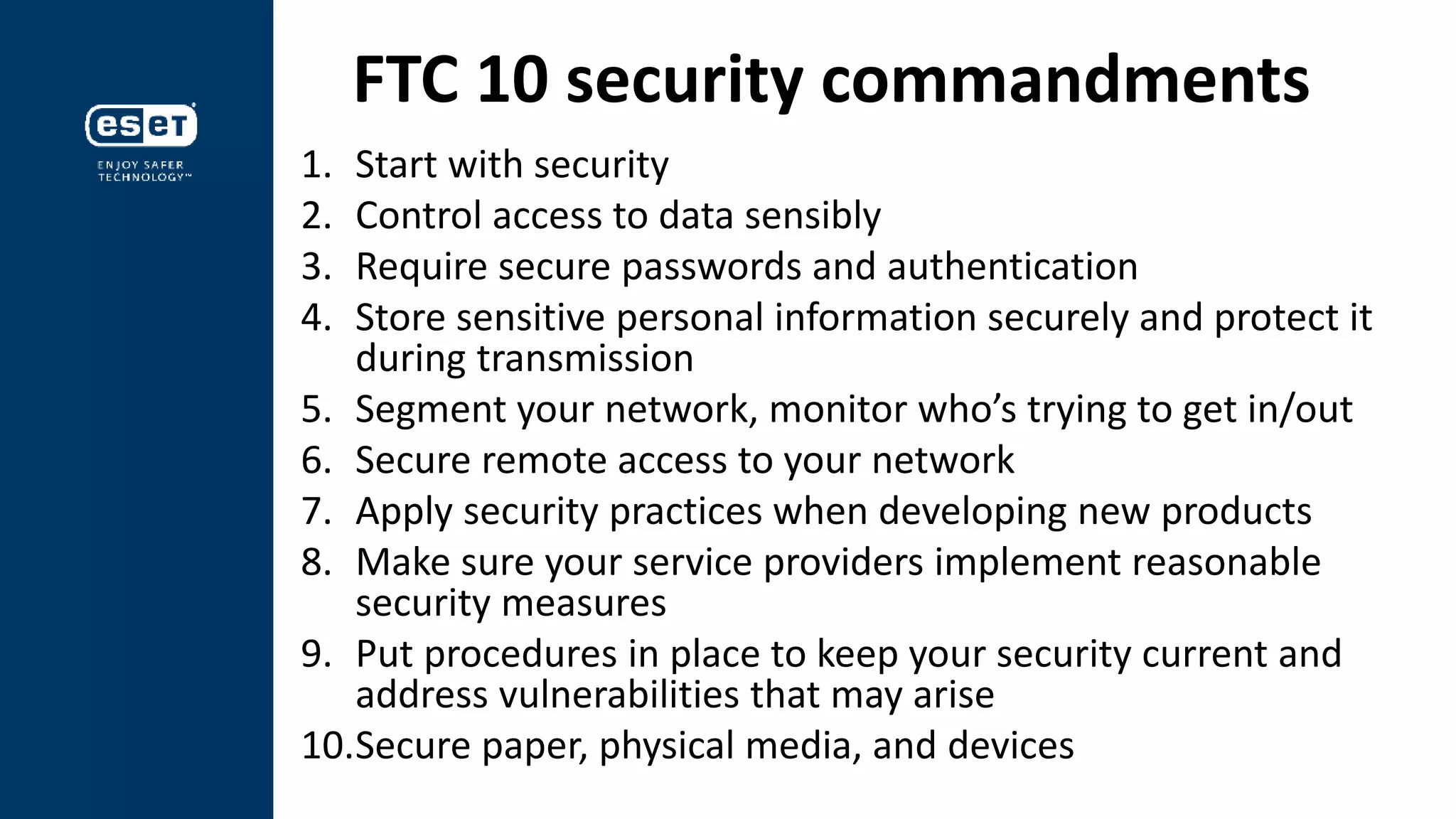
FTC 10 security commandments
1. Start with security
2. Control access to data sensibly
3. Require secure passwords and authentication
4. Store sensitive personal information securely and protect it
during transmission
5. Segment your network, monitor who’s trying to get in/out
6. Secure remote access to your network
7. Apply security practices when developing new products
8. Make sure your service providers implement reasonable
security measures
9. Put procedures in place to keep your security current and
address vulnerabilities that may arise
10.Secure paper, physical media, and devices
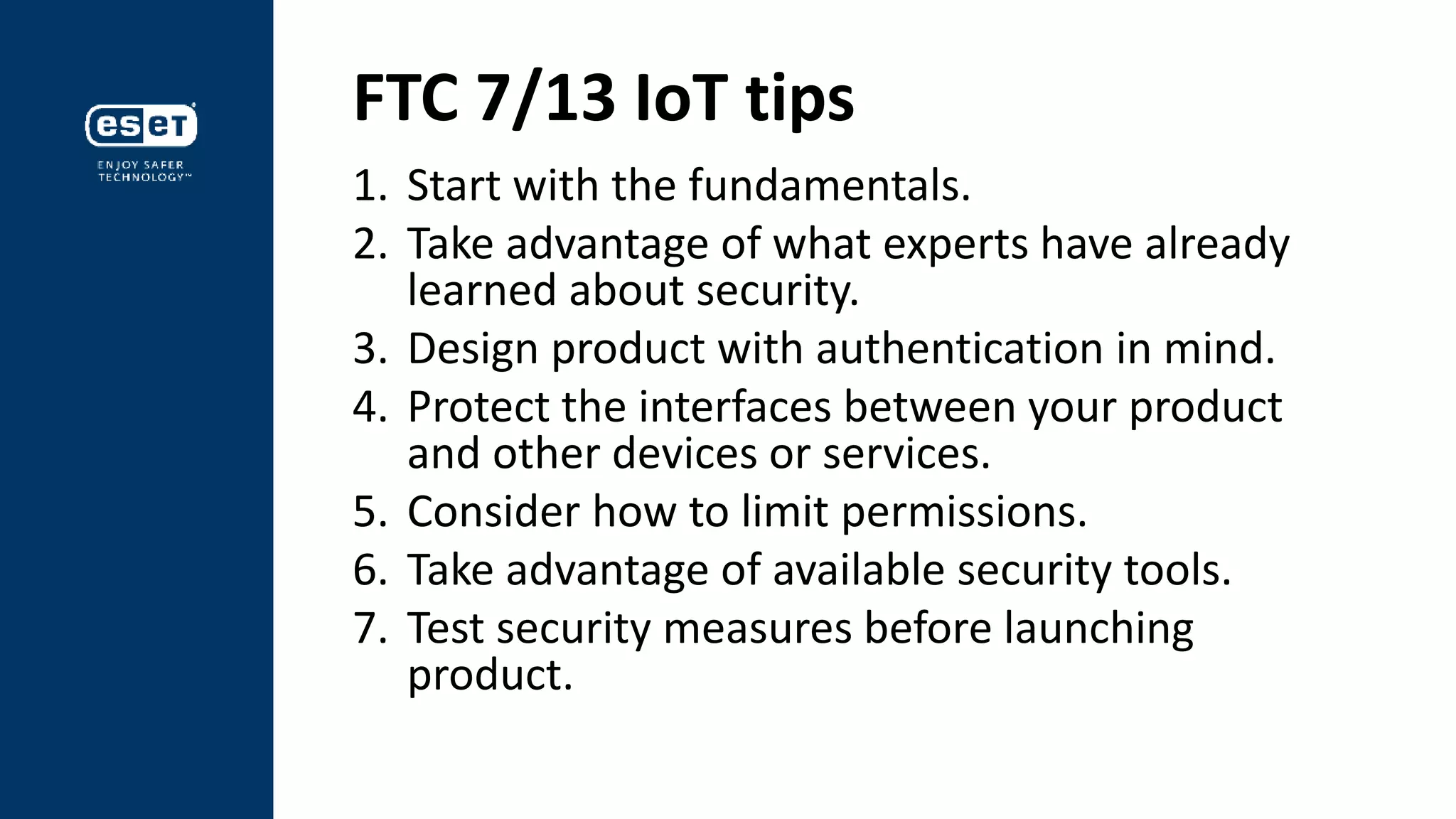
FTC 7/13 IoT tips
1. Start with the fundamentals.
2. Take advantage of what experts have already
learned about security.
3. Design product with authentication in mind.
4. Protect the interfaces between your product
and other devices or services.
5. Consider how to limit permissions.
6. Take advantage of available security tools.
7. Test security measures before launching
product.
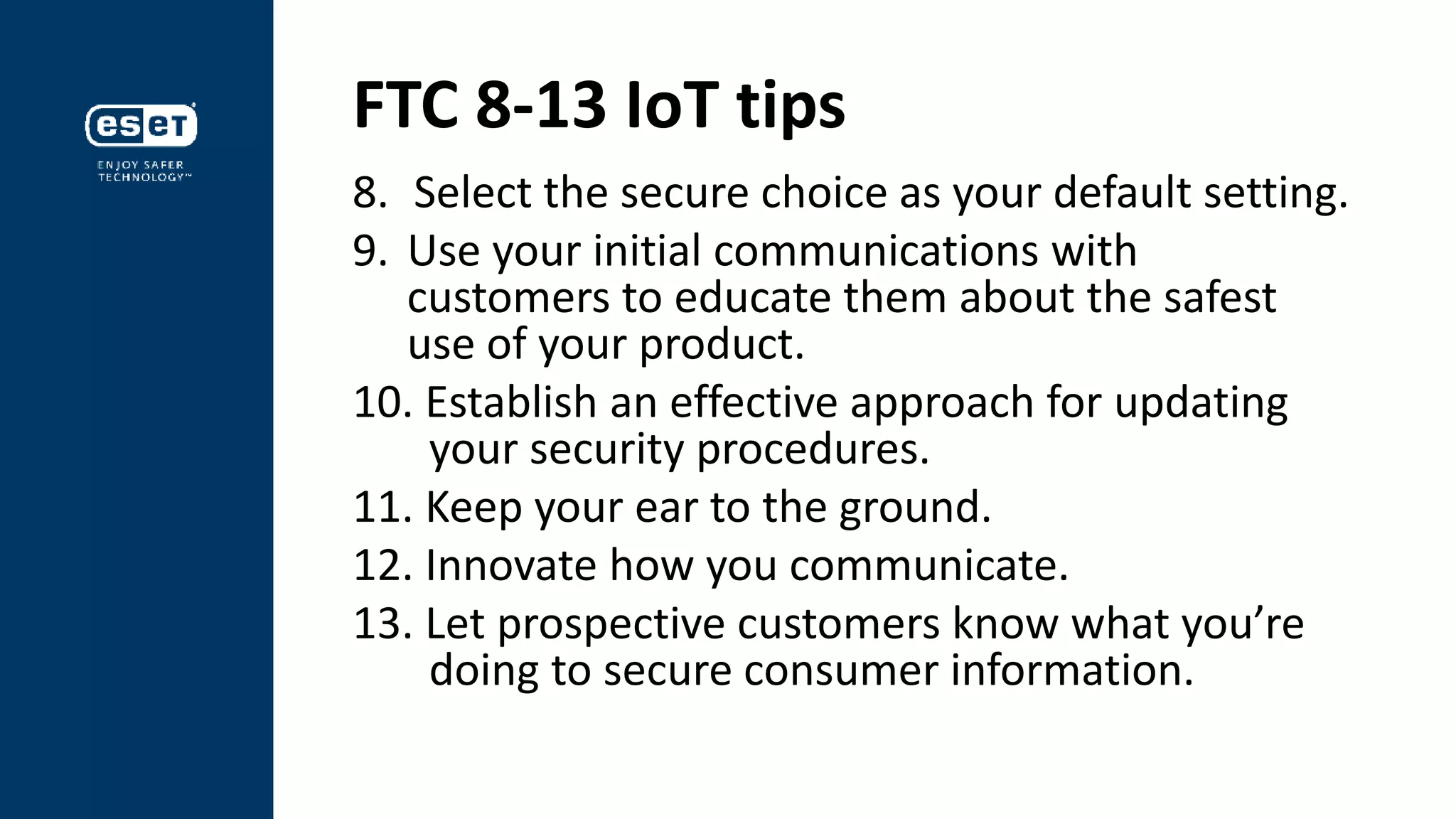
FTC 8-13 IoT tips
8. Select the secure choice as your default setting.
9. Use your initial communications with
customers to educate them about the safest
use of your product.
10. Establish an effective approach for updating
your security procedures.
11. Keep your ear to the ground.
12. Innovate how you communicate.
13. Let prospective customers know what you’re
doing to secure consumer information.
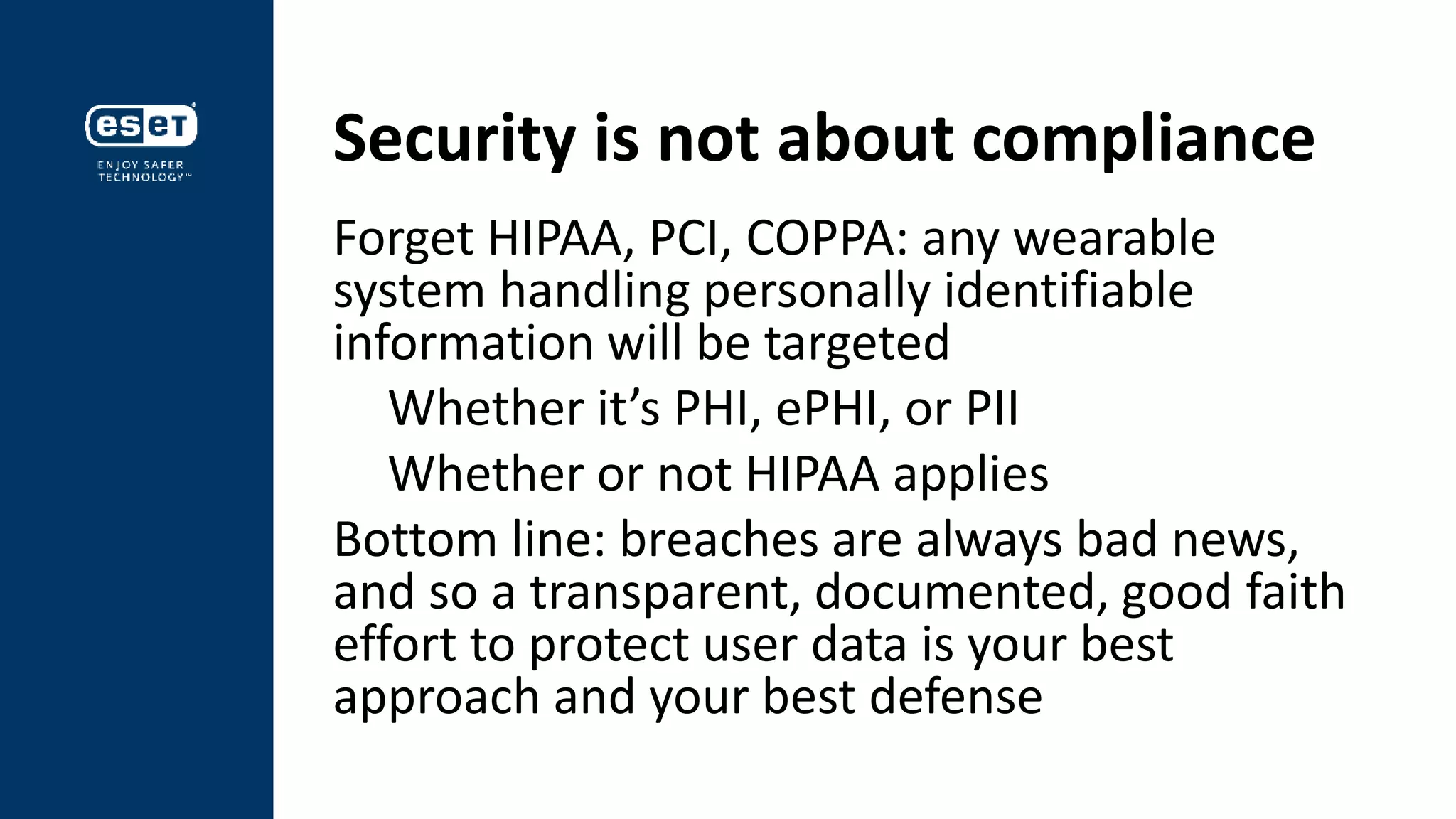
Security is not about compliance
Forget HIPAA, PCI, COPPA: any wearable
system handling personally identifiable
information will be targeted
Whether it’s PHI, ePHI, or PII
Whether or not HIPAA applies
Bottom line: breaches are always bad news,
and so a transparent, documented, good faith
effort to protect user data is your best
approach and your best defense
Thank you!
www.WeLiveSecurity.com
Stephen.Cobb@ESET.com
www.slideshare.net/zcobb
@zcobb
Stephen Cobb, CISSP
Sr. Security Researcher

Security and Wearables: Success starts with security

  • 1.
    Stephen Cobb, CISSP Sr.Security Researcher
  • 2.
    What’s the biggestthreat to the success of your wearable project? A. Lack of funding B. Competition C. Skills shortage D. Technical challenges E. Bad press and brand damage due to a data breach that could have been prevented with better security and stricter adherence to privacy policies
  • 3.
    This is notsuccess Shares in Hong Kong toy maker VTech Halted after customer data stolen
  • 4.
    Worrying IoT surveyresults 52% believe most IoT devices on the market right now DO NOT have the necessary security in place 49% don’t trust having personal / private data tied to IoT devices, but still use them Only 18% of people trust having their personal data tied to IoT devices 90% of developers think current IoT devices lack necessary security Auth0, November 2015
  • 5.
    A Tale ofTwo Industries Wearable Tech Tech to help people Gather and analyze data Improve health, lifestyle Inform decision-making Enhance experience Criminal Tech Tech to help themselves Steal data, sell stolen data Ransom data Rent/sell tools to steal data Enhance earnings
  • 6.
    Data crime isan industry Fueled by information about people Wearables = information about people Targets endpoints and servers Wearables = endpoints Wearables will be targeted By data thieves Wearables will be scrutinized By the Federal Trade Commission
  • 7.
    Attack surface challengesfor Wearables SMARTPHONE: WI-FI, BLUETOOTH 4G, SMS, USB, NFC OPERATING SYSTEM OS PROVIDER APP FRAMEWORKS APP SOFTWARE APP PROVIDER APP ANALYTICS UTILITY API CRM/MARKETING LOCATION SERVICE EMAIL, WEB BROWSER PHYSICAL ACCESS COMMS SERVICES: WIRELESS AND CABLE NOC FACILITIES HVAC EAVESDROPPING RETENTION POLICIES TRAFFIC MONITORING DIAGNOSTICS SERVICE UPDATES PROTOCOLS PHYSICAL SECURITY WEARABLE DEVICE: BLUETOOTH USB OPERATING SYSTEM OS PROVIDER APP FRAMEWORKS APP SOFTWARE APP PROVIDER APP ANALYTICS UTILITY API CRM/MARKETING LOCATION SERVICE PHYSICAL ACCESS WIRELESS AP/ROUTER: FIRMWARE OPERATING SYSTEM WI-FI CONNECTIONS WIRED CONNECTIONS WEB INTERFACE SUPPORT SERVICES USB, WPS PHYSICAL ACCESS THE CLOUD: OPERATING SYSTEMS HYPERVISOR DATABASE MANAGERS SHARDING ENCRYPTION REPLICATION SERVICES SHARED HOSTS MULTIPLE LOCATIONS DATA CENTER SECURITY TRANSNATIONAL FLOWS SHARED FACILITIES MAINTENANCE THIRD PARTIES WWW COMPANY WEBSITE: CUSTOMER DATA UPGRADES ADD-ONS
  • 8.
    What’s the FTCgot to do with it? Consumer protection agency Polices data privacy and security in the U.S. 50 law enforcement actions and counting Monitors emerging technology Suggests appropriate behavior Looks for inappropriate outcomes Takes cases to set precedents Imposes onerous settlements
  • 9.
  • 10.
    FTC 10 securitycommandments 1. Start with security 2. Control access to data sensibly 3. Require secure passwords and authentication 4. Store sensitive personal information securely and protect it during transmission 5. Segment your network, monitor who’s trying to get in/out 6. Secure remote access to your network 7. Apply security practices when developing new products 8. Make sure your service providers implement reasonable security measures 9. Put procedures in place to keep your security current and address vulnerabilities that may arise 10.Secure paper, physical media, and devices
  • 11.
    FTC 7/13 IoTtips 1. Start with the fundamentals. 2. Take advantage of what experts have already learned about security. 3. Design product with authentication in mind. 4. Protect the interfaces between your product and other devices or services. 5. Consider how to limit permissions. 6. Take advantage of available security tools. 7. Test security measures before launching product.
  • 12.
    FTC 8-13 IoTtips 8. Select the secure choice as your default setting. 9. Use your initial communications with customers to educate them about the safest use of your product. 10. Establish an effective approach for updating your security procedures. 11. Keep your ear to the ground. 12. Innovate how you communicate. 13. Let prospective customers know what you’re doing to secure consumer information.
  • 13.
    Security is notabout compliance Forget HIPAA, PCI, COPPA: any wearable system handling personally identifiable information will be targeted Whether it’s PHI, ePHI, or PII Whether or not HIPAA applies Bottom line: breaches are always bad news, and so a transparent, documented, good faith effort to protect user data is your best approach and your best defense
  • 14.

Editor's Notes

  • #2 Health records > Prizes
  • #4  data belonging to some 4.8 million parents and more than 200,000 children was taken. It said that included names, email addresses, passwords and home addresses of parents; as well as first names, genders and birthdays of children.