Year One
History | LKS2 | Vikings and Anglo-Saxons | Viking Raiders and Invaders | Lesson 1
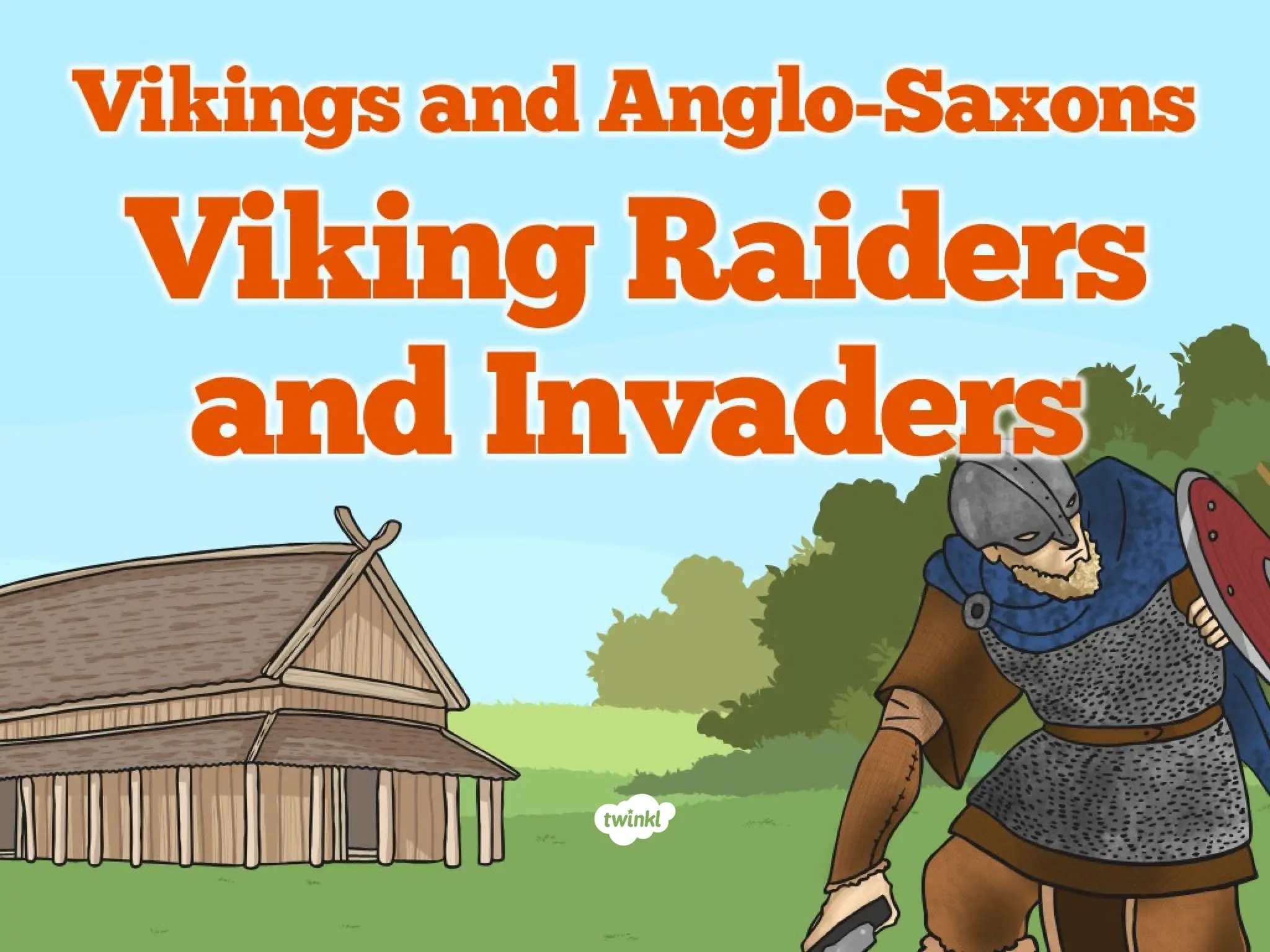
Vikings and Anglo-Saxons
History
Success Criteria
Aim
• I can explain when and where the Vikings came from and say why
they raided Britain.
• I can order events from the time of the Vikings.
• I can create a poster containing details about who the Vikings were and what
they did.
• I can act in role to ask or answer questions.
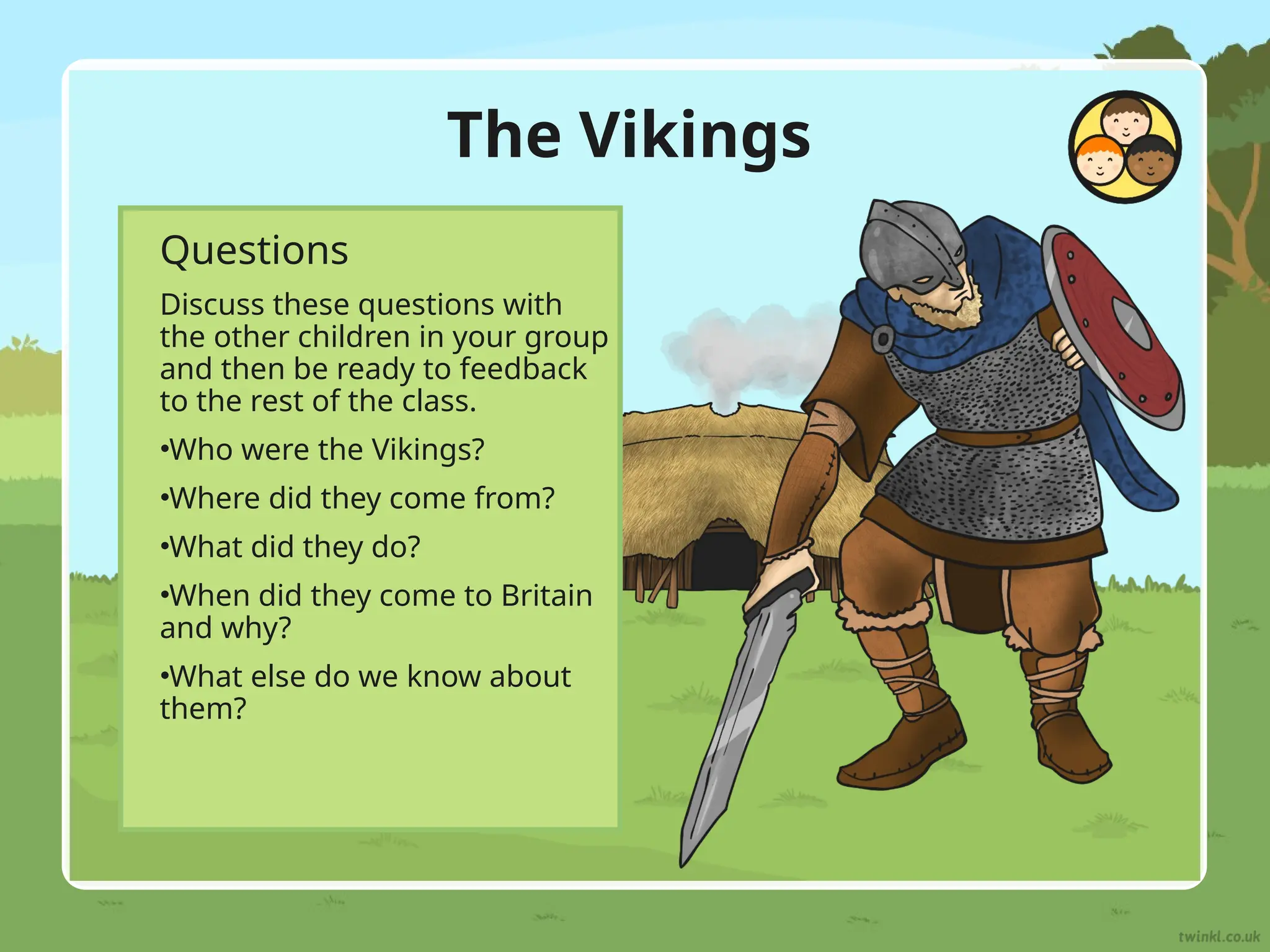
The Vikings
Questions
Discuss these questions with
the other children in your group
and then be ready to feedback
to the rest of the class.
•Who were the Vikings?
•Where did they come from?
•What did they do?
•When did they come to Britain
and why?
•What else do we know about
them?
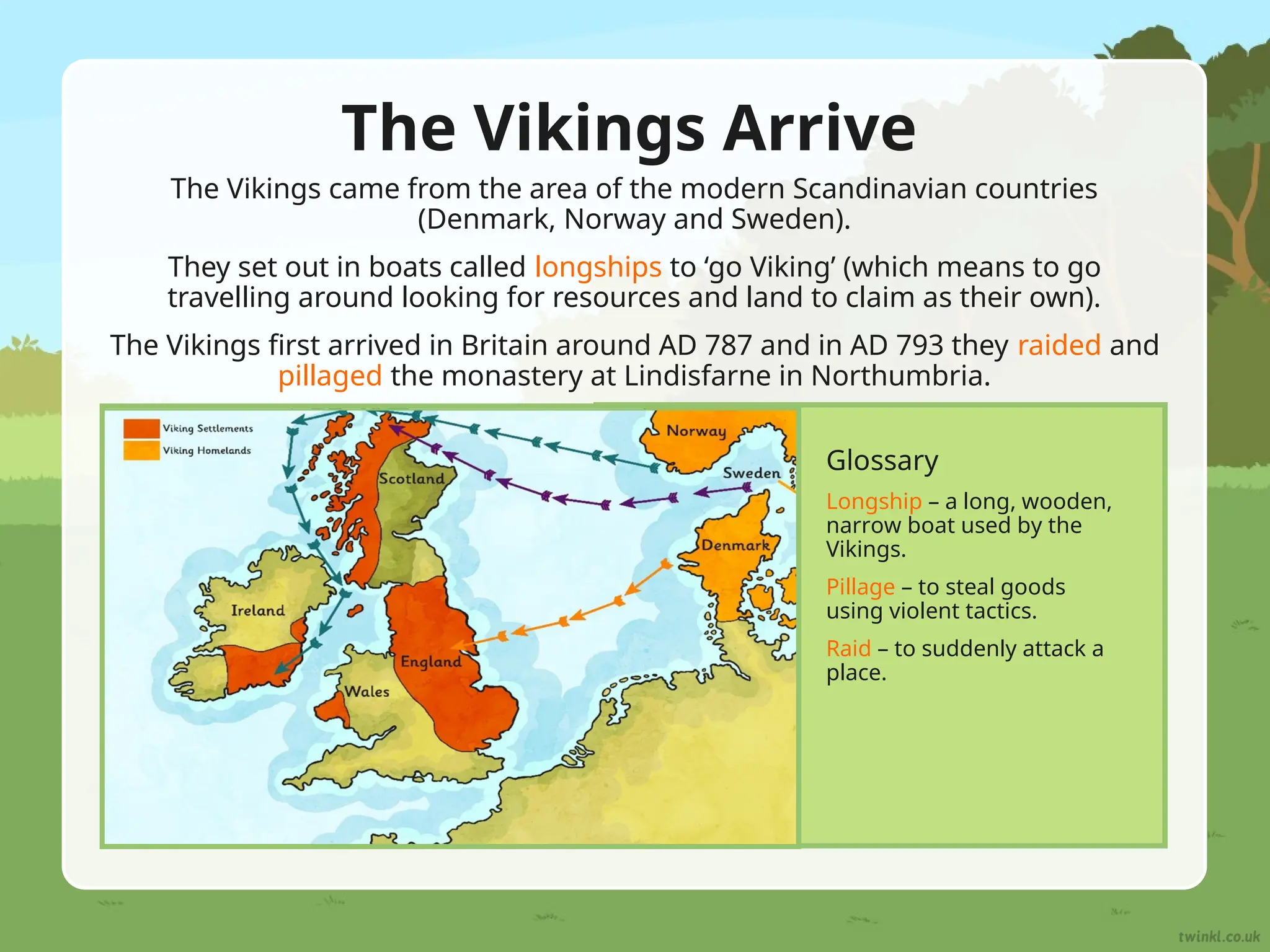
The Vikings Arrive
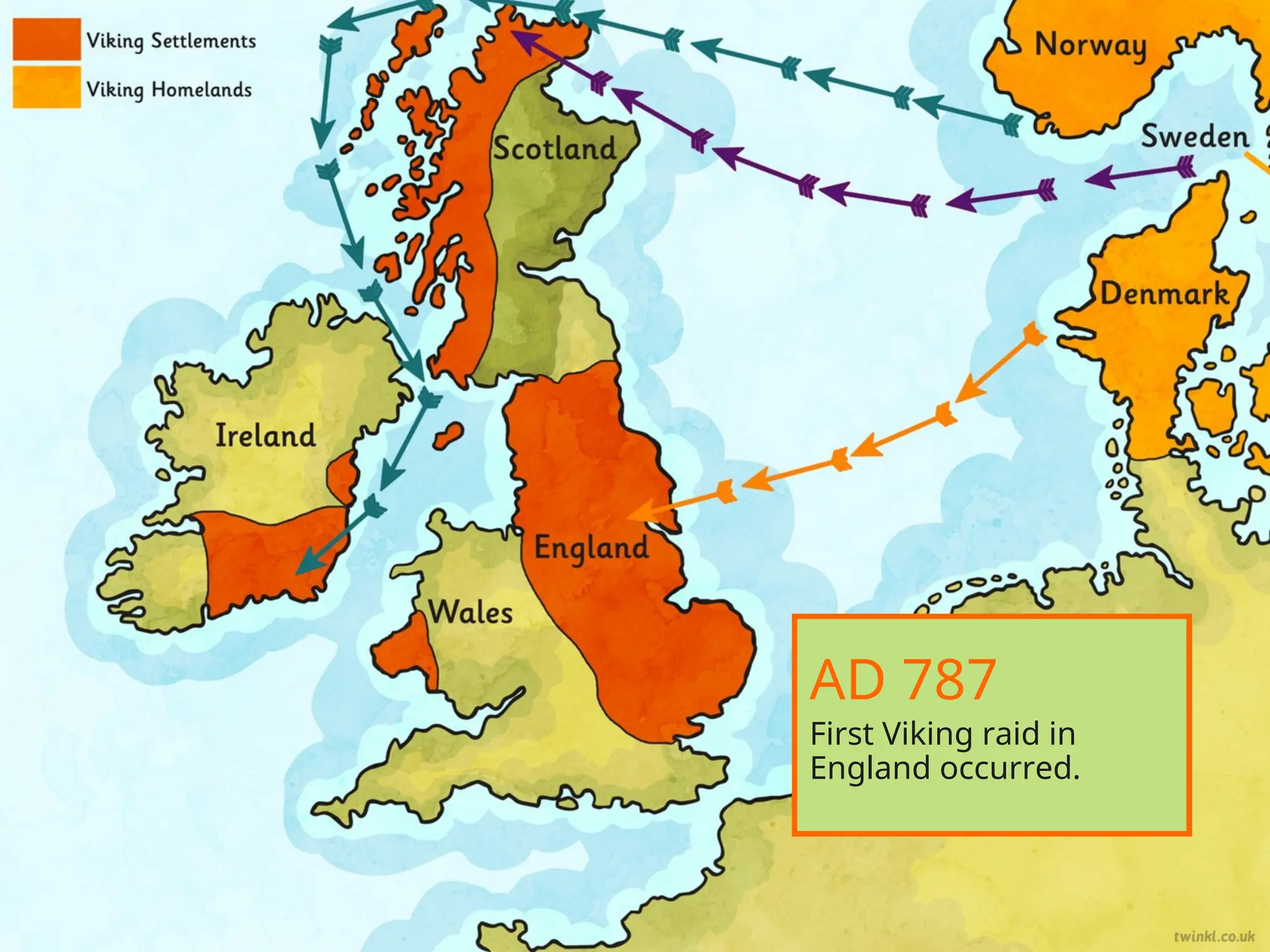
The Vikings came from the area of the modern Scandinavian countries
(Denmark, Norway and Sweden).
They set out in boats called longships to ‘go Viking’ (which means to go
travelling around looking for resources and land to claim as their own).
The Vikings first arrived in Britain around AD 787 and in AD 793 they raided and
pillaged the monastery at Lindisfarne in Northumbria.
Glossary
Longship – a long, wooden,
narrow boat used by the
Vikings.
Pillage – to steal goods
using violent tactics.
Raid – to suddenly attack a
place.
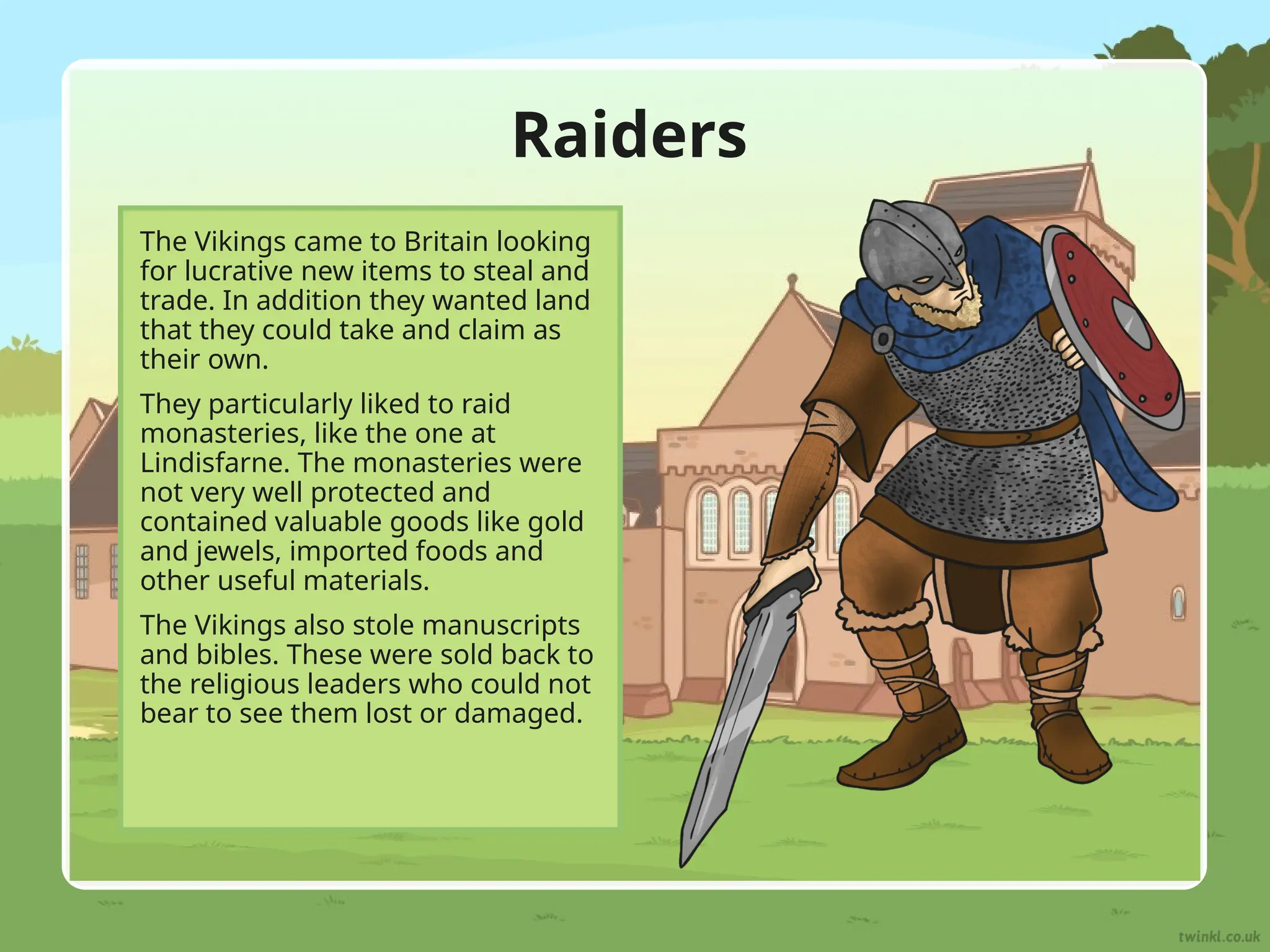
Raiders
The Vikings came to Britain looking
for lucrative new items to steal and
trade. In addition they wanted land
that they could take and claim as
their own.
They particularly liked to raid
monasteries, like the one at
Lindisfarne. The monasteries were
not very well protected and
contained valuable goods like gold
and jewels, imported foods and
other useful materials.
The Vikings also stole manuscripts
and bibles. These were sold back to
the religious leaders who could not
bear to see them lost or damaged.
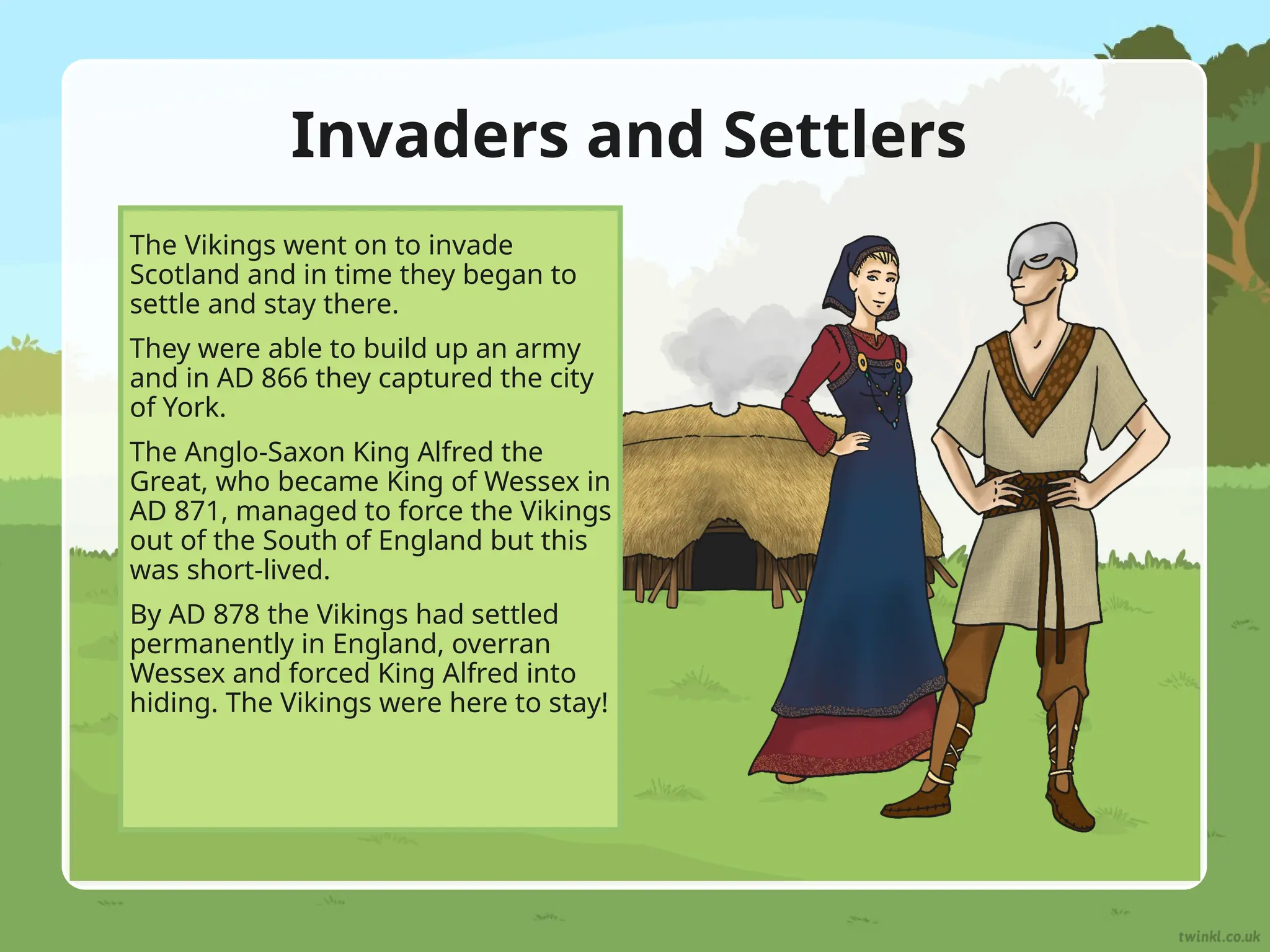
Invaders and Settlers
The Vikings went on to invade
Scotland and in time they began to
settle and stay there.
They were able to build up an army
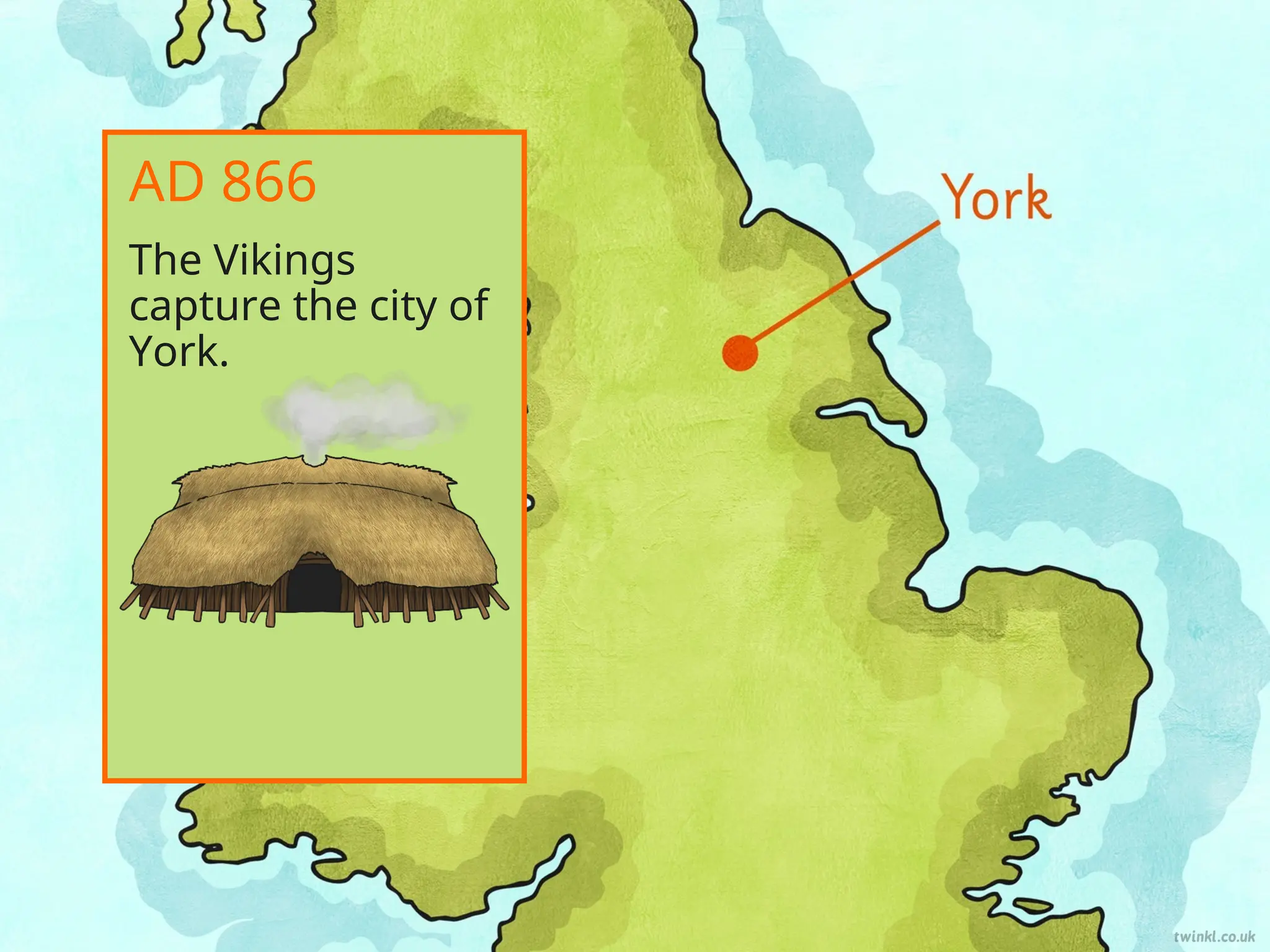
and in AD 866 they captured the city
of York.
The Anglo-Saxon King Alfred the
Great, who became King of Wessex in
AD 871, managed to force the Vikings
out of the South of England but this
was short-lived.
By AD 878 the Vikings had settled
permanently in England, overran
Wessex and forced King Alfred into
hiding. The Vikings were here to stay!
First Viking raid in
England occurred.
AD 787
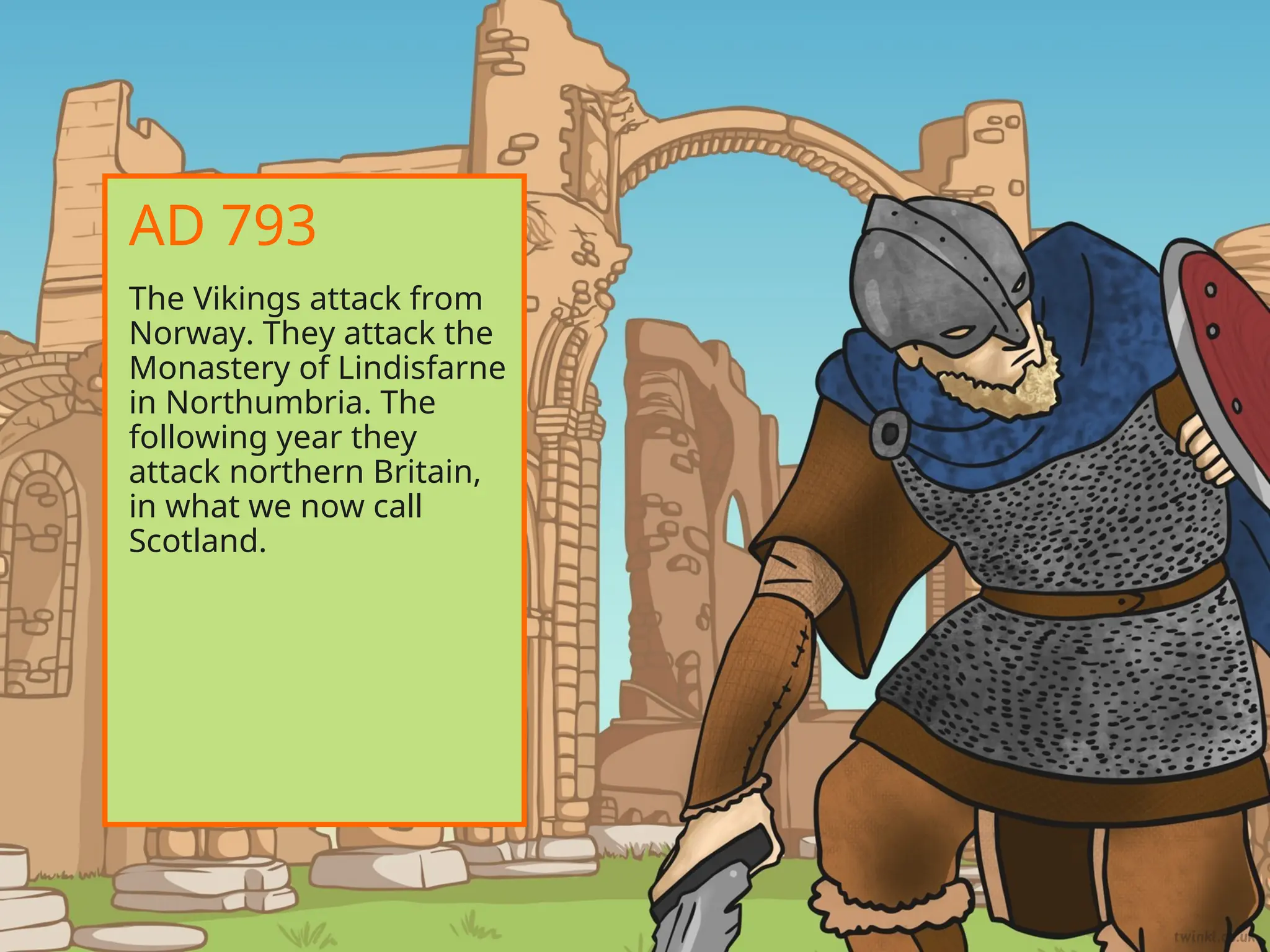
The Vikings attack from
Norway. They attack the
Monastery of Lindisfarne
in Northumbria. The
following year they
attack northern Britain,
in what we now call
Scotland.
AD 793
The Vikings
capture the city of
York.
AD 866
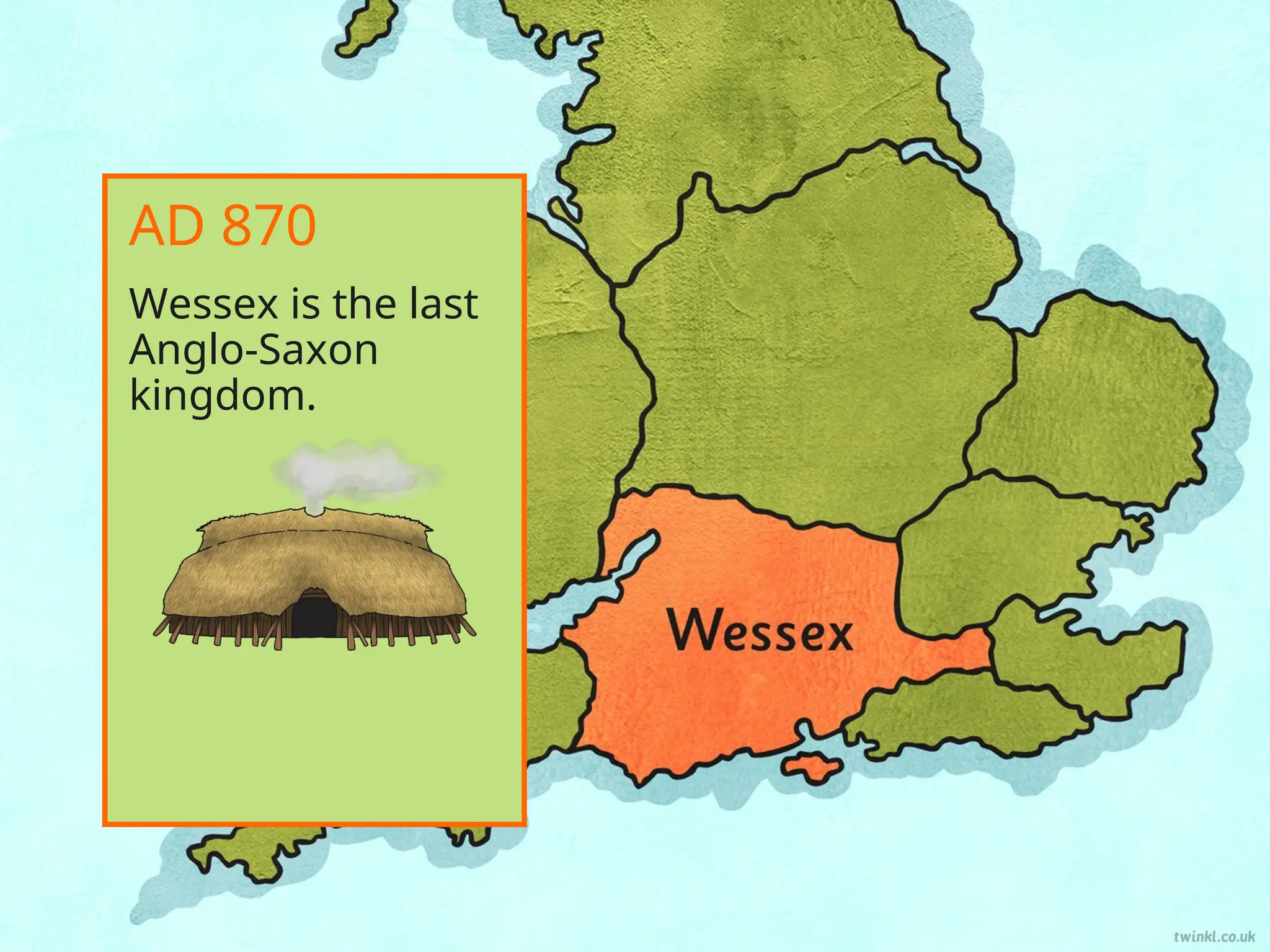
Wessex is the last
Anglo-Saxon
kingdom.
AD 870
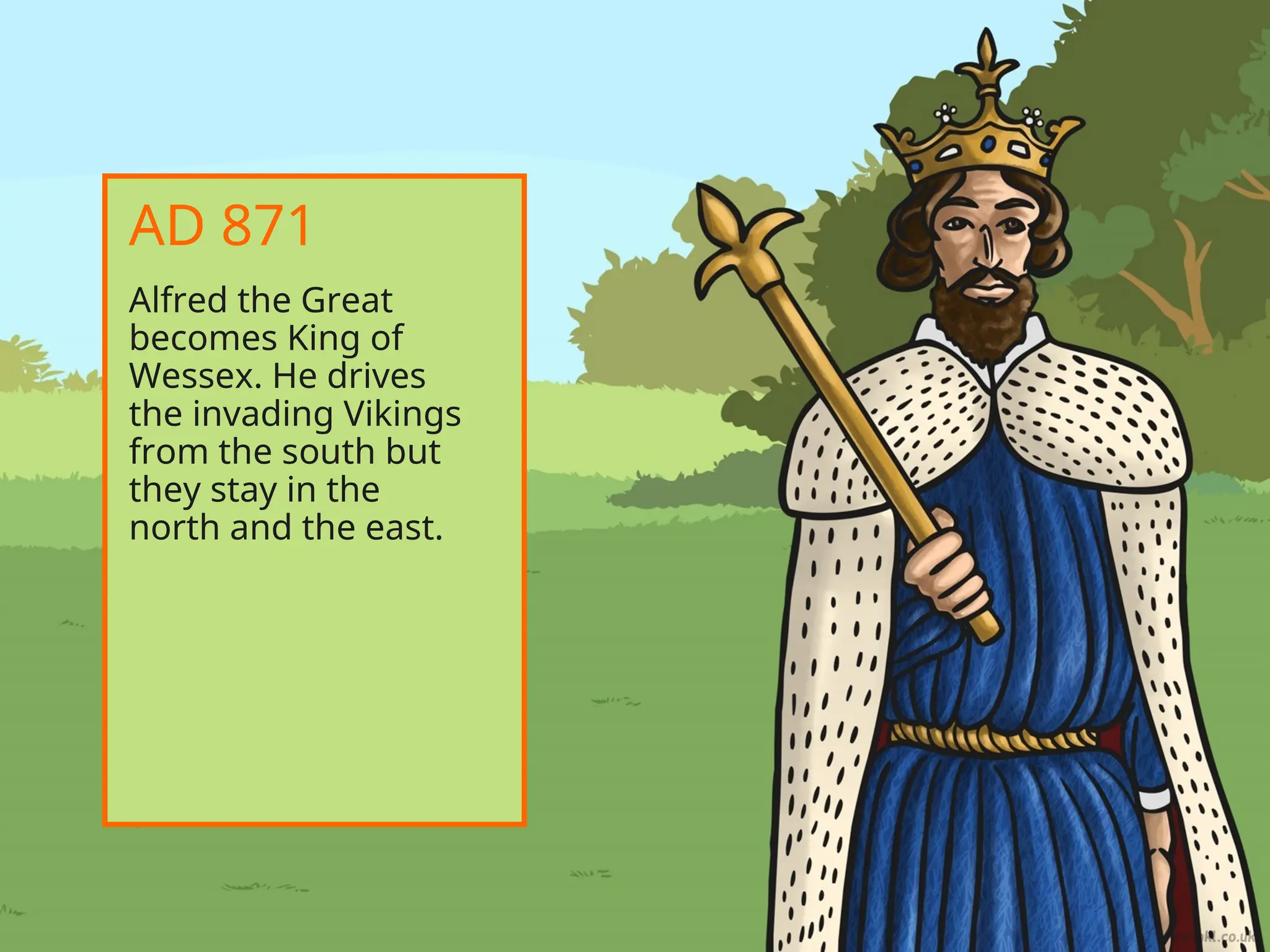
Alfred the Great
becomes King of
Wessex. He drives
the invading Vikings
from the south but
they stay in the
north and the east.
AD 871
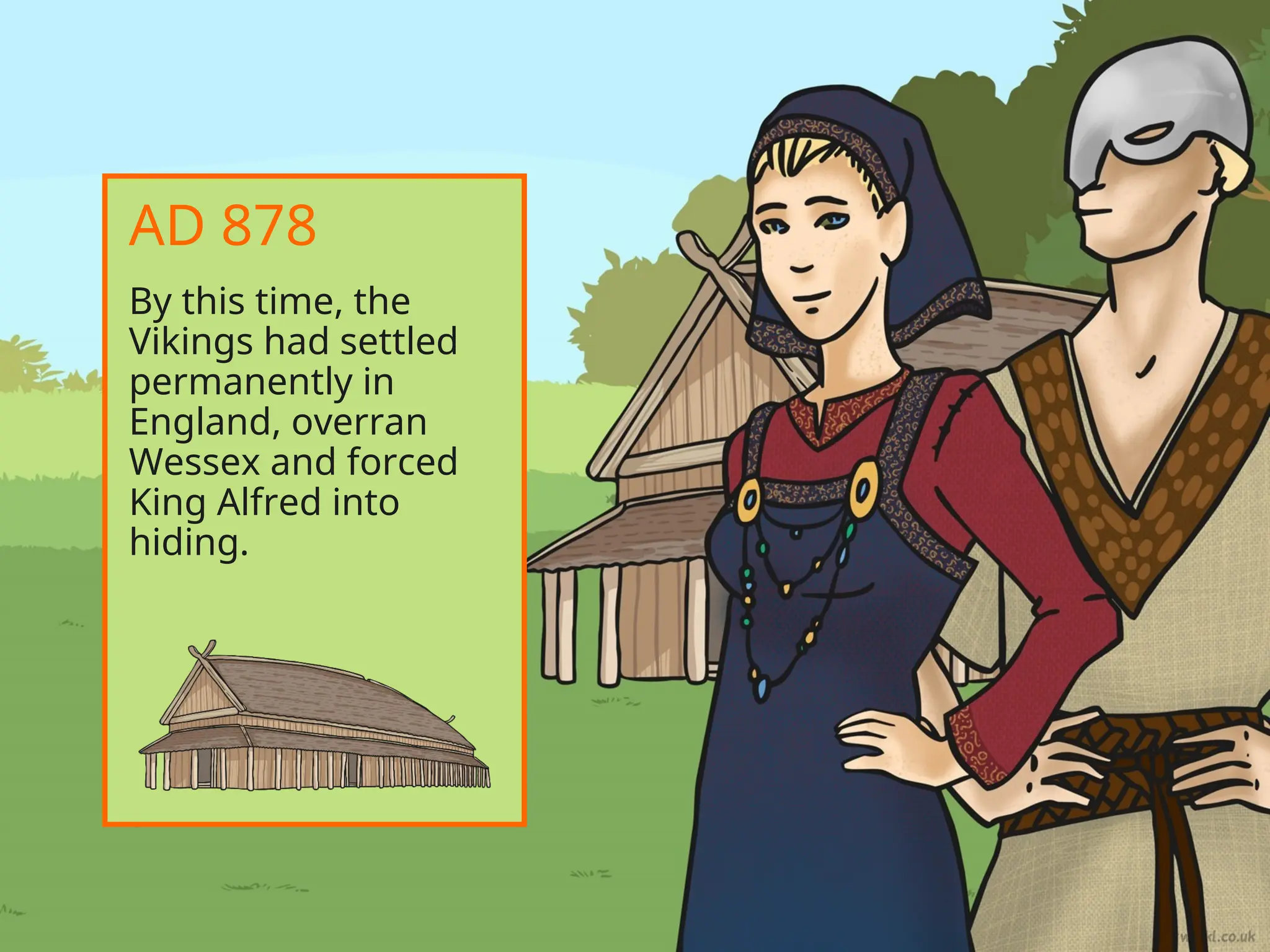
By this time, the
Vikings had settled
permanently in
England, overran
Wessex and forced
King Alfred into
hiding.
AD 878
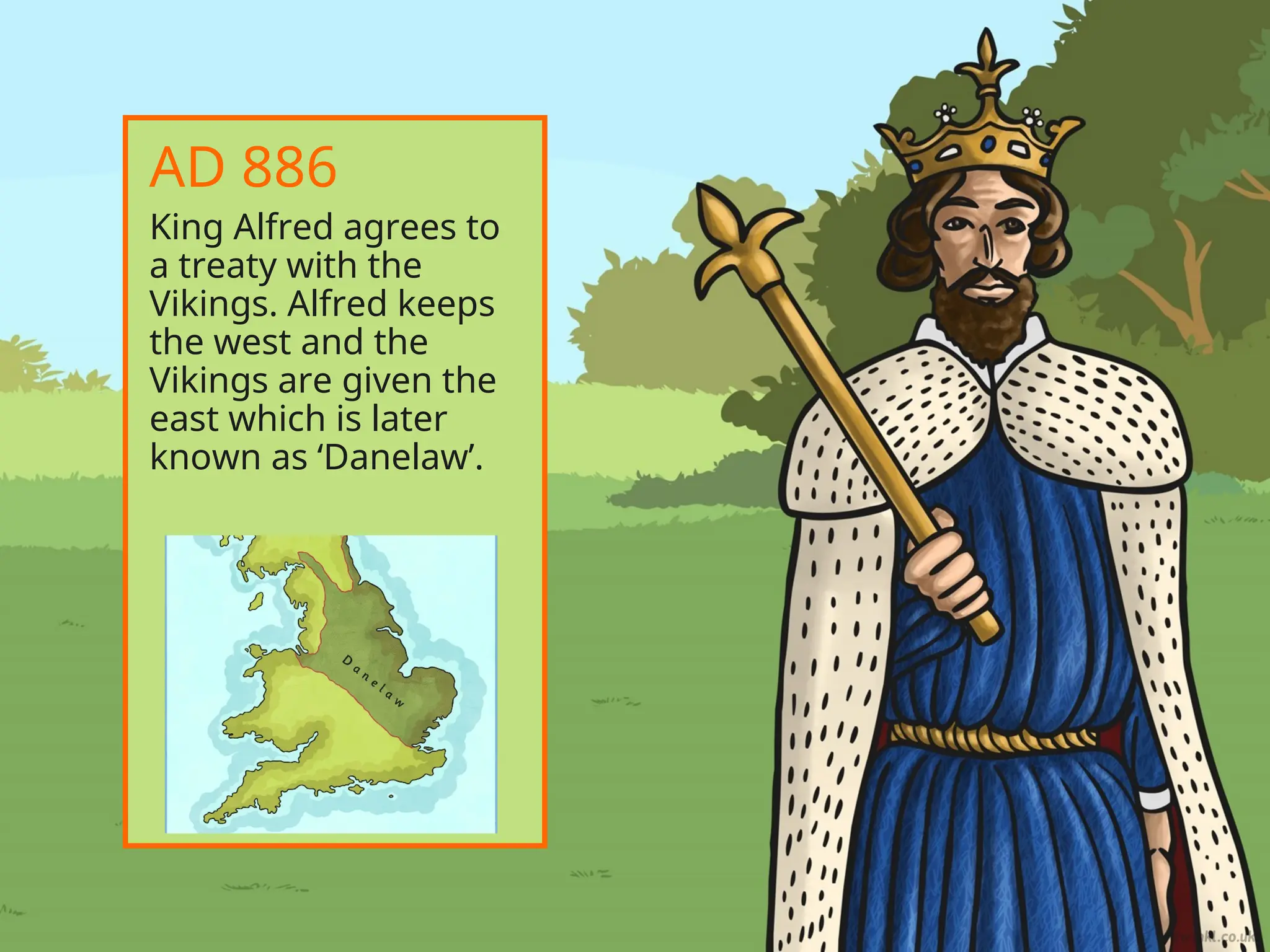
King Alfred agrees to
a treaty with the
Vikings. Alfred keeps
the west and the
Vikings are given the
east which is later
known as ‘Danelaw’.
AD 886
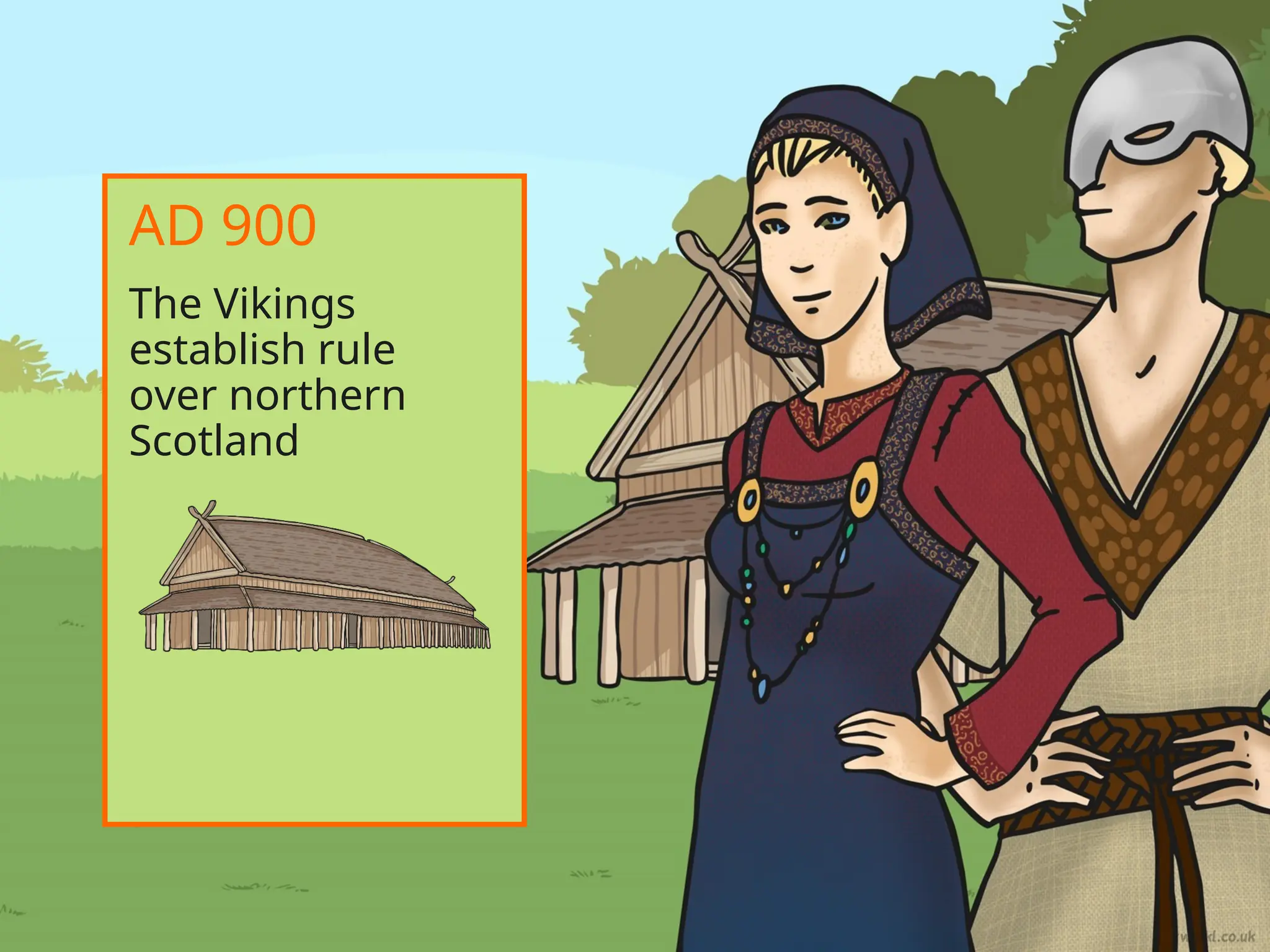
The Vikings
establish rule
over northern
Scotland
AD 900
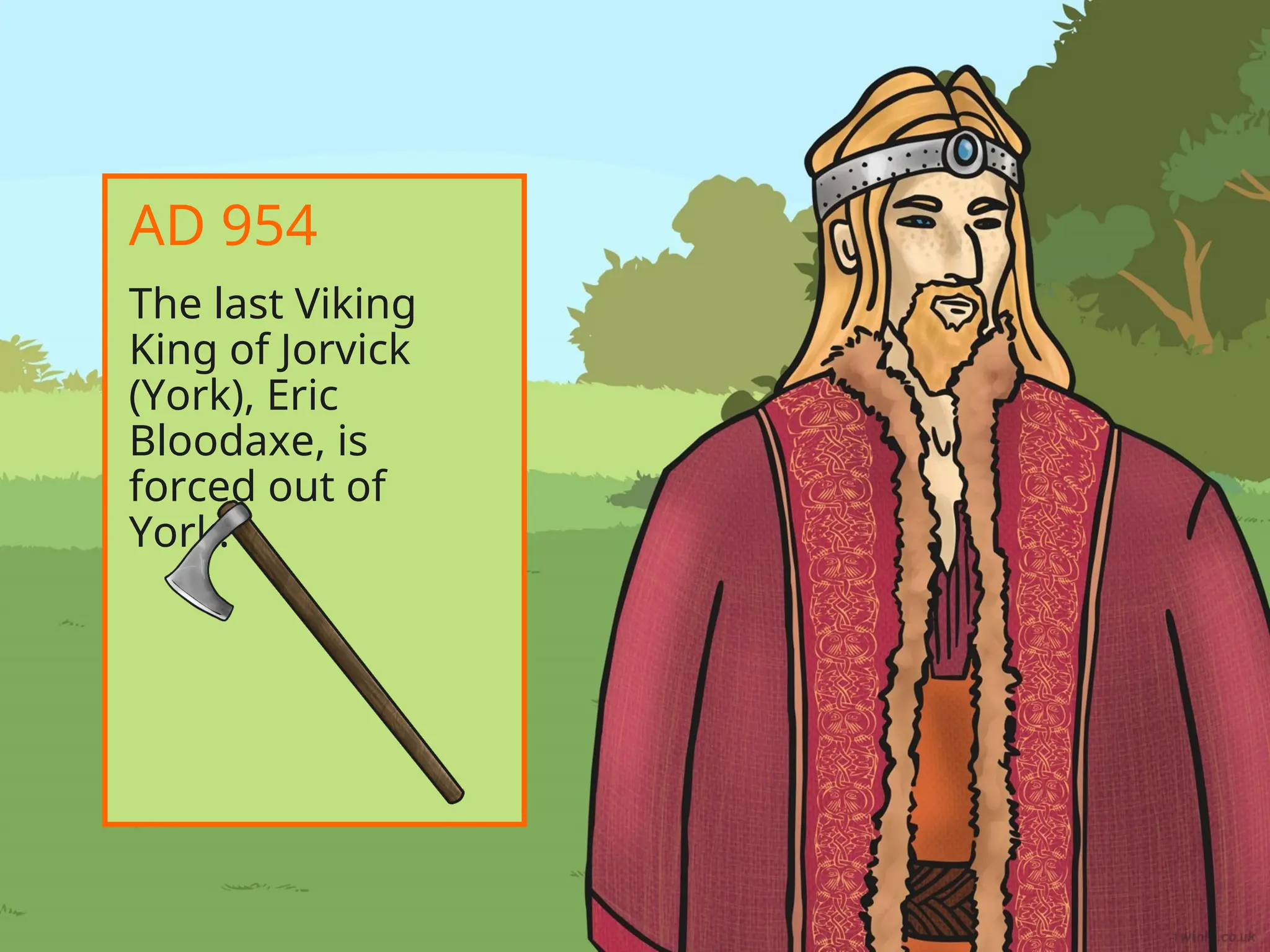
The last Viking
King of Jorvick
(York), Eric
Bloodaxe, is
forced out of
York.
AD 954
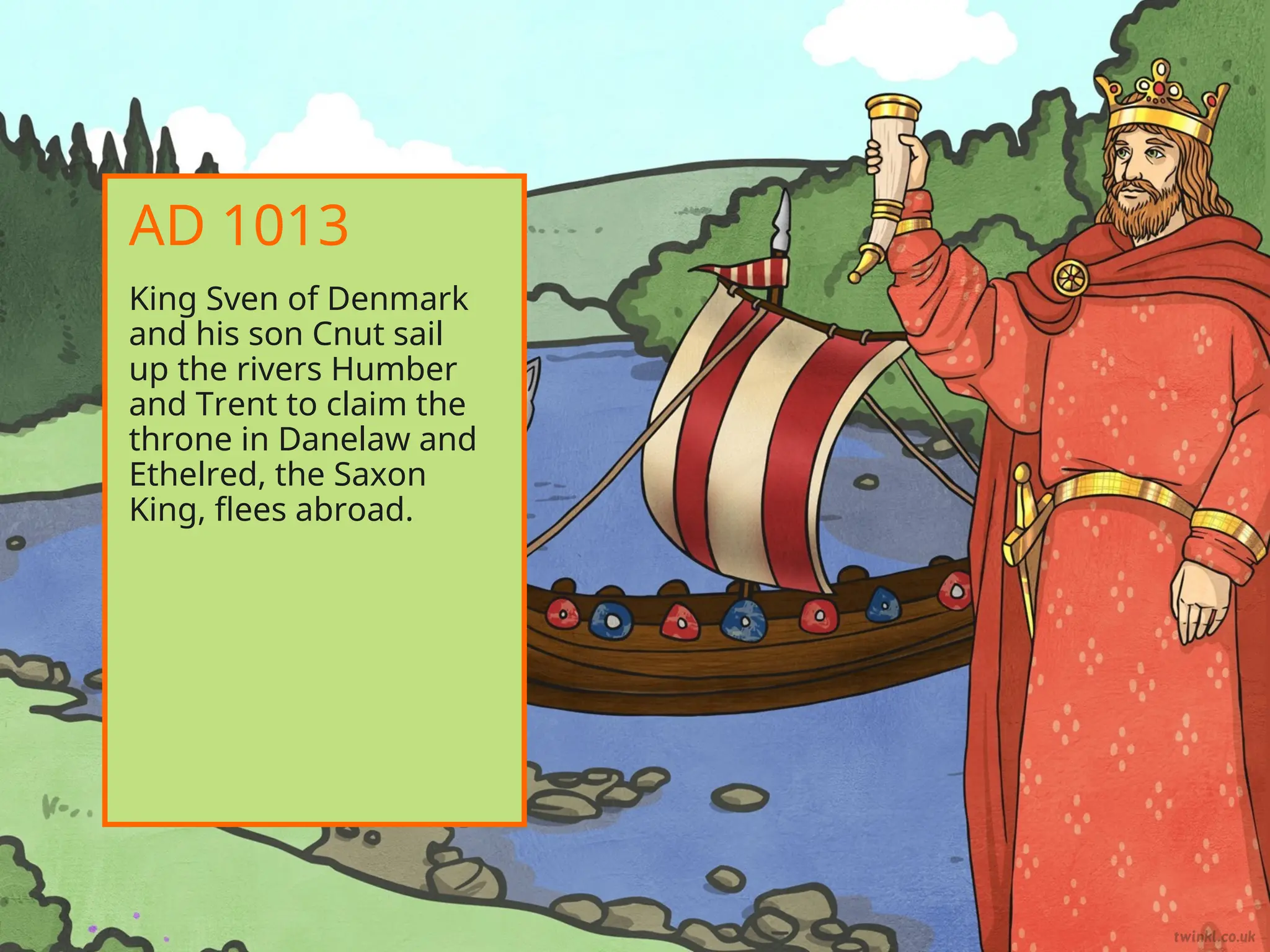
King Sven of Denmark
and his son Cnut sail
up the rivers Humber
and Trent to claim the
throne in Danelaw and
Ethelred, the Saxon
King, flees abroad.
AD 1013
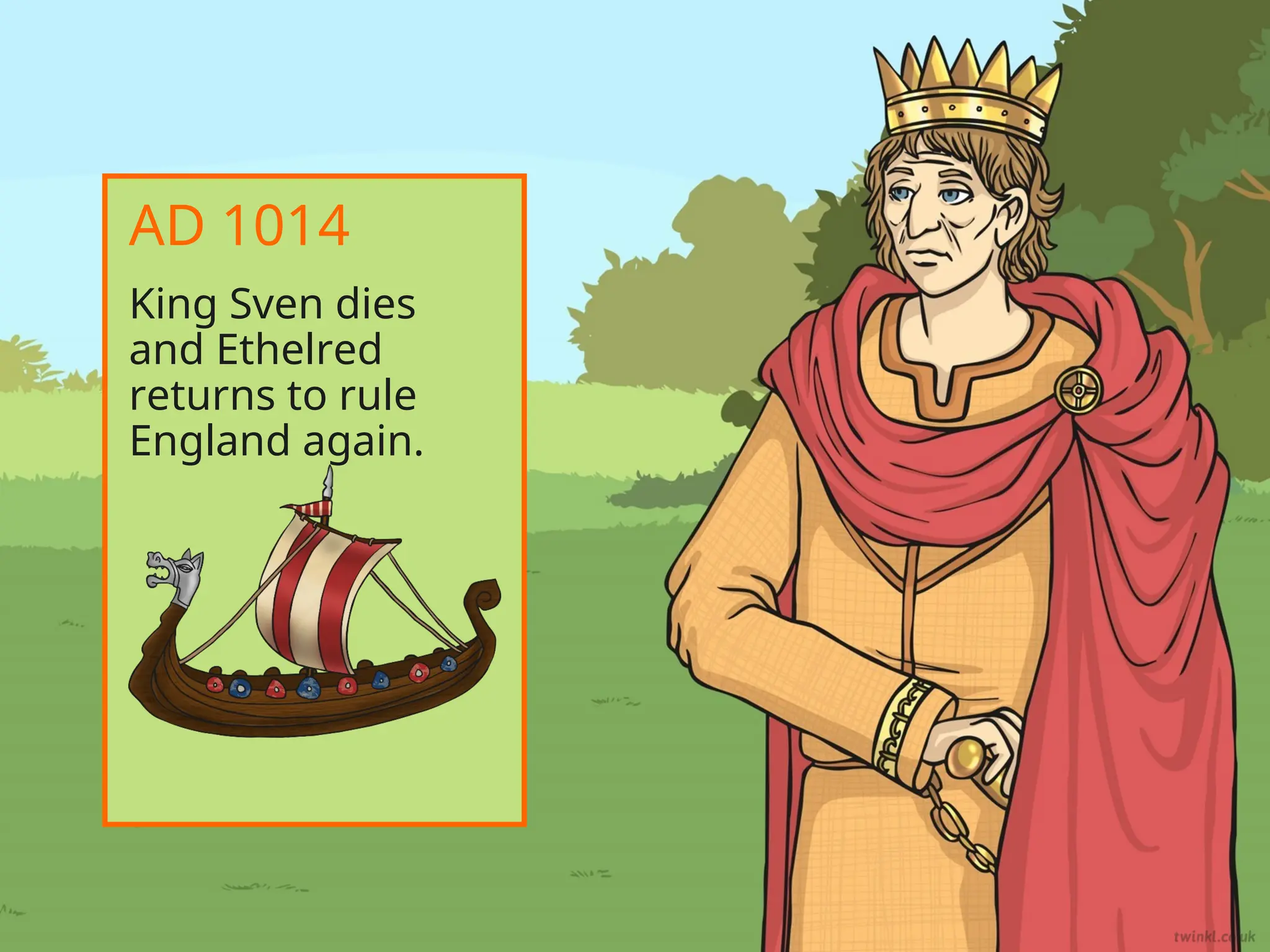
King Sven dies
and Ethelred
returns to rule
England again.
AD 1014
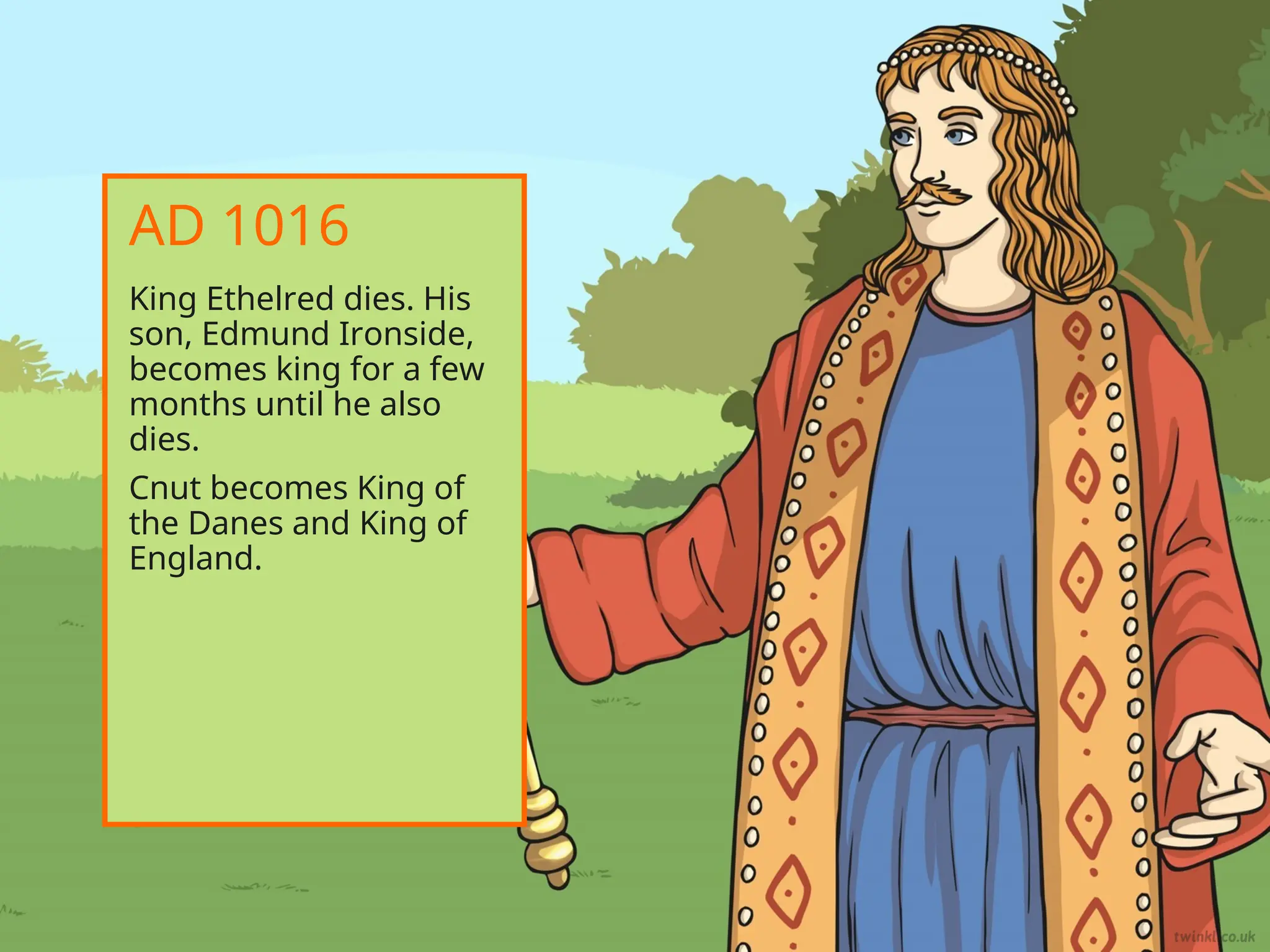
King Ethelred dies. His
son, Edmund Ironside,
becomes king for a few
months until he also
dies.
Cnut becomes King of
the Danes and King of
England.
AD 1016
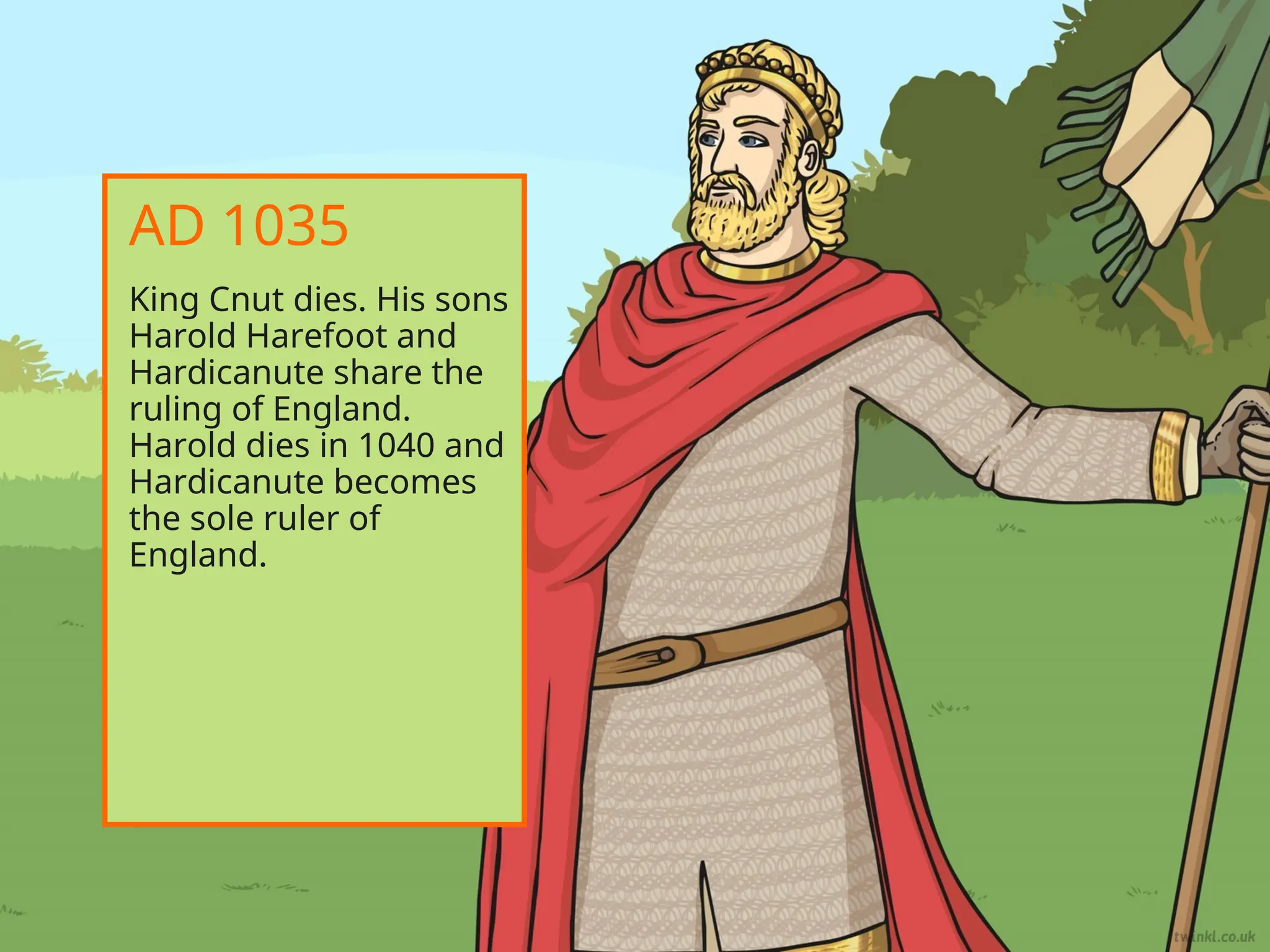
King Cnut dies. His sons
Harold Harefoot and
Hardicanute share the
ruling of England.
Harold dies in 1040 and
Hardicanute becomes
the sole ruler of
England.
AD 1035
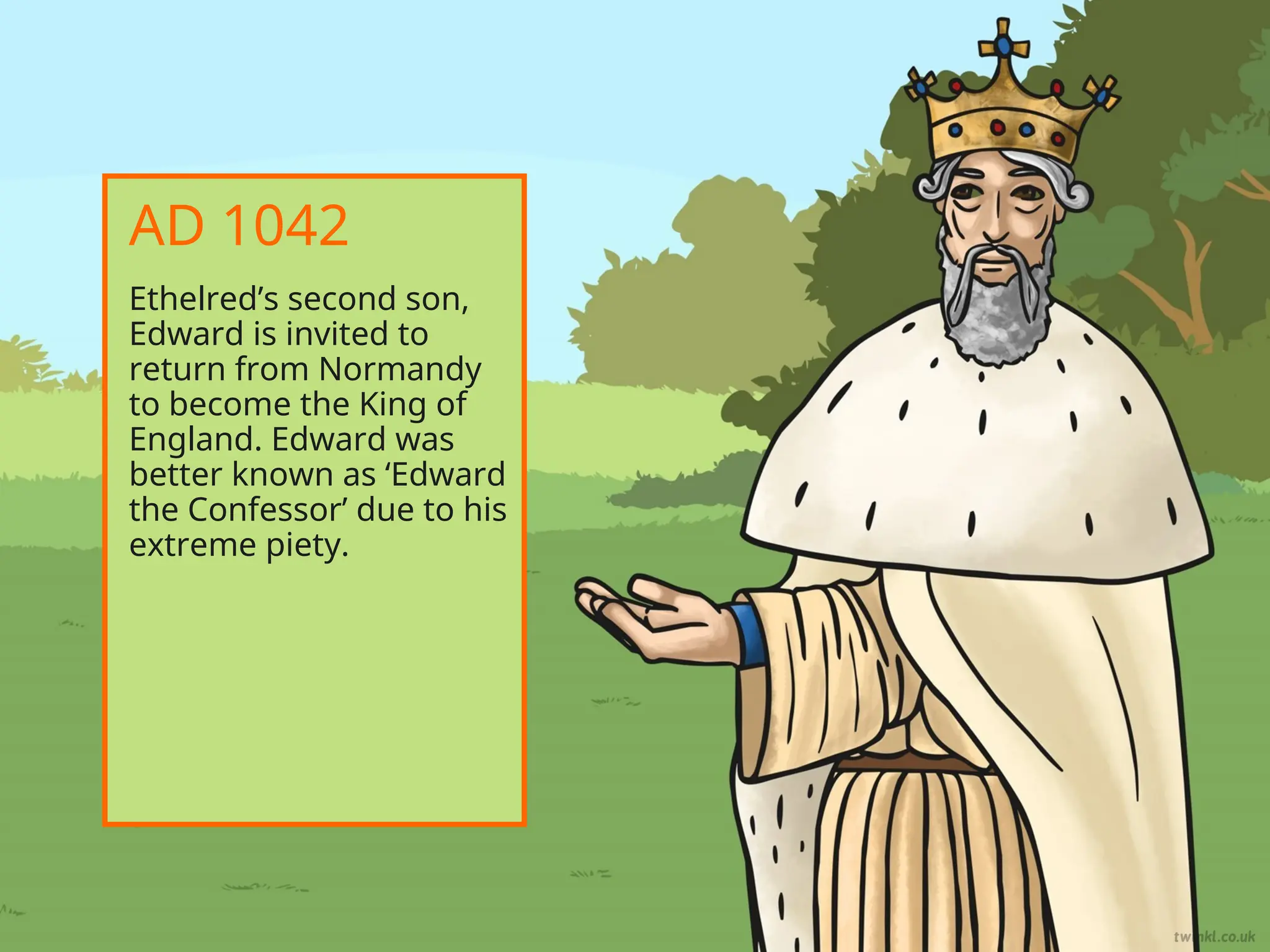
Ethelred’s second son,
Edward is invited to
return from Normandy
to become the King of
England. Edward was
better known as ‘Edward
the Confessor’ due to his
extreme piety.
AD 1042
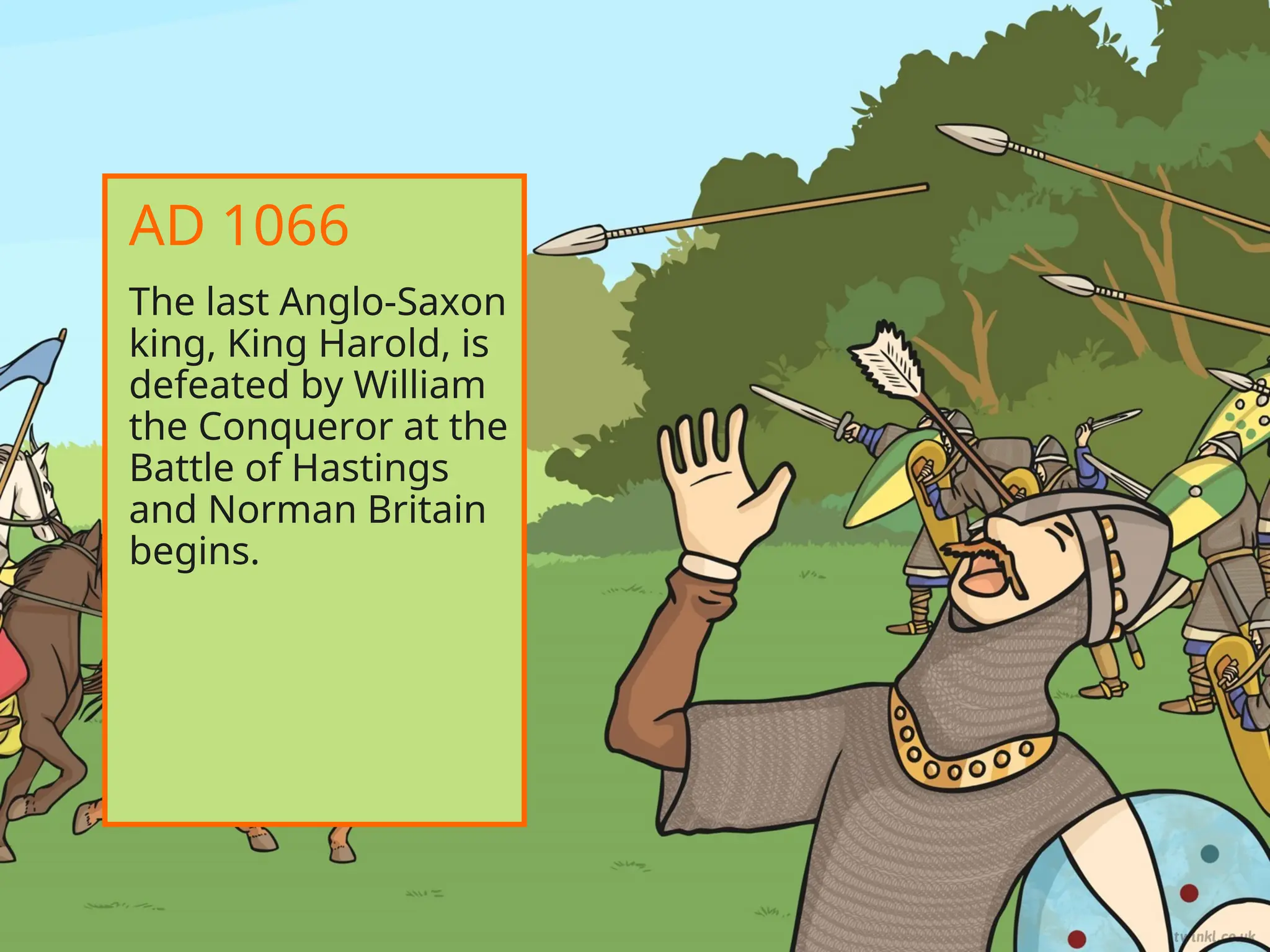
The last Anglo-Saxon
king, King Harold, is
defeated by William
the Conqueror at the
Battle of Hastings
and Norman Britain
begins.
AD 1066
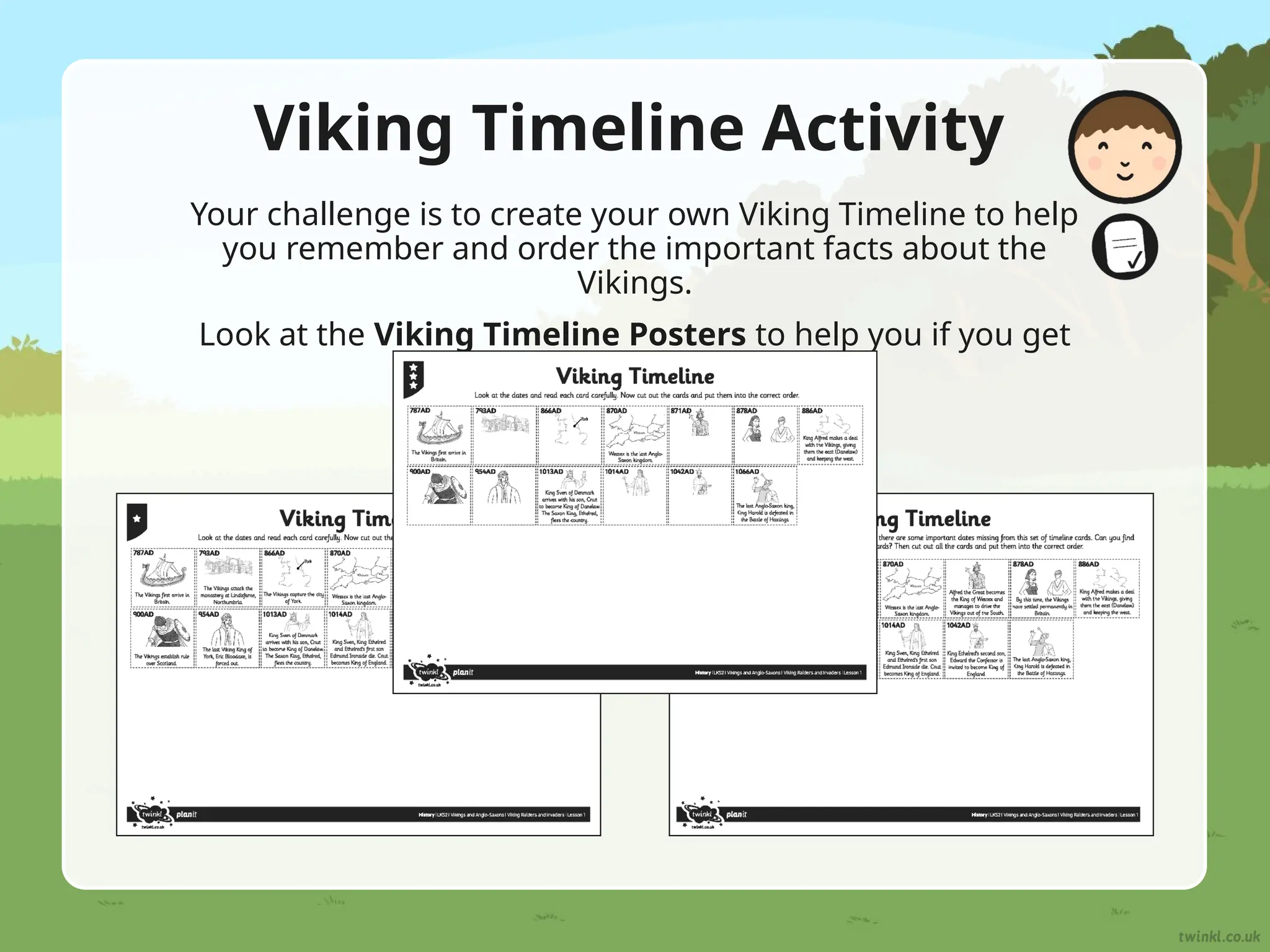
Viking Timeline Activity
Your challenge is to create your own Viking Timeline to help
you remember and order the important facts about the
Vikings.
Look at the Viking Timeline Posters to help you if you get
stuck.
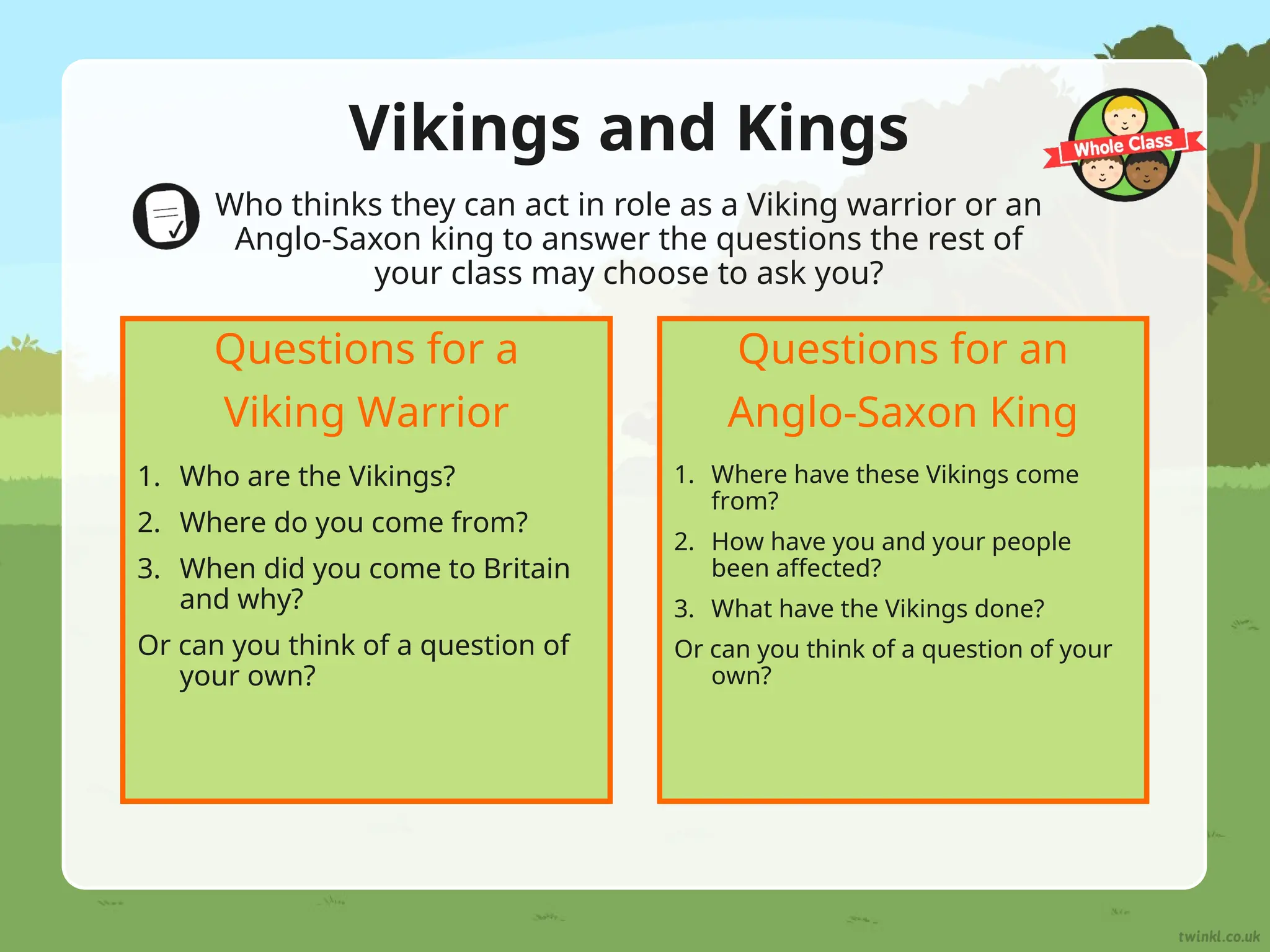
Vikings and Kings
Who thinks they can act in role as a Viking warrior or an
Anglo-Saxon king to answer the questions the rest of
your class may choose to ask you?
1. Who are the Vikings?
2. Where do you come from?
3. When did you come to Britain
and why?
Or can you think of a question of
your own?
Questions for a
Viking Warrior
1. Where have these Vikings come
from?
2. How have you and your people
been affected?
3. What have the Vikings done?
Or can you think of a question of your
own?
Questions for an
Anglo-Saxon King
Success Criteria
Aim
• I can explain when and where the Vikings came from and say why
they raided Britain.
• I can order events from the time of the Vikings.
• I can create a poster containing details about who the Vikings were and what
they did.
• I can act in role to ask or answer questions.
Lesson Presentation Viking Raiders and Invaders.ppt

Lesson Presentation Viking Raiders and Invaders.ppt

  • 1.
    Year One History |LKS2 | Vikings and Anglo-Saxons | Viking Raiders and Invaders | Lesson 1 Vikings and Anglo-Saxons History
  • 3.
    Success Criteria Aim • Ican explain when and where the Vikings came from and say why they raided Britain. • I can order events from the time of the Vikings. • I can create a poster containing details about who the Vikings were and what they did. • I can act in role to ask or answer questions.
  • 4.
    The Vikings Questions Discuss thesequestions with the other children in your group and then be ready to feedback to the rest of the class. •Who were the Vikings? •Where did they come from? •What did they do? •When did they come to Britain and why? •What else do we know about them?
  • 5.
    The Vikings Arrive TheVikings came from the area of the modern Scandinavian countries (Denmark, Norway and Sweden). They set out in boats called longships to ‘go Viking’ (which means to go travelling around looking for resources and land to claim as their own). The Vikings first arrived in Britain around AD 787 and in AD 793 they raided and pillaged the monastery at Lindisfarne in Northumbria. Glossary Longship – a long, wooden, narrow boat used by the Vikings. Pillage – to steal goods using violent tactics. Raid – to suddenly attack a place.
  • 6.
    Raiders The Vikings cameto Britain looking for lucrative new items to steal and trade. In addition they wanted land that they could take and claim as their own. They particularly liked to raid monasteries, like the one at Lindisfarne. The monasteries were not very well protected and contained valuable goods like gold and jewels, imported foods and other useful materials. The Vikings also stole manuscripts and bibles. These were sold back to the religious leaders who could not bear to see them lost or damaged.
  • 7.
    Invaders and Settlers TheVikings went on to invade Scotland and in time they began to settle and stay there. They were able to build up an army and in AD 866 they captured the city of York. The Anglo-Saxon King Alfred the Great, who became King of Wessex in AD 871, managed to force the Vikings out of the South of England but this was short-lived. By AD 878 the Vikings had settled permanently in England, overran Wessex and forced King Alfred into hiding. The Vikings were here to stay!
  • 9.
    First Viking raidin England occurred. AD 787
  • 10.
    The Vikings attackfrom Norway. They attack the Monastery of Lindisfarne in Northumbria. The following year they attack northern Britain, in what we now call Scotland. AD 793
  • 11.
    The Vikings capture thecity of York. AD 866
  • 12.
    Wessex is thelast Anglo-Saxon kingdom. AD 870
  • 13.
    Alfred the Great becomesKing of Wessex. He drives the invading Vikings from the south but they stay in the north and the east. AD 871
  • 14.
    By this time,the Vikings had settled permanently in England, overran Wessex and forced King Alfred into hiding. AD 878
  • 15.
    King Alfred agreesto a treaty with the Vikings. Alfred keeps the west and the Vikings are given the east which is later known as ‘Danelaw’. AD 886
  • 16.
    The Vikings establish rule overnorthern Scotland AD 900
  • 17.
    The last Viking Kingof Jorvick (York), Eric Bloodaxe, is forced out of York. AD 954
  • 18.
    King Sven ofDenmark and his son Cnut sail up the rivers Humber and Trent to claim the throne in Danelaw and Ethelred, the Saxon King, flees abroad. AD 1013
  • 19.
    King Sven dies andEthelred returns to rule England again. AD 1014
  • 20.
    King Ethelred dies.His son, Edmund Ironside, becomes king for a few months until he also dies. Cnut becomes King of the Danes and King of England. AD 1016
  • 21.
    King Cnut dies.His sons Harold Harefoot and Hardicanute share the ruling of England. Harold dies in 1040 and Hardicanute becomes the sole ruler of England. AD 1035
  • 22.
    Ethelred’s second son, Edwardis invited to return from Normandy to become the King of England. Edward was better known as ‘Edward the Confessor’ due to his extreme piety. AD 1042
  • 23.
    The last Anglo-Saxon king,King Harold, is defeated by William the Conqueror at the Battle of Hastings and Norman Britain begins. AD 1066
  • 24.
    Viking Timeline Activity Yourchallenge is to create your own Viking Timeline to help you remember and order the important facts about the Vikings. Look at the Viking Timeline Posters to help you if you get stuck.
  • 25.
    Vikings and Kings Whothinks they can act in role as a Viking warrior or an Anglo-Saxon king to answer the questions the rest of your class may choose to ask you? 1. Who are the Vikings? 2. Where do you come from? 3. When did you come to Britain and why? Or can you think of a question of your own? Questions for a Viking Warrior 1. Where have these Vikings come from? 2. How have you and your people been affected? 3. What have the Vikings done? Or can you think of a question of your own? Questions for an Anglo-Saxon King
  • 26.
    Success Criteria Aim • Ican explain when and where the Vikings came from and say why they raided Britain. • I can order events from the time of the Vikings. • I can create a poster containing details about who the Vikings were and what they did. • I can act in role to ask or answer questions.