PRESENTATION
ON
SCRAMJET ENGINE
By
Shashwat Mishra
BTech-Mechanical
Eng.(VIth Sem)
201410102110068
What isAScramjet Engine?
 A scramjet (supersonic combustion ramjet) engine is variant of a ramjet engine
in which engine carries hydrogen (as a fuel) and takes oxygen ( as oxidiser )
from atmospheric air.
 As in conventional rocket system they carries the oxidiser along with them.
 Apart from rockets and missiles , the engine can find its application in planes
for the purpose of commercial travel by considerably reducing the travel time.
WHY A NEED FOR A SCRAMJET ENGINE
 Nearly 70 % of the propellant ( fuel – oxidiser combination )
carried by today’s launch vechicle consists of oxidiser.
 To reduce the cost and for increasing the high speed of mach 6
next generation launch vehicle must use a propulsion system
which can utilise the atmospheric oxygen during their flight
through the atmosphere.
COMPONENTSOFSCRAMJET ENGINE
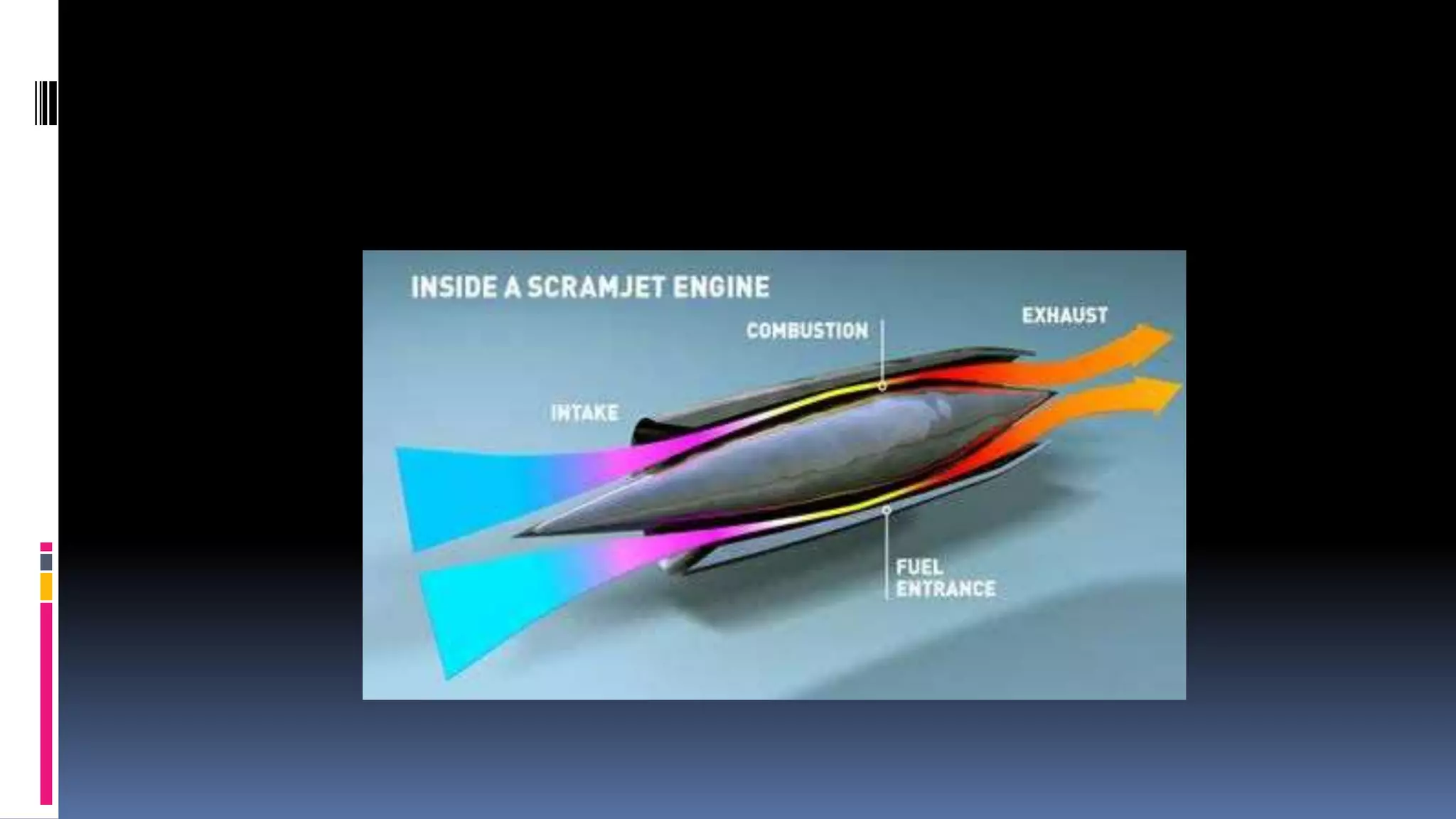
The scramjet is composed of three basic components :
1) A Converging Inlet, where incoming air is compressed and
decelerated.
2) A Combustor, where gaseous fuel is burned with atmospheric
oxygen to produce heat.
3) A Diverging Nozzle, where the heated air is accelerated to
produce thrust.
• In scramjets, the engine inlet is designed so it doesn’t create as much compression
as in ramjet, allowing the air to zip through the engine at supersonic speeds.
• The simplest type of air breathing engine is the scramjet engine and simplified
sketch of engine is given in figure.
PRINCIPLEOFWORKING
 Scramjets works on the same principle of ramjet.
 Based on air breathing propulsion system.
 The engine caries hydrogen as a fuel & takes oxygen from the
atmospheric air.
 Basically in order to achieve the initial speed, a second engine is
integrated in the Scramjet model, it may be rocket or turbojet
engine.
PRINCIPLEOFWORKING cont.
 Hot air flows in the combustion chamber and at this moment
the propellant i.e. hydrogen (having a very low ignition
temperature) are injected by the injector in the combustor,
where it gets self ignited within a millisecond and the
combustion process is carried out at supersonic speed.
 The fresh air supply to the diffuser builds up a pressure at the
diffuser so that these burned gases cannot expand towards
the diffuser. Instead the gases are made expand in combustor
towards tail engine hence providing the required thrust.
ADVANTAGES
 Does not have to carry oxygen.
 No rotating parts, makes it easier to manufacture.
 Less weight and simple design.
 As the hydrogen is used as a propellant combustion is carried
out at supersonic velocity with the help of oxygen from the
atmosphere. As a result of that, steam is being exhaust gas
which is eco-friendly in nature.
DISADVANTAGES
 A scramjet cannot produce efficient thrust unless boosted to
high speed, around Mach 5.
 As a result an additional propulsion systems are required.
 Lack of stealth.
 Testing difficulties.
RECENT DEVELOPMENTS
 Hyper-X “Scramjet”
A new program, called Hyper-X, was launched by NASA in 1997. The
goal is to build working jet airplanes that use a clever combination of
ramjet, scramjet, and rocket engines to reach sufficient speeds to
achieve orbit around the earth. These planes would be conventional
rocket engines to get started and then switch over to ramjet power at
Mach 2 or 3, and then scramjet power at about Mach 5.
SCOPE IN INDIA
 Only few country like USA , RUSSIA , INDIA and CHINA have
succeeded at developing sramjet technologies.
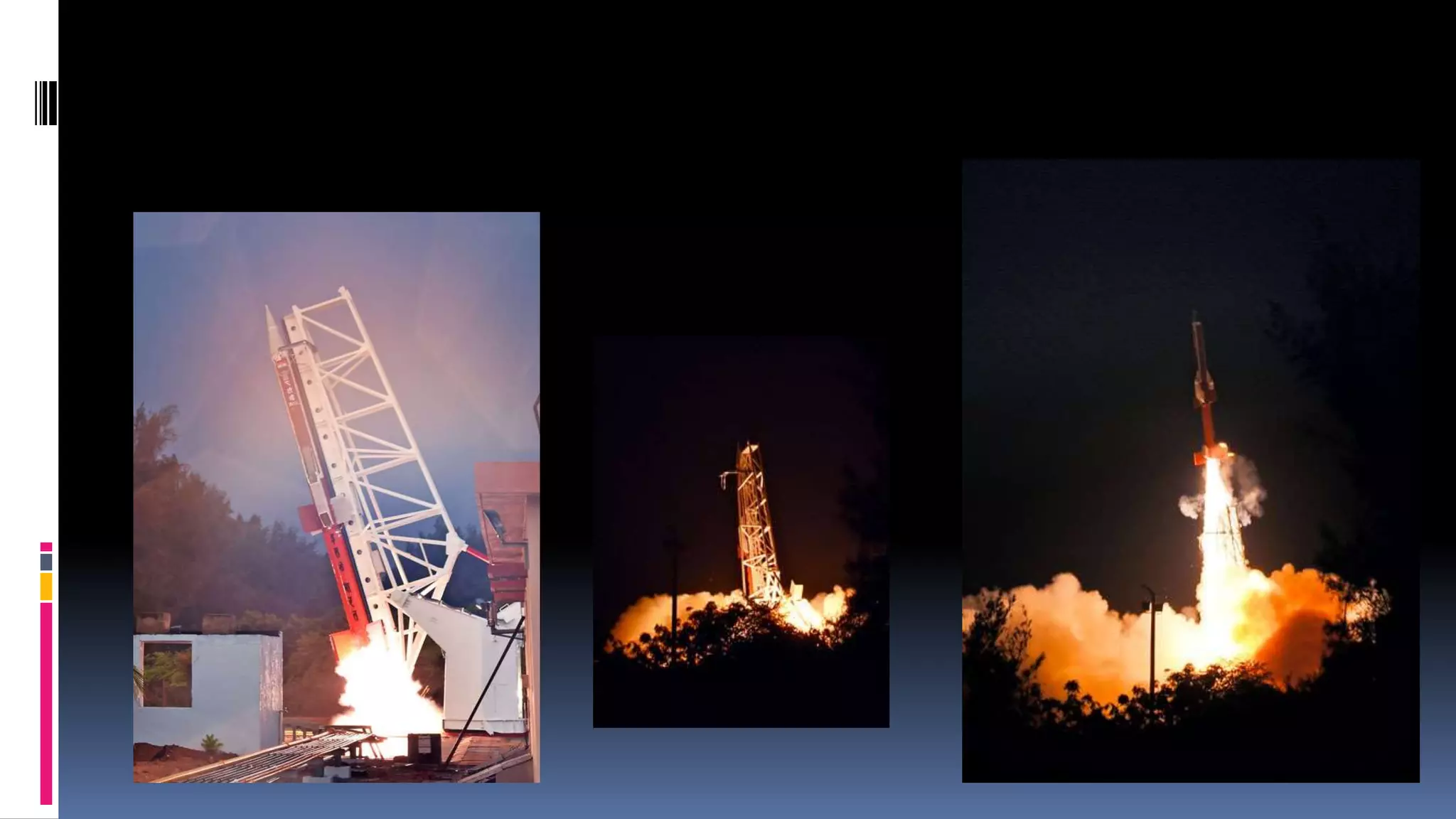
 In year , 2010 , ISRO testfired its AdvanceTechnology Vehicle
( ATV-DO1 ) with a scramjet engine combustor module .
It was a suborbital ballastic trajectory based experiment but
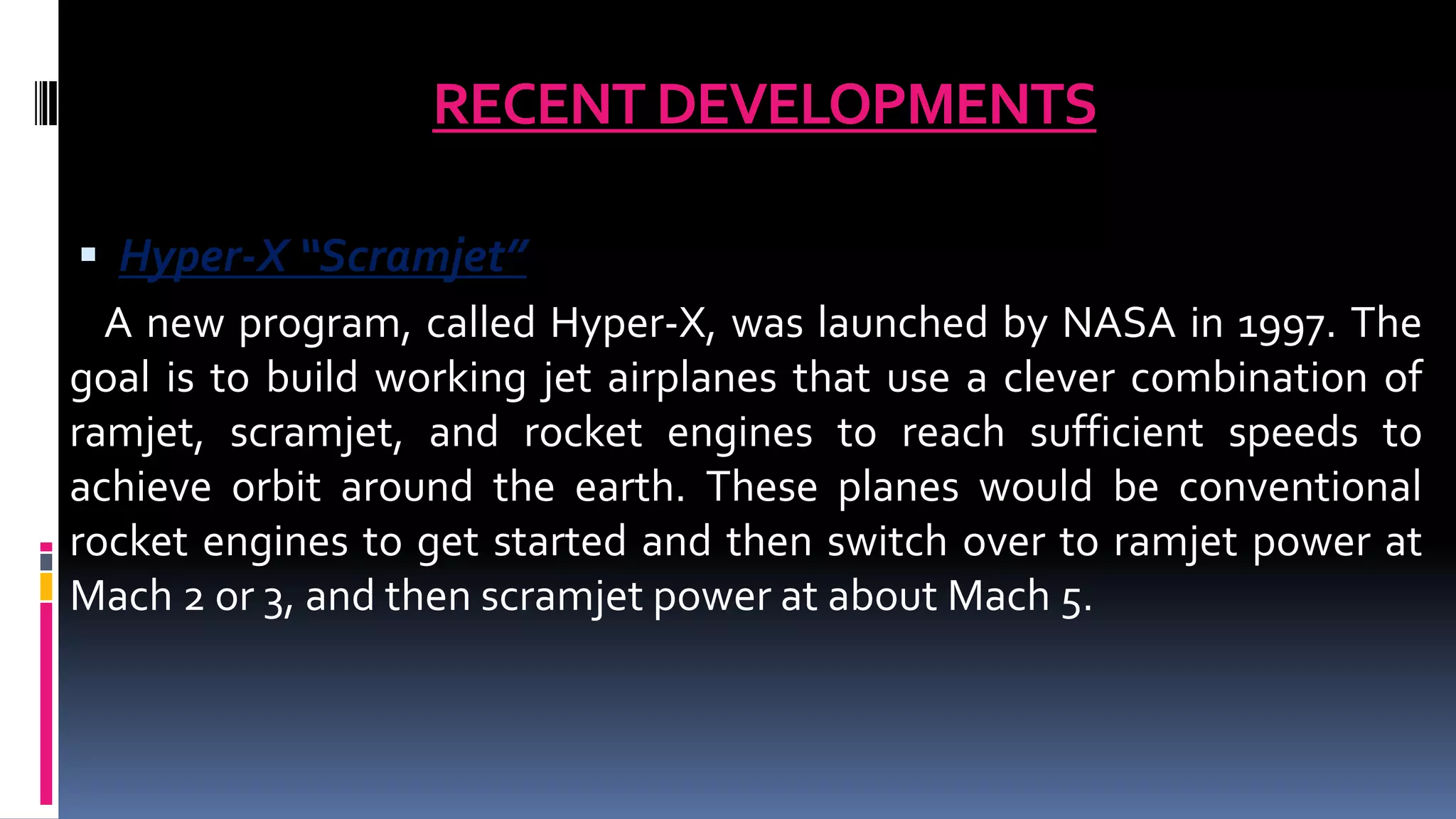
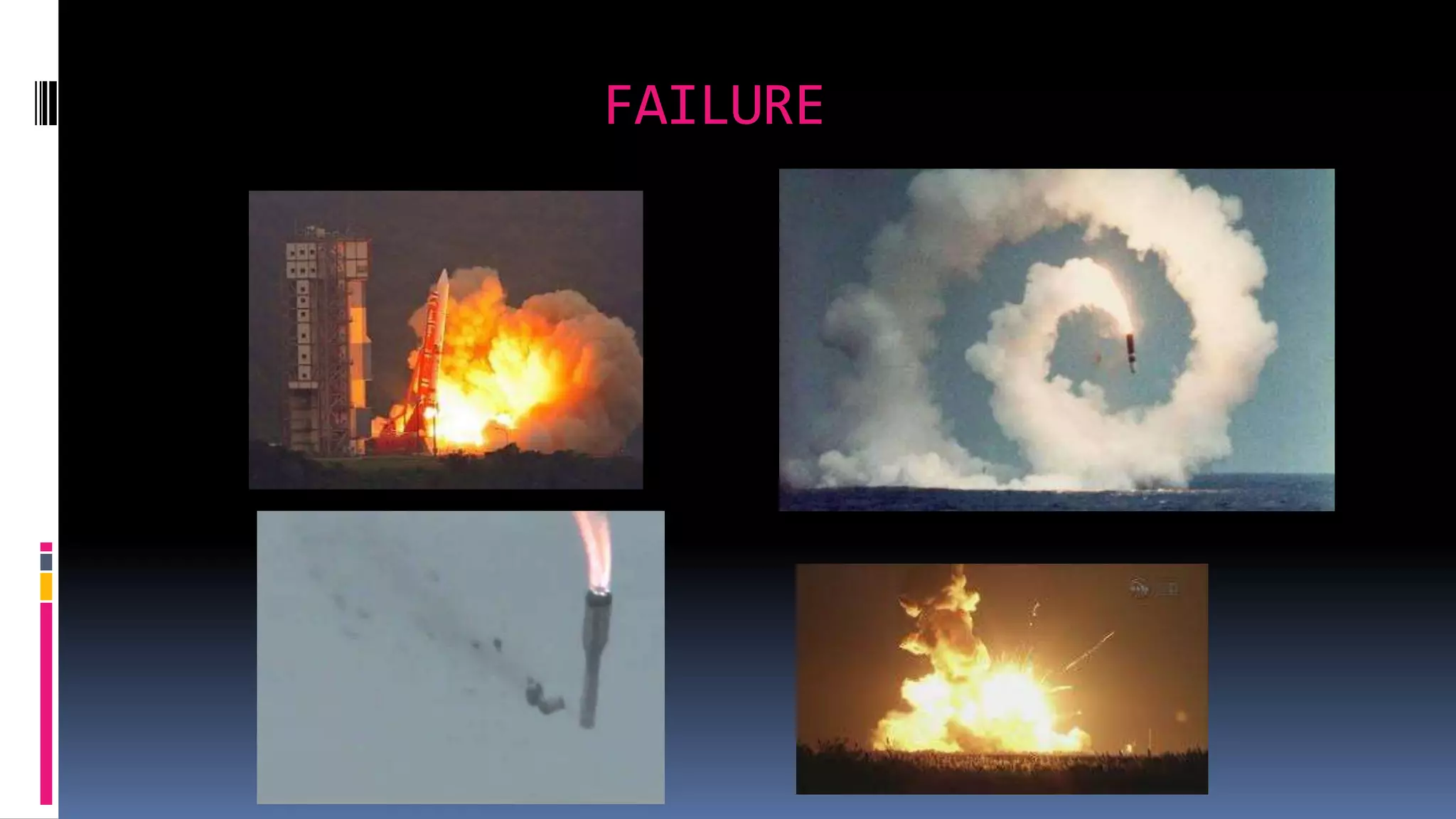
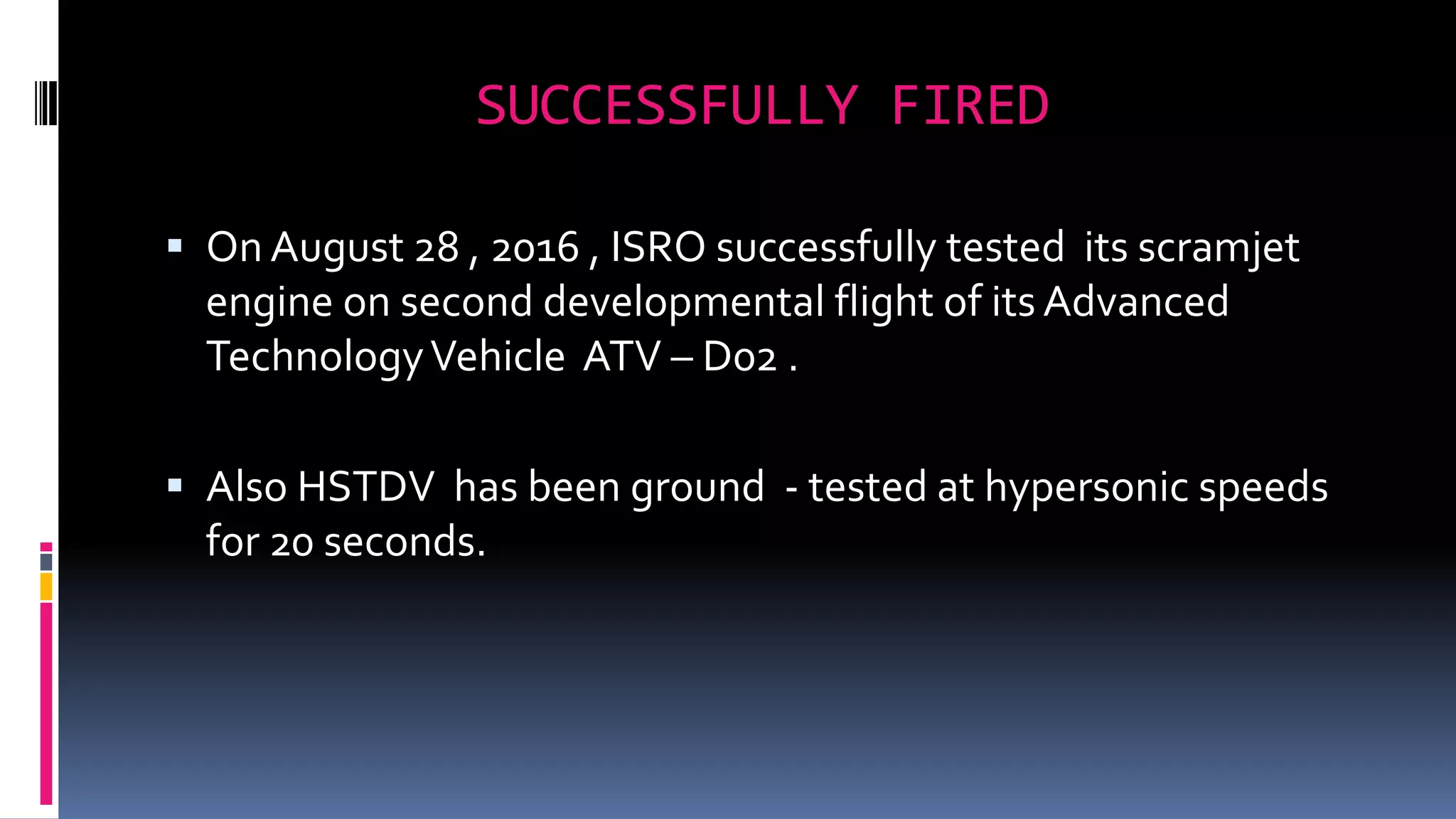
it was failed due to some technical failure.
FAILURE
SUCCESSFULLY FIRED
 On August 28 , 2016 , ISRO successfully tested its scramjet
engine on second developmental flight of its Advanced
TechnologyVehicle ATV – D02 .
 Also HSTDV has been ground - tested at hypersonic speeds
for 20 seconds.
Scramjet engine[1]by Shashwat Mishra

Scramjet engine[1]by Shashwat Mishra

  • 1.
  • 2.
    What isAScramjet Engine? A scramjet (supersonic combustion ramjet) engine is variant of a ramjet engine in which engine carries hydrogen (as a fuel) and takes oxygen ( as oxidiser ) from atmospheric air.  As in conventional rocket system they carries the oxidiser along with them.  Apart from rockets and missiles , the engine can find its application in planes for the purpose of commercial travel by considerably reducing the travel time.
  • 4.
    WHY A NEEDFOR A SCRAMJET ENGINE  Nearly 70 % of the propellant ( fuel – oxidiser combination ) carried by today’s launch vechicle consists of oxidiser.  To reduce the cost and for increasing the high speed of mach 6 next generation launch vehicle must use a propulsion system which can utilise the atmospheric oxygen during their flight through the atmosphere.
  • 5.
    COMPONENTSOFSCRAMJET ENGINE The scramjetis composed of three basic components : 1) A Converging Inlet, where incoming air is compressed and decelerated. 2) A Combustor, where gaseous fuel is burned with atmospheric oxygen to produce heat. 3) A Diverging Nozzle, where the heated air is accelerated to produce thrust.
  • 6.
    • In scramjets,the engine inlet is designed so it doesn’t create as much compression as in ramjet, allowing the air to zip through the engine at supersonic speeds. • The simplest type of air breathing engine is the scramjet engine and simplified sketch of engine is given in figure.
  • 7.
    PRINCIPLEOFWORKING  Scramjets workson the same principle of ramjet.  Based on air breathing propulsion system.  The engine caries hydrogen as a fuel & takes oxygen from the atmospheric air.  Basically in order to achieve the initial speed, a second engine is integrated in the Scramjet model, it may be rocket or turbojet engine.
  • 9.
    PRINCIPLEOFWORKING cont.  Hotair flows in the combustion chamber and at this moment the propellant i.e. hydrogen (having a very low ignition temperature) are injected by the injector in the combustor, where it gets self ignited within a millisecond and the combustion process is carried out at supersonic speed.  The fresh air supply to the diffuser builds up a pressure at the diffuser so that these burned gases cannot expand towards the diffuser. Instead the gases are made expand in combustor towards tail engine hence providing the required thrust.
  • 10.
    ADVANTAGES  Does nothave to carry oxygen.  No rotating parts, makes it easier to manufacture.  Less weight and simple design.  As the hydrogen is used as a propellant combustion is carried out at supersonic velocity with the help of oxygen from the atmosphere. As a result of that, steam is being exhaust gas which is eco-friendly in nature.
  • 11.
    DISADVANTAGES  A scramjetcannot produce efficient thrust unless boosted to high speed, around Mach 5.  As a result an additional propulsion systems are required.  Lack of stealth.  Testing difficulties.
  • 12.
    RECENT DEVELOPMENTS  Hyper-X“Scramjet” A new program, called Hyper-X, was launched by NASA in 1997. The goal is to build working jet airplanes that use a clever combination of ramjet, scramjet, and rocket engines to reach sufficient speeds to achieve orbit around the earth. These planes would be conventional rocket engines to get started and then switch over to ramjet power at Mach 2 or 3, and then scramjet power at about Mach 5.
  • 14.
    SCOPE IN INDIA Only few country like USA , RUSSIA , INDIA and CHINA have succeeded at developing sramjet technologies.  In year , 2010 , ISRO testfired its AdvanceTechnology Vehicle ( ATV-DO1 ) with a scramjet engine combustor module . It was a suborbital ballastic trajectory based experiment but it was failed due to some technical failure.
  • 15.
  • 16.
    SUCCESSFULLY FIRED  OnAugust 28 , 2016 , ISRO successfully tested its scramjet engine on second developmental flight of its Advanced TechnologyVehicle ATV – D02 .  Also HSTDV has been ground - tested at hypersonic speeds for 20 seconds.